
Tenmoku glaze sake cup by Okada Yu
Tenmoku glaze sake cup by Okada Yu
Couldn't load pickup availability
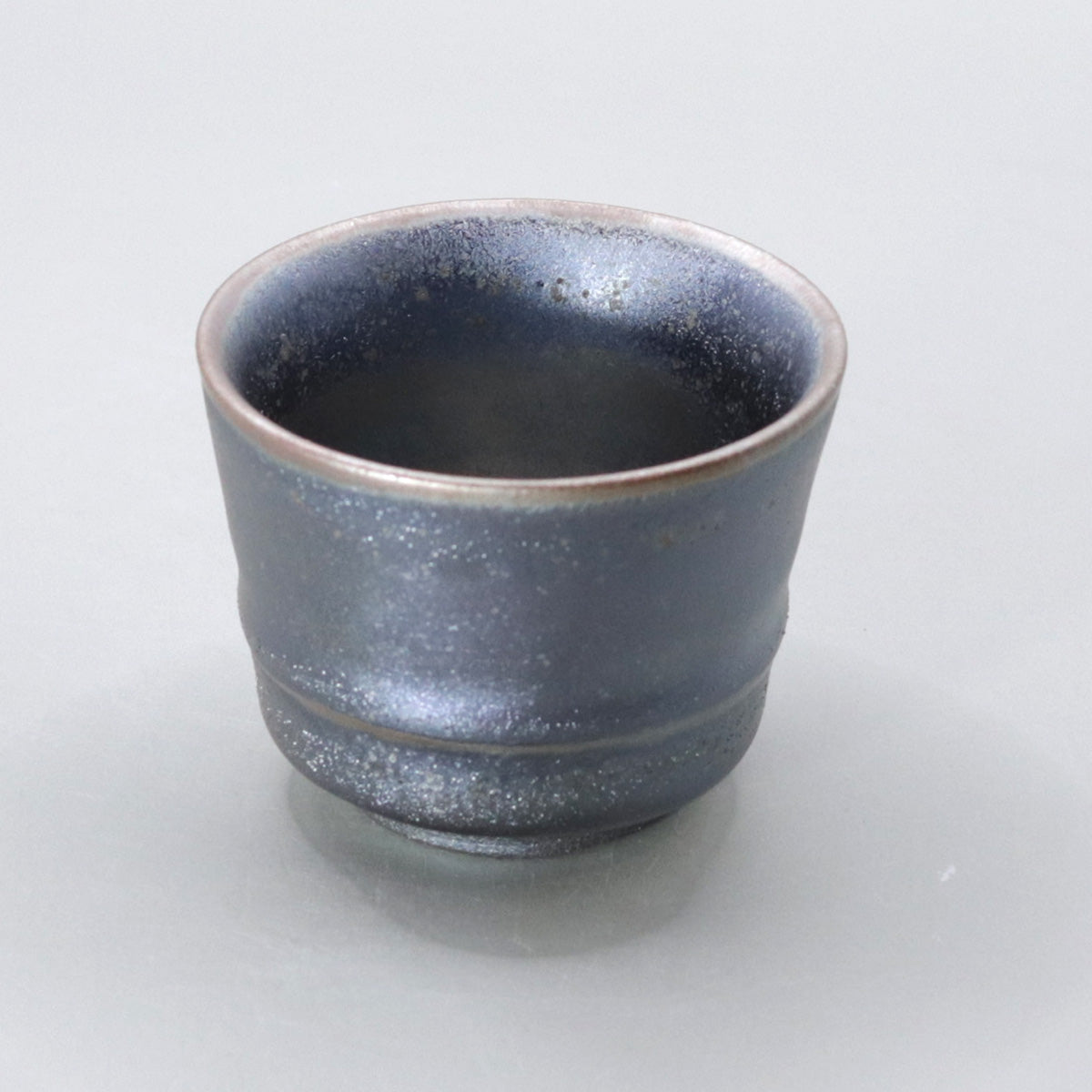
Width: 7.3cm Height: 5.6cm
Tenmoku glaze sake cup
- Created by Masaru Okada -
Work summary
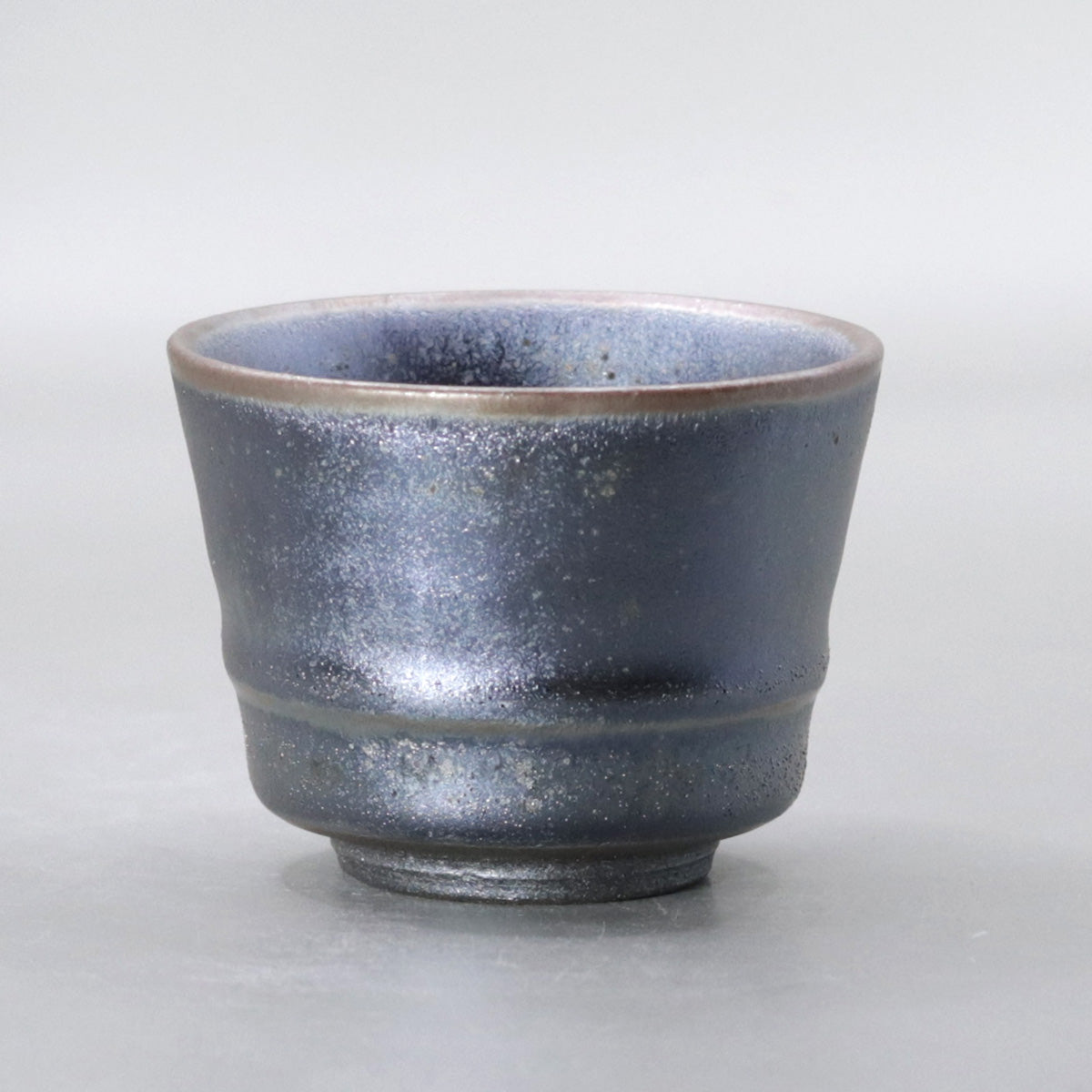
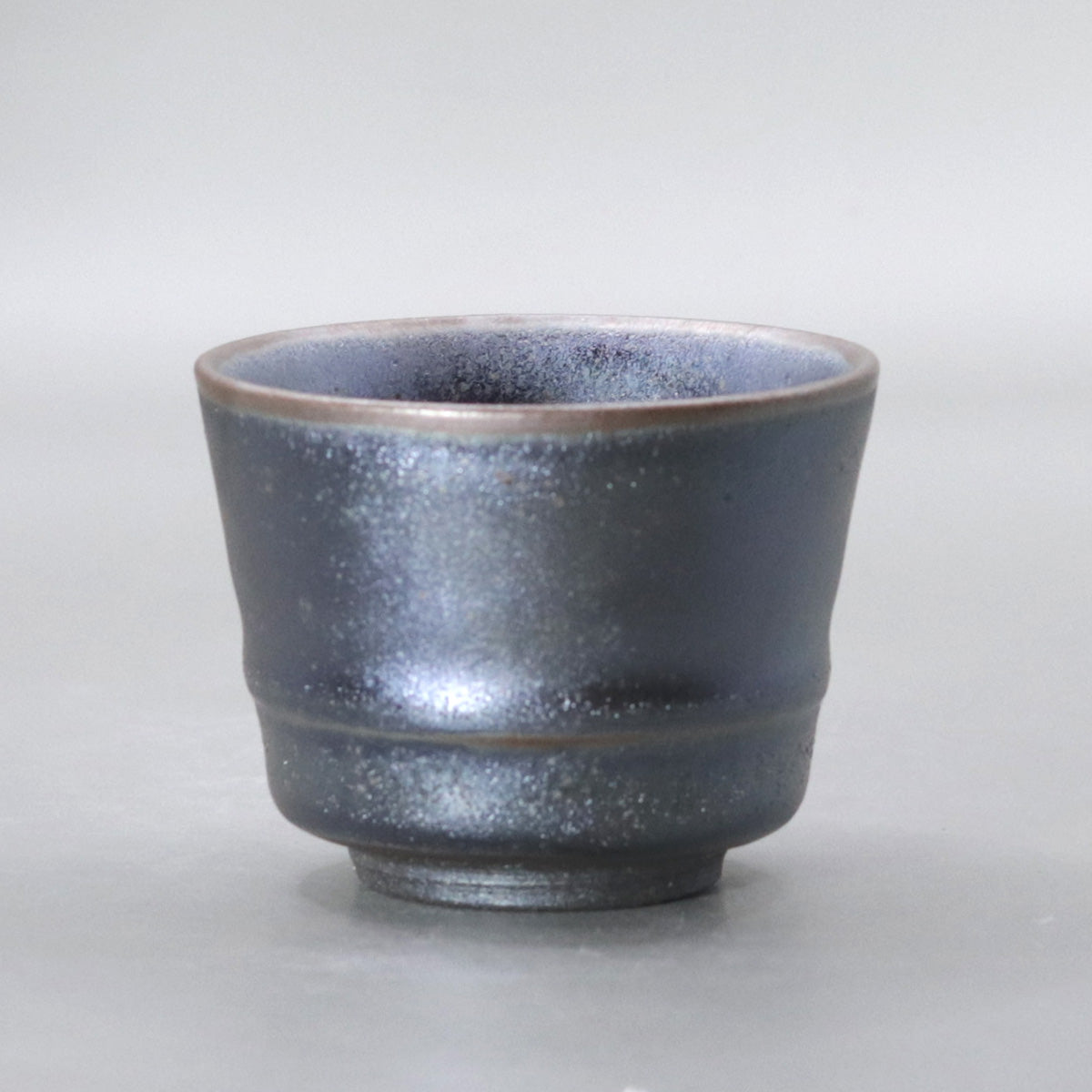
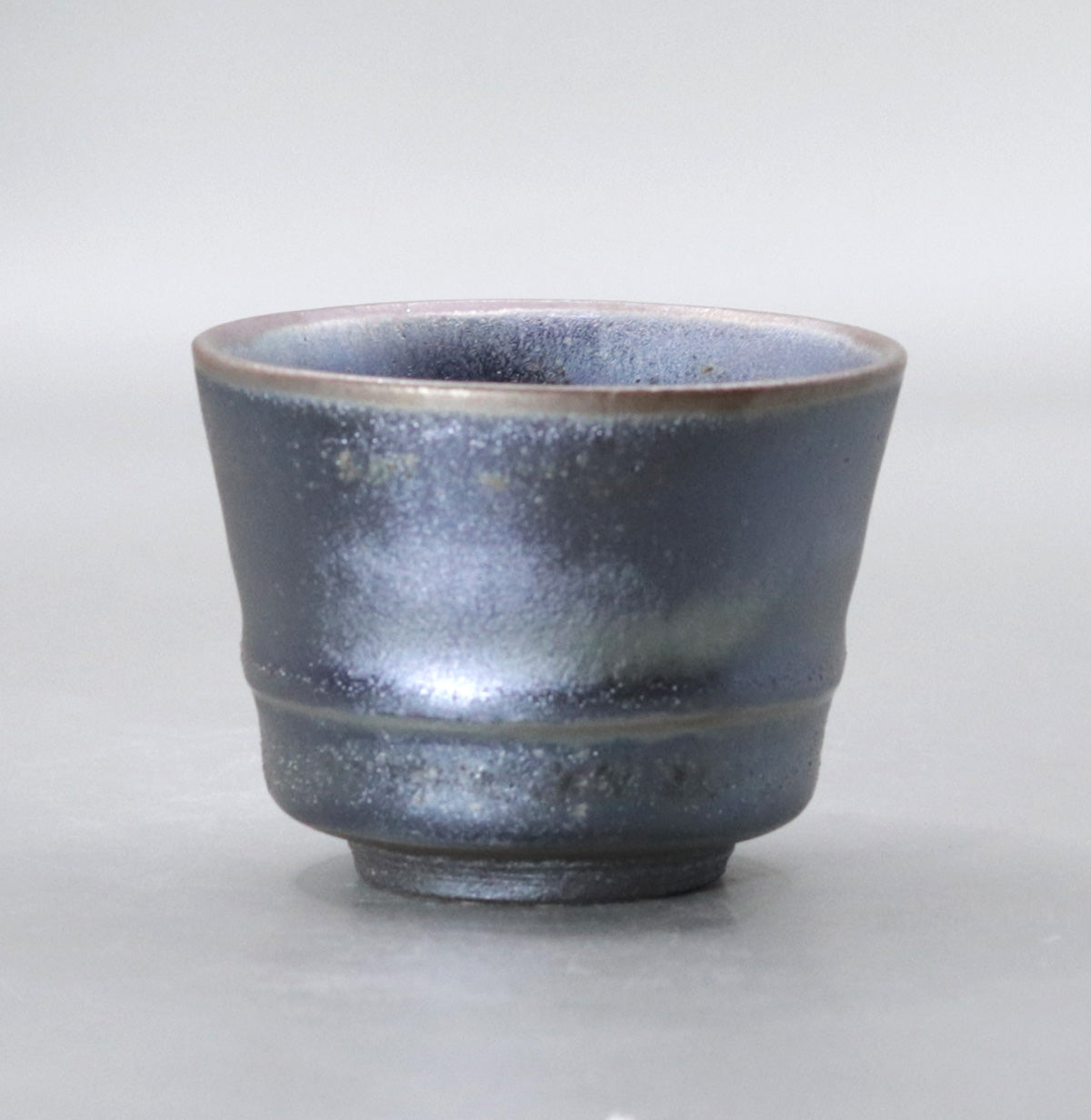
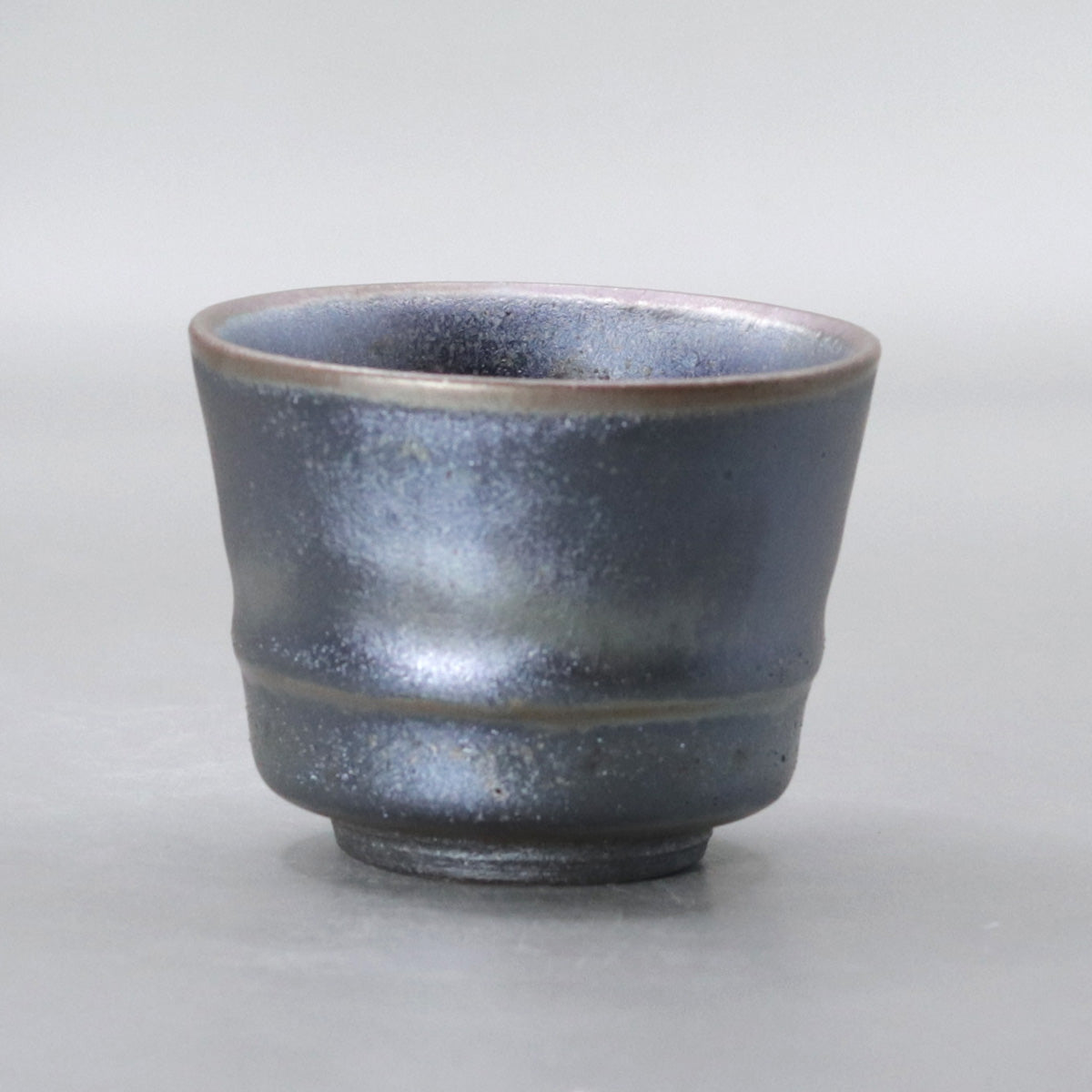
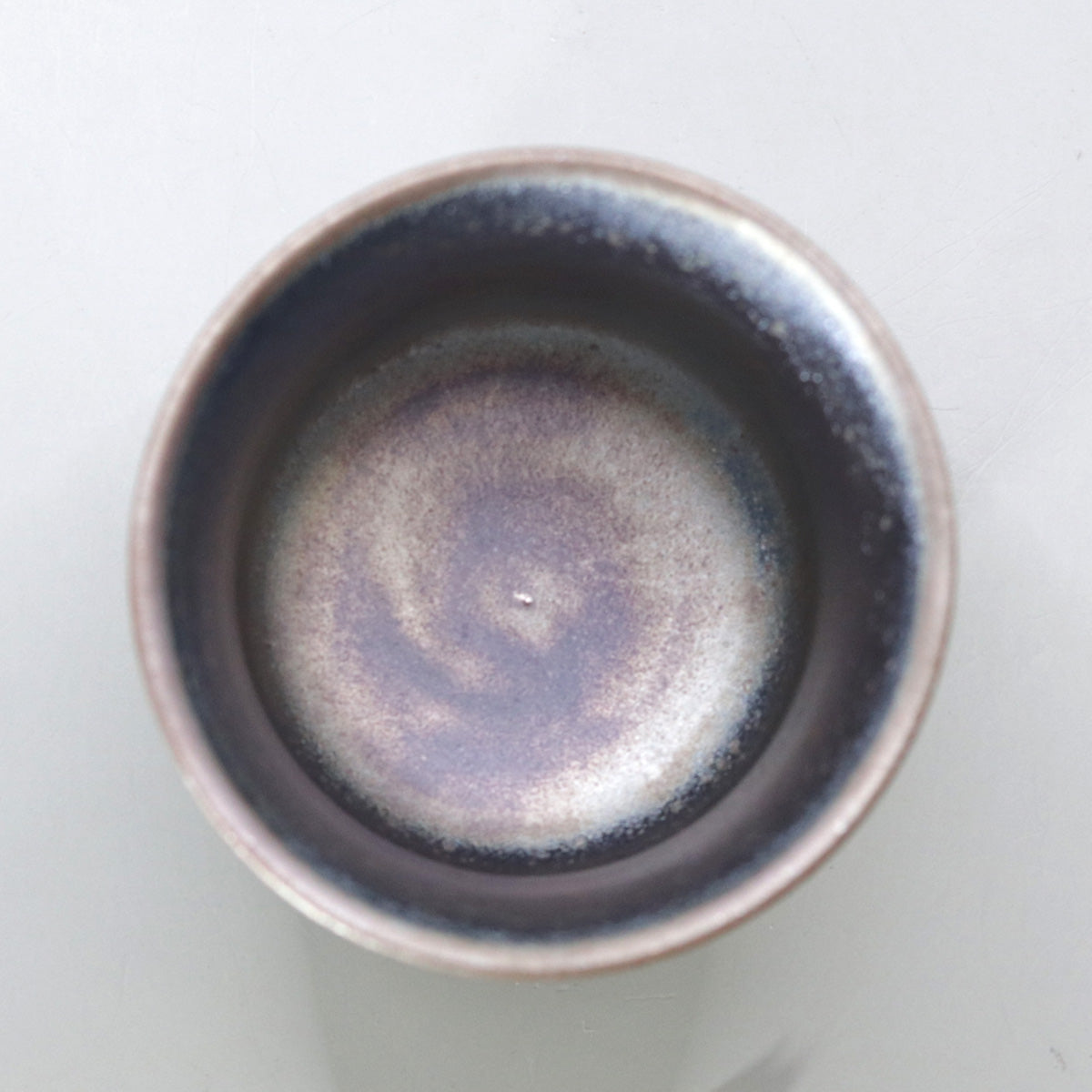
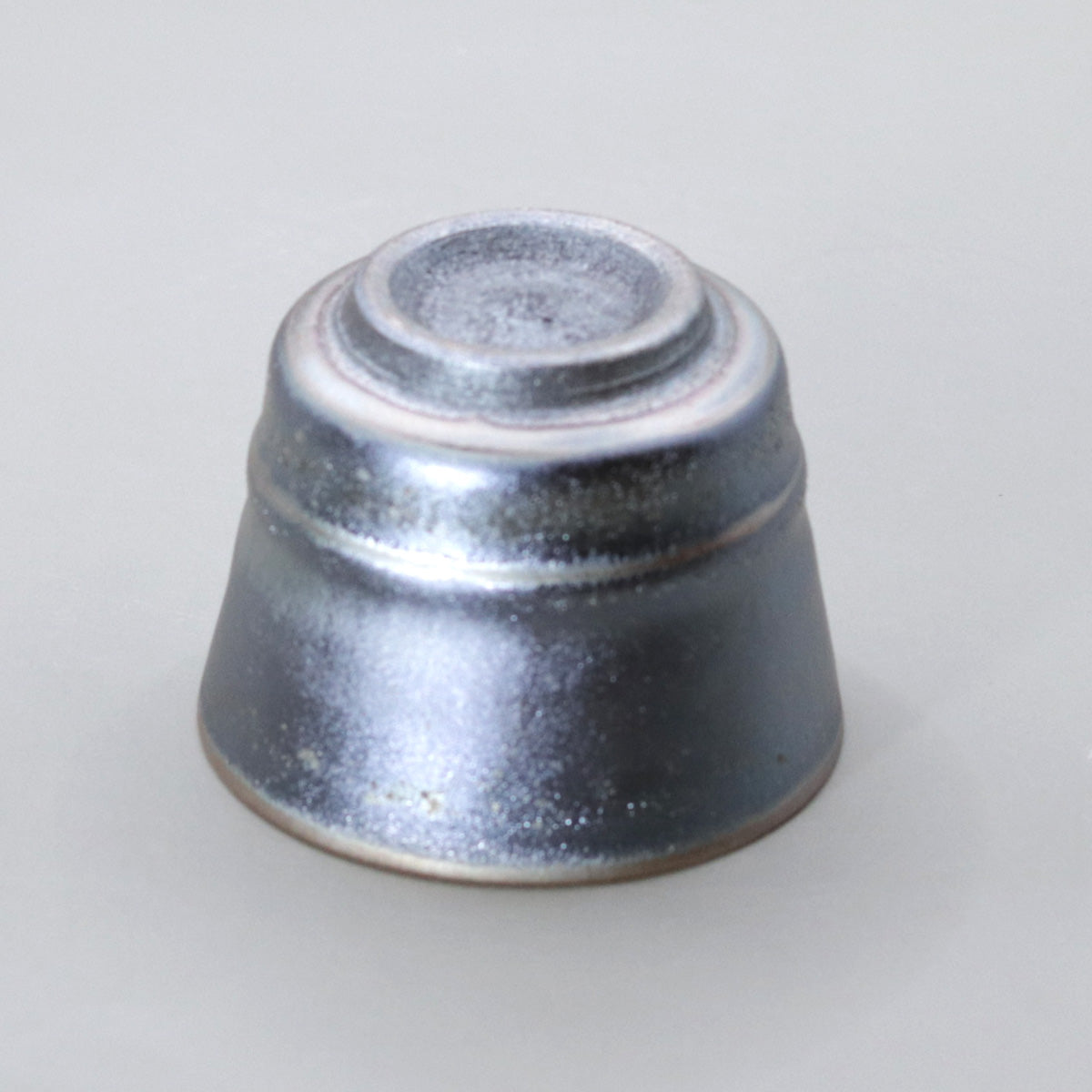
This Tenmoku-glazed sake cup was created by Okada Masaru, who has a kiln in Uji Sumiyama, Kyoto, and is renowned for his research into black glazes and kiln-change effects. Based on a straight cylindrical shape, it features a slight curve at the waist and a form that gently bulges downwards. The subdued blue-steel color of the Tenmoku glaze is adorned with countless tiny oil crystals, giving it a depth and brilliance reminiscent of a quiet night sky. The rim is tinged with a purple-brown color reminiscent of a scarlet sash, adding a warmth to the darkness of the black glaze.
Glaze tones and techniques
The iron feldspar-based Tenmoku glaze is combined with traces of cobalt oxide and manganese oxide, giving it a metallic luster of blue steel with a black base.
The three-stage firing process is primary reduction → slight oxidation → rapid cooling . The process of "fluctuation firing" alternates between reduction and oxidation in small increments, resulting in the deposition of oil-droplet-shaped iron crystals on the surface.
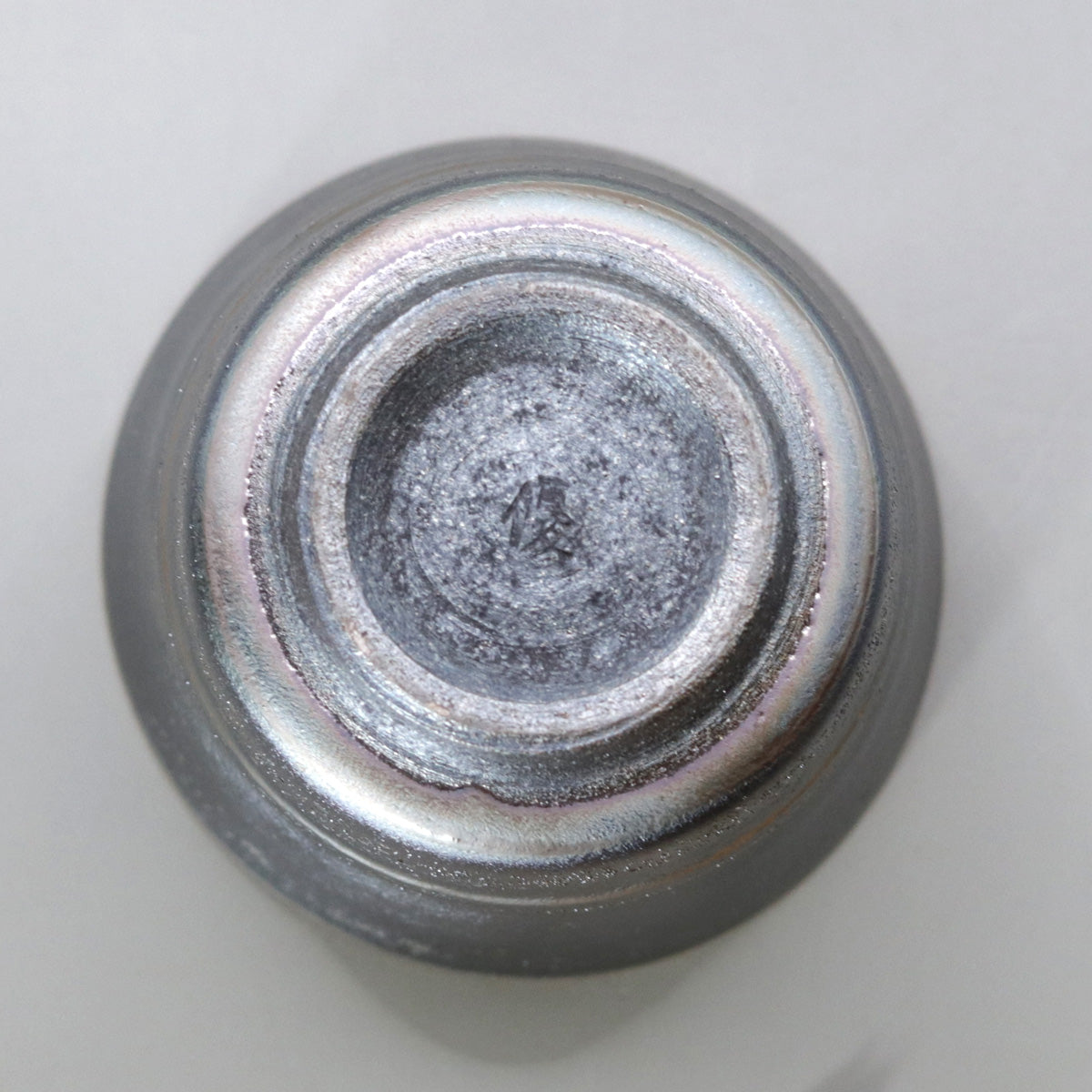
The scarlet color of the rim is achieved by increasing the oxygen supply slightly towards the end of the firing process, causing the iron to oxidize and form a thin purple-brown film.
The glaze has a satin-like semi-gloss finish. From a distance it has a subdued matte appearance, but as you get closer a metallic faint light emerges, changing its appearance depending on the distance and the light source.
Historical and cultural background
Tenmoku glaze originated in the black-glazed bowls of the Jian kiln in Fujian Province during the Song dynasty. It was introduced to Japan by Zen monks during the Kamakura period and developed as a highly valued tool for the tea ceremony. The highly random crystallized scenery, including oil droplets and Yohen patterns, is highly valued as the "mystery of kiln change" and continues to fascinate artists today. The highlight of this piece is that Okada Masaru has applied his many years of kiln change control know-how to preserve the mysterious and profound quality of classical Tenmoku while adding a modern nuance of indigo steel color.
Aesthetic Intention and Spirituality
The oil droplet crystals scattered in the indigo-colored darkness evoke the Zen phrase "yashokumuhen," which embodies a view of the infinite universe. Meanwhile, the curved body symbolizes "kashuku"—the inhalation and exhalation of breath—and imprints the rhythm of life onto the vessel. Every time sake is poured and the cup is swirled, the crystals sparkle like a nebula, and once the sake is downed, the scarlet rim appears faintly, creating a lingering impression of a once-in-a-lifetime encounter.
How to use and points to note
Suitable for chilled and room temperature sake : The cylindrical shape retains the aroma, while the indigo steel color brings out the clarity of clear sake.
Lighting effects : Daylight LEDs create a metallic blue steel glow, while incandescent lights create a soft silver-gray glow for the oil droplets. Enjoy the multi-layered scenery by changing the lighting.
A pleasure to hold : The narrow design creates a natural grip with your fingers, and combined with its light and thin construction, it is easy to hold.
This sake cup, with its deep blue steel light and serene sparkle of oil droplet crystals, is a condensed version of Okada Masaru's aesthetic of "controlled chance." We hope you will hold it in your palm and enjoy the fleeting universe depicted by the light and sake.
Share


-
[I will send it to you quickly and carefully]
We carefully package each product in a way that suits it best.
Also, delivery times vary depending on the piece (vessel, etc.).
Items that already come with a box will be shipped within 1-3 days of the order date.
For items that require a box to be made after your order, it will take approximately 30 days for production to be completed and then shipped.
In either case, once we have confirmed your order, we will contact you by email to inform you of the delivery date.
-
[Requests when purchasing pottery]
Even products that look the same may differ slightly in color, shape, size, etc.
The way the glaze is used, the power of the kiln, the firing method, the season, and the humidity also affect the appearance of the pottery.
Please understand the individuality of each piece of pottery and enjoy the unique warmth of handmade.