


Water jar with rabbit design of Seven Lucky Gods by Okada Yu
Water jar with rabbit design of Seven Lucky Gods by Okada Yu
Couldn't load pickup availability
Width: 17.0cm Height: 17.3cm
"Seven Lucky Gods and Rabbit Water Jar" by Okada Masaru - A microcosm of the tea ceremony where playfulness and good fortune blend together
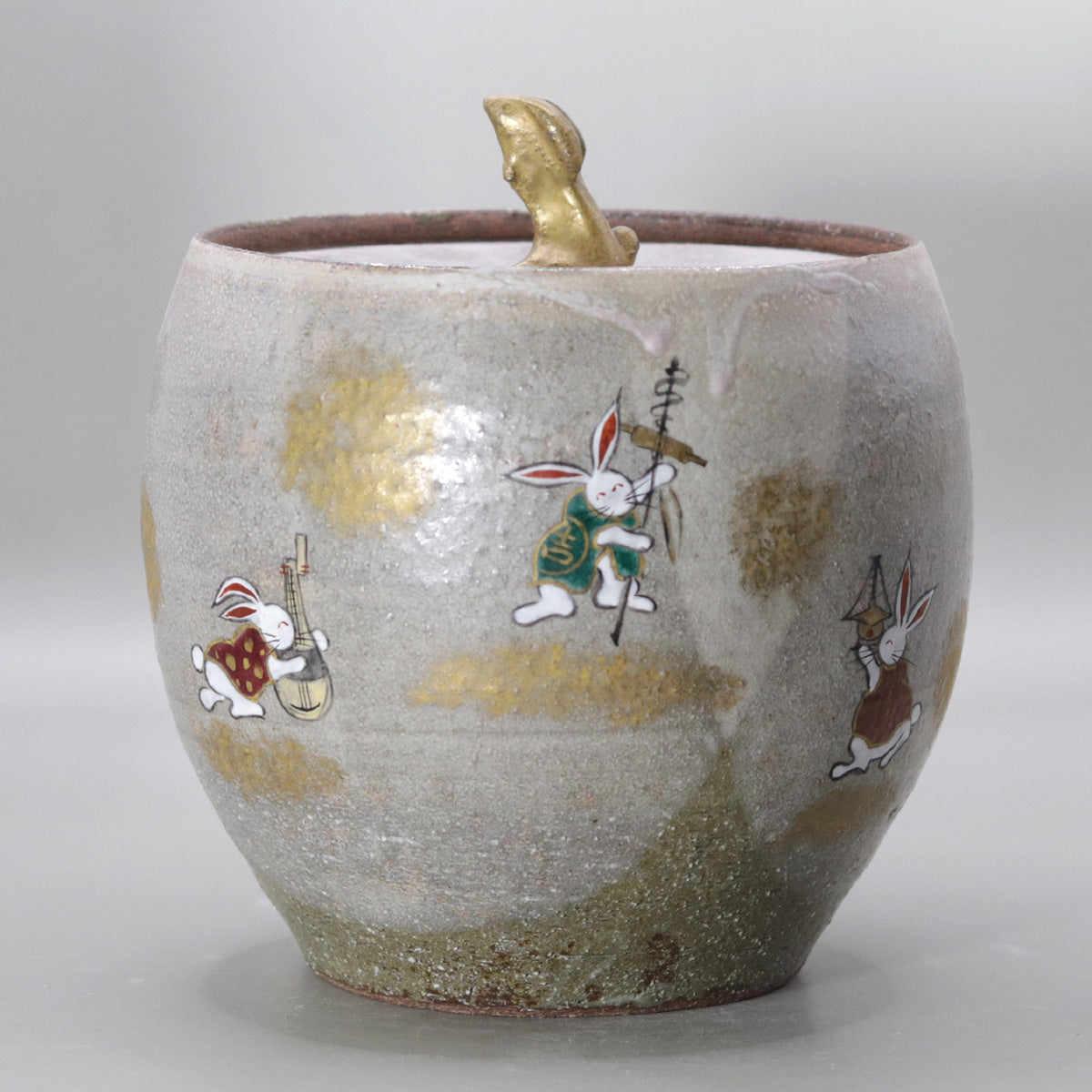
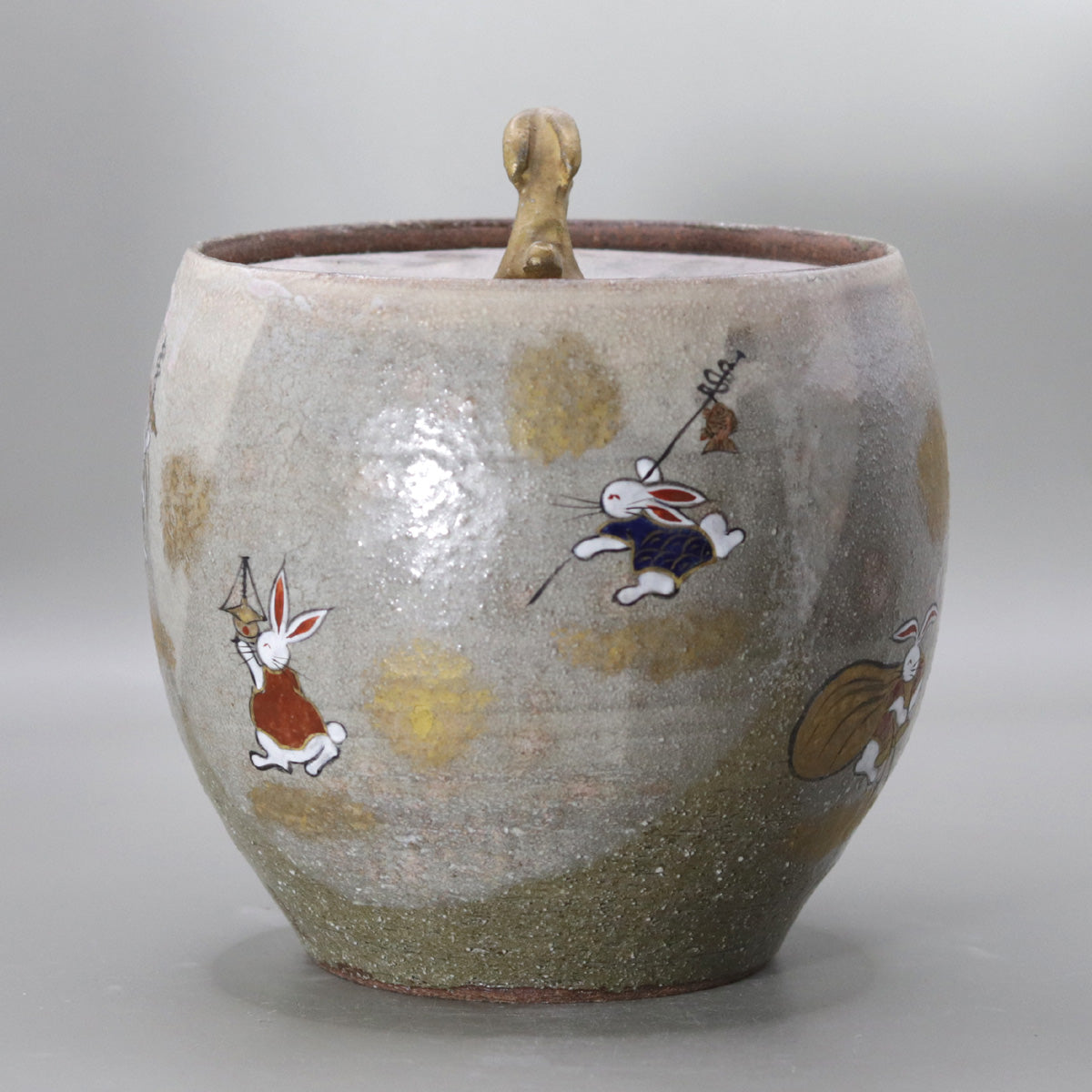
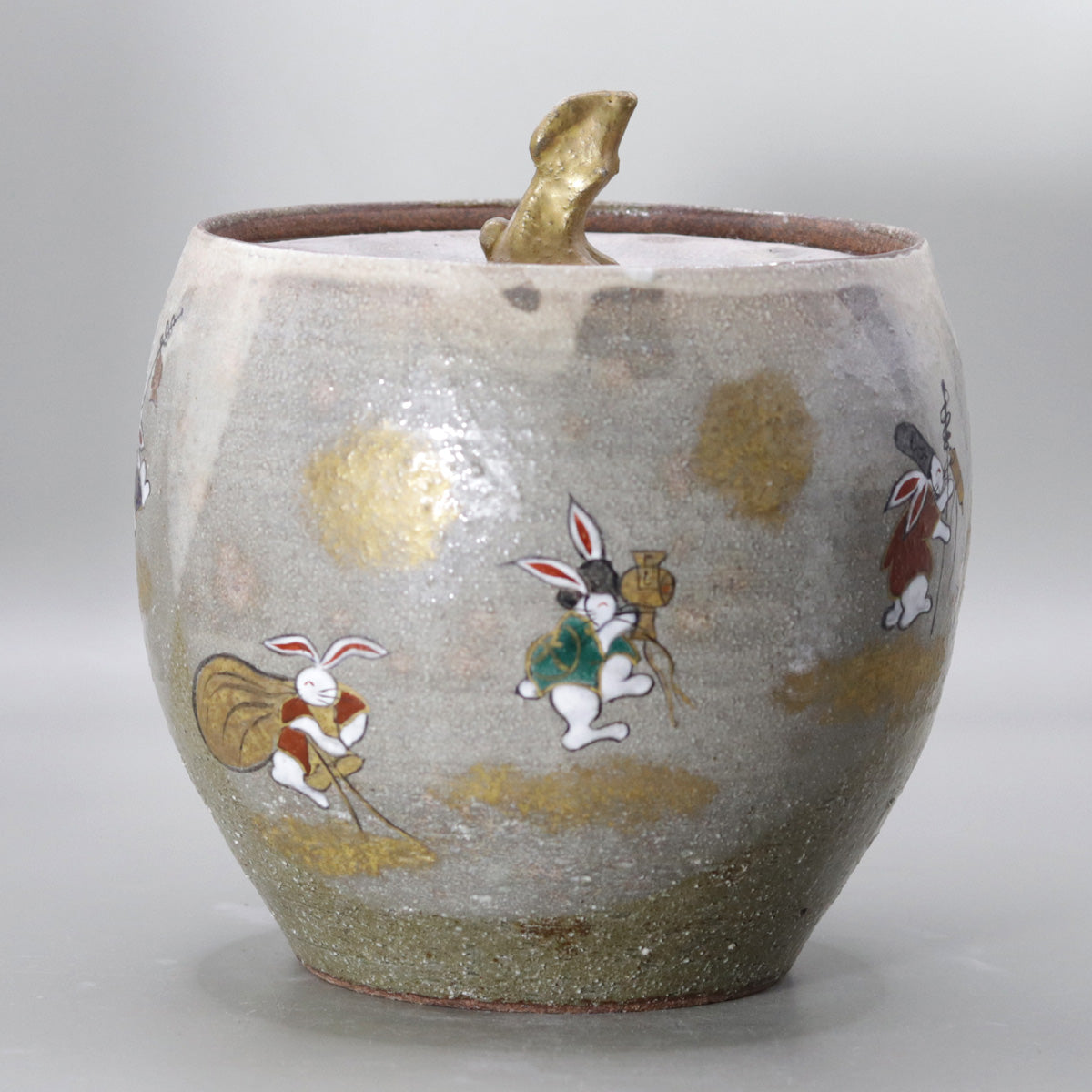
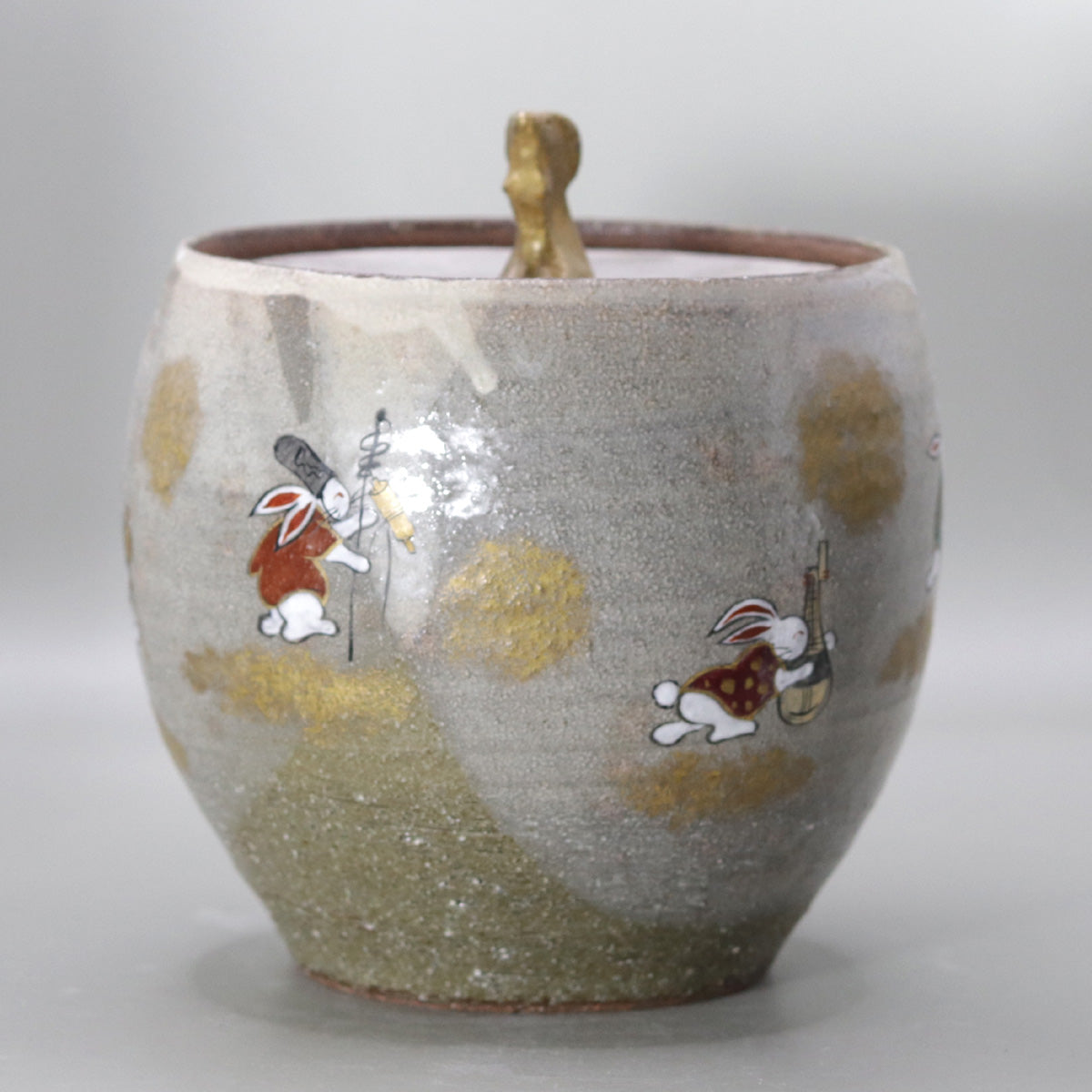
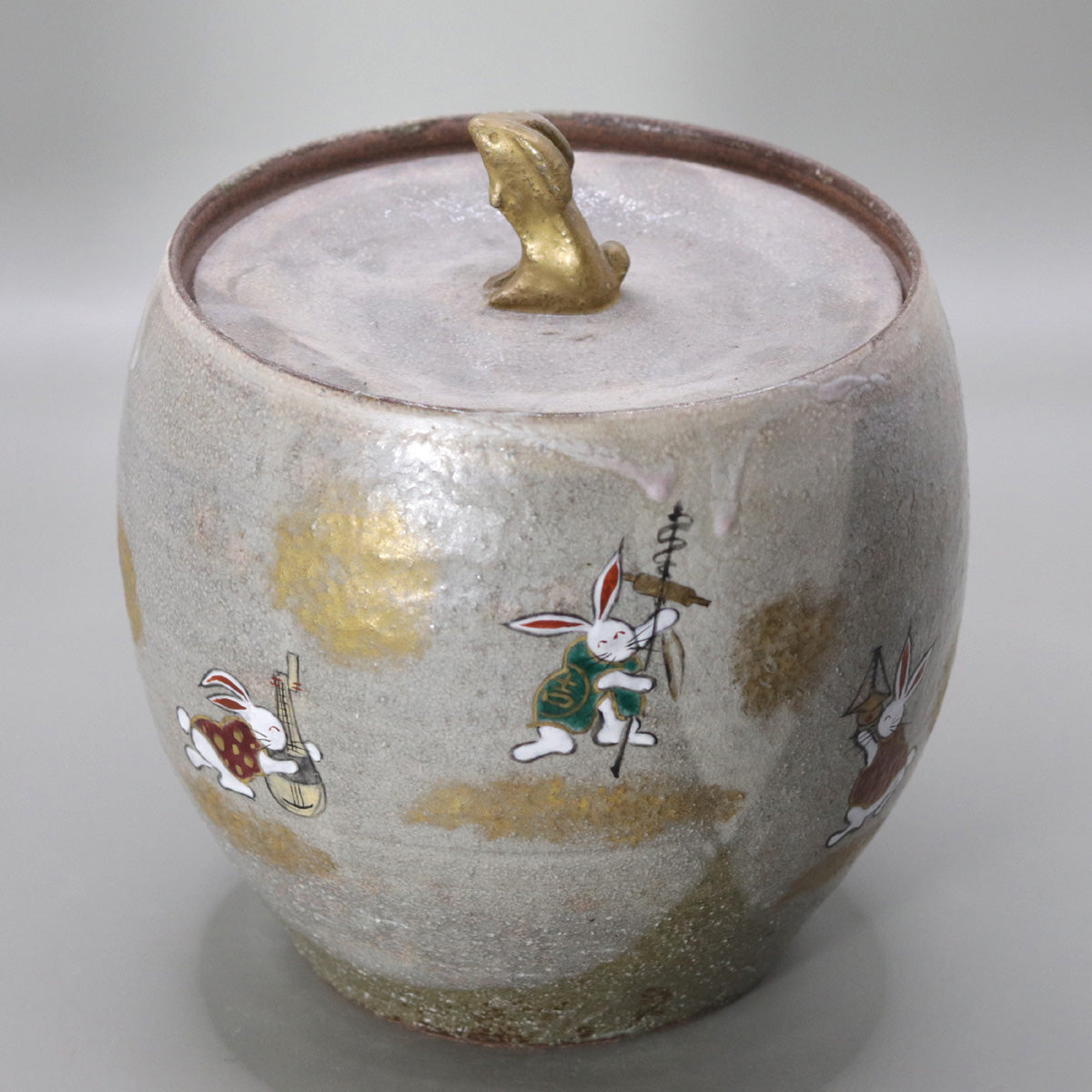
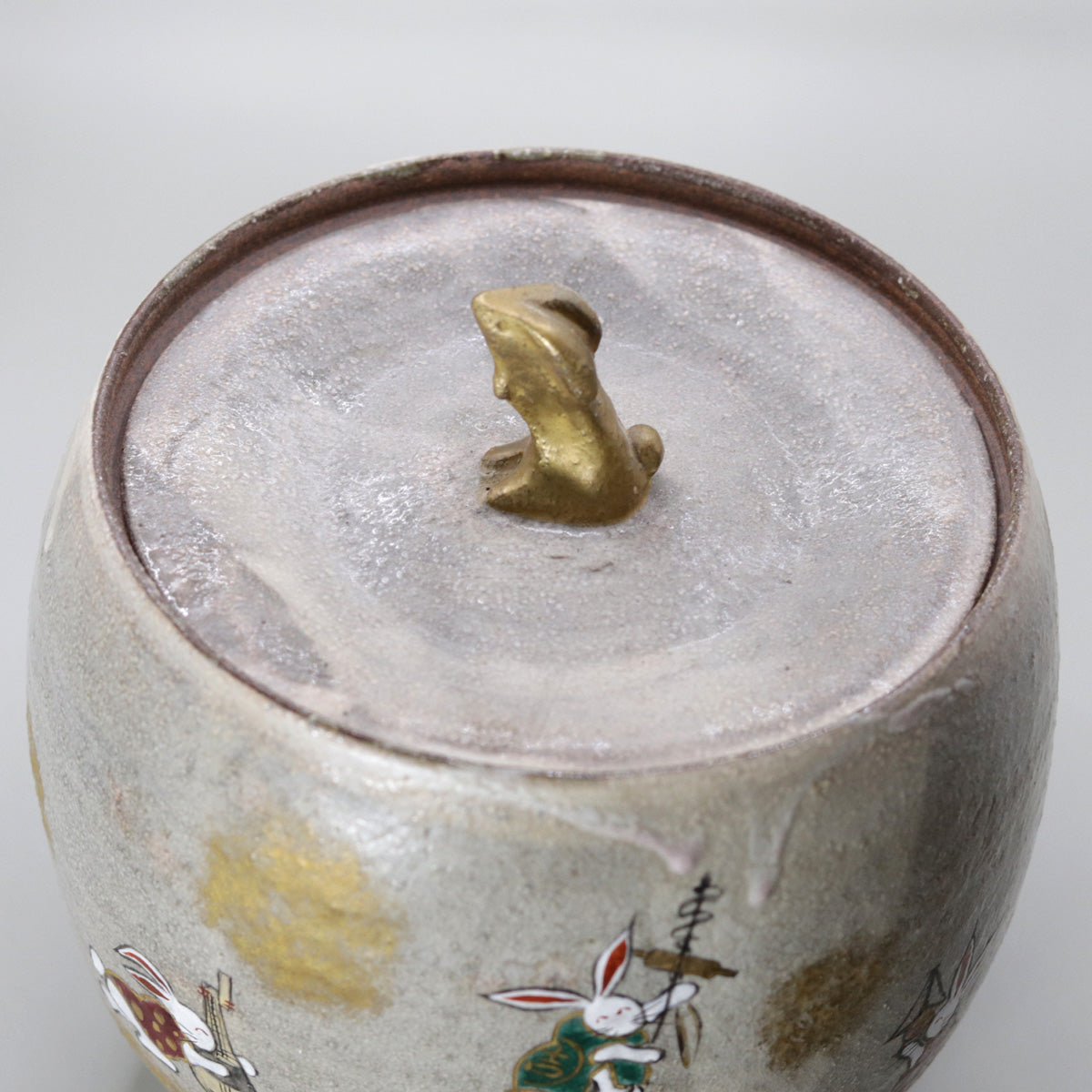
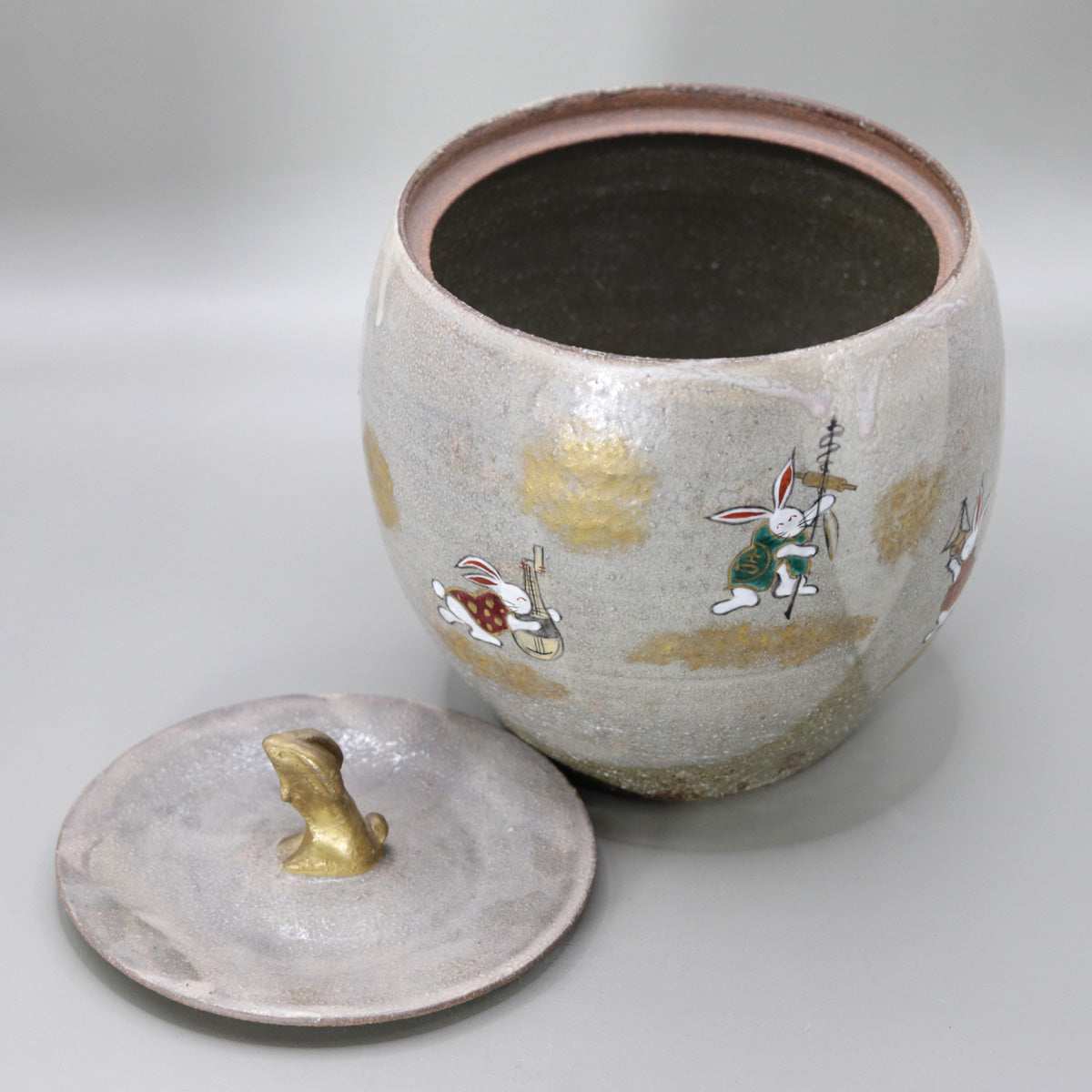
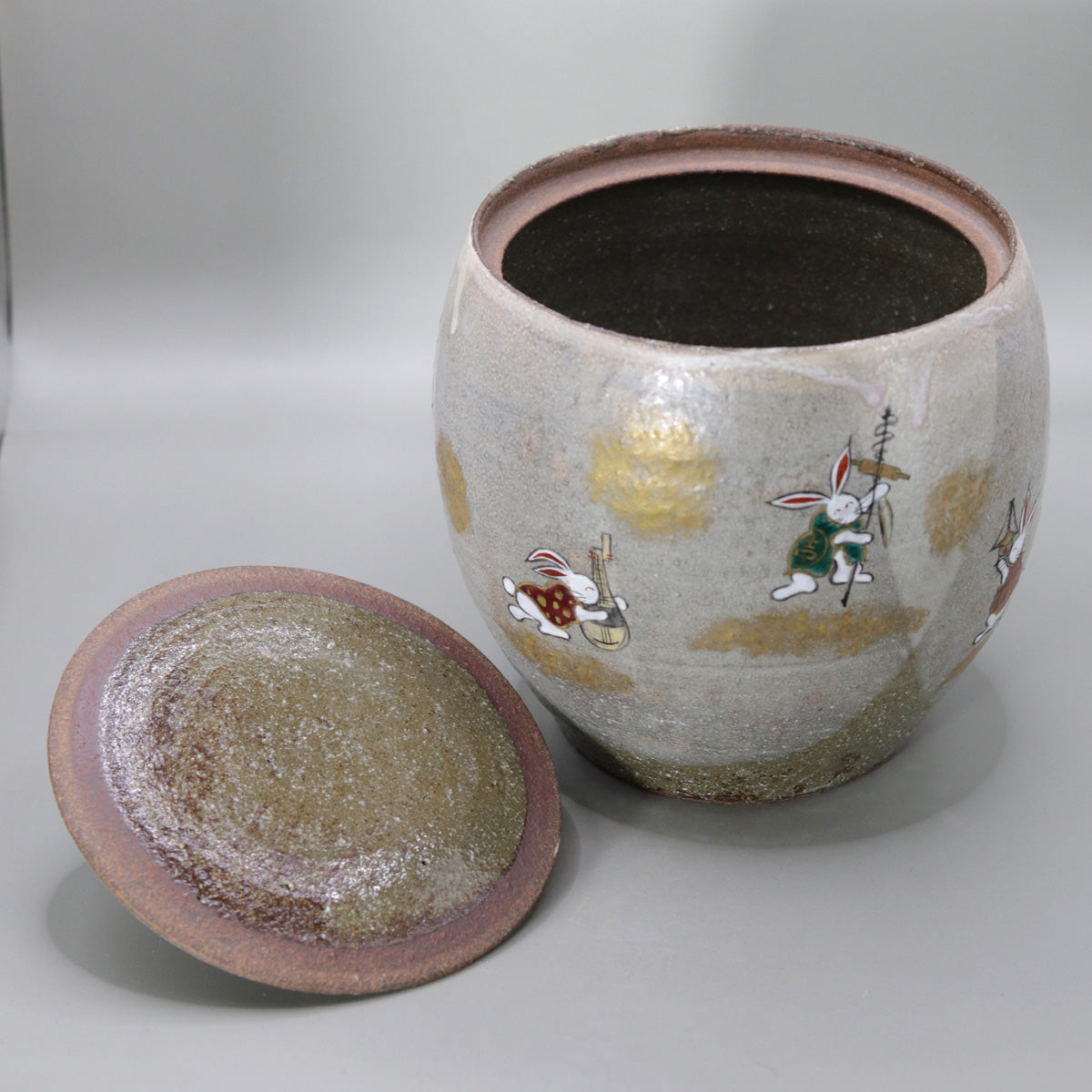
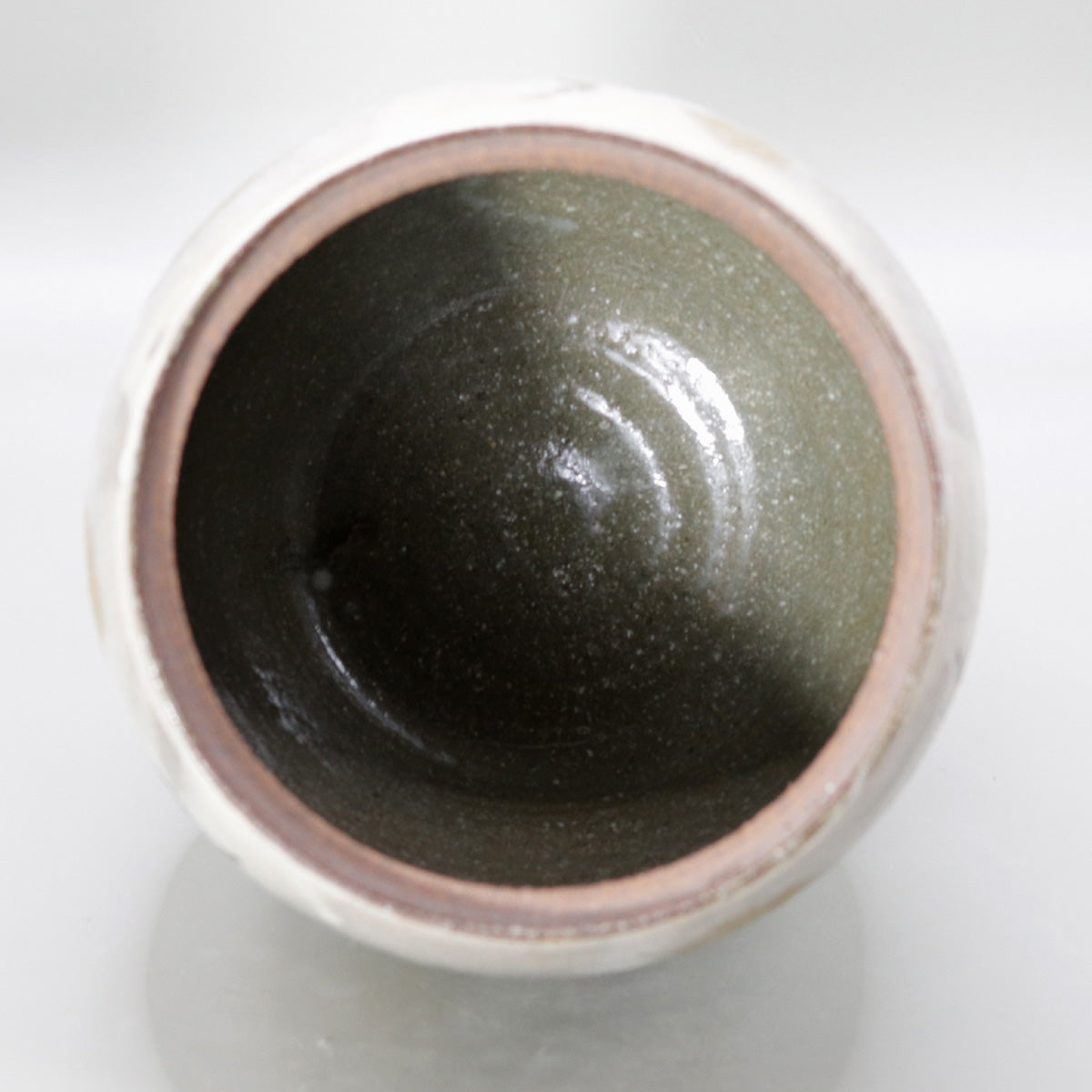
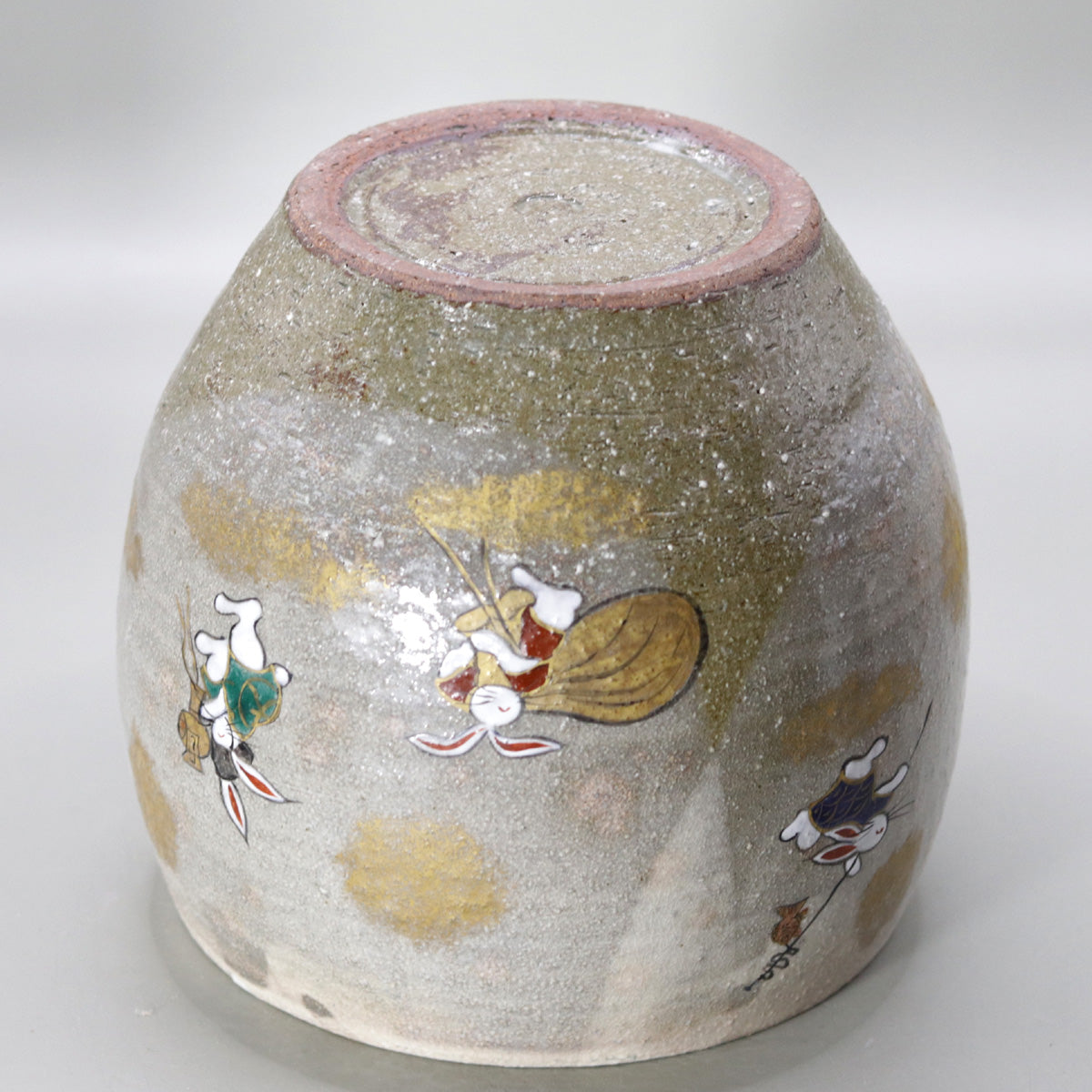
Okada Masaru's "Seven Lucky Gods and Rabbit Water Jar" is a piece that combines the auspicious qualities of the Seven Lucky Gods with adorable rabbits reminiscent of the Choju Jinbutsu Giga paintings . Amidst a tranquil scene created by the soft ash glaze, rabbits painted in gold and colored paint leap lightly, bringing both blessings and playfulness to the tea ceremony. Below, we will introduce the piece in detail from the perspectives of its history, technique, design, and use in tea ceremonies .
1. Historical Background - "Auspicious Images" and Water Jar
The Seven Lucky Gods spread as a folk belief from the Muromachi period through the Showa period, and were incorporated into annual events and craft designs as symbols of good fortune and prosperity.
The humorous animals depicted in the Choju Giga (Kyoto, Kosanji Temple) embody the Japanese concept of "playful beauty," and have been frequently referenced in overglaze Kyoto ware since the Meiji period.
By transferring these historical motifs to the "mizusashi," a tea ceremony utensil that represents purity, Okada Masaru has made the two virtues of happiness and longevity coexist in one vessel.
2. Techniques and Materials - A Combination of Ash Glaze and Gold Painting
3. Deciphering the Design - Rabbits Playing the Seven Lucky Gods
Hotei : Holding a biwa, he lightens the mood with his music.
Bishamon Rabbit : A guardian deity who raises a flag and exorcises evil spirits.
Daikoku Usagi : Holding a mallet modeled after the magic mallet.
Ebisu Rabbit : Carrying a fishing rod, he prays for a good catch = a bountiful harvest.
Benzai Rabbit : Holding a scroll, he has achieved academic success.
Jurojin Usagi : Symbolizes longevity with a fan.
Fukurokuju Rabbit : Wears a tall hat and rules over good fortune and longevity.
In this way, the rabbits suggest "jumping" and each bears an attribute of one of the Seven Gods of Fortune. The composition of the rabbits frolicking in the sky against a scattered golden cloud background will bring a breath of auspiciousness to your tea ceremony.
4. Spirituality - a duet of play and prayer
Okada Masaru's creations are based on the idea that "true prayer resides in play." The rabbit's innocent movements bring the "merit of laughter" that relaxes the hearts of the owner and tea guests, while the power of the Seven Lucky Gods resides within it, making it a talisman that protects the entire tea room.
— Playfulness is the flip side of serious prayer.
Every time I pick it up, Mr. Okada's message quietly resonates within me.
The Seven Lucky Gods Rabbit Water Jar is a masterpiece of modern tea ceremony utensils, combining auspiciousness, humor, and wabi (traditional Japanese aesthetic ). It can be used as a decorative item for annual events, or displayed as an art piece in a modern space, illuminating the space with a warm and welcoming atmosphere as an "object that brings good fortune."
If you would like additional information such as dimensions, box name, price, etc., please feel free to contact us.
Share
-
[I will send it to you quickly and carefully]
We carefully package each product in a way that suits it best.
Also, delivery times vary depending on the piece (vessel, etc.).
Items that already come with a box will be shipped within 1-3 days of the order date.
For items that require a box to be made after your order, it will take approximately 30 days for production to be completed and then shipped.
In either case, once we have confirmed your order, we will contact you by email to inform you of the delivery date.
-
[Requests when purchasing pottery]
Even products that look the same may differ slightly in color, shape, size, etc.
The way the glaze is used, the power of the kiln, the firing method, the season, and the humidity also affect the appearance of the pottery.
Please understand the individuality of each piece of pottery and enjoy the unique warmth of handmade.