
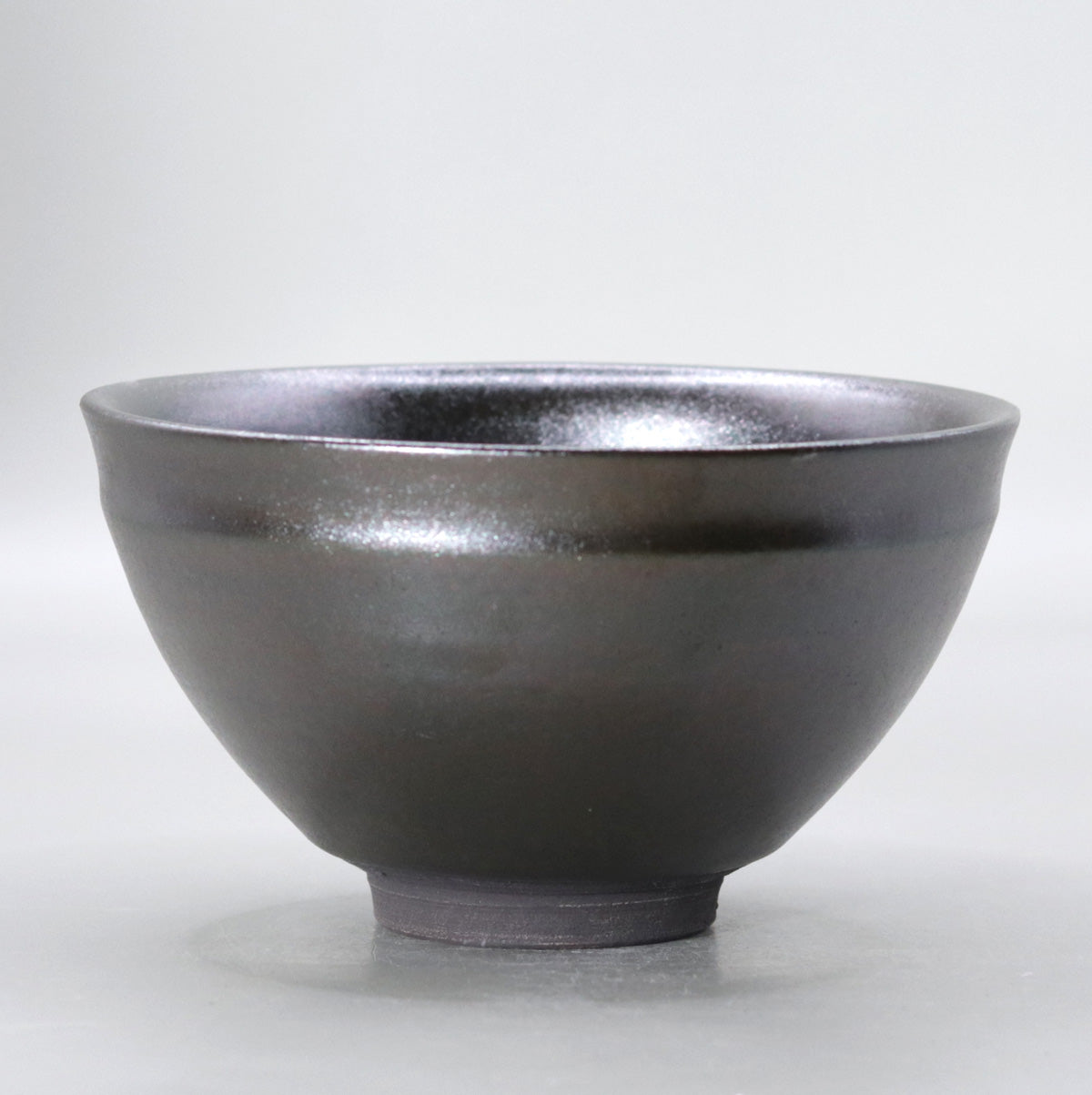
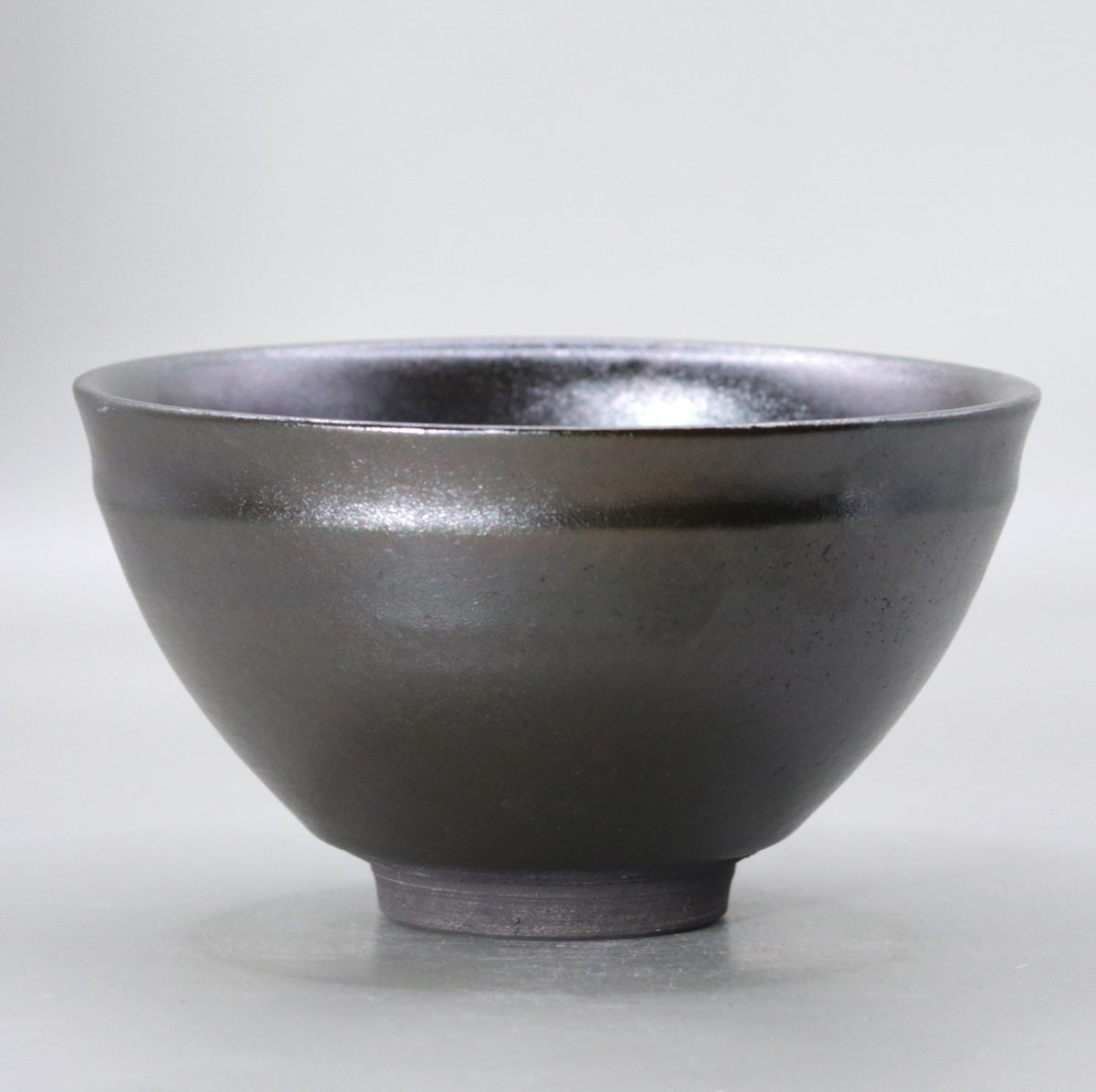
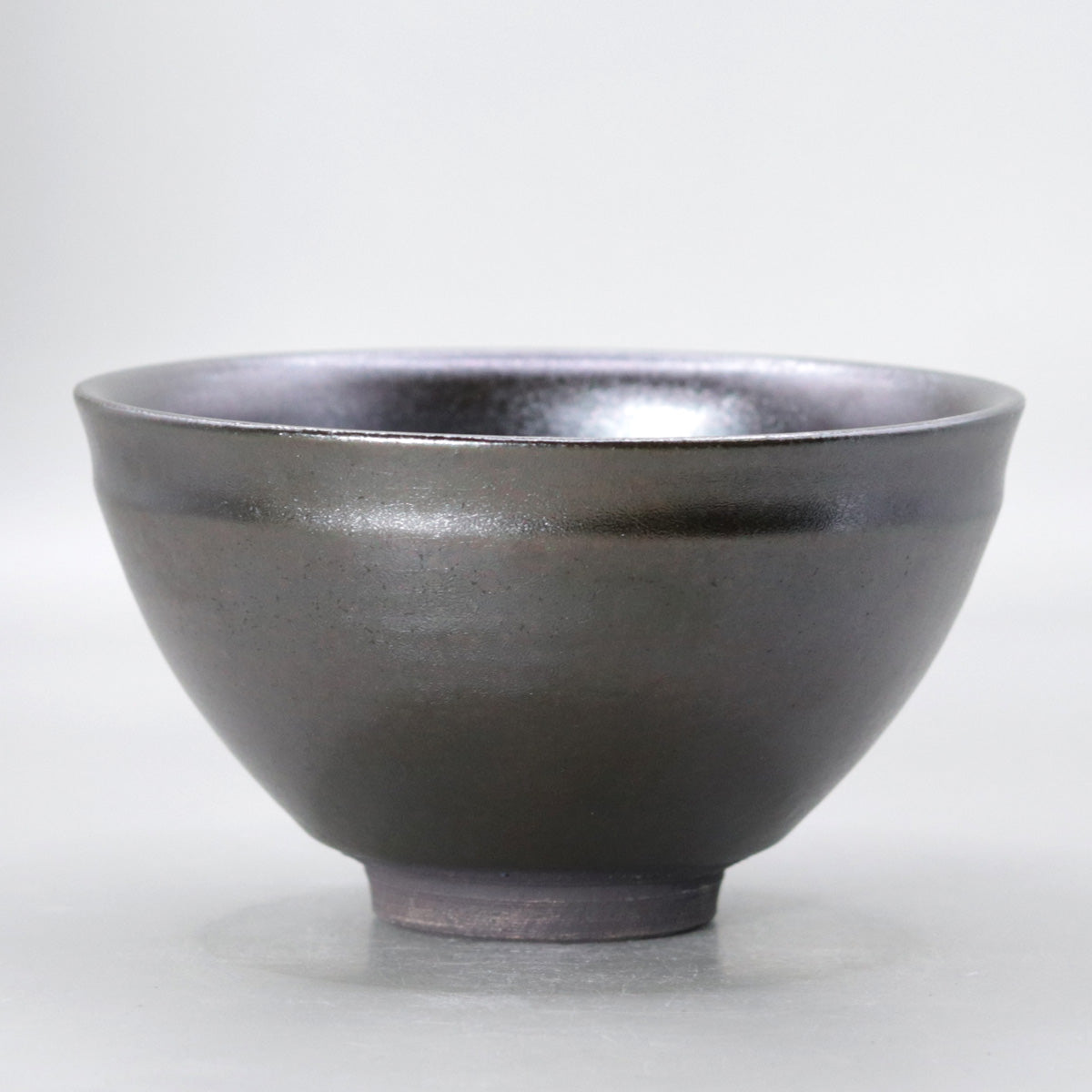
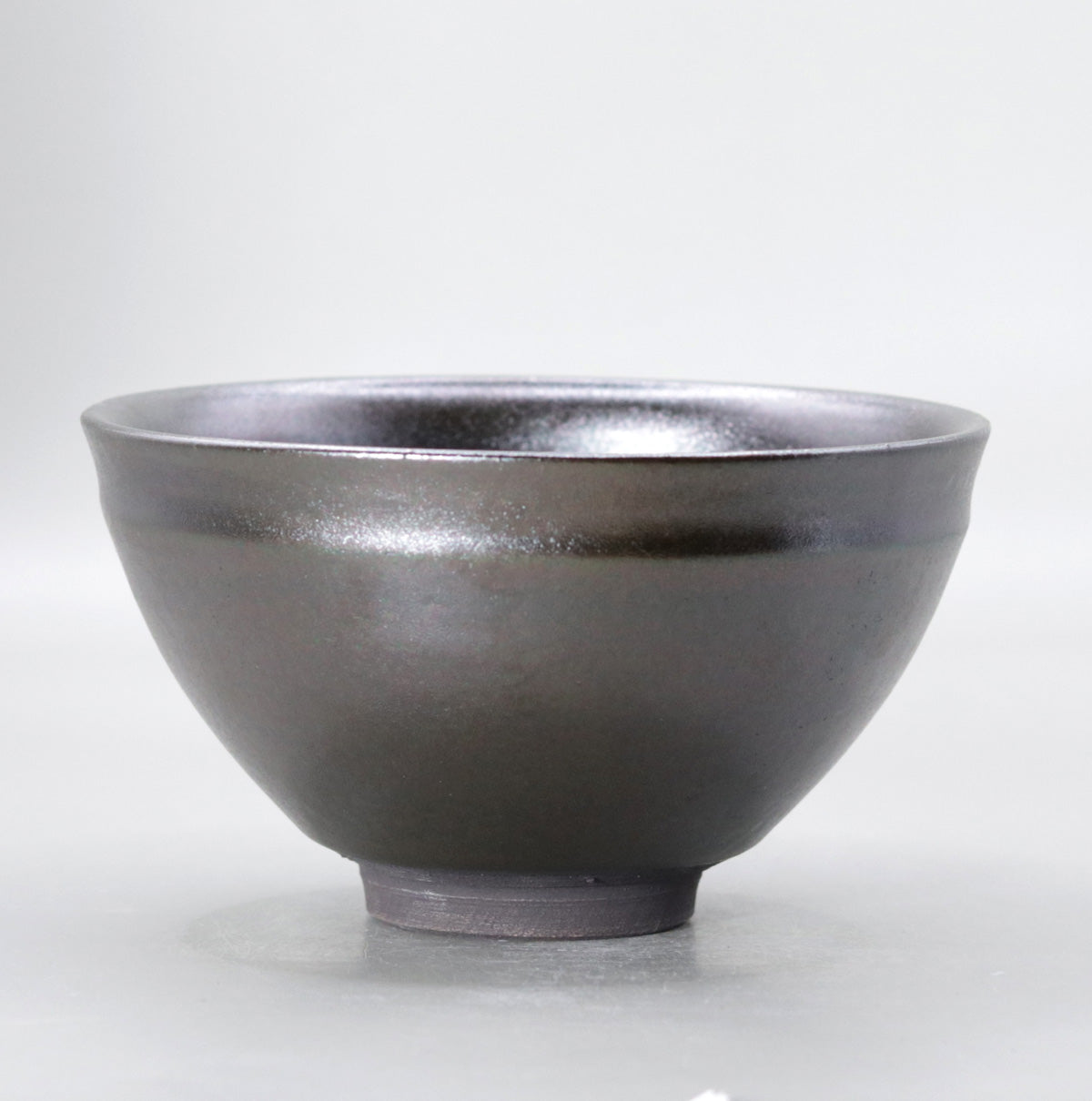
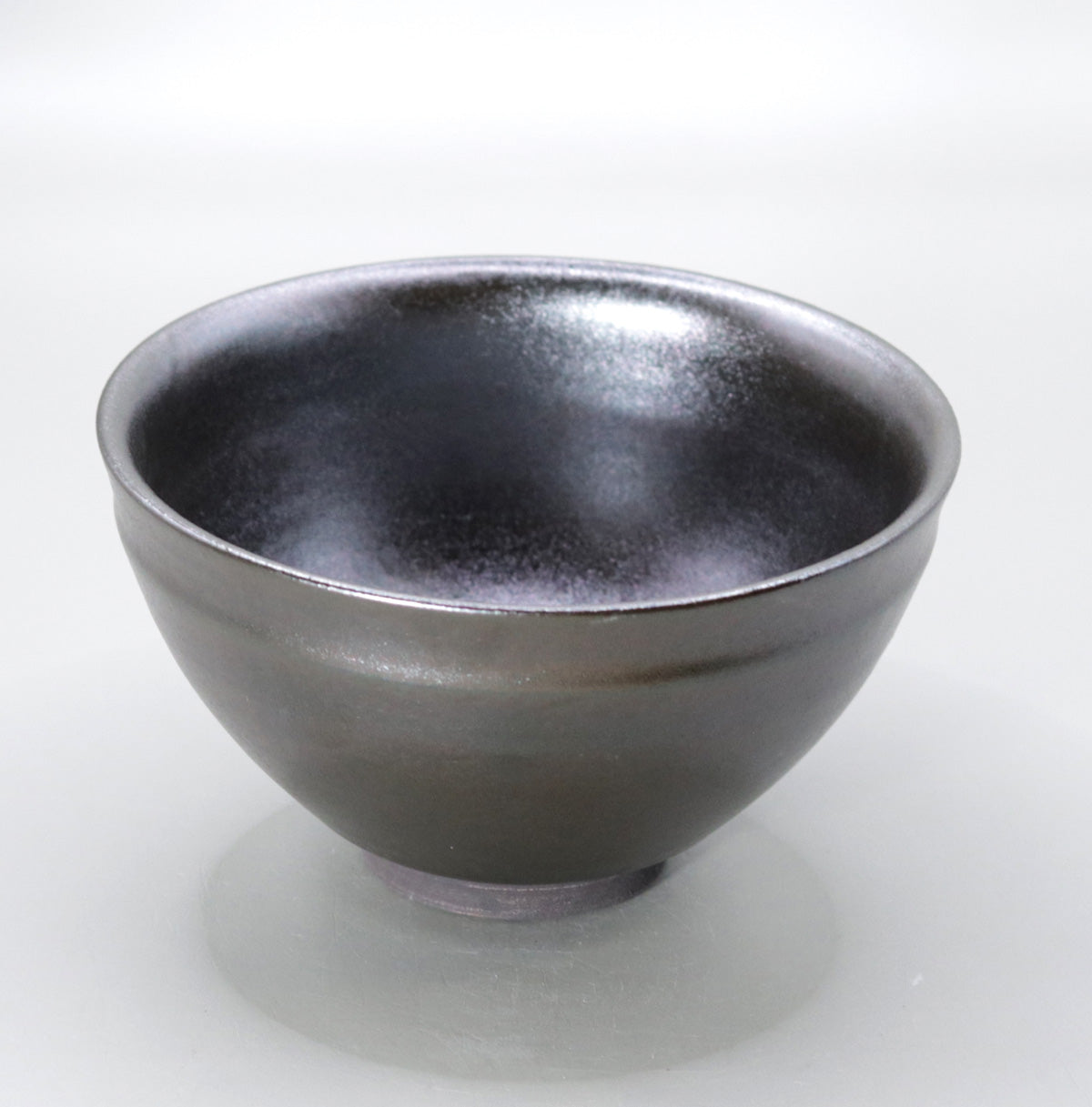
Iron glaze kiln-transformed tea bowl (Tenmoku style) by Okada Yu
Iron glaze kiln-transformed tea bowl (Tenmoku style) by Okada Yu
Couldn't load pickup availability
Width: 13.5cm Height: 7.5cm
Iron-glazed kiln-change tea bowl (Tenmoku style) by Okada Masaru - "The moonlight blends into the still, black surface of the lake, and the eternal history floats."
1. The historical background of Tenmoku tea bowls -- what is "Tenmoku"?
Tenmoku tea bowls (Tenmoku bowls) originated from the black-glazed tea bowls used at temples associated with the sacred mountain "Tianmoku Mountain" in Zhejiang Province, China. During the Song Dynasty (10th to 13th centuries), black glazes containing a high amount of iron were prized for their ability to accentuate the color of white tea, and they were widely produced in various places, including Jian kilns and Jizhou kilns. The oldest documented example of this style is the anecdote about Jianzhan (Jianzhan), recorded by the Northern Song scholar Tao Gu in his "Qingiroku." Tea masters were fascinated by the diverse patterns created by kiln changes, such as yohen (day-changing), oil droplets, kagime (arrow marks), and leaf patterns.
The name "Tenmoku bowl" became established when Zen monks brought these back to Japan along with the tea-drinking culture during the Kamakura period.Tenmoku bowls, with their cylindrical shapes and narrowed mouths, in particular, have excellent heat retention properties and were highly prized for use in tea ceremonies for nobles and for tea ceremonies held on a daisu.
2. The science and beauty of iron glazes: A faint light hidden deep within the black
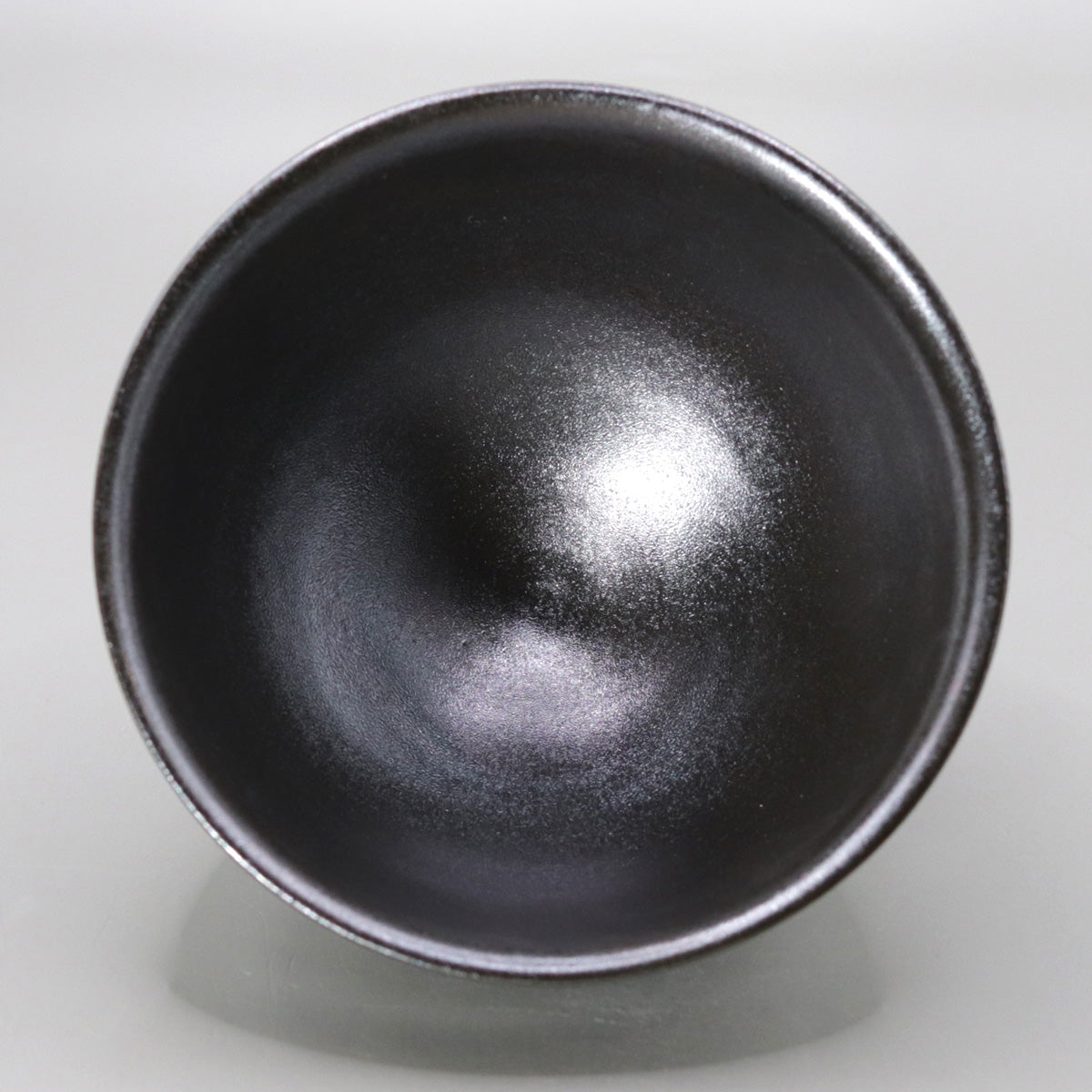
The color of the black glaze is determined by the concentration of iron ions in the glaze. If the iron content is 1-2%, it changes to celadon, and if it is 15% or more, it changes to black porcelain. This piece is glazed with a feldspar and limestone base that contains a high concentration of iron, and the iron is reduced by high-temperature reduction firing to achieve its jet-black "silent black" color.
Due to the kiln changes caused by the position and time difference of the reducing flame, a slight purple-gray band appears in the middle of the body, and depending on the angle, iron crystals that sparkle in dull silver are scattered like stardust. Under LED light, interference light similar to structural color can be seen, creating a depth that goes beyond the solid black color.
3. Design characteristics: Functional beauty brought about by the Tenmoku shape
Lip rim : Gently everted, gently supporting the lips.
Body : A traditional Tenmoku style that gradually narrows from a protruding shape. The slight bulge, reminiscent of the wind blowing along Gojozaka Hill in Kiyomizu, gives the impression of quiet movement.
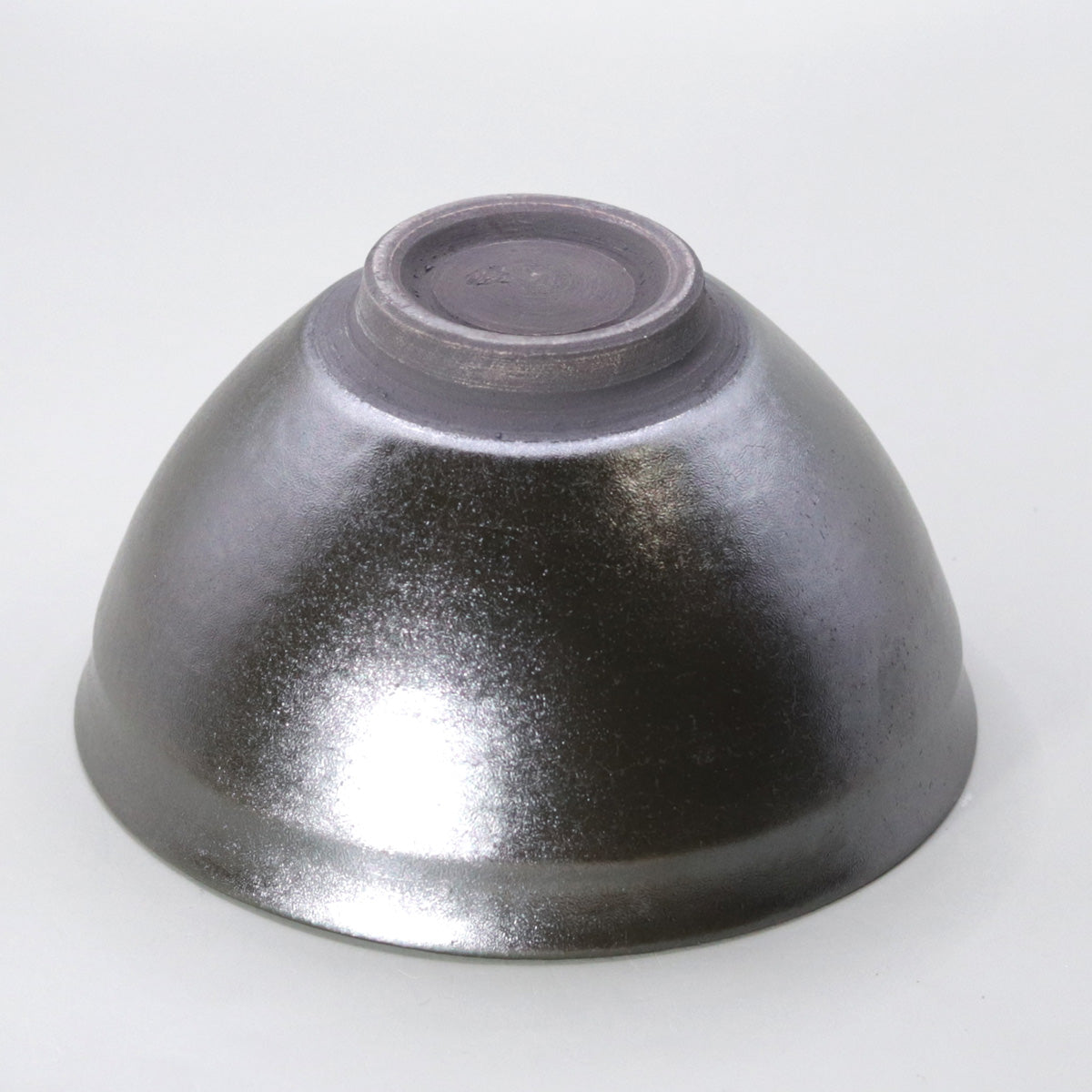
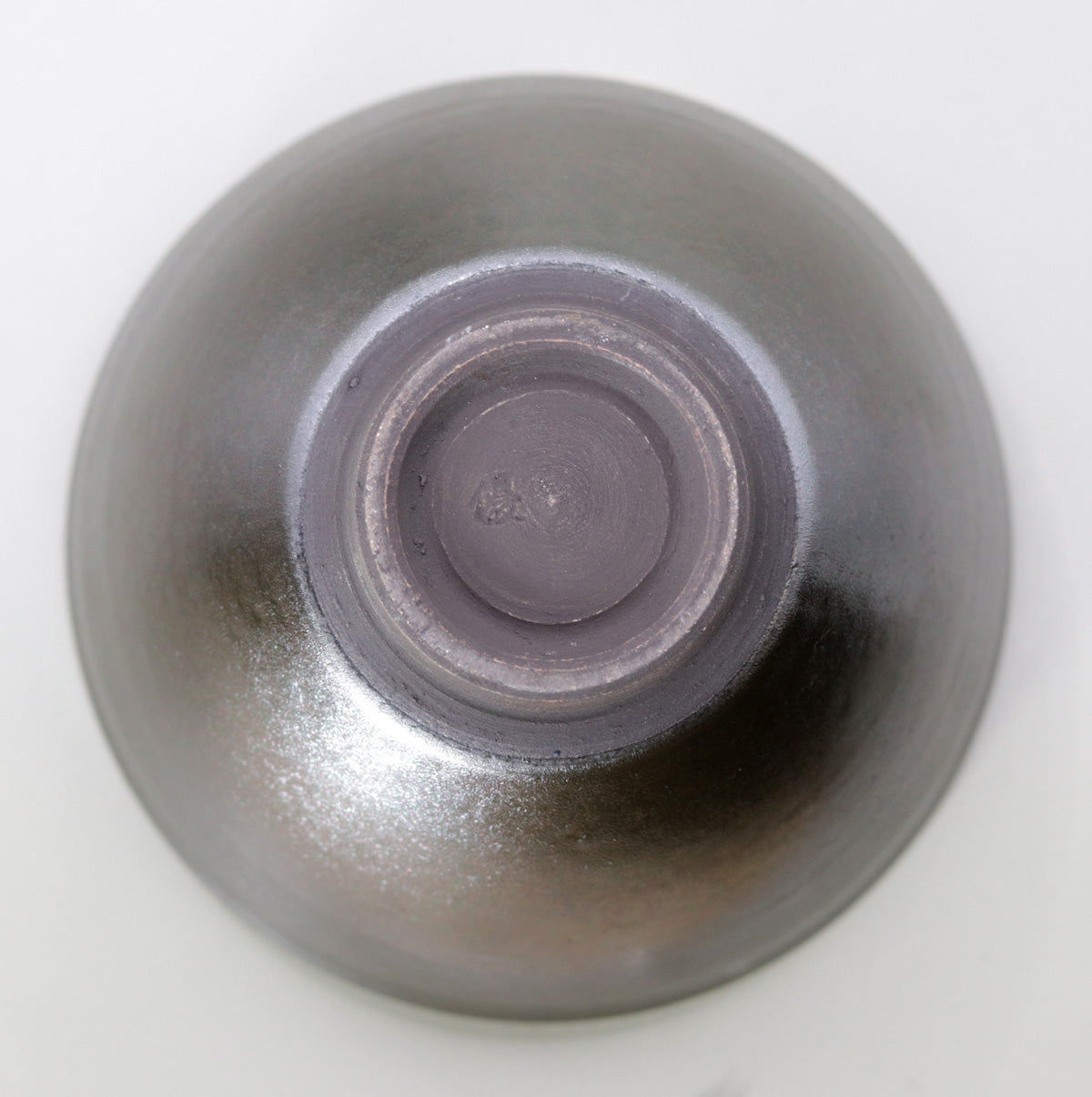
Base : Low and stable, yet balanced weight allows for easy rotation with the wrist. Finished with iron mud decoration resembling the "Oniita" of Seto, it pays homage to the classic Tenmoku style.
4. The hazy sea of clouds depicted by kiln changes
The kiln-changed zones are a cloud-like gradation across the jet-black surface of the vessel. The sudden drop in temperature caused iron to precipitate on the surface, leaving a purple-gray to blue-gray color change. This is reminiscent of the ash-covered Tenmoku pattern seen on Song Dynasty Jian Kiln works, and conveys the true joy of "wood-fired kiln firing," where flames and ash envelop the clay and glaze.
5. Practicality in the palm of your hand: Tea ceremony gestures and scenery development
Uniformity of foam : The center of the teacup is slightly depressed, allowing the whisk to be guided naturally to the center.
Heat retention : The cylindrical body, unique to the Tenmoku shape, slows the drop in water temperature, preserving the flavor of strong tea for longer.
Changes in the scenery : With repeated use, fine tea stains will seep in between the crazing and iron crystals, making the stardust shine even more deeply.
6. Homage to tradition and modern poetry
The black glaze culture that dates back to the Song and Yuan dynasties and the gentle sense of form honed at Kiyomizu Gojozaka. Furthermore, the image of the wind brought by the nature of Uji and Sumiyama - Okada Masaru has condensed these into a single bowl, imbuing it with a modern sculptural quality and poetic sentiment while remaining within the framework of classicism. The deep black of the iron glaze reflects the night sky, and the bands of kiln change reflect the hazy clouds floating on the lake's surface, inviting silence and the passage of time into the palm of your hand.
7. Appreciation and Combination Suggestions
Dark tea : The kiln-changed bands on the foam surface emit a faint light, creating the image of the moon setting over a dark lake.
Usucha : The pale green of the matcha stands out against the jet black glaze, embodying the beauty of praise of shadows.
Tenmokudai : You can add a touch of elegance by combining it with a plain black lacquer base or a base decorated with mother-of-pearl.
Light source : Under the warm light of a lantern or candle, the purple-gray gradation softly emerges, while under the white light of an LED, the iron crystals take on a sharp silvery hue.
Conclusion
The long lineage from the Song Dynasty kilns in China to Seto Tenmoku, reflecting this distant flow in the present, while at the same time creating new scenes carved by the flames of the coal mines - the **Iron Glazed Kiln-Changed Tea Bowl (Tenmoku Style)** breathes at the intersection of timeless history and modern sensibilities. When you hold it in your palm and gently turn it, the shadows flicker and the aroma of tea rises, and the bowl becomes more than just a container, becoming a "companion" that will mark the passage of time with you.
Share


-
[I will send it to you quickly and carefully]
We carefully package each product in a way that suits it best.
Also, delivery times vary depending on the piece (vessel, etc.).
Items that already come with a box will be shipped within 1-3 days of the order date.
For items that require a box to be made after your order, it will take approximately 30 days for production to be completed and then shipped.
In either case, once we have confirmed your order, we will contact you by email to inform you of the delivery date.
-
[Requests when purchasing pottery]
Even products that look the same may differ slightly in color, shape, size, etc.
The way the glaze is used, the power of the kiln, the firing method, the season, and the humidity also affect the appearance of the pottery.
Please understand the individuality of each piece of pottery and enjoy the unique warmth of handmade.