
Straw white glaze tea bowl Nishidansei
Straw white glaze tea bowl Nishidansei
Couldn't load pickup availability
Width: 13.5cm Depth: 15.0cm Height: 9.2cm
The drama of dripping straw white glaze
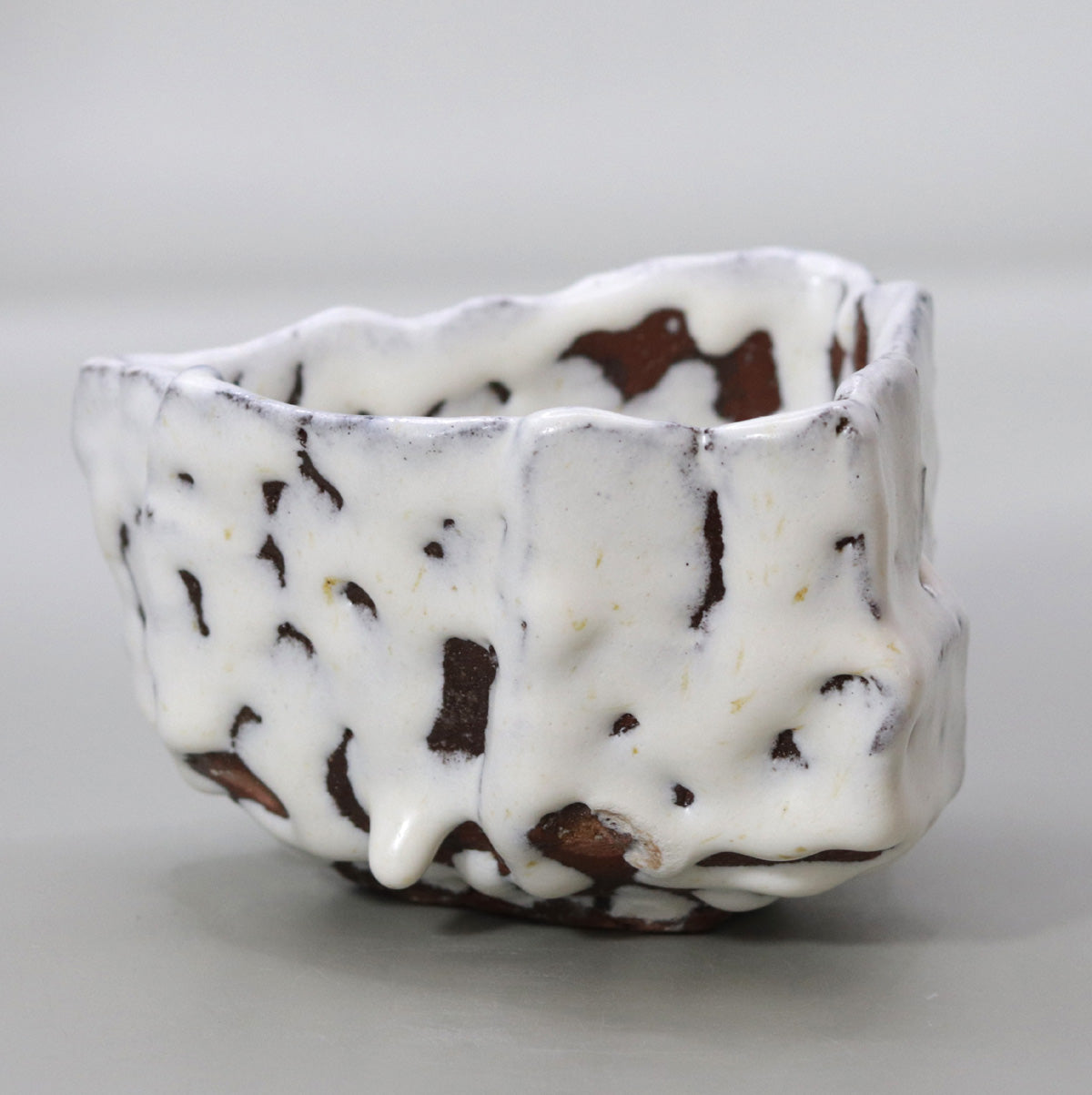
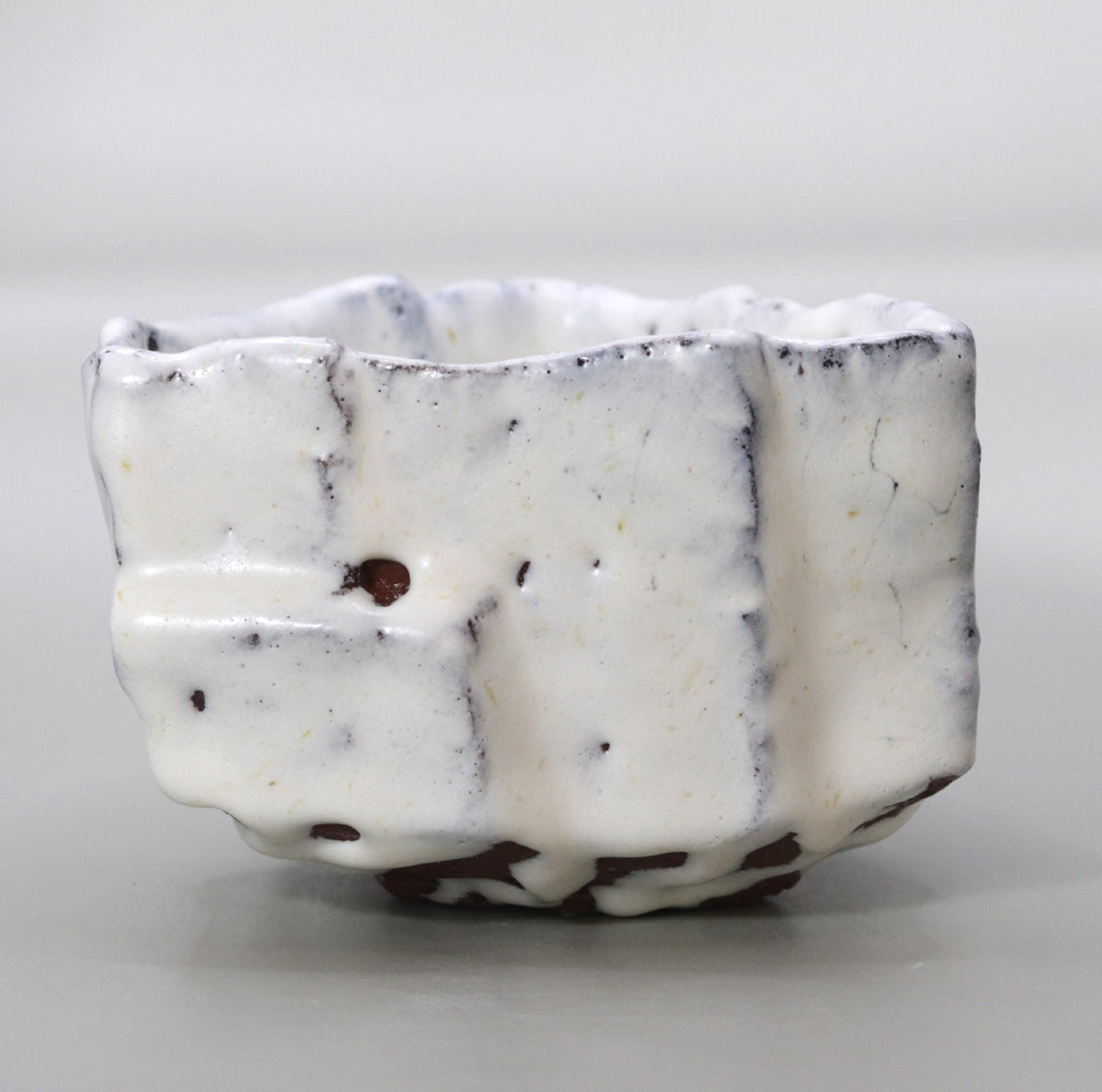
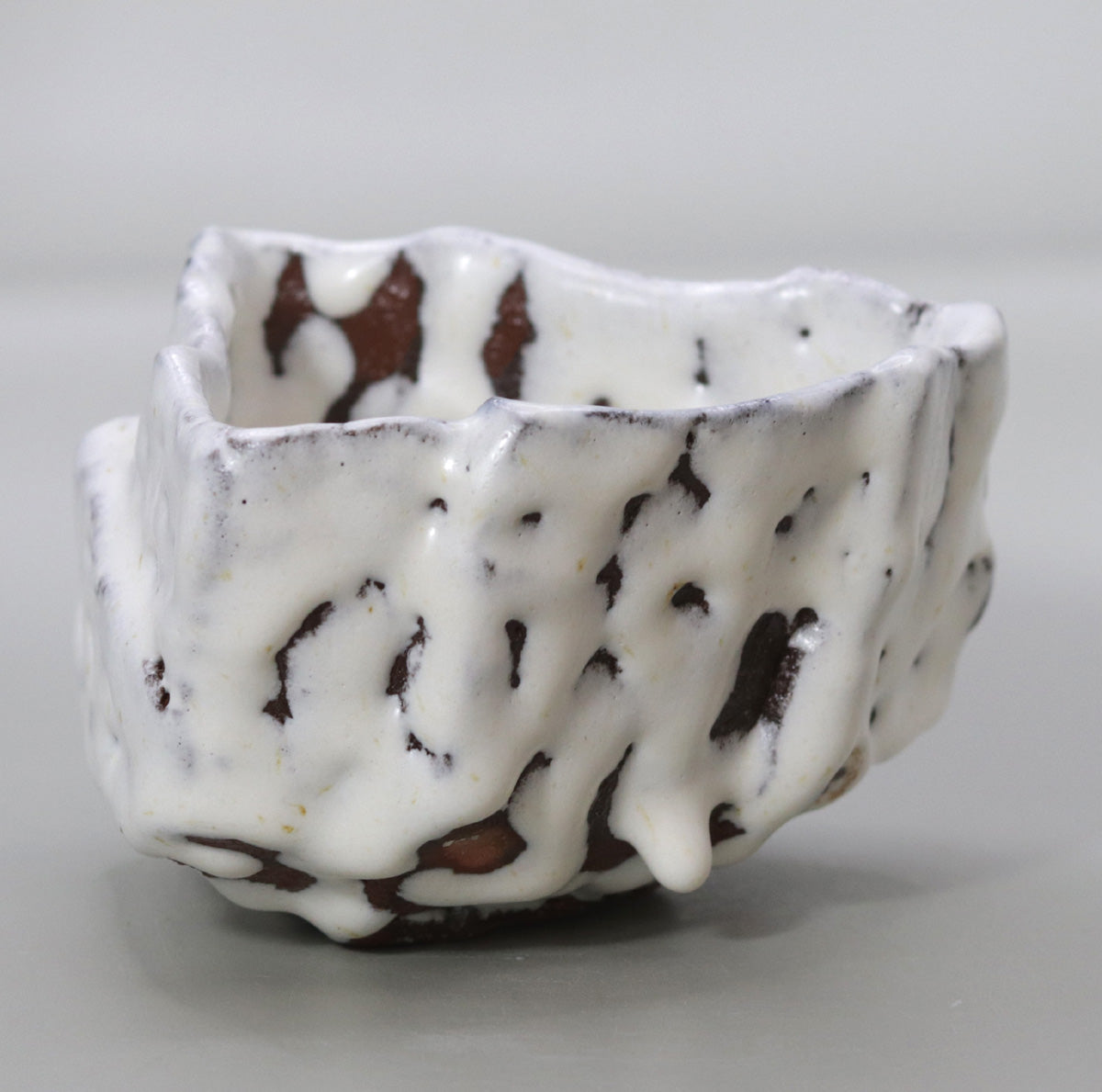
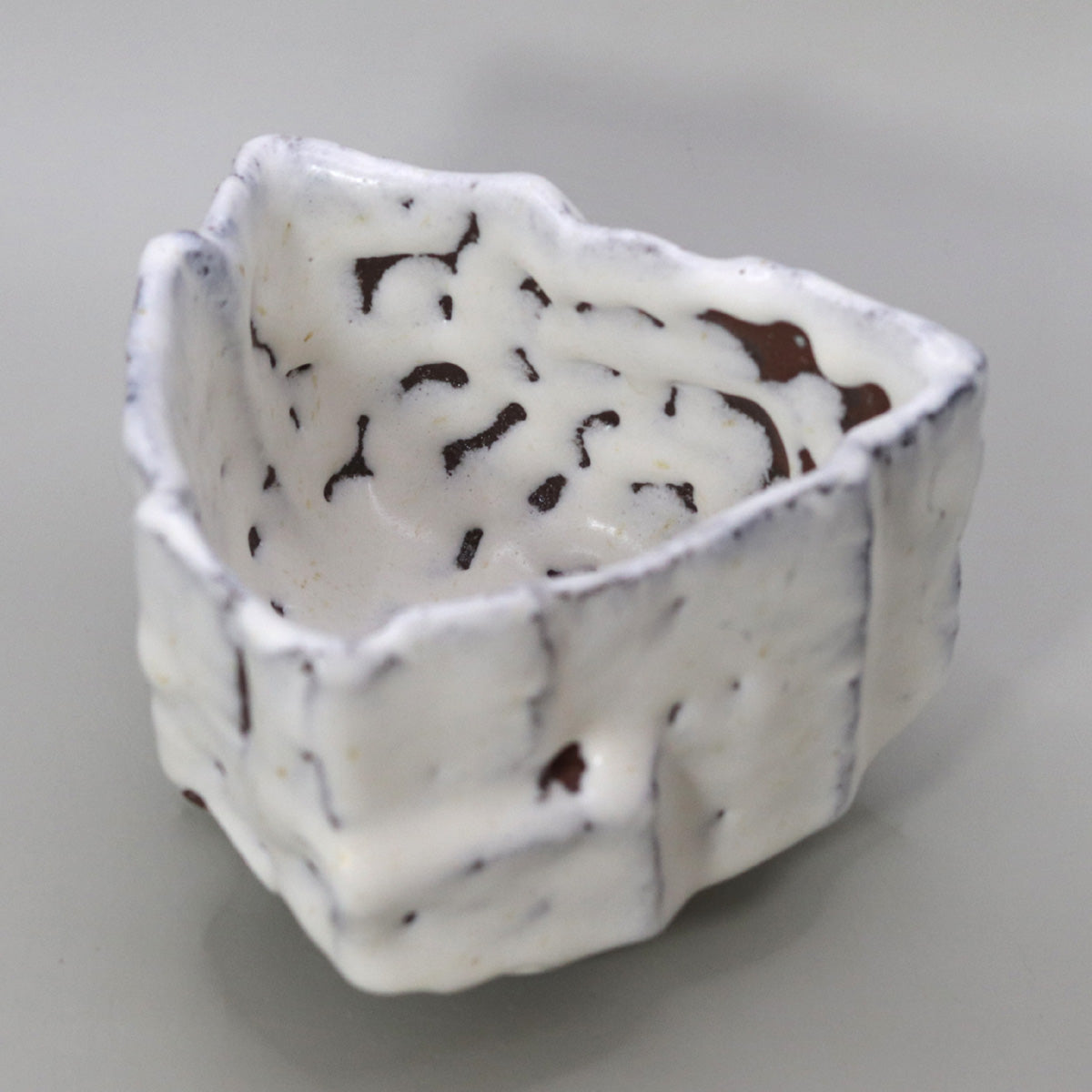
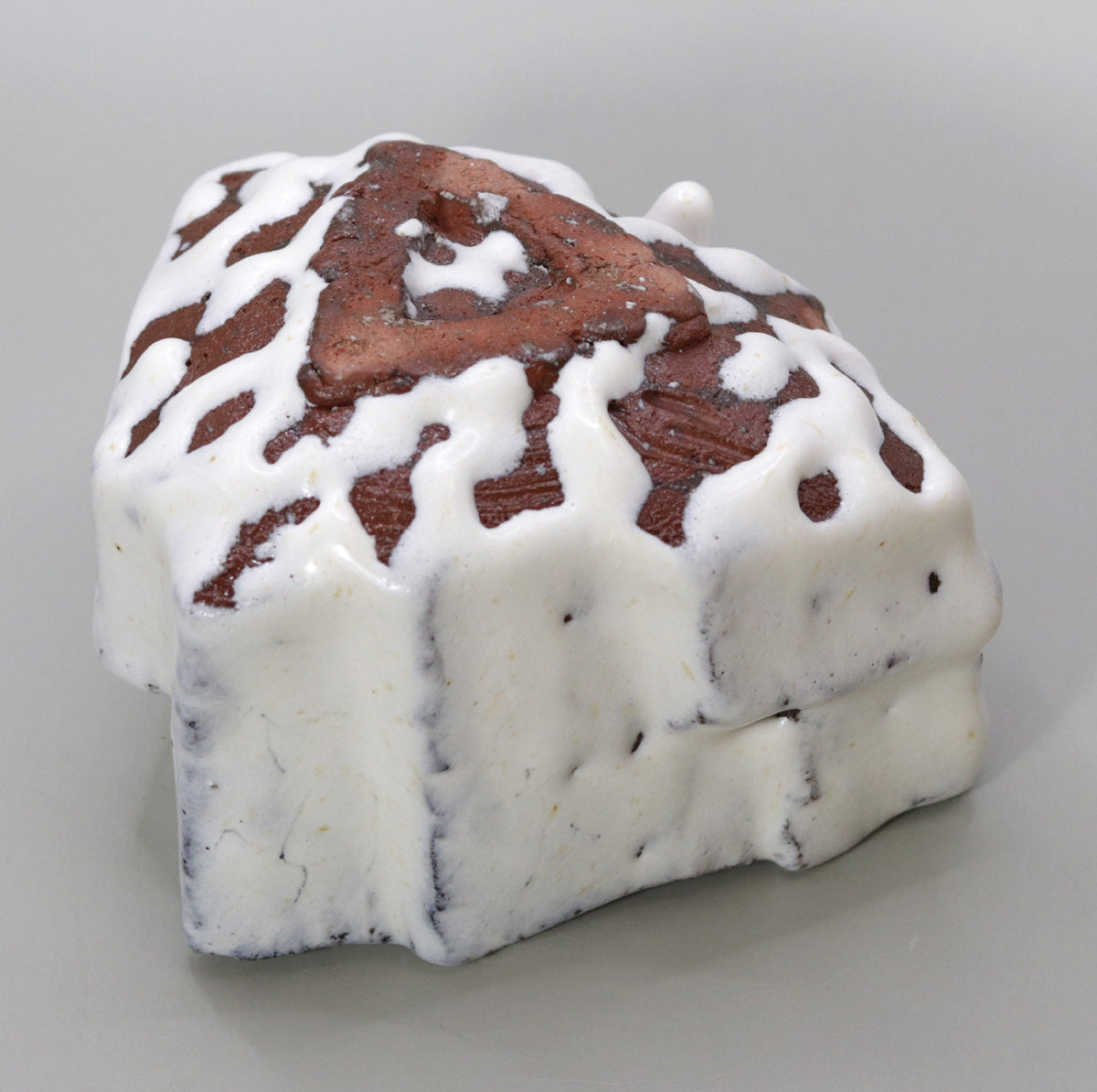
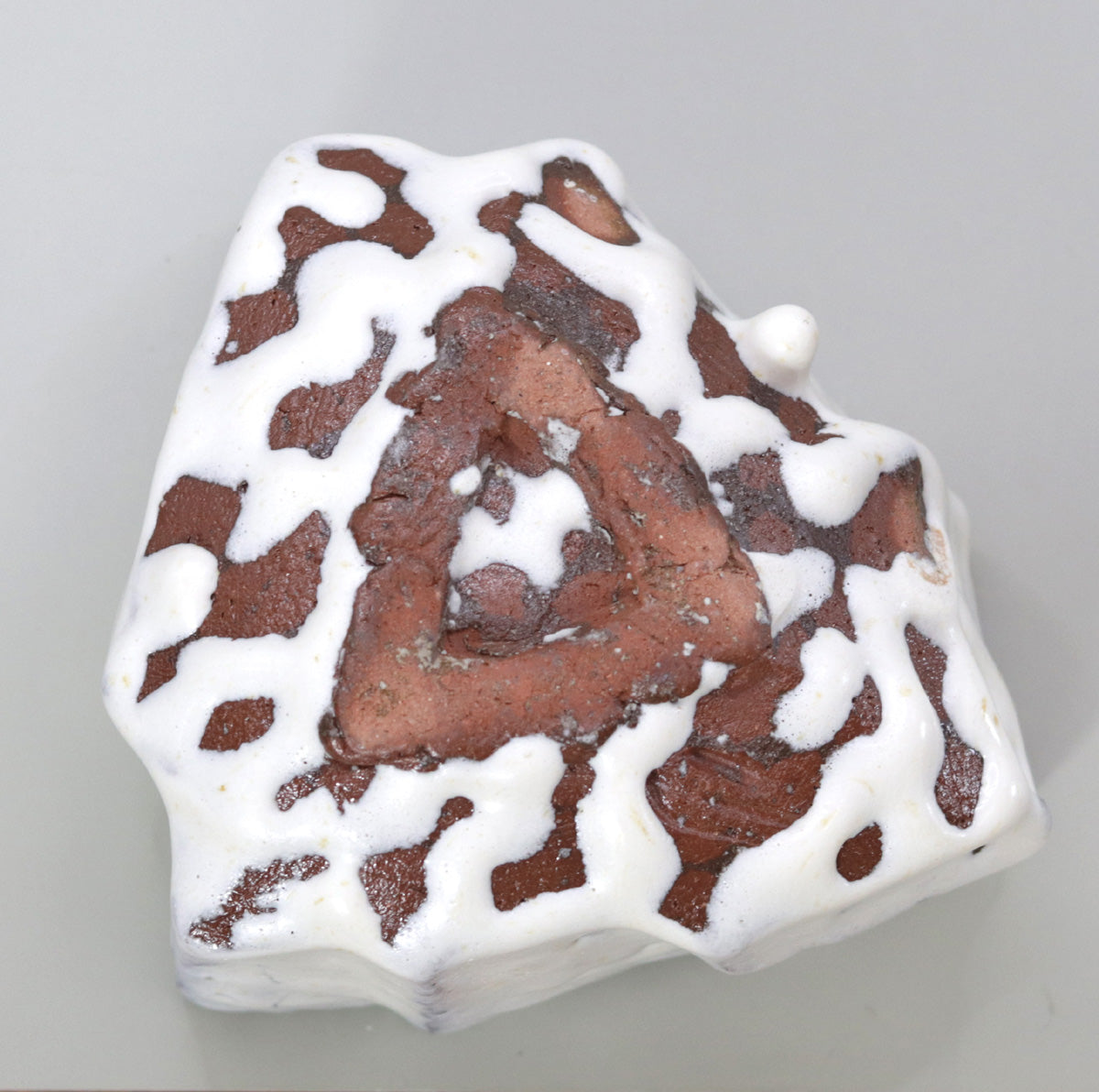
The greatest highlight of this work is the thick layer of straw-white glaze that flows slowly down the exterior wall, creating a scene that looks like meltwater frozen at the moment it runs down the rock surface. The soft white color derived from straw ash allows the reddish-brown base to show through in places, creating complex shades and shadows. The unevenness naturally created by the sliding glaze represents a struggle between chance and necessity, and acts as improvised brushstrokes painted by flame, heightening the visual tension.
Swaying ridgelines in all directions - a sculptural form
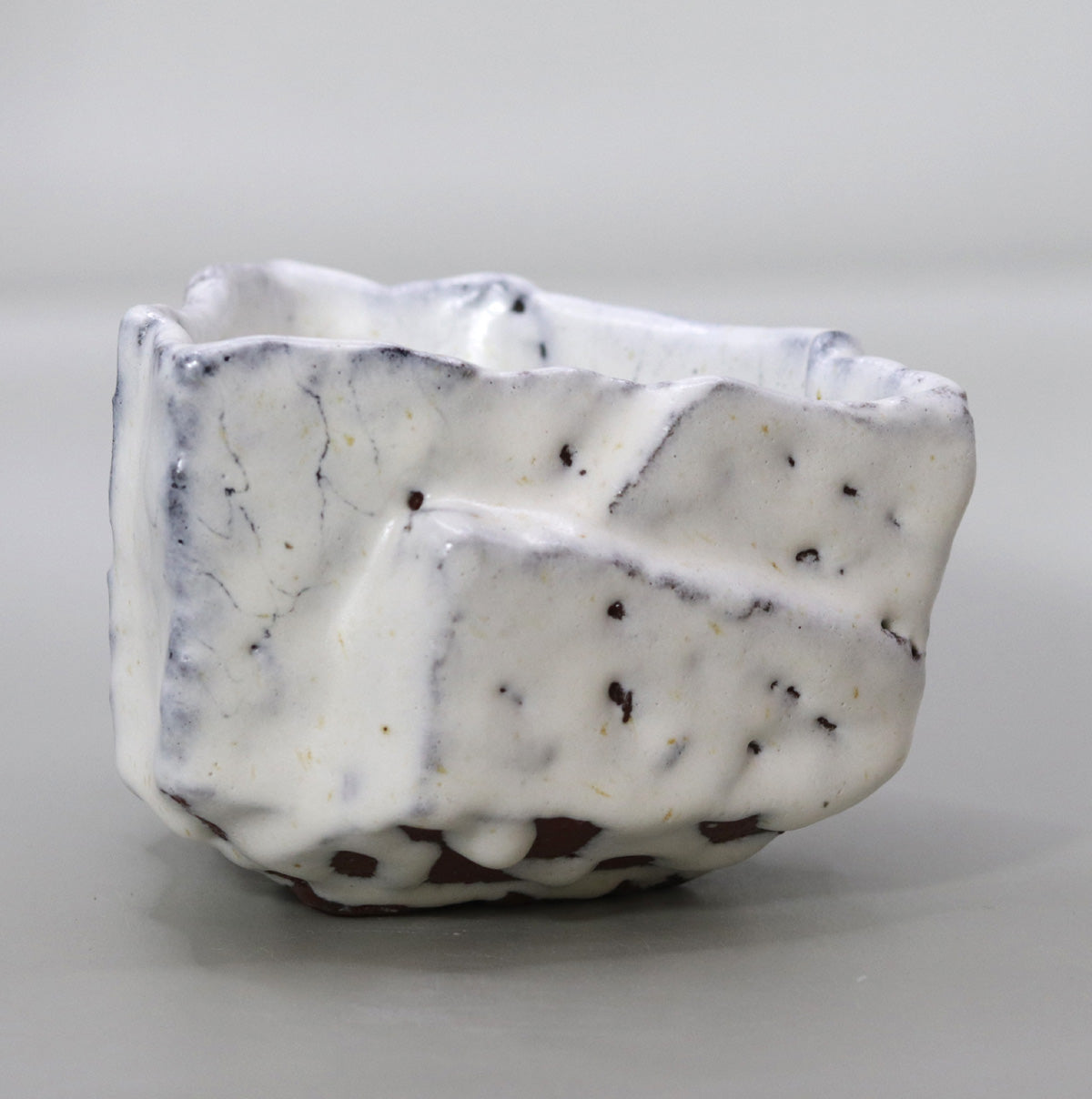
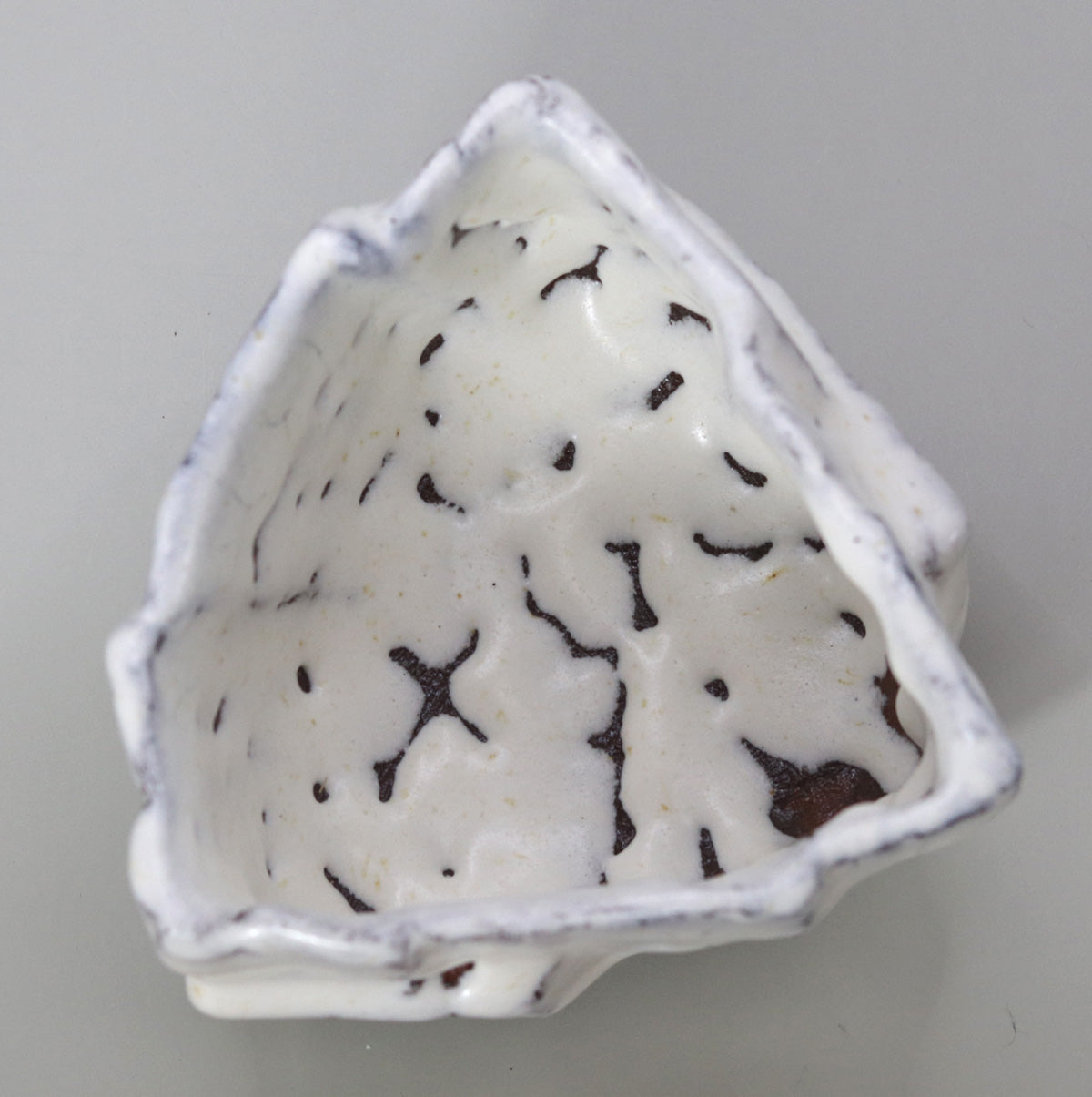
While the overall shape is roughly square, the corners are gently pushed out and the edges sway like waves. The sharp angles and curved ridges create a strong contrast depending on how the light hits them, and a new look emerges every time you turn the vessel. When you hold it in your palm, the chamfers on all four sides rest comfortably on your fingers, creating a wonderful balance between visual boldness and practical stability.
The wonderful texture of red clay
The strong reddish Tamba clay used for the base peeks through the thin areas of the glaze and the gaps in the cracks, creating an even more striking contrast with the white glaze. The iron in the clay combines with the flame to produce a dark brown color, scattering dots across the snow-white surface, giving it a rustic feel reminiscent of sparks dancing in a forest at night. The pools, shrinkage, and bubble marks of the glaze visible near the base are "proof of the kiln change" that capture the moment when the clay and glaze come together at high temperature, breathing life into the vessel.
Functional beauty as tea ceremony utensils
The gently undulating rim provides a soft feel in the mouth, and the ample depth ensures smooth movement of the chasen. The thick body gently transfers heat, keeping even hot, strong tea at a comfortable temperature in the palm of your hand. The base is cut low, so it doesn't wobble on the table, making it a comfortable fit for modern, casual tea gatherings.
The intersection of tradition and innovation
White straw ash glaze has been a familiar material since ancient times in Shino and ash-glazed ware, but Nishibata Tadashi has chosen to apply it thickly to red clay, bringing to the forefront the dynamic feel of the drips, thereby breaking new ground in Tamba ware. The unique character of this piece is the way in which the traditional earthenware taste and innovative design coexist while competing with each other.
A landscape that grows with time
With repeated use, the delicate crazing will gradually take on tea, adding a warmth to the contrast between the white and red clay. The tea stains that remain in the valleys of the dripping glaze will take on a color like young grass sprouting on a mountainside after the snow has melted, imprinting the years of its owner on the vessel.
This straw-glazed tea bowl reflects motion through the dripping thick glaze, while the exposed red clay reflects stillness. It evokes the image of snow, earth, and the gentle breeze of spring in the palm of your hand, and is a treasured piece that will add a rich story to your once-in-a-lifetime tea ceremony.
Tadashi Nishibata Biography
Born on February 24, 1948. Started making pottery in 1969. 1976. Hyogo Prefectural Exhibition Encouragement Award. 1986. Selected for the Japan Traditional Crafts Exhibition for the first time. 1988. Selected for the Japan Traditional Crafts Exhibition. Japan Traditional Crafts Exhibition. Japan Crafts Association President's Award. 1989. Selected for the Japan Ceramic Art Exhibition. Nogawa Memorial Award, Handon no Kai. 1991. Selected for the Japan Traditional Crafts Exhibition. Selected for the Japan Ceramic Art Exhibition. Grand Prize at the Tea Ceremony Forms Exhibition. 1992. Selected for the Japan Traditional Crafts Exhibition. Excellence Award at the Tea Ceremony Forms Exhibition. Hyogo Prefecture Emerging Artist Encouragement Award. Invited to exhibit at the NHK-sponsored Paris - 100 Contemporary Japanese Ceramics Exhibition. Excellence Award at the Tea Ceremony Forms Exhibition. 1993. Selected for the Japan Traditional Crafts Exhibition. Solo exhibition at Sogo Hiroshima store. Kyoto Chemin. 1994. Selected for the Japan Traditional Crafts Exhibition. Solo exhibition at Nihonbashi Mitsukoshi Main Store. 1995. Selected for the Japan Traditional Crafts Exhibition. Solo exhibition at Sogo Hiroshima store. 1996. Selected for the Japan Traditional Crafts Exhibition. Awarded the Excellence Award at the Tea Ceremony Design Exhibition, solo exhibition at Nihonbashi Mitsukoshi Main Store
1997 Encouragement Award at the Tea Ceremony Design Exhibition 1998 Selected for the Japan Traditional Crafts Exhibition Solo exhibition at Mitsukoshi Nihonbashi Main Store Selected for the Japan Traditional Crafts Exhibition 2000 Solo exhibition at Mitsukoshi Nihonbashi Main Store Solo exhibition at Mitsukoshi Fukuoka 2001 Selected for the Japan Traditional Crafts Exhibition 2002 Solo exhibition at Mitsukoshi Nihonbashi Main Store Solo exhibition at Gallery Dojima 2003 Solo exhibition at Touchingston, USA 2004 Grand Prize at the Tea Ceremony Design Exhibition at Sogo Hiroshima 2005 Exhibited at the Akashi City Museum of Culture and Hyogo Ceramics Exhibition Purchase of Akadobedai, Hyogo Ceramic Art Museum Solo exhibition at Gallery Dojima, Mitsukoshi Nihonbashi Main Store 2006 Grand Prize at the Tea Ceremony Design Exhibition Selected for the Japan Traditional Crafts Exhibition at the Museum of Fine Arts, Boston and the New York Japan Society Gallery Solo exhibition at Yokohama Takashimaya Touchingston, USA Father and Son Exhibition at Matsuyama Takashimaya Toshunkai Exhibition, Sogo Yokohama. Encouragement Award at the Tea Ceremony Art Exhibition. Selected for the Japan Traditional Crafts Exhibition in 2008. Selected for the Japan Traditional Crafts Exhibition. Solo Exhibition, Yokohama Takashimaya, Mitsukoshi Nihombashi, Santa Fe, Touchingston, USA. Toshunkai Exhibition, Funabashi, Seibu, Sogo Hiroshima. Invited to the Japanese Ceramics Exhibition in 2009. Solo Exhibition, Gallery Dojima, Sendai Mitsukoshi, 2010. Sogo Kobe. Exhibited in the Musee Tomo Grand Prize Exhibition, Contemporary Tea. Solo Exhibition, Yokohama Takashimaya, Touchingston, USA. Invited to the Japanese Ceramics Exhibition. Solo Exhibition, Joan B. Marvis, New York, USA. Invited to the Japanese Ceramics Exhibition in 2013. Exhibited in the "Contemporary Famous Bowls" exhibition at the Musee Tomo, Kanmi Kikuchi Memorial. Solo Exhibition, Mitsukoshi Nihombashi, Santa Fe, Touchingston, USA. Gallery Miyazaki, Sogo Kobe, Chiba Sogo, 2014. Solo Exhibition, Mitsukoshi Nihombashi, 2015. Received the Hyogo Prefecture Cultural Award in 2016. Exhibited at Higashihiroshima City Museum of Art for "Ceramics that Color Our Lives - Food Ware" Exhibited at Joan B. Marvis' 40th Anniversary Exhibition in 2017.
2018 Solo Exhibition at Nihonbashi Mitsukoshi Main Store
Share
-
[I will send it to you quickly and carefully]
We carefully package each product in a way that suits it best.
Also, delivery times vary depending on the piece (vessel, etc.).
Items that already come with a box will be shipped within 1-3 days of the order date.
For items that require a box to be made after your order, it will take approximately 30 days for production to be completed and then shipped.
In either case, once we have confirmed your order, we will contact you by email to inform you of the delivery date.
-
[Requests when purchasing pottery]
Even products that look the same may differ slightly in color, shape, size, etc.
The way the glaze is used, the power of the kiln, the firing method, the season, and the humidity also affect the appearance of the pottery.
Please understand the individuality of each piece of pottery and enjoy the unique warmth of handmade.