
Tea bowl with gosu painting of the Seven Lucky Gods by Dohachi Takahashi
Tea bowl with gosu painting of the Seven Lucky Gods by Dohachi Takahashi
Couldn't load pickup availability
Width: 12.3cm Height: 8.94cm
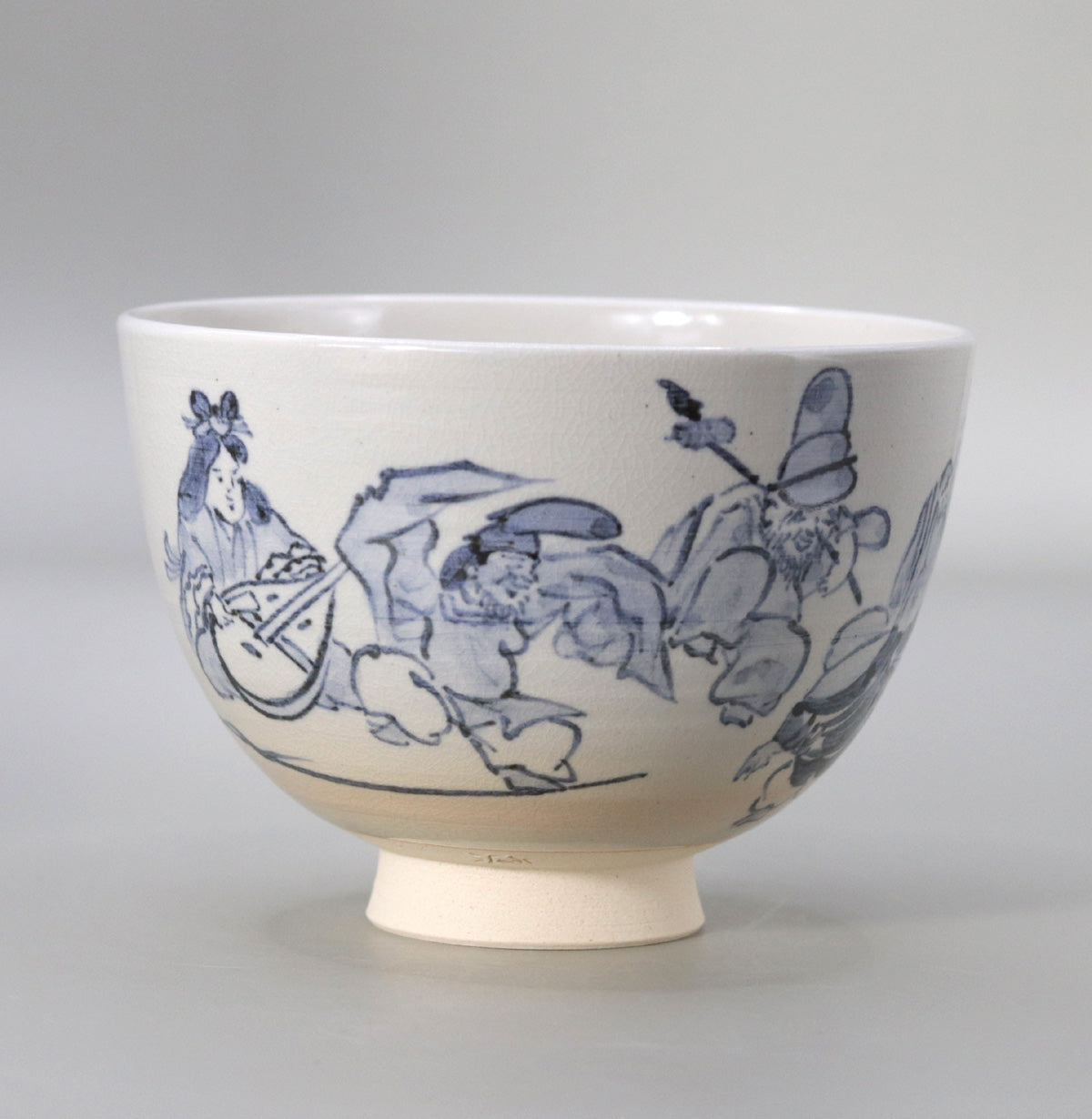
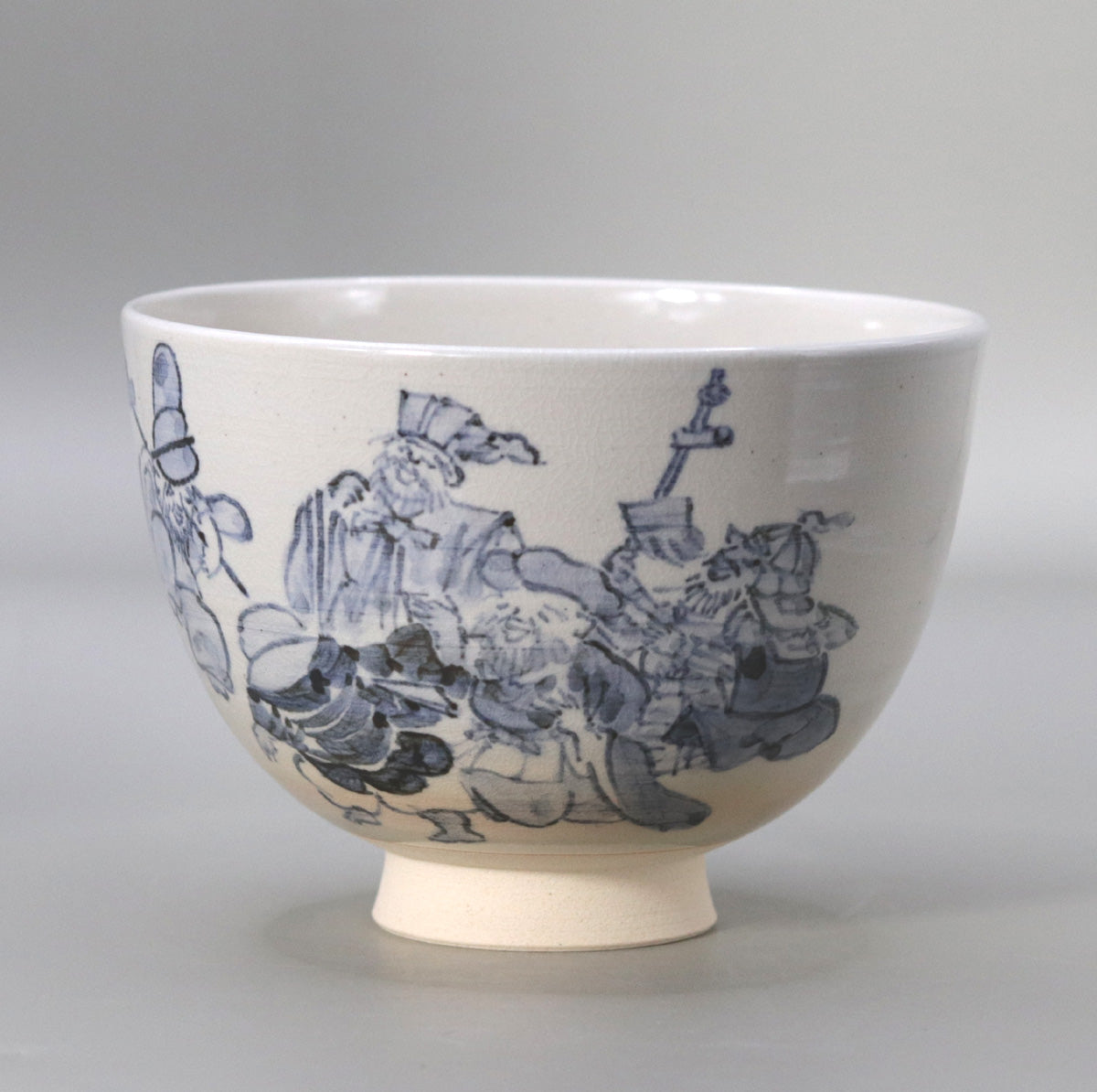
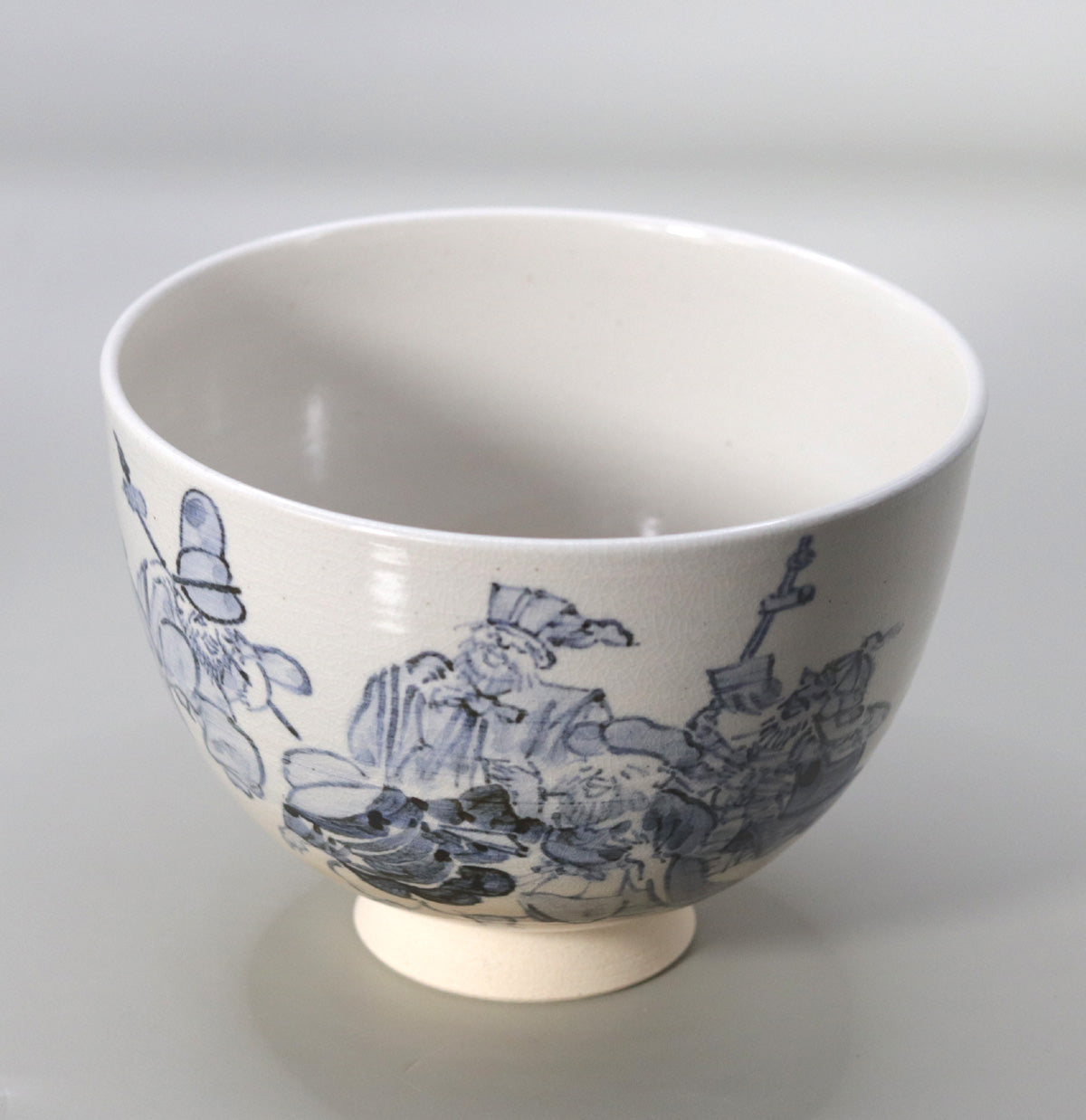
This work, with the Seven Gods of Fortune lightly painted in pale blue gosu on a soft gray glaze , is a celebratory masterpiece that embodies the symbols of prosperity and happiness in a single bowl. Below, we will explain its appeal and the background of its design from five perspectives.
A dignified base and a body that feels like it's embracing
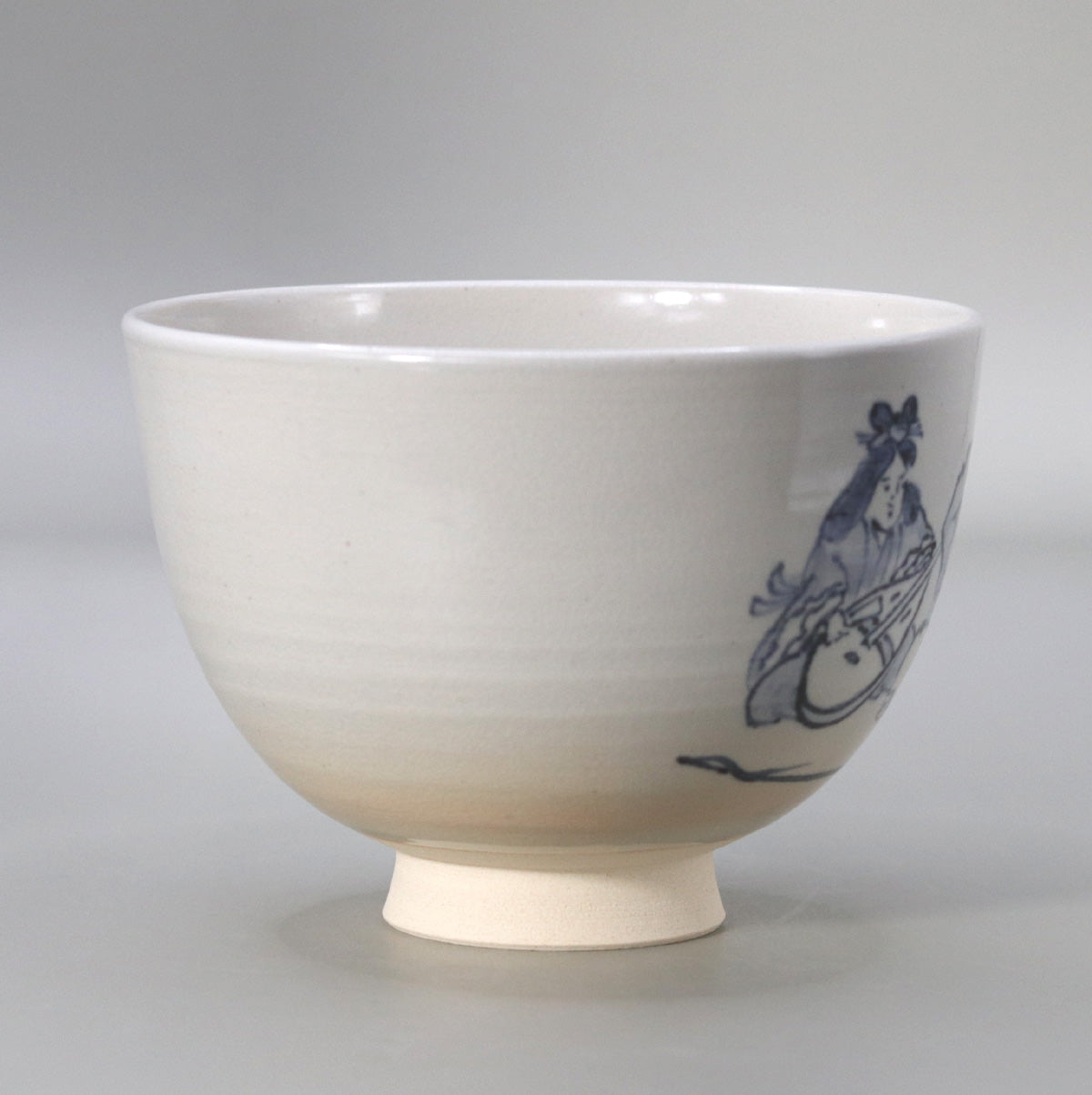
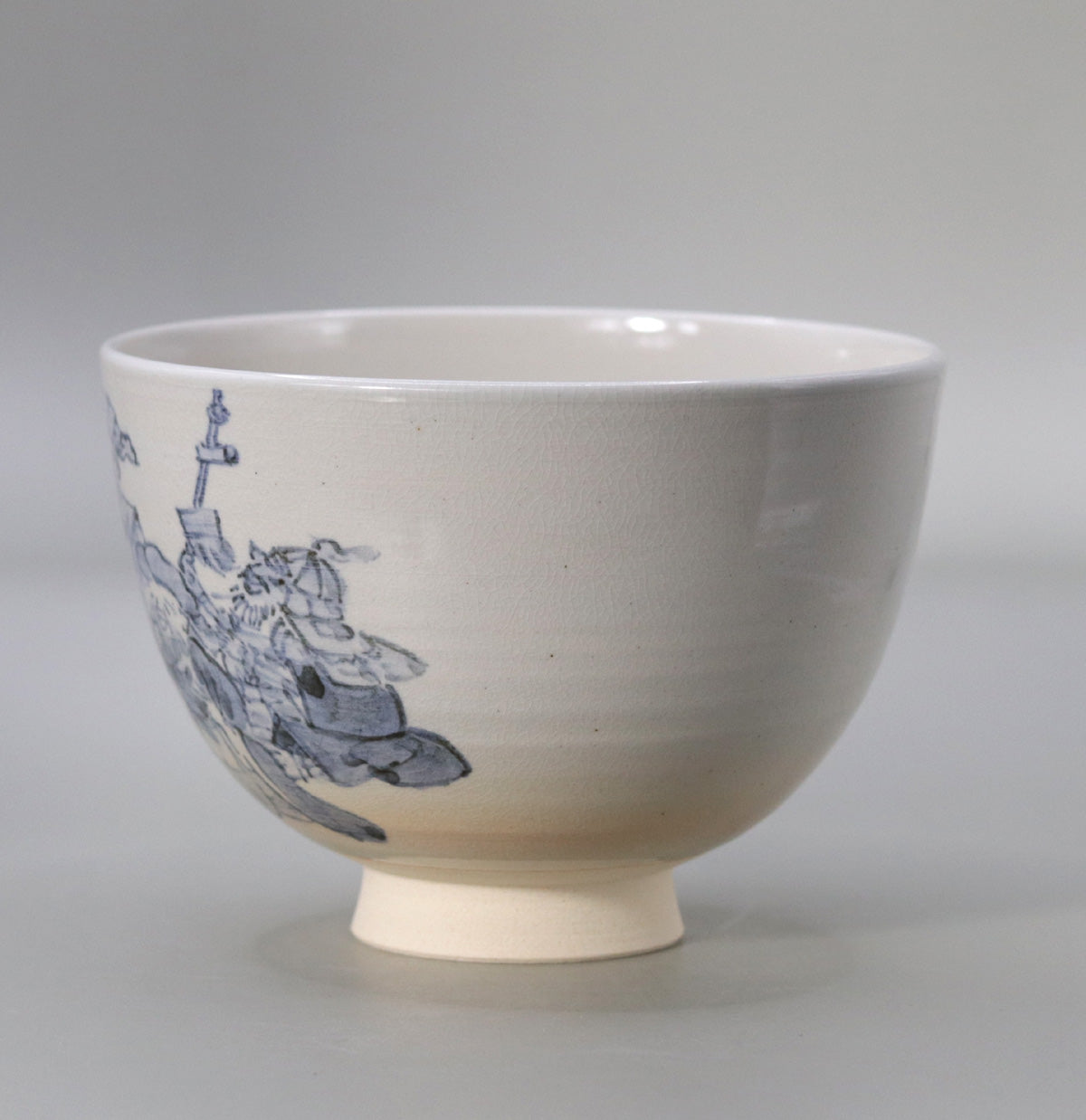
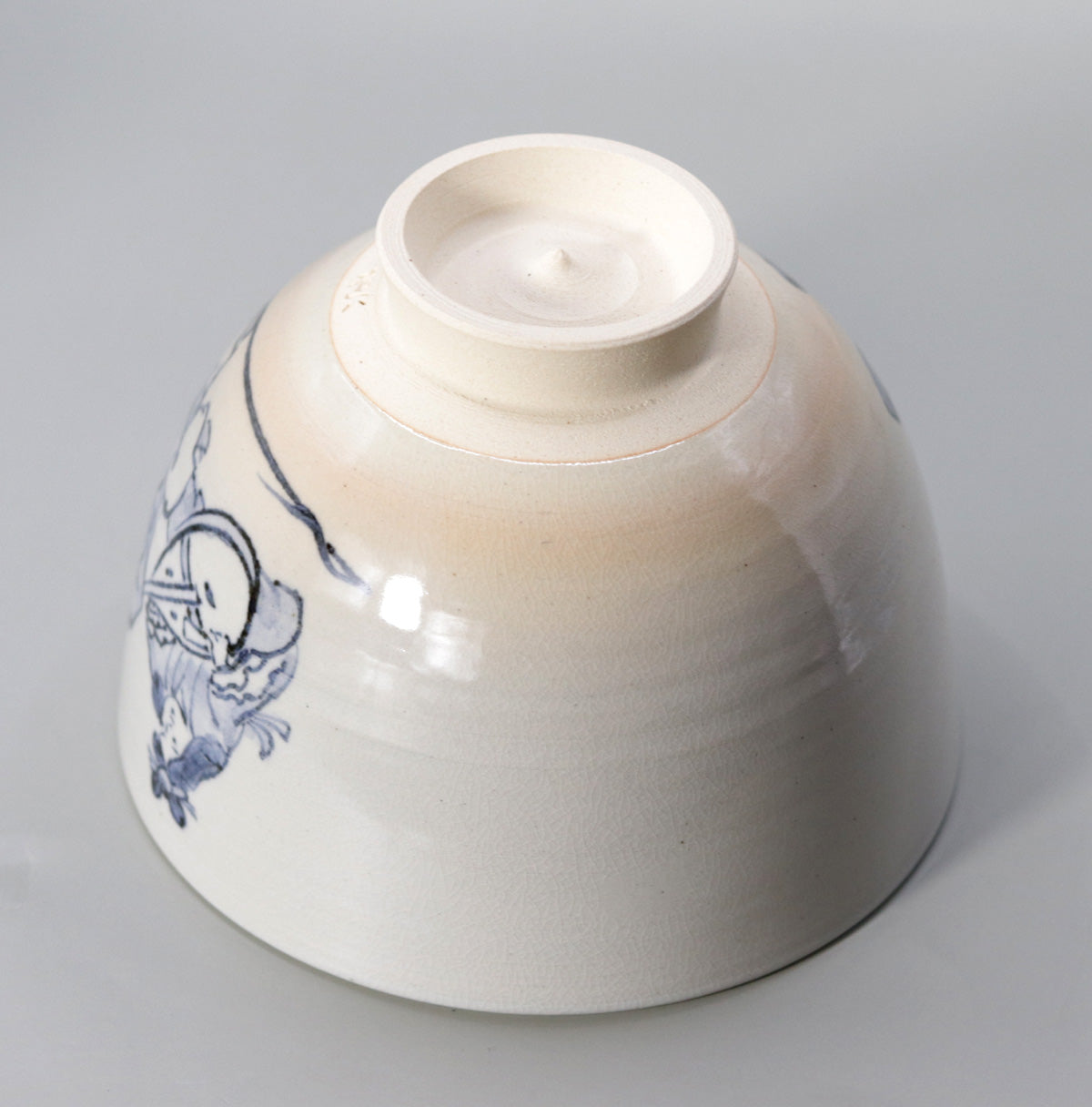
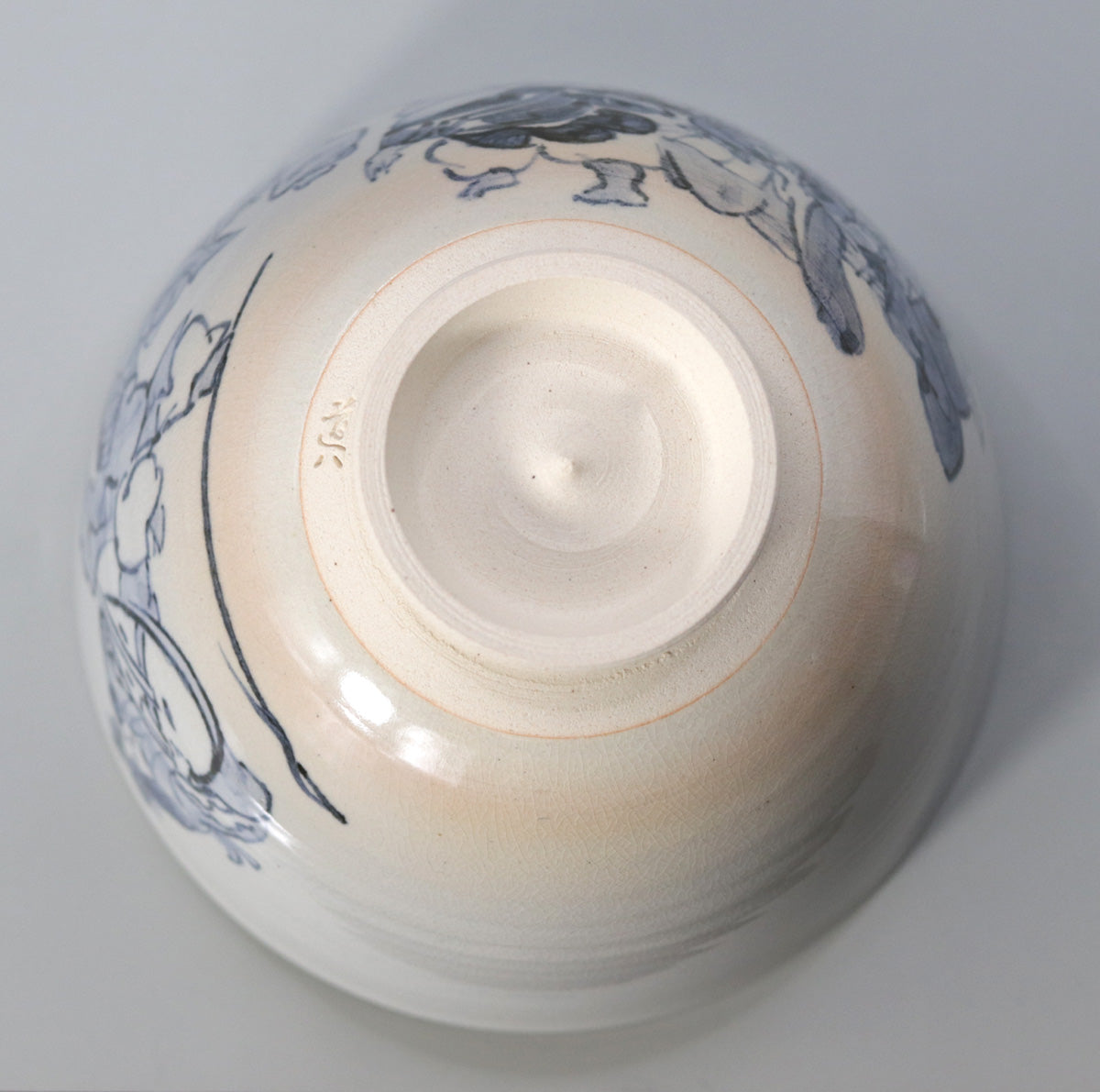
Based on a neat cylindrical shape created by a potter's wheel, the silhouette opens slightly towards the rim to catch the plump foam of the matcha tea. The body has just the right amount of tension, ensuring a volume that envelops the palm of your hand. The base is cut slightly higher, showcasing the cleanness of the base and further enhancing the purity of the ash glaze . The bowl's center of gravity is stable, so there is little shaking when using the tea whisk, making it practical and reliable.
A tranquil landscape of ash and intrusion
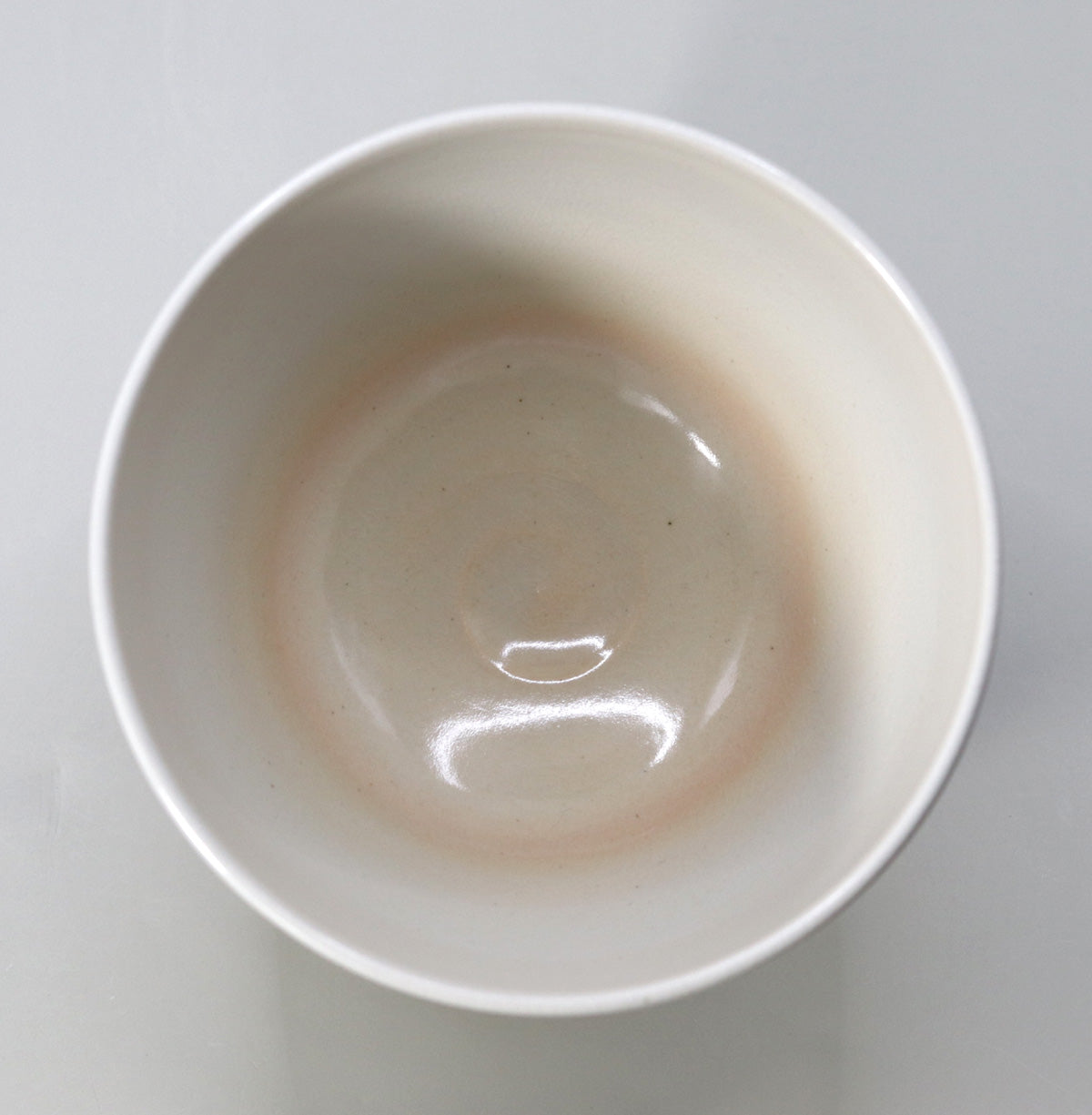
The ash glaze applied to the clay body has a soft milky white color with fine crazing that creates delicate shadows depending on the angle of the light. With years of use, the tea will soak in and the color will deepen, allowing you to fully enjoy the true joy of this piece as a "growing vessel." The glaze is applied thinly from the base to the bottom, and the subtle beige gradation created by the firing process adds warmth.
Procession of the Seven Lucky Gods
The line drawing that encircles the torso depicts a "procession" of seven deities: Ebisu, Daikokuten, Bishamonten, Benzaiten, Fukurokuju, Jurojin, and Hotei, drawn with light brushstrokes. Benzaiten is holding a biwa, suggesting a scene of entertainment. Daikokuten has a broad smile on his face, and Hotei is charmingly holding a lucky bag. Each of the figures is linked in a dynamic pose, creating a story reminiscent of an unfolding picture scroll. The pale shading of the gosu gives a soft depth to the clothing and shadows, and the intentional lack of decoration on the inside (mukimuki) allows the outer image to emerge even more vividly when the green of matcha tea is poured into it.
The beauty of gosu line drawings and brush shading
This piece is classified as an underglaze painting , where the bisque-fired body is painted with gosu, then covered with a transparent glaze and fired. The linework is a technique similar to "Yushibyou" (playful silk painting), which makes use of the brush strokes, and the strength and weakness of the brush pressure are directly expressed as the modulation of the lines. Furthermore, the amount of water in the brush and the concentration of the gosu are skillfully controlled, resulting in a sophisticated expression that expresses the folds and shadows of the garments through gradations of light and shade. Due to the high temperature firing, the color is firm and settles into a subdued blue with an indigo gray hue.
History - The Seven Lucky Gods and the Tea Ceremony
Belief in the Seven Lucky Gods spread among the general public after the Muromachi period, and by the Edo period, it was established as a New Year's treasure ship painting and a lucky charm. It is also a highly valued theme in the tea ceremony, with Seven Lucky Gods tea utensils often used at the first tea ceremony of the New Year and other celebratory tea ceremonies. Takahashi Michihachi is a renowned Kyoto ware colored painting master known for incorporating modern humor while drawing on the classics, and in this work he expresses the cheerfulness of the gods with a light brushstroke. Additionally, the use of a simple blue color, gosu, gives the piece a sophisticated feel that easily blends with modern spaces.
The Takahashi Dohachi family has been known as a prestigious Kyoto ware colored ware family since the late Edo period. The ninth generation master graduated from Kyoto Bunkyo Junior College, majoring in fashion design, and then went on to study molding and research at the Kyoto Prefectural Ceramic Technical College, and further solidified his technical foundation at the Kyoto Industrial Research Institute.
In 1996, he began to study pottery under his father, Dohachi Yashiro, and began making pottery in earnest.
In 2012, he took on the name of the 9th Takahashi Dohachi
His style, which combines the sense of form cultivated through clothing design with the traditional techniques of Kyoto ware, breathes new life into the Dohachika style and displays a refinement that stands out in modern tea ceremony and gallery spaces.
The indigo blue of the gosu glaze dances as if it were swimming in the ash glaze , concentrating the festive atmosphere of the Seven Gods of Fortune in this bowl. Its power to gently elevate any tea ceremony, whether it be a New Year's tea ceremony or everyday use, is sure to enhance the atmosphere. The lightness of the handle, the stability of the base, and the aging of the crazing—all of these qualities will deepen the longer you cherish them. We hope you will enjoy this bowl for many years to come, and savor every sip of the tale of good fortune depicted by Takahashi Michihachi.
Share
-
[I will send it to you quickly and carefully]
We carefully package each product in a way that suits it best.
Also, delivery times vary depending on the piece (vessel, etc.).
Items that already come with a box will be shipped within 1-3 days of the order date.
For items that require a box to be made after your order, it will take approximately 30 days for production to be completed and then shipped.
In either case, once we have confirmed your order, we will contact you by email to inform you of the delivery date.
-
[Requests when purchasing pottery]
Even products that look the same may differ slightly in color, shape, size, etc.
The way the glaze is used, the power of the kiln, the firing method, the season, and the humidity also affect the appearance of the pottery.
Please understand the individuality of each piece of pottery and enjoy the unique warmth of handmade.