
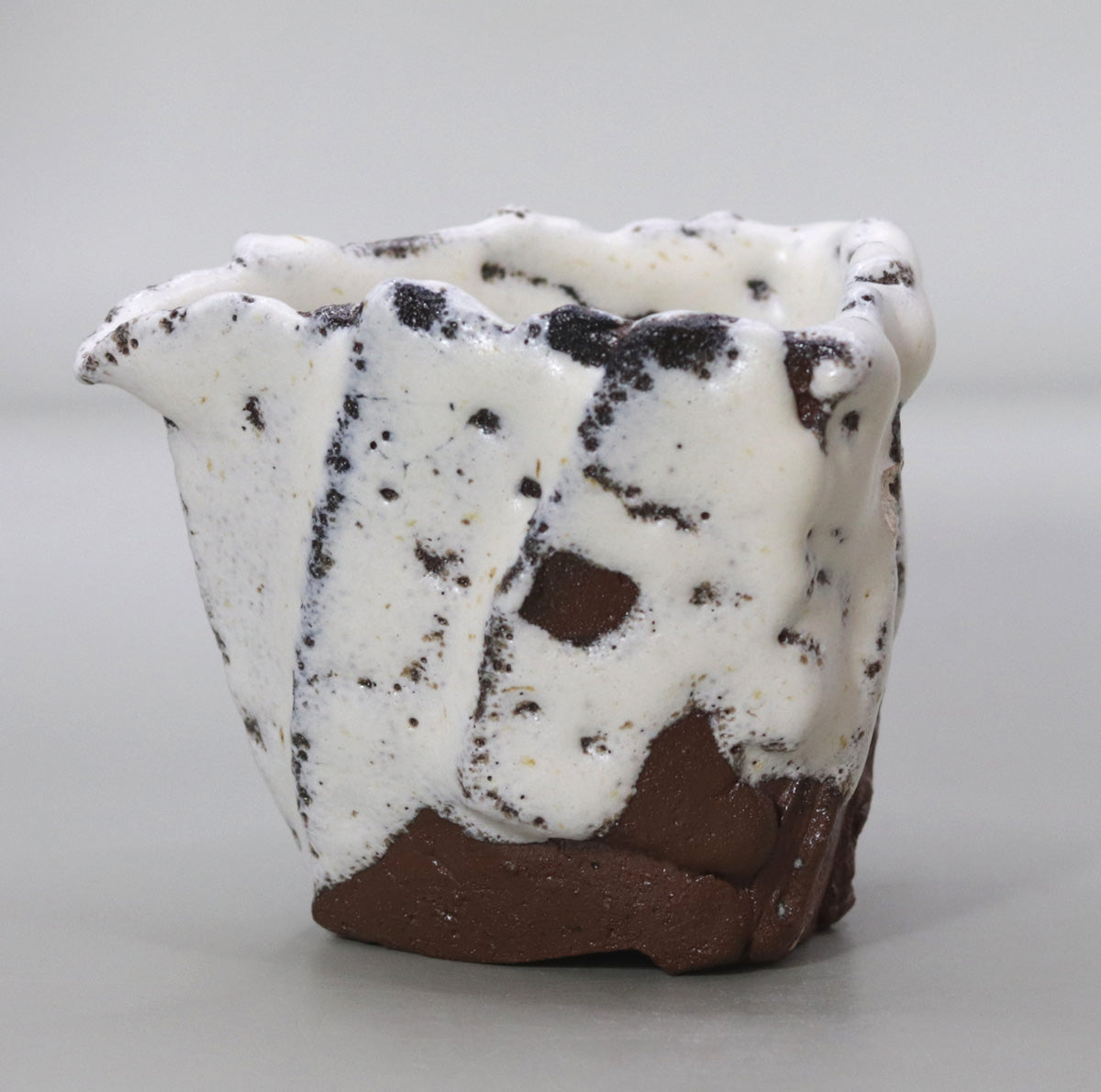
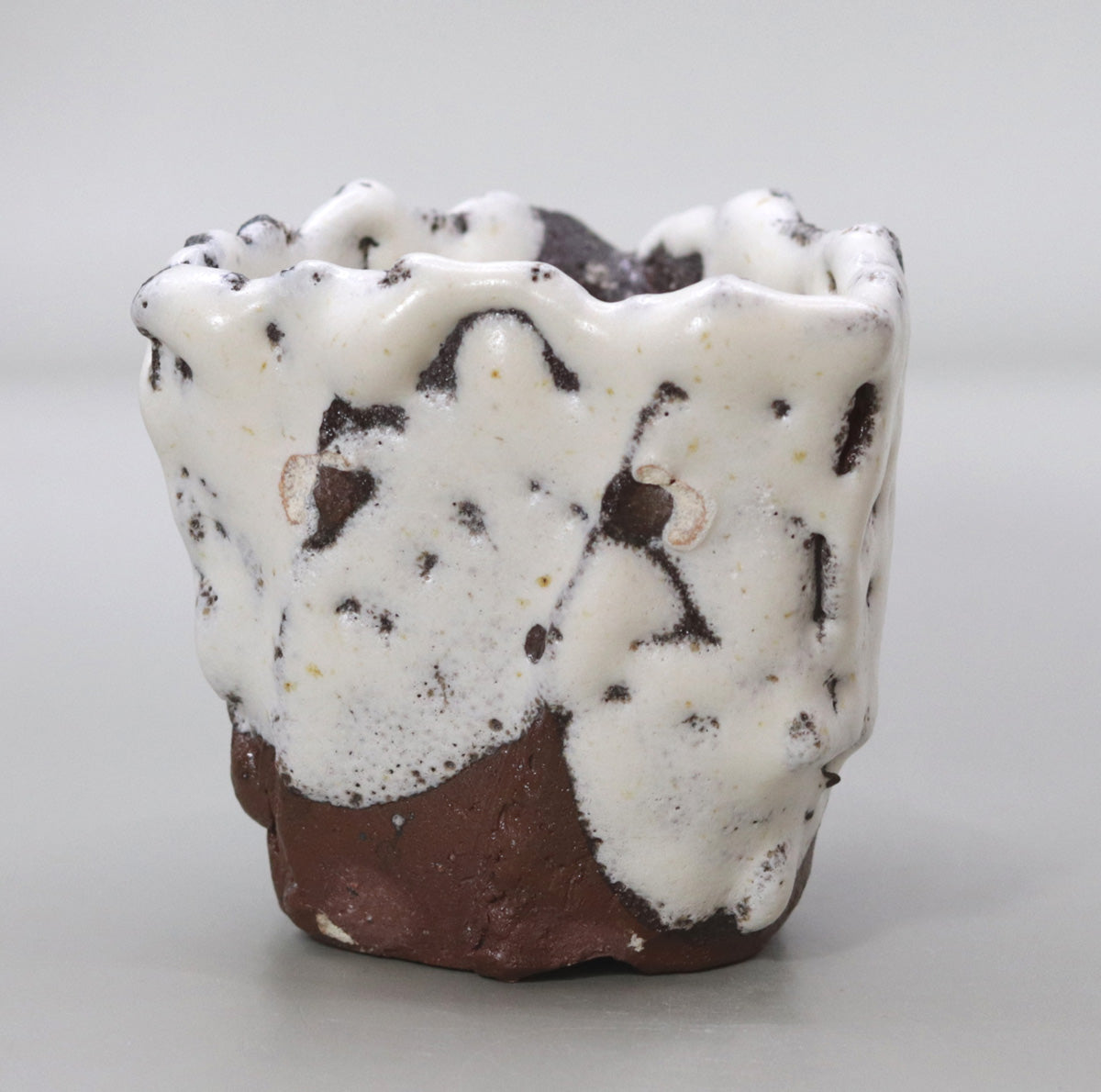
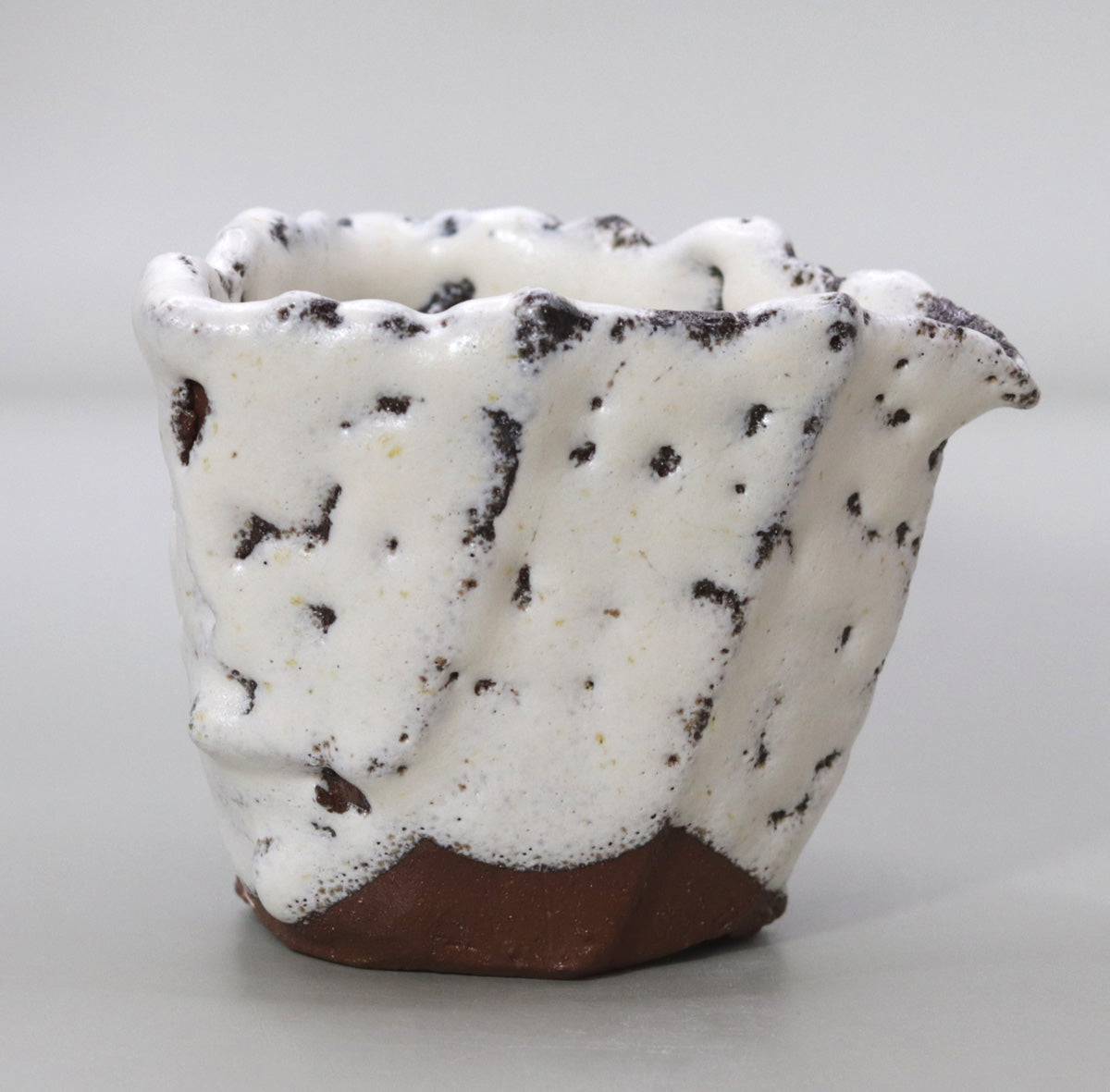
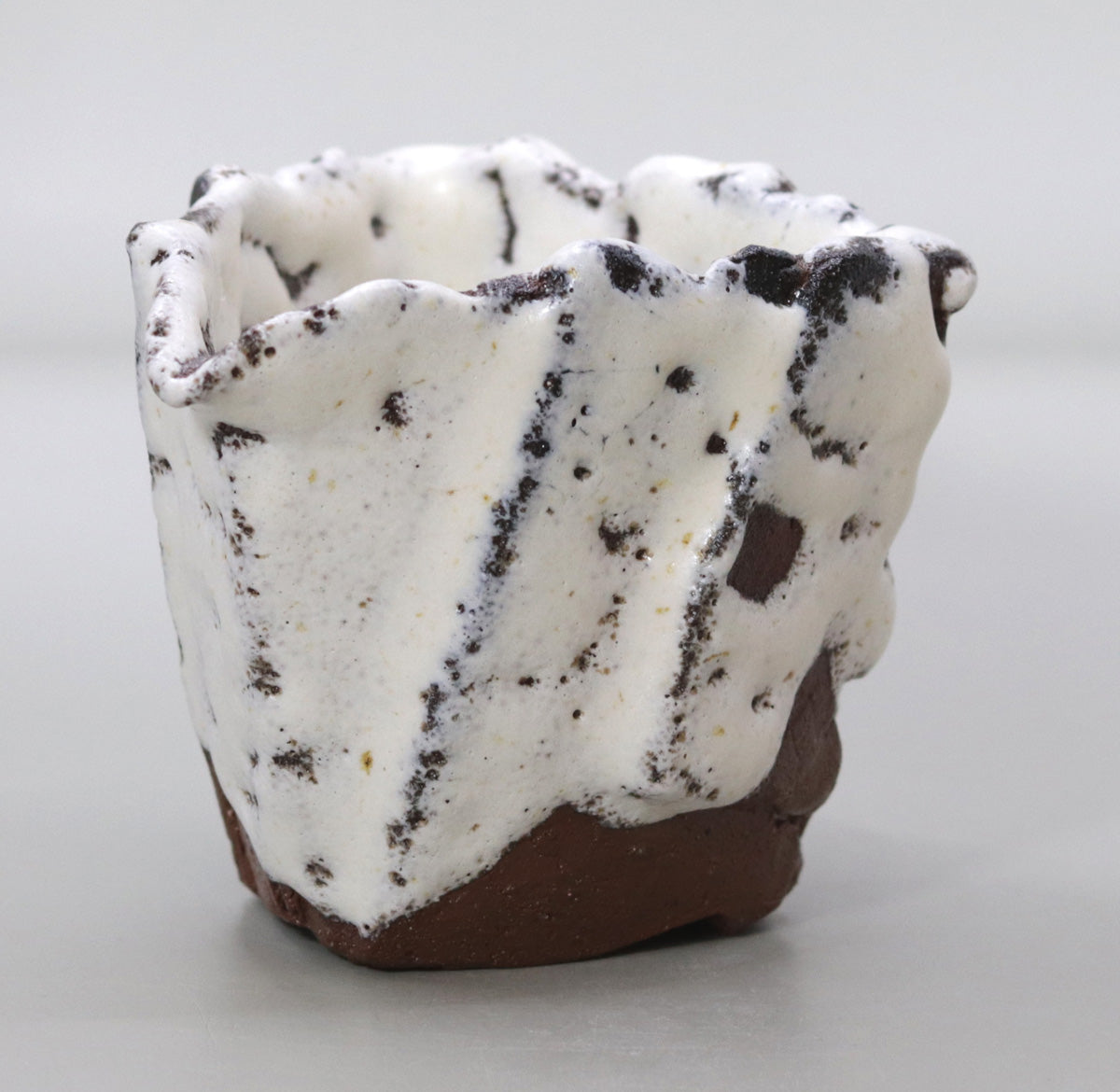
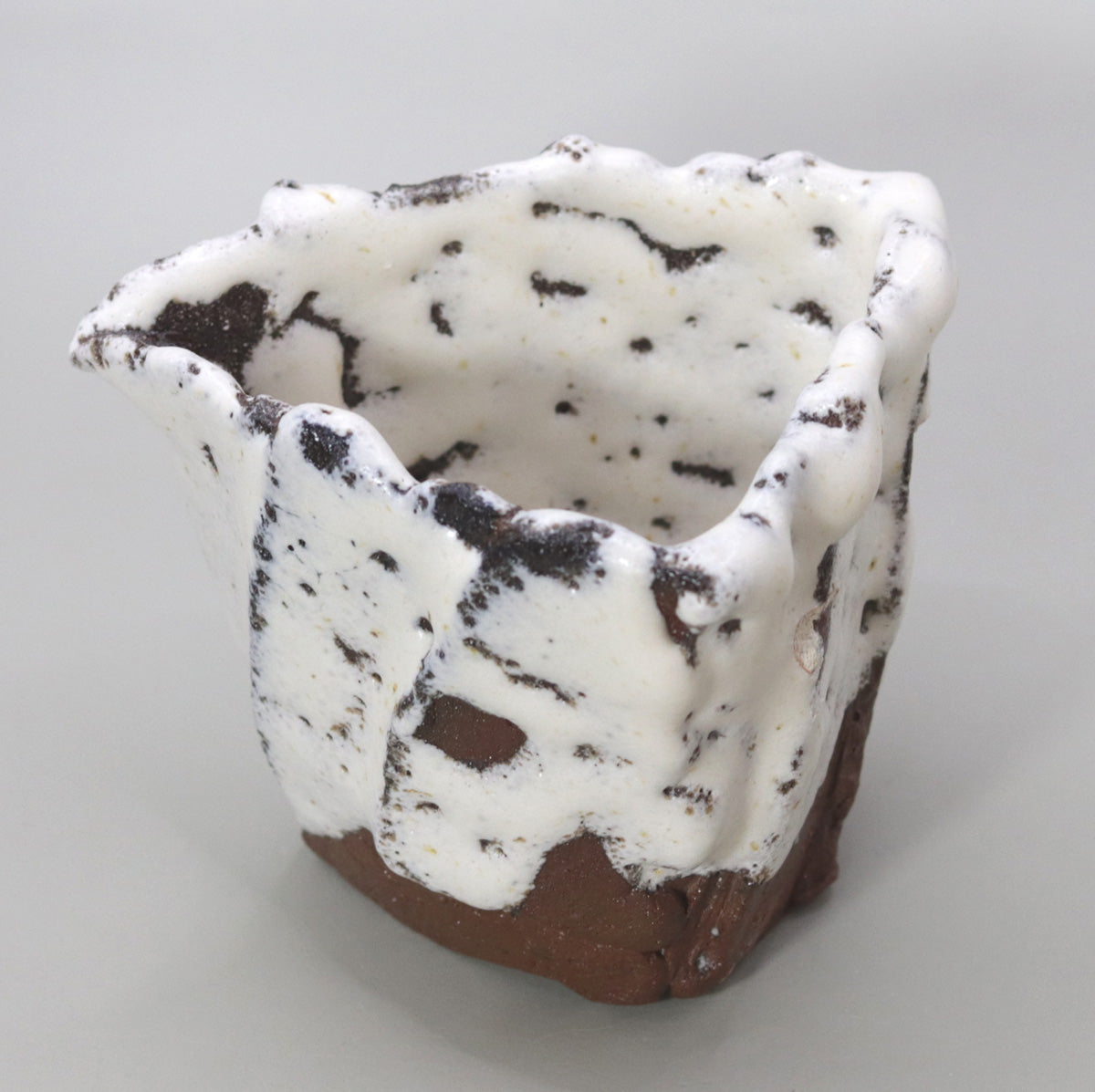
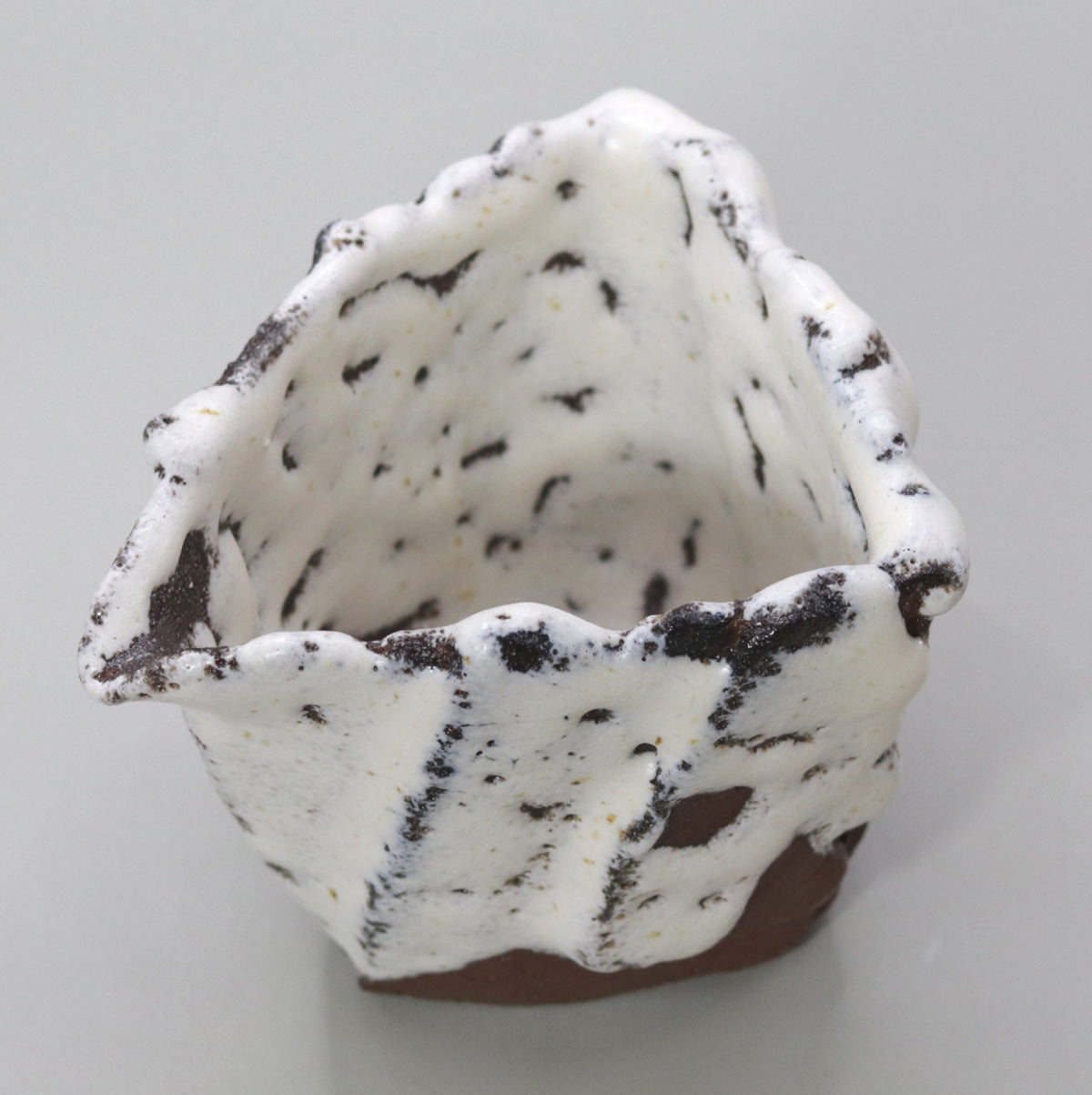
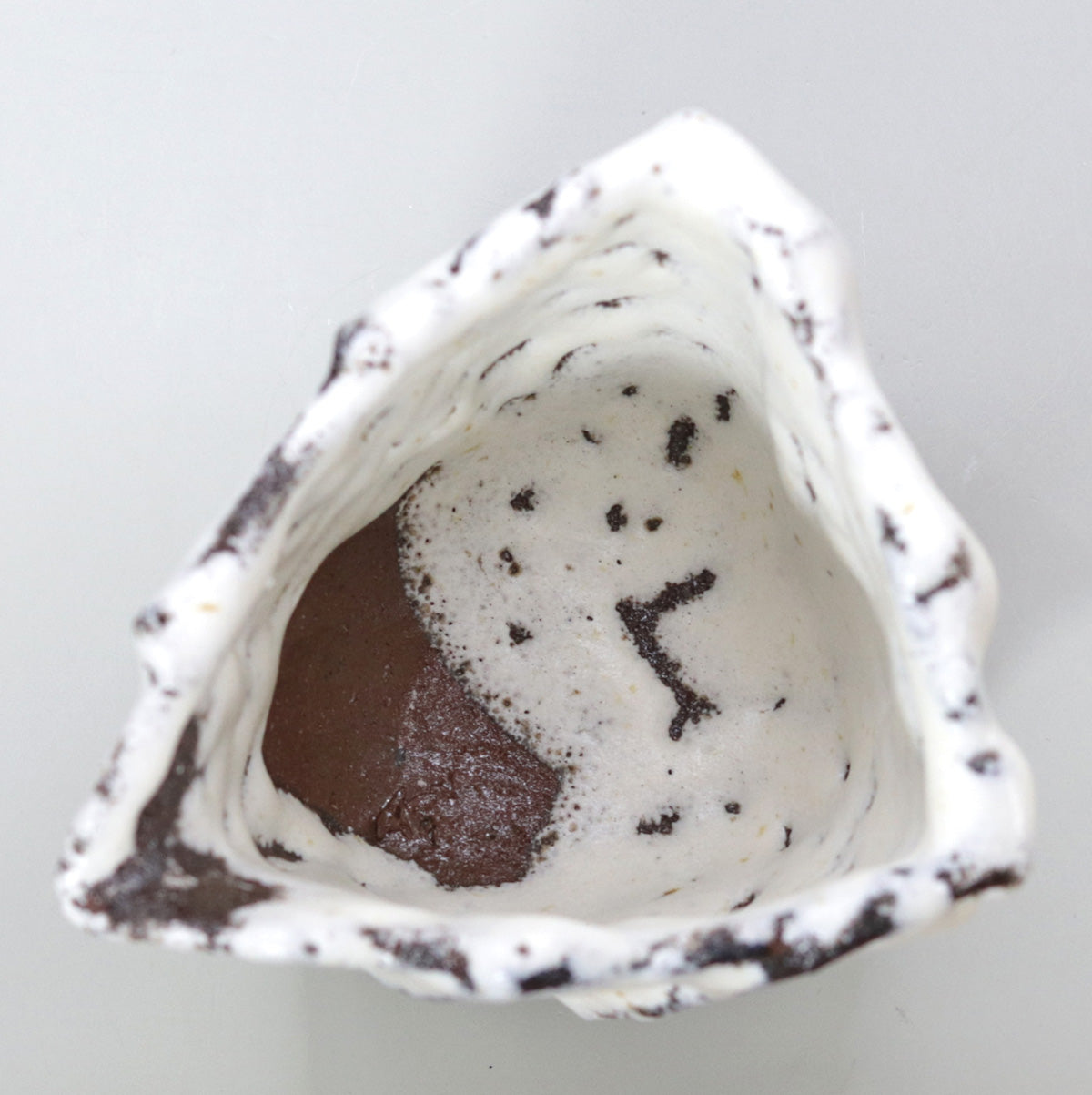
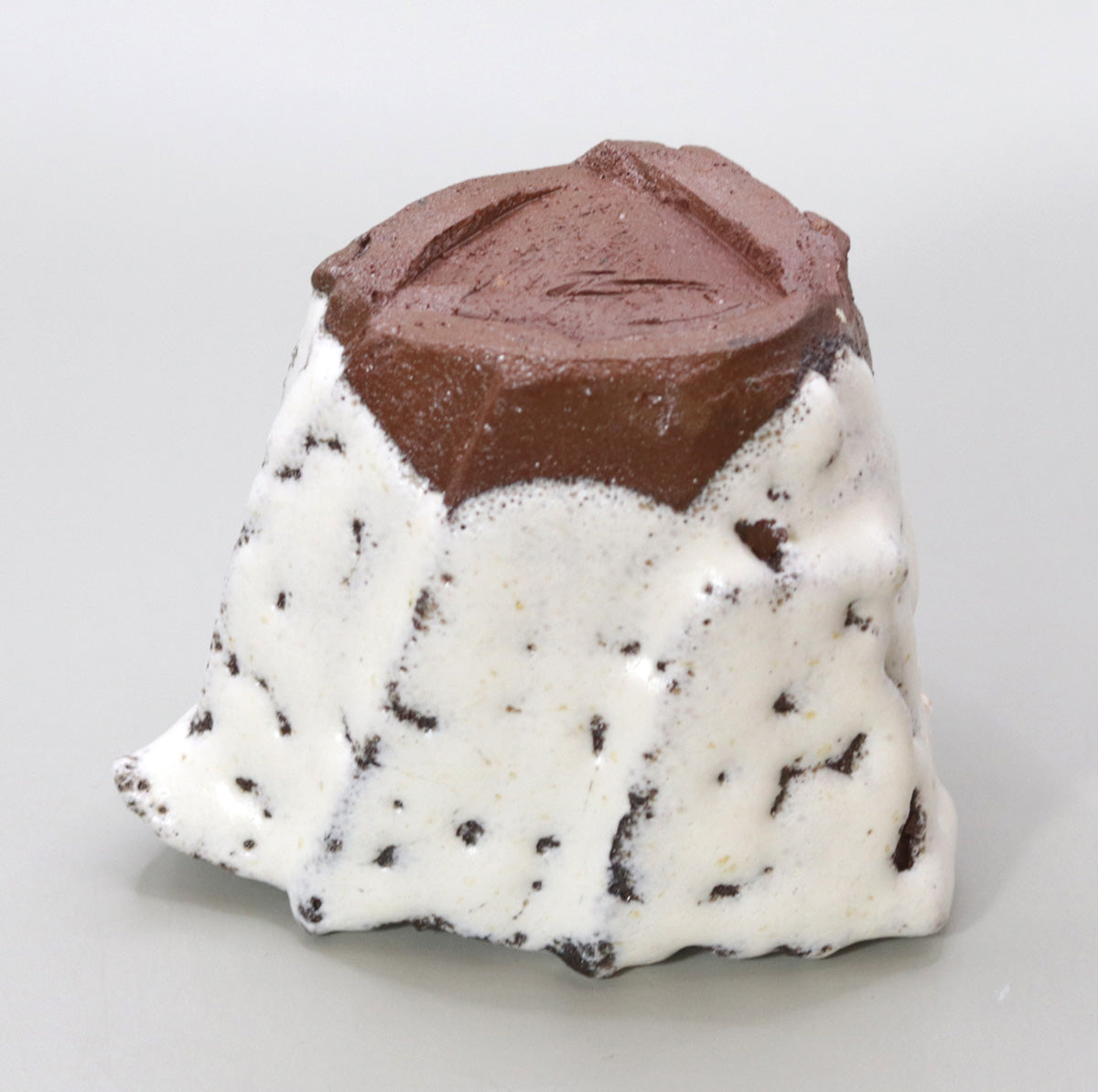
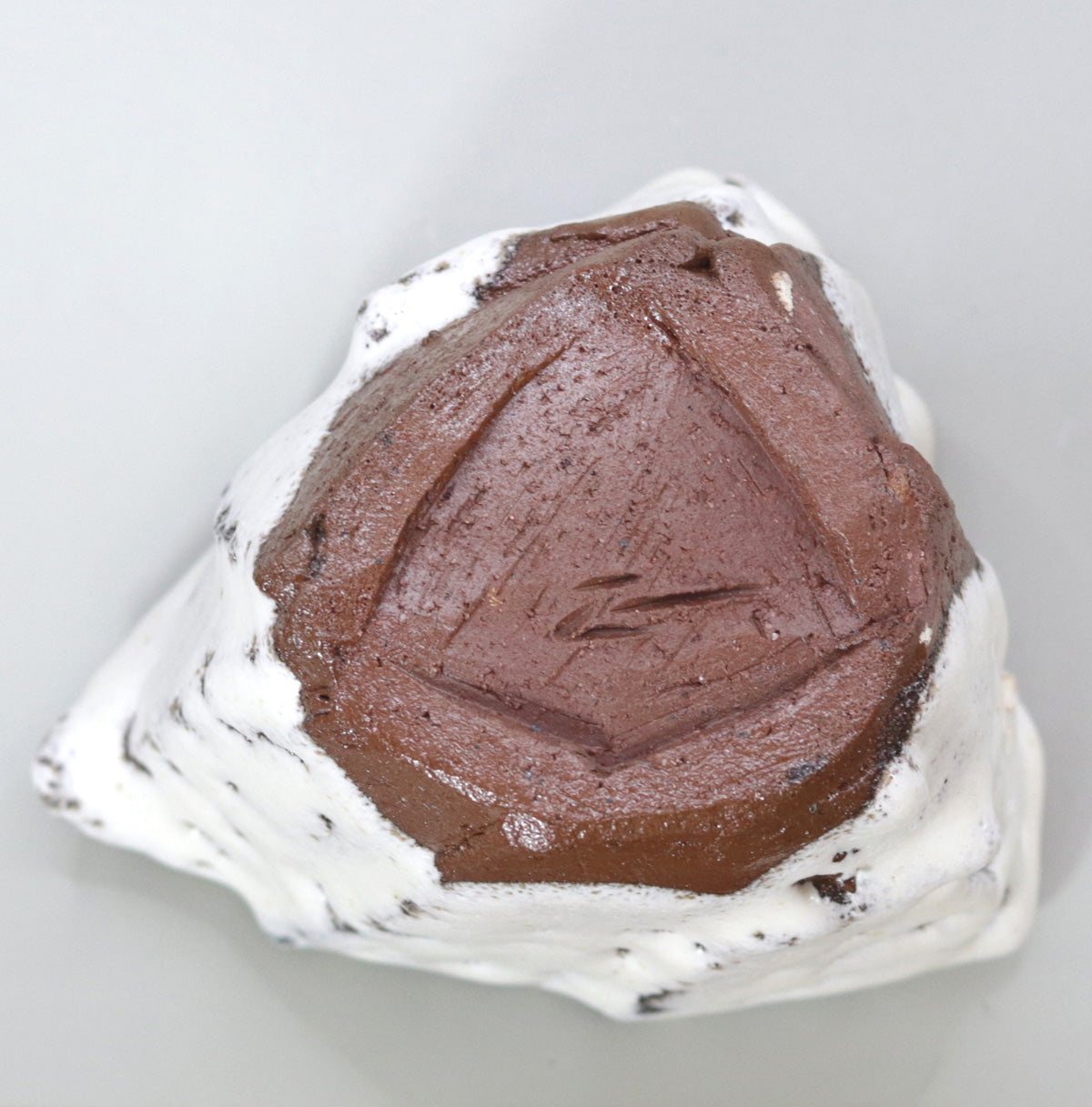
Straw white ash katakuchi (Japanese sake cup)
Straw white ash katakuchi (Japanese sake cup)
Couldn't load pickup availability
Width: 10.6cm Depth: 10.0cm Height: 10.5cm
--An improvised poem of white and scorched wood that evokes a valley after the snow has melted
Straw ash creates a glaze that resembles a snowy landscape
The glaze covering this piece is a "straw ash glaze" made primarily from straw ash. It produces a soft milky white color while also drawing out the iron in the base, resulting in scattered ink-colored spots. The remaining glaze chips and bleeds here and there create a landscape reminiscent of the mountainside after the snow melts in early spring, revealing the bare earth, and gives the piece a sense of depth, like looking at an abstract painting by nature.
The swaying ridges and functional beauty of the katakuchi
The body is based on a generous square, with wavy edges and a gently curved interior. The spout, unique to katakuchi, is shaped so that part of the chamfer is pushed inward, and the glaze flows somewhat thickly, pooling white, reminiscent of an overhanging snow cornice. From a practical standpoint, the angle of the spout and the opening are well balanced, allowing the liquid to drain very smoothly when sake or soup stock is poured, achieving a high level of fusion between functionality and aesthetic beauty.
The rustic charm and warmth of Tanba clay
The base is made from rough clay from Tamba, which is rich in iron, and the reddish-brown surface is exposed where the glaze is thin and around the foot. The rough grain of the surface gives it a rough texture, contrasting with the soft luster of the straw white, allowing you to experience the energy of "earth and fire" both visually and tactilely. The glaze is still applied to the sides of the foot, and the ash that flew in the climbing kiln has melted slightly, removing blue-gray spots, giving a lingering impression of the kiln change.
The appeal of Katakuchi sake cups, which can be used for a wide range of purposes
Katakuchi cups were originally used as sake or sauce containers, but in modern dining tables they are also used for a variety of purposes, such as flower vases. Although this piece has a small capacity, its wide opening and stable base make it easy to handle when pouring green tea or cold sake, making it a truly practical vessel. The white of the straw and the reddish-brown base will bring out the colors of your food and make it a great addition to any table setting.
The spirit of wabi-sabi and modernity
Nishibata Tadashi has said, "I let the flames and ashes speak, and I simply organize the blank spaces." This piece truly embodies an approach that minimizes artificiality and respects the randomness of natural glazing. At the same time, by incorporating the modern katakuchi style of vessel, he adds modern usability and a fresh design to traditional Tamba ware, beautifully bridging the wabi-sabi spirit with modern lifestyles.
A second landscape painted by time
The finely crazing straw-white ash glaze slowly absorbs the components of sake or tea as it is used, causing the lines to turn a pale grayish-brown. The area around the spout also becomes more lustrous with each liquid it comes into contact with, creating a contrast with the vessel's appearance when it was unused, imbuing it with a unique, aged beauty. Over the years, the white becomes more subdued, the speckled pattern takes on softer nuances, and you can enjoy the process as the vessel as a whole gains depth.
Tadashi Nishibata Biography
Born on February 24, 1948. Started making pottery in 1969. 1976. Hyogo Prefectural Exhibition Encouragement Award. 1986. Selected for the Japan Traditional Crafts Exhibition for the first time. 1988. Selected for the Japan Traditional Crafts Exhibition. Japan Traditional Crafts Exhibition. Japan Crafts Association President's Award. 1989. Selected for the Japan Ceramic Art Exhibition. Nogawa Memorial Award, Handon no Kai. 1991. Selected for the Japan Traditional Crafts Exhibition. Selected for the Japan Ceramic Art Exhibition. Grand Prize at the Tea Ceremony Forms Exhibition. 1992. Selected for the Japan Traditional Crafts Exhibition. Excellence Award at the Tea Ceremony Forms Exhibition. Hyogo Prefecture Emerging Artist Encouragement Award. Invited to exhibit at the NHK-sponsored Paris - 100 Contemporary Japanese Ceramics Exhibition. Excellence Award at the Tea Ceremony Forms Exhibition. 1993. Selected for the Japan Traditional Crafts Exhibition. Solo exhibition at Sogo Hiroshima store. Kyoto Chemin. 1994. Selected for the Japan Traditional Crafts Exhibition. Solo exhibition at Nihonbashi Mitsukoshi Main Store. 1995. Selected for the Japan Traditional Crafts Exhibition. Solo exhibition at Sogo Hiroshima store. 1996. Selected for the Japan Traditional Crafts Exhibition. Awarded the Excellence Award at the Tea Ceremony Design Exhibition, solo exhibition at Nihonbashi Mitsukoshi Main Store
1997 Encouragement Award at the Tea Ceremony Design Exhibition 1998 Selected for the Japan Traditional Crafts Exhibition Solo exhibition at Mitsukoshi Nihonbashi Main Store Selected for the Japan Traditional Crafts Exhibition 2000 Solo exhibition at Mitsukoshi Nihonbashi Main Store Solo exhibition at Mitsukoshi Fukuoka 2001 Selected for the Japan Traditional Crafts Exhibition 2002 Solo exhibition at Mitsukoshi Nihonbashi Main Store Solo exhibition at Gallery Dojima 2003 Solo exhibition at Touchingston, USA 2004 Grand Prize at the Tea Ceremony Design Exhibition at Sogo Hiroshima 2005 Exhibited at the Akashi City Museum of Culture and Hyogo Ceramics Exhibition Purchase of Akadobedai, Hyogo Ceramic Art Museum Solo exhibition at Gallery Dojima, Mitsukoshi Nihonbashi Main Store 2006 Grand Prize at the Tea Ceremony Design Exhibition Selected for the Japan Traditional Crafts Exhibition at the Museum of Fine Arts, Boston and the New York Japan Society Gallery Solo exhibition at Yokohama Takashimaya Touchingston, USA Father and Son Exhibition at Matsuyama Takashimaya Toshunkai Exhibition, Sogo Yokohama. Encouragement Award at the Tea Ceremony Art Exhibition. Selected for the Japan Traditional Crafts Exhibition in 2008. Selected for the Japan Traditional Crafts Exhibition. Solo Exhibition, Yokohama Takashimaya, Mitsukoshi Nihombashi, Santa Fe, Touchingston, USA. Toshunkai Exhibition, Funabashi, Seibu, Sogo Hiroshima. Invited to the Japanese Ceramics Exhibition in 2009. Solo Exhibition, Gallery Dojima, Sendai Mitsukoshi, 2010. Sogo Kobe. Exhibited in the Musee Tomo Grand Prize Exhibition, Contemporary Tea. Solo Exhibition, Yokohama Takashimaya, Touchingston, USA. Invited to the Japanese Ceramics Exhibition. Solo Exhibition, Joan B. Marvis, New York, USA. Invited to the Japanese Ceramics Exhibition in 2013. Exhibited in the "Contemporary Famous Bowls" exhibition at the Musee Tomo, Kanmi Kikuchi Memorial. Solo Exhibition, Mitsukoshi Nihombashi, Santa Fe, Touchingston, USA. Gallery Miyazaki, Sogo Kobe, Chiba Sogo, 2014. Solo Exhibition, Mitsukoshi Nihombashi, 2015. Received the Hyogo Prefecture Cultural Award in 2016. Exhibited at Higashihiroshima City Museum of Art for "Ceramics that Color Our Lives - Food Ware" Exhibited at Joan B. Marvis' 40th Anniversary Exhibition in 2017.
2018 Solo Exhibition at Nihonbashi Mitsukoshi Main Store
Share
-
[I will send it to you quickly and carefully]
We carefully package each product in a way that suits it best.
Also, delivery times vary depending on the piece (vessel, etc.).
Items that already come with a box will be shipped within 1-3 days of the order date.
For items that require a box to be made after your order, it will take approximately 30 days for production to be completed and then shipped.
In either case, once we have confirmed your order, we will contact you by email to inform you of the delivery date.
-
[Requests when purchasing pottery]
Even products that look the same may differ slightly in color, shape, size, etc.
The way the glaze is used, the power of the kiln, the firing method, the season, and the humidity also affect the appearance of the pottery.
Please understand the individuality of each piece of pottery and enjoy the unique warmth of handmade.