
Blue gourd vase Masao Tagai
Blue gourd vase Masao Tagai
Couldn't load pickup availability
Width: 19.5cm x 19.5cm Height: 20cm
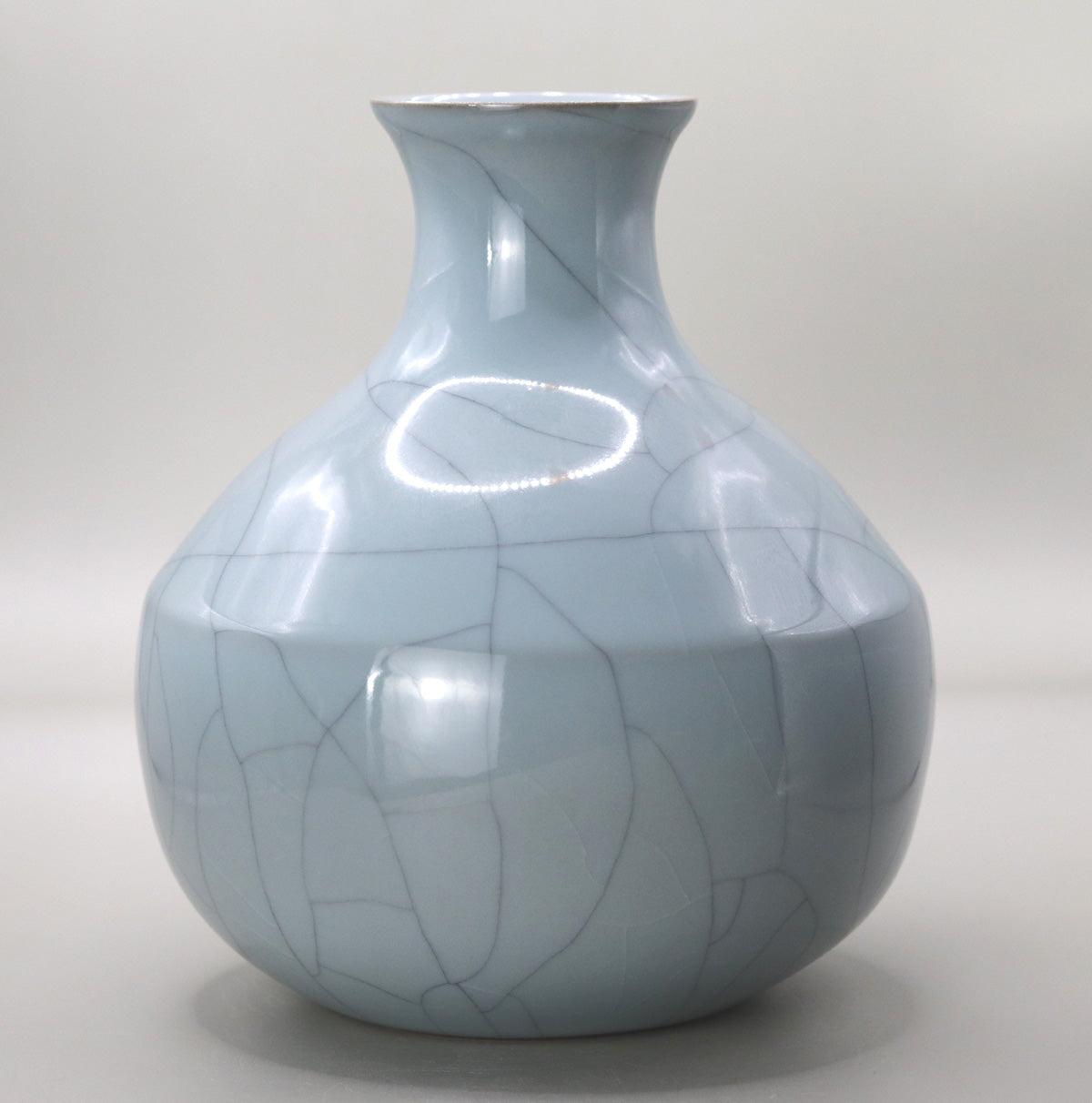
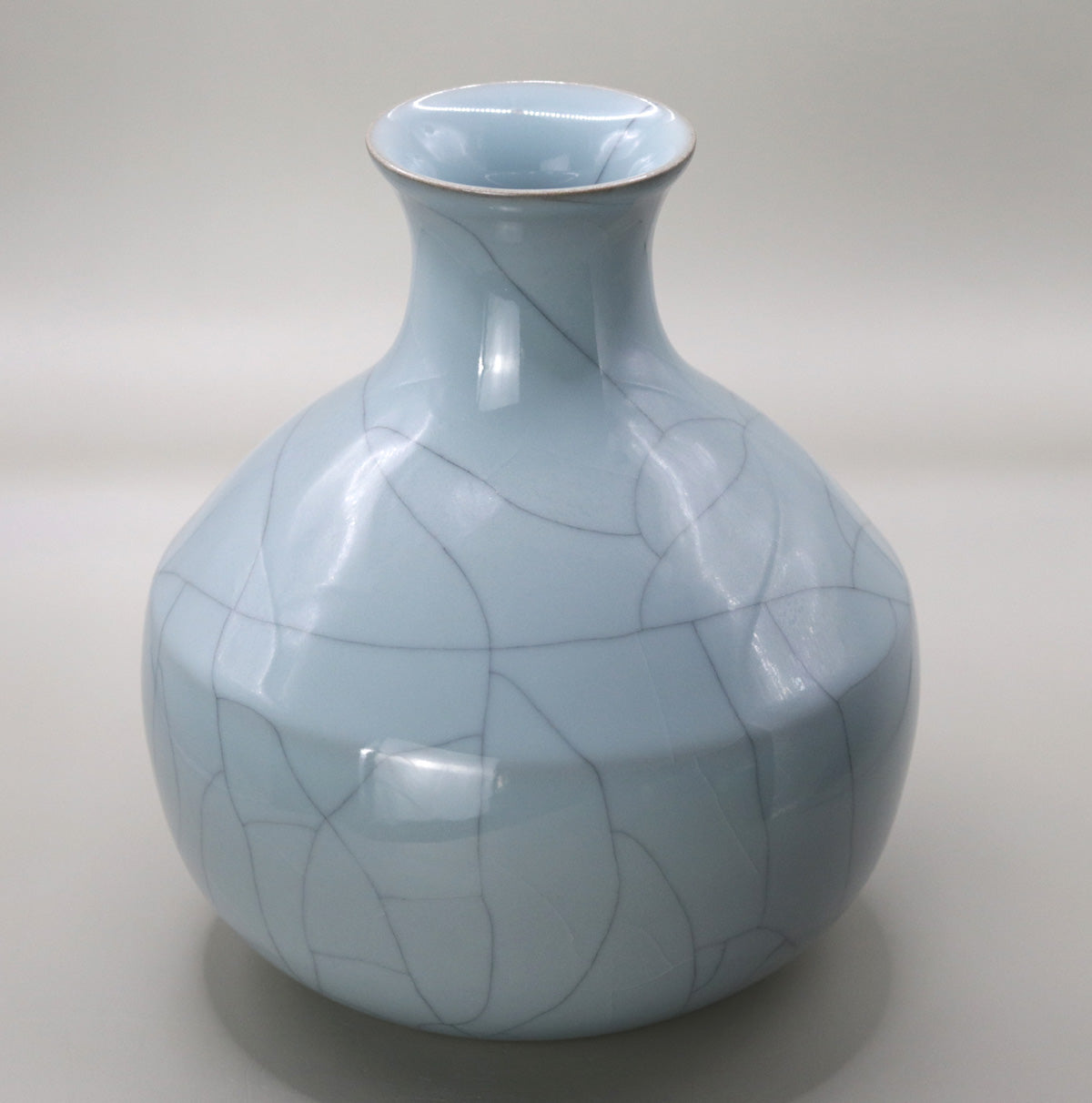
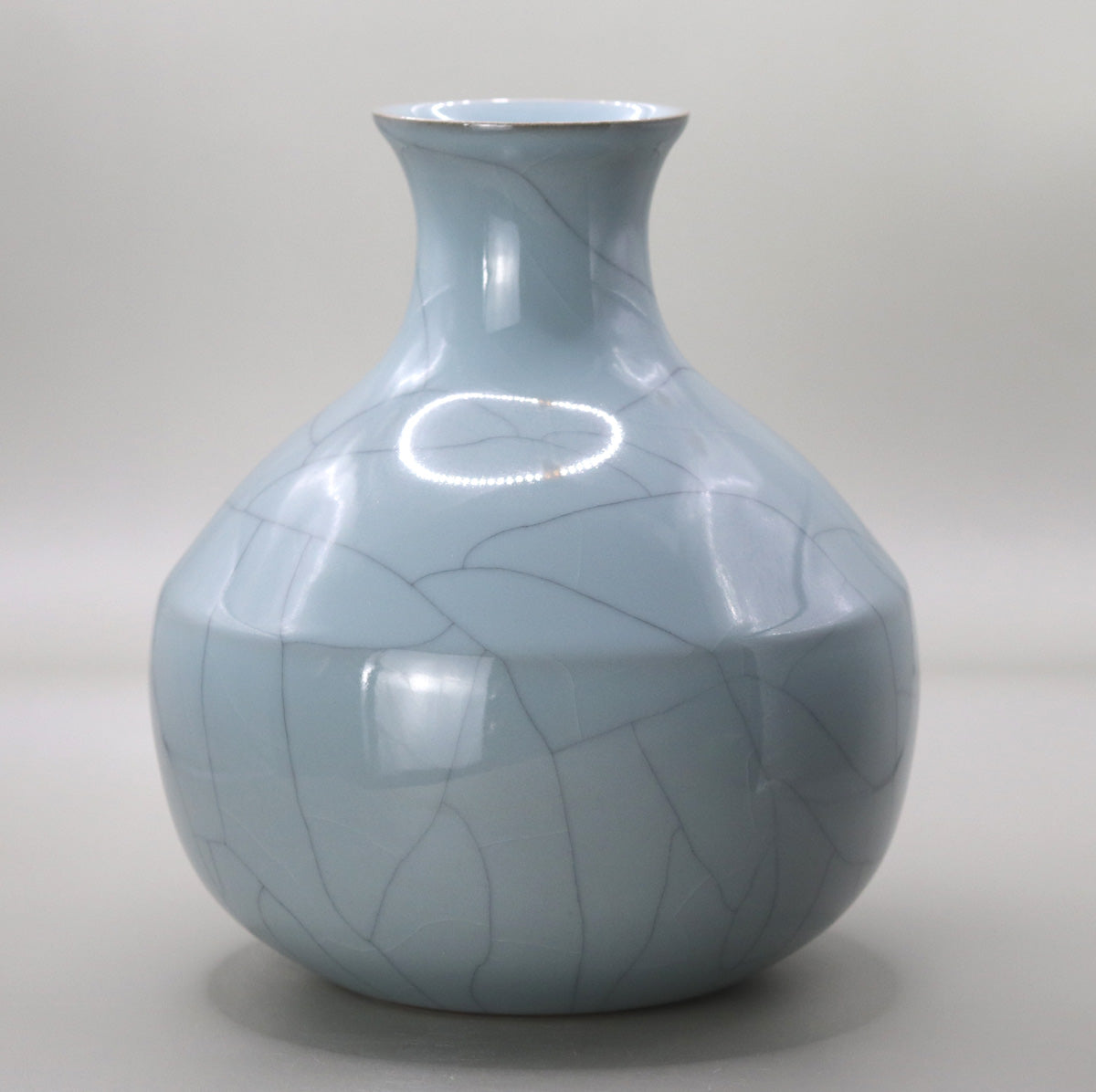
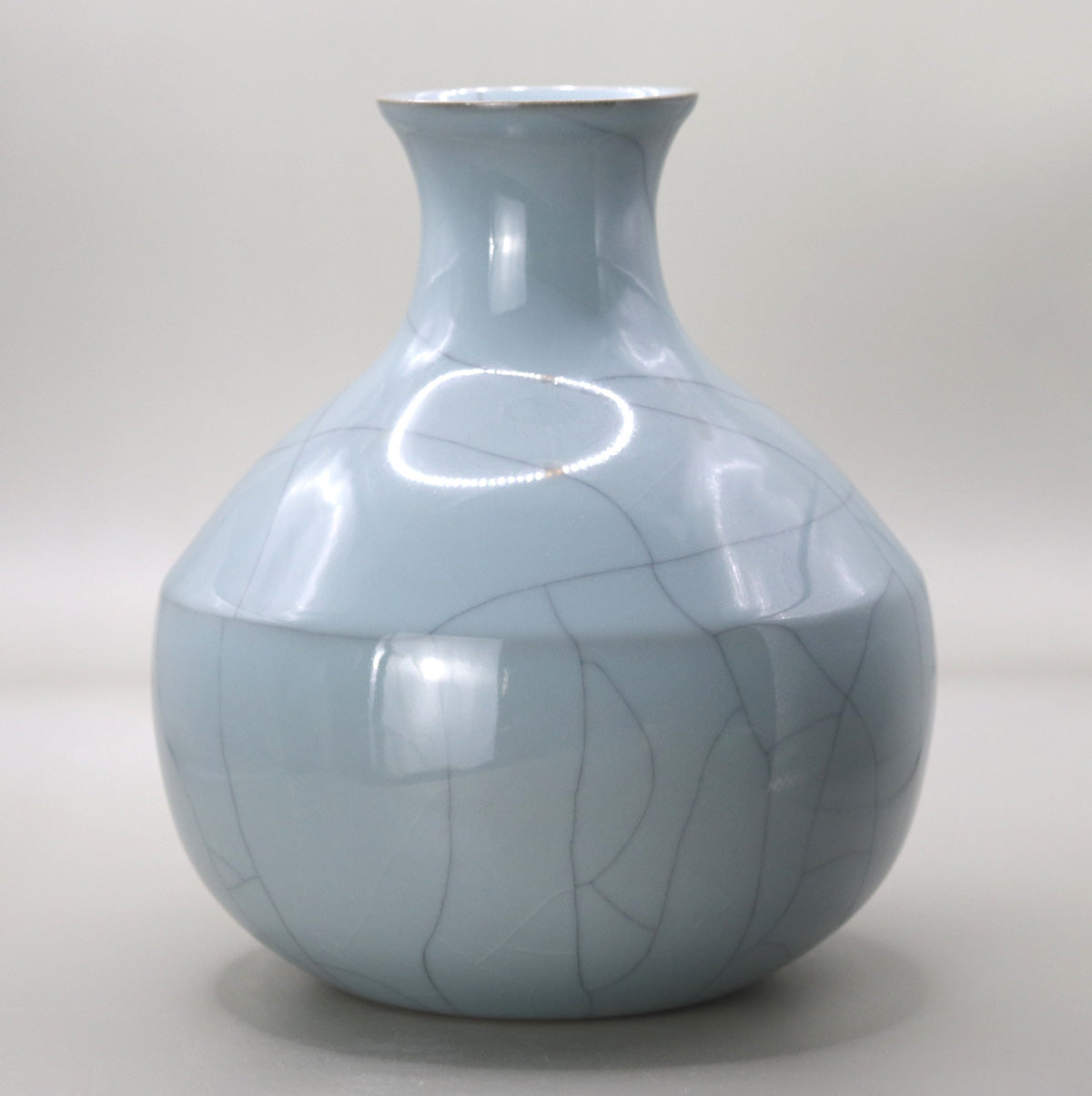
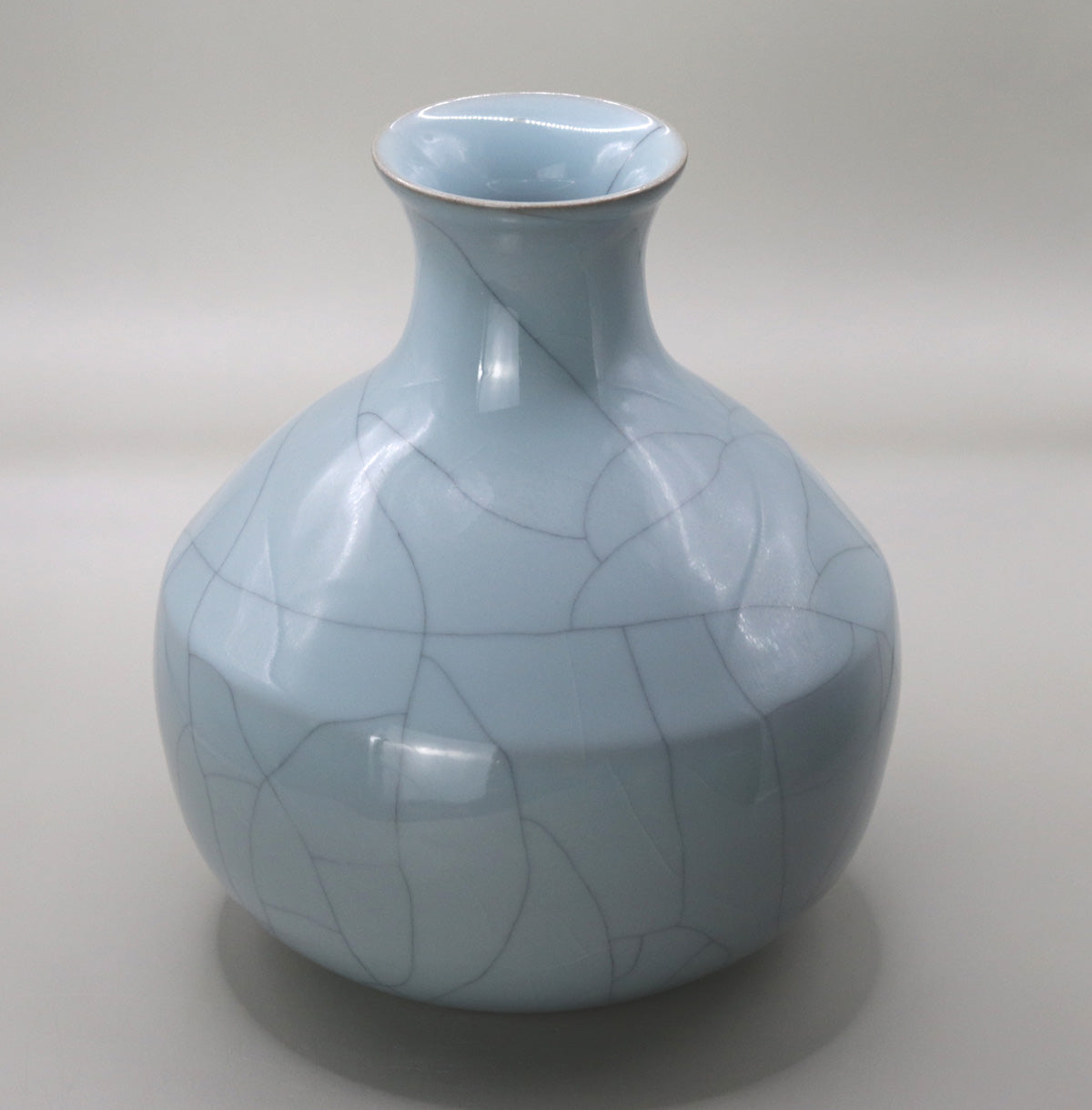
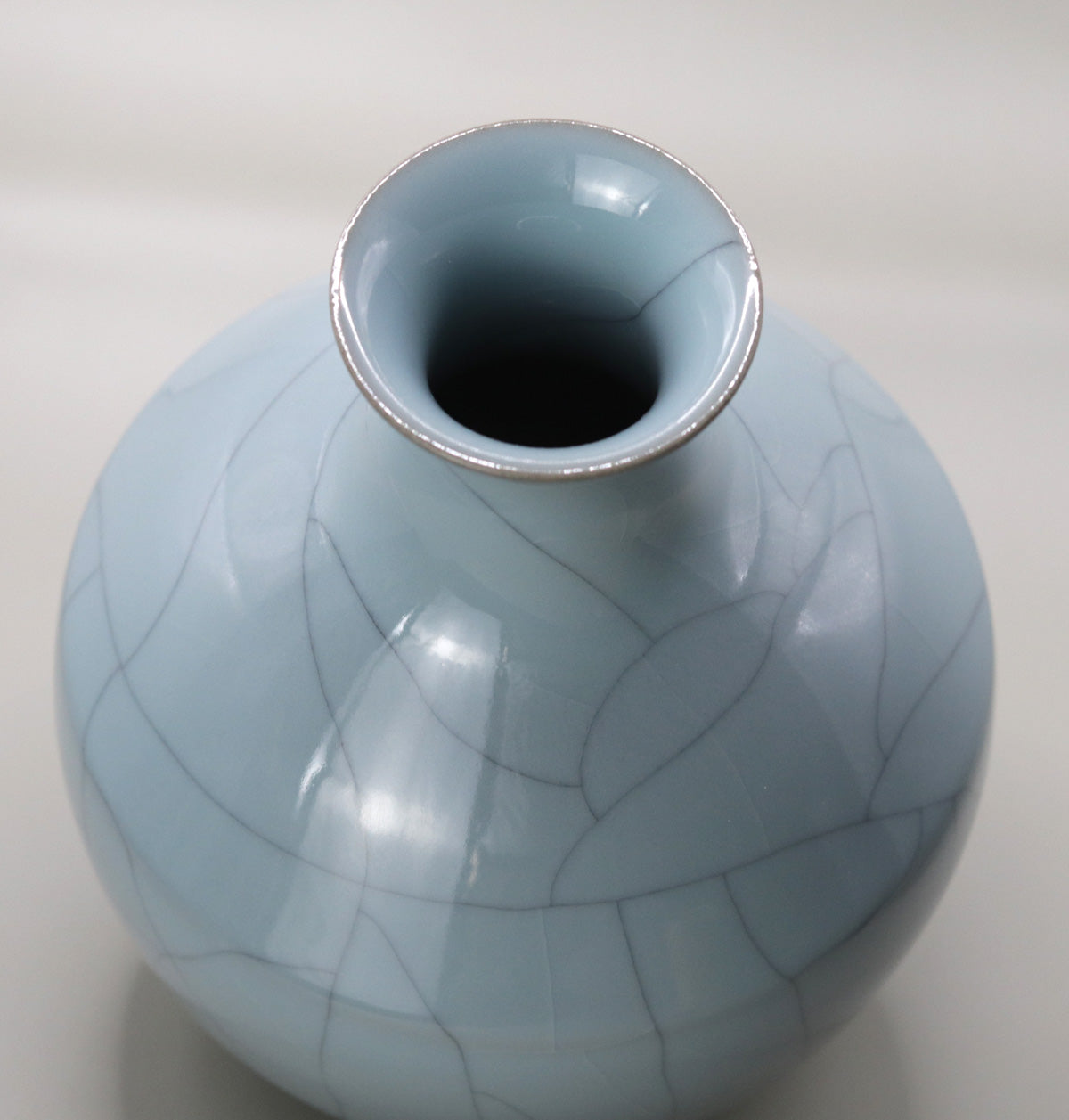
This vase features a large, gently running craze beneath a pale sky-blue celadon glaze. The lines that flow from the large, bulging vase shape to the narrow, tapered neck and slightly outward-curving rim are reminiscent of the classic "gyokko shunpei" (spring vase), yet the slightly sharper angle of the shoulders gives it a sharpness that stands out in a modern space. The mirror-like surface of the celadon glaze softly absorbs the surrounding light, and the craze lines emerge like ink calligraphy, reminiscent of an abstract painting.
Glaze and Crazing
Glaze design : The iron glaze is adjusted and fired at a high temperature under reduction, followed by a "reduction drop" process in which the atmosphere is switched to an oxidizing atmosphere towards the end, resulting in a pure blue color with no reddish tinge.
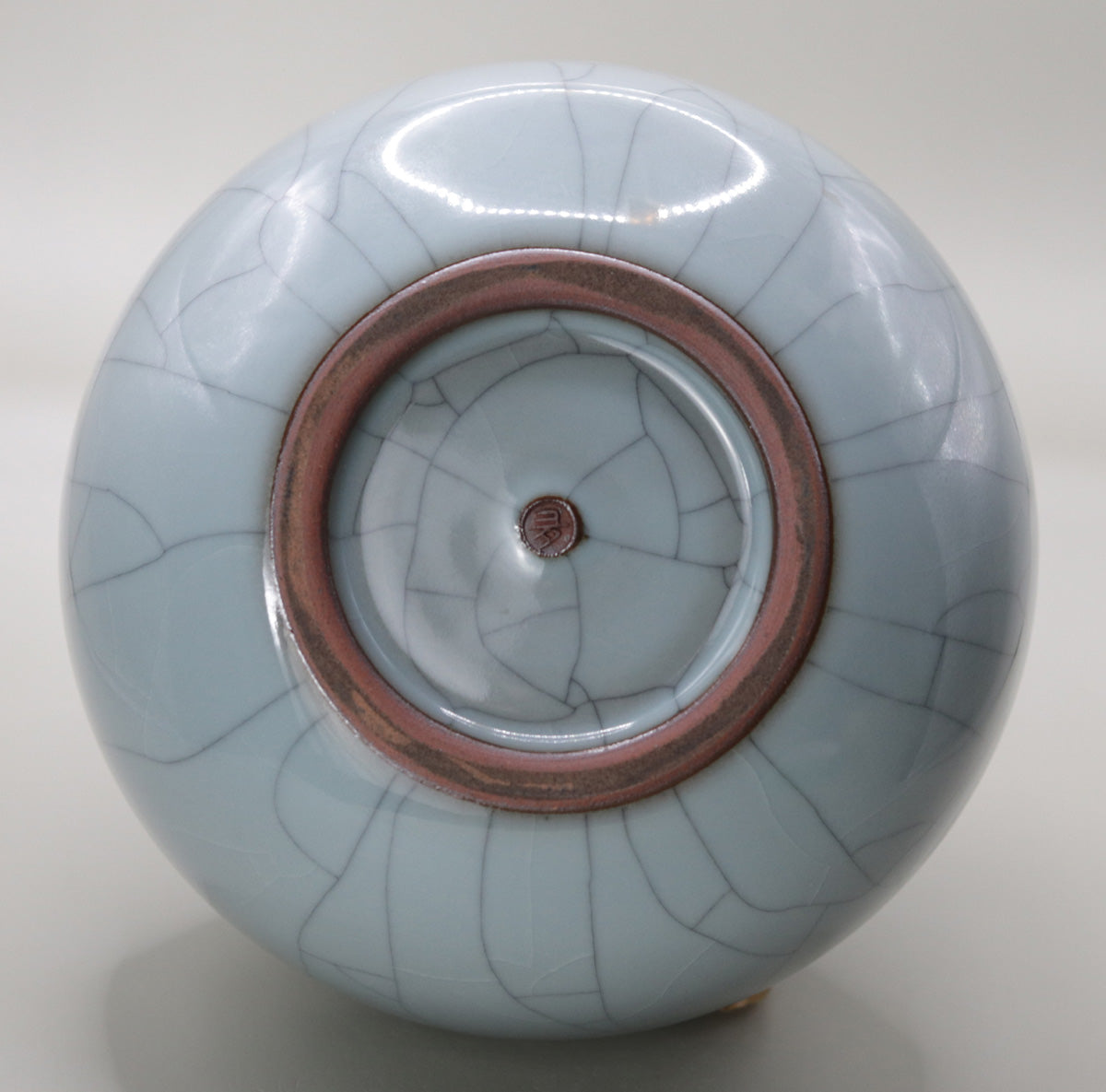
Large craze formation : The difference in expansion coefficient between the clay and the glaze is deliberately large, and bold cracks are created on the glaze surface by rapid cooling after firing. The craze lines that cross the curved surface vary in thickness, creating a rhythm that is reminiscent of the grain pattern of natural stone, creating a bold appearance.
Ink dyeing process : After firing, brown colored water is boiled and soaked in to color the crazing. The lines stand out clearly, making the vessel stand out even from a distance. With repeated use, the lines deepen with the addition of floral water and humidity, allowing you to enjoy the changes over time.
history
Celadon originated in the Yuezhou kilns of the Six Dynasties, and evolved into the pale blue of the Ru kilns of the Northern Song dynasty and the deep blue of the Longquan kilns of the Southern Song dynasty. It was introduced to Japan during the Kamakura and Muromachi periods along with the arrival of Zen, and a unique aesthetic sense was fostered in the Momoyama tea ceremony, where "crazing" was appreciated as a scene of wabi (traditional Japanese beauty). This work combines the lake-like blue of Longquan kilns with the bold craze design favored in early modern Japan, elevating it to a form that responds to modern tea ceremonies and contemporary spaces.
Viewing
The beauty of reflections <br data-start="1589" data-end="1592">The spherical body of the piece softly absorbs the surrounding light, reflecting the shadows of hanging scrolls and lanterns like a mirror. At tea ceremonies, it is effective to bring a candle close to it and project the flickering light.
Rhythm of interpenetrating lines <br data-start="1682" data-end="1685">As you shift your viewpoint, the lines overlap, creating a sense of depth, as if seaweed or stone patterns were floating beneath the surface.
Changes in the iron rim over time <br data-start="1750" data-end="1753">The iron rust on the rim takes on a black luster with the touch and the flower water, further tightening the pale blue and ink lines.
Masao Tagai's "Celadon Vase" is a masterpiece that combines the power of its clear blue color and large craze with the grace of its classical vase shape. When placed in a space, the mirrored surface absorbs the surroundings, and when a seasonal flower is placed inside, the vase and the flower resonate with each other, creating a beautiful landscape. The true joy of a vase is that it grows with its user, as the craze deepens over the years and the blue fades to a slightly dull color. We hope that you will enjoy it for many years to come, interacting with the flowers of each season and carving your own unique story into it.
Share
-
[I will send it to you quickly and carefully]
We carefully package each product in a way that suits it best.
Also, delivery times vary depending on the piece (vessel, etc.).
Items that already come with a box will be shipped within 1-3 days of the order date.
For items that require a box to be made after your order, it will take approximately 30 days for production to be completed and then shipped.
In either case, once we have confirmed your order, we will contact you by email to inform you of the delivery date.
-
[Requests when purchasing pottery]
Even products that look the same may differ slightly in color, shape, size, etc.
The way the glaze is used, the power of the kiln, the firing method, the season, and the humidity also affect the appearance of the pottery.
Please understand the individuality of each piece of pottery and enjoy the unique warmth of handmade.