
White Tanba Tea Bowl by Nishitansho
White Tanba Tea Bowl by Nishitansho
Couldn't load pickup availability
Width: 15.0cm Depth: 15.0cm Height: 9.6cm
1. A detailed, penetrating landscape running through a clear white
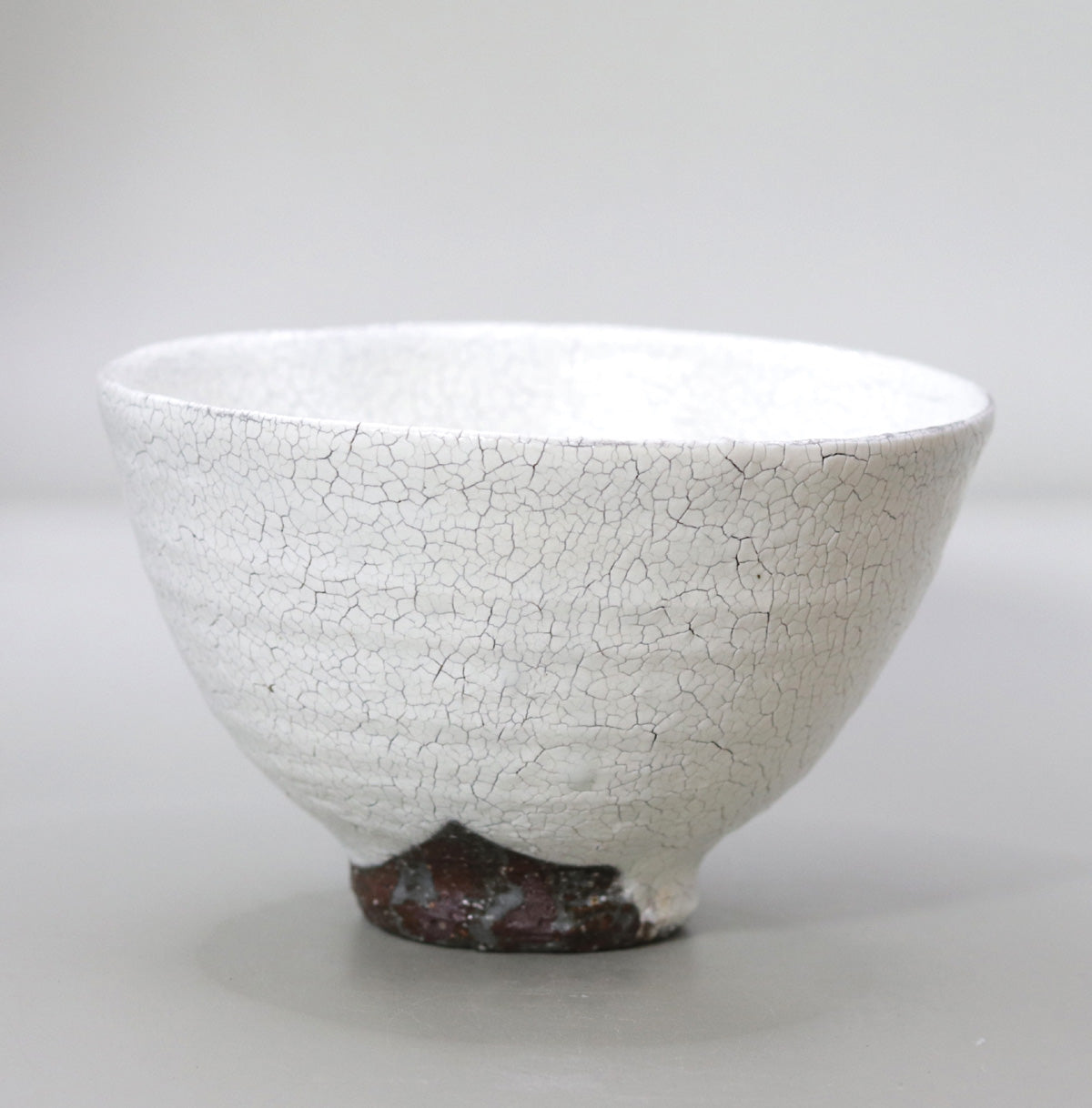
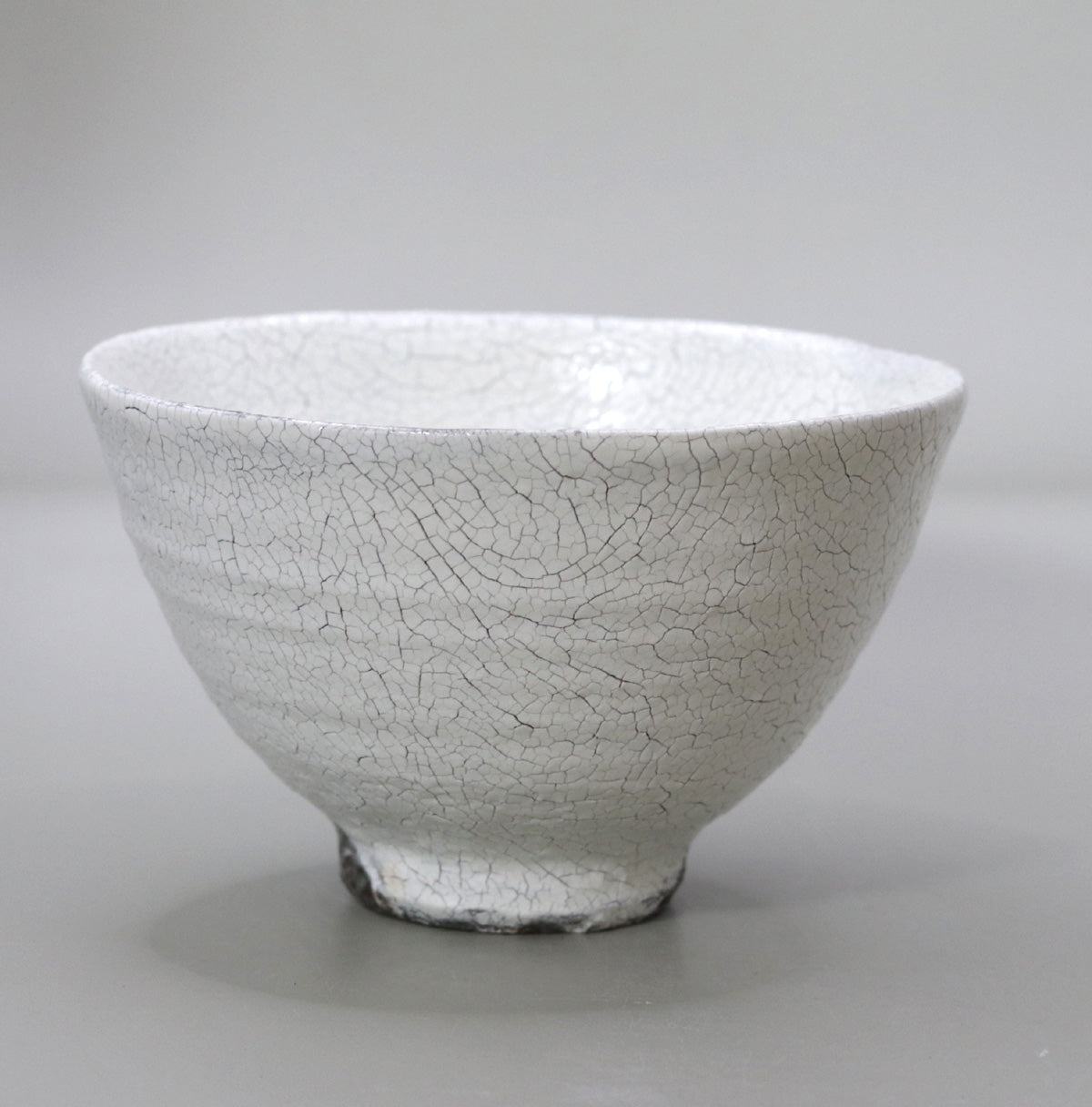
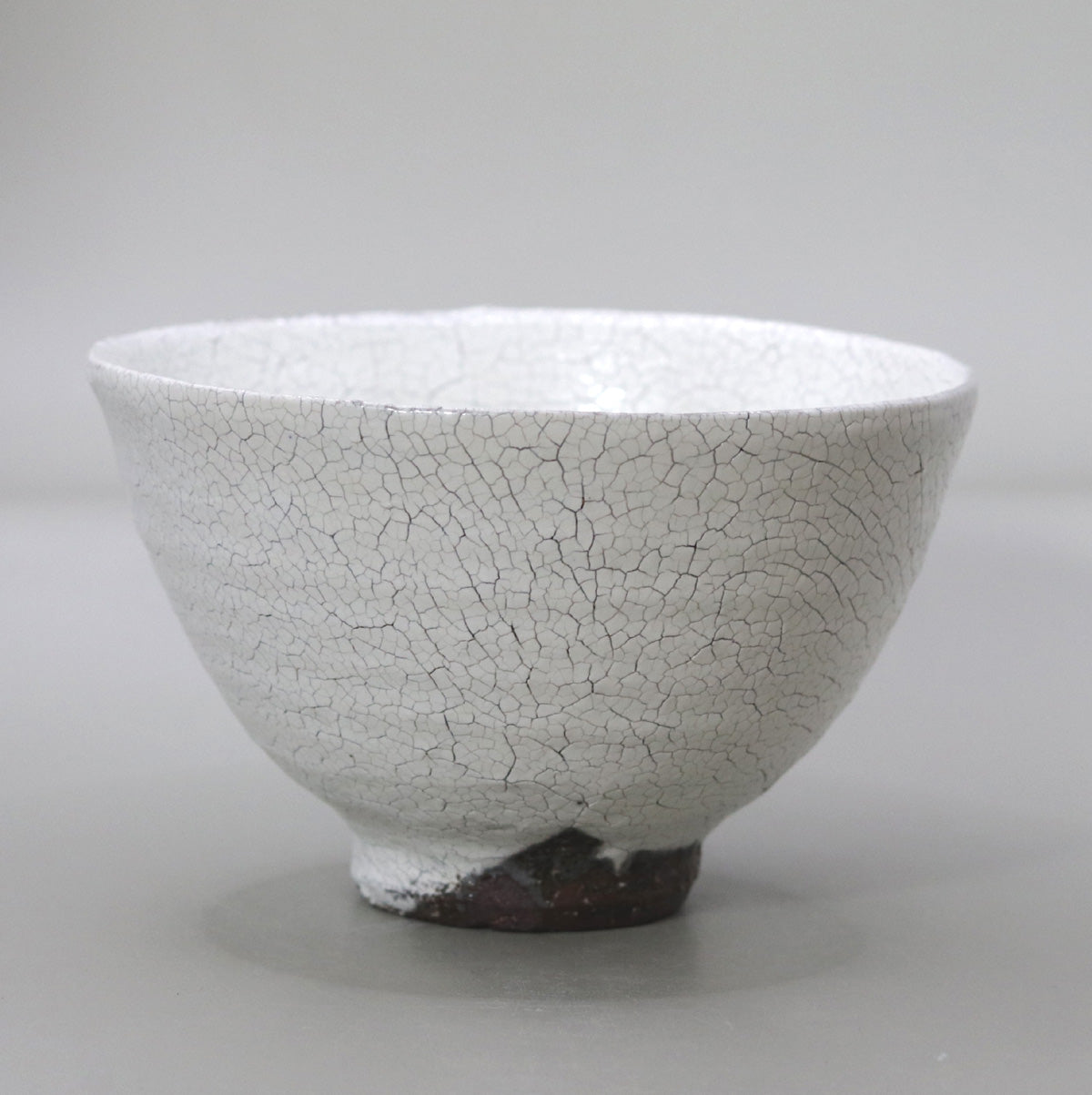
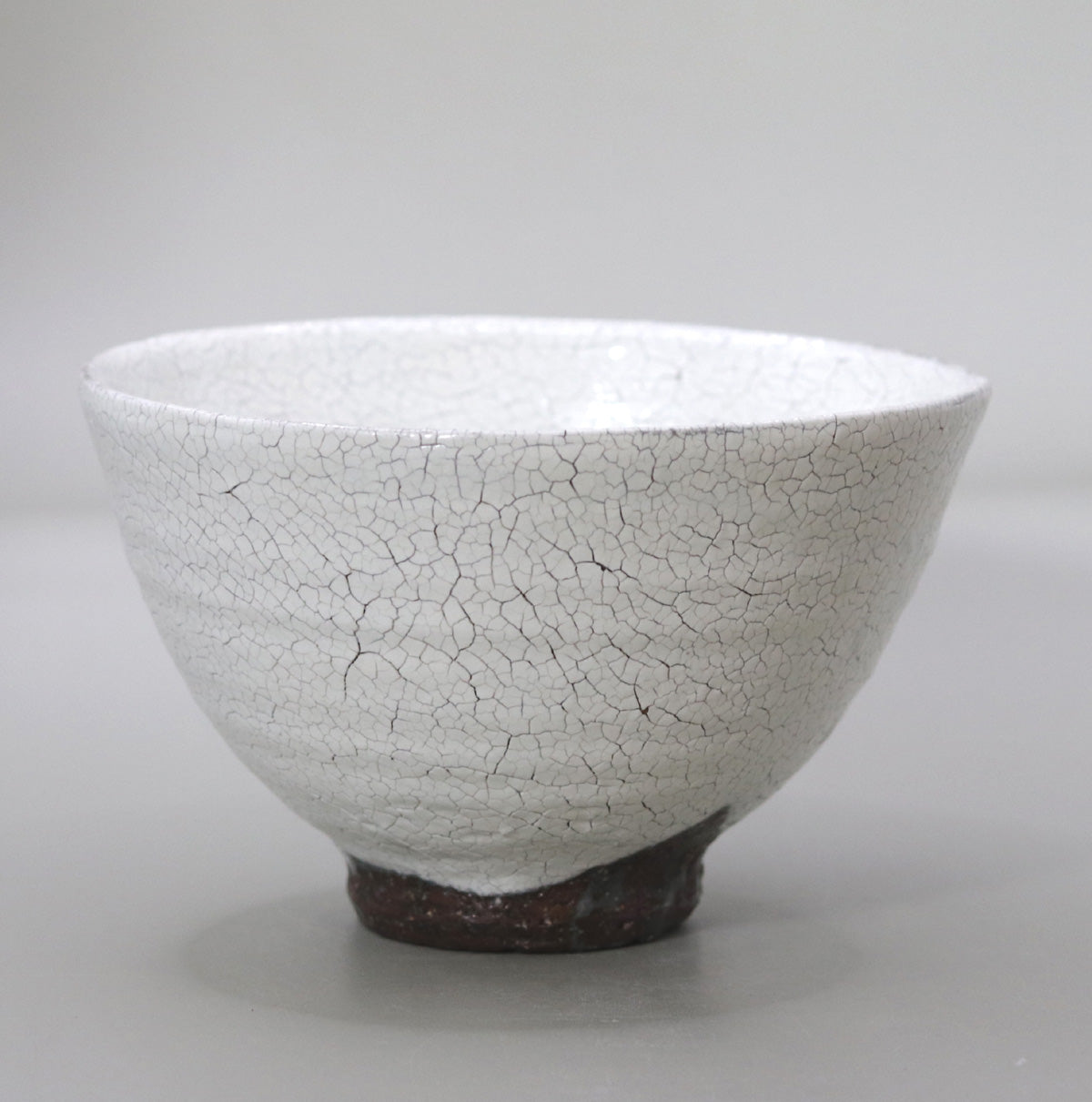
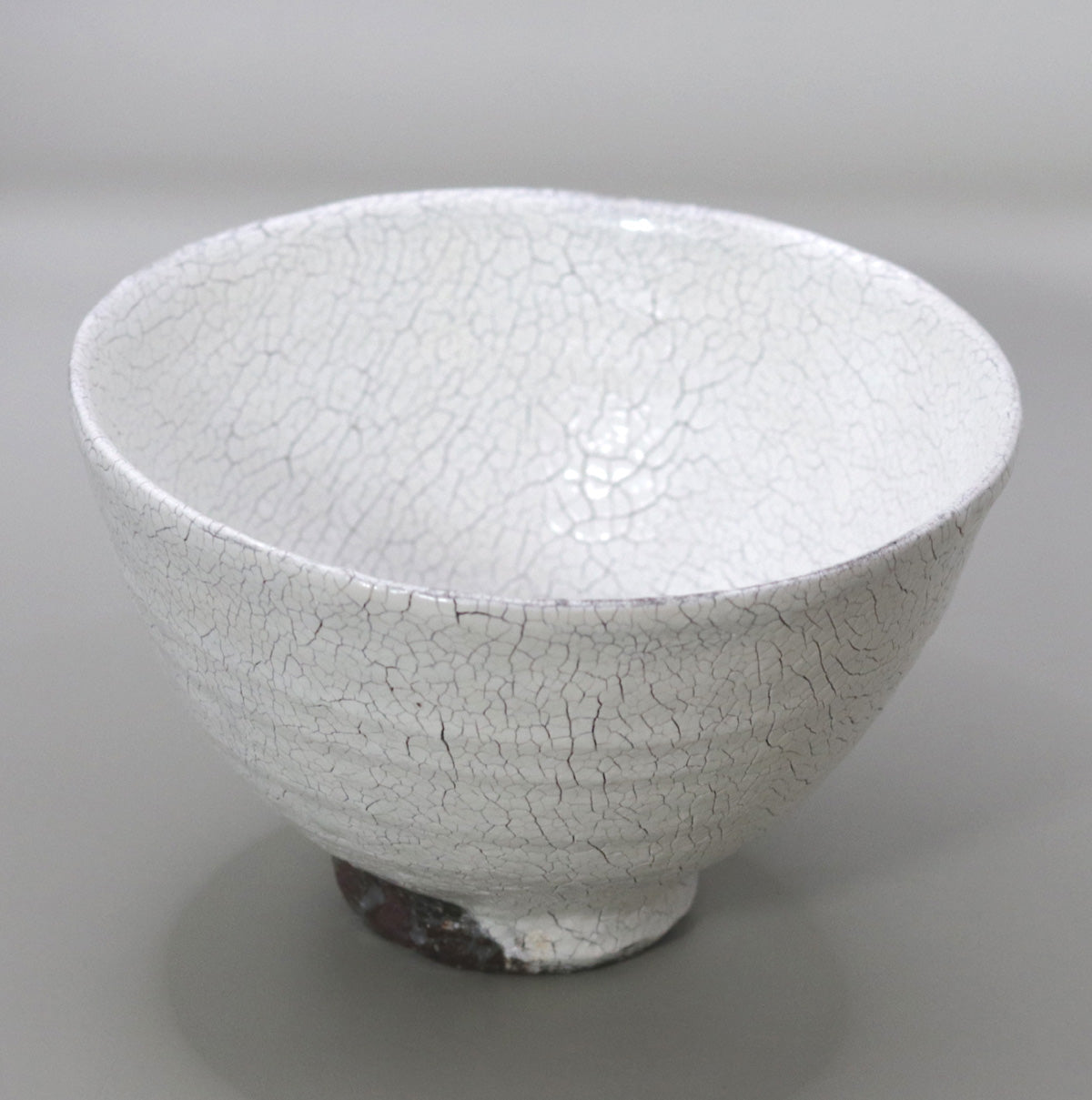
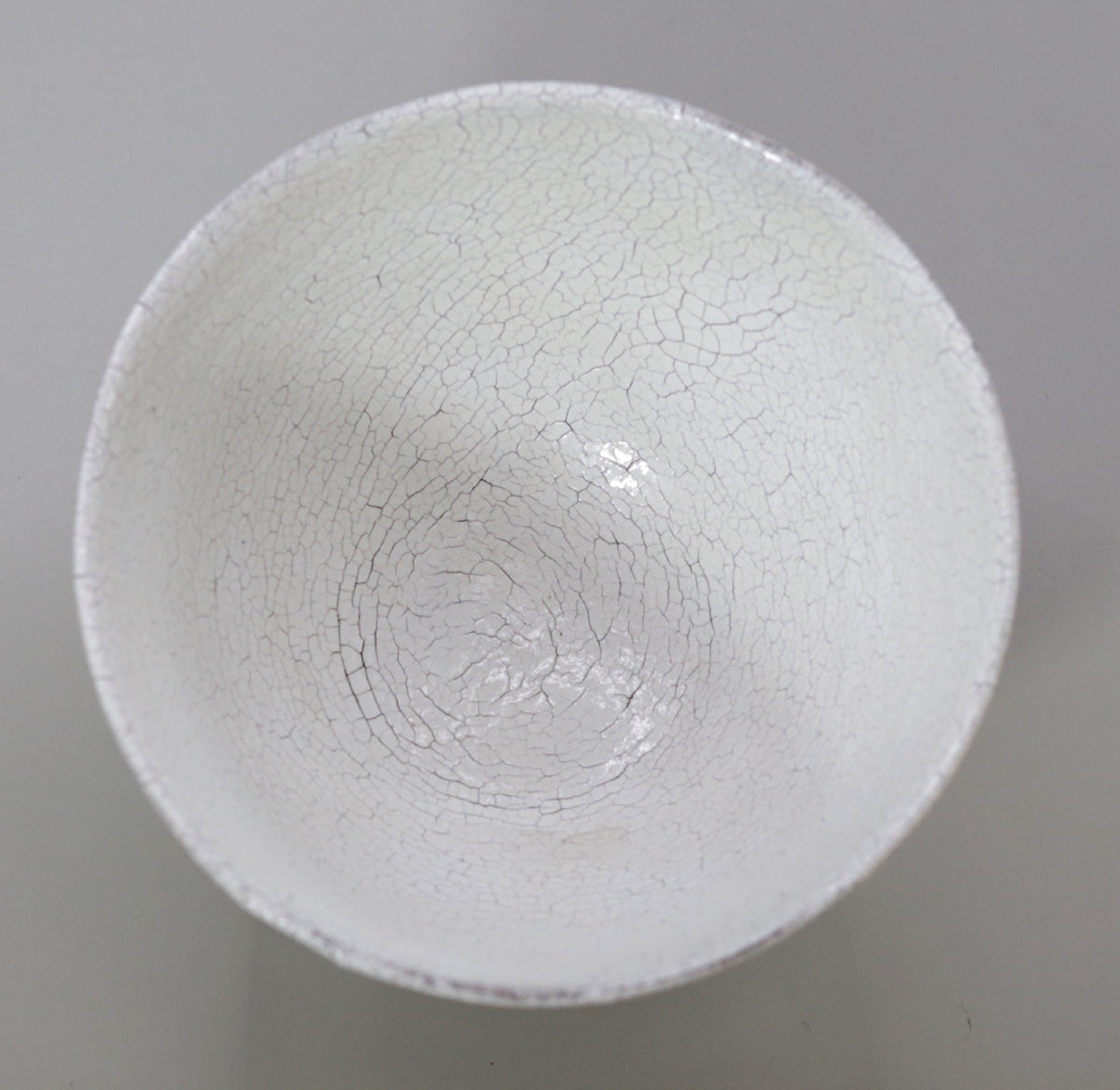
The greatest attraction of this piece is the fine crazing pattern that runs across the entire surface. The tortoiseshell-shaped cracks, created by the difference in shrinkage between the milky white glaze and the base as it cooled, are reminiscent of the cracks in the ice on the surface of a frozen lake. When light hits them, the crazing lines cast a subtle shadow, bringing out a rich sense of shading and rhythm within the tranquil white, creating a truly outstanding effect.
2. The lineage of Shiratanba and the challenge of Nishibata Tadashi
The history of Tamba ware is known for the "wildness" of its red clay and natural glaze, but from the Edo period onwards, "white Tamba" was born, which attempted to whiten the ware by adjusting the ash glaze. Nishibata Tadashi follows this tradition, applying a milky white glaze mainly made of feldspar to selected clay with low iron content, and firing it at high temperatures in a wood-fired kiln to achieve a soft white colour. The glaze's expansion coefficient and cooling speed are meticulously designed to create finely detailed crazing, highlighting the technical innovation unique to a contemporary artist.
3. Shape and platform: a harmony of practicality and beauty
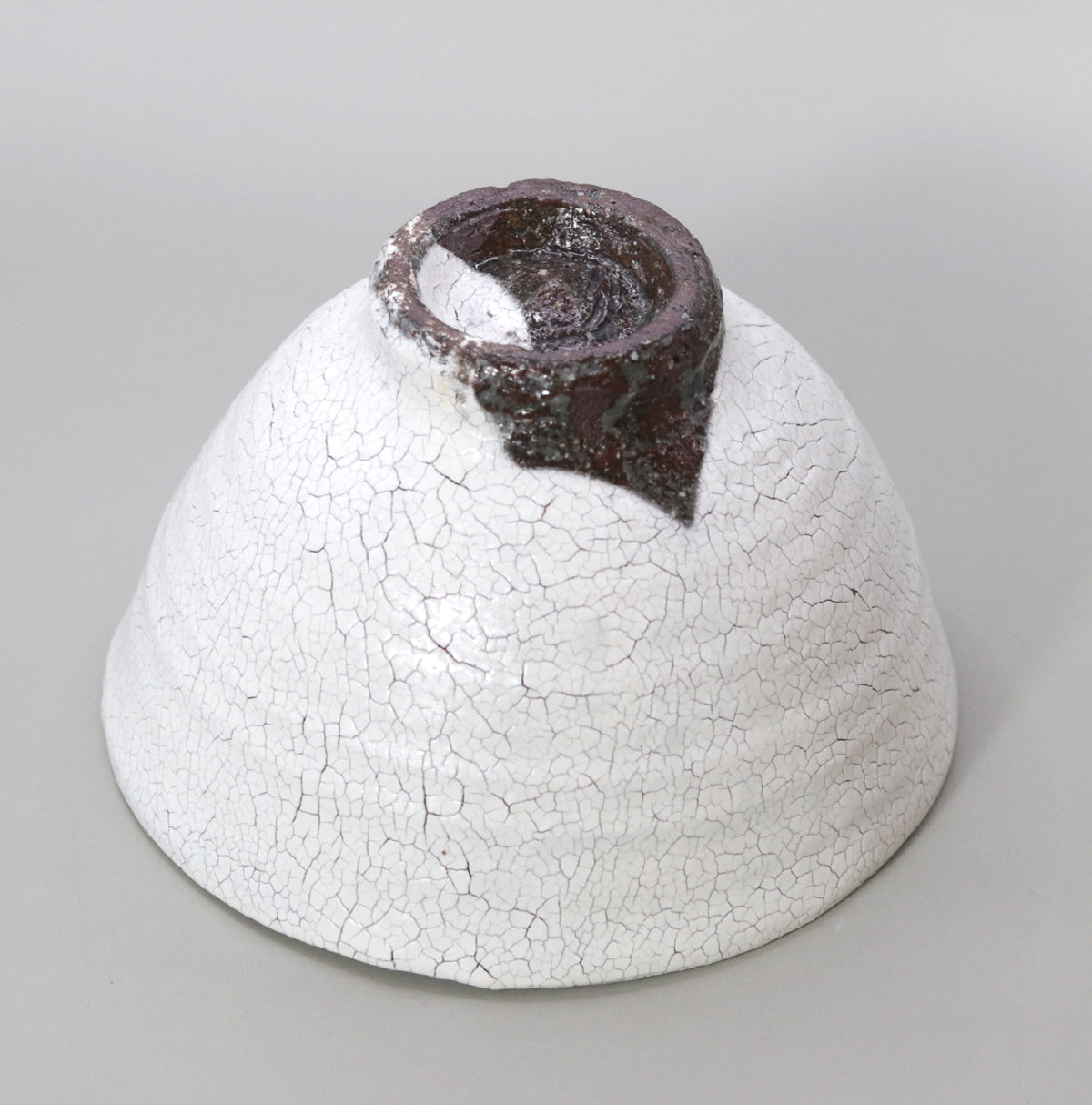
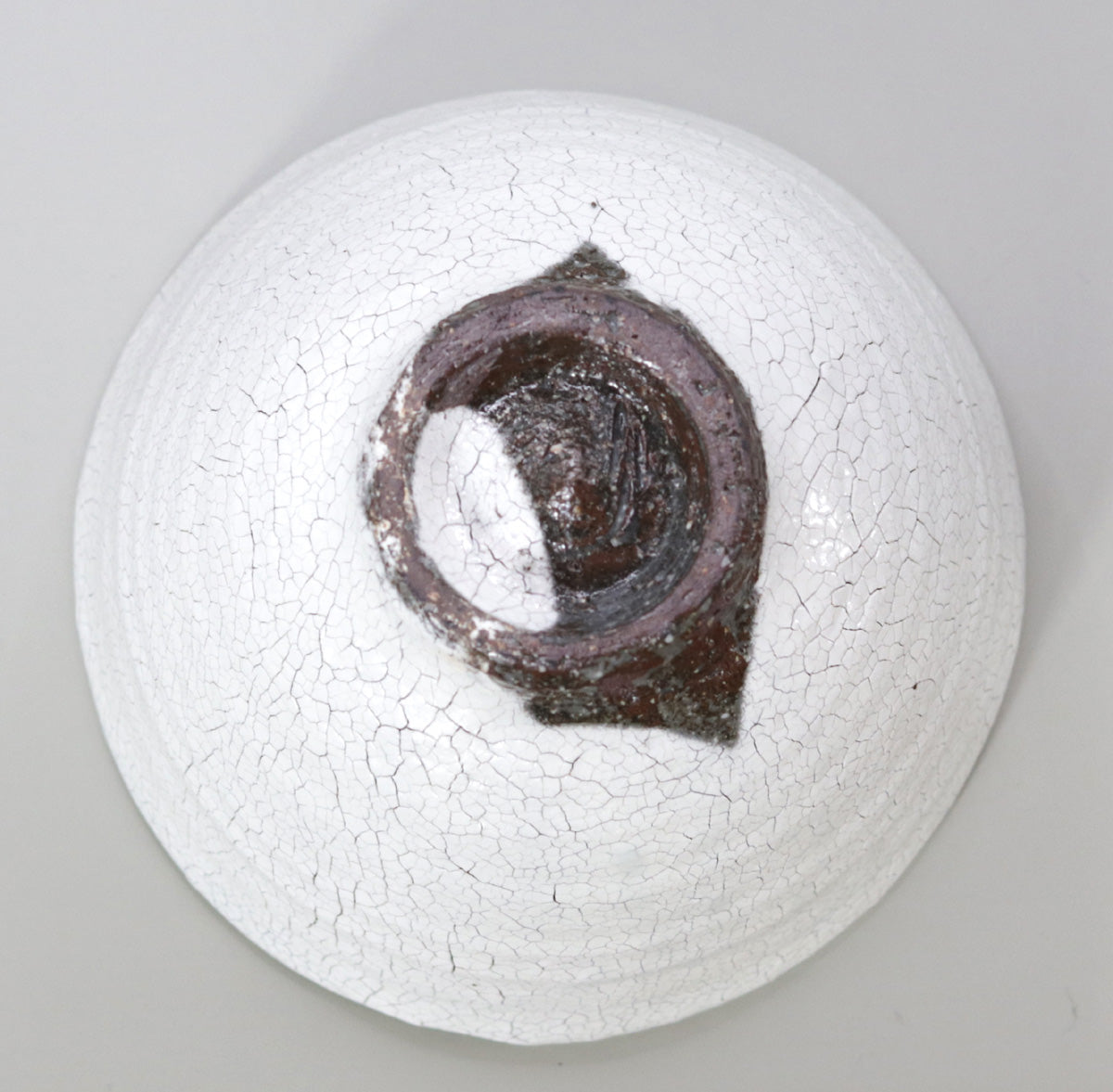
The bowl forms a gentle curve from the inside to the body, making it surprisingly light to hold. The rounded shape without any waist naturally guides the movement of the tea whisk, ensuring a uniform froth. In contrast, the base reveals the reddish-brown color characteristic of Tamba clay, and the outer periphery is carved away on three sides to accentuate its presence. The contrast between the white glaze and the earthenware gives the bowl a sense of tension and also functions as a visual accent.
4. A Dialogue Between White and Brown: Colors that Stand Out at Tea Ceremonies
The milky white glaze vividly brings out the green of the matcha. In the thin tea, the bubbles create delicate patterns along the craze lines, while in the thick tea, the deep brown and milky white contrast to create a mysterious look like the evening shadows falling on a snowy field. With each use, the tea seeps into the fine crazes, and you can enjoy the process of the color changing over time from light gray to pale brown - this is one of the joys of Shirotanba.
5. Zen silence and the poetry of wind and snow
The pure white evokes the idea that "form is emptiness," and the shape, free of unnecessary decoration, resonates deeply with the spirit of Zen. At the same time, the bare red clay remaining on the side of the foot embodies the energy of the earth, and a balance of stillness and movement, purity and impurity coexist within the bowl. At a tea ceremony, it will bring depth to the guest's mind, allowing them to simultaneously feel a sense of tranquility and the changing of the seasons.
6. A story that time adds to
Over the years, the intricate crazing absorbs a brown color, changing the scenery like a twilight setting on snow. With each touch, the oils of human skin and the humidity of the room have a subtle effect, causing subtle yellows and grays to overlap with the white. This process of "development" is none other than the joy of using this piece for a long time.
The White Tanba Tea Bowl is a vessel that embodies the history of Tanba's soil and fire, and allows you to feel the silence of snow and the breath of the earth in your palm. Please enjoy the milky white world woven by Nishibata Tadashi's meticulous calculations and bold firing, and nurture and deepen it along with the once-in-a-lifetime experience of the tea ceremony.
Tadashi Nishibata Biography
Born on February 24, 1948. Started making pottery in 1969. 1976. Hyogo Prefectural Exhibition Encouragement Award. 1986. Selected for the Japan Traditional Crafts Exhibition for the first time. 1988. Selected for the Japan Traditional Crafts Exhibition. Japan Traditional Crafts Exhibition. Japan Crafts Association President's Award. 1989. Selected for the Japan Ceramic Art Exhibition. Nogawa Memorial Award, Handon no Kai. 1991. Selected for the Japan Traditional Crafts Exhibition. Selected for the Japan Ceramic Art Exhibition. Grand Prize at the Tea Ceremony Forms Exhibition. 1992. Selected for the Japan Traditional Crafts Exhibition. Excellence Award at the Tea Ceremony Forms Exhibition. Hyogo Prefecture Emerging Artist Encouragement Award. Invited to exhibit at the NHK-sponsored Paris - 100 Contemporary Japanese Ceramics Exhibition. Excellence Award at the Tea Ceremony Forms Exhibition. 1993. Selected for the Japan Traditional Crafts Exhibition. Solo exhibition at Sogo Hiroshima store. Kyoto Chemin. 1994. Selected for the Japan Traditional Crafts Exhibition. Solo exhibition at Nihonbashi Mitsukoshi Main Store. 1995. Selected for the Japan Traditional Crafts Exhibition. Solo exhibition at Sogo Hiroshima store. 1996. Selected for the Japan Traditional Crafts Exhibition. Awarded the Excellence Award at the Tea Ceremony Design Exhibition, solo exhibition at Nihonbashi Mitsukoshi Main Store
1997 Encouragement Award at the Tea Ceremony Design Exhibition 1998 Selected for the Japan Traditional Crafts Exhibition Solo exhibition at Mitsukoshi Nihonbashi Main Store Selected for the Japan Traditional Crafts Exhibition 2000 Solo exhibition at Mitsukoshi Nihonbashi Main Store Solo exhibition at Mitsukoshi Fukuoka 2001 Selected for the Japan Traditional Crafts Exhibition 2002 Solo exhibition at Mitsukoshi Nihonbashi Main Store Solo exhibition at Gallery Dojima 2003 Solo exhibition at Touchingston, USA 2004 Grand Prize at the Tea Ceremony Design Exhibition at Sogo Hiroshima 2005 Exhibited at the Akashi City Museum of Culture and Hyogo Ceramics Exhibition Purchase of Akadobedai, Hyogo Ceramic Art Museum Solo exhibition at Gallery Dojima, Mitsukoshi Nihonbashi Main Store 2006 Grand Prize at the Tea Ceremony Design Exhibition Selected for the Japan Traditional Crafts Exhibition at the Museum of Fine Arts, Boston and the New York Japan Society Gallery Solo exhibition at Yokohama Takashimaya Touchingston, USA Father and Son Exhibition at Matsuyama Takashimaya Toshunkai Exhibition, Sogo Yokohama. Encouragement Award at the Tea Ceremony Art Exhibition. Selected for the Japan Traditional Crafts Exhibition in 2008. Selected for the Japan Traditional Crafts Exhibition. Solo Exhibition, Yokohama Takashimaya, Mitsukoshi Nihombashi, Santa Fe, Touchingston, USA. Toshunkai Exhibition, Funabashi, Seibu, Sogo Hiroshima. Invited to the Japanese Ceramics Exhibition in 2009. Solo Exhibition, Gallery Dojima, Sendai Mitsukoshi, 2010. Sogo Kobe. Exhibited in the Musee Tomo Grand Prize Exhibition, Contemporary Tea. Solo Exhibition, Yokohama Takashimaya, Touchingston, USA. Invited to the Japanese Ceramics Exhibition. Solo Exhibition, Joan B. Marvis, New York, USA. Invited to the Japanese Ceramics Exhibition in 2013. Exhibited in the "Contemporary Famous Bowls" exhibition at the Musee Tomo, Kanmi Kikuchi Memorial. Solo Exhibition, Mitsukoshi Nihombashi, Santa Fe, Touchingston, USA. Gallery Miyazaki, Sogo Kobe, Chiba Sogo, 2014. Solo Exhibition, Mitsukoshi Nihombashi, 2015. Received the Hyogo Prefecture Cultural Award in 2016. Exhibited at Higashihiroshima City Museum of Art for "Ceramics that Color Our Lives - Food Ware" Exhibited at Joan B. Marvis' 40th Anniversary Exhibition in 2017.
2018 Solo Exhibition at Nihonbashi Mitsukoshi Main Store
Share
-
[I will send it to you quickly and carefully]
We carefully package each product in a way that suits it best.
Also, delivery times vary depending on the piece (vessel, etc.).
Items that already come with a box will be shipped within 1-3 days of the order date.
For items that require a box to be made after your order, it will take approximately 30 days for production to be completed and then shipped.
In either case, once we have confirmed your order, we will contact you by email to inform you of the delivery date.
-
[Requests when purchasing pottery]
Even products that look the same may differ slightly in color, shape, size, etc.
The way the glaze is used, the power of the kiln, the firing method, the season, and the humidity also affect the appearance of the pottery.
Please understand the individuality of each piece of pottery and enjoy the unique warmth of handmade.