
Ash glaze tea bowl Nishidansei
Ash glaze tea bowl Nishidansei
Couldn't load pickup availability
Width: 13.4cm Depth: 12.8cm Height: 9.0cm
A colorful veil drawn by ash
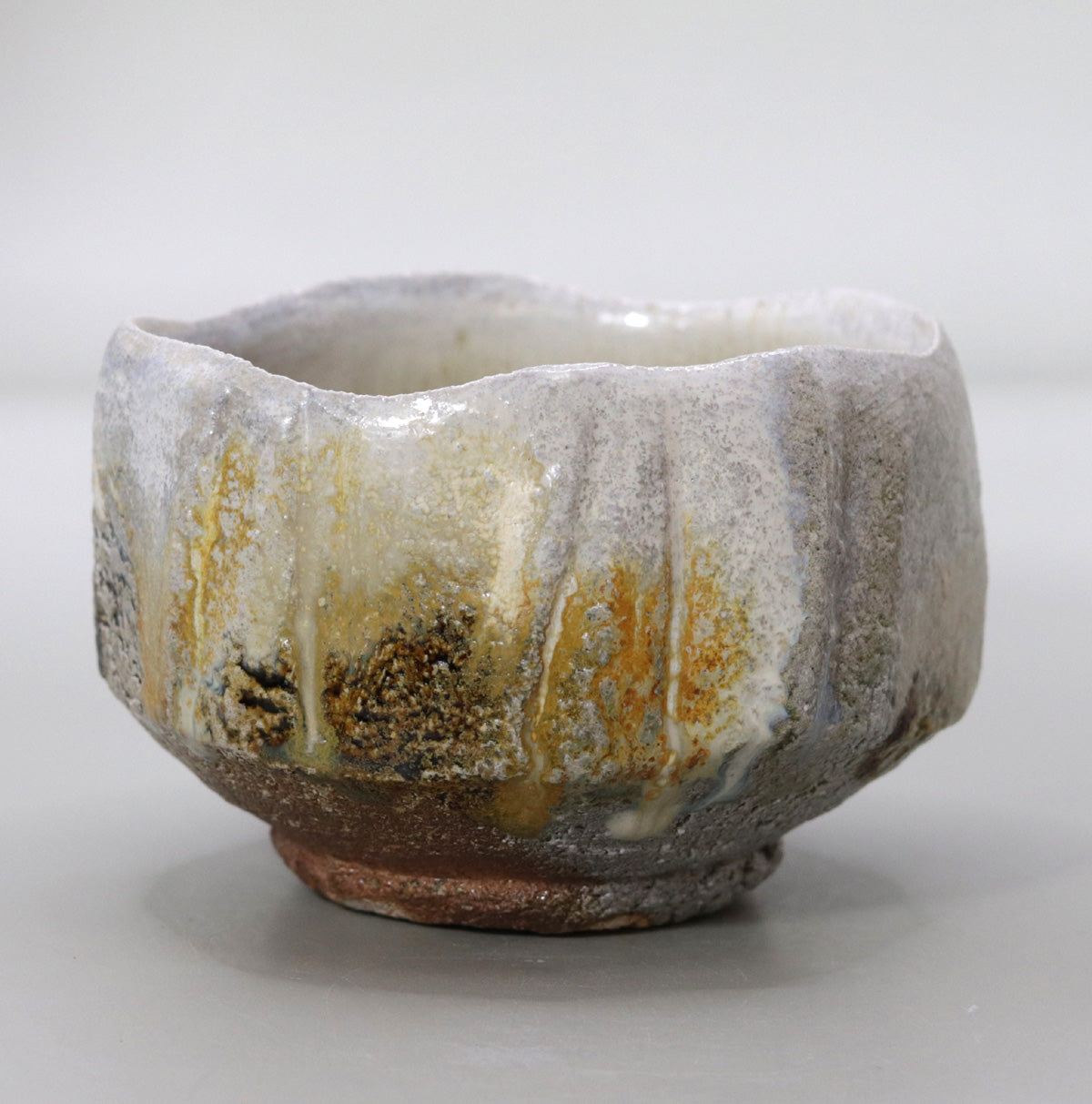
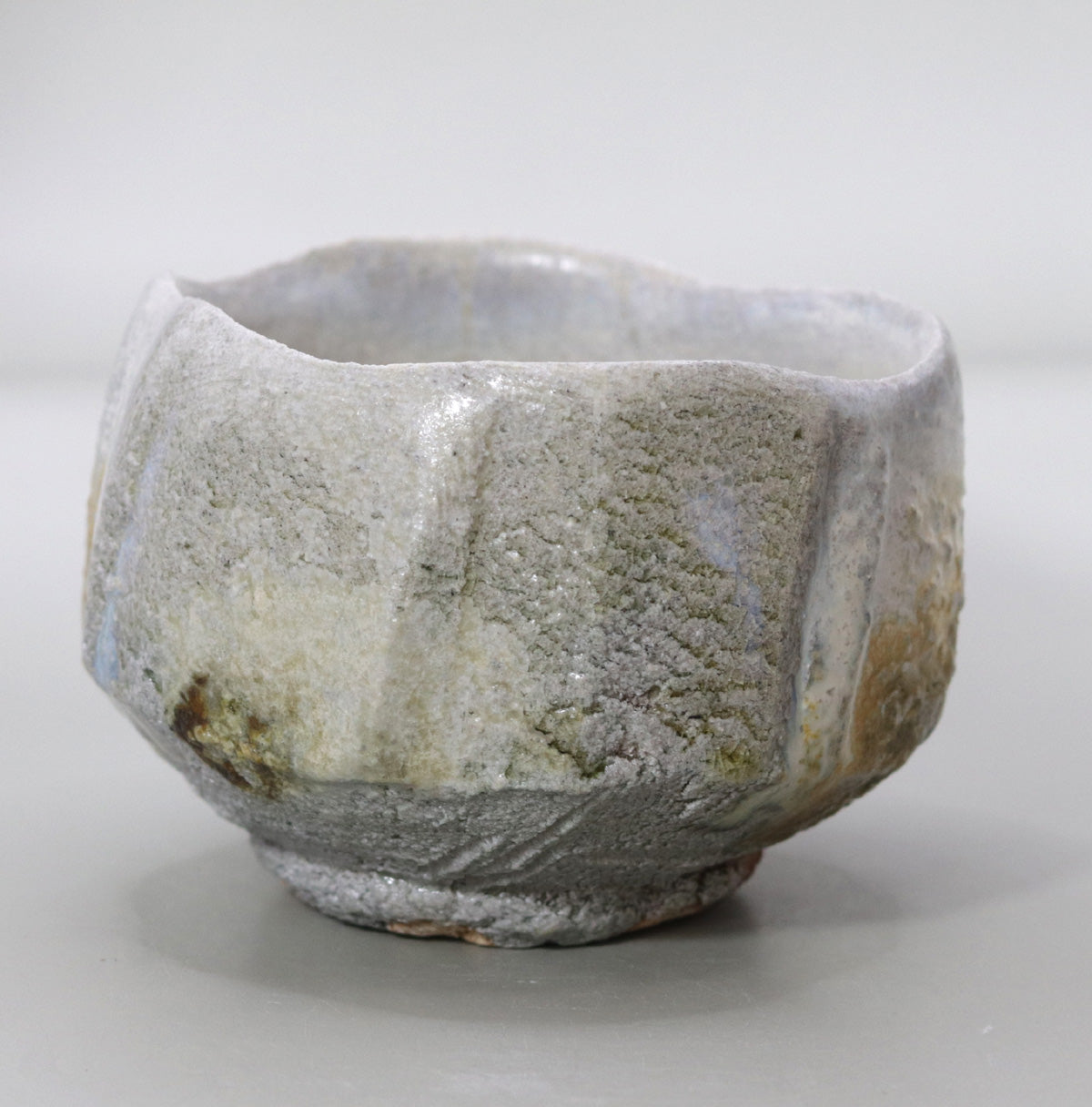
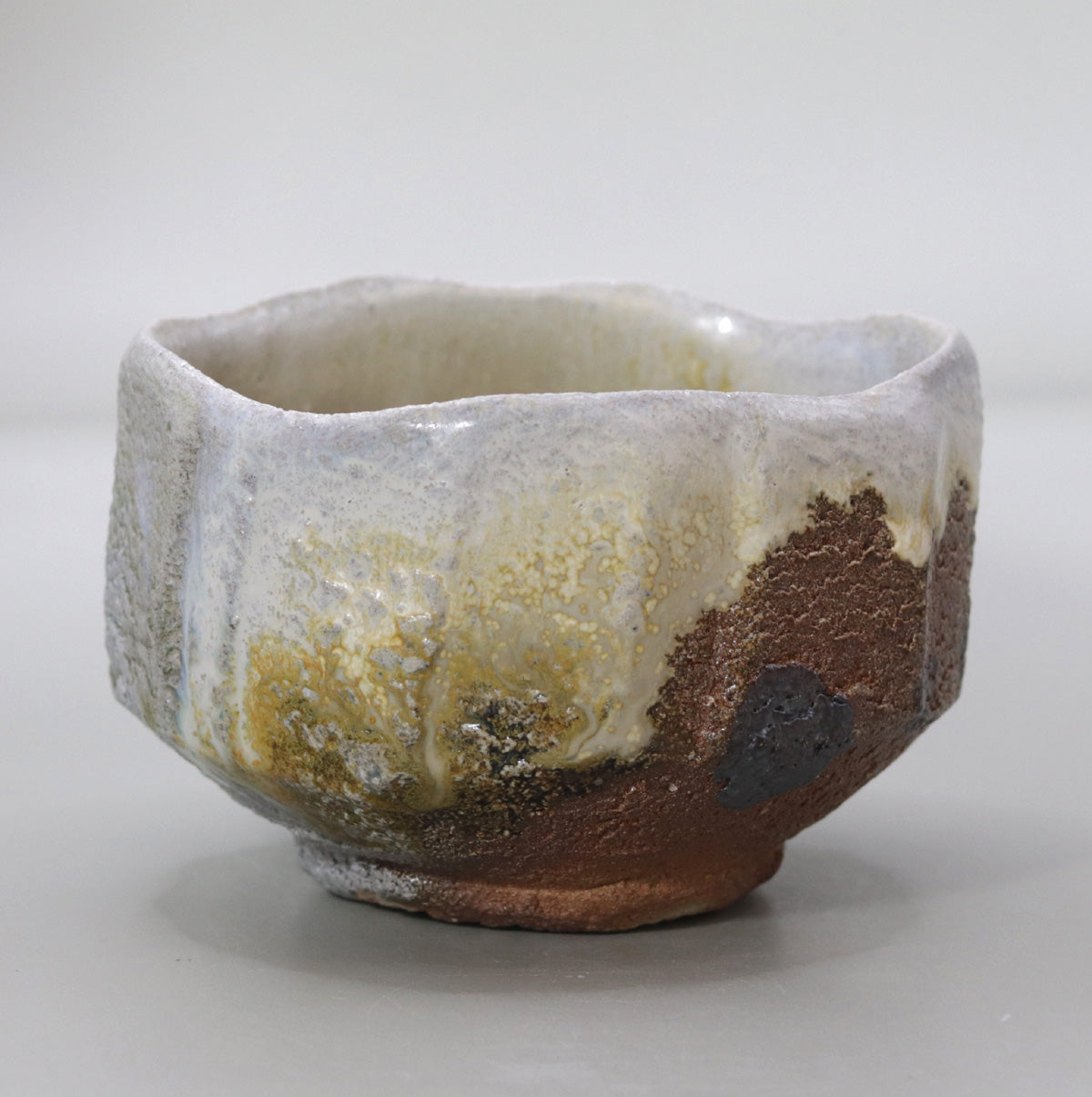
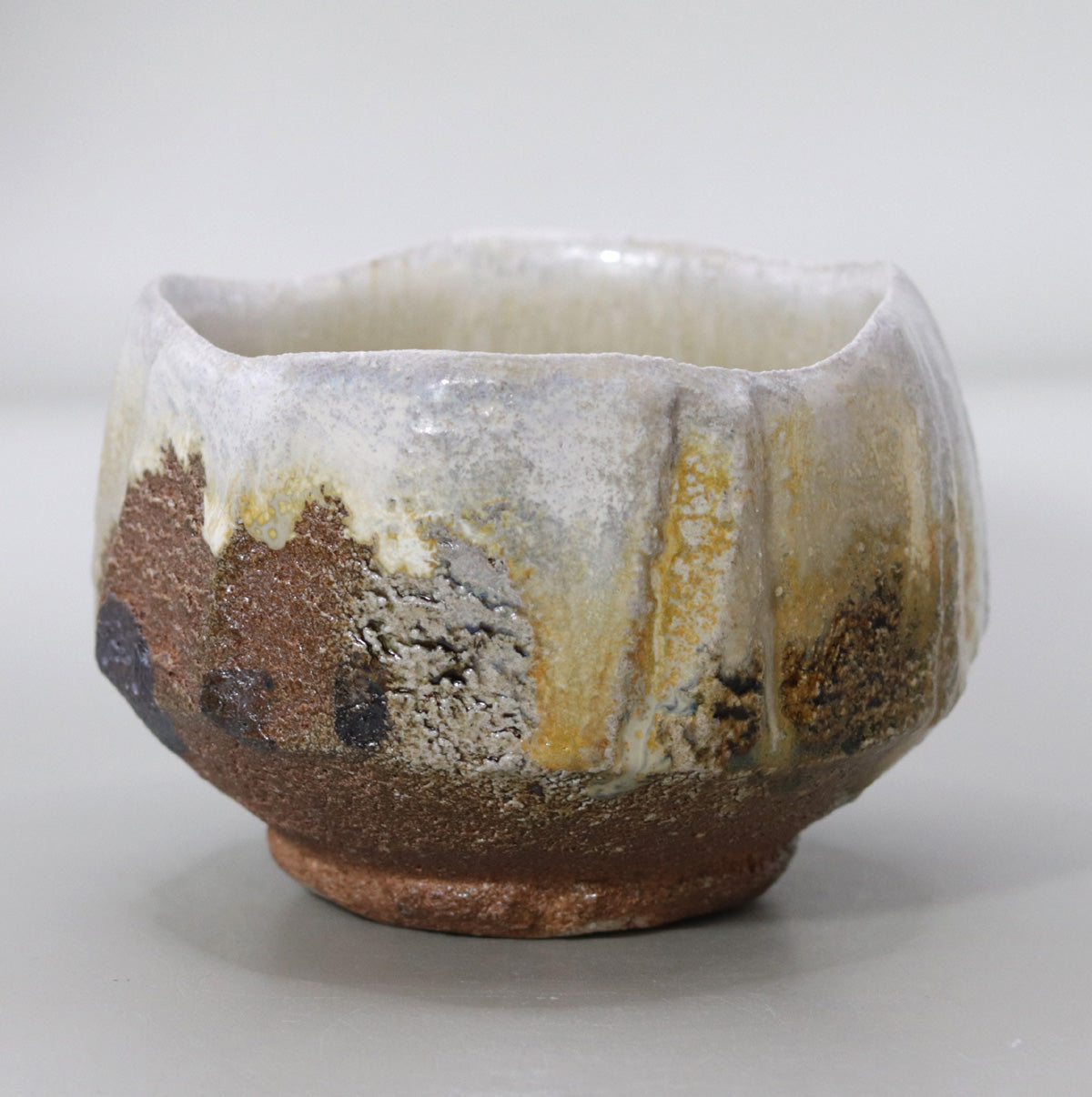
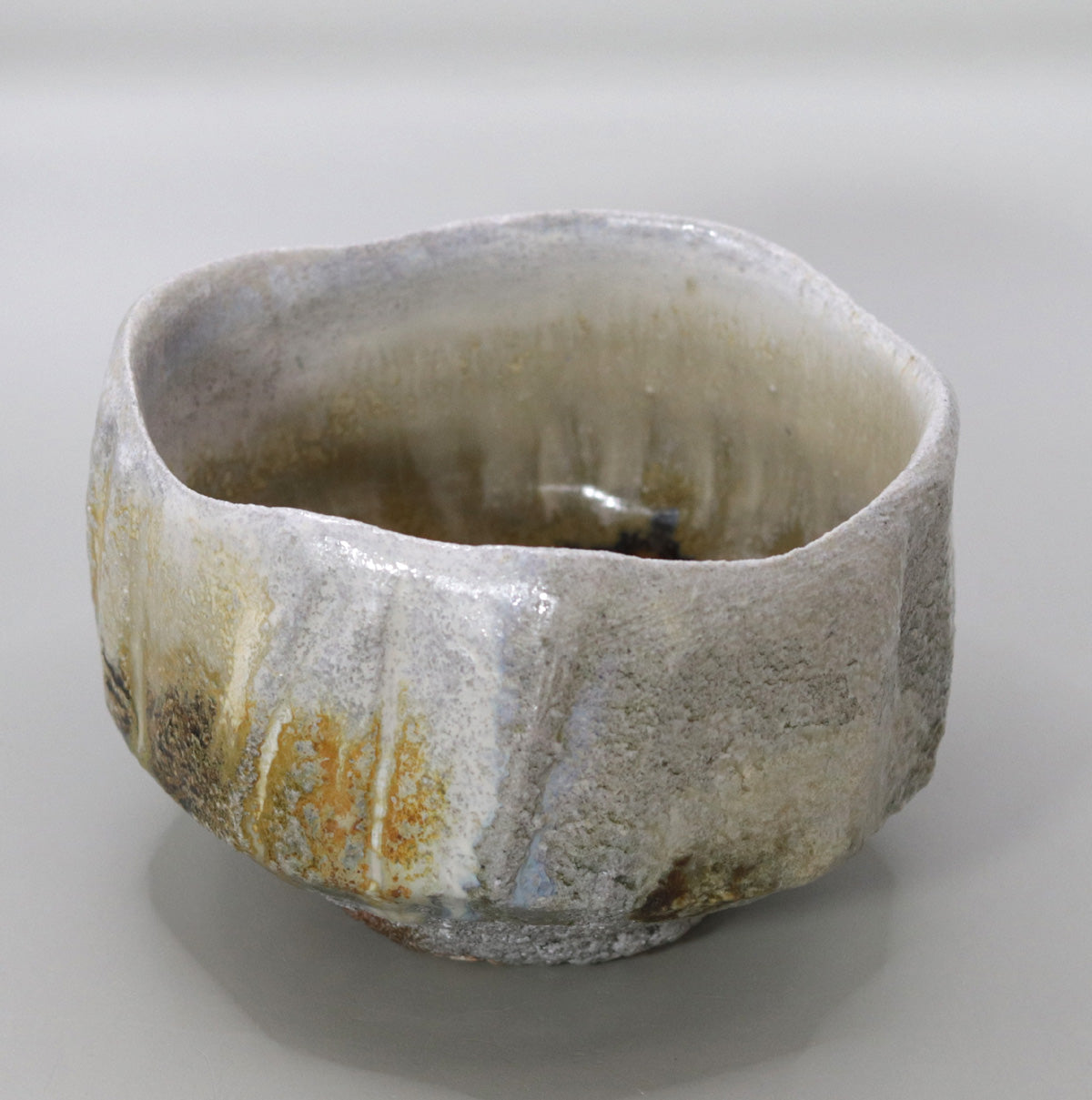
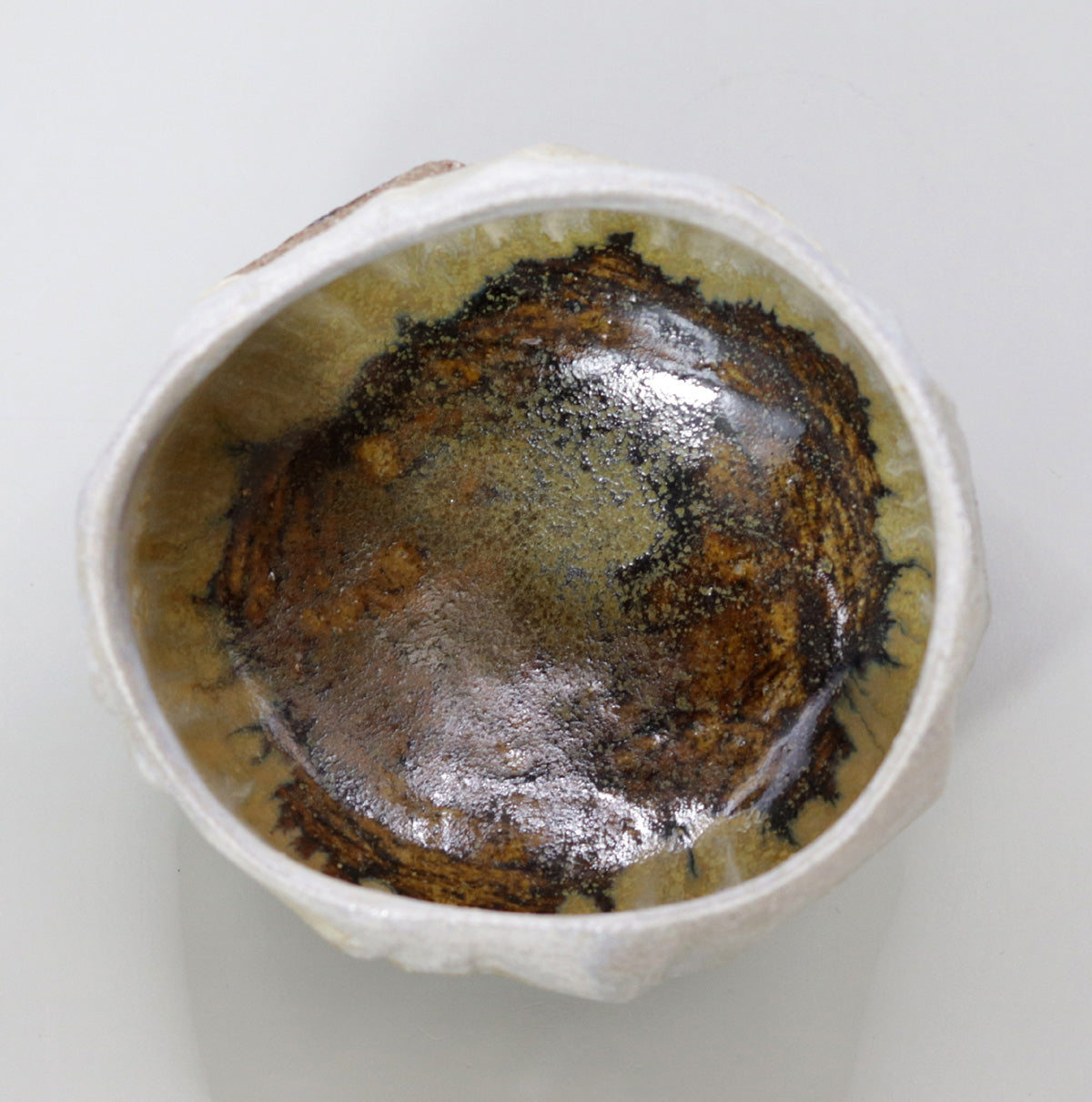
In this piece, the ash glaze flows and builds up layers, creating a gradation that shifts from milky white to pale gray, ochre, and pale blue. The calcium in the ash melts and combines with the iron and silica contained in the base, forming a yellowish-brown and orange "sauce," creating a scene that resembles a vein of mineral deposits seeping into the mountainside. The vitreous luster unique to ash glazes the delicate yuhada (grain-like) surface, and its fascinating sheen, like wet rock, changes depending on the angle from which it is viewed.
Gentle bending creates stillness and movement
The body is carved with gentle vertical folds, creating shadows that echo the natural flow of ash. The rim is lightly wavy, with soft variations in height like the ridges of a mountain range, adding a pleasant variation to the mouthfeel. When held in the palm of your hand, your fingers naturally catch the unevenness of the folds, perfectly combining a rustic look with ease of use.
The wonders of kiln changes woven by Tamba ware
Throughout its thousand-year history, Tamba ware has been characterized by the beauty of the "natural glaze" created by the fierce flames and fly ash of the climbing kiln. Nishibata Tadashi meticulously calculates the positioning of the kiln load, deliberately leaving areas to the flames and ash, thereby eliciting a unique expression that hovers on the border between chance and deliberateness. The process by which the ash glaze drips in columns after a long residence time and cools and hardens again at the end creates a sense of profoundness, as if condensing a cliff wall weathered over a thousand years.
Colors and textures that stand out in the tea ceremony
The colorful glaze, with its pale gray-blue and yellowish brown hues, creates a backdrop that highlights the vibrant green of the matcha. When thin tea is brewed, the fine bubbles reflect off the glassy ash glaze, creating a sparkling mirror-like effect, while when thick tea is brewed, the deep brown water reflects the ochre-colored sauce, evoking the charm of an autumn evening glow. The thick body gently transfers heat, maintaining a gentle warmth in the palm of your hand even in cold weather, a practical consideration.
Zen silence and a hymn to nature
Devoid of intentional decoration, the scenery achieved solely through the workings of ash and flame is reminiscent of the "beauty of randomness" preached by Zen. The bubbles and minute crystals hidden in the ash glaze evoke the breathing of the earth and the footprints of weathering, evoking a sense of the grand axis of time amidst the tranquility. When this tea bowl is used at a tea ceremony, a meditative space emerges, as if the mountains, rivers, plants and trees have been condensed into a single bowl, bringing a deep aftertaste to the once-in-a-lifetime occasion.
The crystallization of craftsmanship and innovation
Nishibata Tadashi's work builds on the traditional Tanba ash-glazing technique, and by devising ways to carve out the base and arrange the kiln load, he has achieved a three-dimensional form that emphasizes the "flow" of dripping ash. By highlighting the intersection where the glassy texture of the ash glaze and the roughness of the clay intersect, he has achieved a sculptural impact not seen in traditional Tanba ash-glazed tea bowls.
Texture nurtured by time
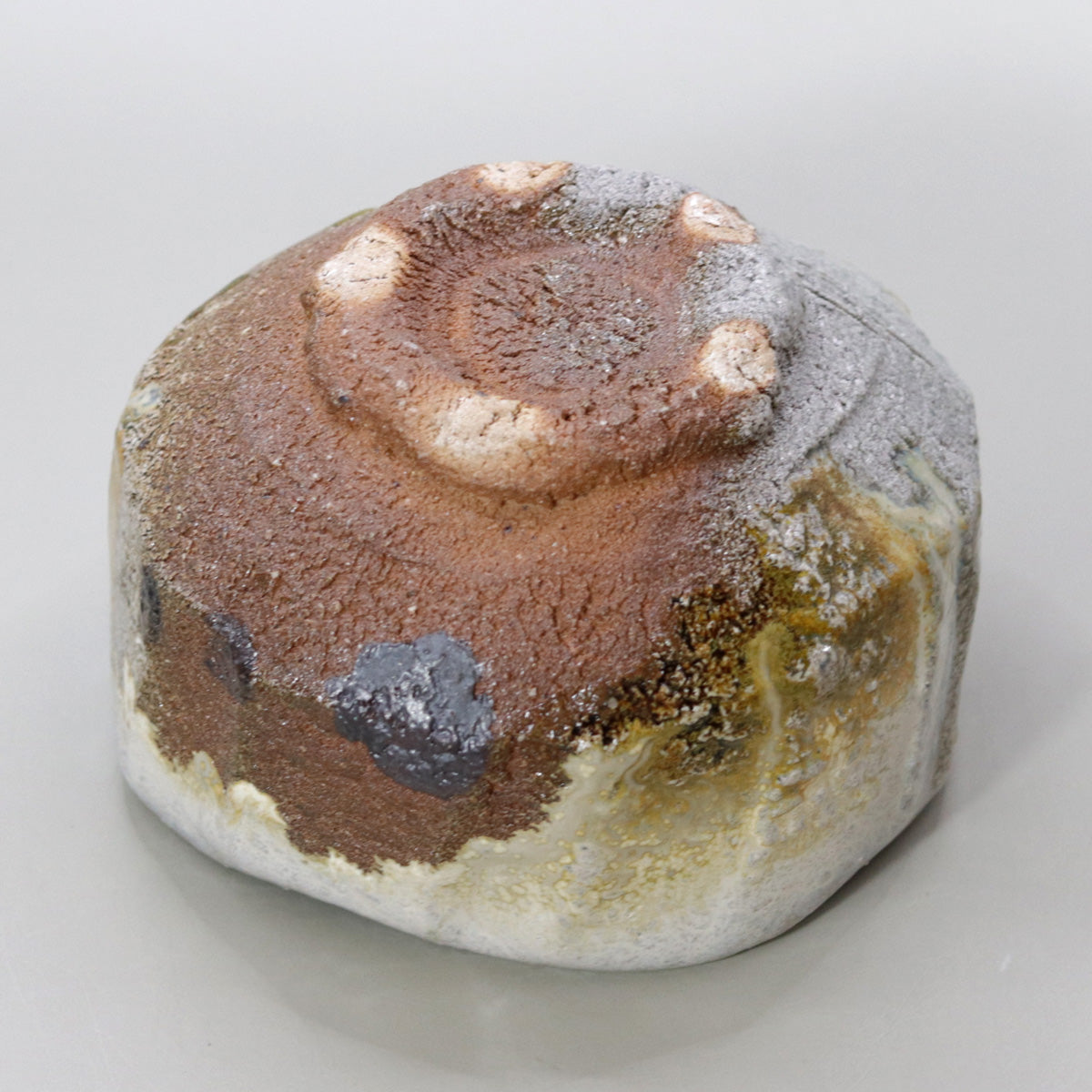
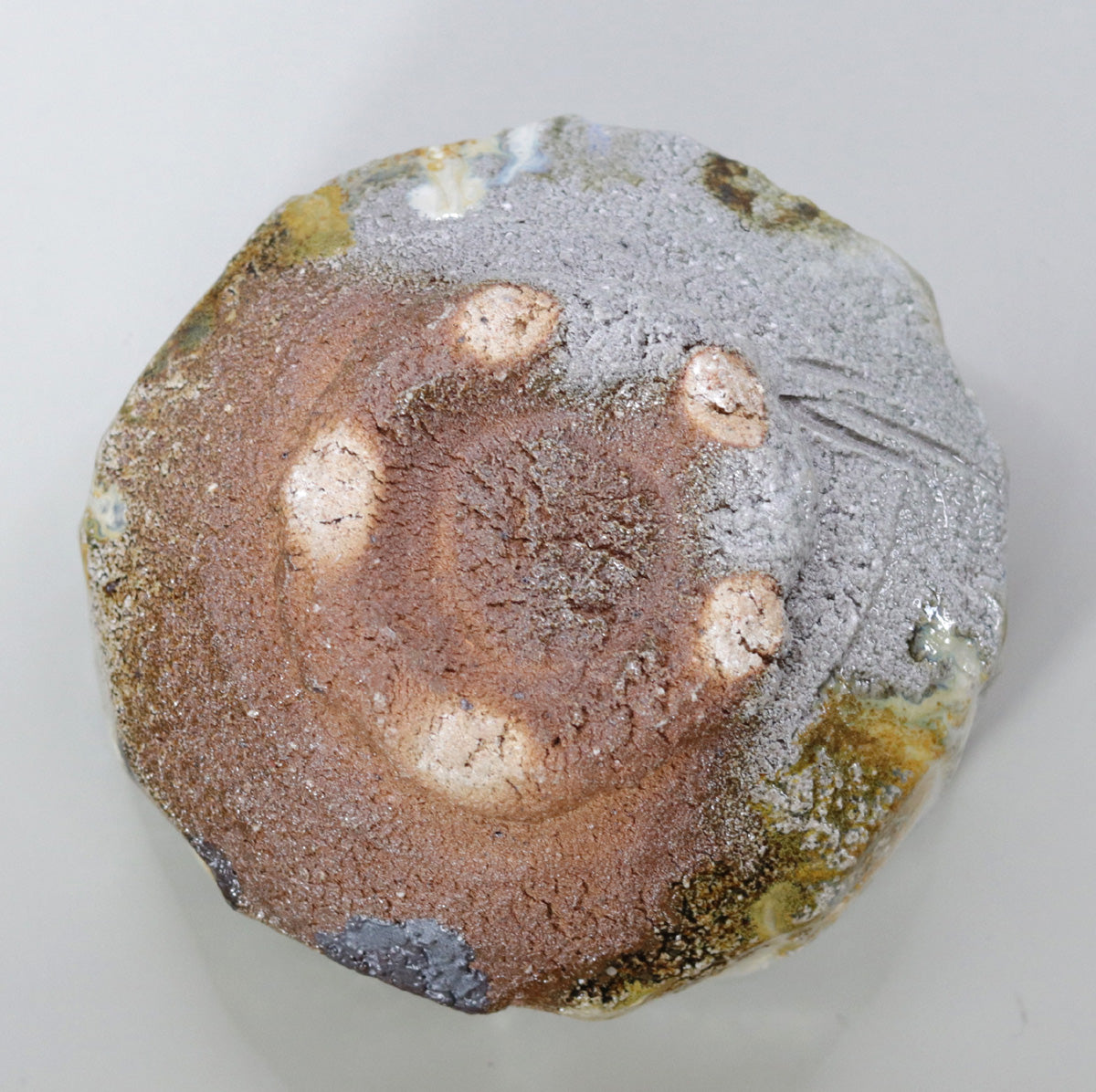
The glaze layer has fine crazing, and the more it is used, the more tea stains it, turning the gray-blue surface a pale brown. The drip marks and ash pools on the bottom also gradually gain a glossy finish, and the way the owner's time is engraved into the vessel's appearance is one of the true joys of tea utensils.
This ash-glazed tea bowl allows you to hold in your palm an abstract painting of ash and flame, leading to a moment of deep meditation during the tea ceremony. This unique scene, woven by the natural world and human skill, is a treasured treasure to be treasured for many years to come. Sougetsu will continue to enrich the bowl, continuing to carve out a story of Zen serenity and praise for nature.
Tadashi Nishibata Biography
Born on February 24, 1948. Started making pottery in 1969. 1976. Hyogo Prefectural Exhibition Encouragement Award. 1986. Selected for the Japan Traditional Crafts Exhibition for the first time. 1988. Selected for the Japan Traditional Crafts Exhibition. Japan Traditional Crafts Exhibition. Japan Crafts Association President's Award. 1989. Selected for the Japan Ceramic Art Exhibition. Nogawa Memorial Award, Handon no Kai. 1991. Selected for the Japan Traditional Crafts Exhibition. Selected for the Japan Ceramic Art Exhibition. Grand Prize at the Tea Ceremony Forms Exhibition. 1992. Selected for the Japan Traditional Crafts Exhibition. Excellence Award at the Tea Ceremony Forms Exhibition. Hyogo Prefecture Emerging Artist Encouragement Award. Invited to exhibit at the NHK-sponsored Paris - 100 Contemporary Japanese Ceramics Exhibition. Excellence Award at the Tea Ceremony Forms Exhibition. 1993. Selected for the Japan Traditional Crafts Exhibition. Solo exhibition at Sogo Hiroshima store. Kyoto Chemin. 1994. Selected for the Japan Traditional Crafts Exhibition. Solo exhibition at Nihonbashi Mitsukoshi Main Store. 1995. Selected for the Japan Traditional Crafts Exhibition. Solo exhibition at Sogo Hiroshima store. 1996. Selected for the Japan Traditional Crafts Exhibition. Awarded the Excellence Award at the Tea Ceremony Design Exhibition, solo exhibition at Nihonbashi Mitsukoshi Main Store
1997 Encouragement Award at the Tea Ceremony Design Exhibition 1998 Selected for the Japan Traditional Crafts Exhibition Solo exhibition at Mitsukoshi Nihonbashi Main Store Selected for the Japan Traditional Crafts Exhibition 2000 Solo exhibition at Mitsukoshi Nihonbashi Main Store Solo exhibition at Mitsukoshi Fukuoka 2001 Selected for the Japan Traditional Crafts Exhibition 2002 Solo exhibition at Mitsukoshi Nihonbashi Main Store Solo exhibition at Gallery Dojima 2003 Solo exhibition at Touchingston, USA 2004 Grand Prize at the Tea Ceremony Design Exhibition at Sogo Hiroshima 2005 Exhibited at the Akashi City Museum of Culture and Hyogo Ceramics Exhibition Purchase of Akadobedai, Hyogo Ceramic Art Museum Solo exhibition at Gallery Dojima, Mitsukoshi Nihonbashi Main Store 2006 Grand Prize at the Tea Ceremony Design Exhibition Selected for the Japan Traditional Crafts Exhibition at the Museum of Fine Arts, Boston and the New York Japan Society Gallery Solo exhibition at Yokohama Takashimaya Touchingston, USA Father and Son Exhibition at Matsuyama Takashimaya Toshunkai Exhibition, Sogo Yokohama. Encouragement Award at the Tea Ceremony Art Exhibition. Selected for the Japan Traditional Crafts Exhibition in 2008. Selected for the Japan Traditional Crafts Exhibition. Solo Exhibition, Yokohama Takashimaya, Mitsukoshi Nihombashi, Santa Fe, Touchingston, USA. Toshunkai Exhibition, Funabashi, Seibu, Sogo Hiroshima. Invited to the Japanese Ceramics Exhibition in 2009. Solo Exhibition, Gallery Dojima, Sendai Mitsukoshi, 2010. Sogo Kobe. Exhibited in the Musee Tomo Grand Prize Exhibition, Contemporary Tea. Solo Exhibition, Yokohama Takashimaya, Touchingston, USA. Invited to the Japanese Ceramics Exhibition. Solo Exhibition, Joan B. Marvis, New York, USA. Invited to the Japanese Ceramics Exhibition in 2013. Exhibited in the "Contemporary Famous Bowls" exhibition at the Musee Tomo, Kanmi Kikuchi Memorial. Solo Exhibition, Mitsukoshi Nihombashi, Santa Fe, Touchingston, USA. Gallery Miyazaki, Sogo Kobe, Chiba Sogo, 2014. Solo Exhibition, Mitsukoshi Nihombashi, 2015. Received the Hyogo Prefecture Cultural Award in 2016. Exhibited at Higashihiroshima City Museum of Art for "Ceramics that Color Our Lives - Food Ware" Exhibited at Joan B. Marvis' 40th Anniversary Exhibition in 2017.
2018 Solo Exhibition at Nihonbashi Mitsukoshi Main Store
Share
-
[I will send it to you quickly and carefully]
We carefully package each product in a way that suits it best.
Also, delivery times vary depending on the piece (vessel, etc.).
Items that already come with a box will be shipped within 1-3 days of the order date.
For items that require a box to be made after your order, it will take approximately 30 days for production to be completed and then shipped.
In either case, once we have confirmed your order, we will contact you by email to inform you of the delivery date.
-
[Requests when purchasing pottery]
Even products that look the same may differ slightly in color, shape, size, etc.
The way the glaze is used, the power of the kiln, the firing method, the season, and the humidity also affect the appearance of the pottery.
Please understand the individuality of each piece of pottery and enjoy the unique warmth of handmade.