
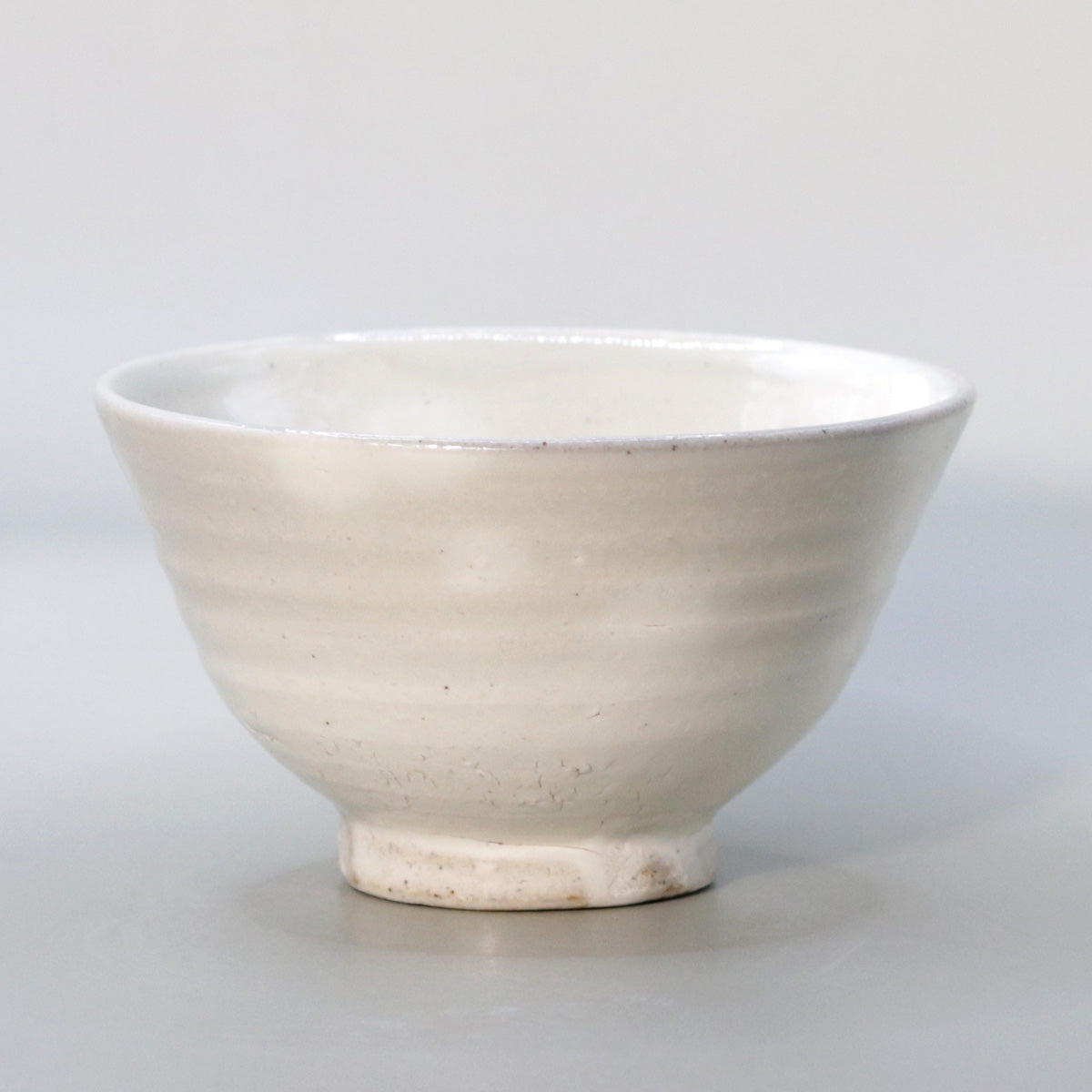
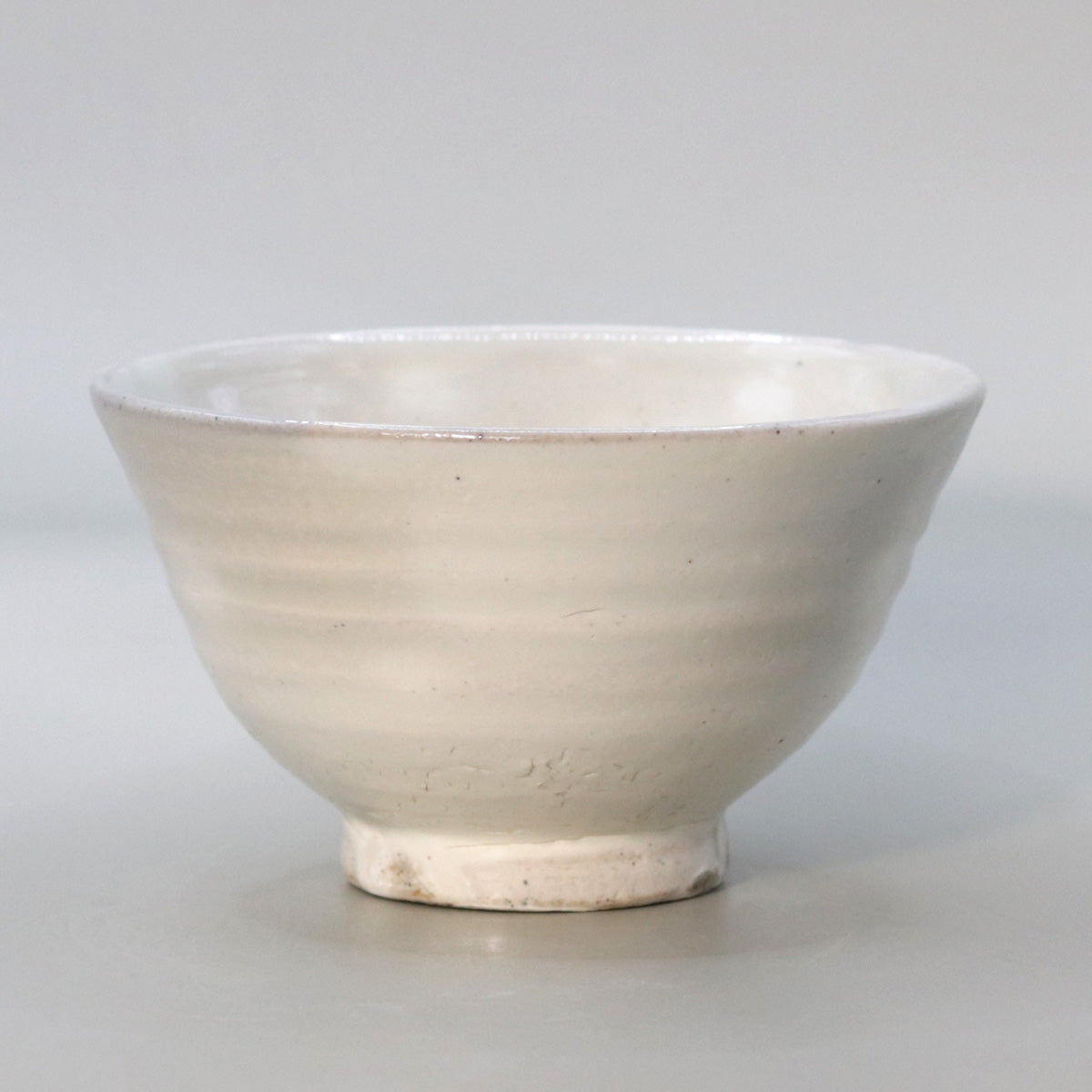
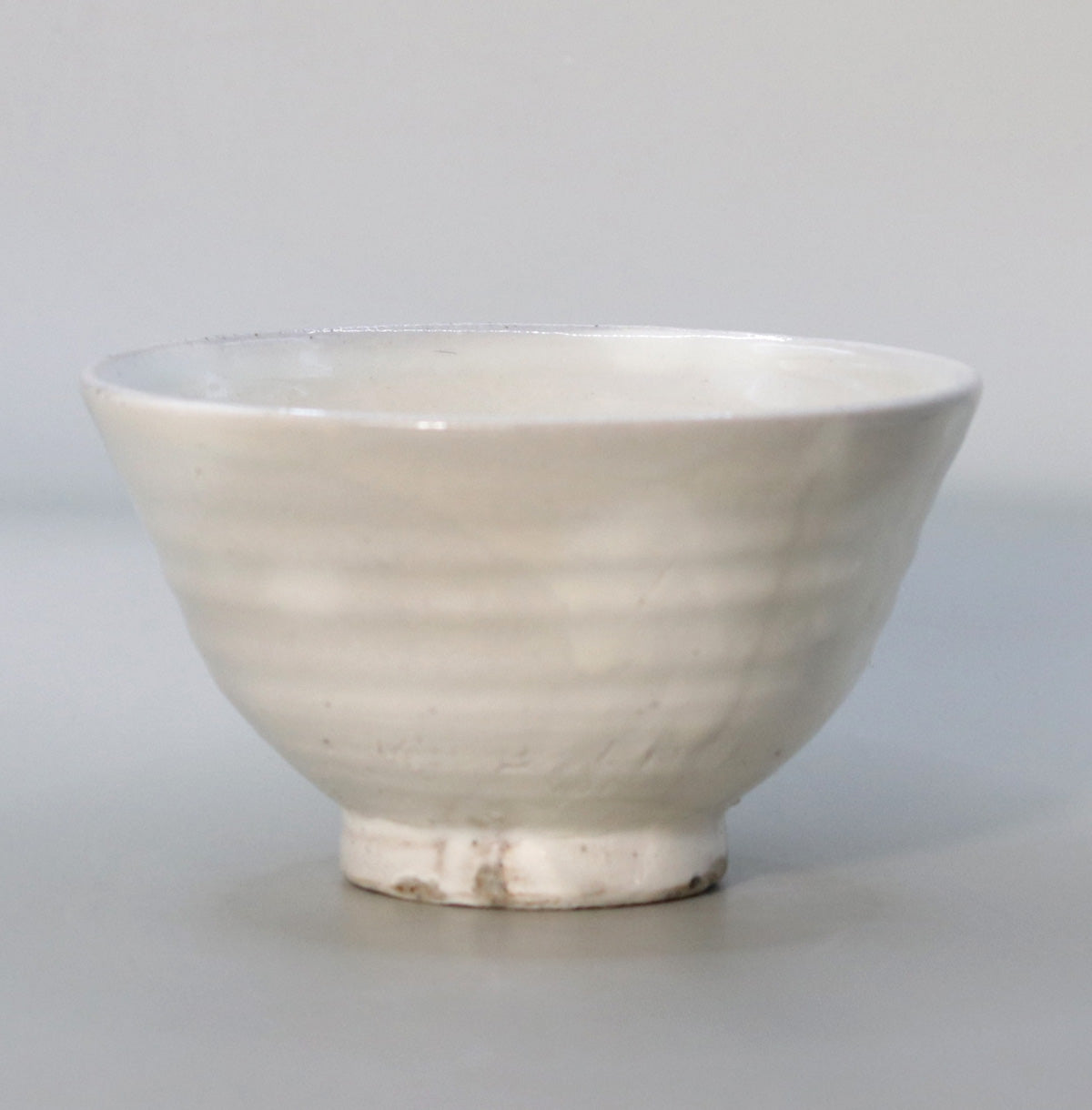
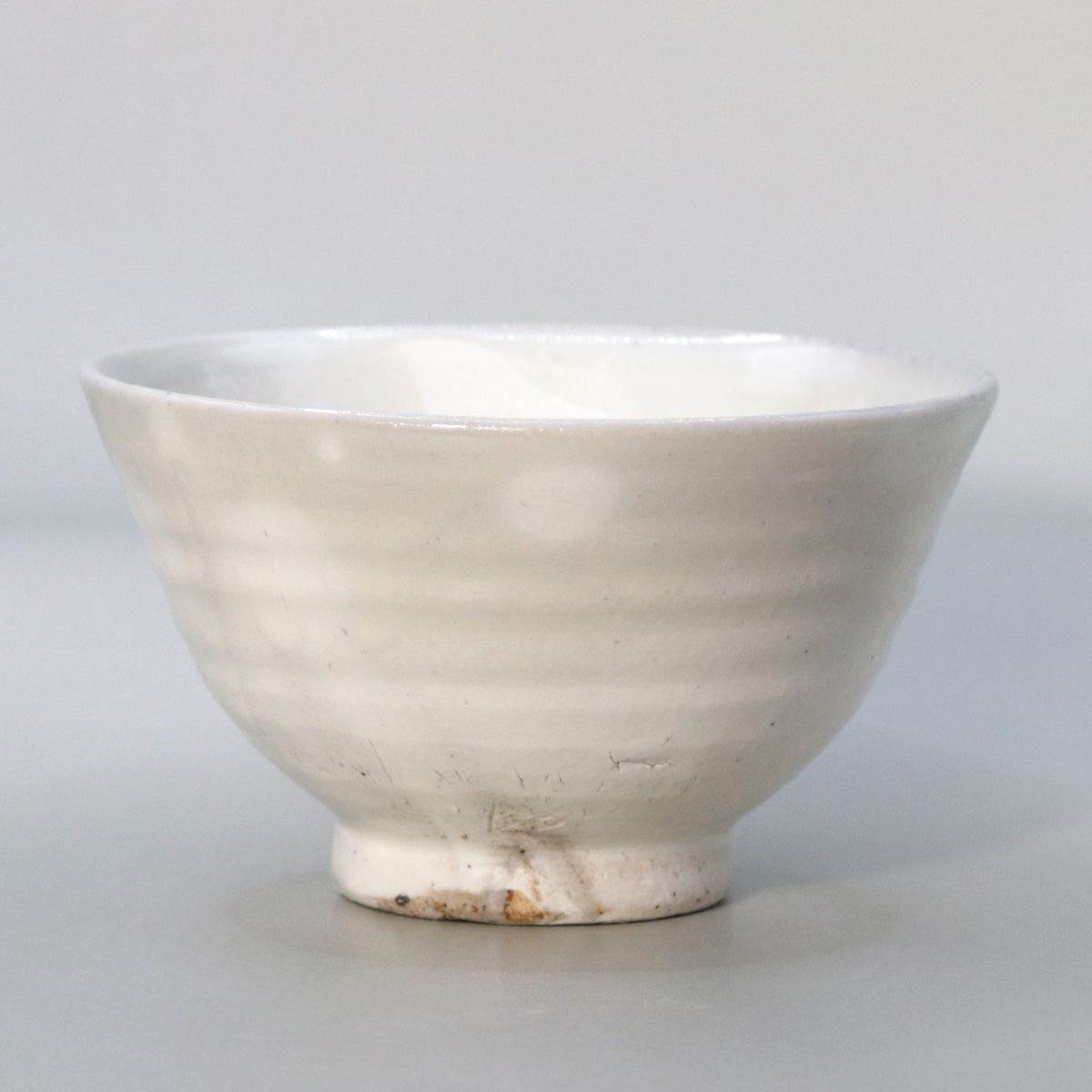
Powdered tea bowl, Suwa Sozan
Powdered tea bowl, Suwa Sozan
Couldn't load pickup availability
Width: 12.7cm Height: 7.3cm
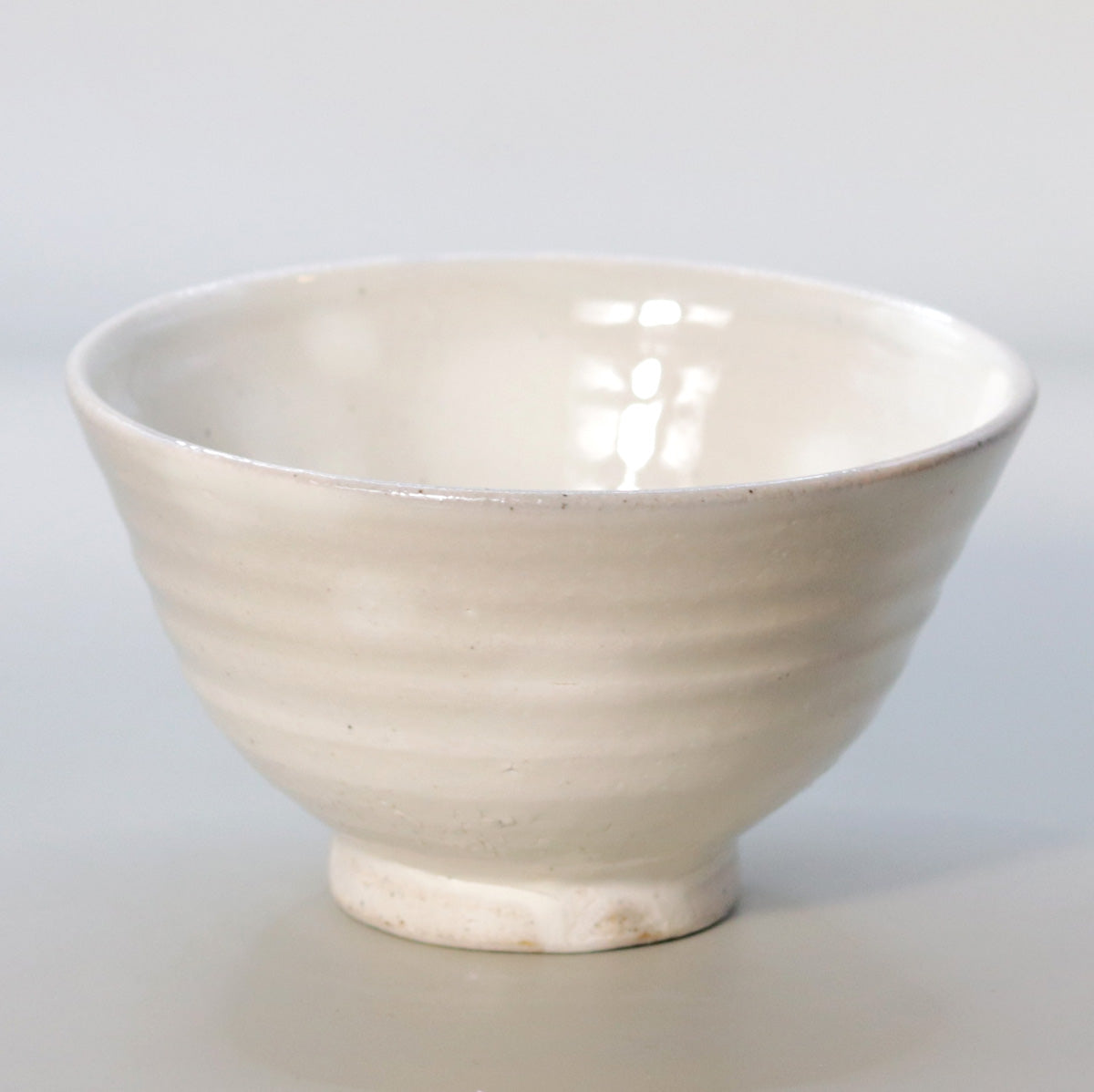
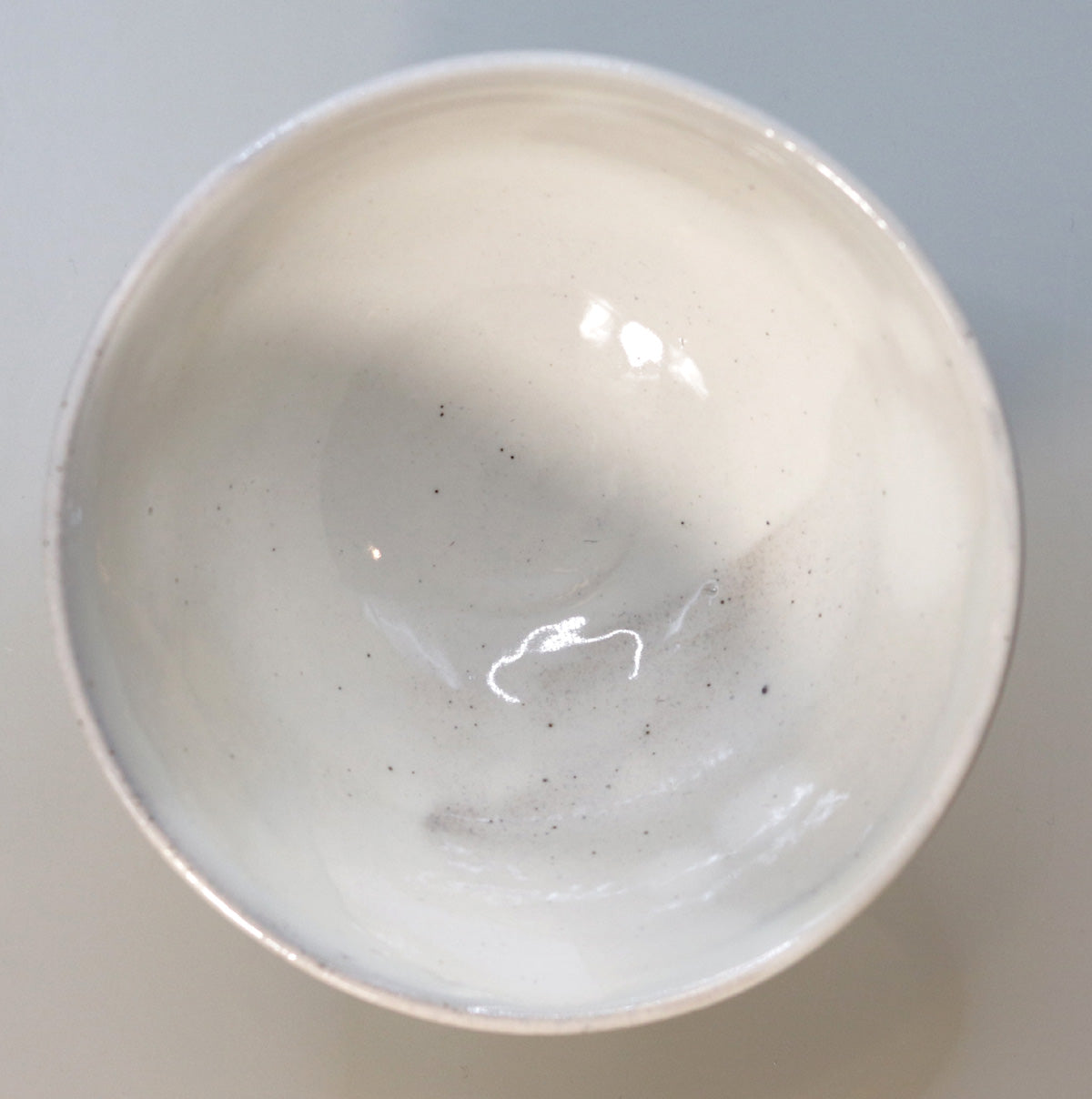
This "Kohiki" tea bowl, created by the fourth generation Suwa Sozan, is a white vessel filled with warmth and tranquility. Kohiki is a pottery technique passed down in Japan since ancient times, and is made up of a three-layer structure (base + white makeup + transparent glaze) in which a white decorative clay (white mud) is applied, and then a clear glaze is applied and fired. The soft, slightly grayish white surface differs from perfect white porcelain in that it has a somewhat hazy quality, retaining the warmth of the clay and a strong hint of handwork.
This technique was influenced by the white porcelain of the Joseon Dynasty of the Korean Peninsula, but was nurtured within the unique aesthetics of Japanese pottery. Kohiki vessels, which have a sense of "randomness and intentionality" within their whiteness, have long been beloved by tea masters and have been highly valued as "mitate" vessels.
What is Kohiki? Scenery created by the base and the clay
Kohiki refers to a ware made by using clay (base material) that is originally gray or reddish brown in color, then applying a white muddy coating on top of that, and then applying a transparent glaze on top of that, and then firing it. This white coating technique conceals the color of the base material, allowing the entire vessel to have a soft white appearance.
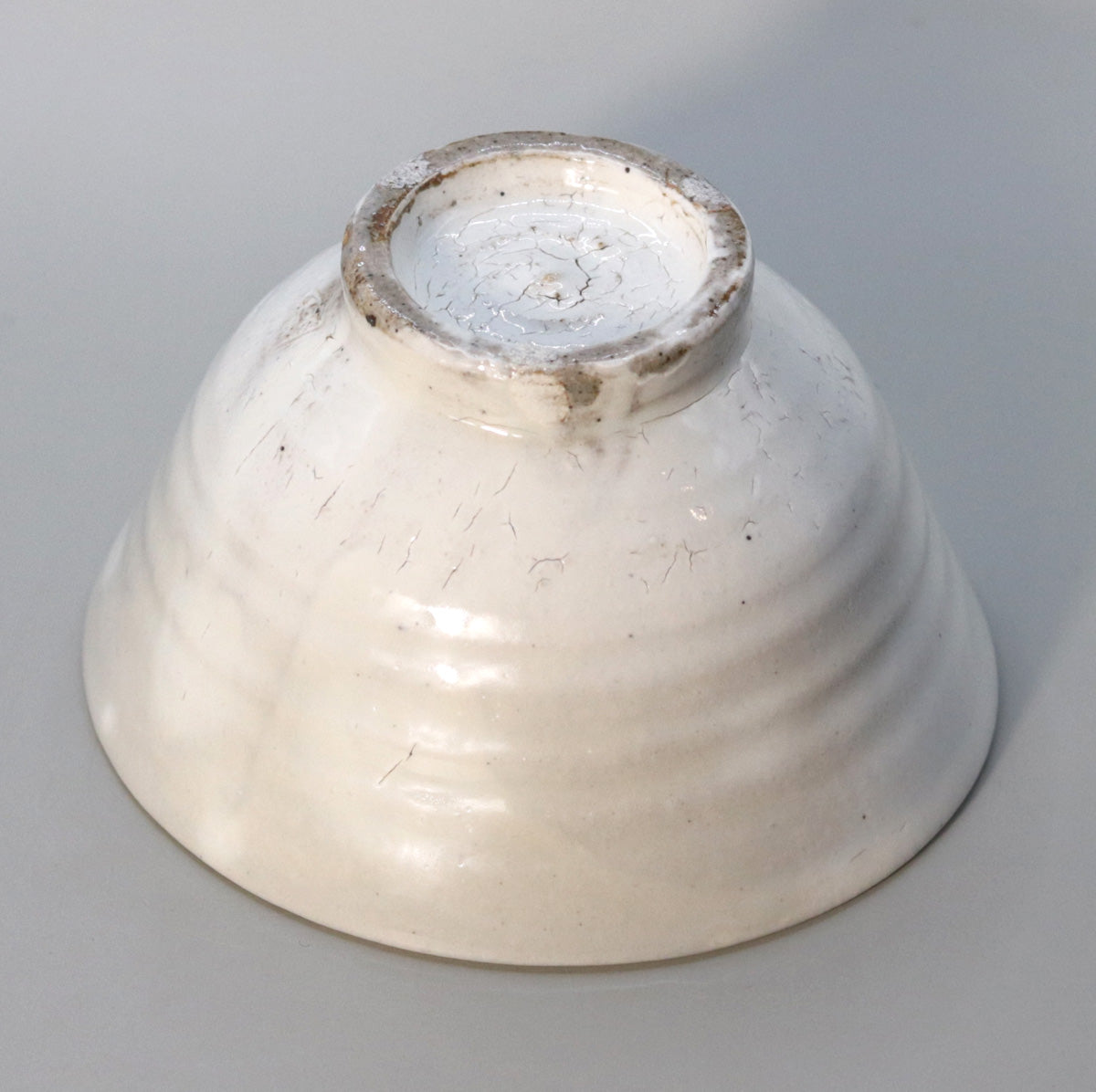
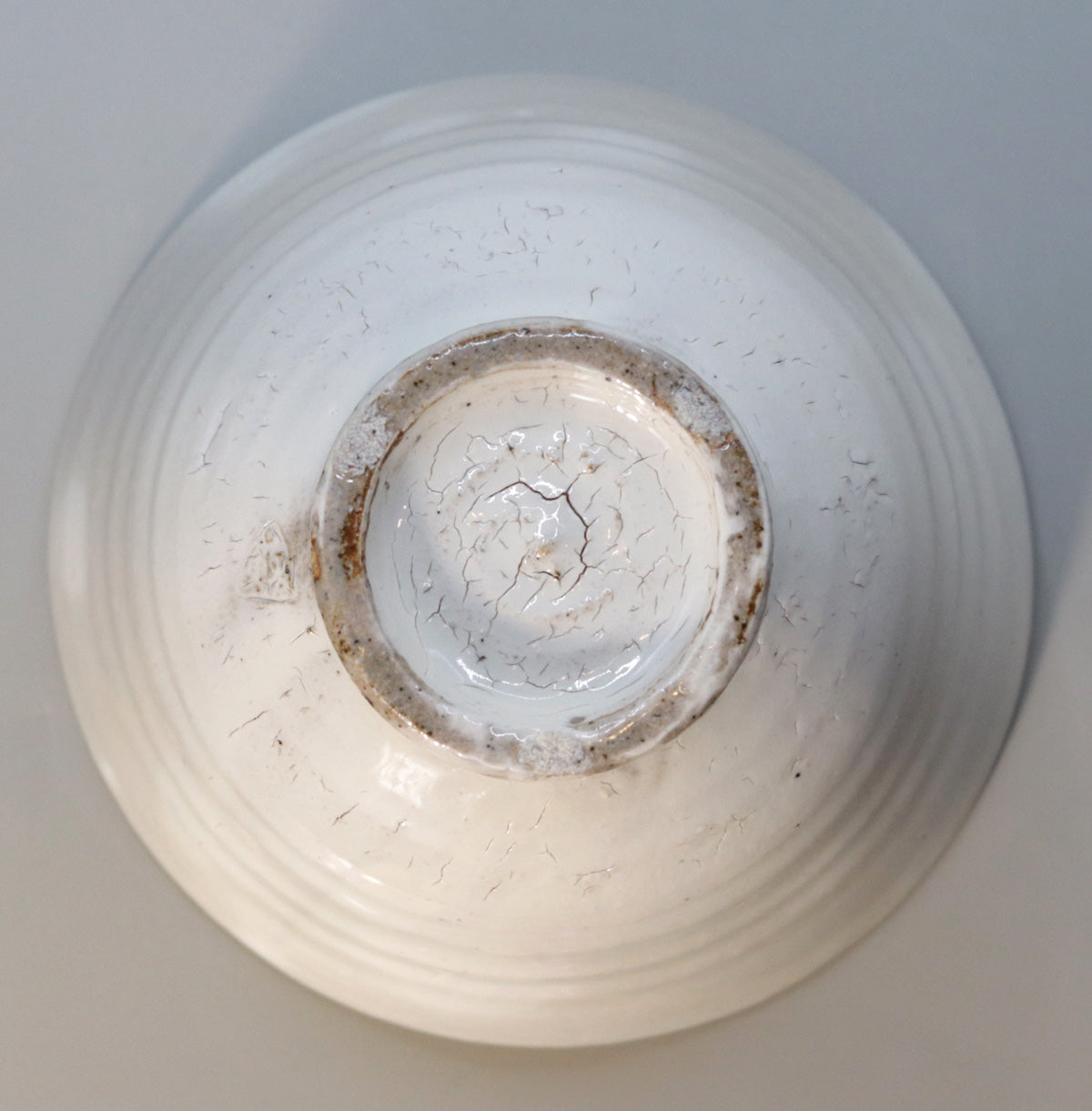
The surface of the white porcelain, coated with a transparent glaze, is characterized by minute crazing, roughness, and color fluctuations due to firing, creating an appearance that could be described as a "living white" that is by no means uniform. This is a beauty of the "texture" that is the result of earth, fire, and handiwork , and is completely different from white porcelain or blue and white porcelain. The warmth you feel when you pick it up and the moist surface texture when you drink tea create a unique appeal.
Shape: A sympathetic blend of elegance and softness
This powdered-glazed tea bowl, crafted by Suwa Sozan, has a gentle bulge at the waist and a slightly curved rim. While creating a sense of tension throughout, it is not linear, but rather has a soft silhouette that somehow evokes the feeling of "breathing." The base is modest yet curves outward, supporting the overall sense of stability while also creating a sculptural rhythm that draws the eye from the inside out to the base.
Furthermore, the wheel marks from the shaping process remain intact, and the "brushstrokes of the shape" that are traces of handwork allow the artist's breath to live in this practical tea bowl. This slight "fluctuation" expresses a much deeper beauty than a perfect form, and can be said to be a vivid embodiment of the "beauty of imperfection" and "beauty of wabi" that are at the core of Japanese aesthetics.
The lineage of Joseon powder-making
The origins of this powder-painting technique can be seen in the white porcelain and Bunsei ware (powder blue porcelain) produced in the late Joseon Dynasty on the Korean Peninsula from the 15th to 16th centuries. Joseon ware, which has a simple yet elegant appearance, was particularly well-received by Japanese tea masters and was highly valued in the tea ceremony culture of Sen no Rikyu and others.
Sozan has inherited this aesthetic sense of the Joseon Dynasty into the modern era, while breathing new life into the traditional technique of Kohiki. Rather than simply replicating the original, he has created forms that are in tune with modern life and sensibilities, while at the same time incorporating the spirituality of the color "white" that seems to speak quietly to us.
The beauty of utility dwells in Kohiki tea bowls
More than just beautiful to look at, this Kohiki tea bowl is a vessel whose true value is revealed through use. You can enjoy the "life of the vessel" as it changes over time, such as the contrast with the green when matcha is poured into it, the way the glaze changes its appearance when exposed to steam, and the "tea stains on the crazing" that appear with use.
Kohiki ware is still loved by many people today as the embodiment of the "beauty of utility" that Yanagi Soetsu advocated.
Abundance in silence
This Kohiki tea bowl by Suwa Sozan is not just beautiful, but also gives the viewer and user a sense of "richness in tranquility" and "depth in simplicity." The spirituality dwells in the color white and the warmth of the earth. There is neither too much nor too little, just the beauty of "being there."
When you pick it up or touch it to your mouth, this vessel gently embraces you like melting snow, and will continue to bring peace to your heart even in the midst of the hustle and bustle of modern life.
Share
-
[I will send it to you quickly and carefully]
We carefully package each product in a way that suits it best.
Also, delivery times vary depending on the piece (vessel, etc.).
Items that already come with a box will be shipped within 1-3 days of the order date.
For items that require a box to be made after your order, it will take approximately 30 days for production to be completed and then shipped.
In either case, once we have confirmed your order, we will contact you by email to inform you of the delivery date.
-
[Requests when purchasing pottery]
Even products that look the same may differ slightly in color, shape, size, etc.
The way the glaze is used, the power of the kiln, the firing method, the season, and the humidity also affect the appearance of the pottery.
Please understand the individuality of each piece of pottery and enjoy the unique warmth of handmade.