
Yellow-gray incense burner by Okada Yu
Yellow-gray incense burner by Okada Yu
Couldn't load pickup availability
Width: 10.0cm Height: 13.2cm
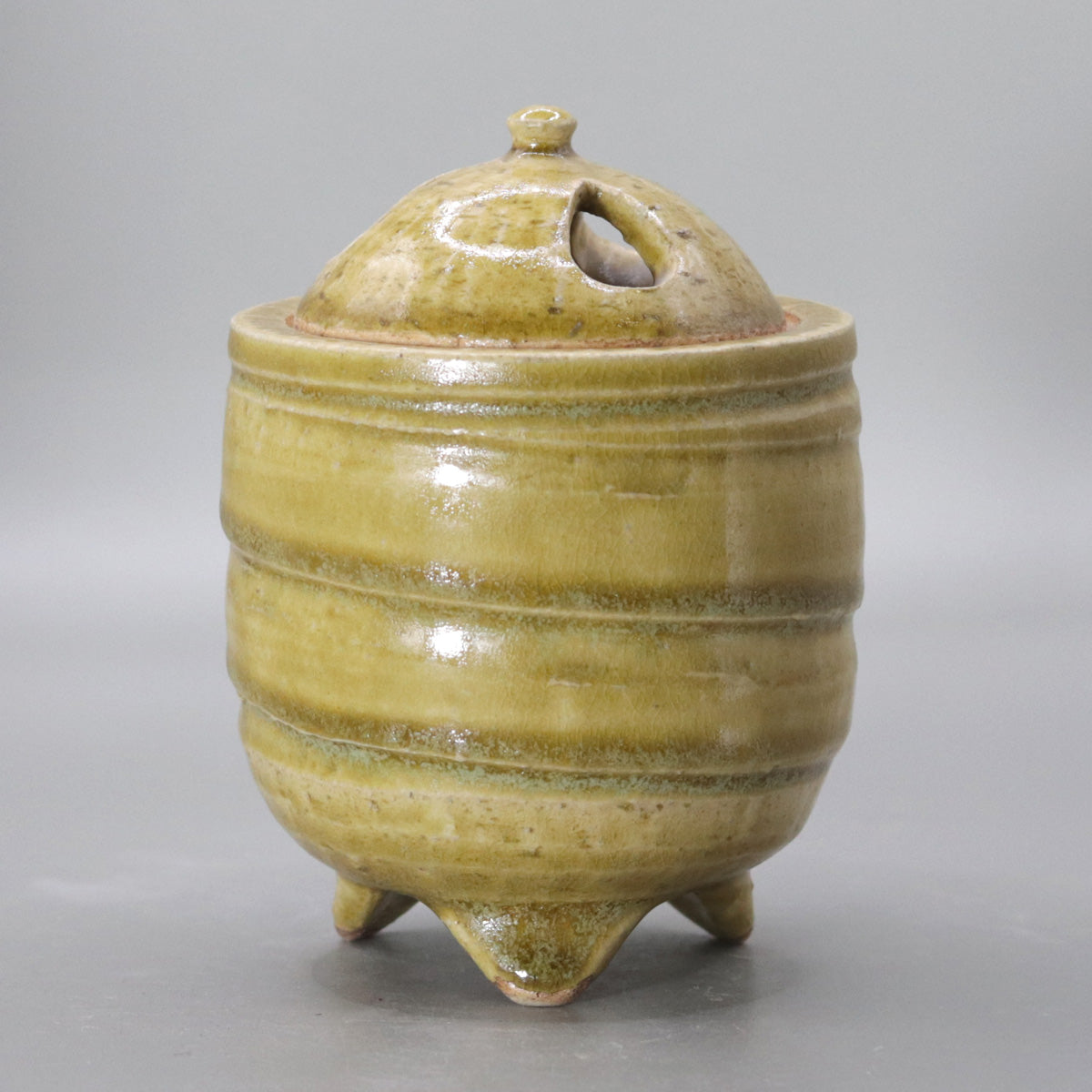
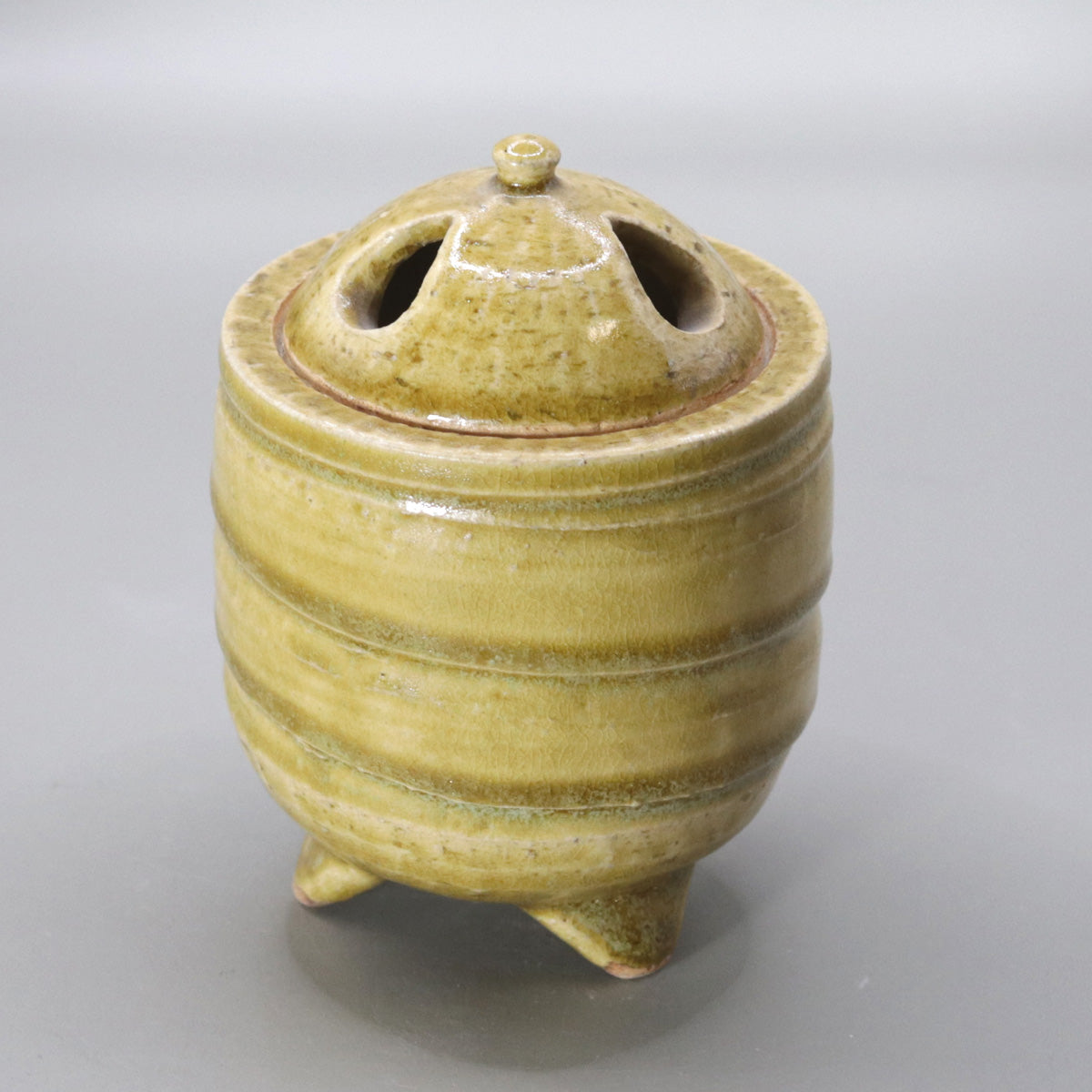
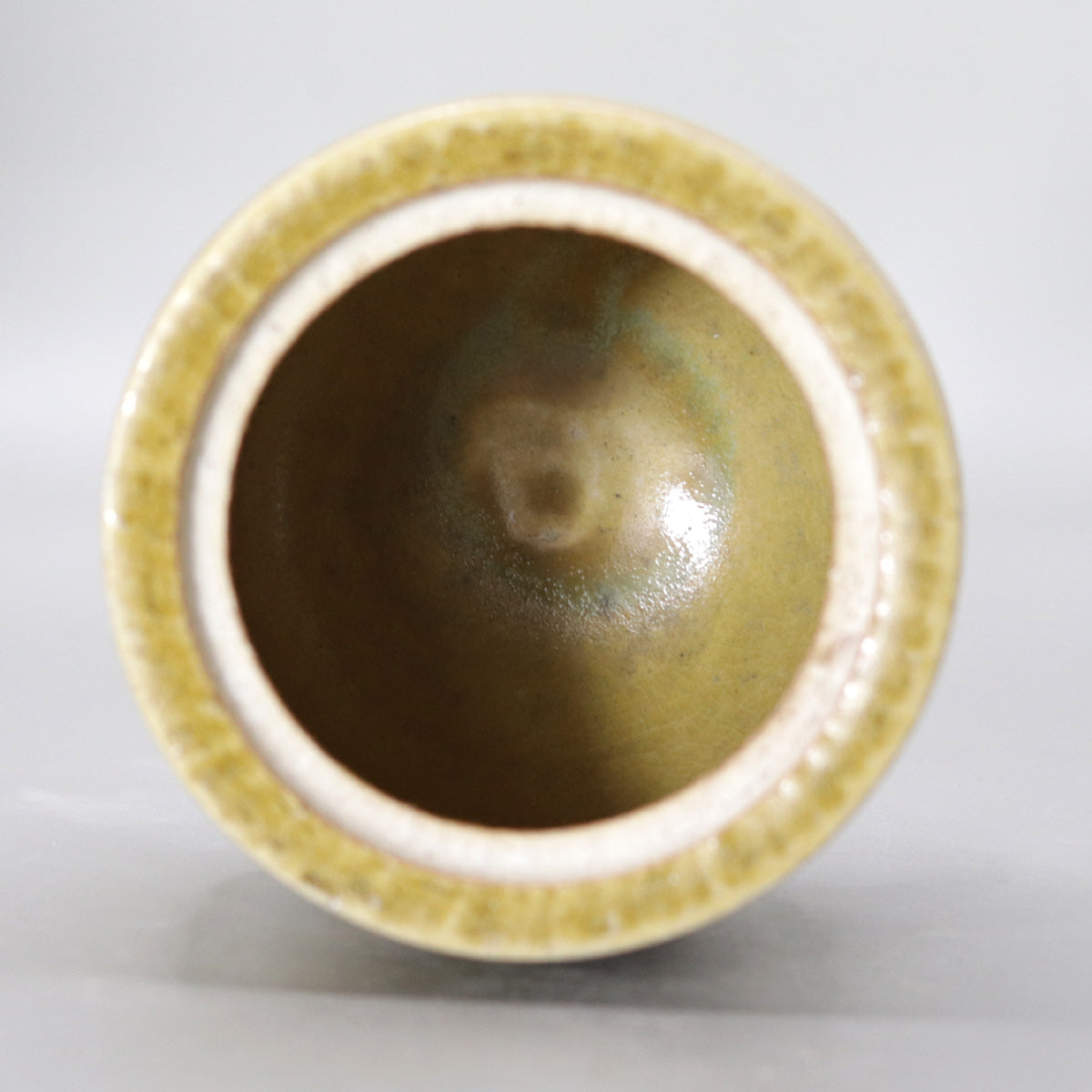
"Yellow Ash Glazed Incense Burner" by Okada Masaru - The golden scenery created by wood ash and the ancient rhythm played by the tripod
With its soft golden glaze and ancient form capturing the earth with three points, Okada Masaru's Yellow-Grey Glazed Incense Burner is a work that combines warm colors reminiscent of the yellow Seto ware of the Momoyama period with a contemporary sculptural balance. As the incense smoke gently rises, the luster and shadows cast by the ash glaze flicker, bringing a quiet, festive atmosphere to the space. Below, we will introduce its appeal in detail in five chapters covering history, technique, design, spirituality, and incense ceremony use .
1. Historical Background - The Intersection of Kiseto and Incense Burner Culture
The Lineage of Kiseto Kiseto ware flourished in Mino kilns during the Momoyama period and is characterized by a soft rapeseed oil color, achieved by oxidizing and firing an iron-containing wood ash glaze. Along with Raku ware and Oribe ware, Kiseto ware was beloved by tea masters from Sen no Rikyu onwards as a new type of beauty that embodied the ideals of wabi-cha tea.
The history of incense burners <br data-end="397" data-start="394">Incense burners began as ritual implements in Nara Buddhism, and from the Muromachi period onwards they came to be valued in both monkou (scent-smelting rituals) and the tea ceremony. Examples of Kiseto-style incense burners can be seen from the early Edo period, and those with tripod bases in particular incorporated the design of the Chinese bronze "kanae" (triple), symbolizing auspiciousness and stability.
Okada Masaru's Perspective <br data-end="542" data-start="539">Keeping this historical layer in mind, Okada Masaru has combined the gloss of the yellow-gray glaze with the tripod structure to reinterpret it into a minimalist form that stands out in modern spaces.
2. Design analysis: Vocabulary of the cylindrical body, tripod, and openwork window
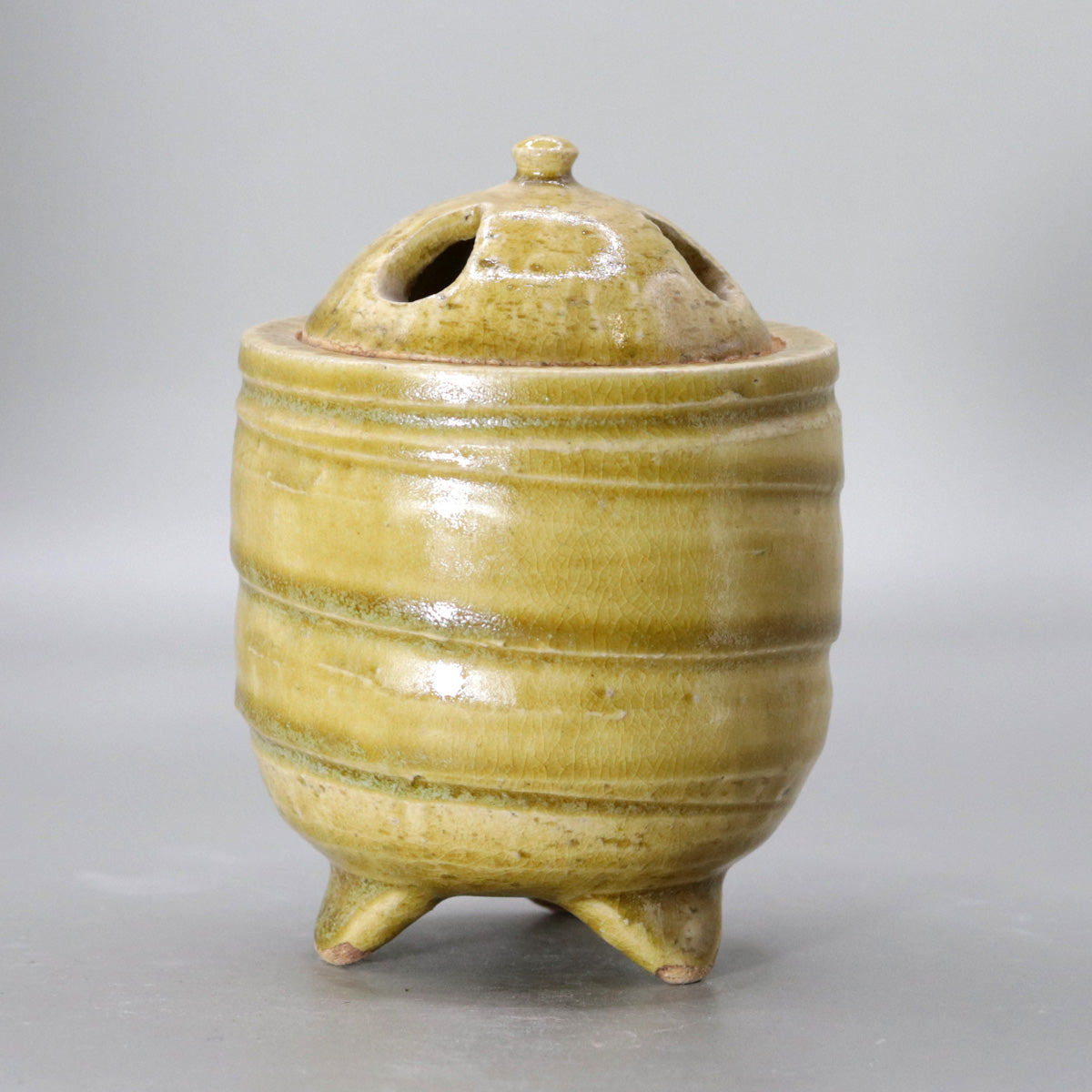
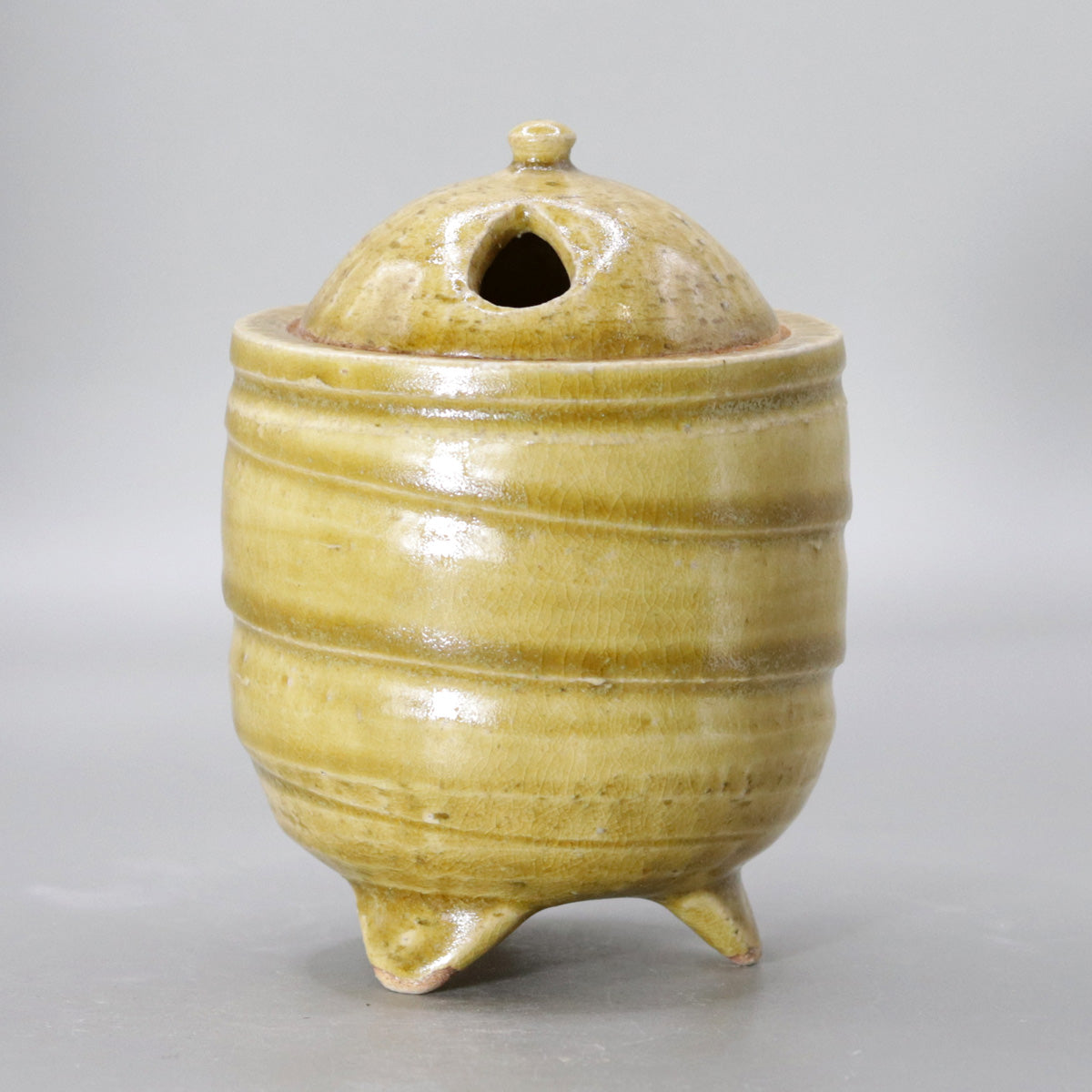
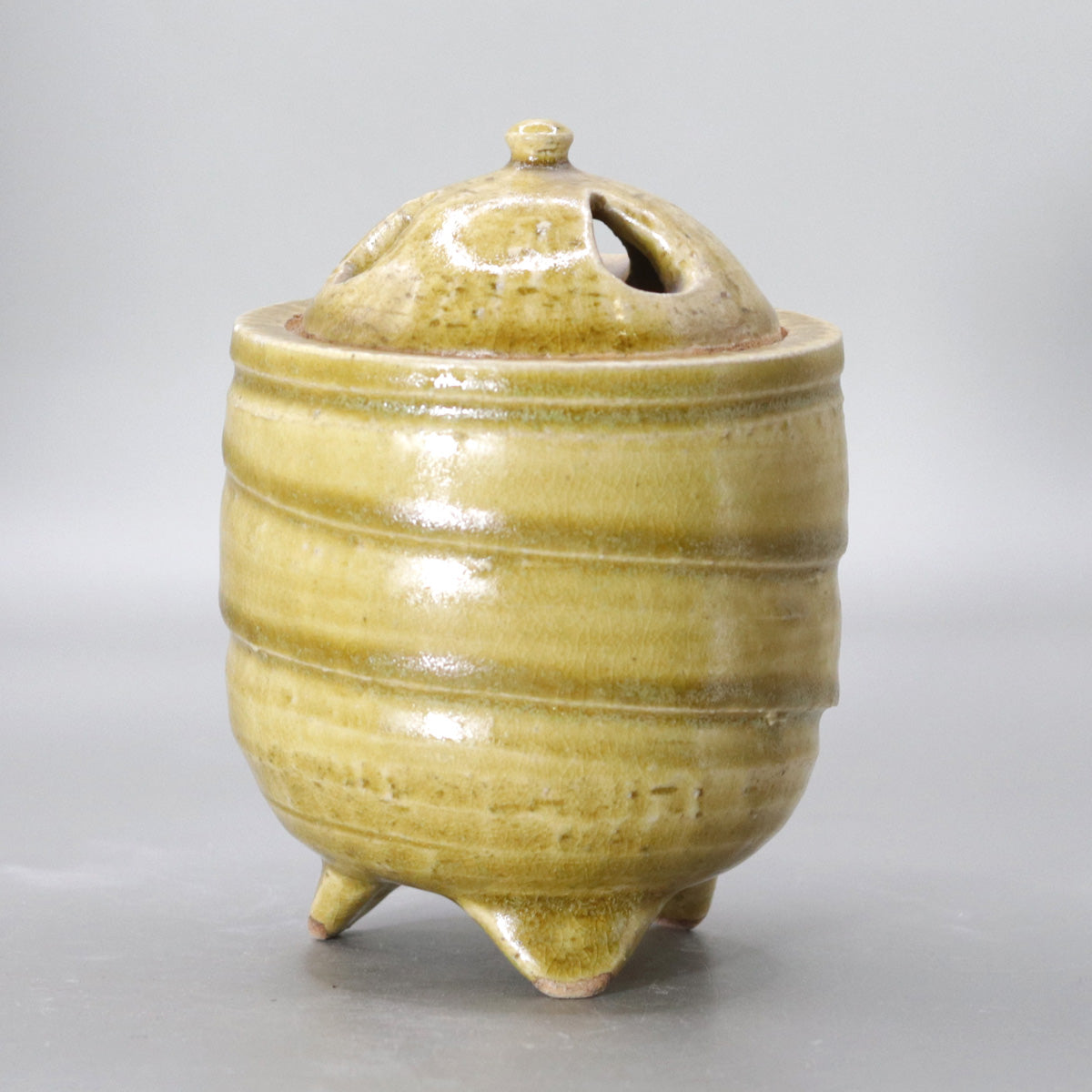
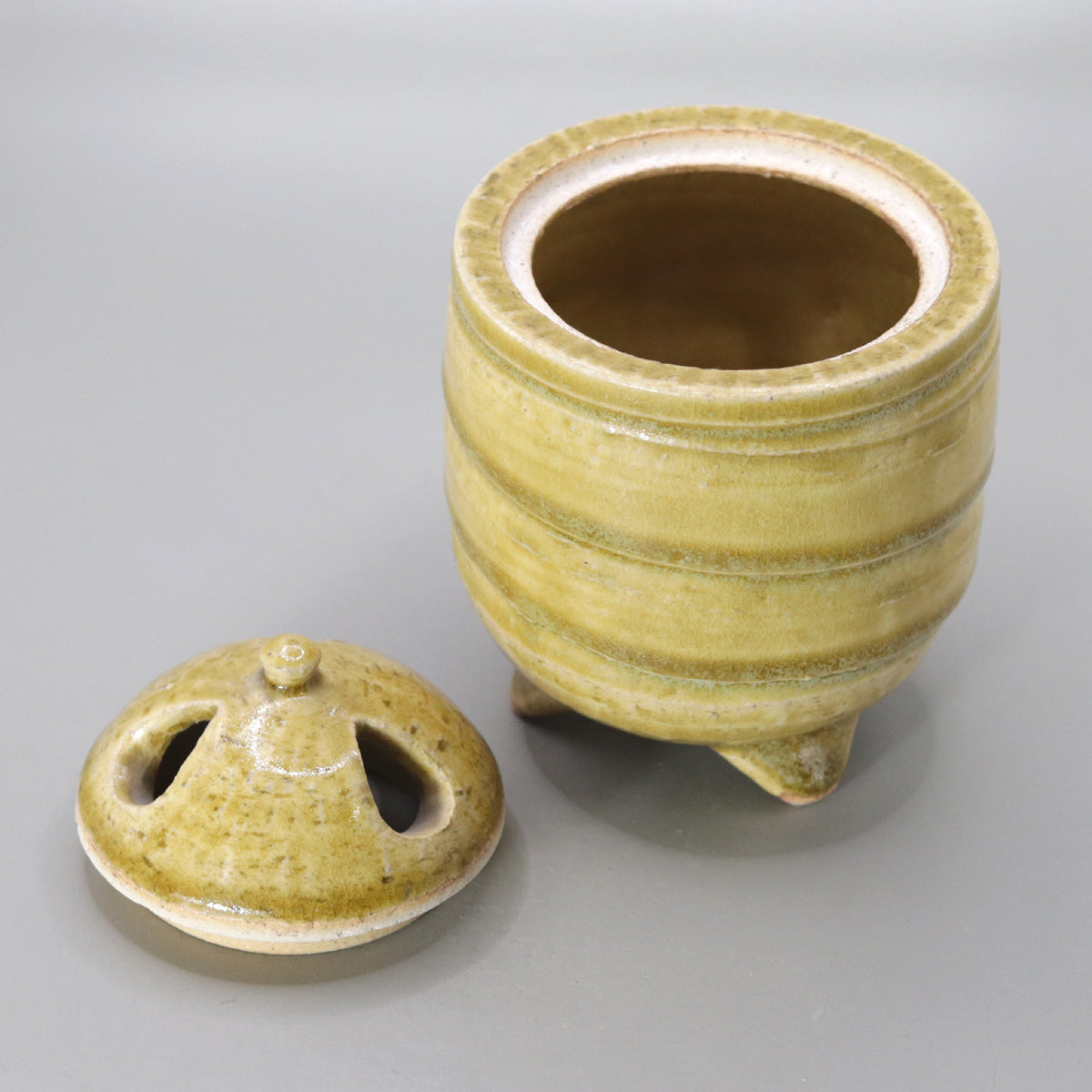
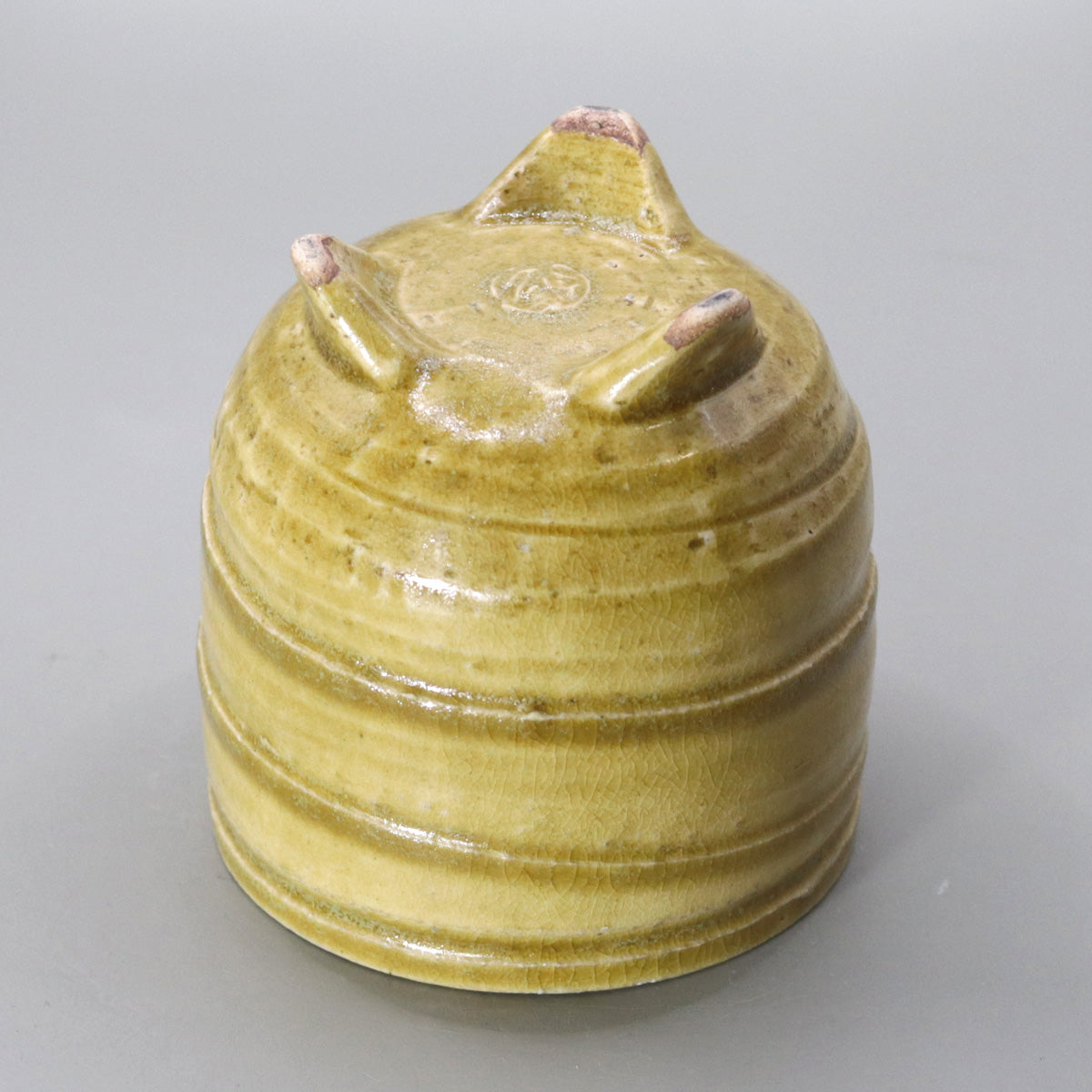
Horizontal grooves on the cylindrical body <br data-end="1098" data-start="1095">Three lines carved on the potter's wheel remain on the body, and the shading caused by the flow of the glaze spreads in a circular pattern. This is based on the stepped design seen in Kiseto "tiered rimmed bowls," and creates a **"pattern that marks the passage of time** that is rare for an incense burner.
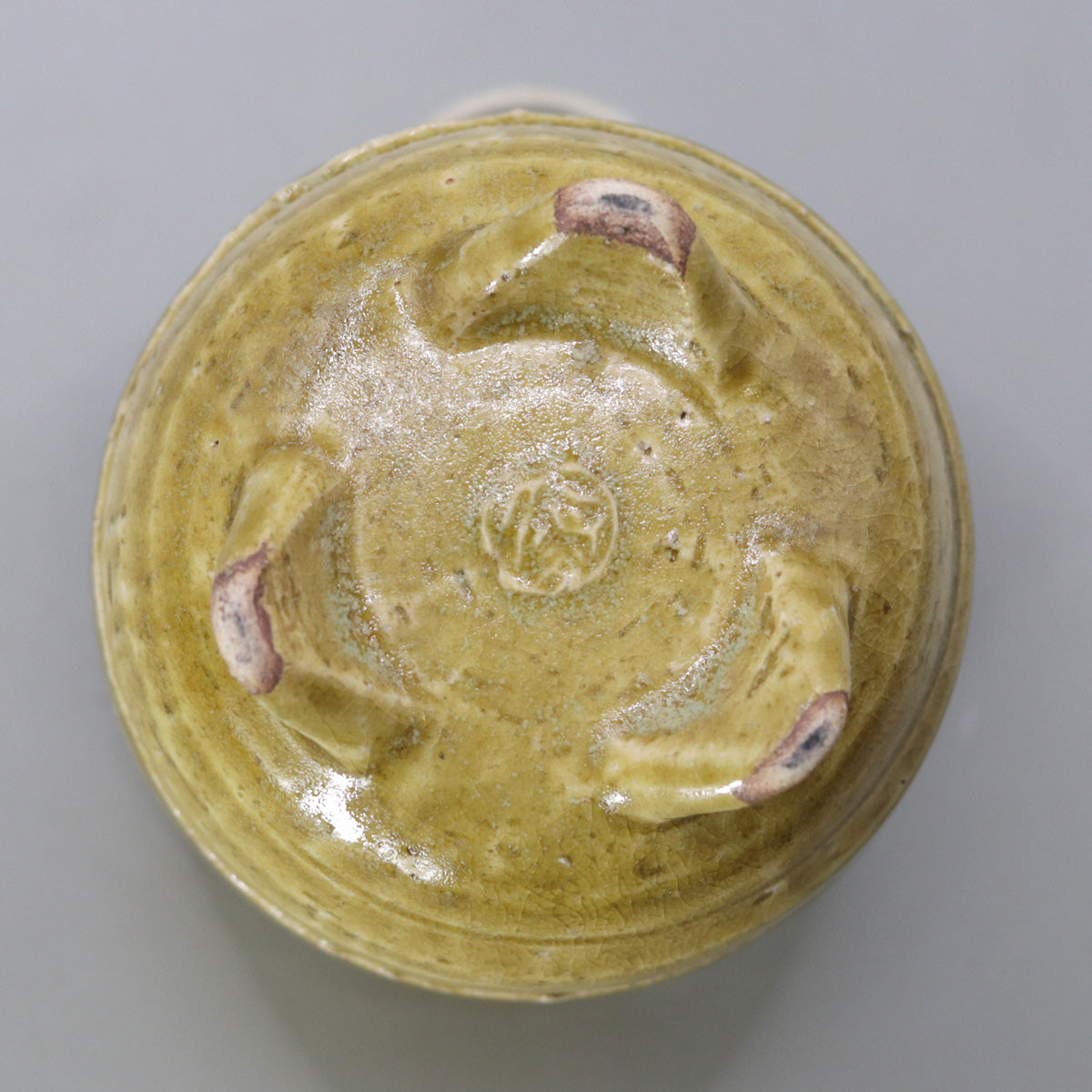
The symbolism of the tripod <br data-end="1212" data-start="1209">The three-point support represents the harmony of heaven, earth, and man, and also has the function of efficiently dissipating the heat from the hearth. The slight glaze cracks that appear on the ends of the legs add to the appeal of the piece, exuding the vividness of the firing process.
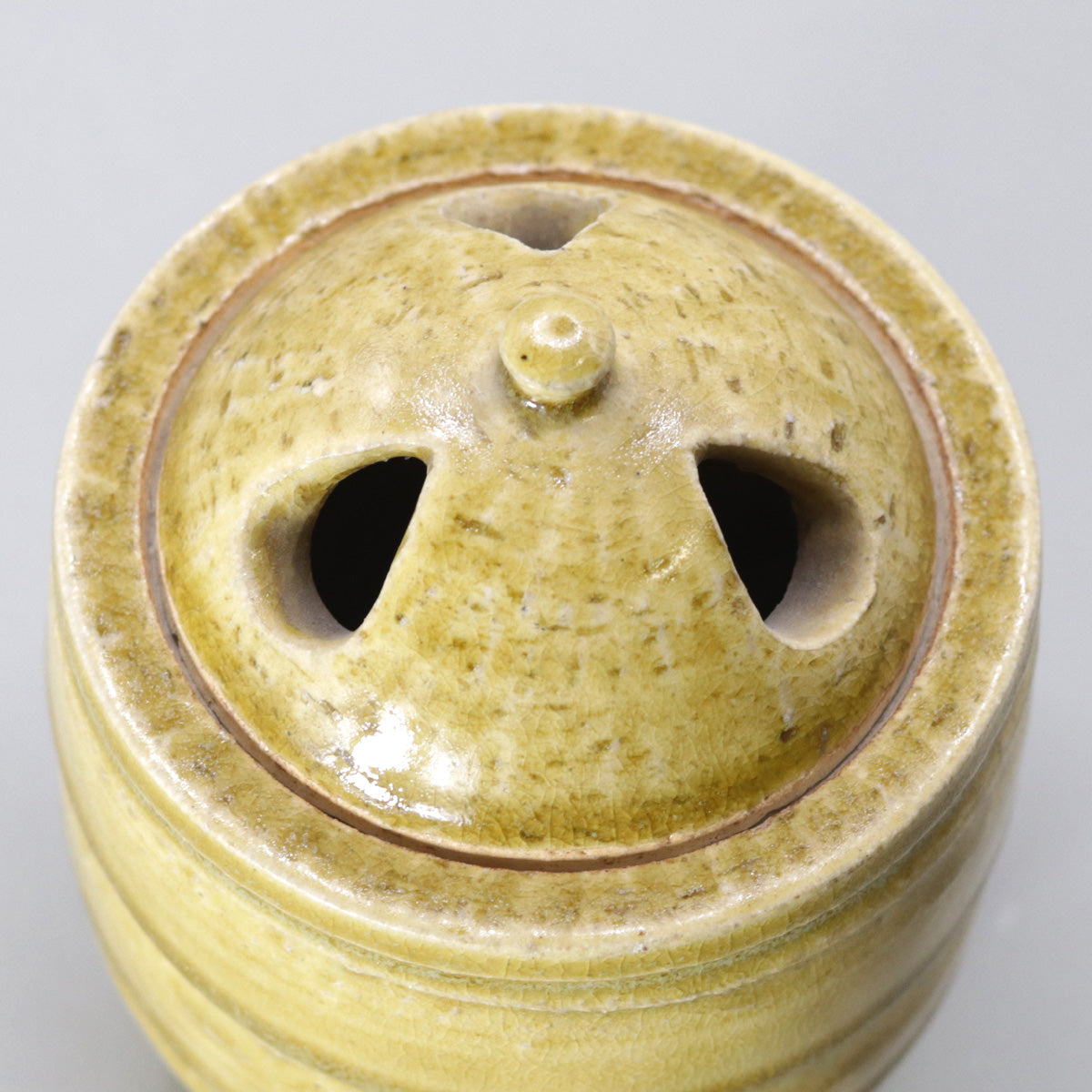
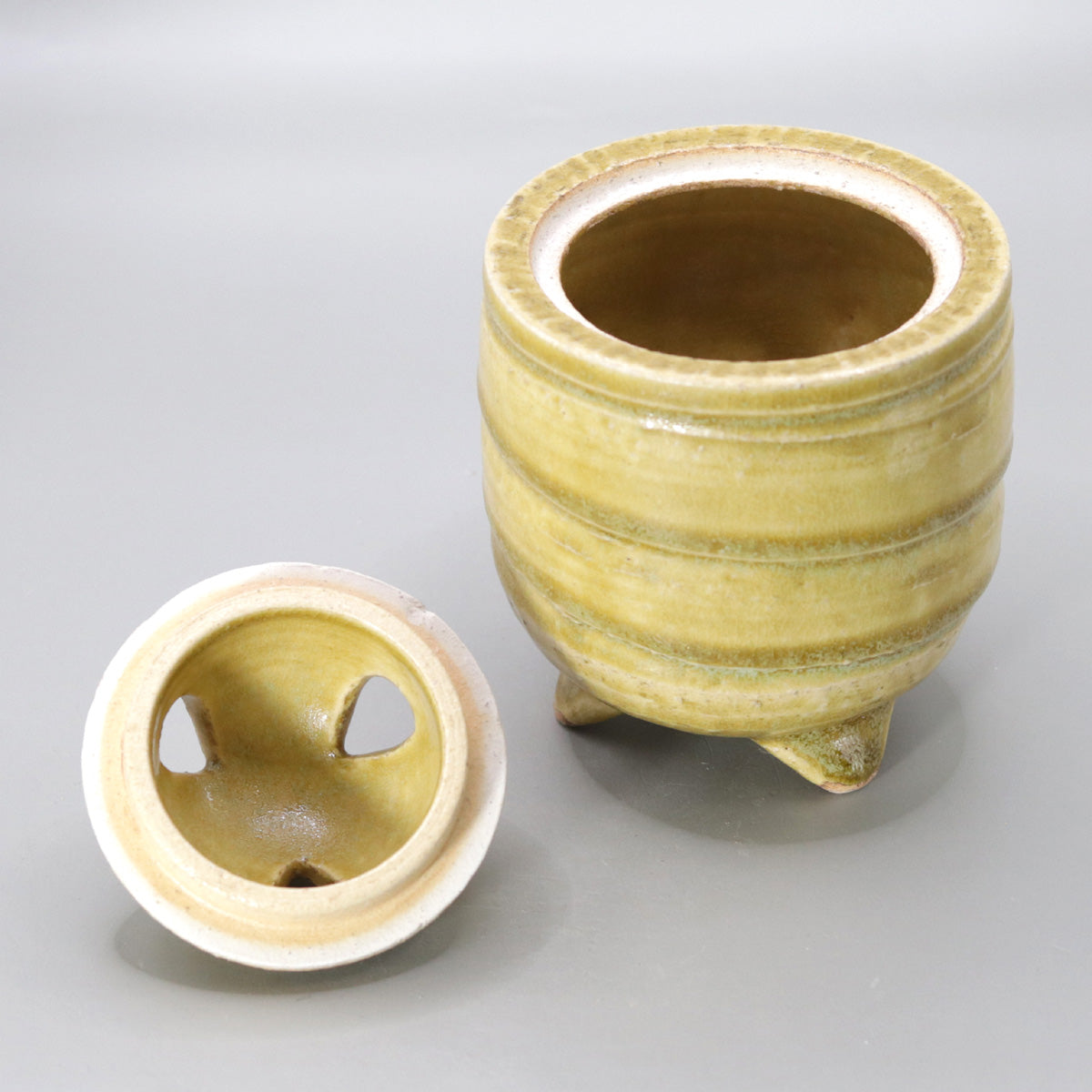
Openwork window and knob <br data-end="1306" data-start="1303">The crescent-shaped window in the hemispherical lid squeezes incense smoke from a single point, creating a visual "pillar of incense." The teardrop-shaped knob fits easily in the fingers, helping to regulate the rhythm of the movement.
3. Spirituality - A purification metaphor woven with "gold" and "smoke"
The soft gold of the yellow-gray glaze is a warm color that evokes feelings of "fruitfulness" and "sunshine" rather than wealth and prestige. When incense is burned, the smoke rises, taking on a glow and intertwining with the lustrous surface of the vessel, creating a scene reminiscent of the countryside in autumn sunlight. This evokes the primordial sensation of "prayer to celebrate the harvest" and adds a fresh sense of vitality to the combination of incense, tea ceremony, and flowers.
The Yellow-Gray Glazed Incense Burner is a masterpiece that combines the warmth of Momoyama Mino yellow Seto ware with the ancient elegance of a tripod, while being reconstructed with Okada Masaru's unique minimalist design.
The gentle golden color of the wood ash glaze changes appearance moment by moment as it catches the flame and incense smoke, the rhythm of the tripod makes the entire vessel float lightly, and the openwork window in the hemispherical lid creates a line of movement and shadows for the fragrance.
It will naturally fit into the living room of a modern home or on the display stand of a museum shop, as well as into a tea room, quietly illuminating the space as a sculpture of "incense" and "light . " The ripe golden color envelops purifying smoke. This philosophy will mesmerizingly intertwine with the user's daily life, weaving a timeless impression.
Share


-
[I will send it to you quickly and carefully]
We carefully package each product in a way that suits it best.
Also, delivery times vary depending on the piece (vessel, etc.).
Items that already come with a box will be shipped within 1-3 days of the order date.
For items that require a box to be made after your order, it will take approximately 30 days for production to be completed and then shipped.
In either case, once we have confirmed your order, we will contact you by email to inform you of the delivery date.
-
[Requests when purchasing pottery]
Even products that look the same may differ slightly in color, shape, size, etc.
The way the glaze is used, the power of the kiln, the firing method, the season, and the humidity also affect the appearance of the pottery.
Please understand the individuality of each piece of pottery and enjoy the unique warmth of handmade.