

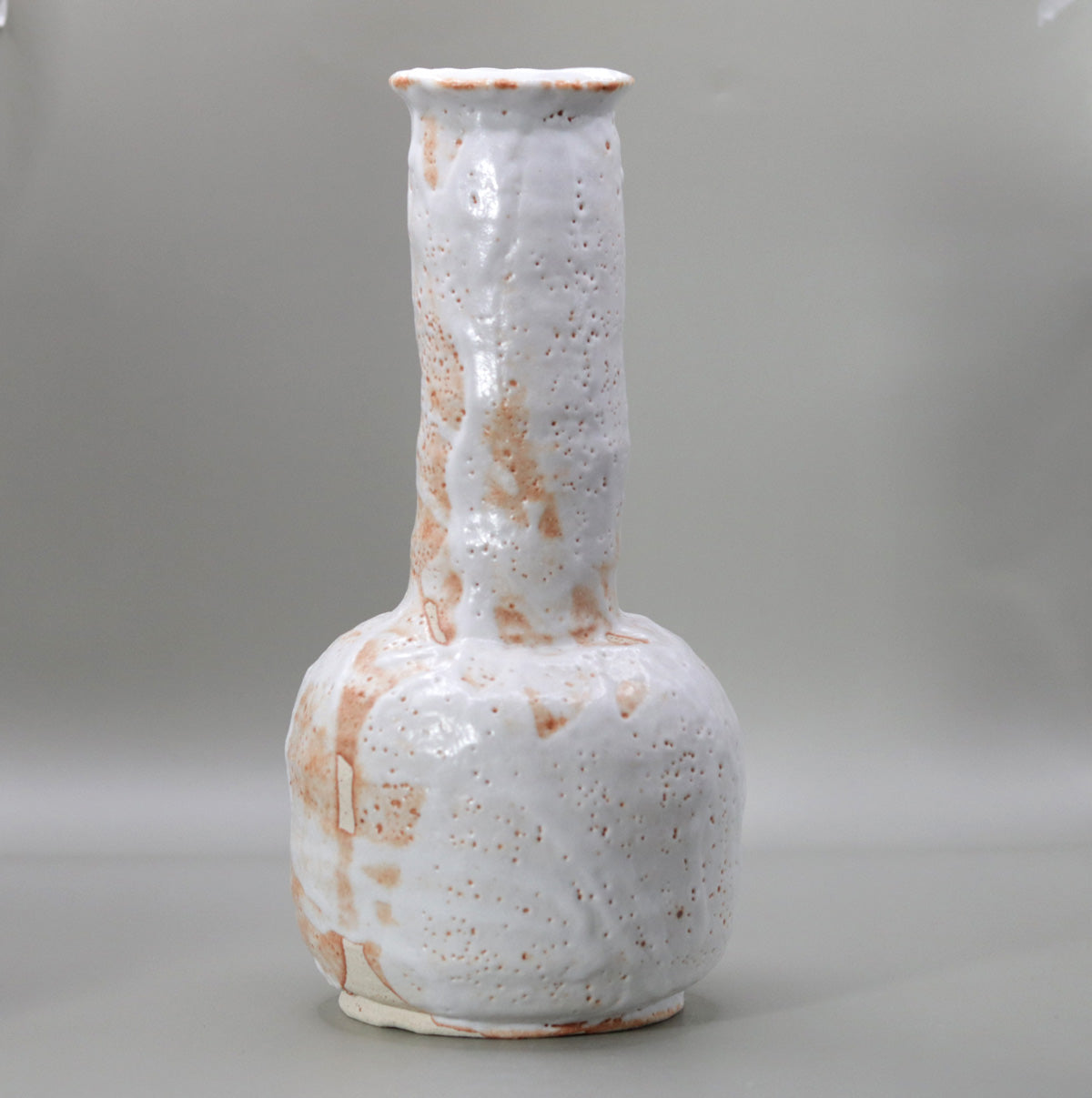
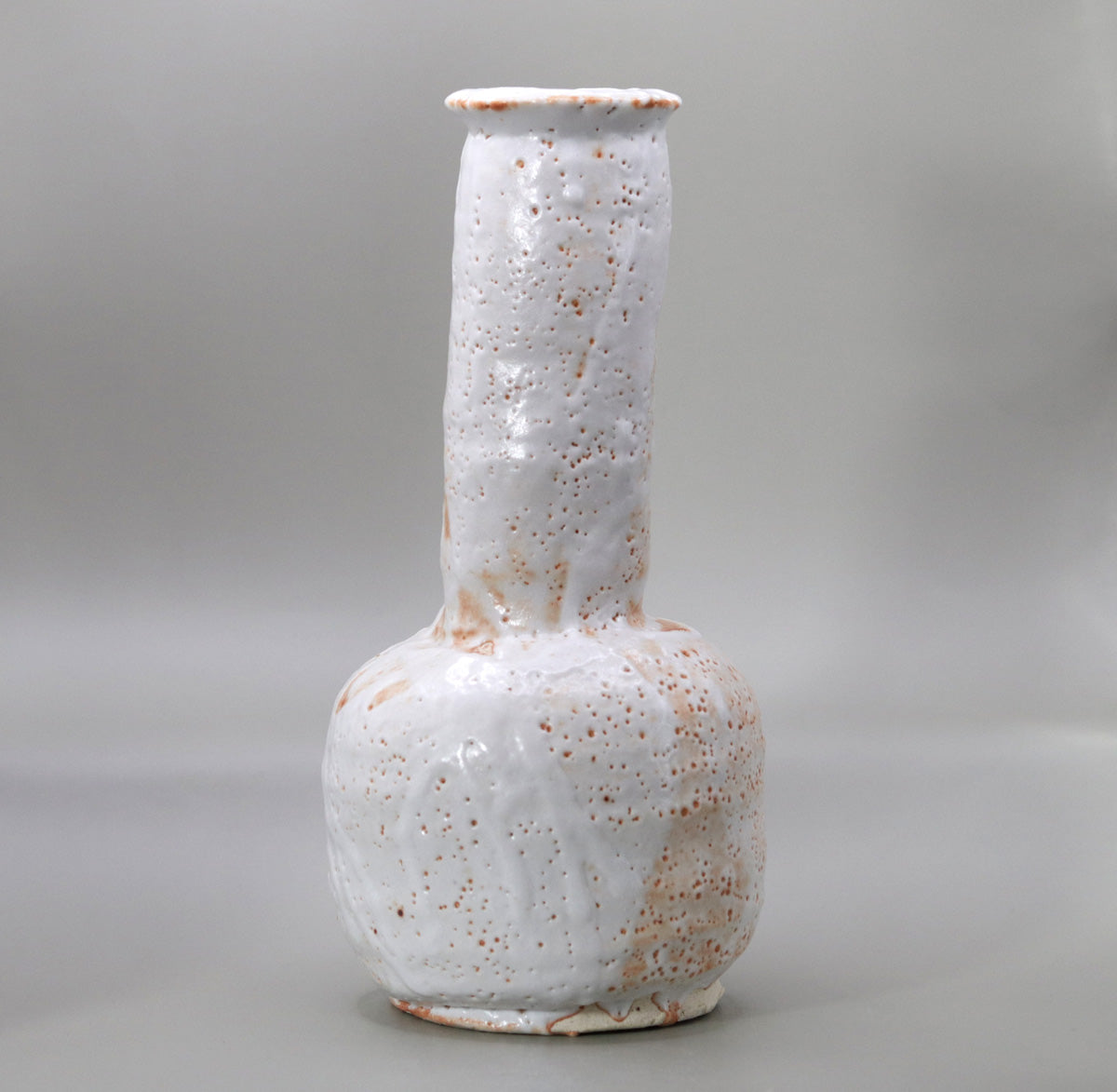
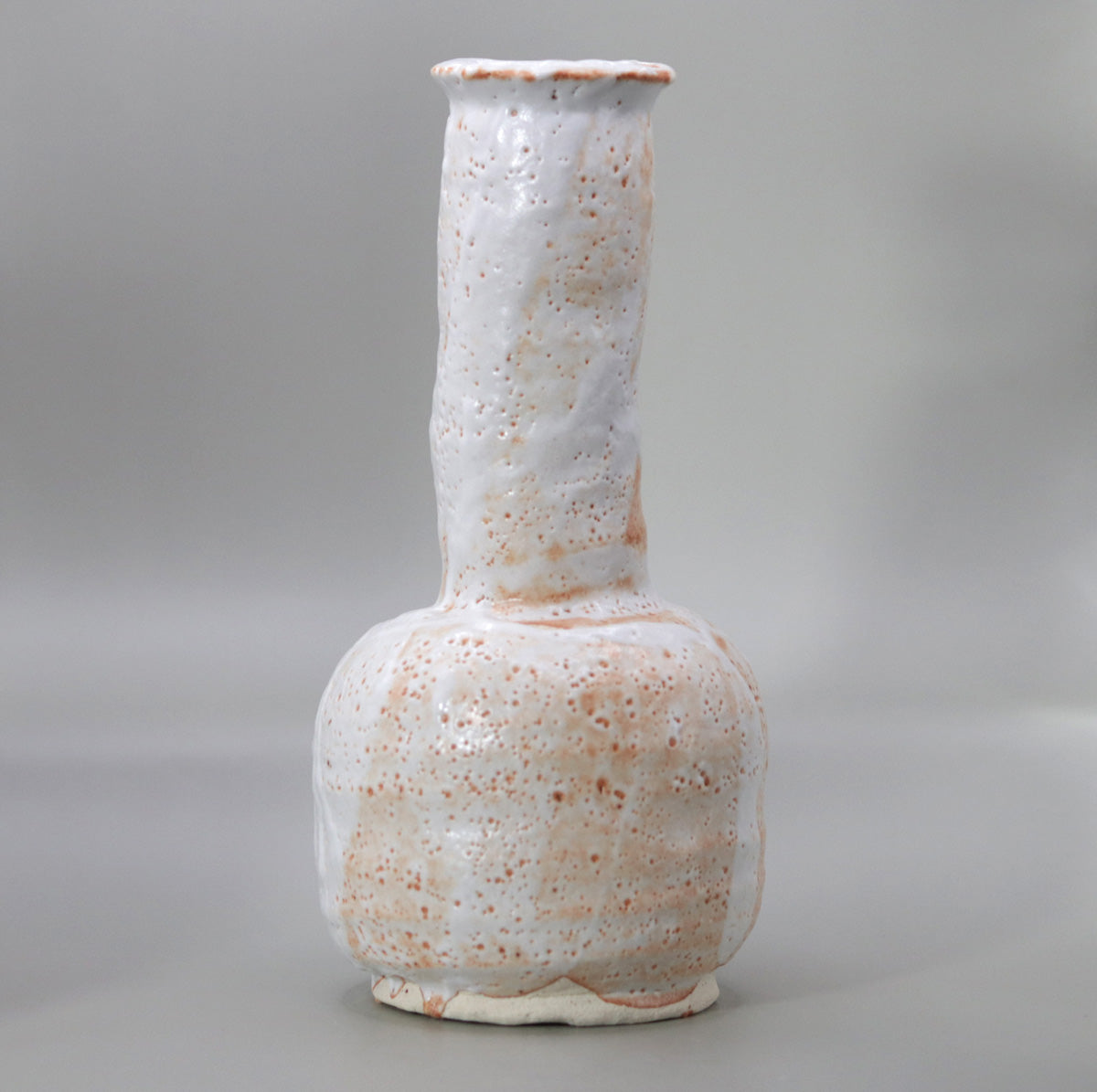
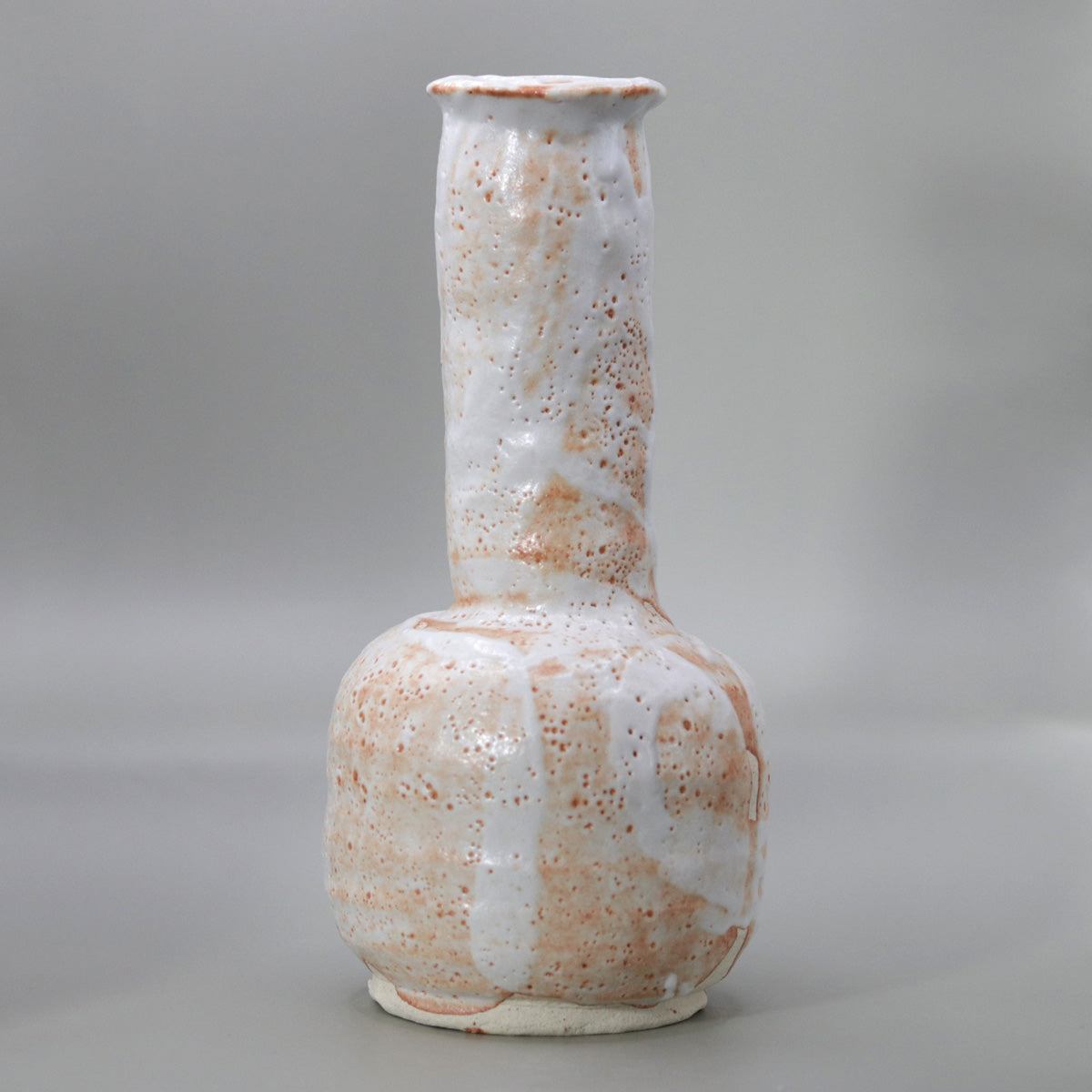
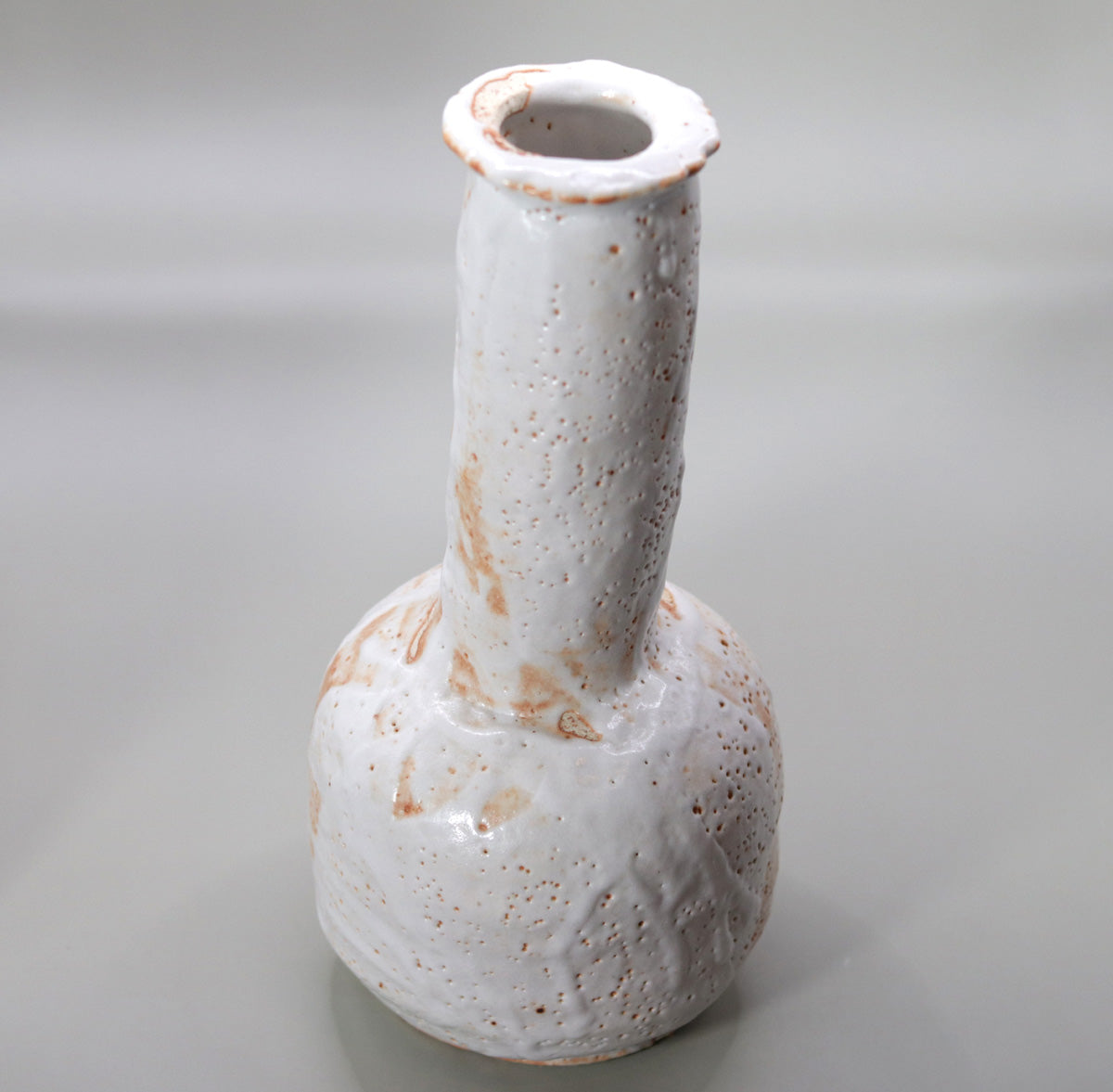
Shino Kinuta Flower Vase by Hideki Yanashita
Shino Kinuta Flower Vase by Hideki Yanashita
Couldn't load pickup availability
12.5*26
Width 12.5cm Height 26cm
Shino: The "Universe of White" - The Background of the Technique and the Poetics of Clay
Shino ware was born in Mino (present-day eastern Gifu Prefecture) during the Azuchi-Momoyama period and is the first pottery in the history of Japanese pottery to fully express the color "white."
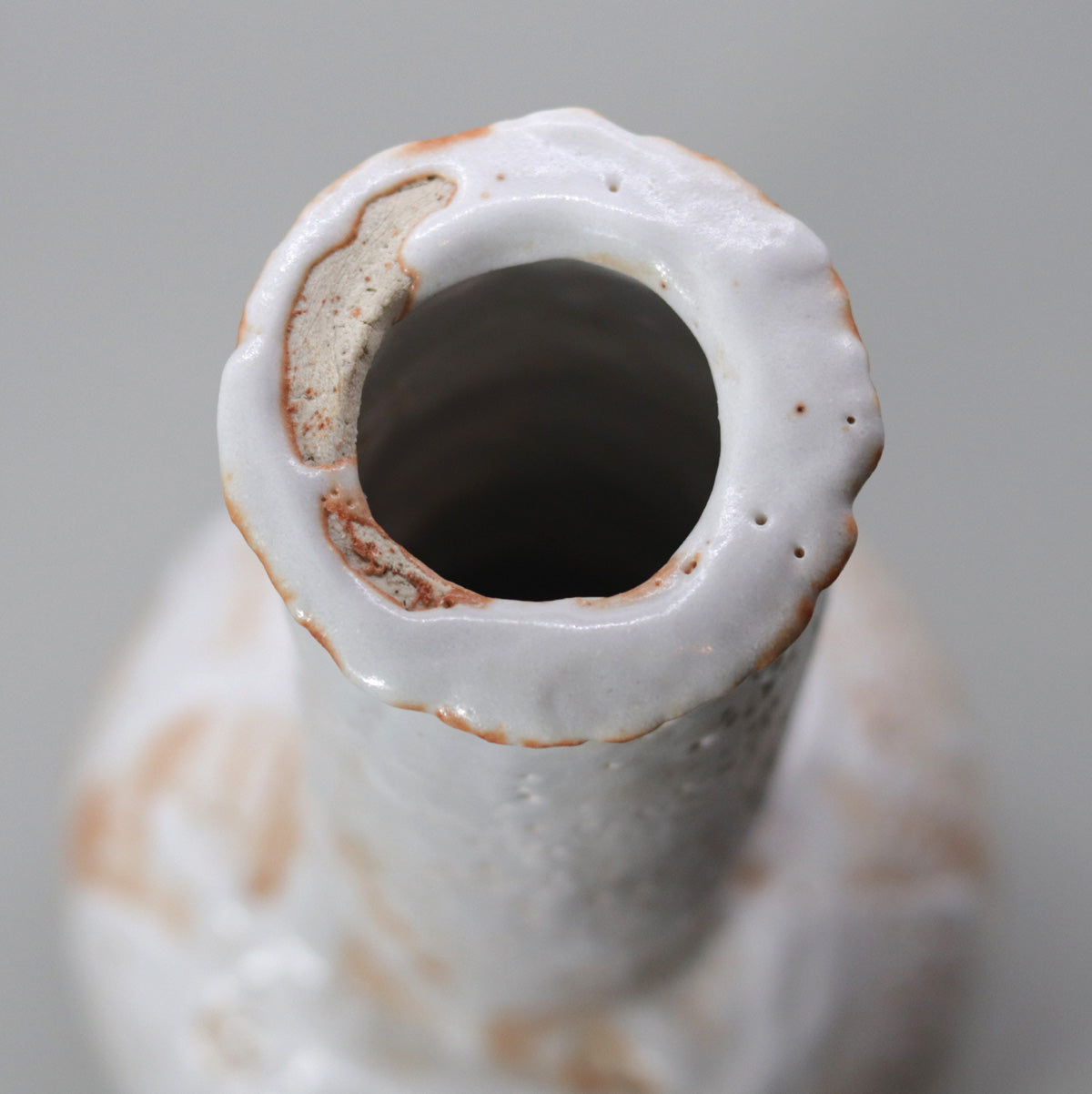
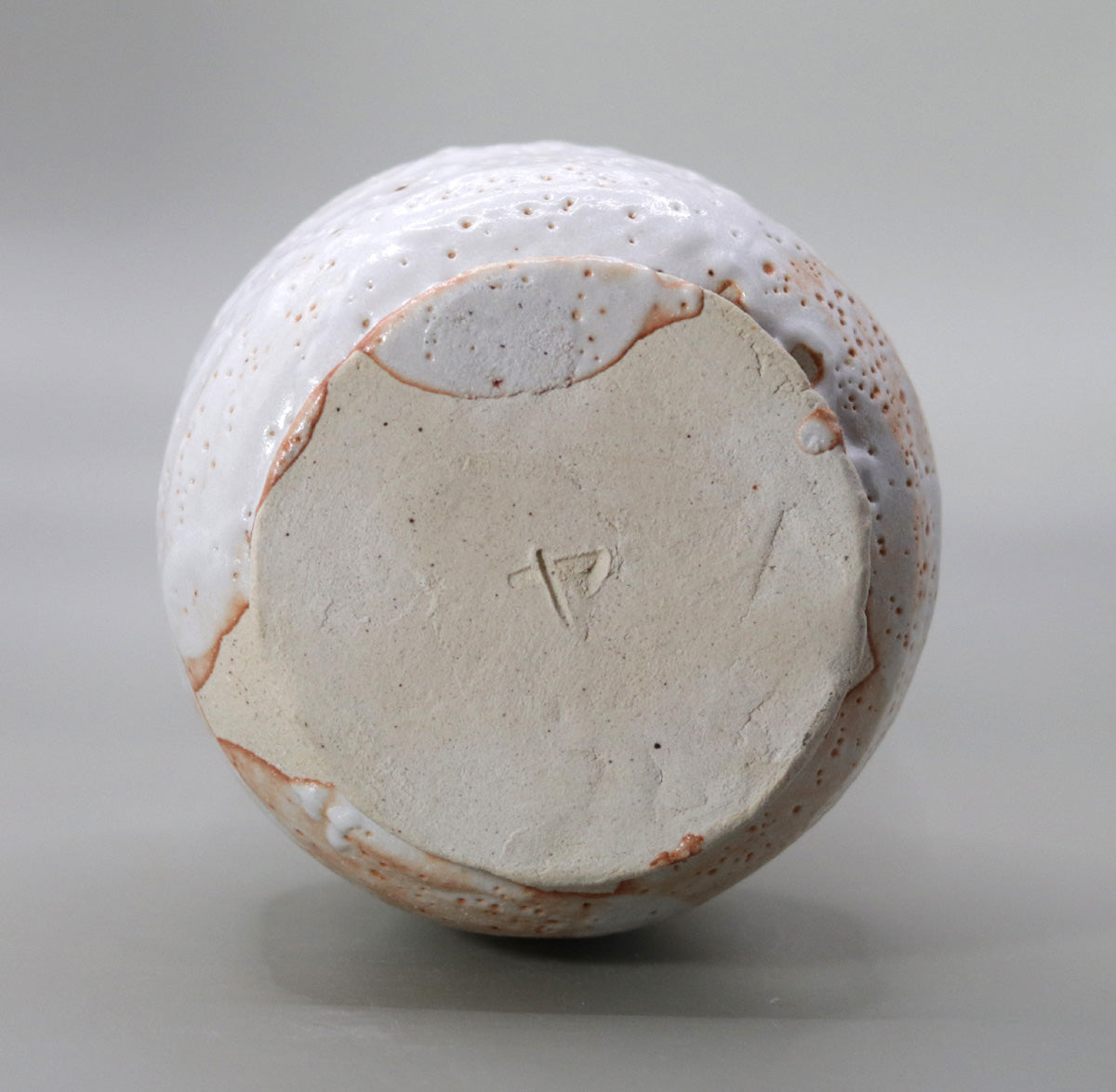
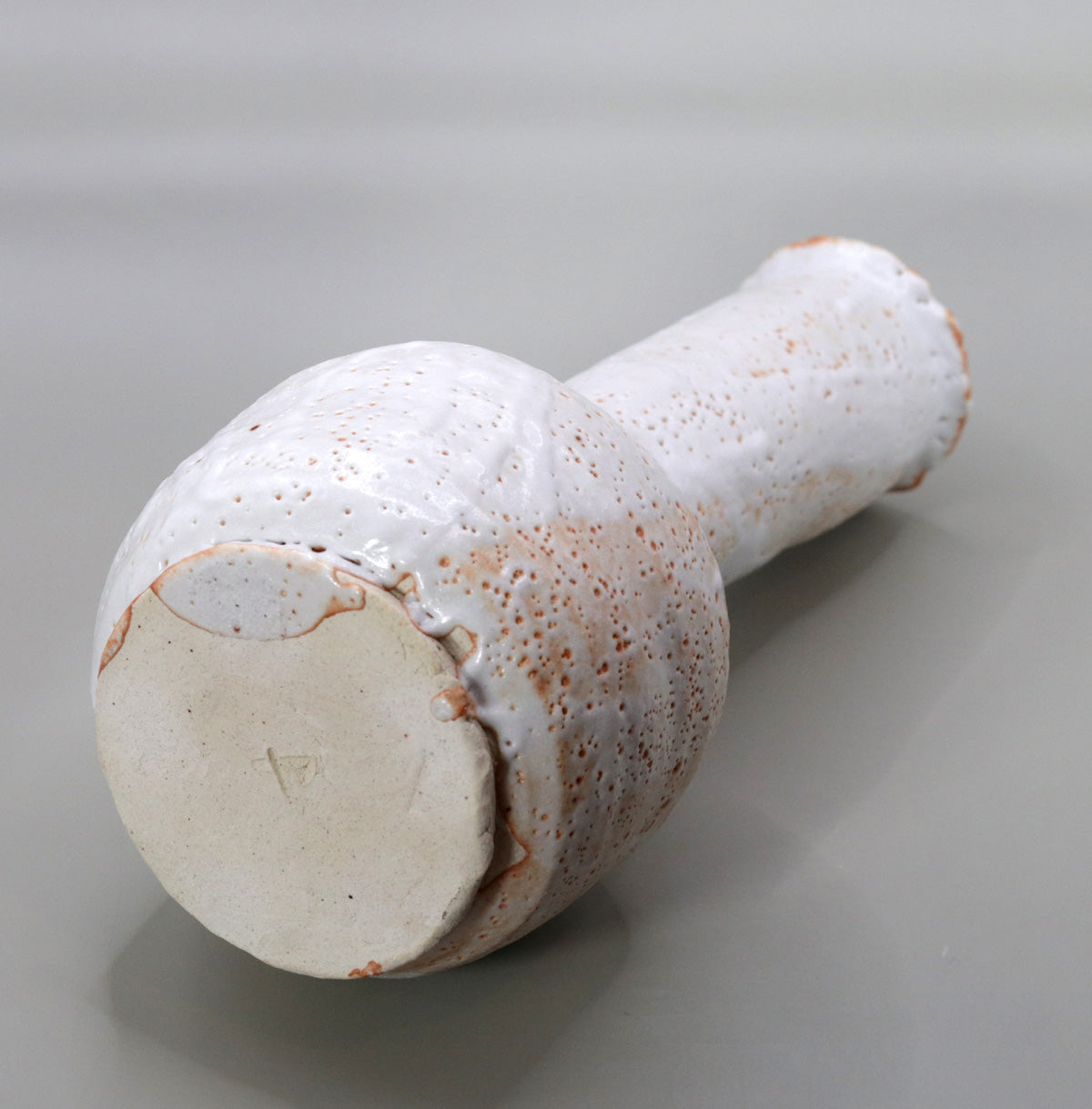
By applying a thick layer of Shino glaze, which is primarily composed of feldspar, to moxa clay, which has a low iron content, and then firing it, an opaque milky white glaze surface is created, and a reddish-brown "fire color" appears depending on the degree of fire.
This contrast between white and red is extremely symbolic in expressing the aesthetic sense of wabi and sabi . The white of Shino ware has a softness like a "silent light" rather than brightness, and gives the entire vessel an air of tranquility.
Additionally, textures such as crazing and yuzuhada (a type of citron peel) are also important elements, and the "traces of time" engraved on the surface of the vessel gently stir the memories of the viewer.
The Kinuta Form: Noh, Haiku, and the Japanese Mindscape
A "kinuta" is a tool used to beat cloth to soften it, and since ancient times, its sound has been considered a symbol of conveying feelings to people far away .
There is a Chinese anecdote about how the wife of Su Wu struck a kinuta in a high tower, and the sound reached her husband in the north. In Japan, the Noh play Kinuta depicts a woman who has been abandoned by her husband striking a kinuta with resentment and loneliness.
Furthermore, "beating the kiln" and "the sound of the kiln" are familiar autumnal seasonal words , and in the world of haiku they have been used as devices to symbolize "soundless sounds" and "the presence of absence."
"A blank space of feelings dwelling in the kinuta that remains silent no matter how much it is struck"
It is the crystallization of a very Japanese sensibility that asks the question, "What is beauty?"
Yanagishita Tokiki's Challenge: Integrating Contradictory Elements: Transience and Stability
With this vase, Yanagishita Tokiki aimed to achieve a balance between instability and presence. A typical kinuta-gata vase has broad shoulders, a low center of gravity, and a dignified posture. However, Yanagishita's piece adopts a delicate, unsteady form . This design is the result of an exquisite harmony between the materiality of clay and the spirit of "sabi."
The Beauty of "Unhammered Kinuta" - The Intersection of Literature and the Tea Ceremony
When we think of "kinuta" as a tea ceremony implement, the first thing that comes to mind is the kinuta celadon ware fired in the Longquan kilns from the Southern Song to Yuan dynasties.
Kinuta celadon ware, represented by the National Treasure "Mansei" and Important Cultural Property "Sensei," has been highly praised by tea masters since Rikyu for its beautiful celadon glaze and noble form.
Rather than focusing on such "dignified kinuta," Mr. Yanagishita focused on the loneliness of the literary kinuta, the stillness of the unstruck kinuta .
The ash from split pine wood falling on the white clay is slightly charred, and the subtle color of the fire is revealed, embodying the essence of Shino, where simplicity itself is the expression .
Moreover, the thickness of the glaze, the traces of the fire during firing, and the slender neck - each seem to exist independently, yet as a whole they seem to sing one song.
When the flowers are added, the vessel is complete.
This Shino Kinuta flower vase has a complete form on its own, but its beauty is instantly enhanced when it is filled with flowers.
The contrast between the vitality of the flowers and the fragility of the container .
The hard clay sculpture and the softness of the living flowers collide, creating a dramatic contrast between "stillness" and "movement."
Moreover, this contrast is not a dissonance, but rather functions as a harmonious tension .
This "beauty of tension" is the philosophy that runs through Yanagishita Tokiki's pottery, and the Shino Kinuta flower vase can be said to be one of his most poetic achievements.
Why Kinuta now? Reexamining loneliness in history
A sound that can only be conveyed by striking someone far away.
The sound can no longer be heard, and only the vessel remains.
"Kinuta" is a sound that resonates towards the past, and also a feeling entrusted to the future .
In this modern age, how precious and meaningful is a vessel that can tolerate such loneliness and space?
Yanagishita Tokiki has combined the "whiteness of Shino ware" with the "silent sound" of kinuta to create "pottery that gently resonates something deep in the heart of the viewer."
In lieu of a conclusion: A tribute to the beginning of the season
Try displaying this vessel during the long autumn nights.
Try simply inserting a single flower.
For example, Japanese pampas grass. For example, wild chrysanthemums. For example, unknown roadside flowers.
The flowers will look even more delicate in the stillness of the container.
The presence of flowers will give the vessel an even more narrative feel.
"A single flower blooms from an unbeaten kinuta"
This work is a form of beauty and thought, as if such a poem had been sealed within a vessel.
Hideki Yanashita Profile
Ceramic artist 1967 –
Born in Tokyo, Yanagishita currently lives and works in Iga City, Mie Prefecture. Fascinated by pottery from the Momoyama period, he embarked on a career in ceramics. After training in Shigaraki , he built his own anagama kiln in Iga, Mie Prefecture, and opened the "Kanda Kiln." Under the tutelage of Sadamitsu Sugimoto, he delves deeply into the world of wabi-sabi from his own unique perspective, producing a diverse range of works, including Raku ware, Yakishime, Ido, and Oribe ware. An important theme in Yanagishita's creative endeavors is the pursuit of new heights , born from the incorporation of modern materials and unique approaches, while deeply studying the techniques and spirit of his predecessors. His works question essential beauty that transcends time and invite viewers into a deeper world of art.
Base of operations : Iga, Mie Prefecture
Share
-
[I will send it to you quickly and carefully]
We carefully package each product in a way that suits it best.
Also, delivery times vary depending on the piece (vessel, etc.).
Items that already come with a box will be shipped within 1-3 days of the order date.
For items that require a box to be made after your order, it will take approximately 30 days for production to be completed and then shipped.
In either case, once we have confirmed your order, we will contact you by email to inform you of the delivery date.
-
[Requests when purchasing pottery]
Even products that look the same may differ slightly in color, shape, size, etc.
The way the glaze is used, the power of the kiln, the firing method, the season, and the humidity also affect the appearance of the pottery.
Please understand the individuality of each piece of pottery and enjoy the unique warmth of handmade.