
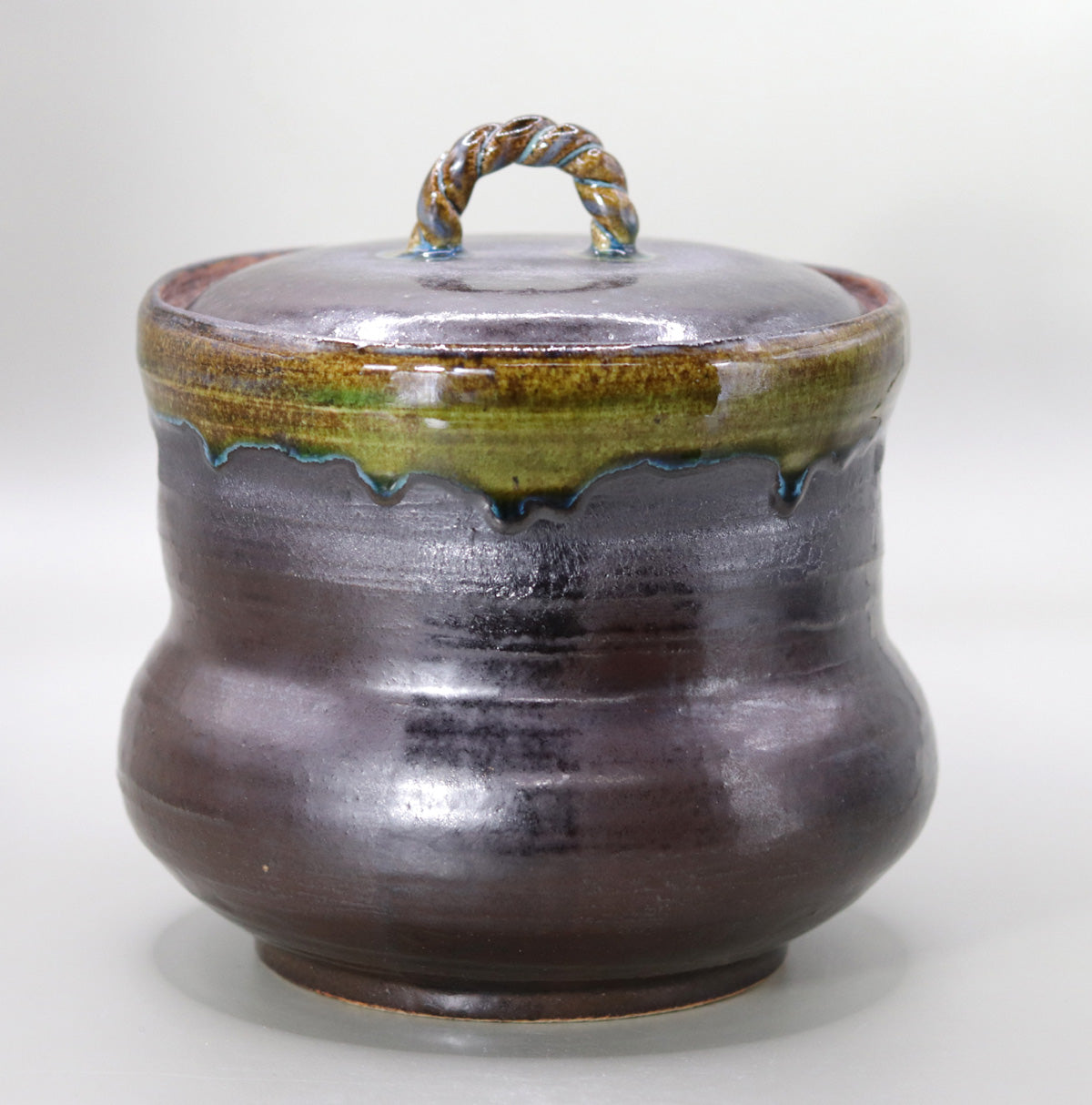
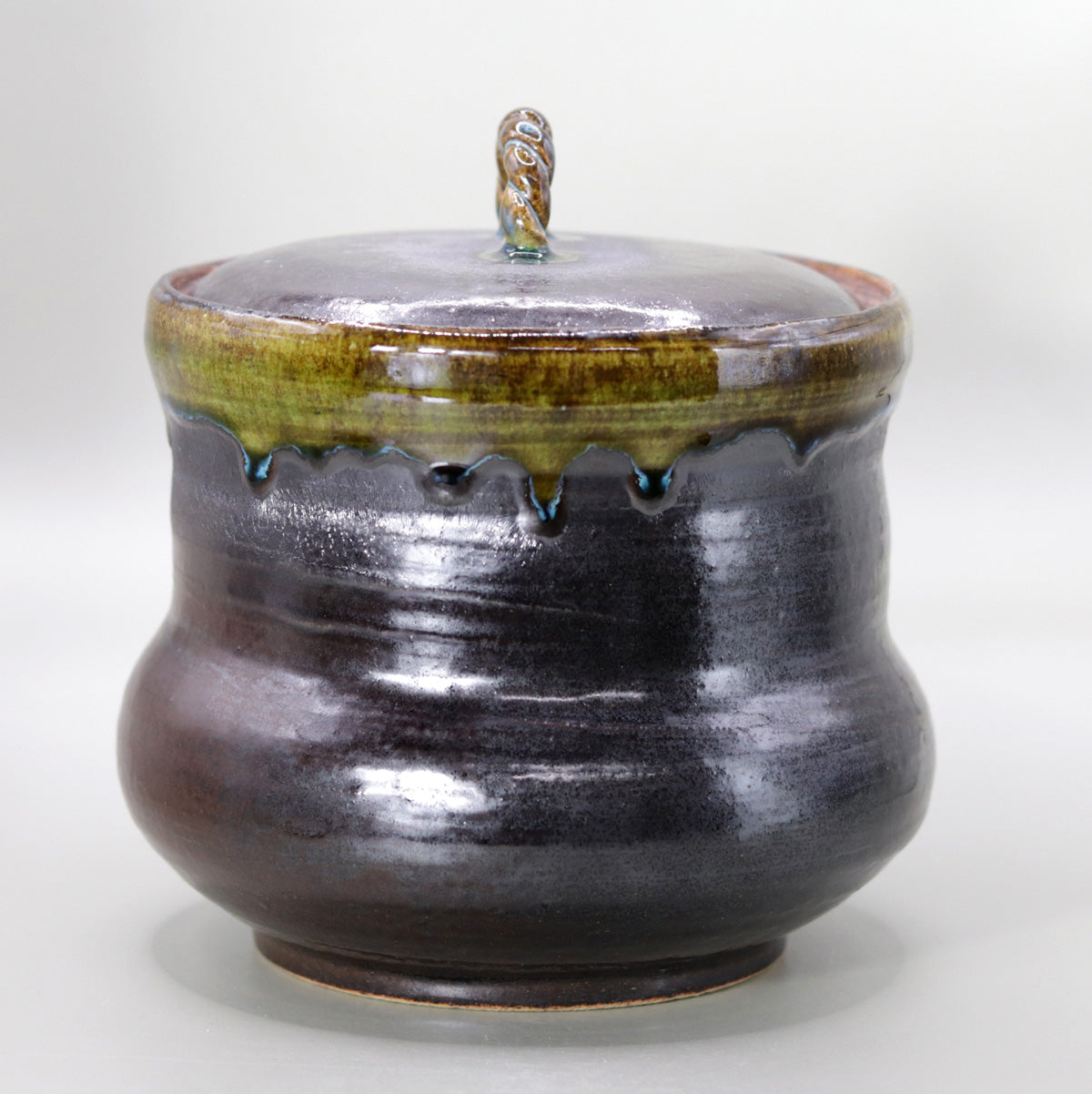
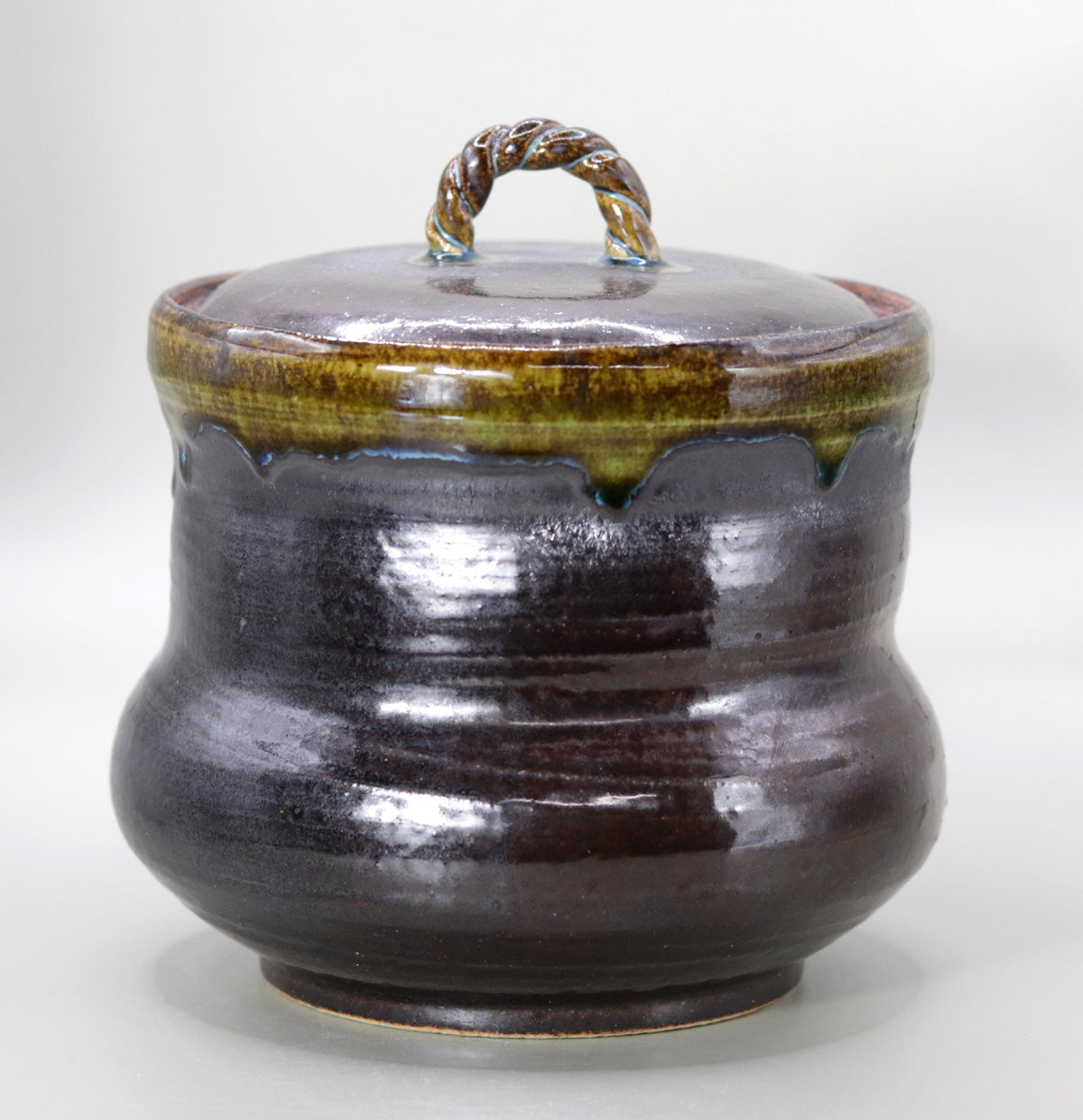
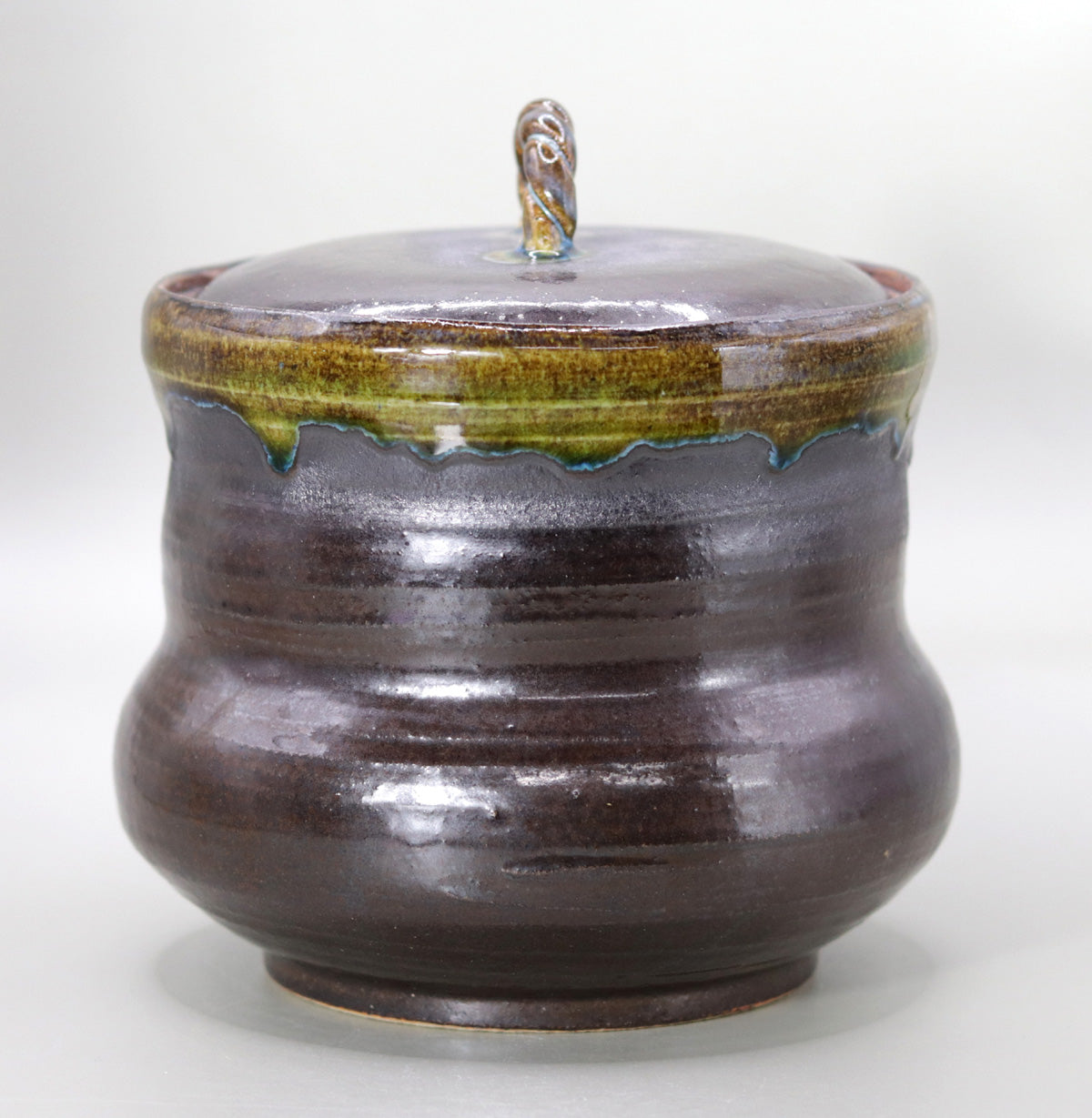
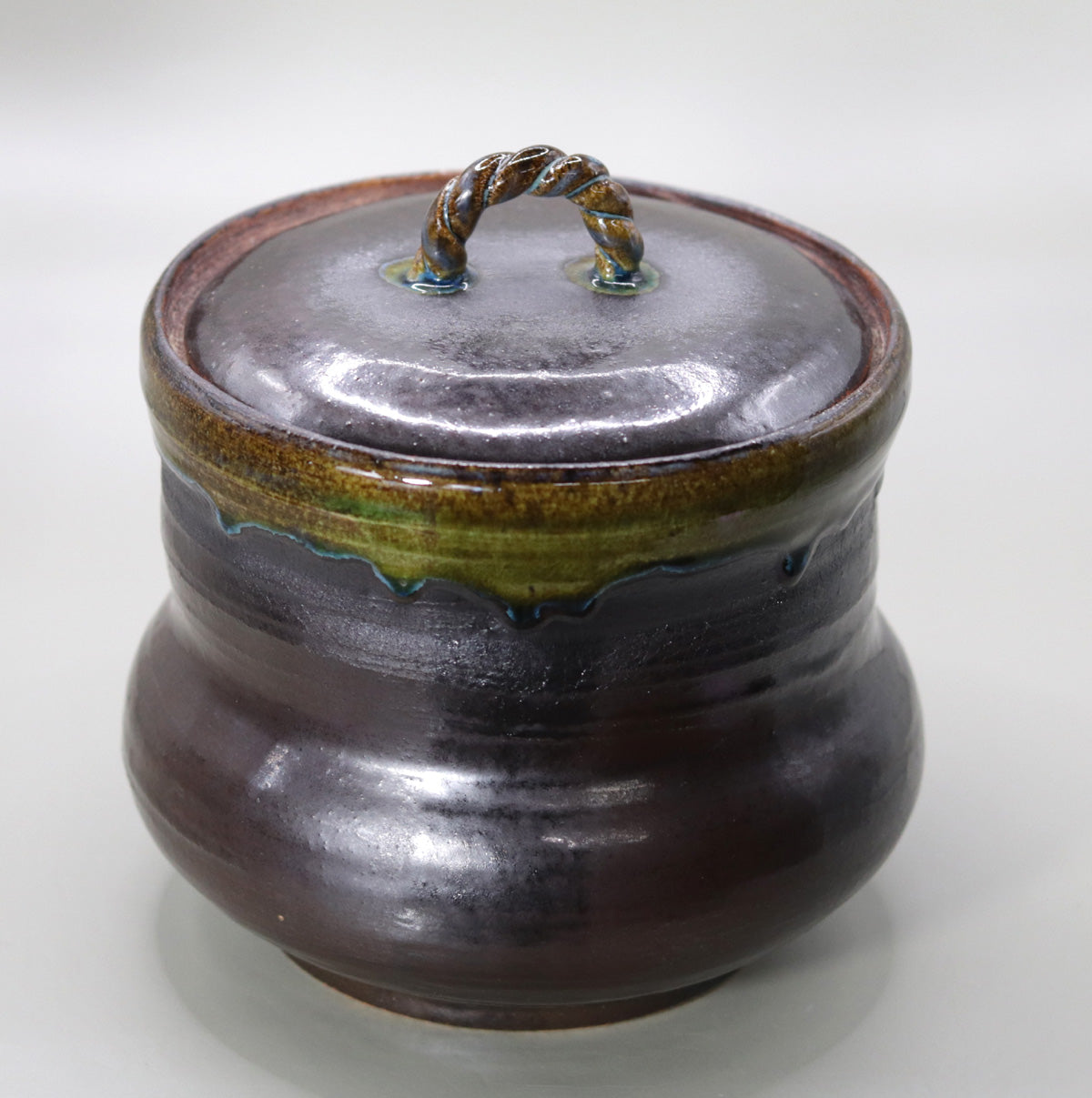
Iron glazed water jar by Ogawa Bunsai
Iron glazed water jar by Ogawa Bunsai
Couldn't load pickup availability
Width: 17.0cm x 17.0cm Height: 17.0cm
Iron glazed water jar
-Written by Bunsai Ogawa (6th generation)
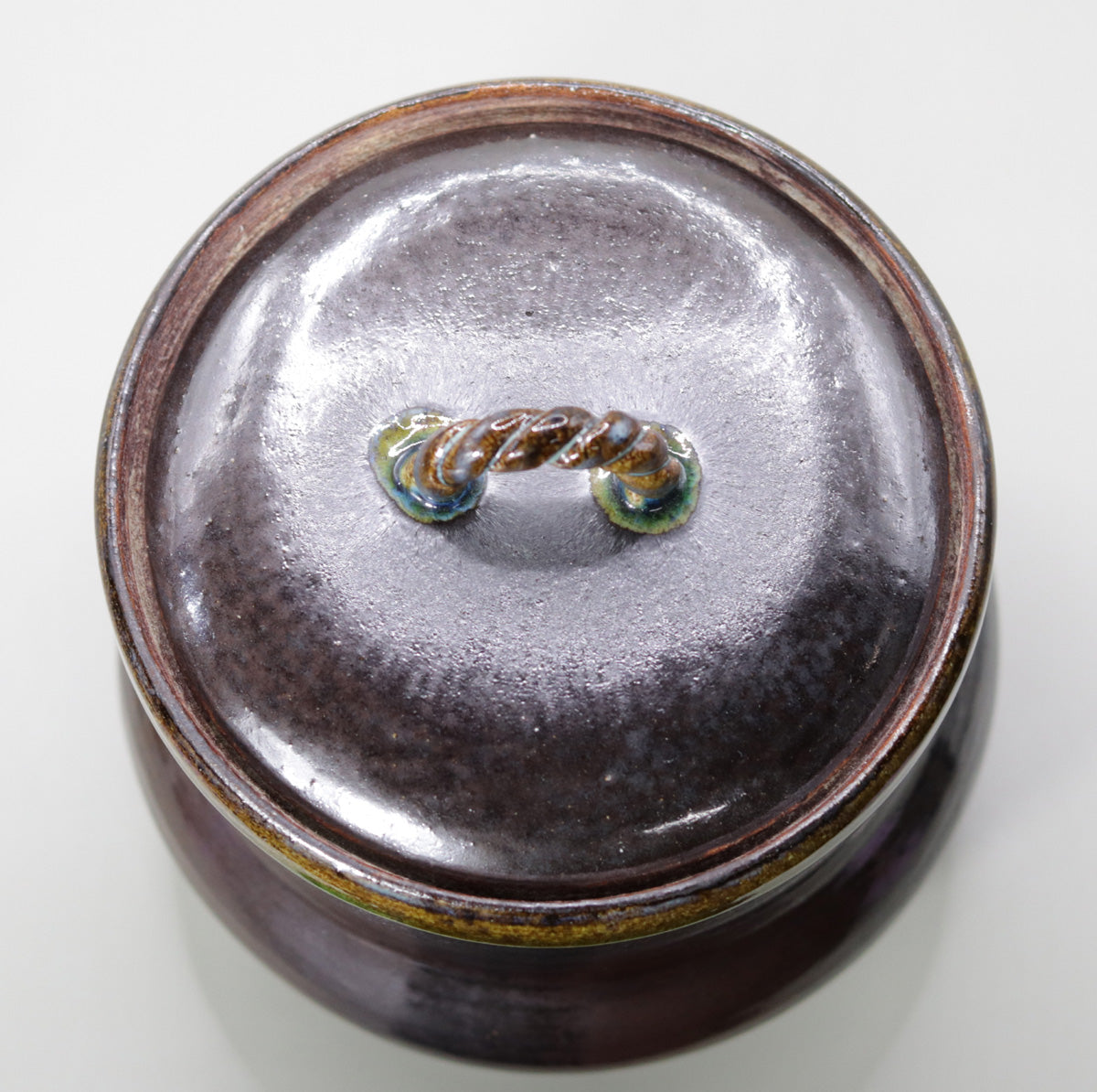
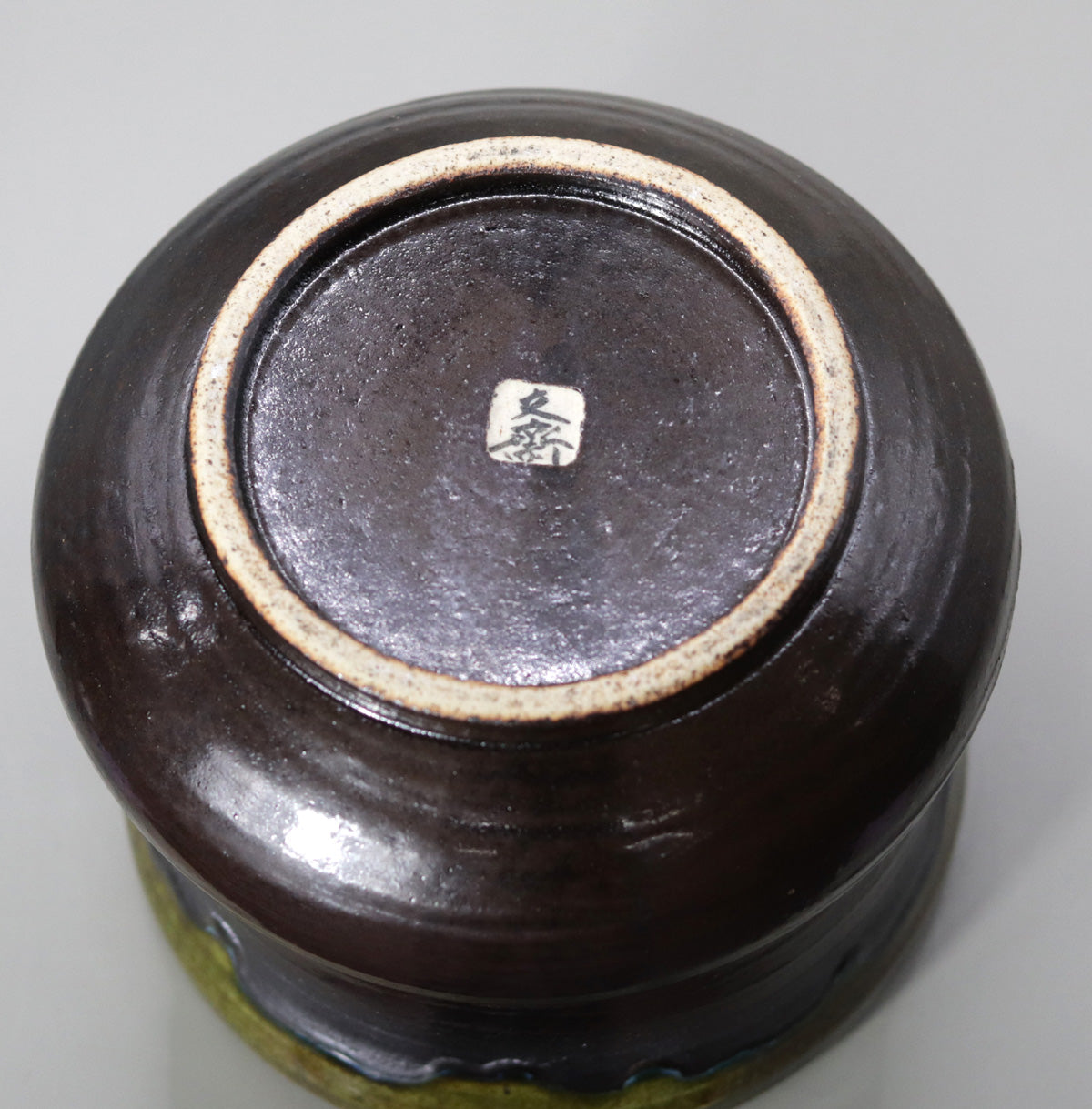
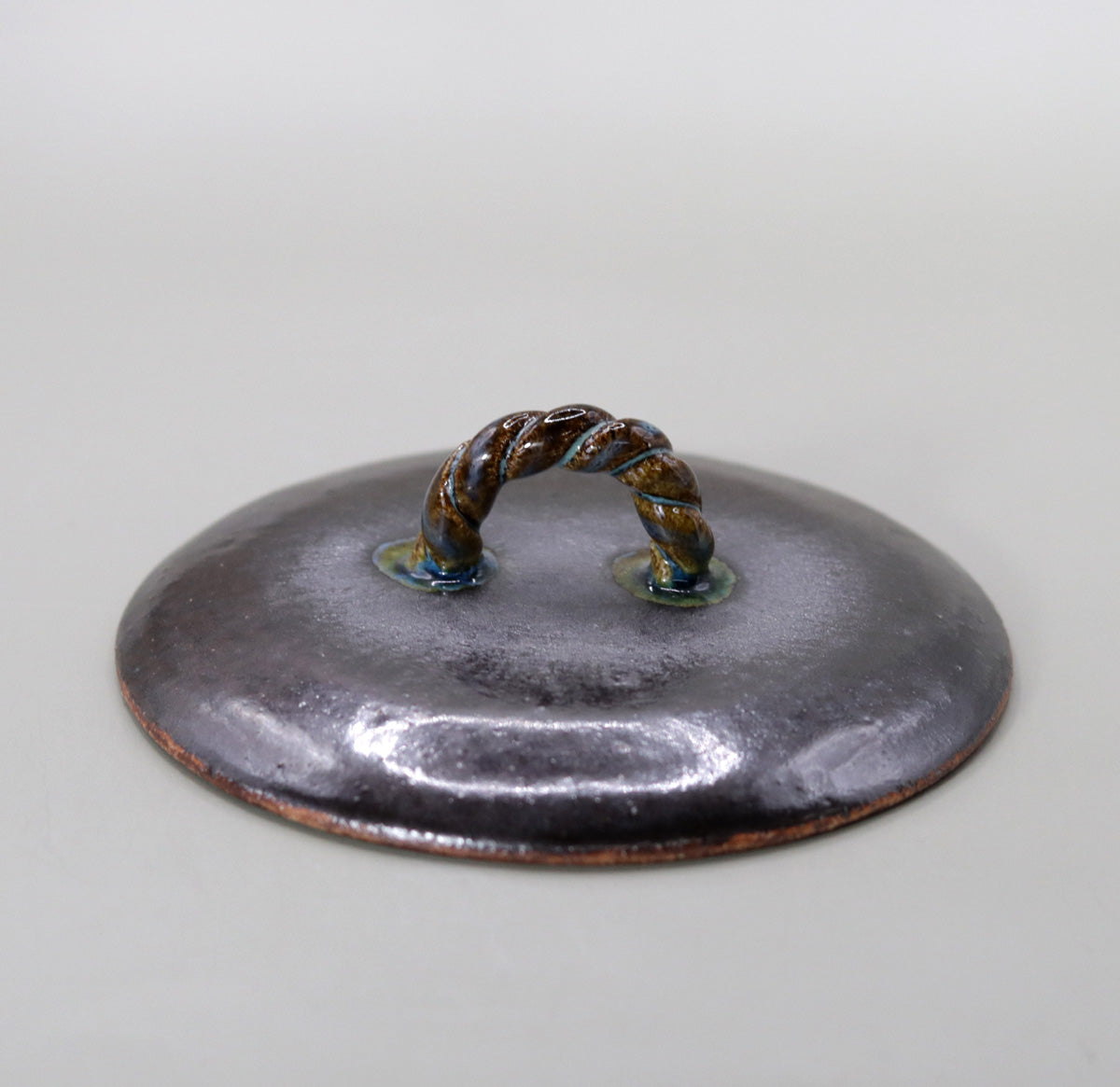
This "Iron-glazed Water Jar" is a dignified piece created by the sixth generation Ogawa Bunsai (Oki), combining serenity and strength. The rich luster of the iron glaze, combined with the subtle seepage and flow of the green glaze, creates the air of a spring hidden deep in the mountains. The rope handle on the lid goes beyond practicality to become a decorative accent reminiscent of ancient vessels, adding a unique sense of shadow and elegance to the space of a tea room.
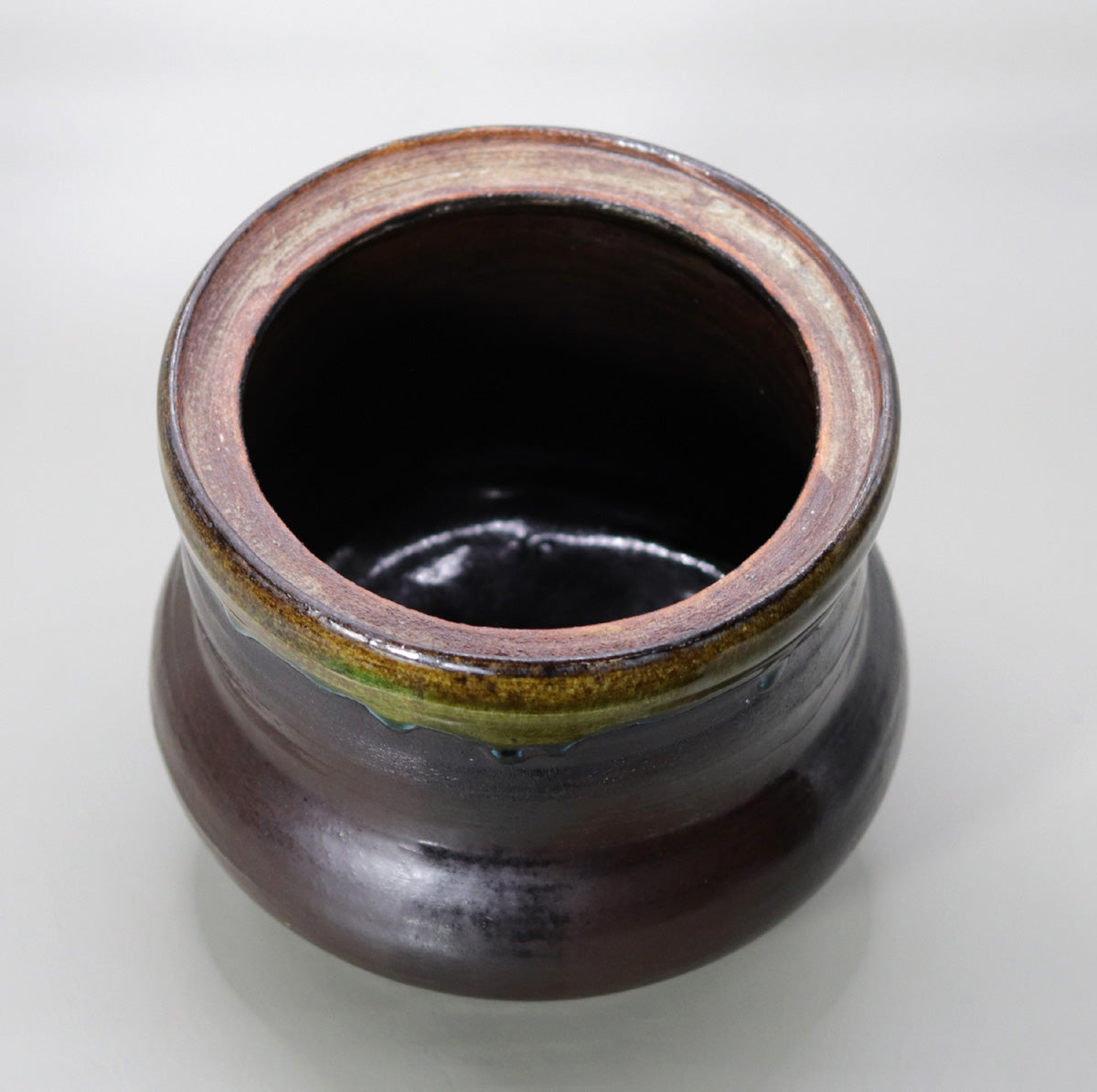
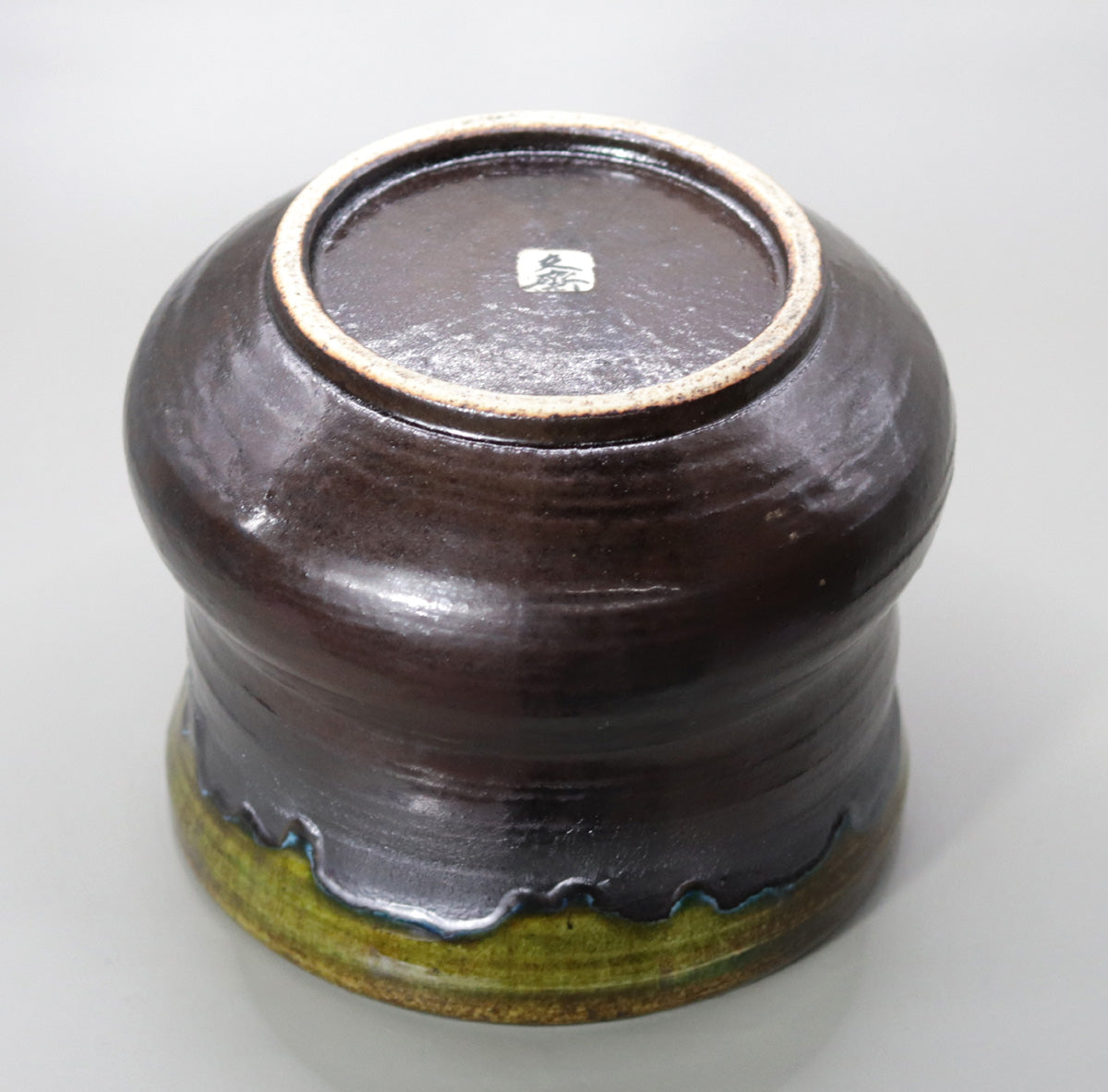
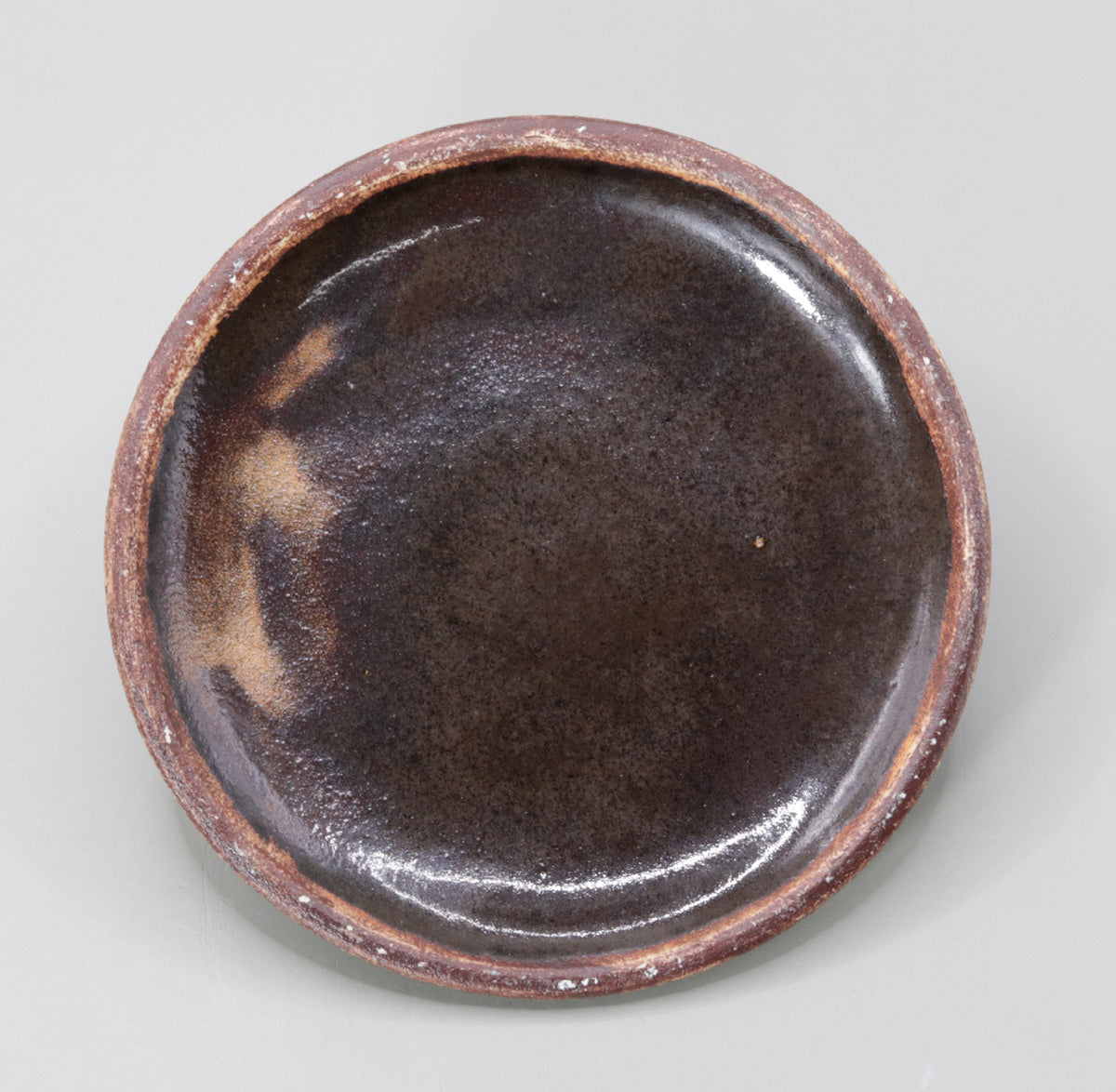
Although lustrous, it never becomes gaudy, and its soft texture brings a sense of calm both visually and tactilely. The color, intermediate between the black and brown of the iron glaze, appears naturally depending on the firing temperature, and in this uncertainty one can find the spirit of "once in a lifetime" (ichigo ichie) spirit. The minute traces of the wheel's wheel that appear on the surface also give a sense of the breath of "human hands" rather than the uniformity of a machine, resulting in a beautiful form that fully fulfills the true purpose of a tea ceremony tool.
Tableware that lives in the tea ceremony
The water jar is a symbol of "purification" in the tea ceremony. It is always positioned directly in front of the guest during the tea ceremony, and its appearance influences the impression of the entire space. The restrained appearance and rich glaze of this piece are endowed with the dignity befitting its role, and it has the power to deliver a "clean spirit" to those who see it.
Of particular note is the use of the green glaze that softly melts around the edge of the lid. This color, which Bunsai VI has explored for many years, was not simply a way to create beauty, but was born from his spiritual perspective - a color that "wishes for peace and feels the cycle of life." The way the green blends with the dark brown iron glaze is a true collaboration of "yin and yang," "hard and soft."
The lineage and innovation of Bunsai kiln
The aesthetic beauty and philosophy embodied in this vessel are based on the traditions of Bunsai Kiln, which has a history of over 150 years.
The first generation, Ogawa Bunsai (Bunsuke), was born in Kaga in 1809. Aiming to pursue a career in the pottery industry, he traveled to Kyushu and Arita in Hizen, mastering the techniques of kiln building. He then opened a kiln in Kaseyama, Kyoto, and was recognized by the Ichijo family, who bestowed the character "sai" and their family crest, hence the name "Bunsai." In 1873, the kiln was moved to Gojozaka, Kyoto, and the techniques and spirit have been passed down for six generations since then.
The sixth generation, Ogawa Bunsai (Oki), studied sculpture at graduate school before embarking on a career in ceramics, winning numerous awards at the Nitten and Kyoto Exhibitions, and attracting attention for his works that combine modern sensibilities with traditional techniques. In recent years, he has become known as the "Green Man," and has been developing creative activities that embody prayers for peace, centered on the expression of emerald glazes.
A vessel of peace and beauty
As the 6th Bunsai says, "I want to put my wish for a world without conflict into the form of a vessel."
This feeling is especially evident in a tranquil water jar like this one. The light that spreads through the black, the serendipitous scenery created by the flow of glaze. These cannot be achieved artificially, but are the "miracle of pottery" born from the union of fire, earth, water, and the human hand and heart.
And it is the tea ceremony venue that receives this miracle - a space where people come face to face and share their hearts. With this water jar there, the air becomes still and time begins to flow more slowly. It is truly a "symbol" that, while being a practical vessel, also embodies a deep spirituality.
Iron-glazed water jar - it represents the strength that resides in silence,
And the crystallization of Bunsai kiln embodies the wish for peace in a single drop of green.
A form of beauty and prayer that is needed in this day and age.
Please come and experience its presence in the tea room.
Share
-
[I will send it to you quickly and carefully]
We carefully package each product in a way that suits it best.
Also, delivery times vary depending on the piece (vessel, etc.).
Items that already come with a box will be shipped within 1-3 days of the order date.
For items that require a box to be made after your order, it will take approximately 30 days for production to be completed and then shipped.
In either case, once we have confirmed your order, we will contact you by email to inform you of the delivery date.
-
[Requests when purchasing pottery]
Even products that look the same may differ slightly in color, shape, size, etc.
The way the glaze is used, the power of the kiln, the firing method, the season, and the humidity also affect the appearance of the pottery.
Please understand the individuality of each piece of pottery and enjoy the unique warmth of handmade.