
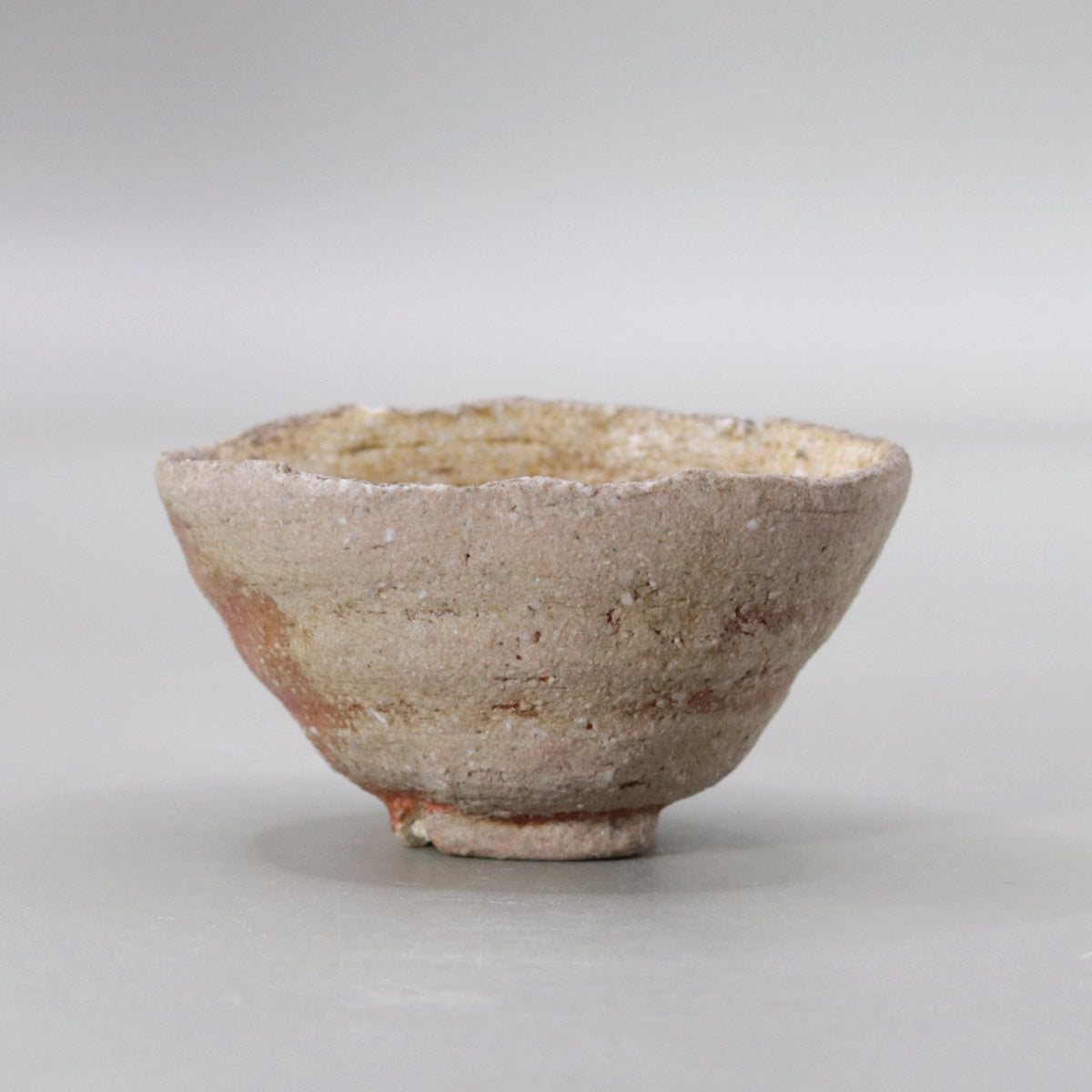
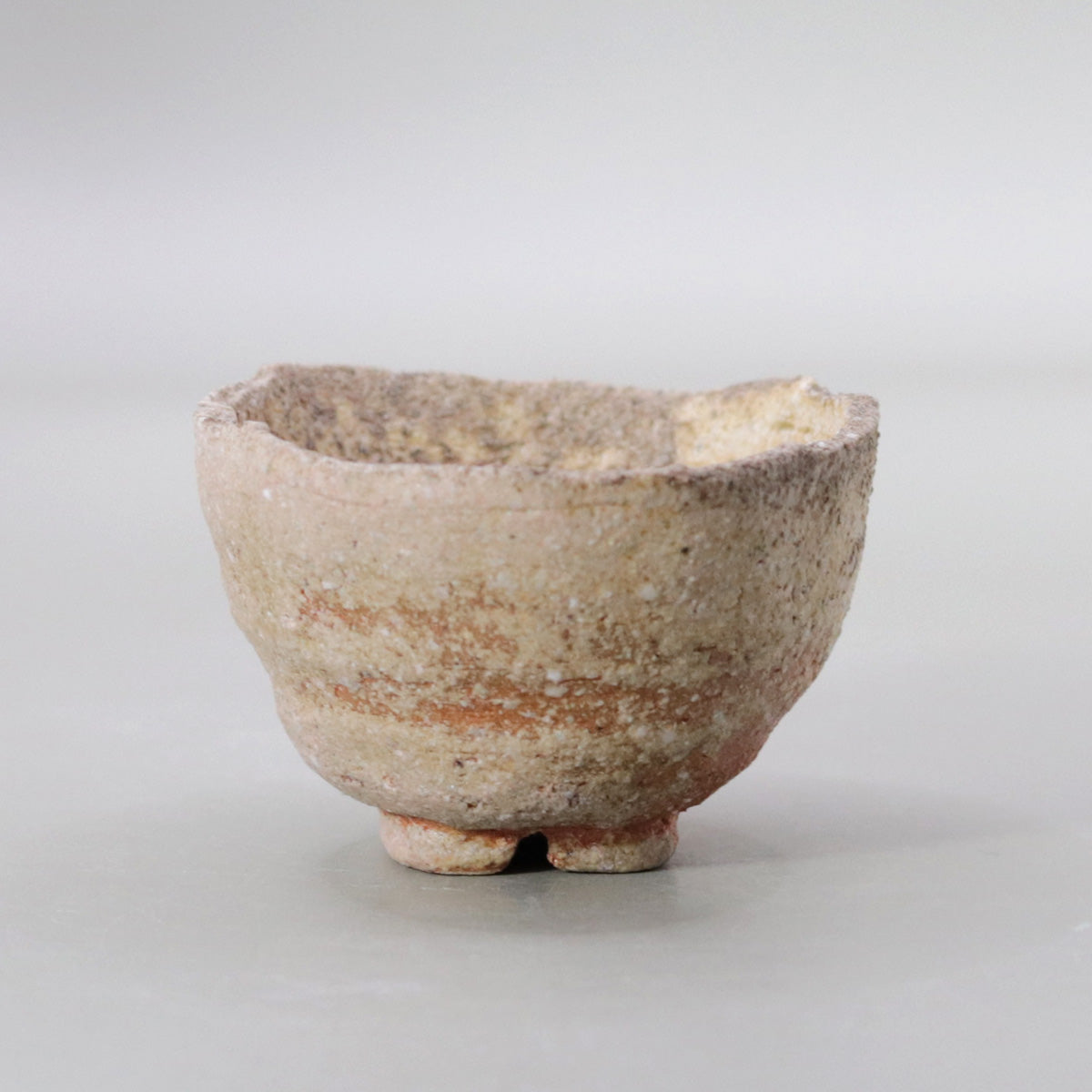
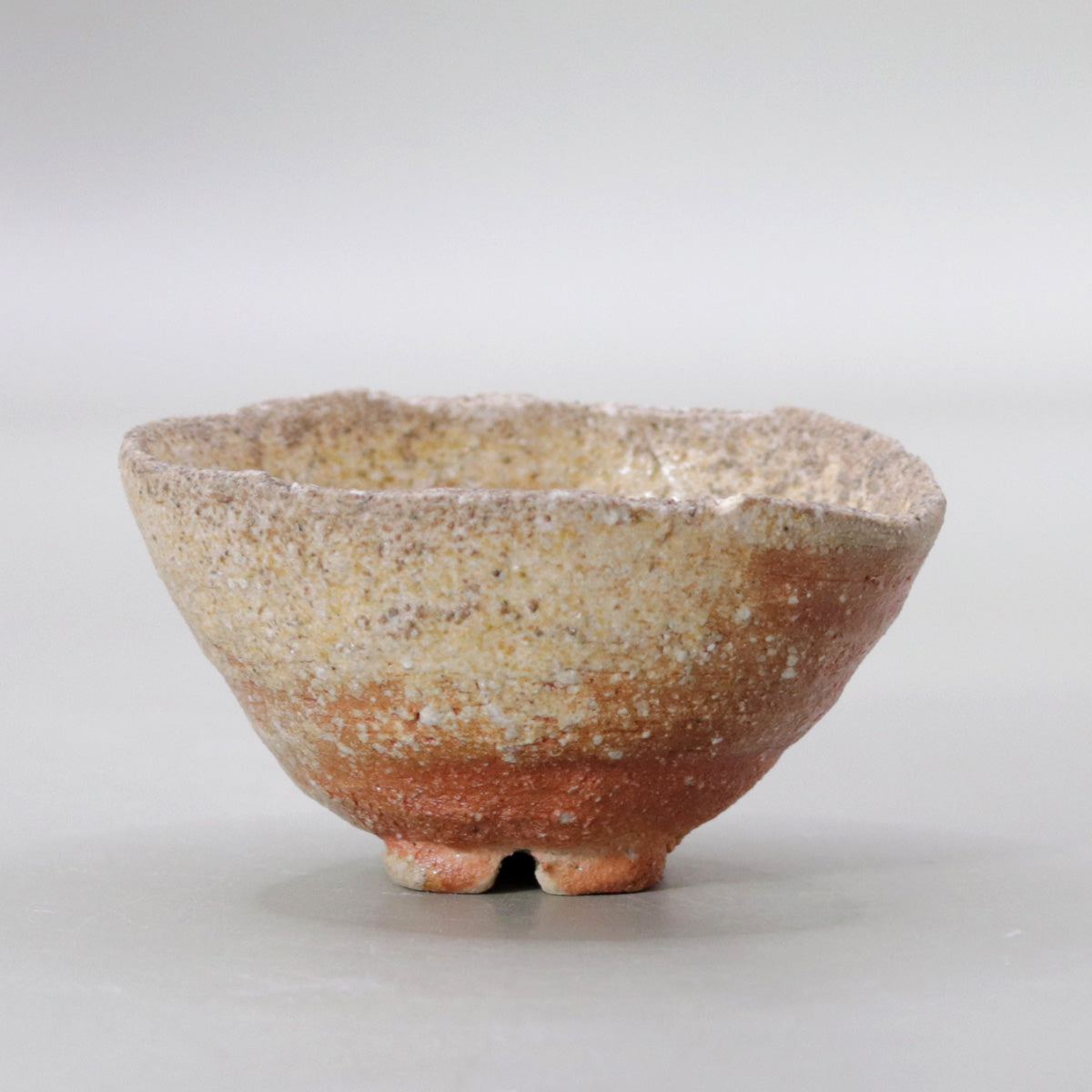
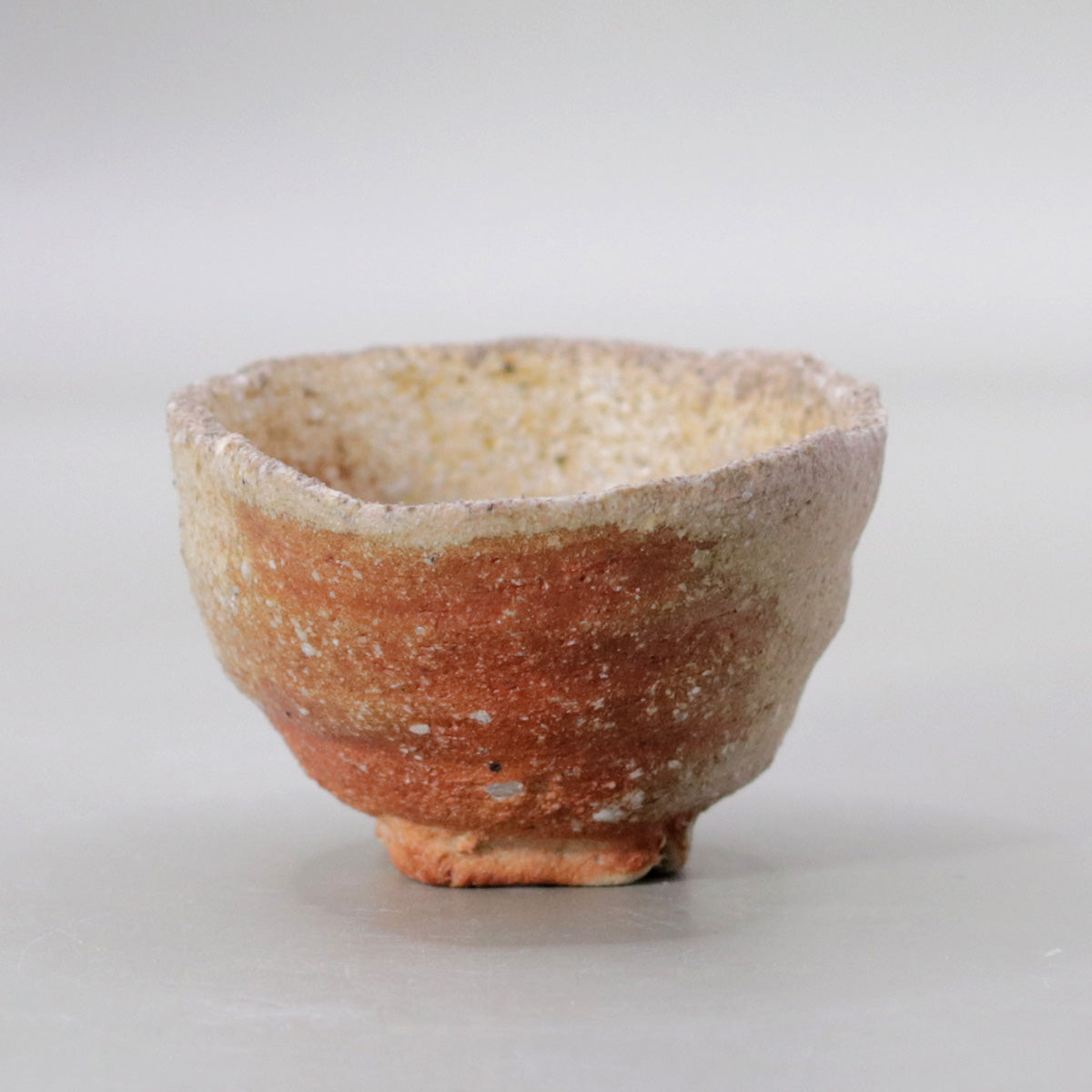
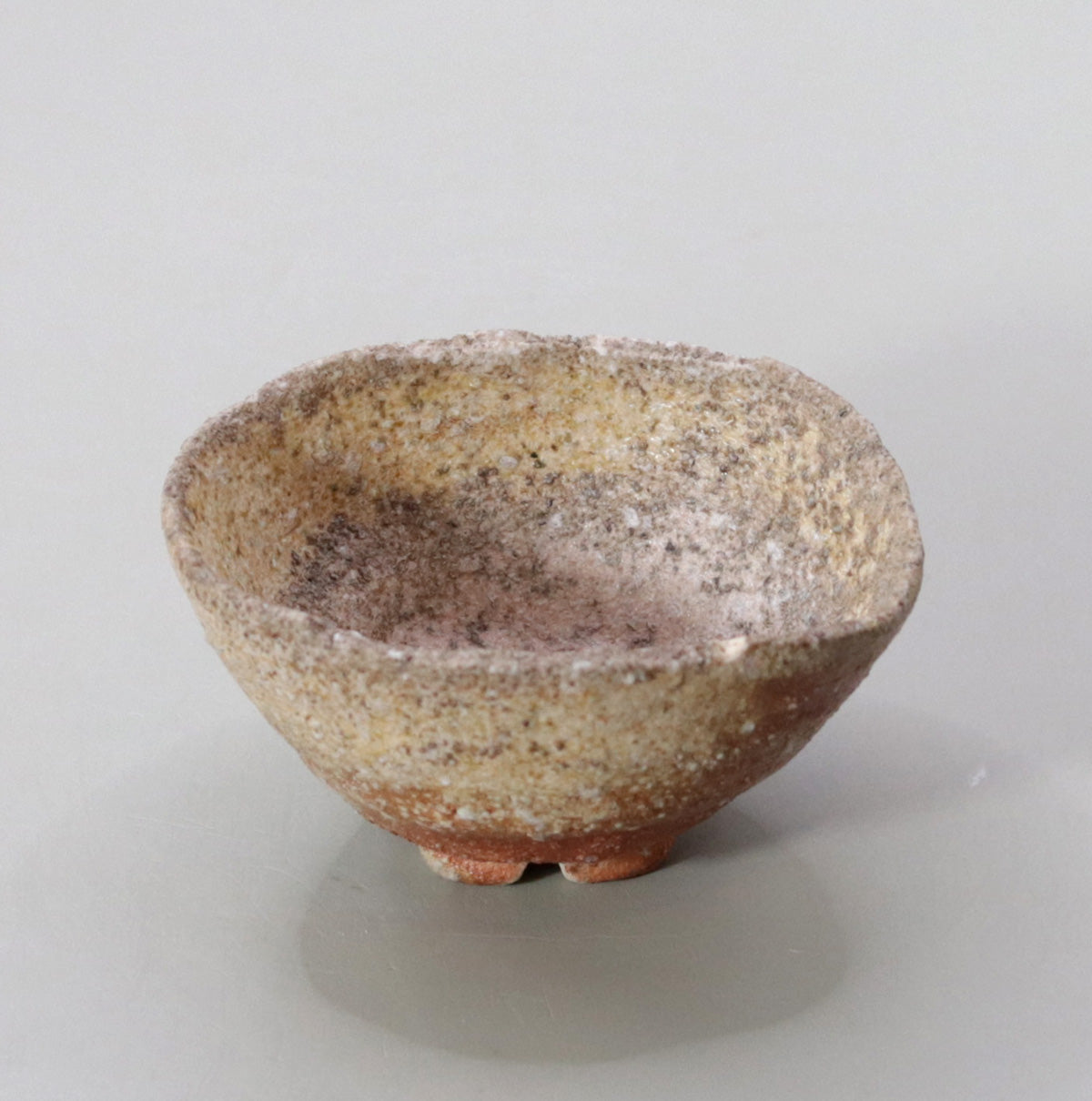
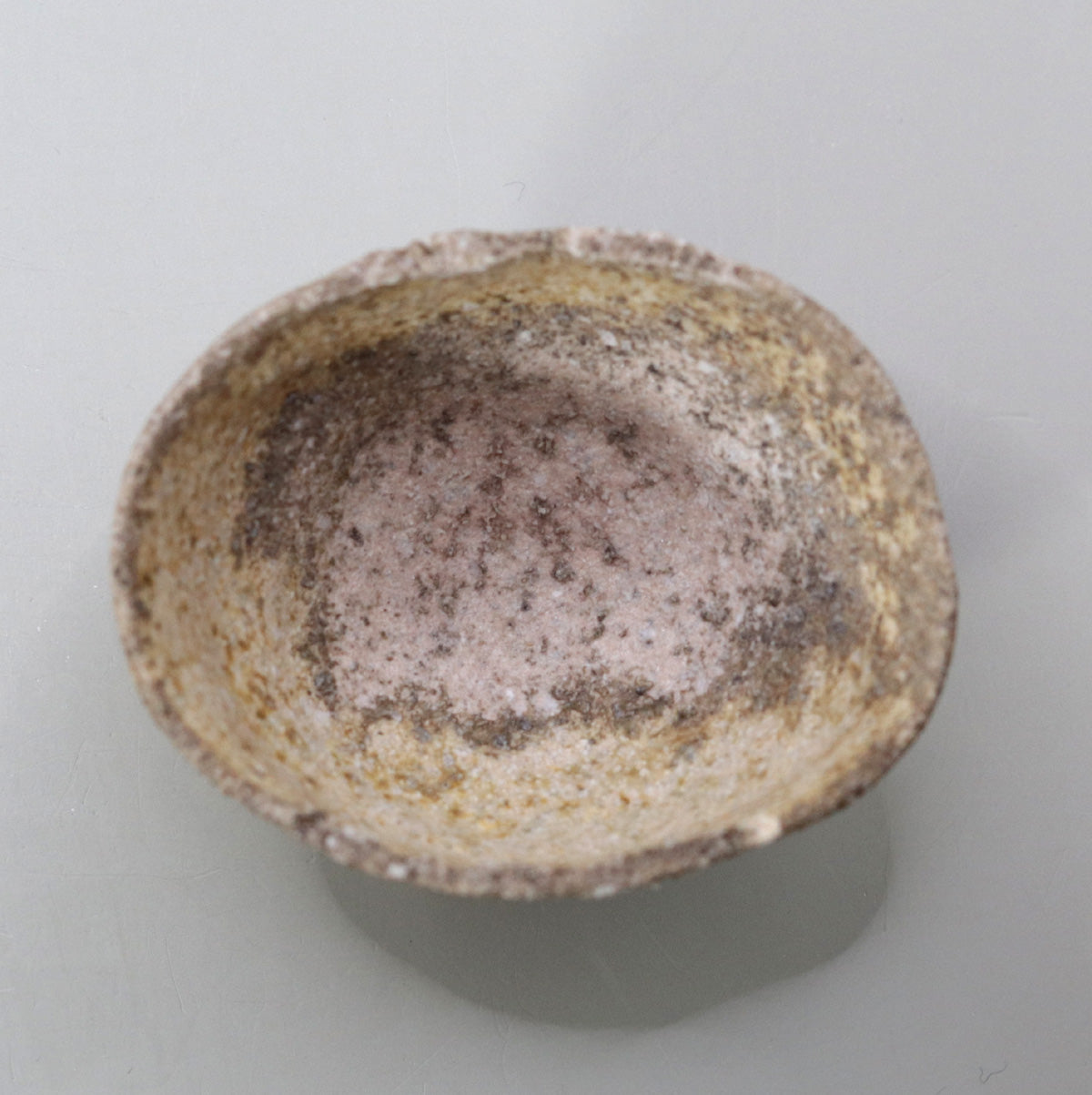
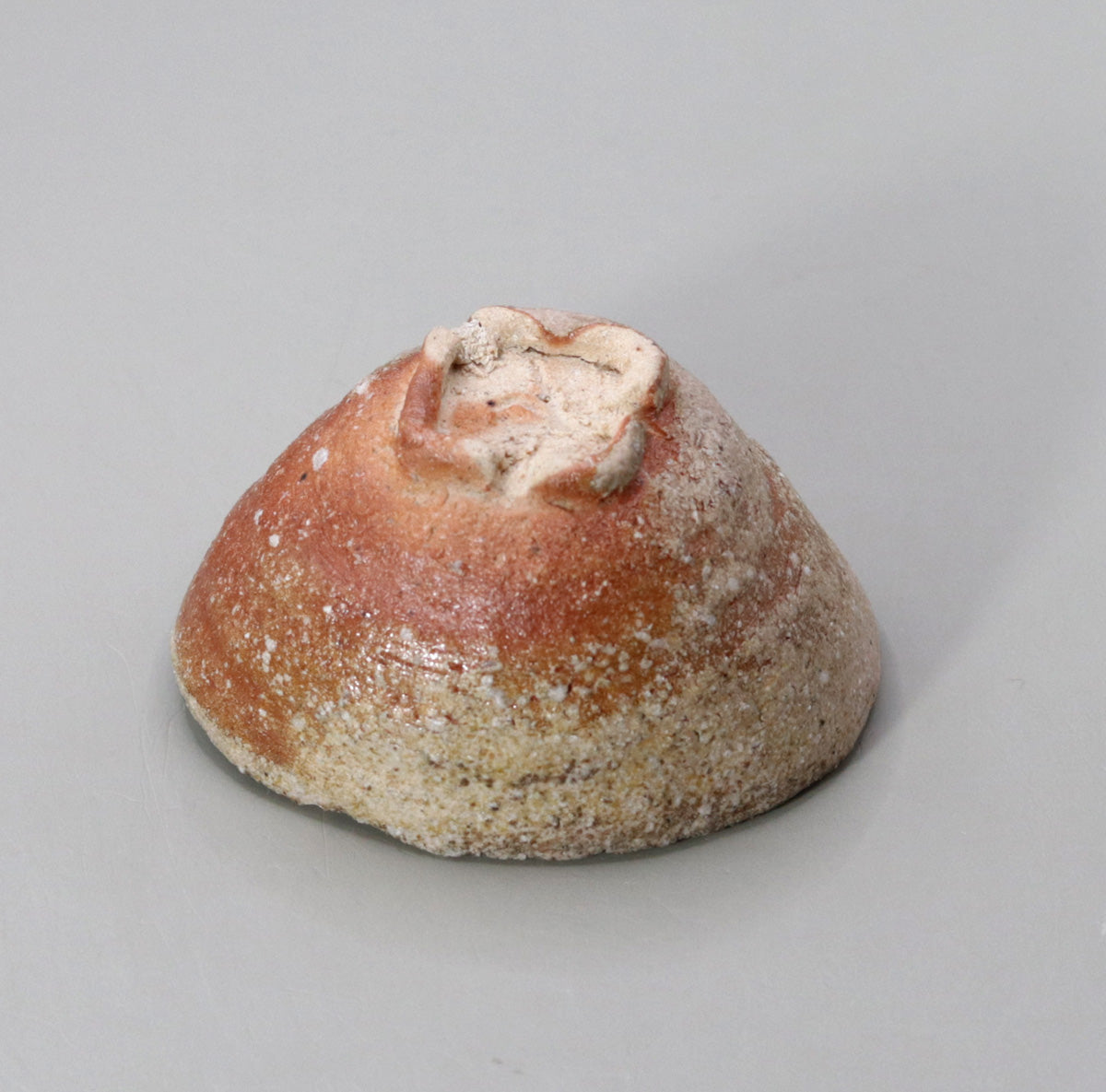
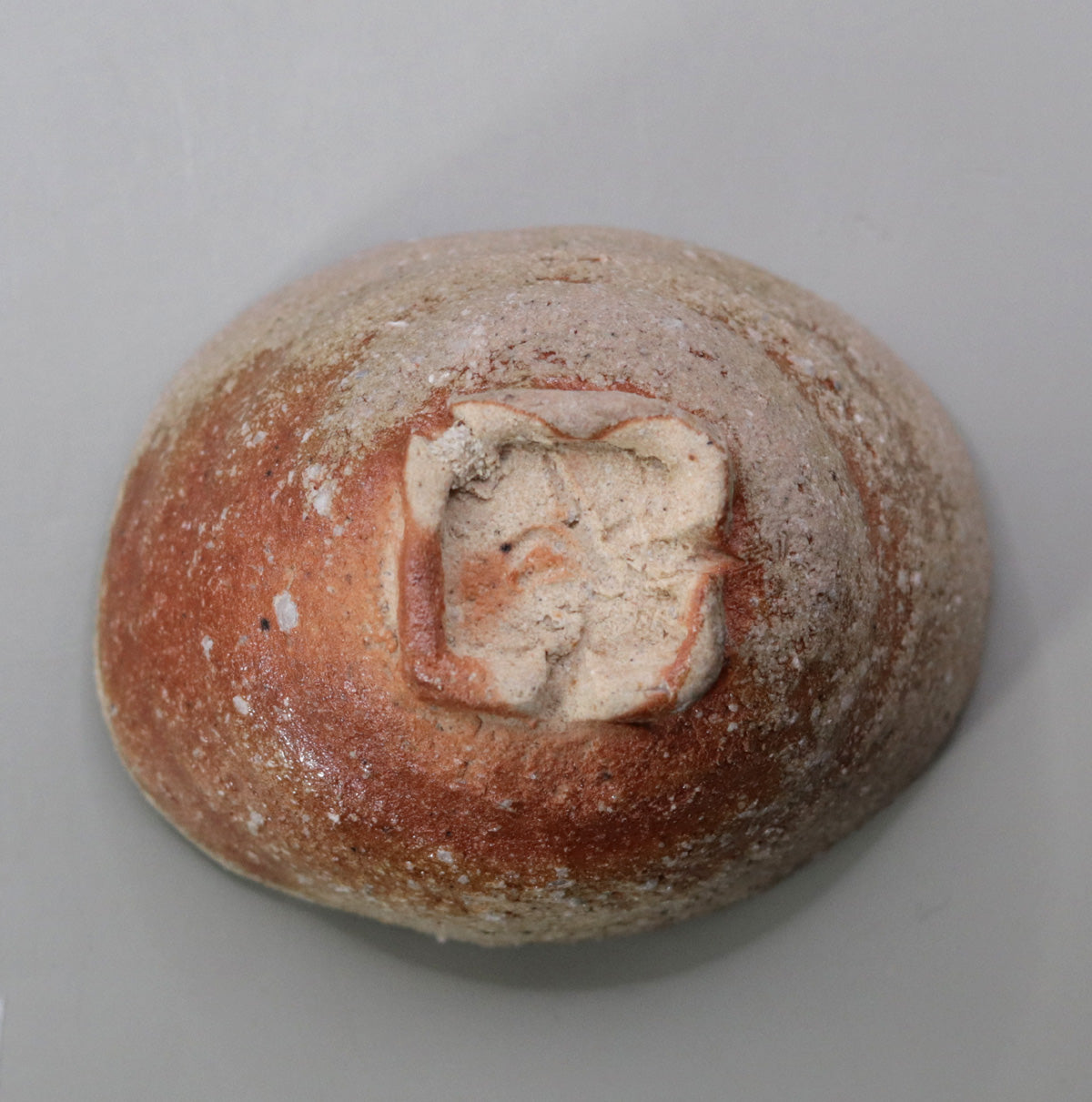
Shigaraki brush washer sake cup by Yanashita Hideki
Shigaraki brush washer sake cup by Yanashita Hideki
Couldn't load pickup availability
Width 8.4cm x 6.7cm Height 4.5cm
By Yanagishita Tokiki - A small brush washer that carries on the memory of the tangerine and lives in the present
Shigaraki ware is one of the most representative pottery styles of the Momoyama period, characterized by the beauty of the "yakishime" (fire-polished) finish that combines the rough texture of the clay with the natural glaze. While Shigaraki has produced numerous unparalleled masterpieces, such as flower vases and water jars, that utilize the strength and simplicity of the clay, there are few tea bowls produced there, and it is even said that "there are few tea bowls in Shigaraki." Shigaraki pottery has a strong impression of "grass," and historically, it has rarely been treated as "shin" (true) or "gyo" (traditional) vessels that embody formality and order.
In the late Momoyama period, Kobori Enshu created a tea bowl that lent Shigaraki ware a clear sense of formal beauty and order. The name of this tea bowl was "Hanatachibana." This work, "Shigaraki Brush Washing Sake Cup," is a masterpiece in which Yanagishita Tokiki has reconstructed Enshu's spirit and form into a modern sake cup, making it a masterpiece that could be called "a small Hanatachibana living in the modern era."
The material called Shigaraki and "clay that is difficult to make into tea bowls"
The appeal of Shigaraki ware lies in the unique earthenware character of the yakishime process. The color of the clay changes during firing, the ash covering the surface causes the natural glaze to flow, and the color of the fire appears depending on the temperature of the fire. Shigaraki ware embodies an aesthetic sense that appreciates these accidental changes in the kiln as the "scenery" of the work. However, because Shigaraki pottery is created by "exposing the clay surface," it faces a disadvantage when it comes to tea bowls and sake cups, which are tools that are placed in the mouth. If the clay remains rough on the rim, drinking becomes uncomfortable, and if the earthenware flavor is too strong, hygiene becomes a concern. Furthermore, Shigaraki originally had a lineage of household utensils rooted in agriculture, and was distant from "formal vessels" with decorative qualities and refined aesthetics. As a result, even historically, masterpieces of Shigaraki tea bowls are rare, and while "Mizunoko" and "Igaguri" are considered famous, they do not have the presence to rival masterpieces such as Shino and Raku.
Kobori Enshu's "Brush Washing Tea Bowl, Flower Orange" - The Challenge of Formalizing Shigaraki
It was Kobori Enshu who elevated the simple local character of Shigaraki in a completely opposite direction.
He had a bowl called "Hanatachibana" (Flower Orange) created by recreating the prestigious "brush washing" (a vessel for washing brushes) found in Chinese bronzeware and Tang Dynasty Chinaware, using the "grass" clay of Shigaraki. "Hanatachibana" has a high base resembling a three-legged pedestal and a refined bowl shape, exuding formal beauty amid the subdued finish of the high-fired finish. This work symbolizes Enshu's aesthetic sense, which could be described as "neoclassical," born with the establishment of samurai society. By "blending" Tang Dynasty-style designs with Japanese-style ware materials, Enshu pioneered a new realm of beauty. While Enshu tea is part of the lineage of wabi-cha (traditional tea) that stretches from Juko to Jo'o to Rikyu to Oribe, the difference in its role during that era meant that it was necessary to bring "order" and "formality" into the tea ceremony. Although Enshu inherited the spirit of "rebellion against the ruling class" of wabi-cha tea, he was also in a position to maintain "public order" as the head tea master of the shogunate, and for him, works such as "Flower Orange" were the very embodiment of ambiguous beauty.
Shigaraki Brush Washing Sake Cup: A reinterpretation of the Enshu style in a sake cup
This work, "Shigaraki Brush Washing Sake Cup" by Yanagishita Tokiki, is a sake cup inspired by the "Hanatachibana" (Flower Orange), but it is no mere copy. By deliberately breaking down the formality of the brush wash and relaxing the tension, it has the practicality and warmth of a sake cup. The shape is gentle, and the body is imbued with the reddish-brown fire color that is unique to Shigaraki, while the inside shows faint traces of fallen ash. The somewhat relaxed form fits comfortably in the user's hand, and the expression of the vessel seems to be intended for "use."
Revival of ancient Shigaraki and soil that lives in the present
While modern Shigaraki ware often features new expressions, such as "Bidoro Shigaraki," which achieves a glassy luster through the application of glazes, Yanagishita's work revisits the essence of ancient Shigaraki , reexamining the very essence of beauty. Ash falls naturally, allowing the power of the clay to emerge in the firing process. Rather than attempting to appear beautiful, Yanagishita believes in the natural "appearance" of nature. This approach quietly resides throughout this vessel. At the same time, the simplicity of this work never lapses into unsophistication, thanks to Yanagishita's masterful use of minimalism and the use of white space. Incorporating the traditional Chinese brush-washing style into Shigaraki ware with a high-fired finish—his ability to embrace this contradiction and yet achieve harmony—can be described as a highly refined "neoclassical" style, reminiscent of Enshu's philosophy.
A place where the formality of brush washing and the joy of sake cups intersect
He pours the sake, takes a big sip, turns the cup over, looks up at the hill, and pours another drink.
In this repetition, the earth and flames of Shigaraki, the prestige of Enshu, and the modern sensibility of Yanagishita Tokiki gradually seep in. This Shigaraki Brush Washing Sake Cup is truly a vessel that gives you the moment when the act of drinking turns into the act of "tasting history in the palm of your hand."
Above all, this is a rare piece that beautifully and quietly pioneered the "brush-washing style sake cup" genre, which had not been attempted much in Shigaraki until now.
While inheriting the spirit of Enshu, Mr. Yanagishita is updating the "present of Shigaraki" - his aesthetic sense and imagination permeate every corner of the pottery.
Hideki Yanashita Profile
Ceramic artist 1967 –
Born in Tokyo, Yanagishita currently lives and works in Iga City, Mie Prefecture. Fascinated by pottery from the Momoyama period, he embarked on a career in ceramics. After training in Shigaraki , he built his own anagama kiln in Iga, Mie Prefecture, and opened the "Kanda Kiln." Under the tutelage of Sadamitsu Sugimoto, he delves deeply into the world of wabi-sabi from his own unique perspective, producing a diverse range of works, including Raku ware, Yakishime, Ido, and Oribe ware. An important theme in Yanagishita's creative endeavors is the pursuit of new heights , born from the incorporation of modern materials and unique approaches, while deeply studying the techniques and spirit of his predecessors. His works question essential beauty that transcends time and invite viewers into a deeper world of art.
Base of operations : Iga, Mie Prefecture
Share
-
[I will send it to you quickly and carefully]
We carefully package each product in a way that suits it best.
Also, delivery times vary depending on the piece (vessel, etc.).
Items that already come with a box will be shipped within 1-3 days of the order date.
For items that require a box to be made after your order, it will take approximately 30 days for production to be completed and then shipped.
In either case, once we have confirmed your order, we will contact you by email to inform you of the delivery date.
-
[Requests when purchasing pottery]
Even products that look the same may differ slightly in color, shape, size, etc.
The way the glaze is used, the power of the kiln, the firing method, the season, and the humidity also affect the appearance of the pottery.
Please understand the individuality of each piece of pottery and enjoy the unique warmth of handmade.