
Iron-glazed gold-painted Nara-e tea bowl by Rakusai Onishi
Iron-glazed gold-painted Nara-e tea bowl by Rakusai Onishi
Couldn't load pickup availability
Width: 13.5cm Height: 7.2cm
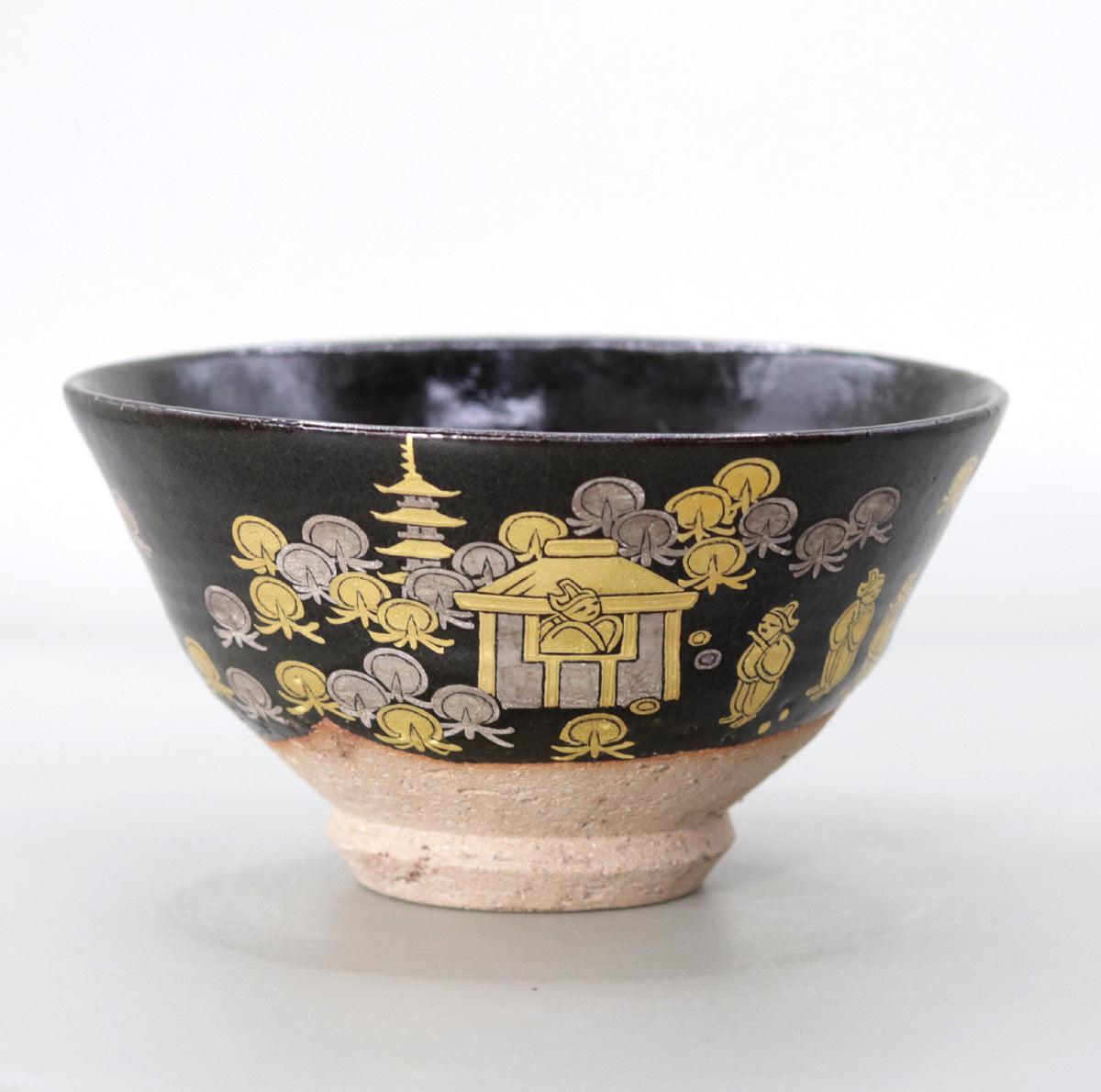
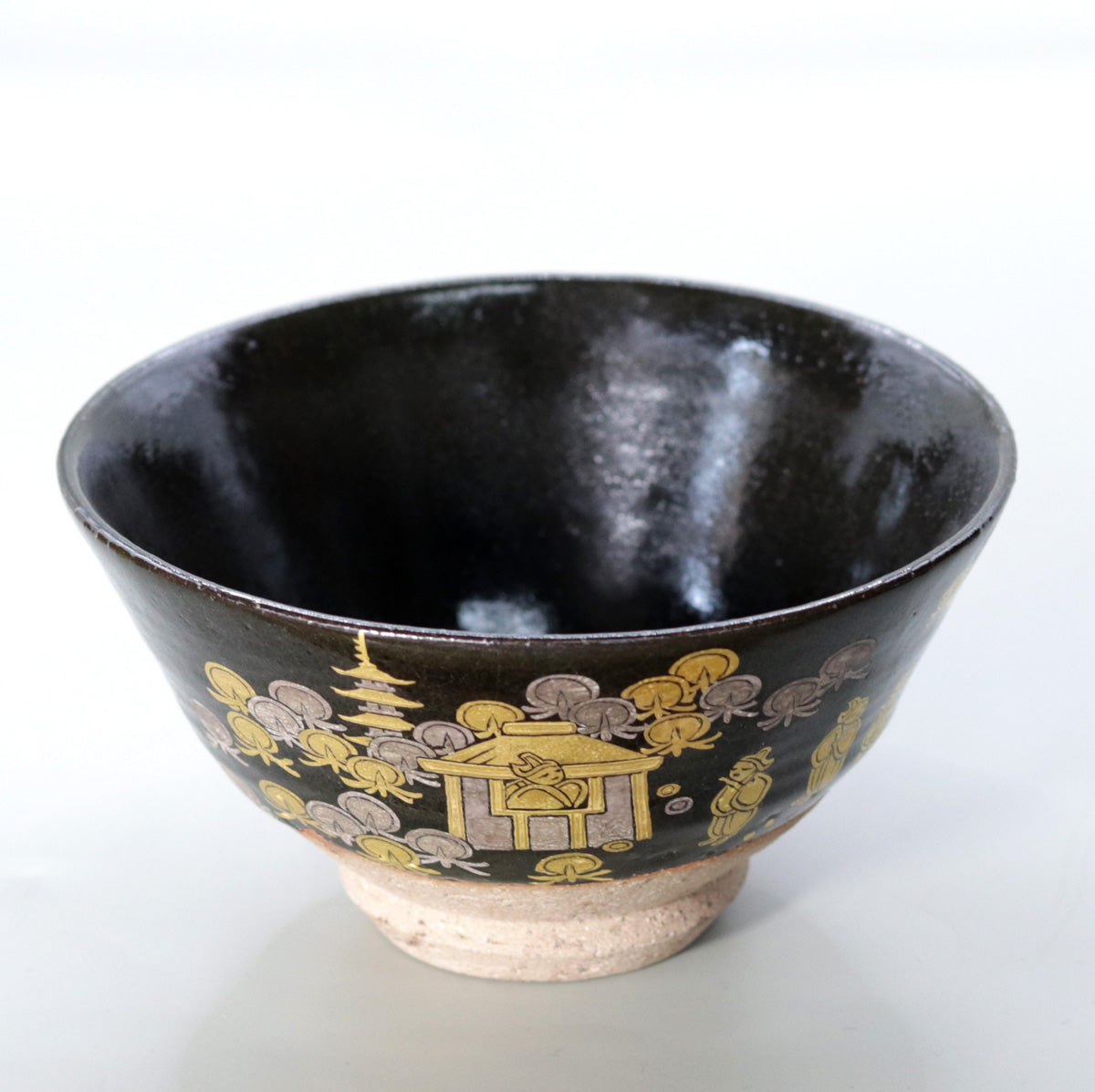
This piece, with its deep iron glaze like black lacquer and brilliant Nara-e painting in gold and platinum, embodies the intersection of "wabi" and "miyabi" that is unique to Onishi Rakusai. The gold decoration floating on the glaze surface, reminiscent of the darkness of night, is particularly brilliant under the light, bringing both tranquility and a sense of storytelling to the tea ceremony. Below, we will explain it from five perspectives.
1. Shape and clay
Elegant bowl shape <br data-start="227" data-end="230">The bowl shape with a slightly bulging body and a tight rim makes it easy to create an even foam for the matcha and makes it easy to handle.
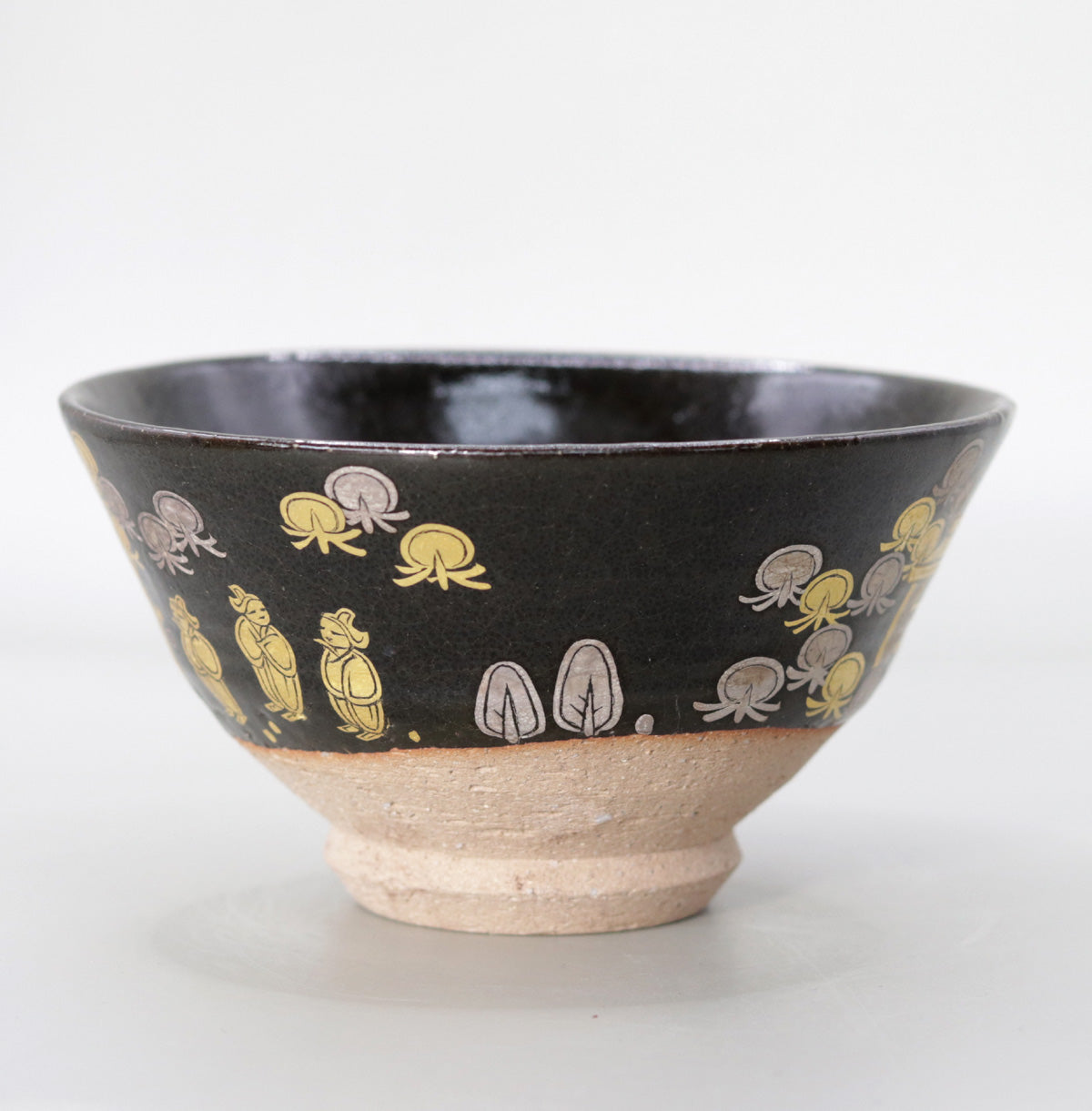
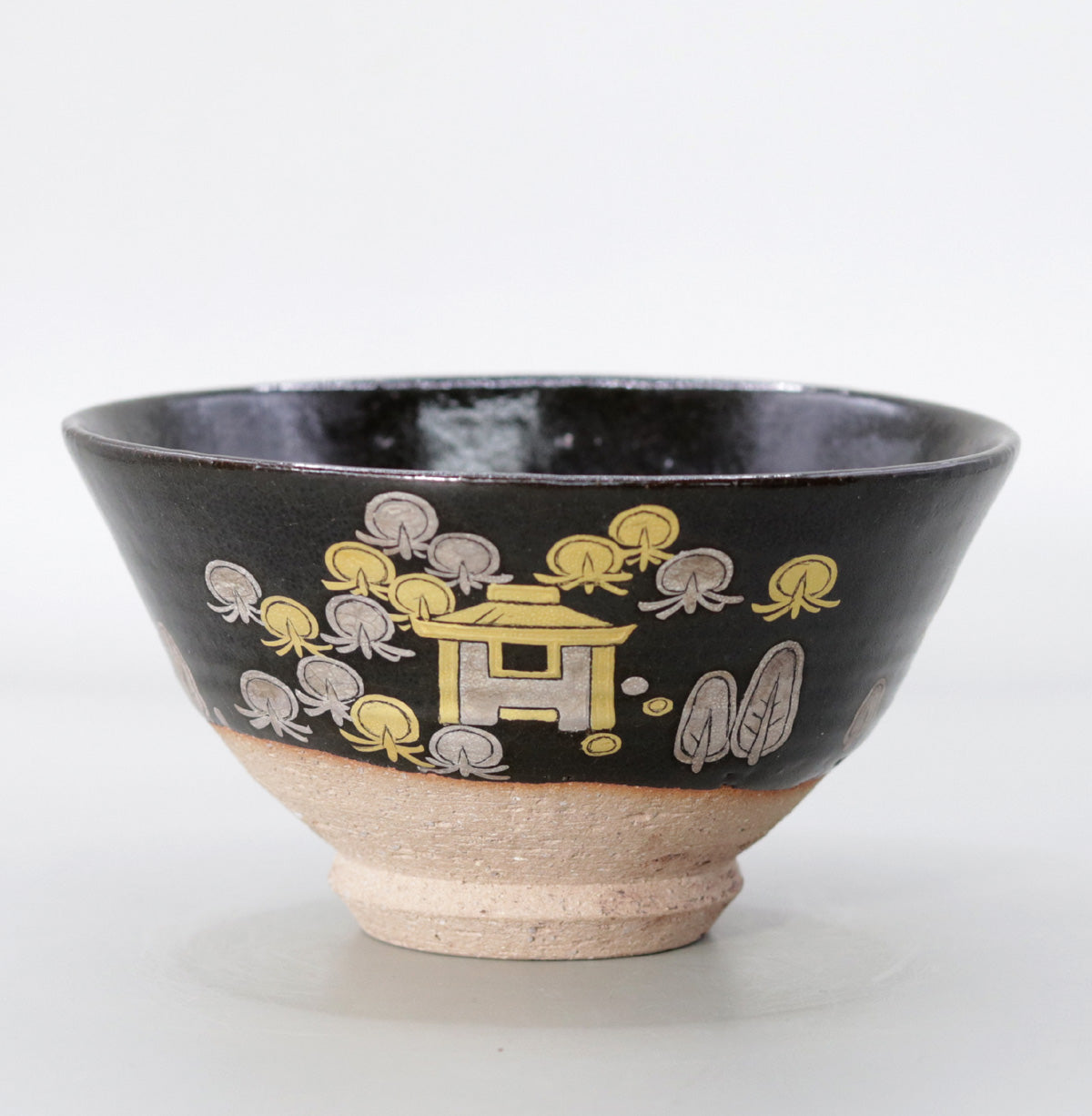
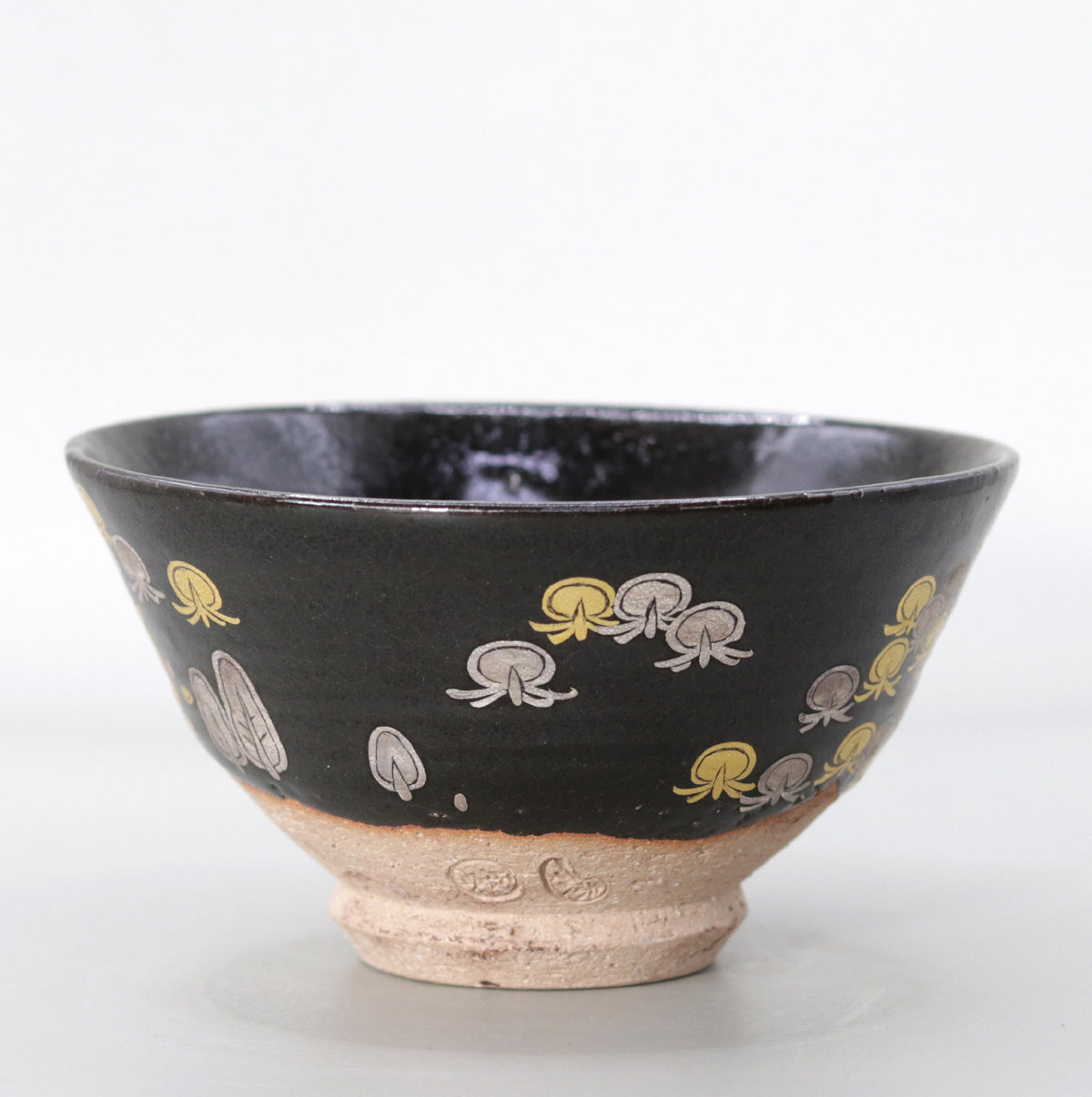
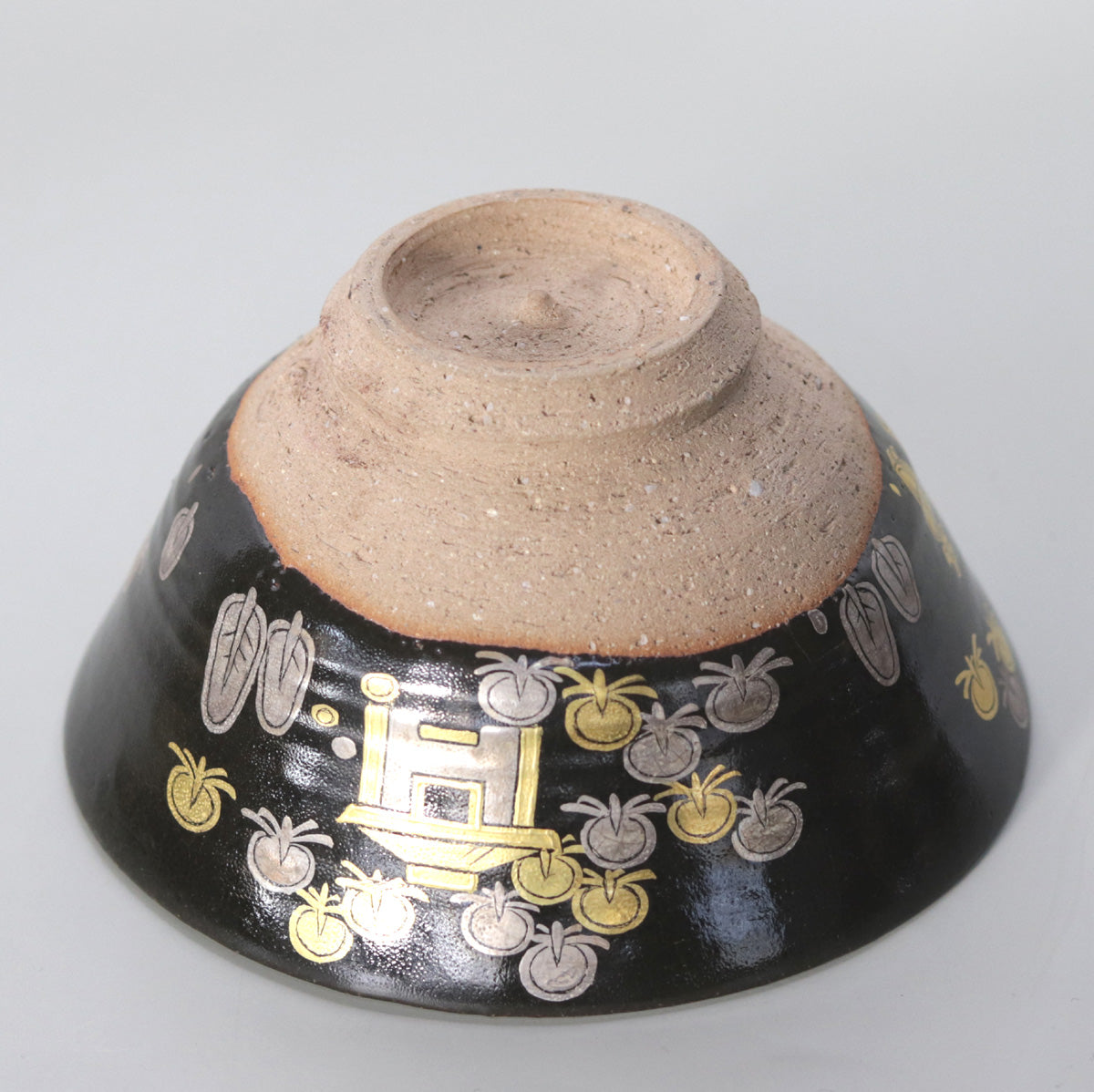
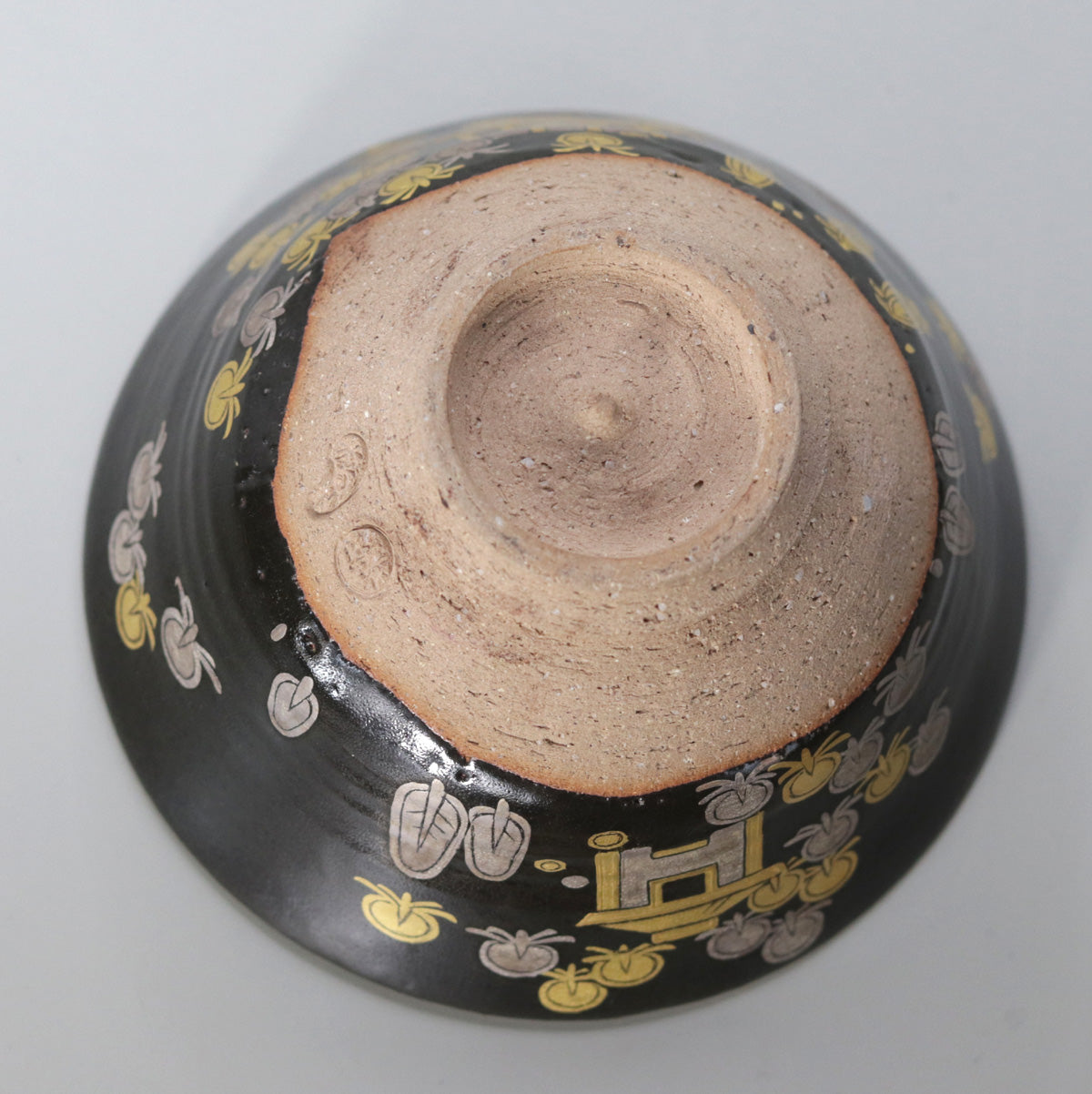
Treatment of the rough clay base and foot <br data-start="293" data-end="296">The foot is left bisque, and the iron glaze is cut off halfway, creating a striking contrast between the paleness of the clay surface and the black luster of the glaze surface. The wheel marks and stone ridges that remain uncarved are reminiscent of the strength of Momoyama pottery.
2. Glaze and texture
Deep black iron glaze <br data-start="417" data-end="420">By firing the iron glaze, which contains a lot of iron oxide, in a slightly reducing state, a subtle metallic glow is created within the jet black, which, combined with the gold leaf, creates an effect reminiscent of lacquerware maki-e.
The glaze is intentionally cut with the waist, causing the edges of the glaze to scorch during firing, creating an amber-colored "fire mark." This, combined with the charring marks, can be seen as a natural line drawn by the flames.
3. Nara Eizo - A picture scroll of the ancient capital floating in the dark night
Five-story pagoda and temple hall <br data-start="632" data-end="635">The five-story pagoda and temple hall are painted in gold on the front, symbolizing the ancient shrines and temples of Nara. The pagoda's multi-tiered structure is depicted with varying thickness of lines to create a three-dimensional effect, and noble figures are placed inside the temple hall, exuding the elegance of imperial culture.
Ginkgo Leaves and Procession <br data-start="740" data-end="743">The yellow and platinum motifs that decorate the surrounding area are stylized ginkgo leaves. The yellow ginkgo leaves that cover the southern capital in autumn are mirrored, and the procession figures blend into them, making the entire vessel a "mirage folding screen."
4. Technique: Gold and platinum lacquer
Line-engraved coloring <br data-start="876" data-end="879">We use "line-engraved gold coloring," in which thin lines are engraved into the black surface after firing the iron glaze and gold and platinum paint is embedded into the lines.The engraved grooves dig into the glaze surface, making the coloring less likely to peel off and more durable.
Twice fired
After the gold and silver color is fixed at 730-780°C, the piece is fired again at a lower temperature to soften the luster and adjust the sparkle to suit the lighting at a tea ceremony.
5. Functional beauty at the tea ceremony
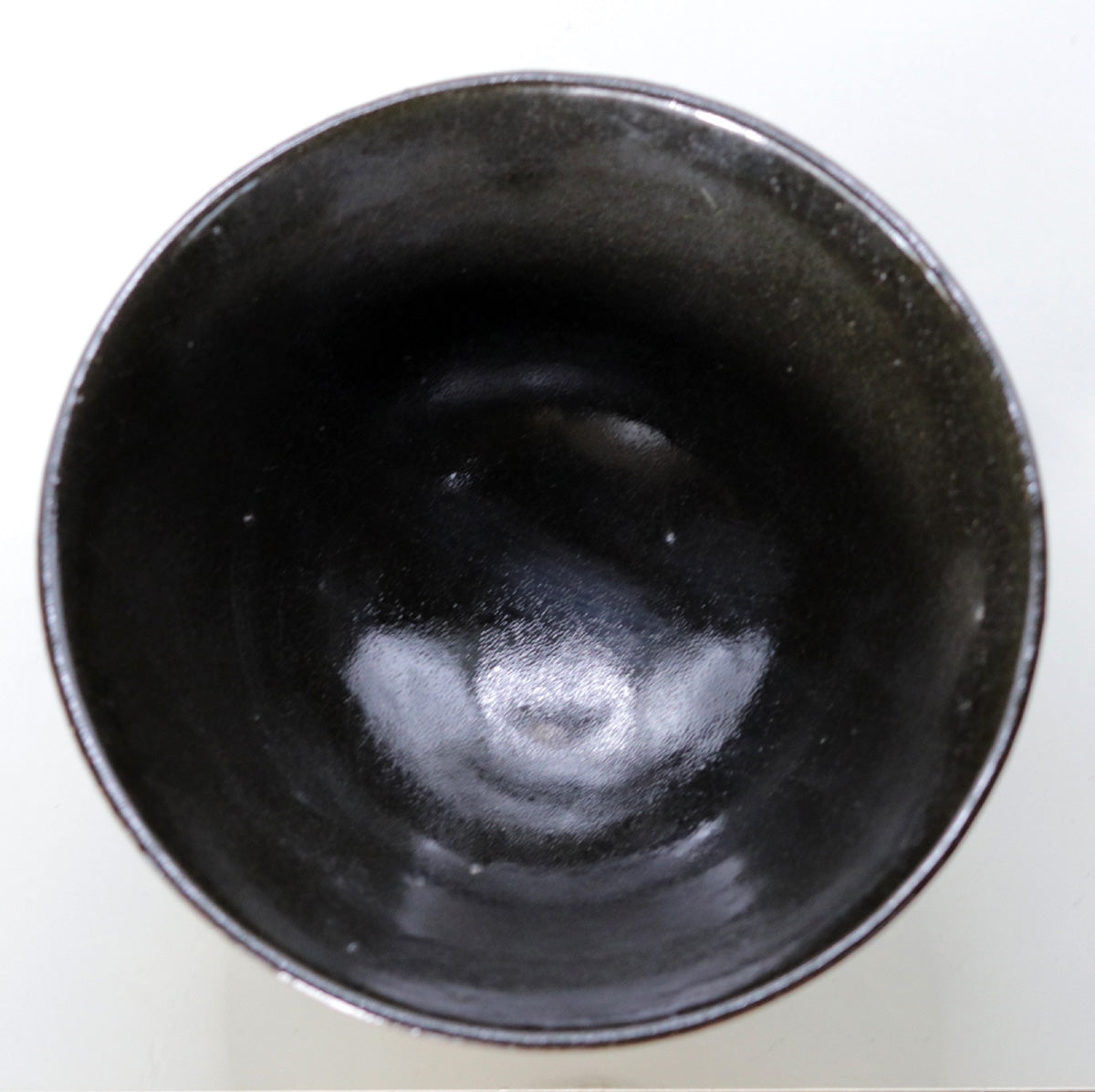
Contrast with Matcha <br data-start="1068" data-end="1071">The inside is also glazed black, allowing the jade green of the matcha to stand out. The gold trimming tightens the brown surface, creating the effect of a full moon floating in the night sky.
Expanding the storytelling <br data-start="1150" data-end="1153">As the scenery changes each time the vessel is passed around, from pagoda to hall to procession, the host can add stories such as "Autumn in Nara" or "The Yellow Ginkgo Leaves and the Lantern Festival."
The jet black of the iron glaze, the brilliance of the gold leaf, the narrative quality of Narae painting, and the wabi (traditional Japanese beauty) of the rough clay - all these elements blend together in this work, as if capturing the "ancient capital at night" in a single bowl. Placed at a tea ceremony, guests can savor a cup of tea while gazing at the golden pagoda sparkling against the black night sky, and also feel the quiet autumn breeze. Onishi Rakusai's iron glazed, gold-decorated Narae painting tea bowl is a superb piece that simultaneously fulfills its purpose, wabi (traditional Japanese beauty), and elegance.
Share
-
[I will send it to you quickly and carefully]
We carefully package each product in a way that suits it best.
Also, delivery times vary depending on the piece (vessel, etc.).
Items that already come with a box will be shipped within 1-3 days of the order date.
For items that require a box to be made after your order, it will take approximately 30 days for production to be completed and then shipped.
In either case, once we have confirmed your order, we will contact you by email to inform you of the delivery date.
-
[Requests when purchasing pottery]
Even products that look the same may differ slightly in color, shape, size, etc.
The way the glaze is used, the power of the kiln, the firing method, the season, and the humidity also affect the appearance of the pottery.
Please understand the individuality of each piece of pottery and enjoy the unique warmth of handmade.