
Nara tea bowl with Goki style painting by Rakusai Onishi
Nara tea bowl with Goki style painting by Rakusai Onishi
Couldn't load pickup availability
Width: 11.4cm Height: 8.8cm
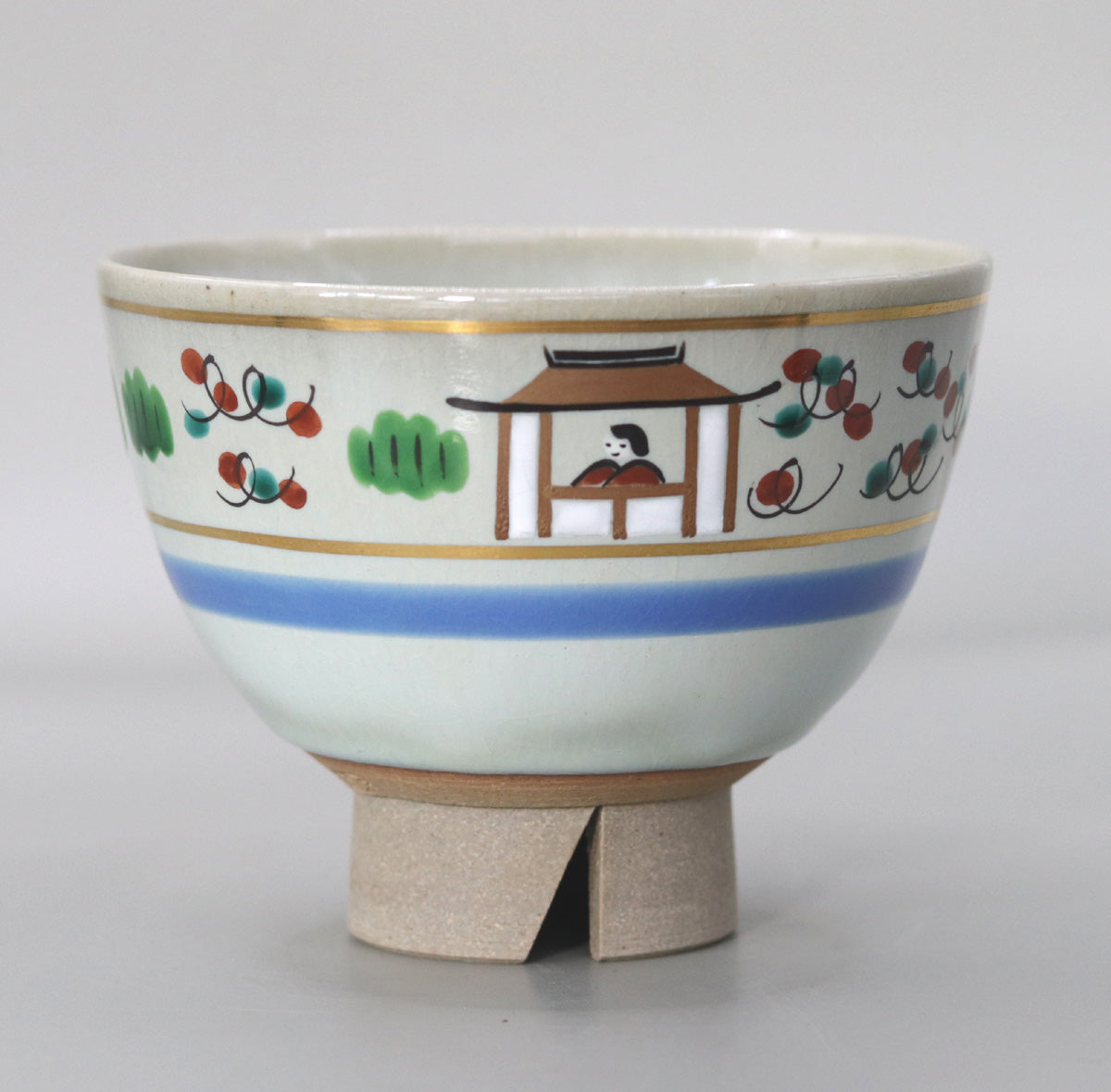
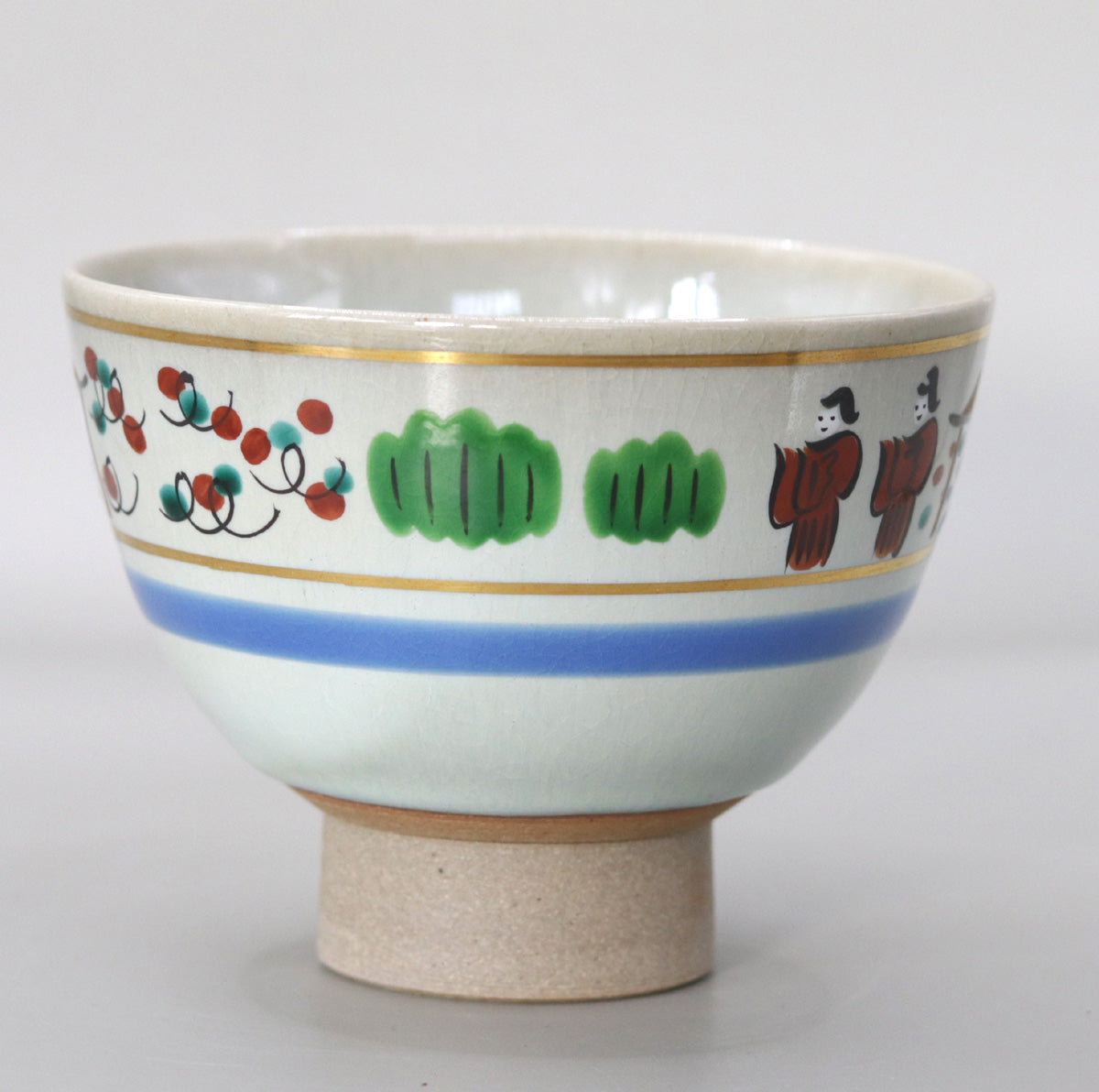
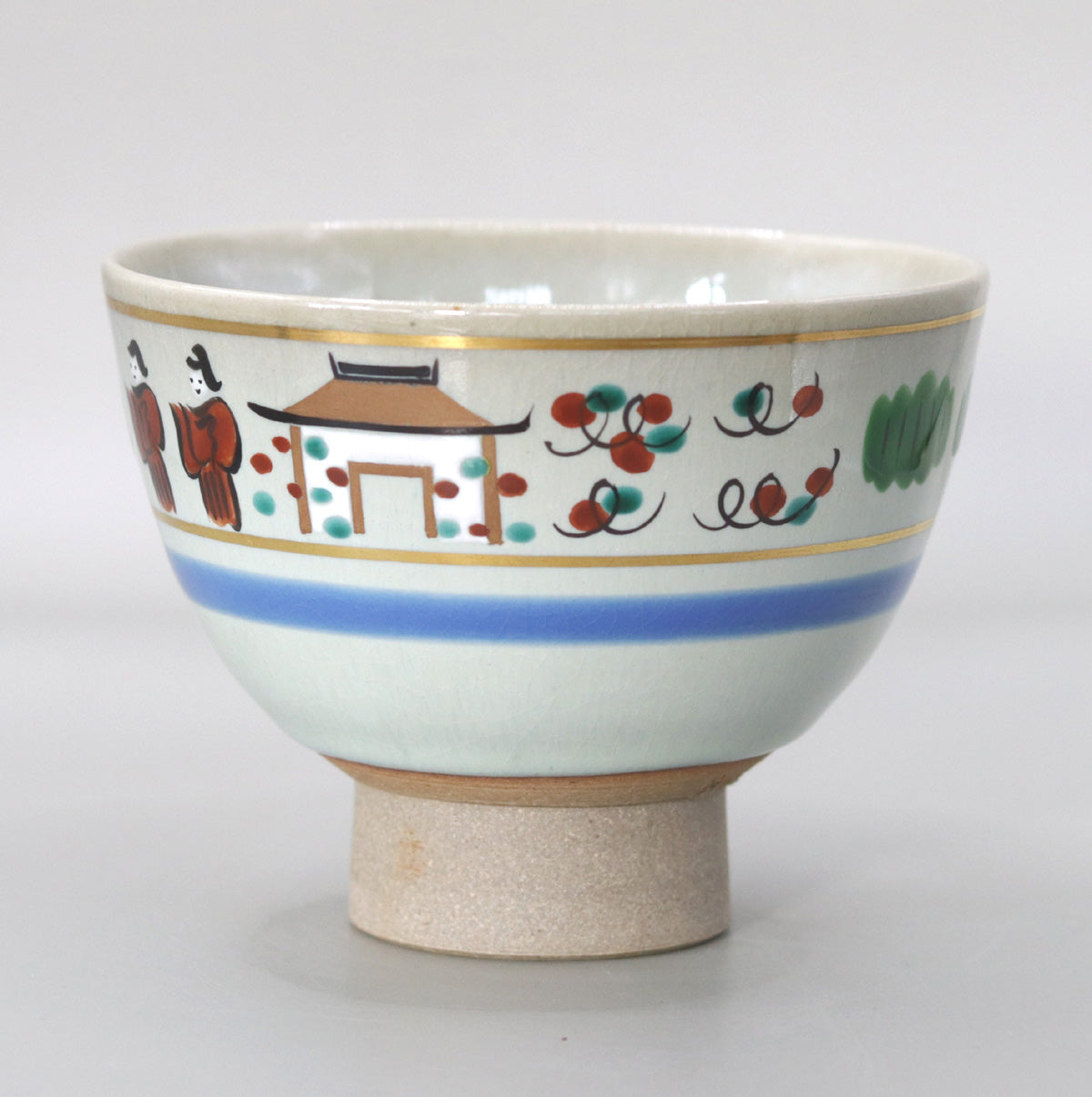
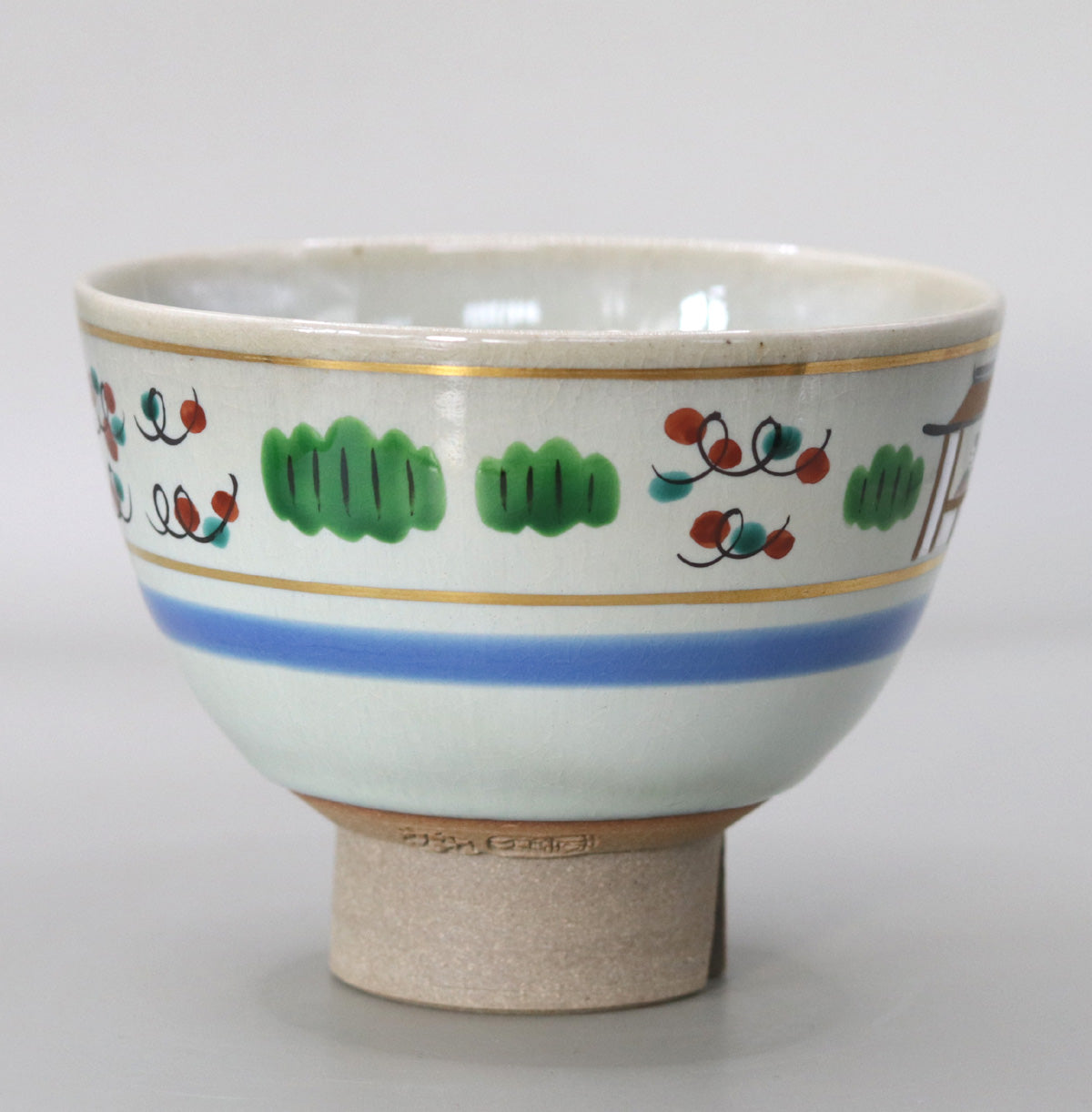
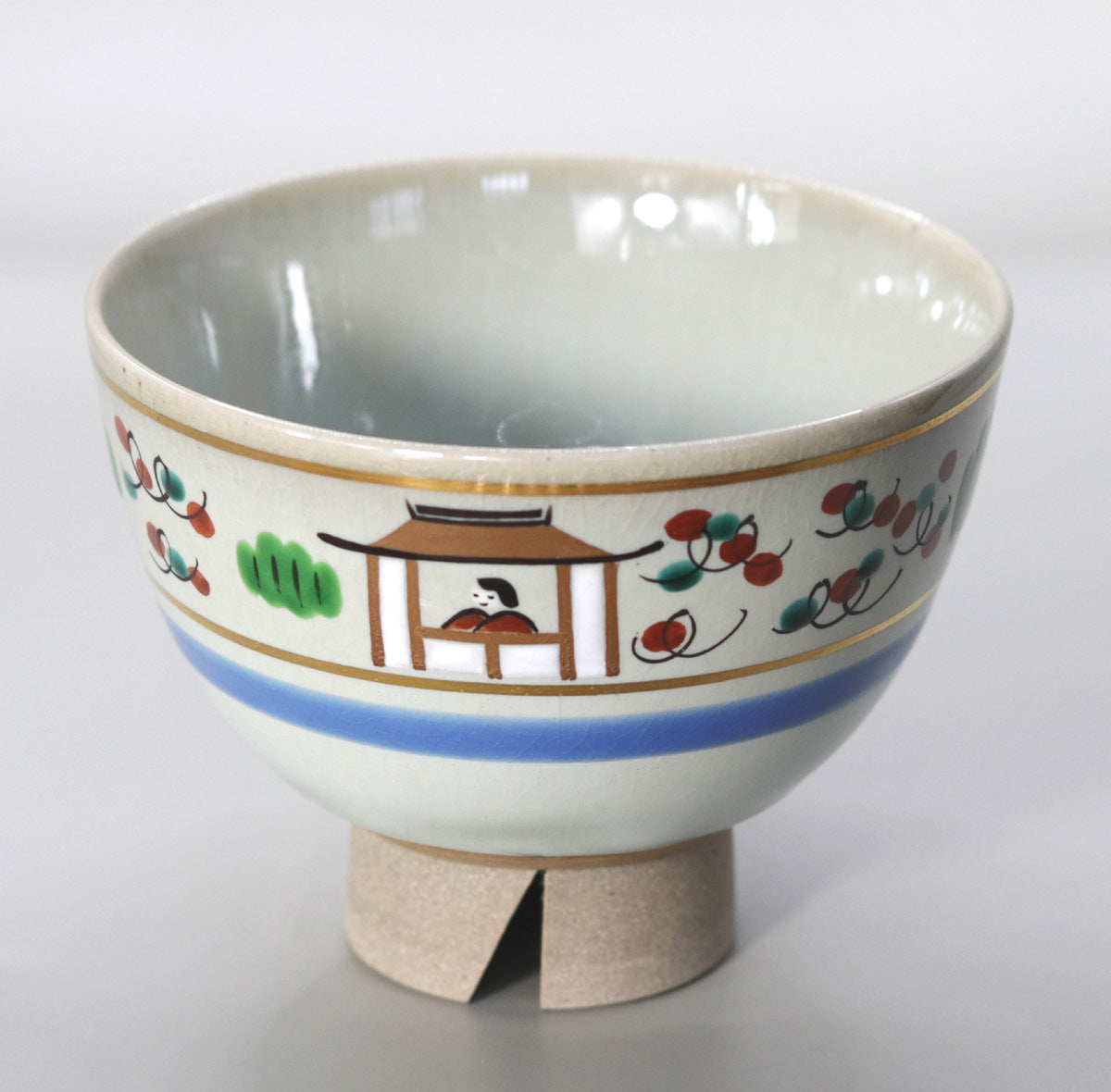
This piece, created by Onishi Rakusai, is a bowl that can be described as a crossroads of ancient elegance and refinement, combining the bold Gokigata style, which originated from rice bowls of the Joseon Dynasty of Korea, with a strip of Nara-e painting, a style that has been around since the Momoyama period. While fulfilling a high level of functionality as a matcha bowl, the design shines as it brings a sense of storytelling to the tea ceremony. Below, we will introduce its appeal in detail from five perspectives.
1. Beauty of Form - The volume and stability brought about by the Goki style
Tension from the round body to the rim <br data-start="251" data-end="254">The body is slightly taut, but tapers gently towards the rim, making it the ideal shape for creating a uniform foam when brewing matcha.
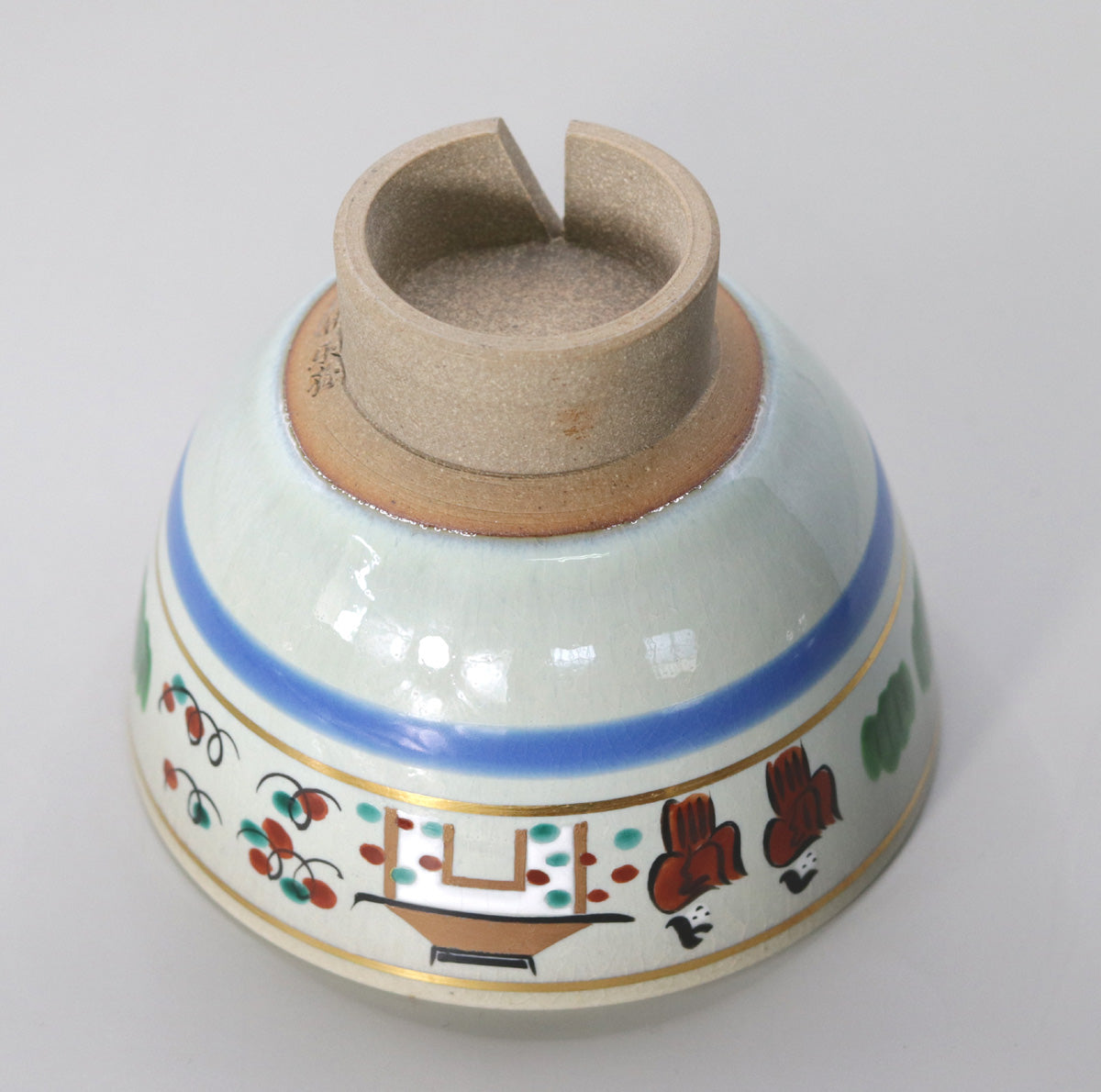
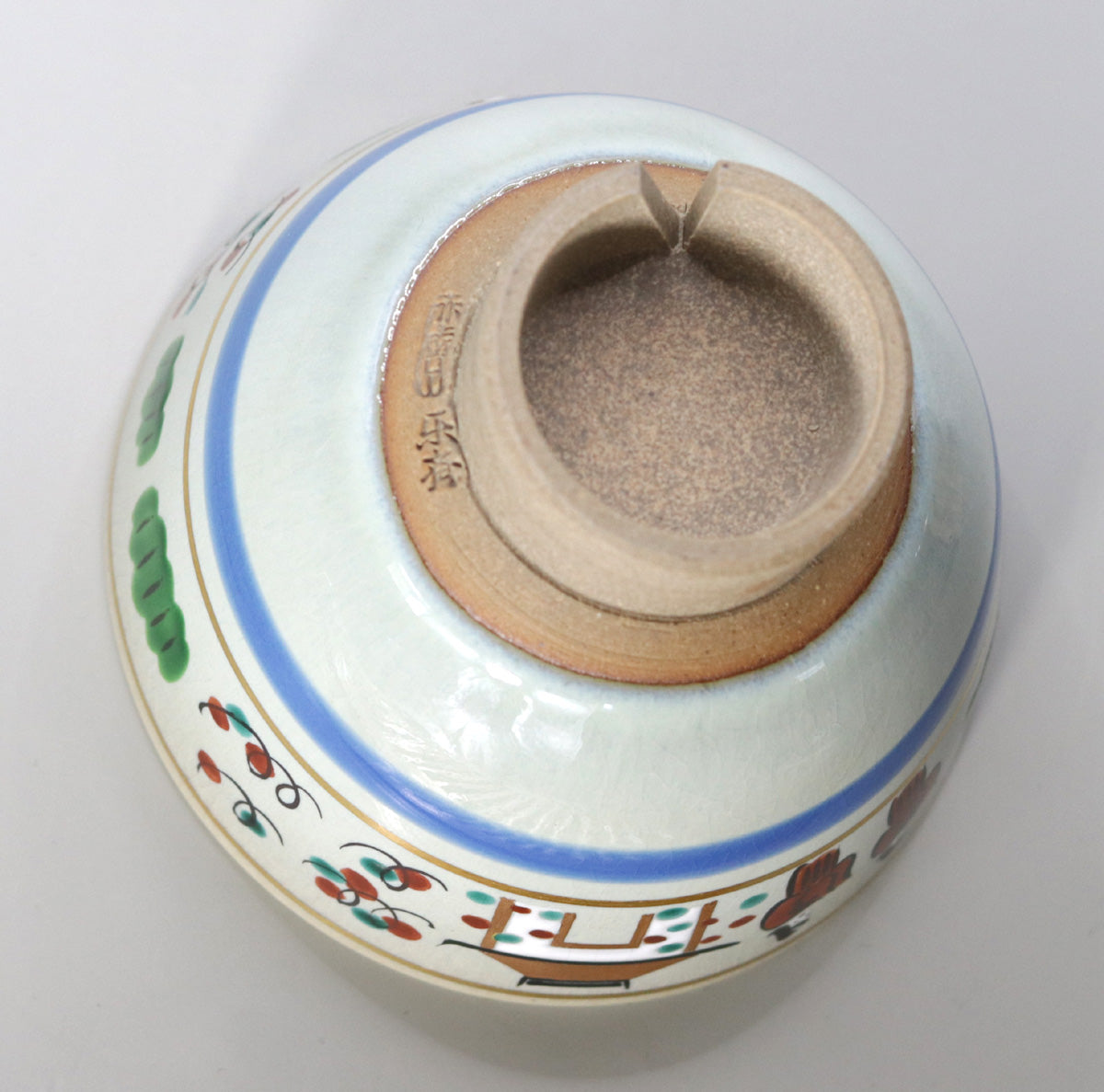
Split-top base <br data-start="332" data-end="335">The split-top base in the Go-ware style retains the dynamic feel of Korean origins, while allowing the fingers to rest naturally on it, making it easy to handle. The sandy texture of the base gives a comfortable grip to the fingertips, supporting the tea ceremony movements.
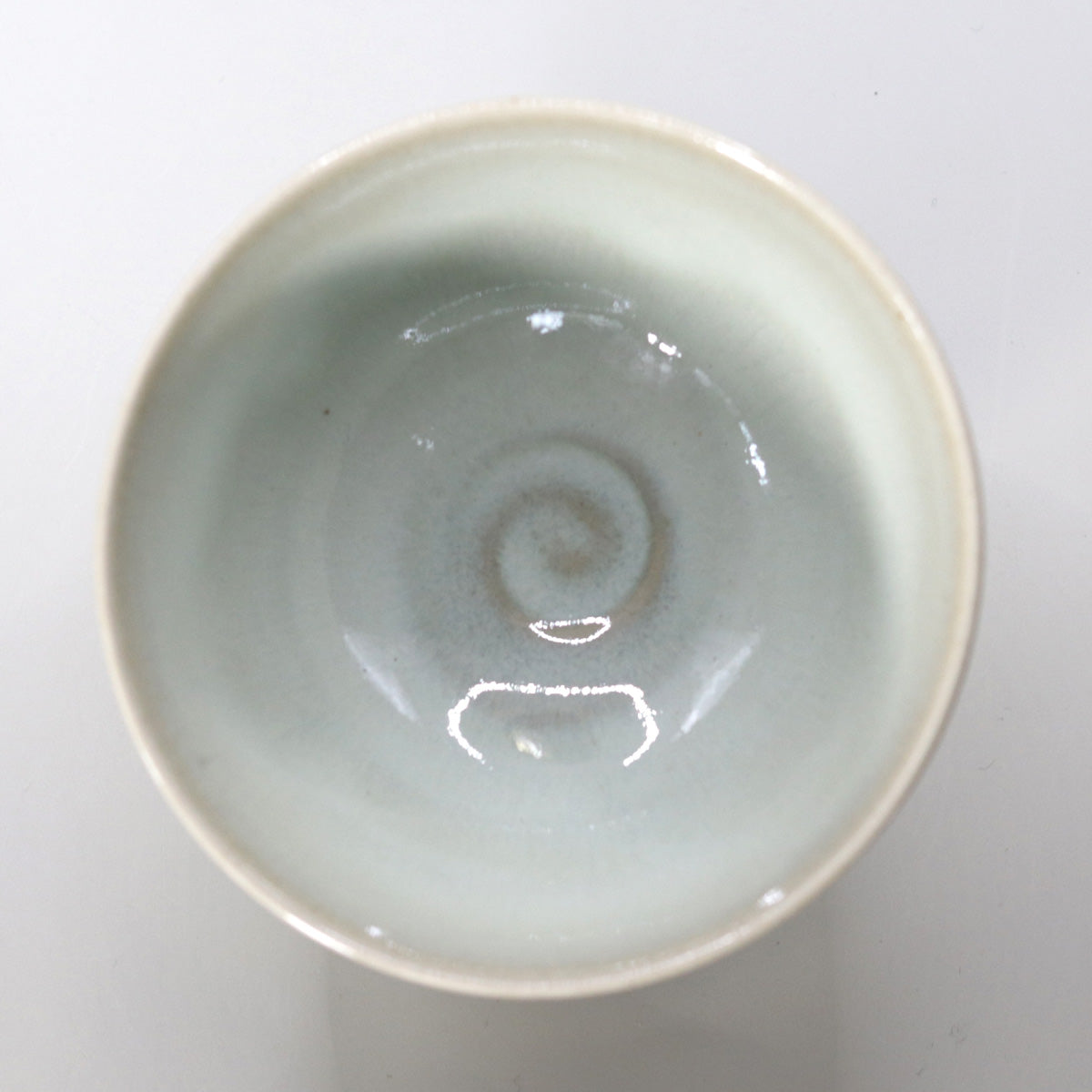
The tranquility of pale celadon glaze <br data-start="441" data-end="444">A transparent glaze with a pale blue hue is applied to the lower outer surface and the inner surface, with slight crazes that run like fine ice. It creates a tranquil setting that softly reflects the green of the matcha.
2. Nara-e Design: A picture scroll unfolding in a strip
The Imperial Pavilion and Nobles <br data-start="564" data-end="567">The front depicts a nobleman in a crimson robe standing in a pavilion, reminiscent of a scene from a Heian picture scroll. As the host passes around the dishes to the guests, he naturally catches the eye as the center of the story.
Flowering trees and bushes
The evergreen bushes and crimson-fruited flowering trees are rhythmically arranged to lightly connect the scenery. The scattered green "brushstrokes" are a color scheme designed to resonate with the green of matcha.
Gold paint frame effect <br data-start="742" data-end="745">Gold paint lines are drawn on the borders of the upper and lower obi and on the rim, tightening the design like a framed picture scroll. The gold paint adds just the right amount of elegance to the tranquility of the pale celadon glaze, enhancing its formality.
3. Techniques - The precision and softness of Kyoto ware
Ironwork and five colors
The outline is neatly pressed down with extremely fine iron pigments, and the coloring is the five traditional colors of verdigris, cinnabar, ochre, etc. The overglaze is fired two or three times while gradually changing the color temperature, optimizing the color depth and luster.
Overlapping pale celadon glaze and painting <br data-start="969" data-end="972">By dividing the body into two sections, with the upper section painted and the lower section secured with a pale celadon glaze with no painting, a contrast of "stillness and movement" is created that is different from that of a gosu obi. Your eyes are naturally drawn to the Nara-e obi.
4. Functional beauty at the tea ceremony
Matcha stands out <br data-start="1079" data-end="1082">The pale blue glaze on the inside reflects the matcha brightly, making the gradation of white and green bubbles stand out clearly.
Space for storytelling <br data-start="1143" data-end="1146">As the scenery changes from noble people to trees to bushes each time the tea bowl is turned, the host can enjoy a conversation interpreting the "Nara Picture Scroll" for his guests.
Can be used in any season <br data-start="1222" data-end="1225">Nara-e motifs are not strictly limited to any season, so they can be used in any season - young grass in early spring, green maples in early summer, autumn leaves in autumn, or the silence of winter - and can flexibly suit the style of the tea ceremony.
5. Historical and cultural significance
The Goki style is a Korean rice bowl introduced to Japan during the Momoyama period, and was beloved by tea masters as a symbol of "wabi" (a style of simplicity). Its robust form is complemented by Nara-e paintings, a symbol of court culture, which embodies the dichotomy of "wabi" and "miyabi" (elegant beauty). This represents both the "wabi-sabi" sought by Sen no Rikyu and the "kirei-sabi" (beautiful rustic beauty) pursued by Kobori Enshu, a comprehensive reinterpretation of Momoyama tea ceremony ceramics. By incorporating classical elements while adding a lightness that complements modern tea ceremonies, Onishi Rakusai is building a bridge between the past and the present.
The power of the Goki style, the serenity of the pale celadon glaze, and the dynamism of the Nara-e obi - these three layers of beauty resonate in this Goki style Nara-e tea bowl by Onishi Rakusai, like a "moving picture scroll" that begins to tell a story the moment it is placed at a tea ceremony. Holding it in your palm will bring to mind the aroma of matcha and the breeze of the ancient capital, naturally deepening the conversation with your guests. This is an exquisite piece that combines the "beauty of utility" and the "beauty of storytelling" that the tea ceremony demands.
Share
-
[I will send it to you quickly and carefully]
We carefully package each product in a way that suits it best.
Also, delivery times vary depending on the piece (vessel, etc.).
Items that already come with a box will be shipped within 1-3 days of the order date.
For items that require a box to be made after your order, it will take approximately 30 days for production to be completed and then shipped.
In either case, once we have confirmed your order, we will contact you by email to inform you of the delivery date.
-
[Requests when purchasing pottery]
Even products that look the same may differ slightly in color, shape, size, etc.
The way the glaze is used, the power of the kiln, the firing method, the season, and the humidity also affect the appearance of the pottery.
Please understand the individuality of each piece of pottery and enjoy the unique warmth of handmade.