
White glaze ridge line sake cup Yu Okada
White glaze ridge line sake cup Yu Okada
Couldn't load pickup availability
Width: 9.3cm Height: 4.3cm
White glaze ridgeline sake cup
- Created by Masaru Okada -
Work summary
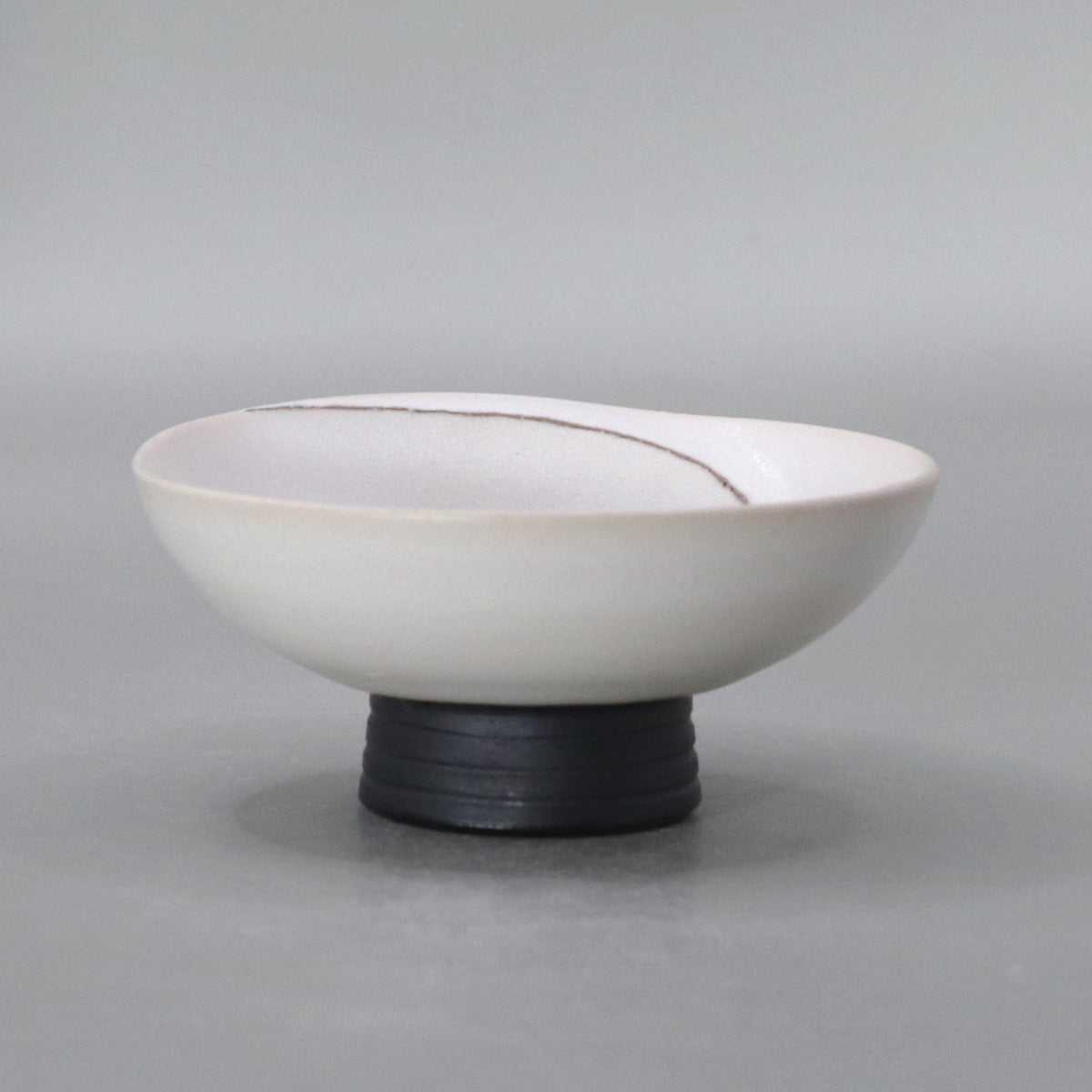
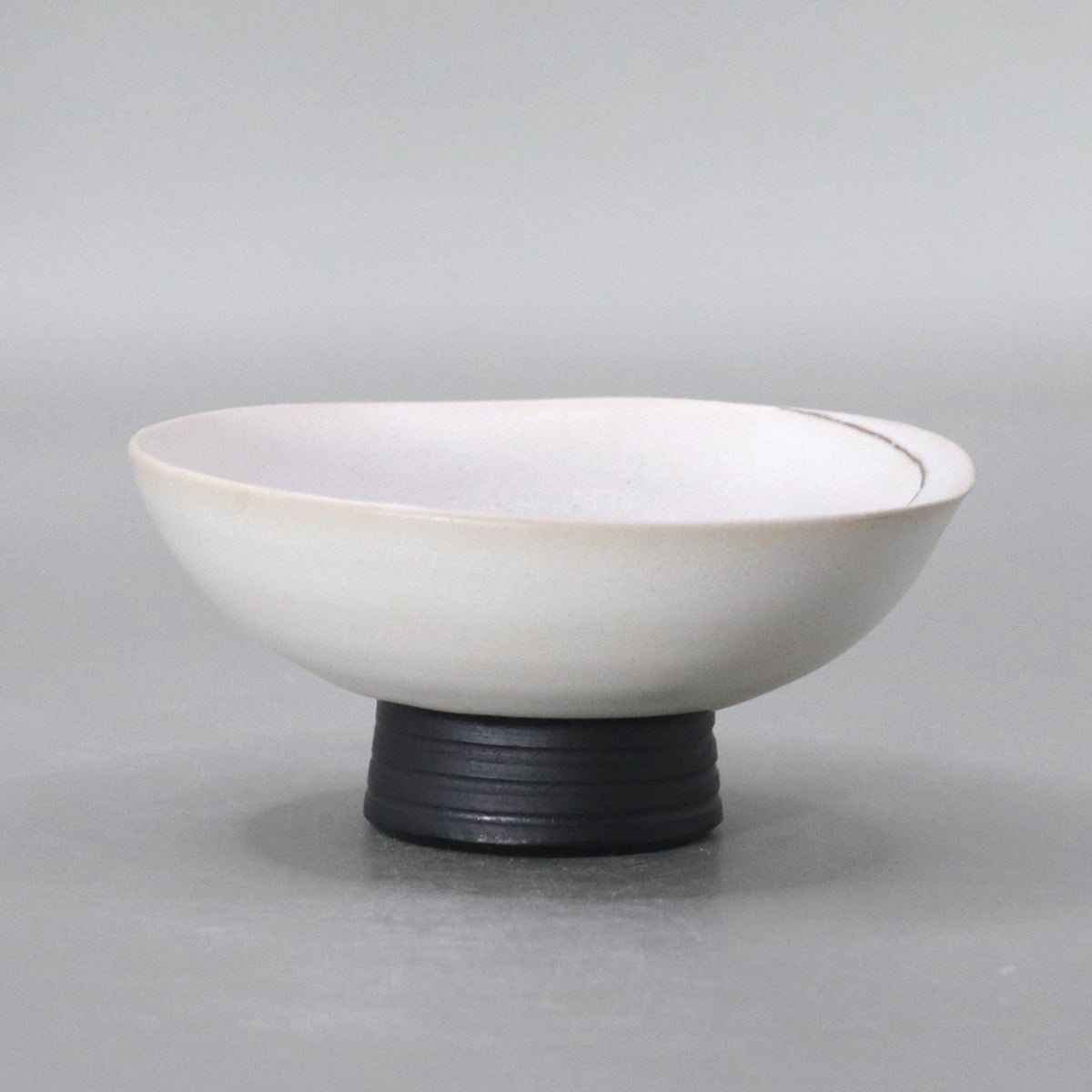
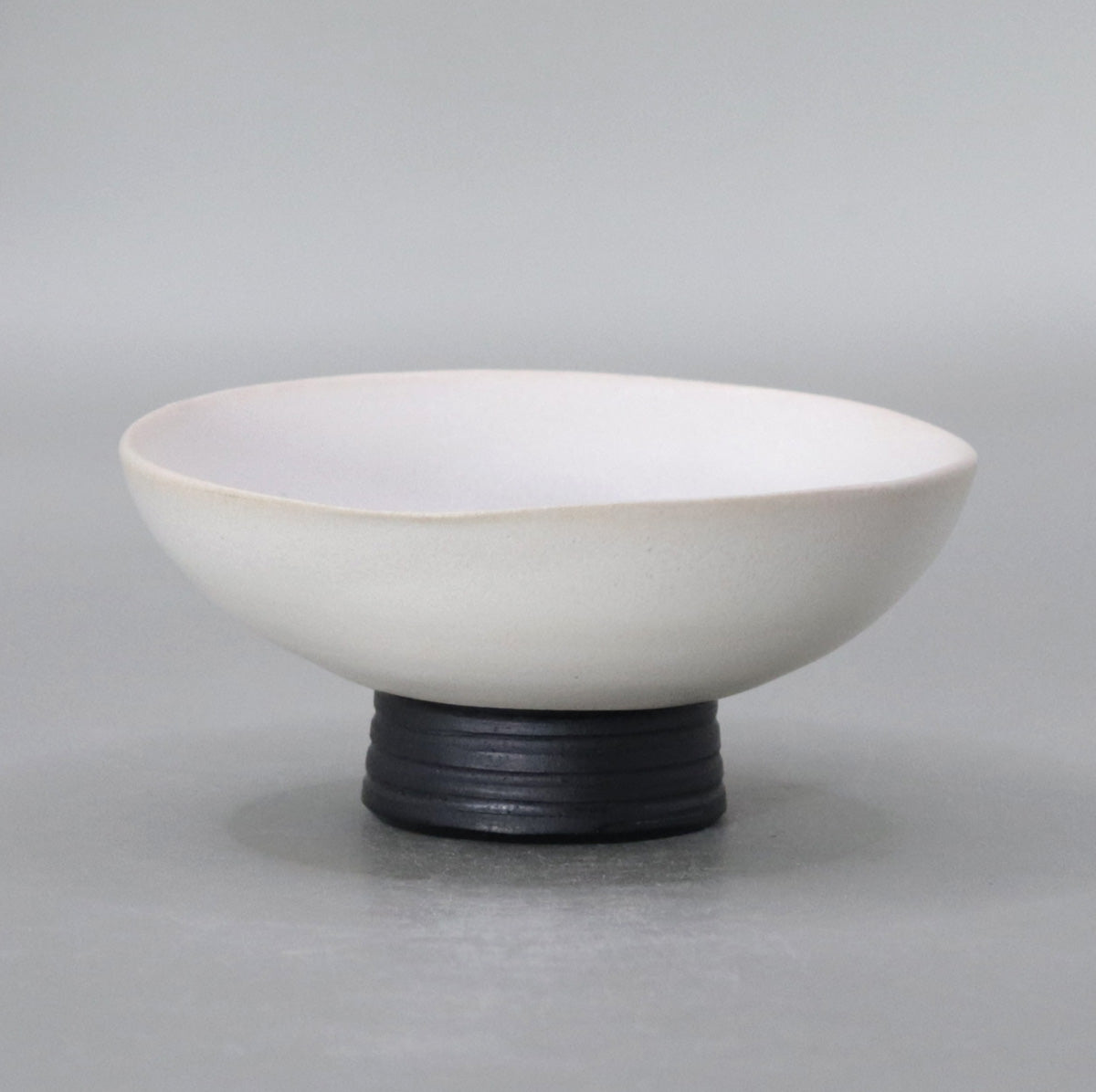
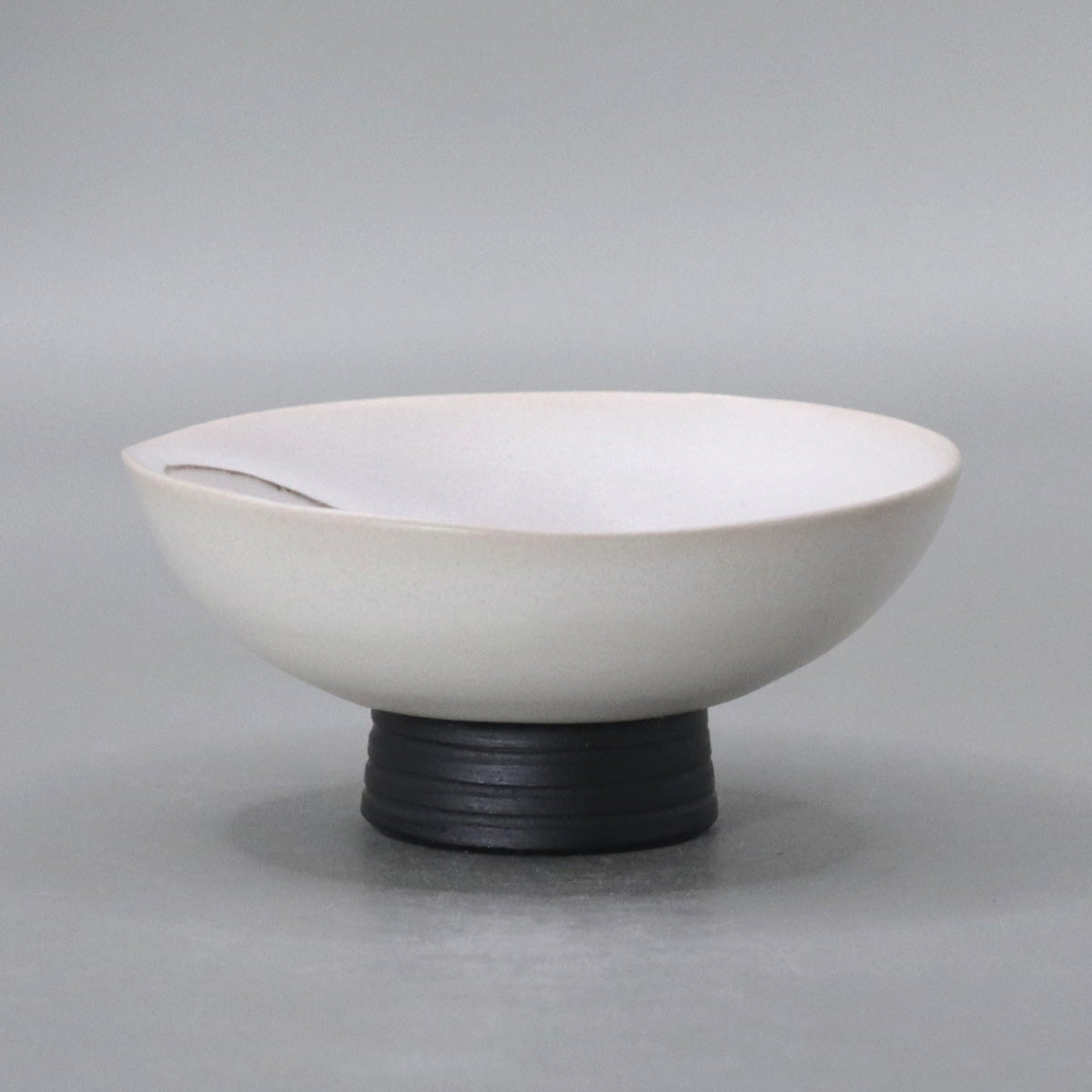
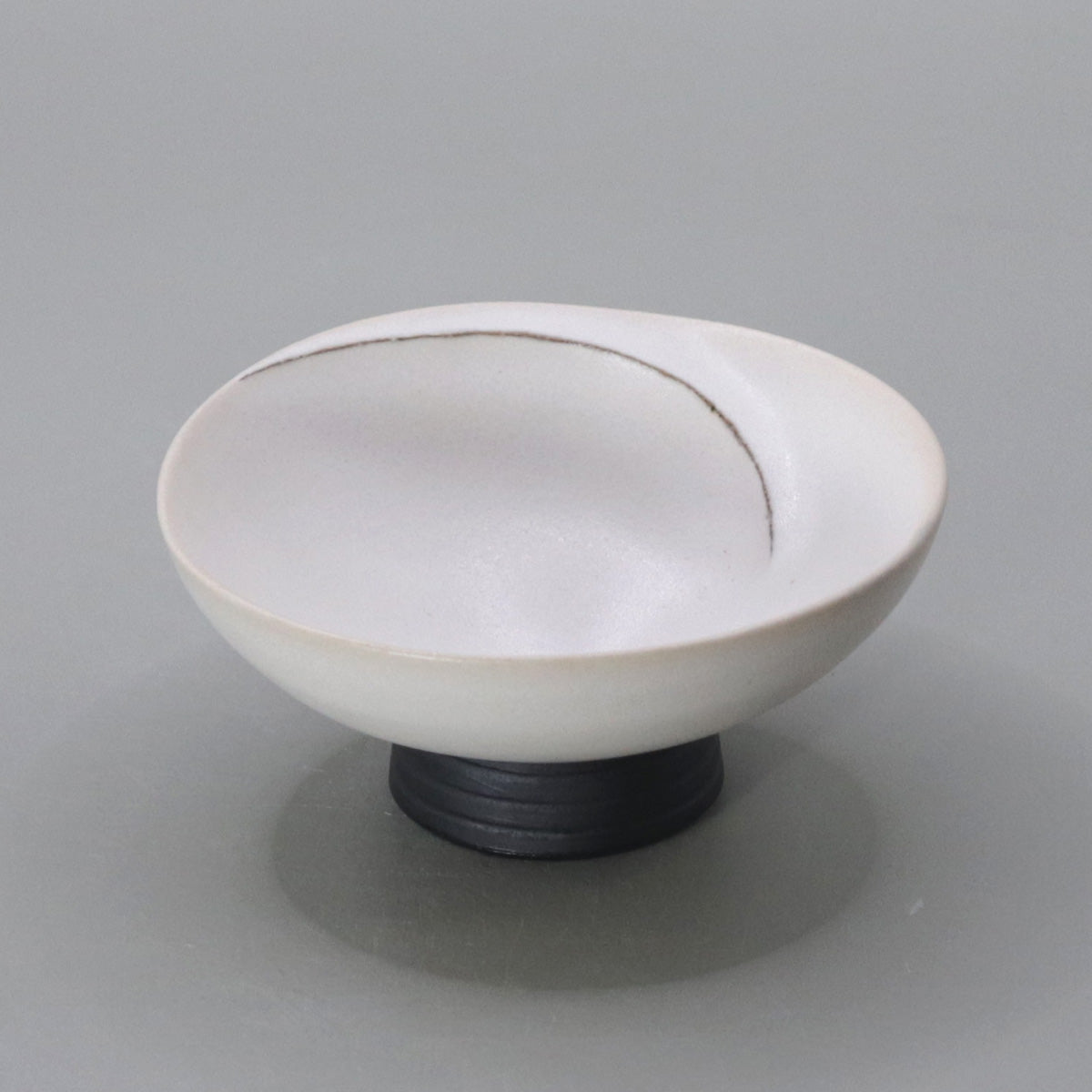
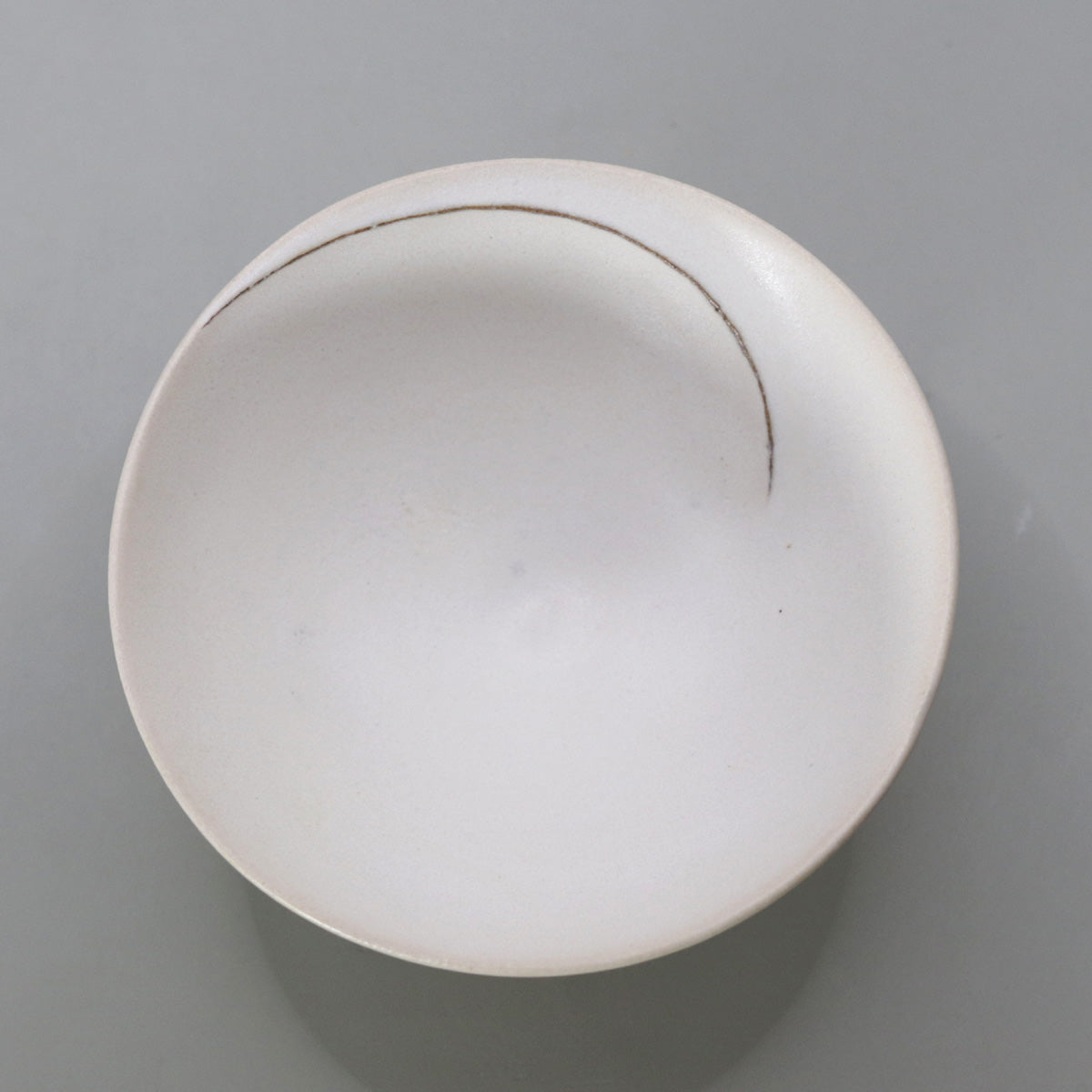
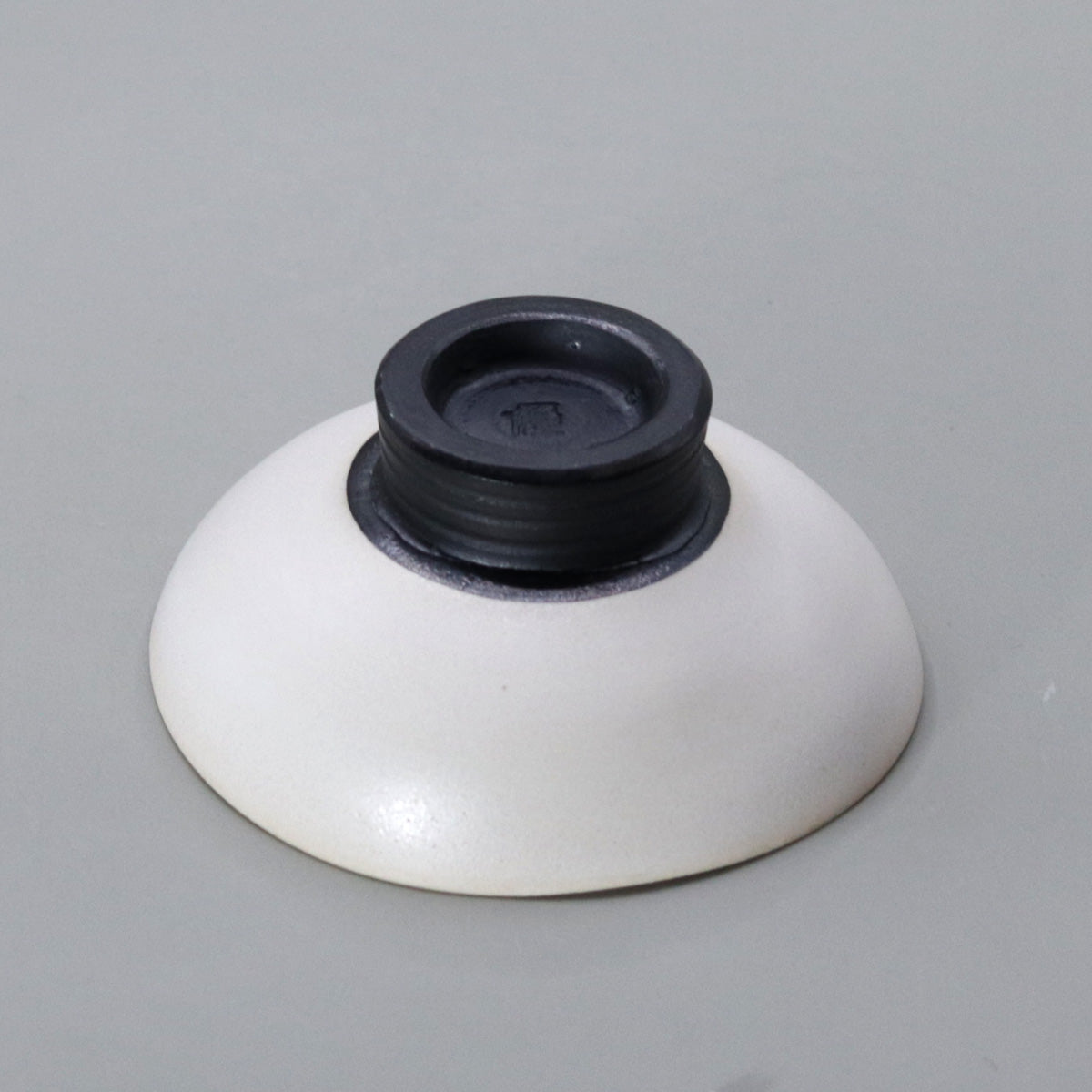
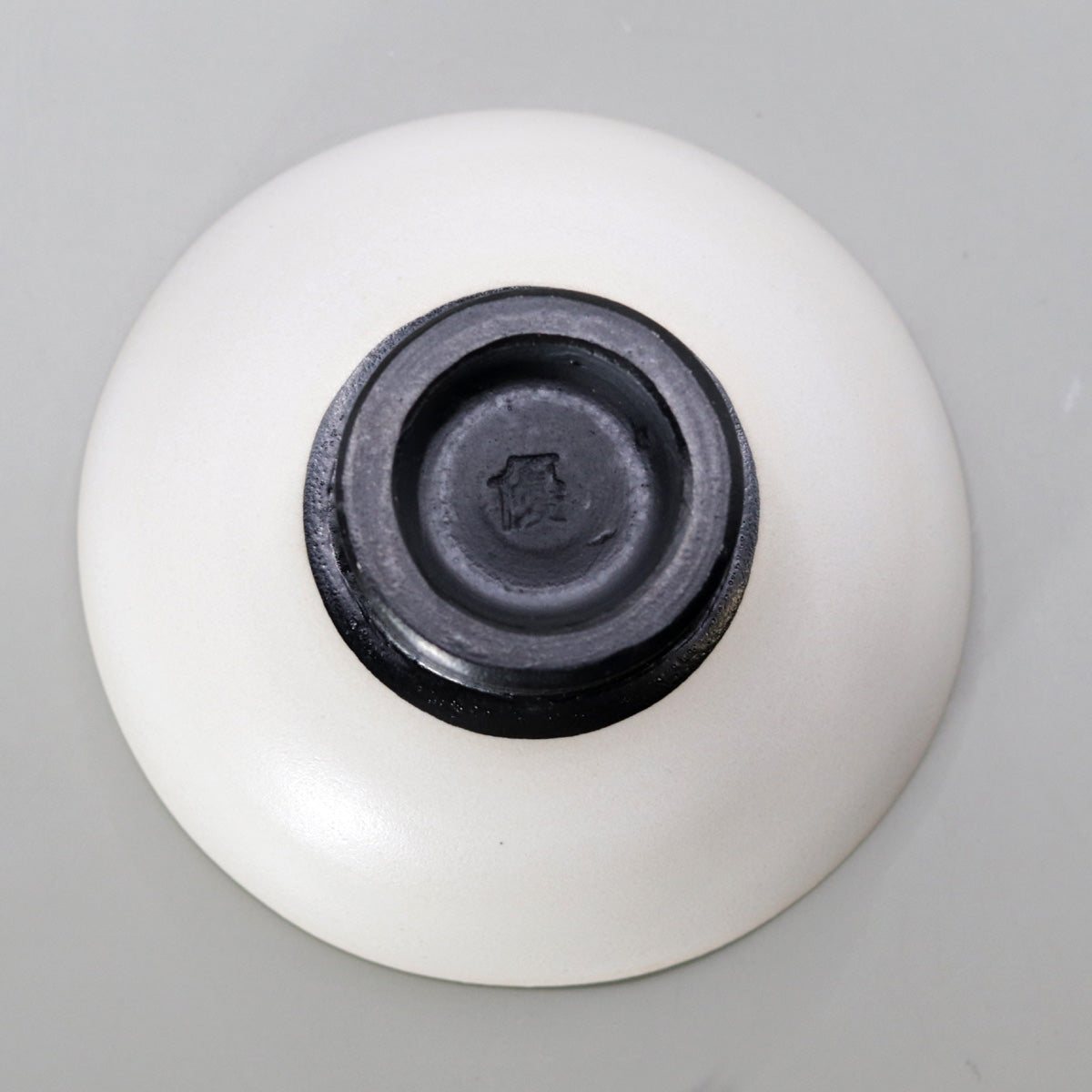
This white-glazed sake cup was created by Okada Masaru, a potter in the Uji coal mines of Kyoto. A curved ridge runs across the interior of the cup, adding a sense of tension to the tranquility of the white porcelain. The contrast between the slightly flattened bowl shape and the tall, black cylindrical base creates an ambitious piece that evokes a sense of abstract modernism.
Glaze and Technique
White glaze blend : A semi-porcelain base made primarily of feldspar is coated with a milky white glaze that has been given a slightly warmth by oxidation firing, aiming for a soft tone that is not too pure white.
Ridge carving : After shaping on the potter's wheel, the leather is carved in one go using a single-edge knife while it is still hard, and a thin layer of glaze is applied to the edges to accentuate the sharpness of the lines.
Black glaze base : The base is covered with a glaze containing a lot of iron, and the iron turns black while adjusting the oxidation and reduction in the kiln using a two-phase firing process. This reduces the difference in the expansion coefficient between the clay and the glaze, preventing distortion even when the piece is thin.
Historical and cultural background
White porcelain and white-glazed sake vessels, drawing on the lineage of Ming dynasty blue-and-white porcelain from Jingdezhen, China, and white porcelain from the Yi dynasty, have come to symbolize "tranquility" and "purity" in modern Japanese ceramics. By applying the "control of color and light" he cultivated through his research into the kiln-changing effects of Tenmoku glaze to white glaze, Okada Masaru has embodied not just a simple white, but a "white that embodies warmth." Furthermore, by inserting the minimalist element of a "ridgeline," he has captured the philosophy of the "single line" in Zen painting - a universe of white space - in the microcosm of a sake cup.
Aesthetic Intention and Spirituality
The ridges are "cross sections of blank space," and when light hits them, they cast shadows. When sake is poured, the lines melt into the liquid and disappear, only to reappear as the drink is consumed. This repetition suggests the cycle of "being and nothingness," evoking the introspective moments associated with Zen koans.
A single ridgeline cuts diagonally through a tranquil white surface. This sake cup symbolizes the "aesthetics of white space" and "monochrome dialogue" presented by Okada Masaru. Hold it in your palm and watch the shadow melt into the sake's surface, enjoying the performance of light and shadow that changes with the passage of time.
Share
-
[I will send it to you quickly and carefully]
We carefully package each product in a way that suits it best.
Also, delivery times vary depending on the piece (vessel, etc.).
Items that already come with a box will be shipped within 1-3 days of the order date.
For items that require a box to be made after your order, it will take approximately 30 days for production to be completed and then shipped.
In either case, once we have confirmed your order, we will contact you by email to inform you of the delivery date.
-
[Requests when purchasing pottery]
Even products that look the same may differ slightly in color, shape, size, etc.
The way the glaze is used, the power of the kiln, the firing method, the season, and the humidity also affect the appearance of the pottery.
Please understand the individuality of each piece of pottery and enjoy the unique warmth of handmade.