
Tanba Red Tea Bowl Nishitan Masashi
Tanba Red Tea Bowl Nishitan Masashi
Couldn't load pickup availability
Width: 15.0cm Depth: 12.8cm Height: 10.2cm
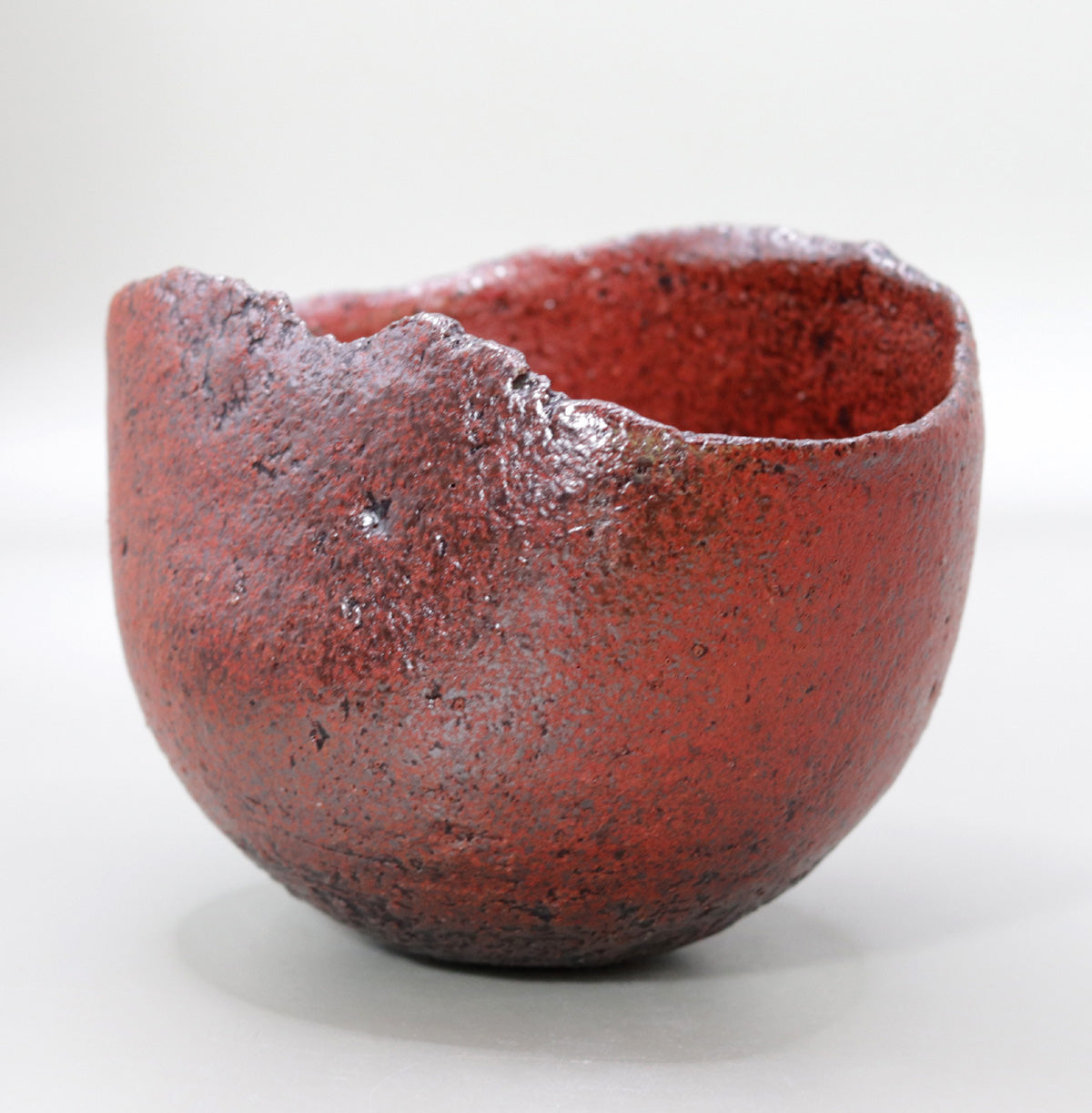
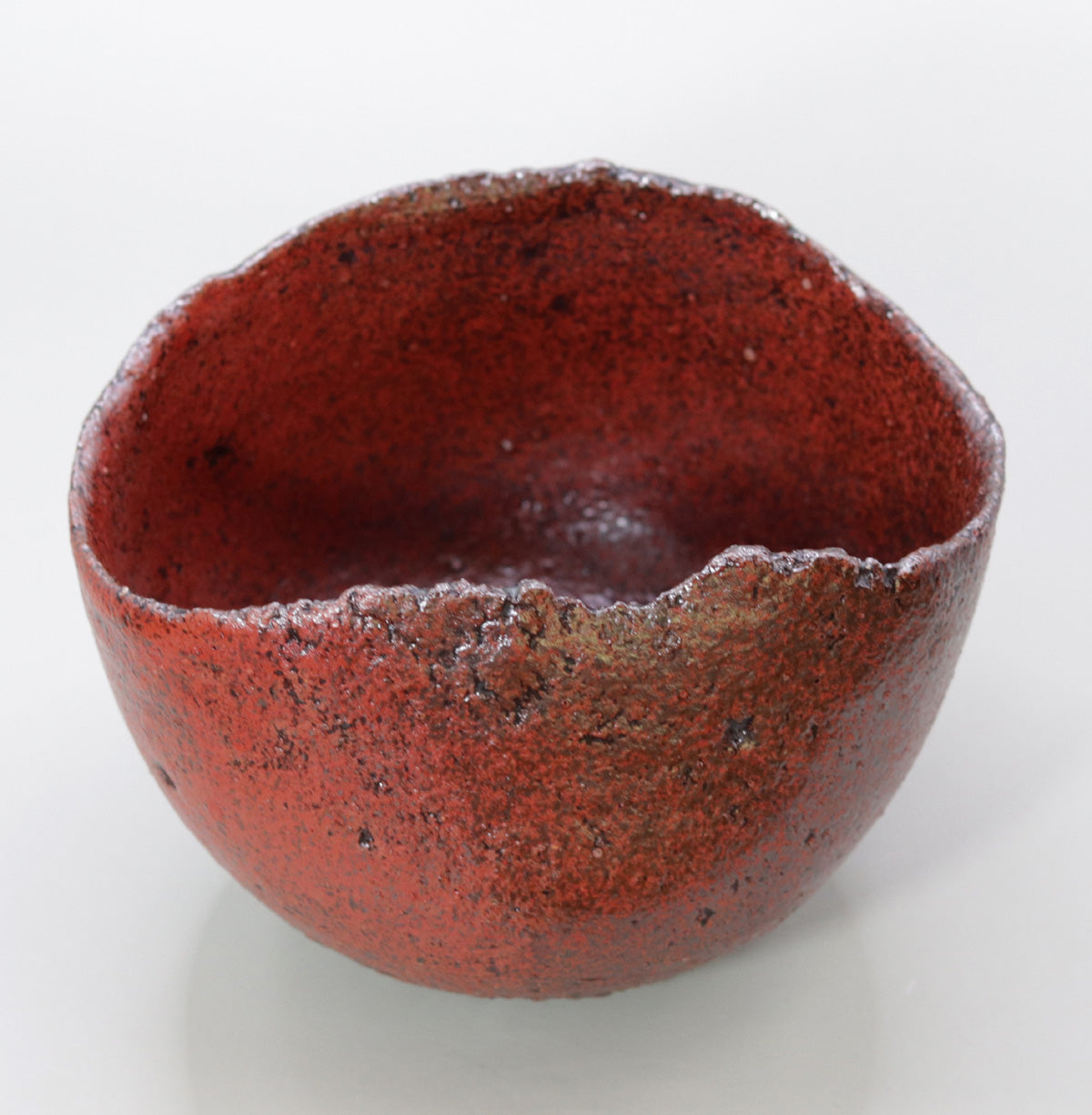
Deep crimson skin with a lava-like texture
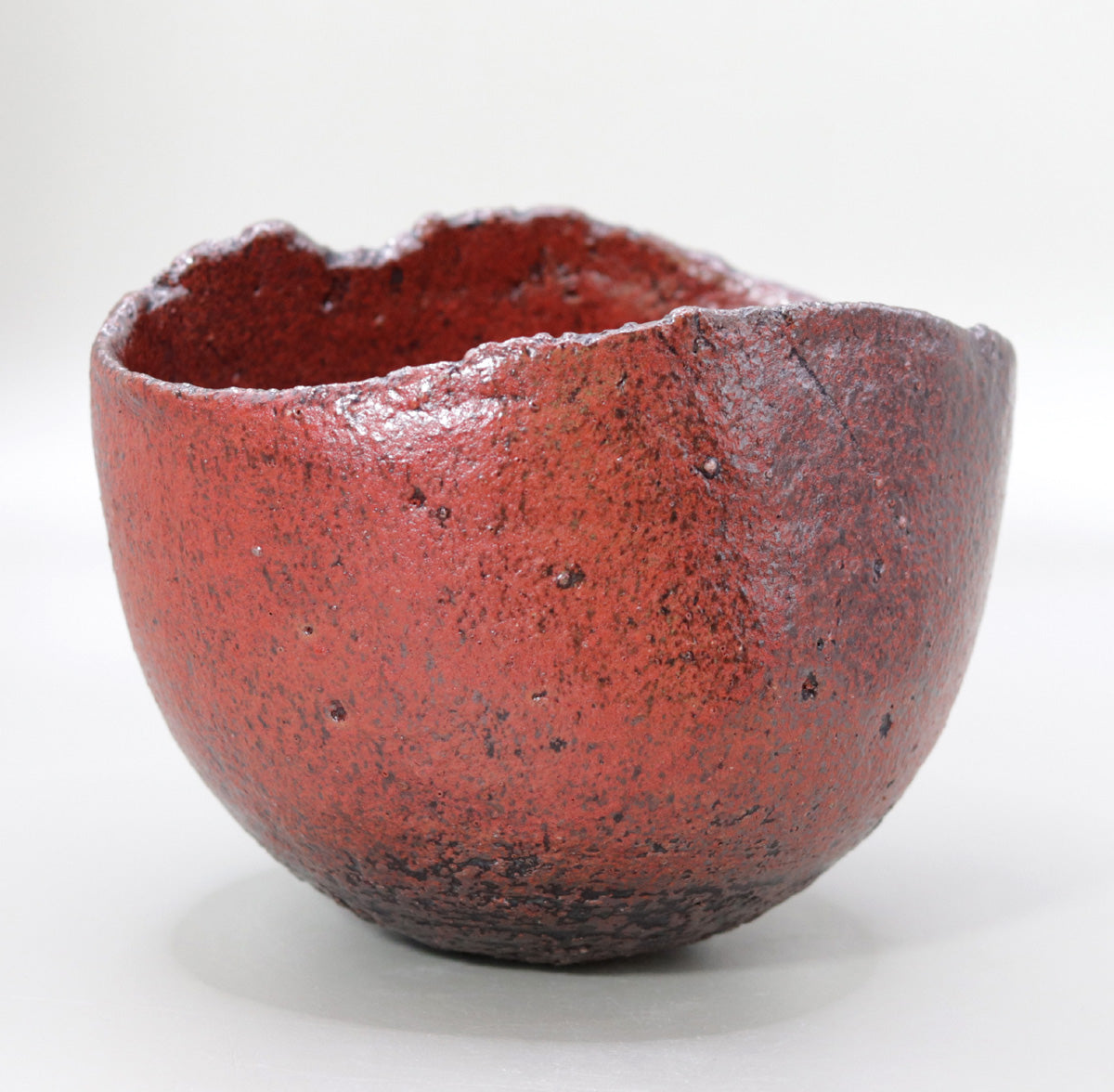
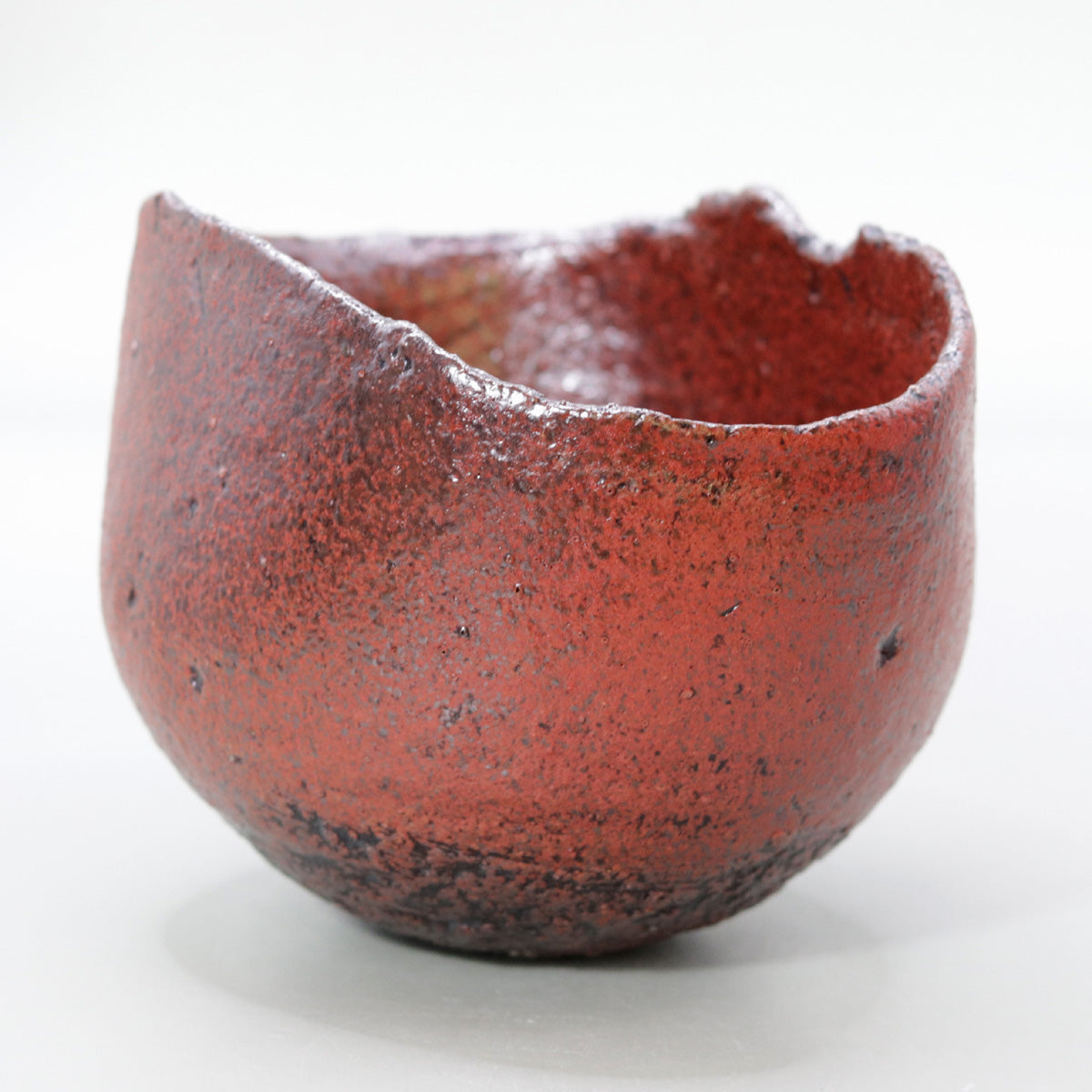
The scarlet color that covers the exterior walls of this piece was achieved through a two-stage firing process in which iron-rich Tanba clay is first strongly reduced to a dark brown color, and then oxidized towards the end. In contrast to the glossiness of Akaraku, the rough texture, left behind by the embers, stands out, reminiscent of the surface of cooled, solidified lava. The scattered iron particles that do not completely melt create tiny dark brown specks that give depth to the scarlet color.
Rough rim - weathered cliff ridge
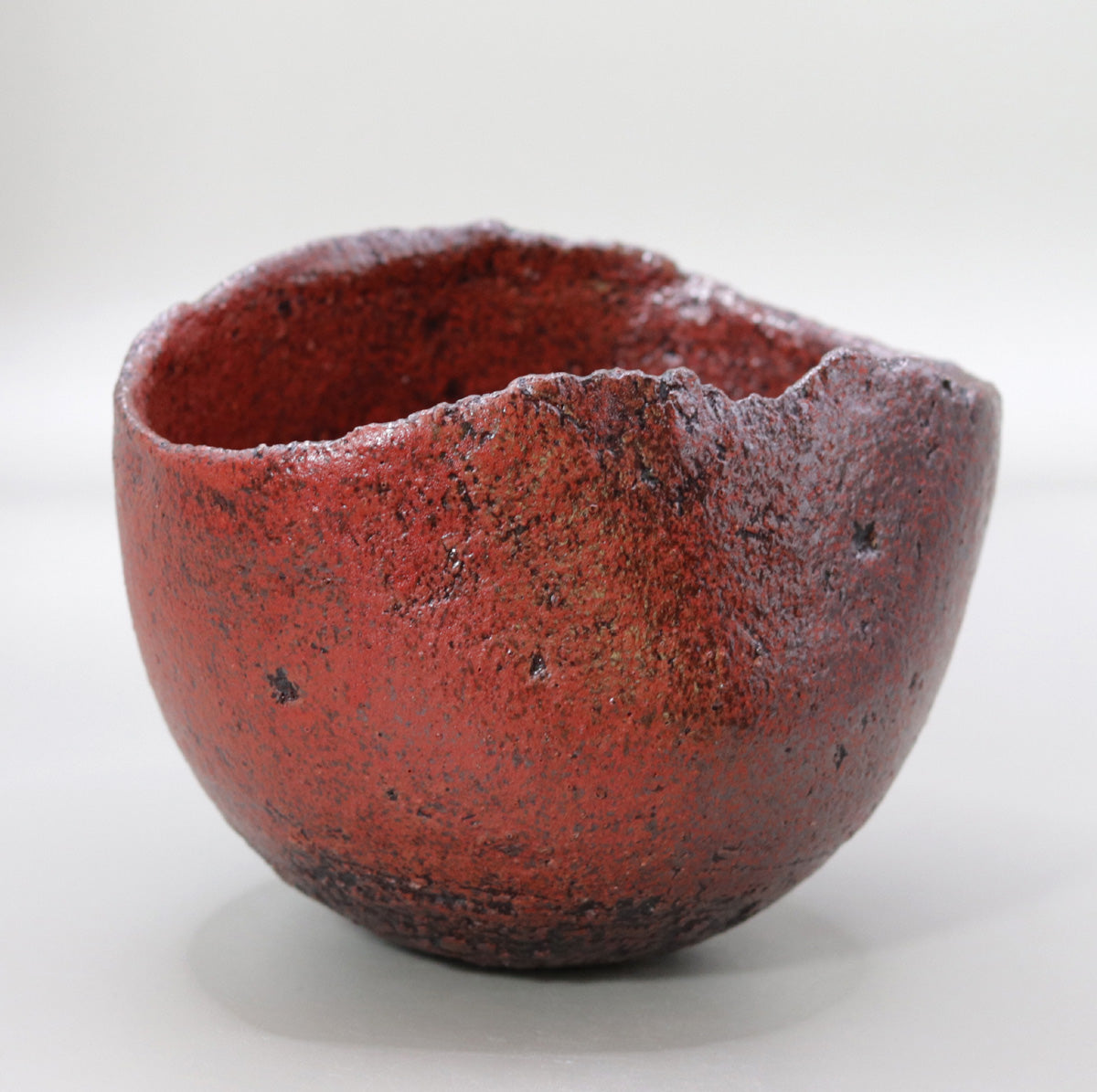
The rim is partially hollowed out after being shaped on a potter's wheel, and then naturally crumbles due to shrinkage during firing. These irregular ridges are reminiscent of rock walls carved by waves or cliffs eroded by wind and snow, and exude a dynamic tension amidst the stillness. This creates the joy of choosing where to place your lips, adding a casual playfulness to the tea ceremony.
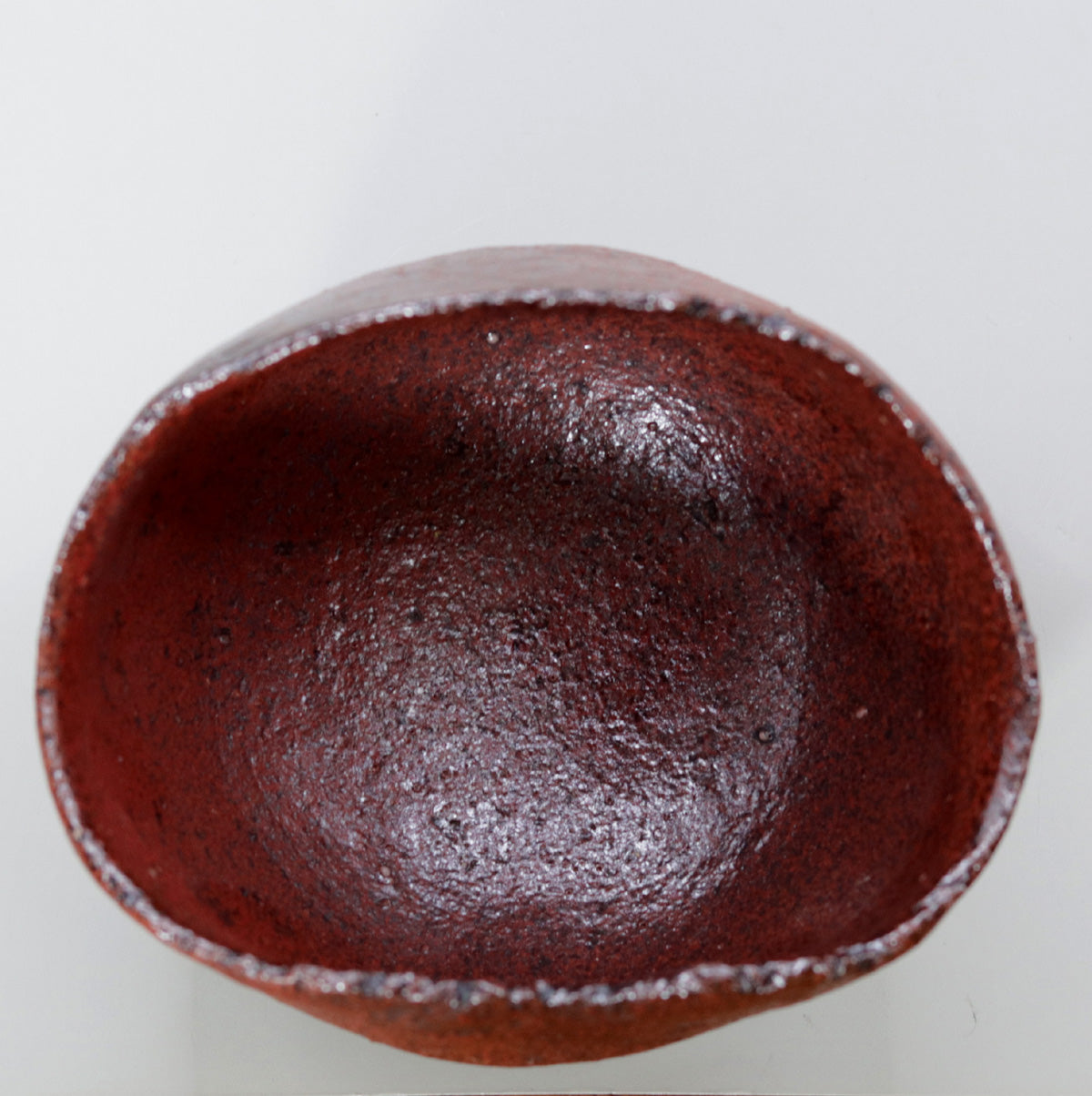
The profound contrast created by the scarlet-black interior walls
The inside is fired to a slightly darker scarlet than the outside, and its semi-glossy finish vividly brings out the green of the matcha. The thin brown foam casts delicate shadows on the rough surface, and when thick tea is poured into it, the scarlet blends with the dark brown water, creating the mysterious atmosphere of a lava cave lit by a night bonfire.
A soft, egg-shaped form and a light, thin construction
The body is a rounded egg shape, finished with a smooth silhouette that leaves almost no trace of wheel marks. Although the thickness is moderate, it is solid because it is firmly fired at a high temperature of around 1280°C, and is surprisingly light to hold. When you hold it in your palm, the rough outer skin provides just the right amount of stimulation to your fingertips, contrasting strikingly with the smooth inner wall.
The surface of Tanba clay visible from the heights
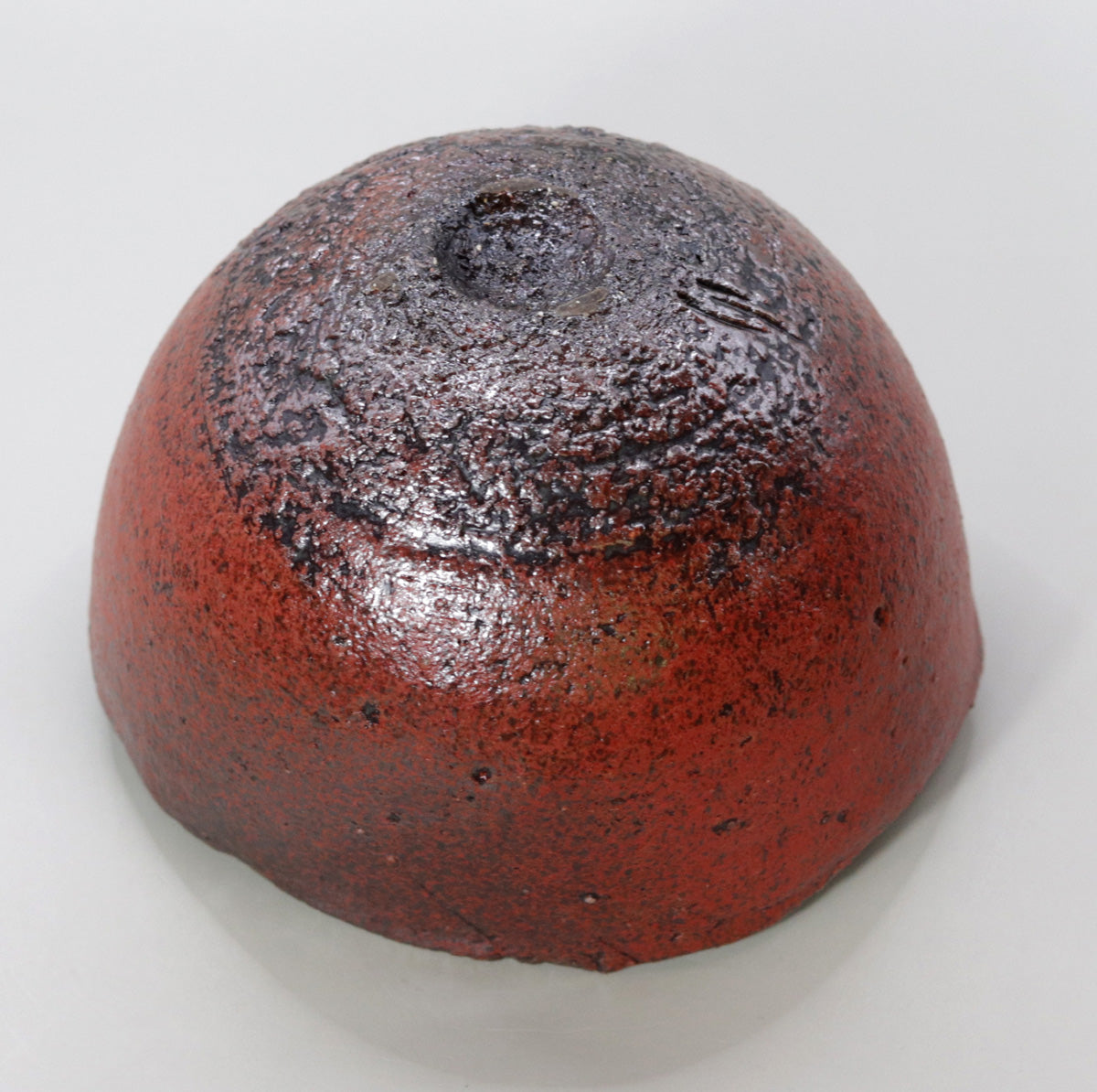
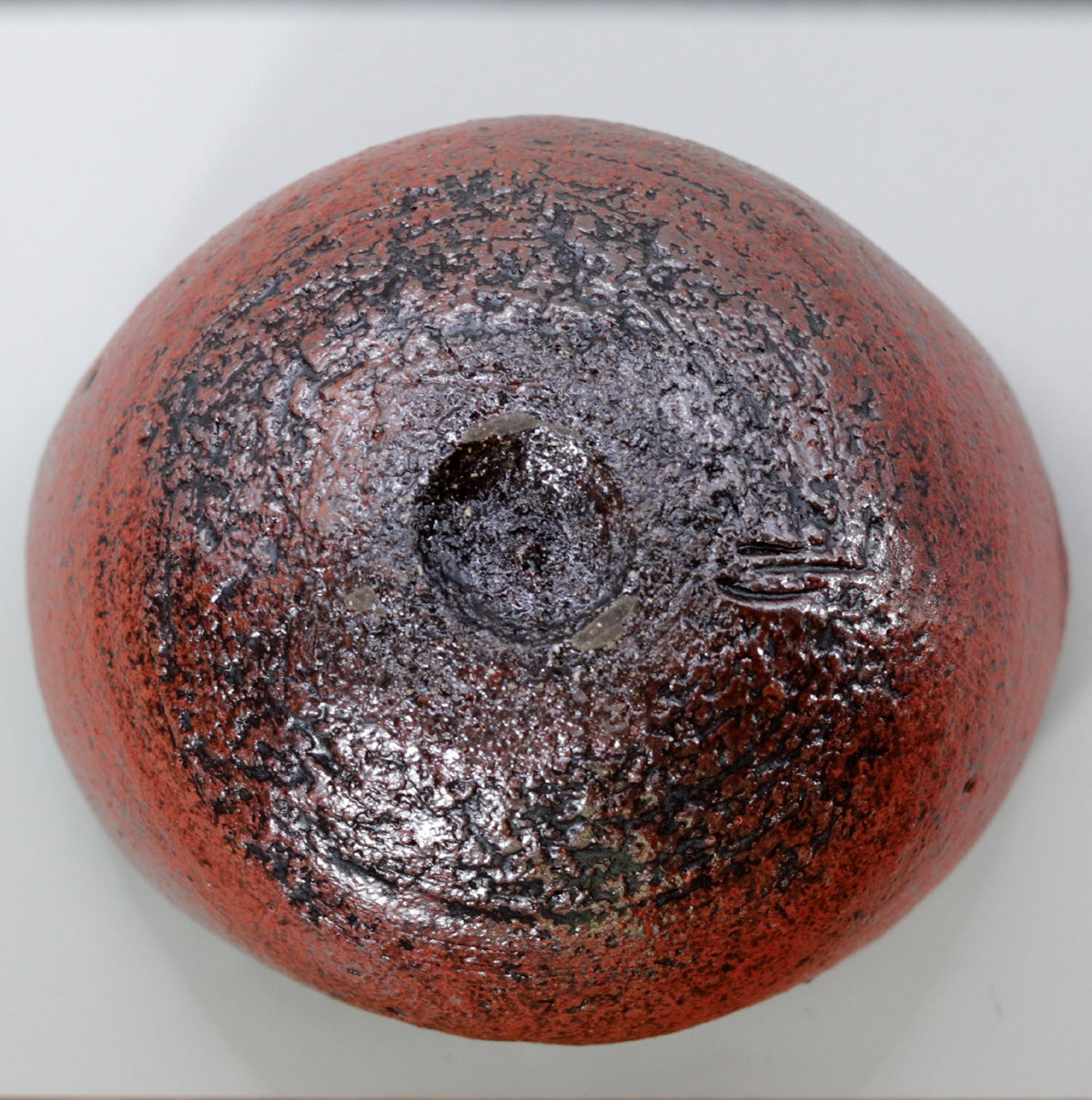
The sides of the foot are left unglazed, leaving the reddish-brown base exposed. Areas with traces of ash have turned blue-gray, forming layers of red, black, and ash. These quietly speak of the iron ore and feldspar that lie hidden in the mountains and fields of Tanba, breathing the breath of the earth into the vessel.
Functionality as tea ceremony utensils
The gently curved edge of the teacup does not hinder the movement of the chasen, ensuring even foaming. The thin body transfers heat gently to the hand, making it comfortable to handle even when brewing thick tea in winter. The low base provides stability on the table and is adaptable to modern table settings.
The intersection of wabi and the brilliance of flames
The scarlet color symbolizes the splendor of "yang," while the matte texture and the shadows of the iron spots evoke the tranquility of wabi. Nishibata Tadashi's theme is "The heat of life hidden within wabi-sabi," and he has brought out a complex expression in the solid red color, condensing the drama of earth and fire.
The luster and shadows that come with time
The rough surface absorbs the oils from your hands as you use it, and begins to take on a moist luster. Tea stains and moisture seep into the minute irregularities, and as the scarlet color takes on a soft brown, the vessel as a whole gains depth. Because there is no crazing, the change is extremely gradual, but you can still enjoy the gradation of red that quietly breathes over the course of several years.
This Tanba red tea bowl is as if the flickering of a glowing ember has been crystallized. The red color pulsates quietly in the palm of your hand, gently adding a memory of the flame and the weight of the earth to the once-in-a-lifetime experience of the tea ceremony. Please treasure it for a long time and enjoy the melody of the years as the scarlet color grows deeper and deeper.
Tadashi Nishibata Biography
Born on February 24, 1948. Started making pottery in 1969. 1976. Hyogo Prefectural Exhibition Encouragement Award. 1986. Selected for the Japan Traditional Crafts Exhibition for the first time. 1988. Selected for the Japan Traditional Crafts Exhibition. Japan Traditional Crafts Exhibition. Japan Crafts Association President's Award. 1989. Selected for the Japan Ceramic Art Exhibition. Nogawa Memorial Award, Handon no Kai. 1991. Selected for the Japan Traditional Crafts Exhibition. Selected for the Japan Ceramic Art Exhibition. Grand Prize at the Tea Ceremony Forms Exhibition. 1992. Selected for the Japan Traditional Crafts Exhibition. Excellence Award at the Tea Ceremony Forms Exhibition. Hyogo Prefecture Emerging Artist Encouragement Award. Invited to exhibit at the NHK-sponsored Paris - 100 Contemporary Japanese Ceramics Exhibition. Excellence Award at the Tea Ceremony Forms Exhibition. 1993. Selected for the Japan Traditional Crafts Exhibition. Solo exhibition at Sogo Hiroshima store. Kyoto Chemin. 1994. Selected for the Japan Traditional Crafts Exhibition. Solo exhibition at Nihonbashi Mitsukoshi Main Store. 1995. Selected for the Japan Traditional Crafts Exhibition. Solo exhibition at Sogo Hiroshima store. 1996. Selected for the Japan Traditional Crafts Exhibition. Awarded the Excellence Award at the Tea Ceremony Design Exhibition, solo exhibition at Nihonbashi Mitsukoshi Main Store
1997 Encouragement Award at the Tea Ceremony Design Exhibition 1998 Selected for the Japan Traditional Crafts Exhibition Solo exhibition at Mitsukoshi Nihonbashi Main Store Selected for the Japan Traditional Crafts Exhibition 2000 Solo exhibition at Mitsukoshi Nihonbashi Main Store Solo exhibition at Mitsukoshi Fukuoka 2001 Selected for the Japan Traditional Crafts Exhibition 2002 Solo exhibition at Mitsukoshi Nihonbashi Main Store Solo exhibition at Gallery Dojima 2003 Solo exhibition at Touchingston, USA 2004 Grand Prize at the Tea Ceremony Design Exhibition at Sogo Hiroshima 2005 Exhibited at the Akashi City Museum of Culture and Hyogo Ceramics Exhibition Purchase of Akadobedai, Hyogo Ceramic Art Museum Solo exhibition at Gallery Dojima, Mitsukoshi Nihonbashi Main Store 2006 Grand Prize at the Tea Ceremony Design Exhibition Selected for the Japan Traditional Crafts Exhibition at the Museum of Fine Arts, Boston and the New York Japan Society Gallery Solo exhibition at Yokohama Takashimaya Touchingston, USA Father and Son Exhibition at Matsuyama Takashimaya Toshunkai Exhibition, Sogo Yokohama. Encouragement Award at the Tea Ceremony Art Exhibition. Selected for the Japan Traditional Crafts Exhibition in 2008. Selected for the Japan Traditional Crafts Exhibition. Solo Exhibition, Yokohama Takashimaya, Mitsukoshi Nihombashi, Santa Fe, Touchingston, USA. Toshunkai Exhibition, Funabashi, Seibu, Sogo Hiroshima. Invited to the Japanese Ceramics Exhibition in 2009. Solo Exhibition, Gallery Dojima, Sendai Mitsukoshi, 2010. Sogo Kobe. Exhibited in the Musee Tomo Grand Prize Exhibition, Contemporary Tea. Solo Exhibition, Yokohama Takashimaya, Touchingston, USA. Invited to the Japanese Ceramics Exhibition. Solo Exhibition, Joan B. Marvis, New York, USA. Invited to the Japanese Ceramics Exhibition in 2013. Exhibited in the "Contemporary Famous Bowls" exhibition at the Musee Tomo, Kanmi Kikuchi Memorial. Solo Exhibition, Mitsukoshi Nihombashi, Santa Fe, Touchingston, USA. Gallery Miyazaki, Sogo Kobe, Chiba Sogo, 2014. Solo Exhibition, Mitsukoshi Nihombashi, 2015. Received the Hyogo Prefecture Cultural Award in 2016. Exhibited at Higashihiroshima City Museum of Art for "Ceramics that Color Our Lives - Food Ware" Exhibited at Joan B. Marvis' 40th Anniversary Exhibition in 2017.
2018 Solo Exhibition at Nihonbashi Mitsukoshi Main Store
Share


-
[I will send it to you quickly and carefully]
We carefully package each product in a way that suits it best.
Also, delivery times vary depending on the piece (vessel, etc.).
Items that already come with a box will be shipped within 1-3 days of the order date.
For items that require a box to be made after your order, it will take approximately 30 days for production to be completed and then shipped.
In either case, once we have confirmed your order, we will contact you by email to inform you of the delivery date.
-
[Requests when purchasing pottery]
Even products that look the same may differ slightly in color, shape, size, etc.
The way the glaze is used, the power of the kiln, the firing method, the season, and the humidity also affect the appearance of the pottery.
Please understand the individuality of each piece of pottery and enjoy the unique warmth of handmade.