
Tenmoku glaze sake cup by Okada Yu
Tenmoku glaze sake cup by Okada Yu
Couldn't load pickup availability
Width: 7.4cm Height: 5.4cm
Tenmoku glaze sake cup
- Created by Masaru Okada -
Work summary
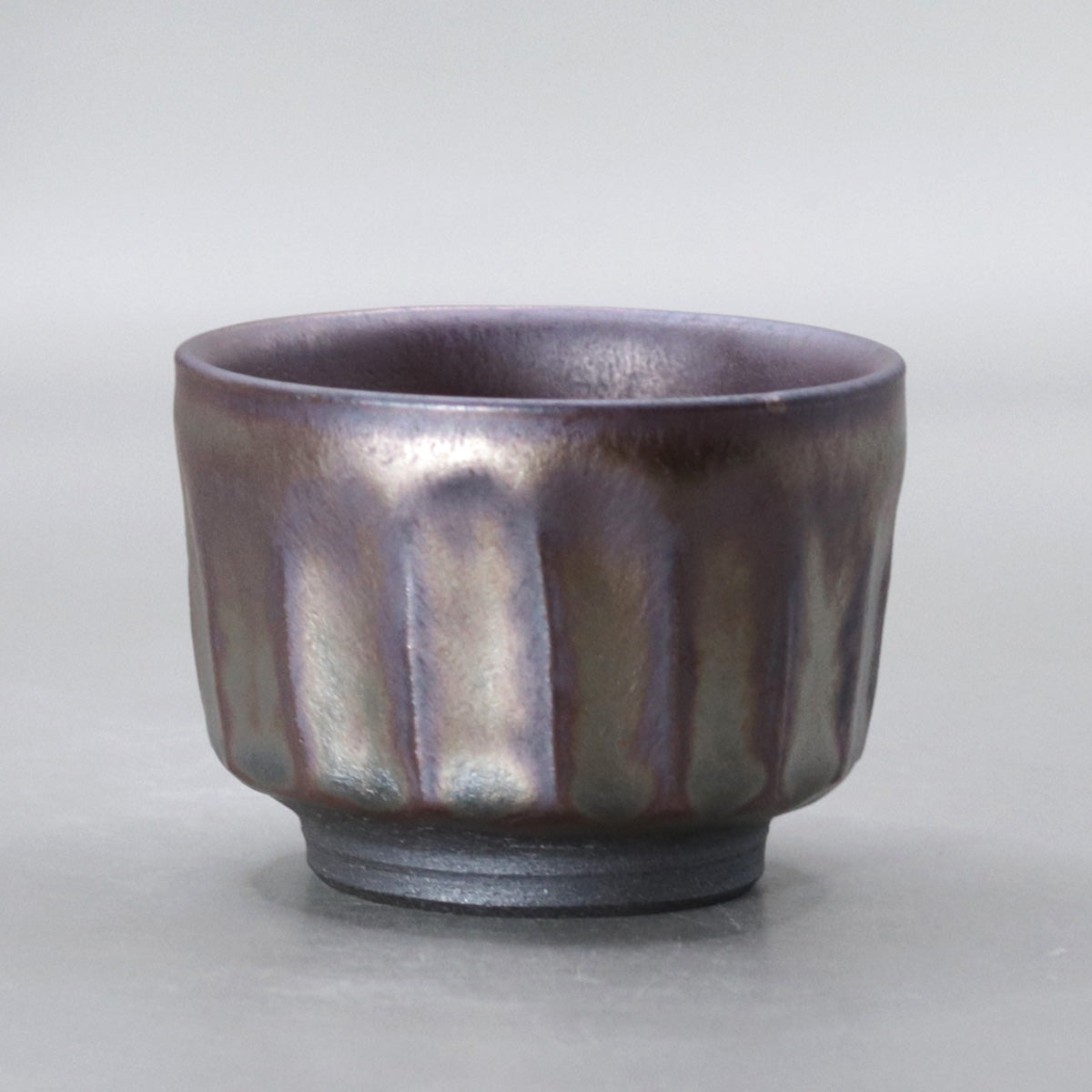
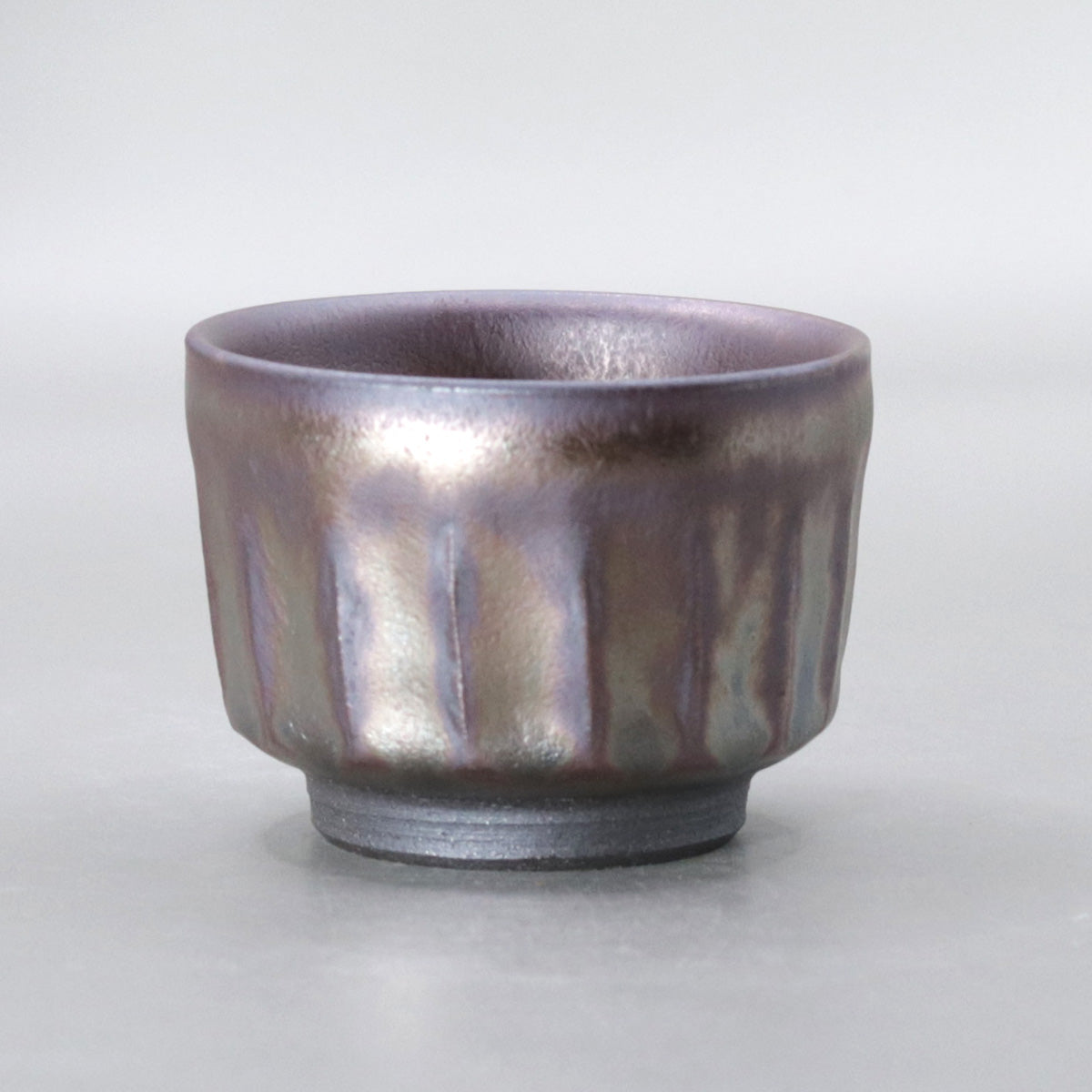
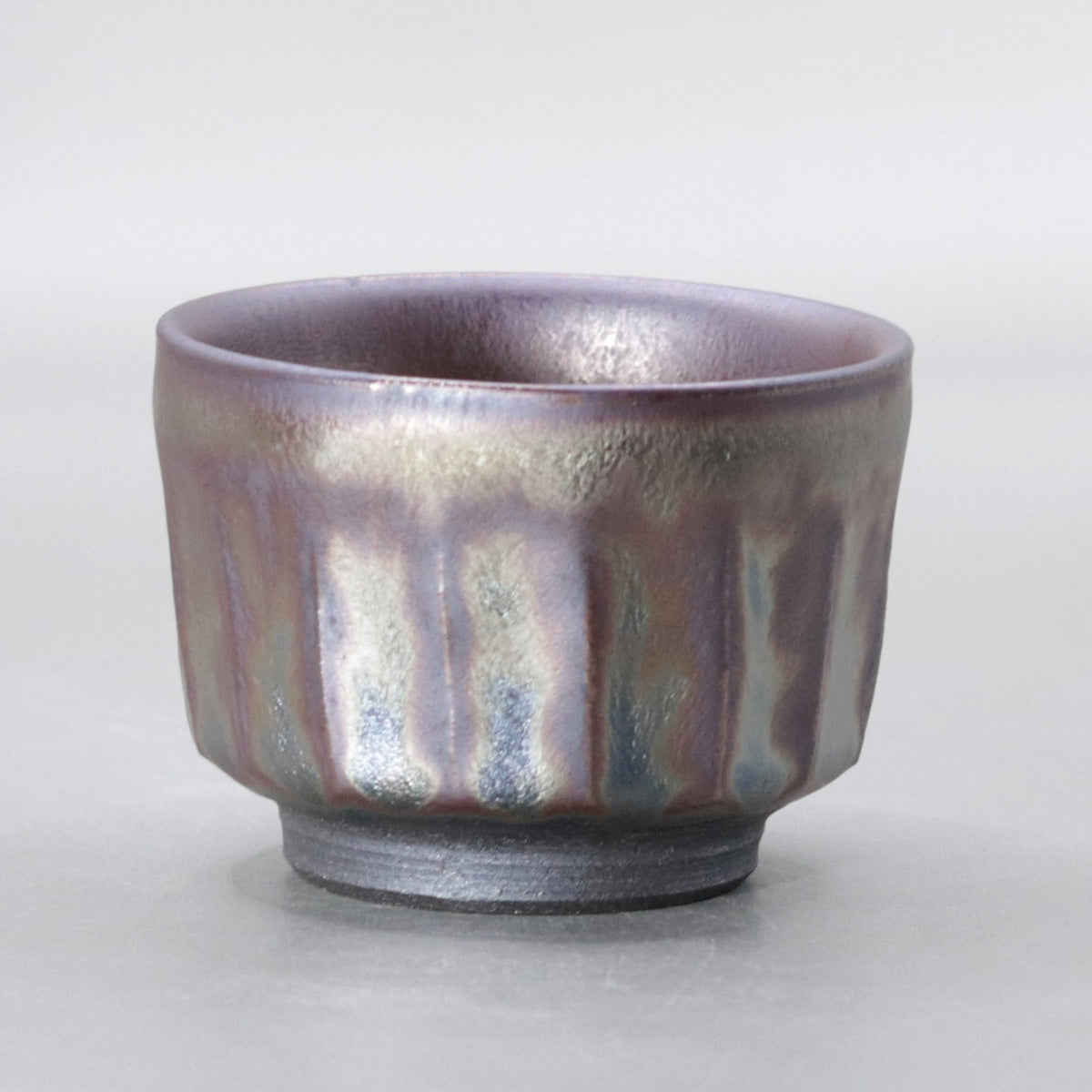
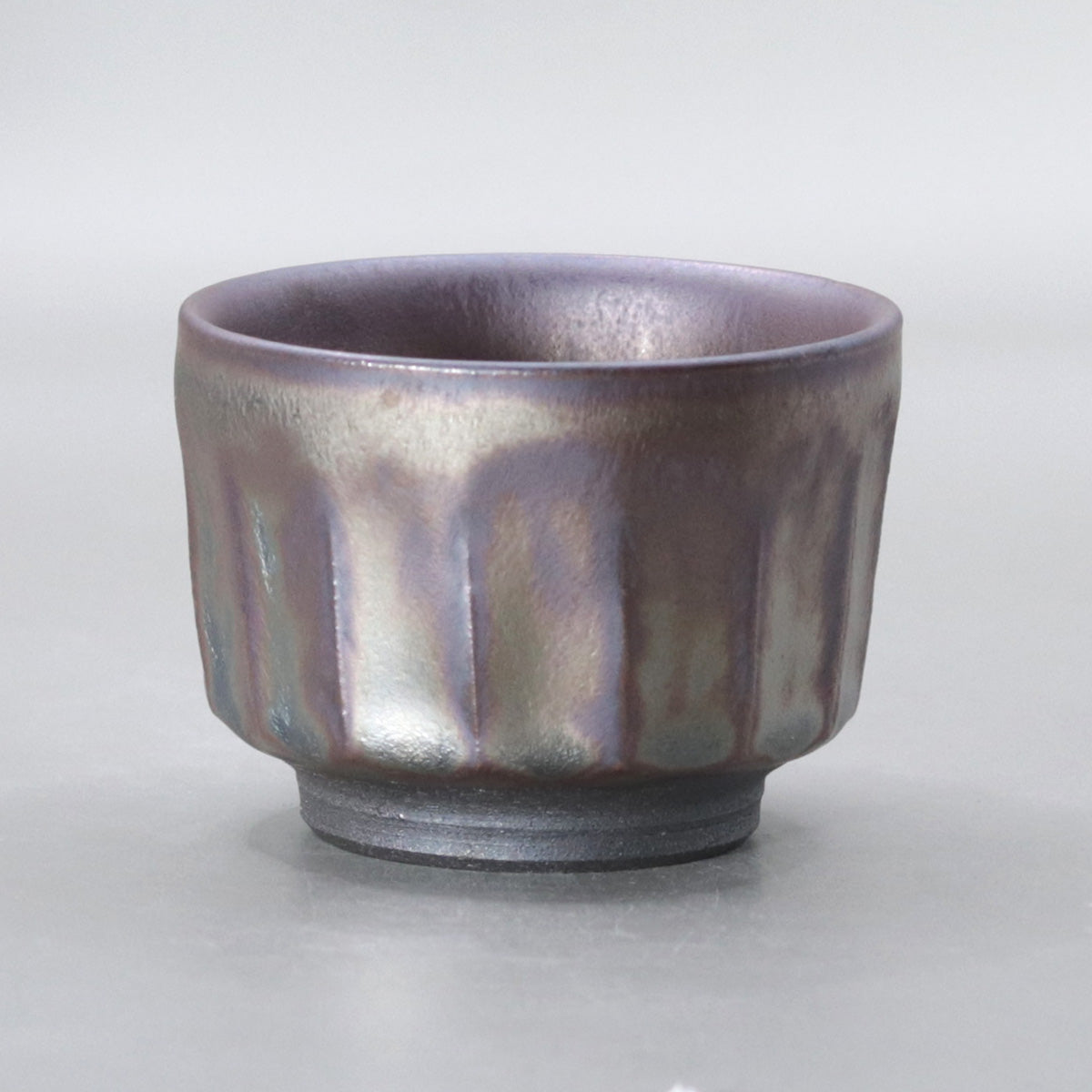
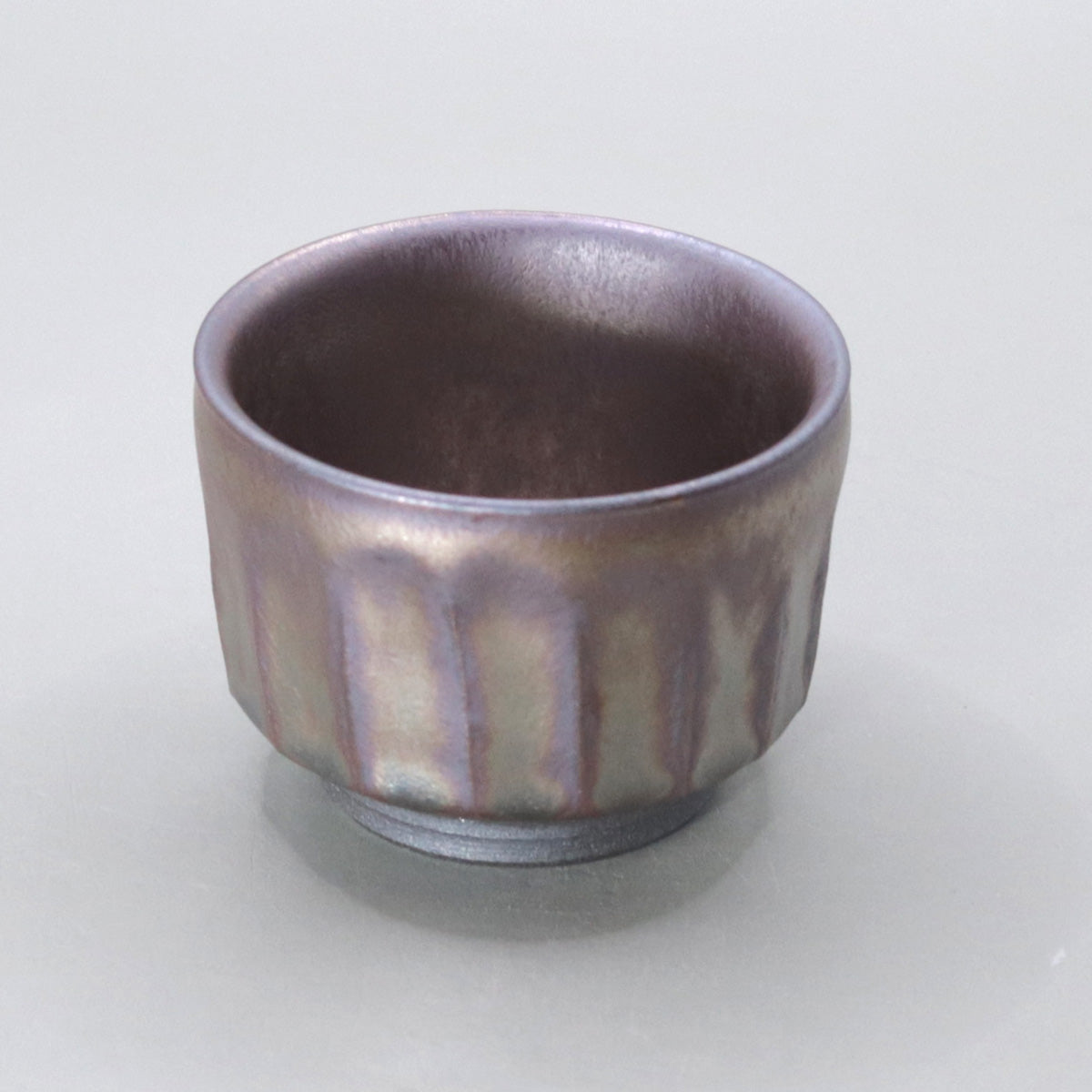
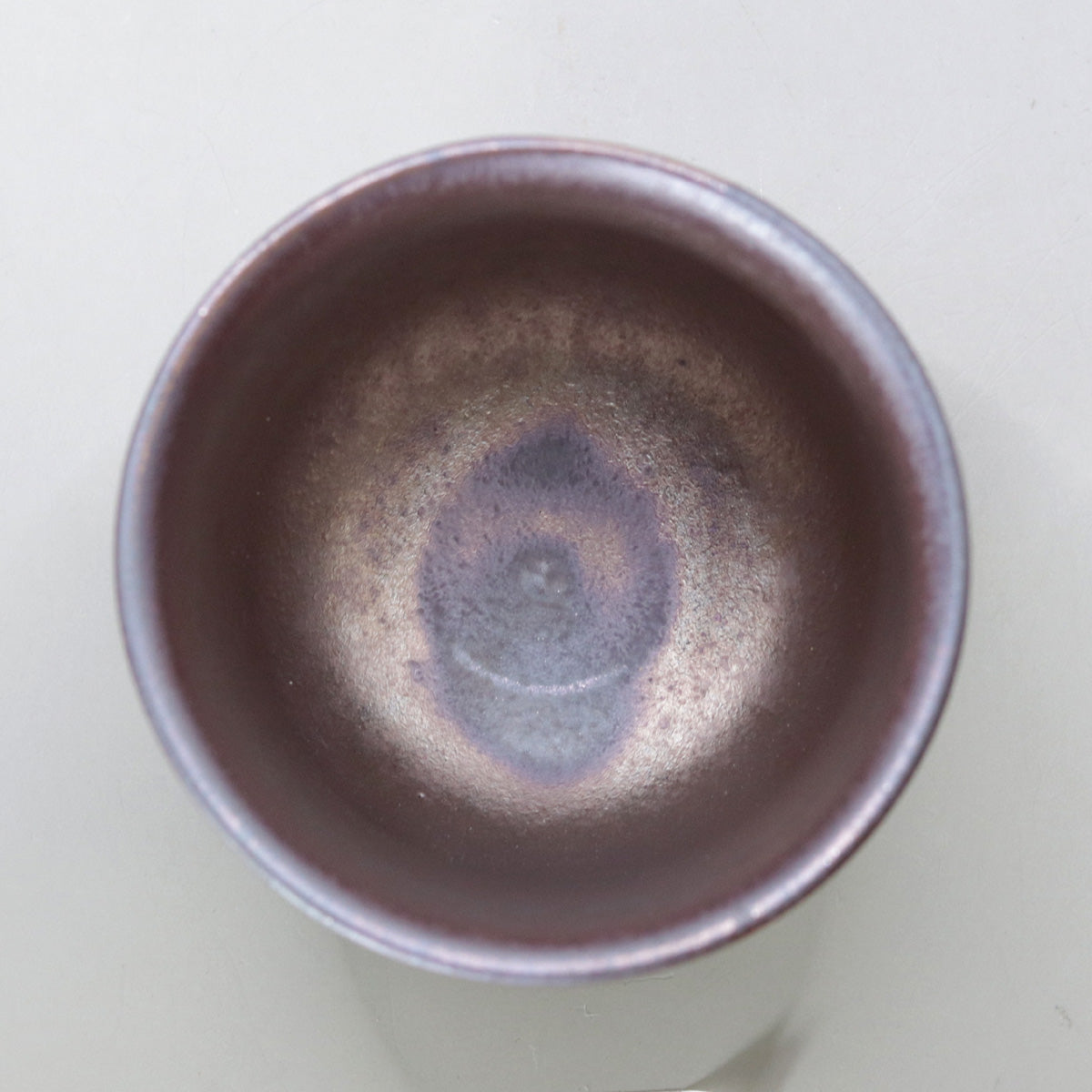
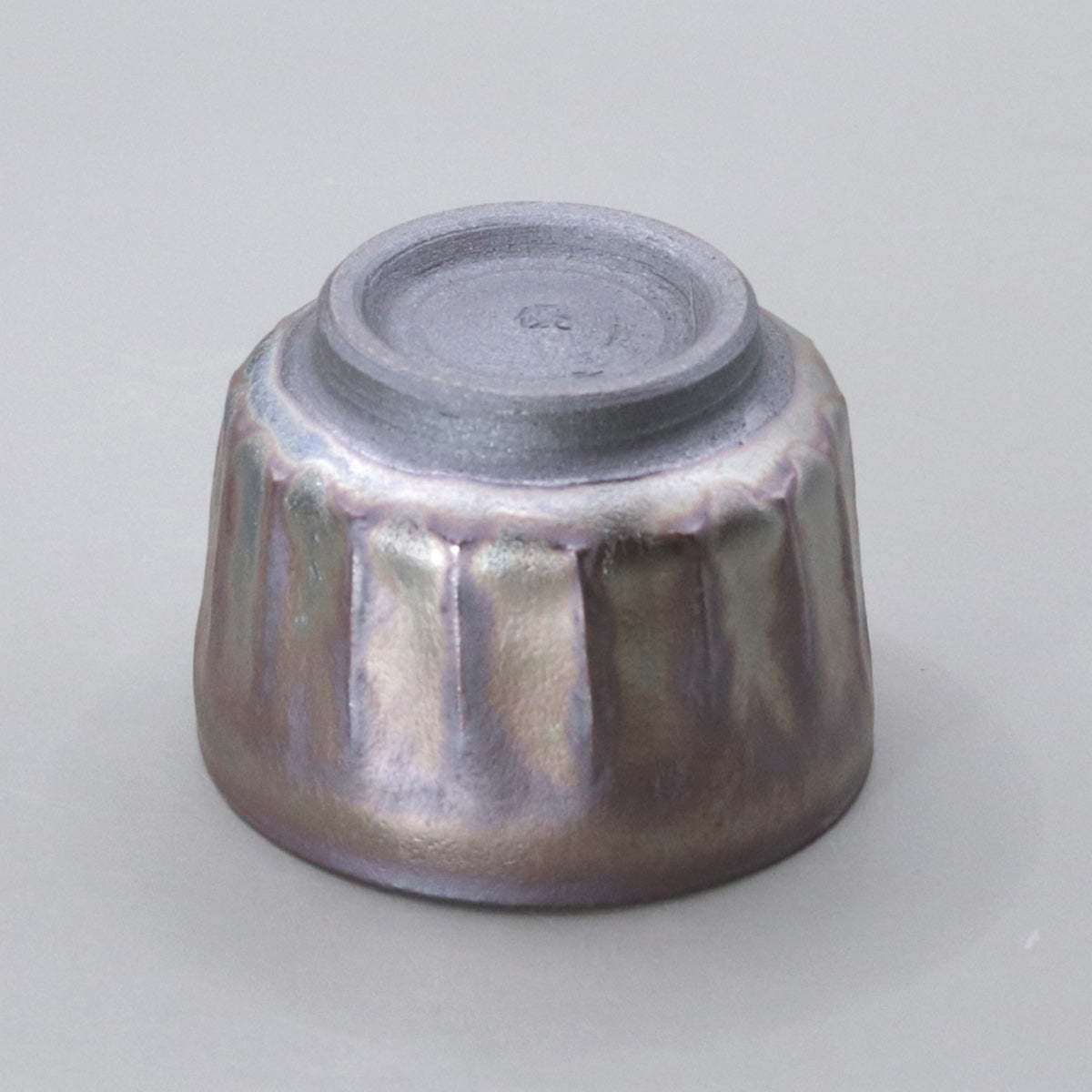
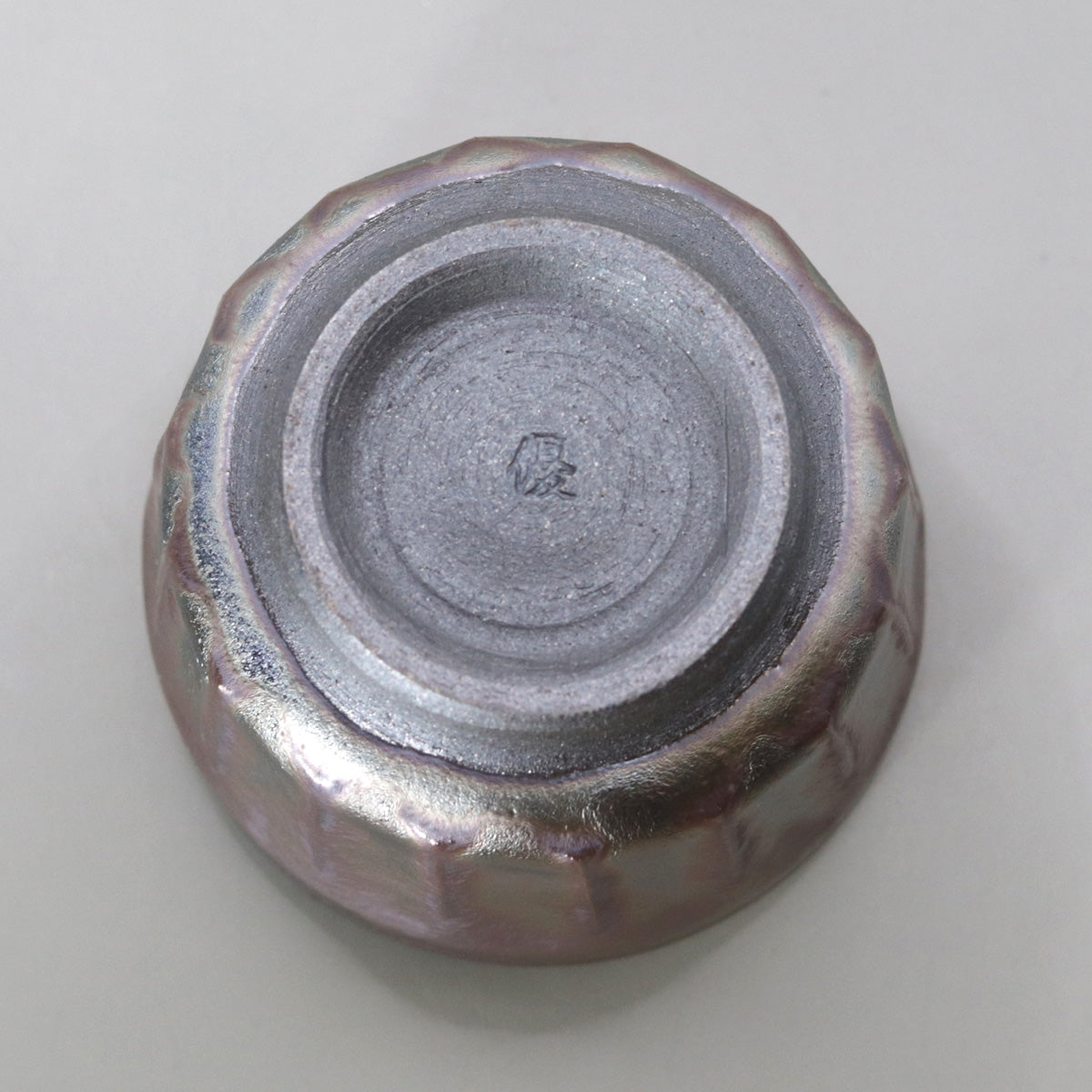
This Tenmoku-glazed sake cup was created by Okada Masaru, who has a kiln in Uji Sumiyama, Kyoto. The slightly upright cylindrical body is engraved with multiple vertical ridges (shinogi) centered around the bottom. The Tenmoku glaze, which reveals layers of purple gray, blue ink, and dull gold, creates a sense of depth with a metallic sheen and matte finish that intertwines depending on the light.
Glaze and Technique
Manganese oxide and traces of chromium are added to the iron feldspar-based Tenmoku glaze , giving it a deep purple-black base with a bluish-steel or dull gold sheen.
Fluctuation firing : Okada's unique technique involves first reducing the clay to produce a black color, then alternating between reduction and weak oxidation in the latter half of the firing, resulting in the formation of a crystalline layer with a metallic luster on the surface.
Effect of the ridged surface : The glaze thins out on the convex parts of the ridges, changing color from purple-gray to reddish purple, while the glaze pools in the concave parts, changing color from blue-black to dull gold, creating a different appearance depending on the angle from which you view it.
Historical and cultural background
Tenmoku glaze originated from the black-glazed bowls of the Jian kilns in Fujian Province during the Song dynasty, and was introduced to Japan by Zen monks during the Kamakura period. It eventually became highly valued in the tea ceremony, and its accidental crystal patterns, such as oil droplets and Yohen patterns, are particularly prized as the "wonder of kiln transformation." Meanwhile, the ridged technique was developed in Joseon porcelain and Hagi ware, and has taken root as a distinctively Japanese design, with its simple chamfering accentuating the contrast between the base and glaze. This piece combines these two traditional elements, elevating them to a modern form and brilliance.
Aesthetic Intention and Spirituality
The rhythm of the vertical ridges is a "sign of time" that visualizes each moment of breathing. The deep radiance of the Tenmoku glaze that is layered on top of it evokes the infinite universe, which is related to the Zen phrase "Yoroshiku Mujin." Every time you tilt the sake in your palm, the light sways along the ridges, and the surface of the liquid is slightly diffused - this subtle change speaks to the preciousness of "once in a lifetime" encounters.
How to use and points to note
Ideal for chilled and room temperature sake : The cylindrical shape retains the aroma of the sake just right, subtly enhancing the aroma of ginjo sake.
The appearance changes completely depending on the light source : in natural light it has a calm dull gold color, while under spotlights it has a purple-gray metallic glow. Enjoy the various expressions by changing the time of day and lighting.
Pleasure of holding : The raised part of the ridge provides a grip for the fingers, making it non-slip and easy to hold.
A dull gold light flickers in the deep purple-black darkness, and the rhythm of the ridges quietly marks the passage of time. This sake cup is a crystallization of Okada Masaru's kiln change control techniques, cultivated over many years, and the beauty of its minimalist form. We hope you will enjoy a blissful drinking experience, savoring the universe hidden in the silence in the palm of your hand.
Share


-
[I will send it to you quickly and carefully]
We carefully package each product in a way that suits it best.
Also, delivery times vary depending on the piece (vessel, etc.).
Items that already come with a box will be shipped within 1-3 days of the order date.
For items that require a box to be made after your order, it will take approximately 30 days for production to be completed and then shipped.
In either case, once we have confirmed your order, we will contact you by email to inform you of the delivery date.
-
[Requests when purchasing pottery]
Even products that look the same may differ slightly in color, shape, size, etc.
The way the glaze is used, the power of the kiln, the firing method, the season, and the humidity also affect the appearance of the pottery.
Please understand the individuality of each piece of pottery and enjoy the unique warmth of handmade.