
Nara-e tea bowl by Rakusai Onishi
Nara-e tea bowl by Rakusai Onishi
Couldn't load pickup availability
Width: 14.4cm Height: 6.9cm
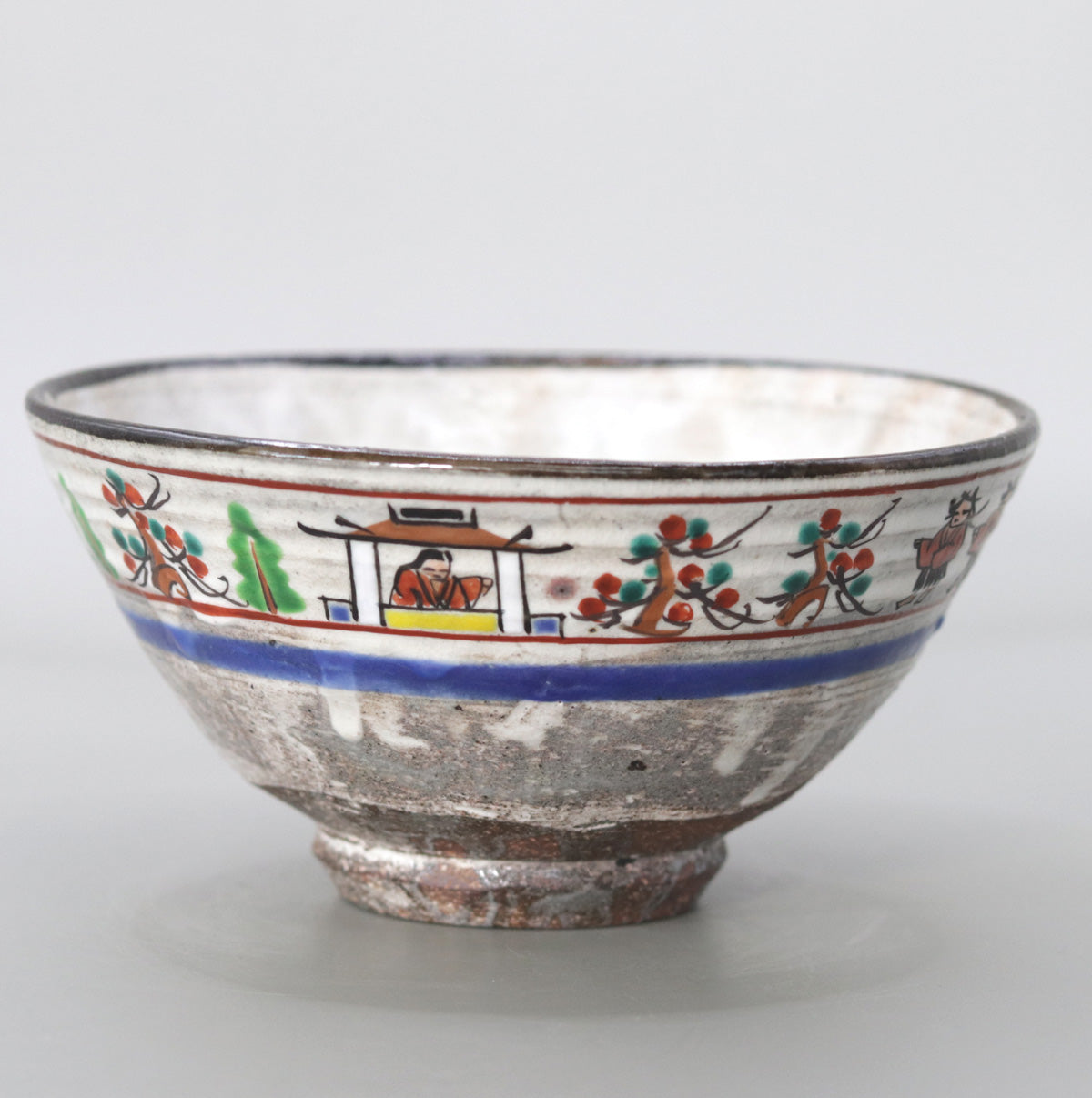
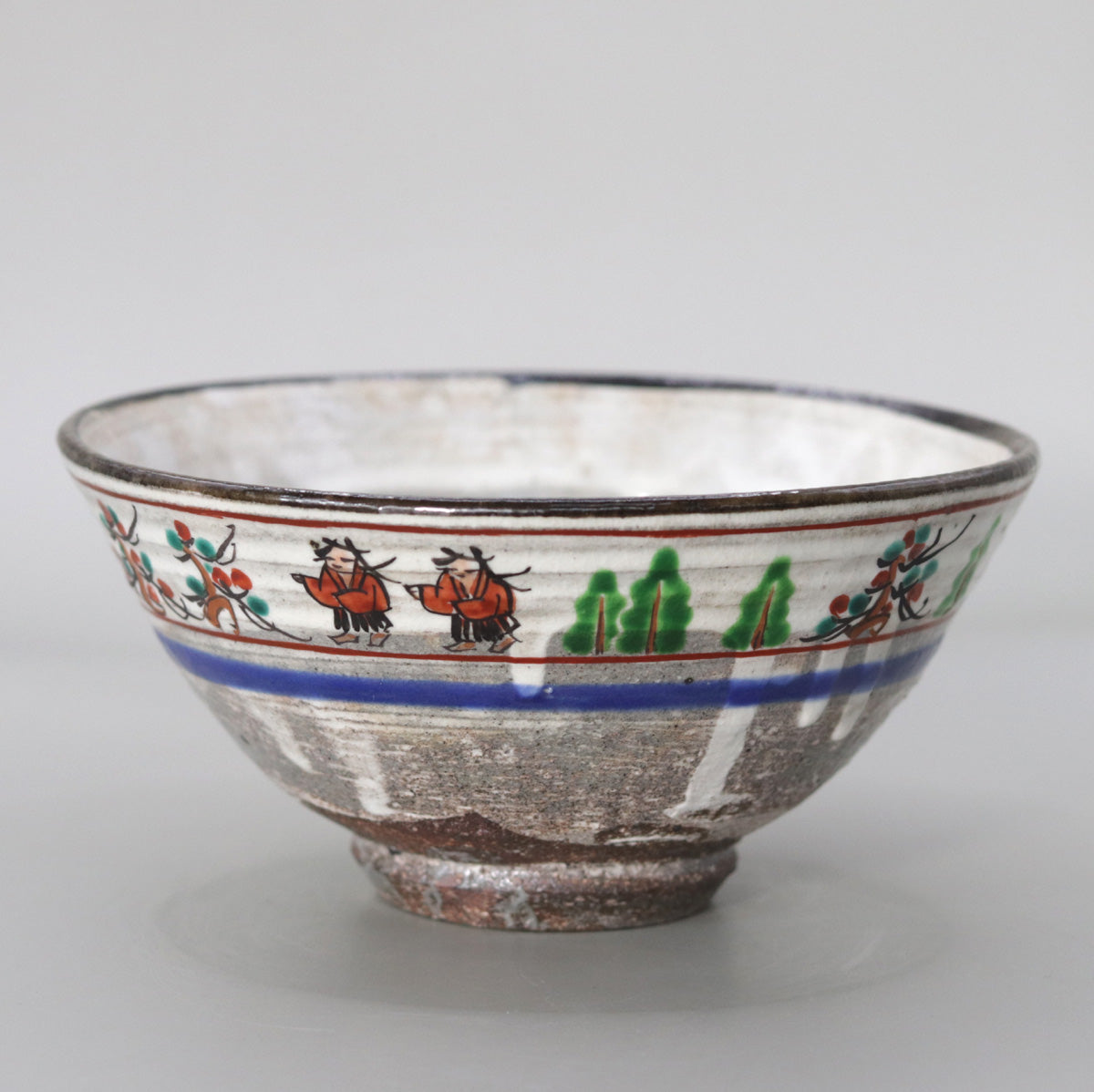
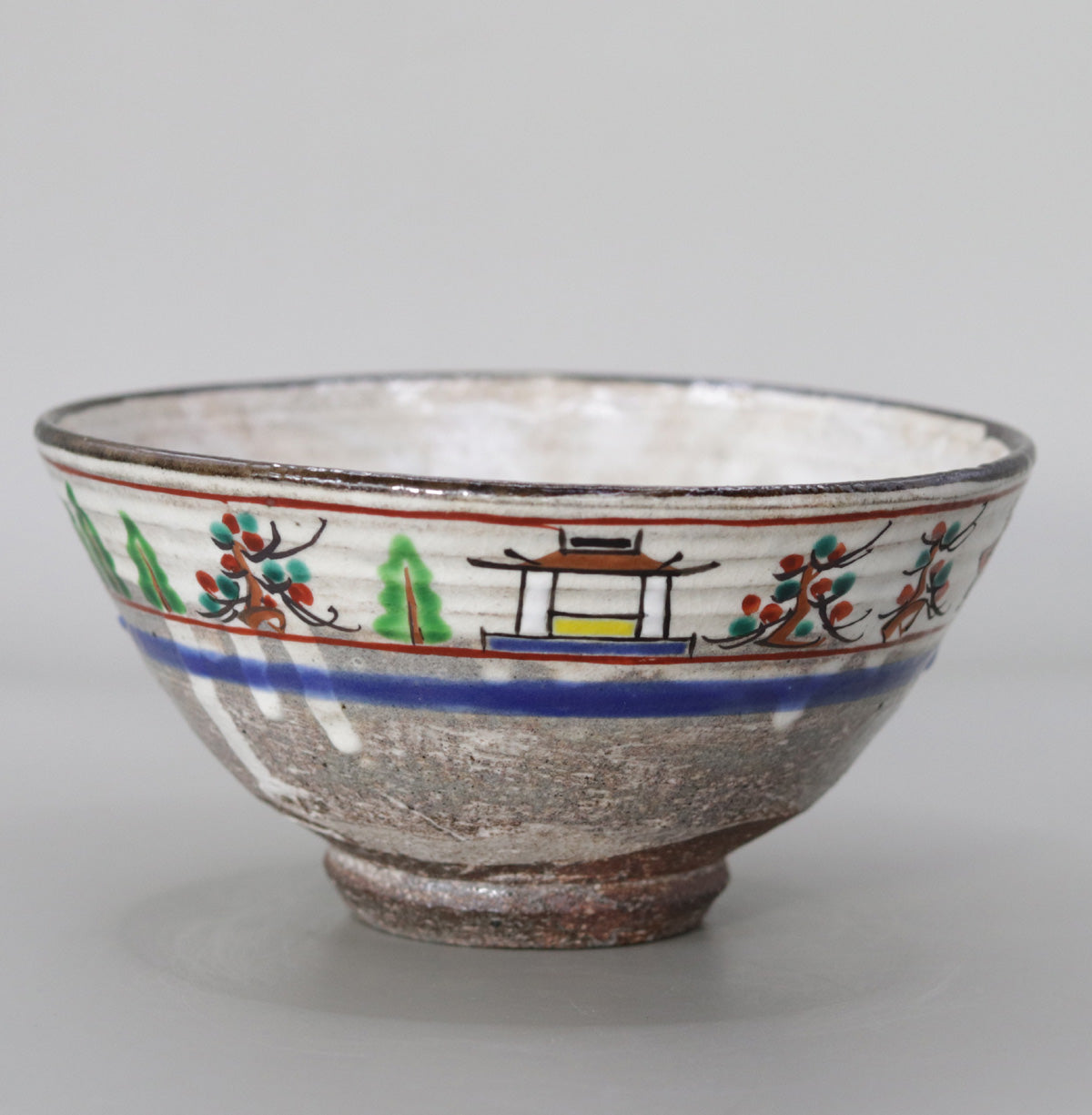
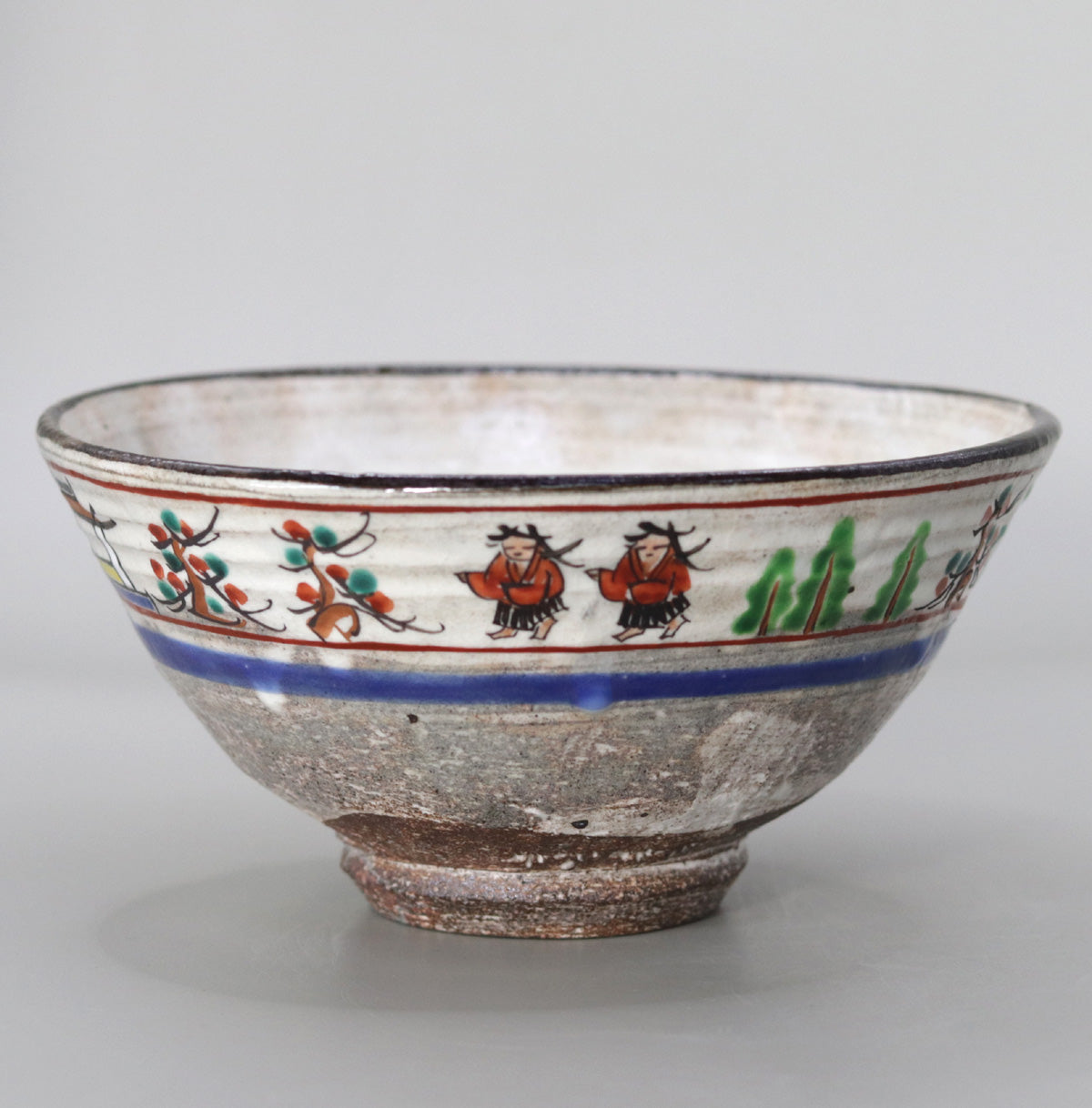
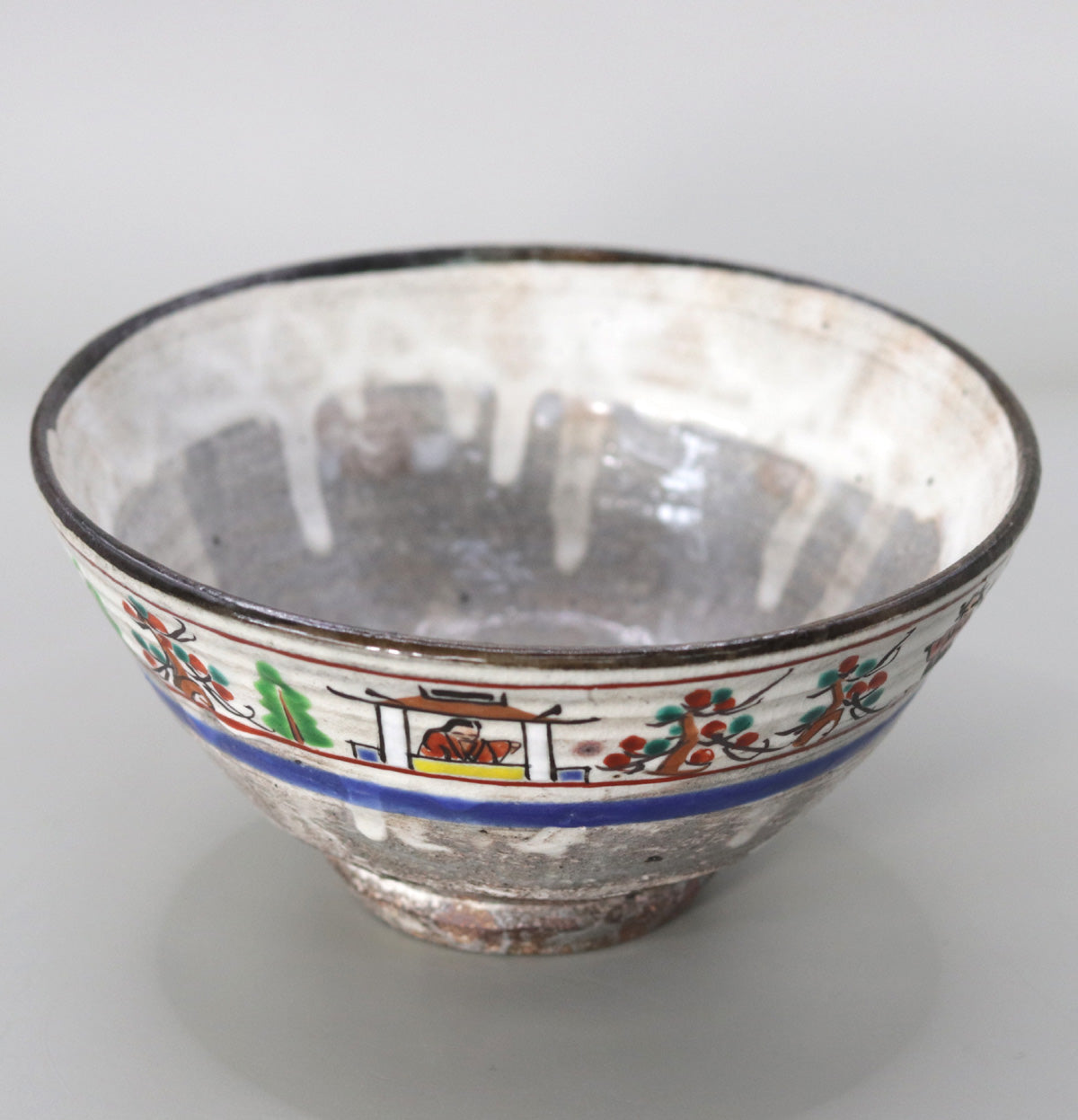
Onishi Rakusai's Narae tea bowl is a bowl that effortlessly combines the earthiness of the Momoyama period with the elegance of Narae painting. The vibrant colors unfold in bands on a white background, creating a sense of movement reminiscent of a scroll being rolled up, and it combines the functionality of a matcha bowl with a narrative quality. Below, we will introduce its appeal from five aspects.
1. Shape and clay
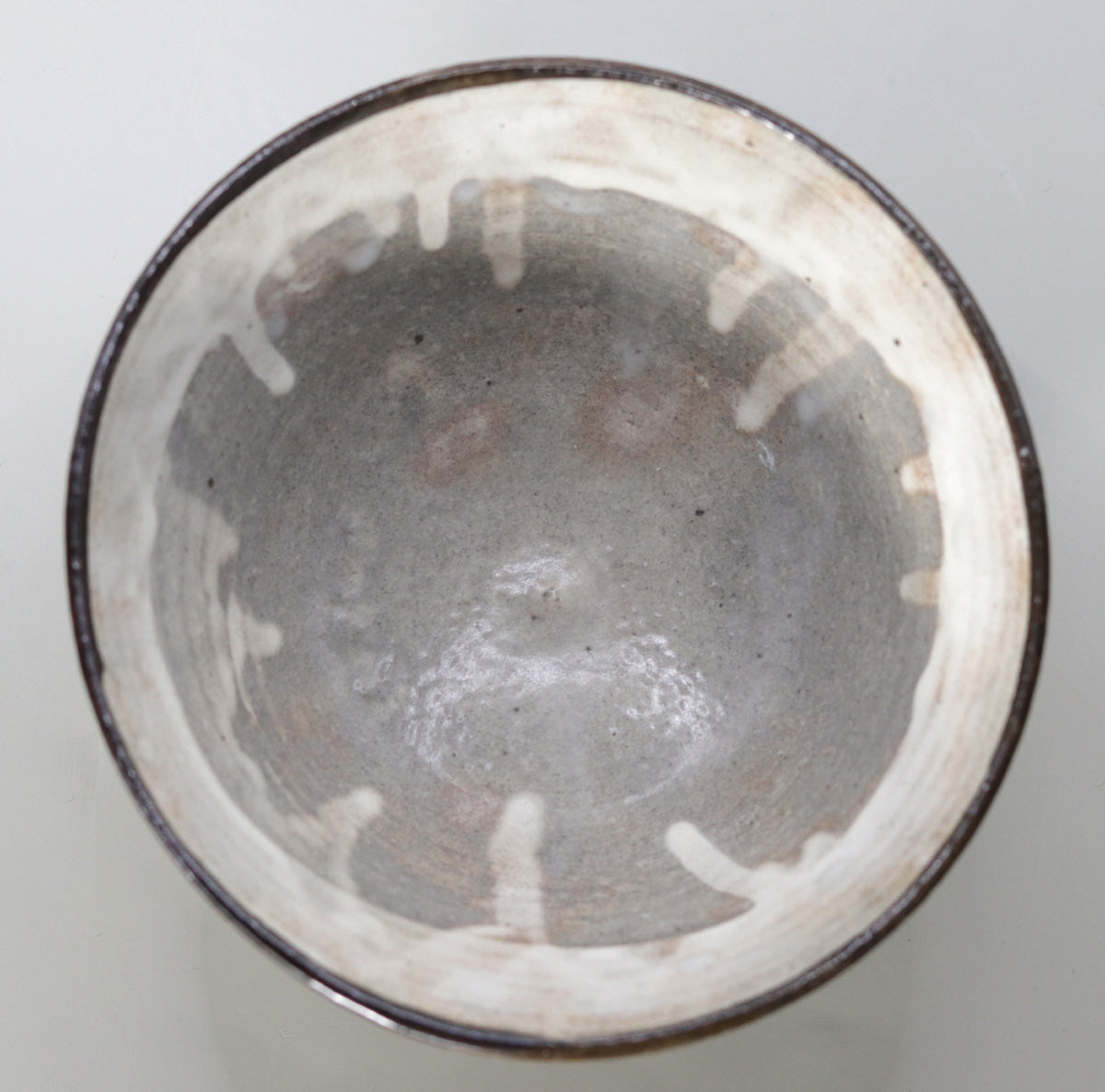
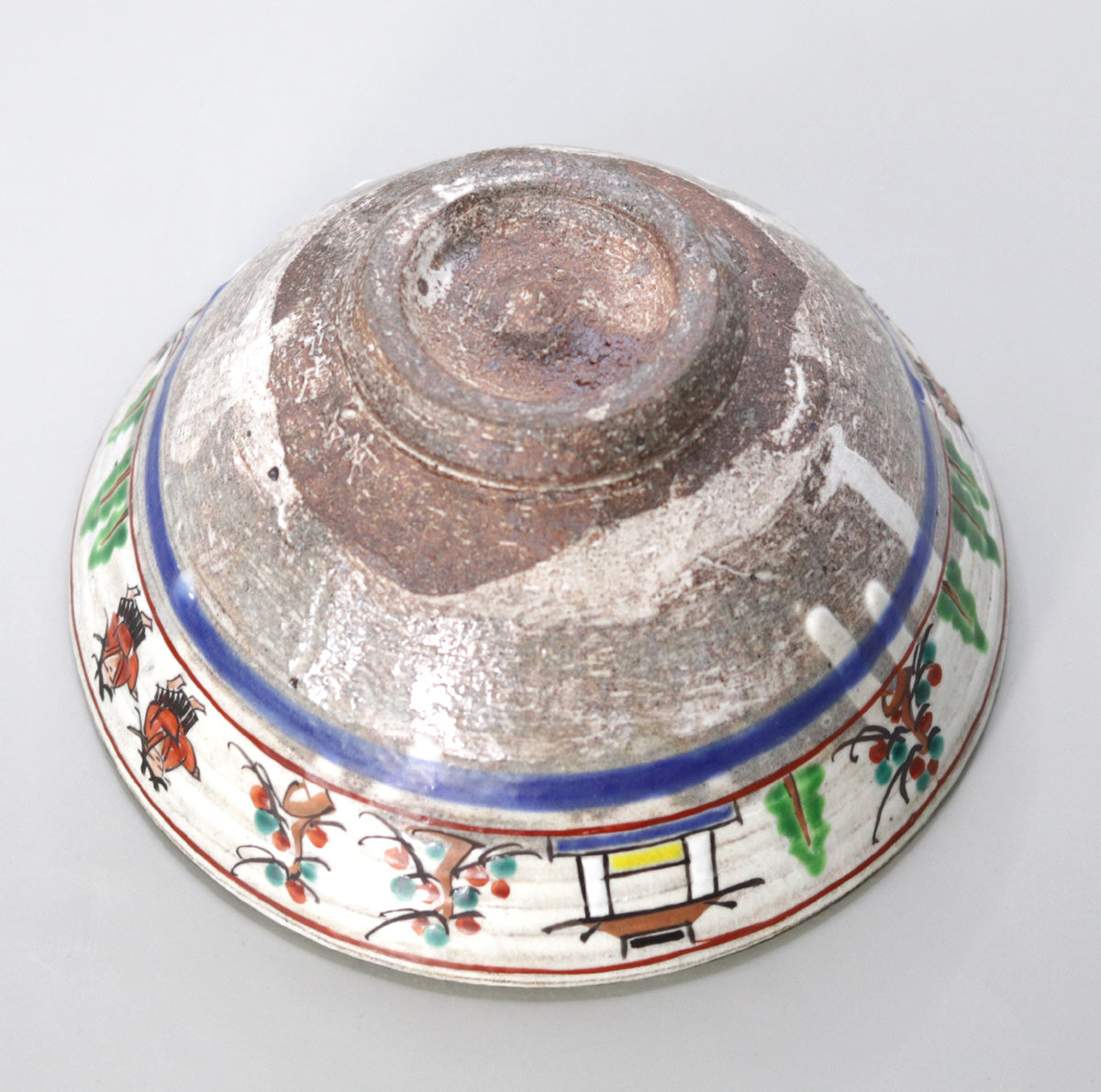
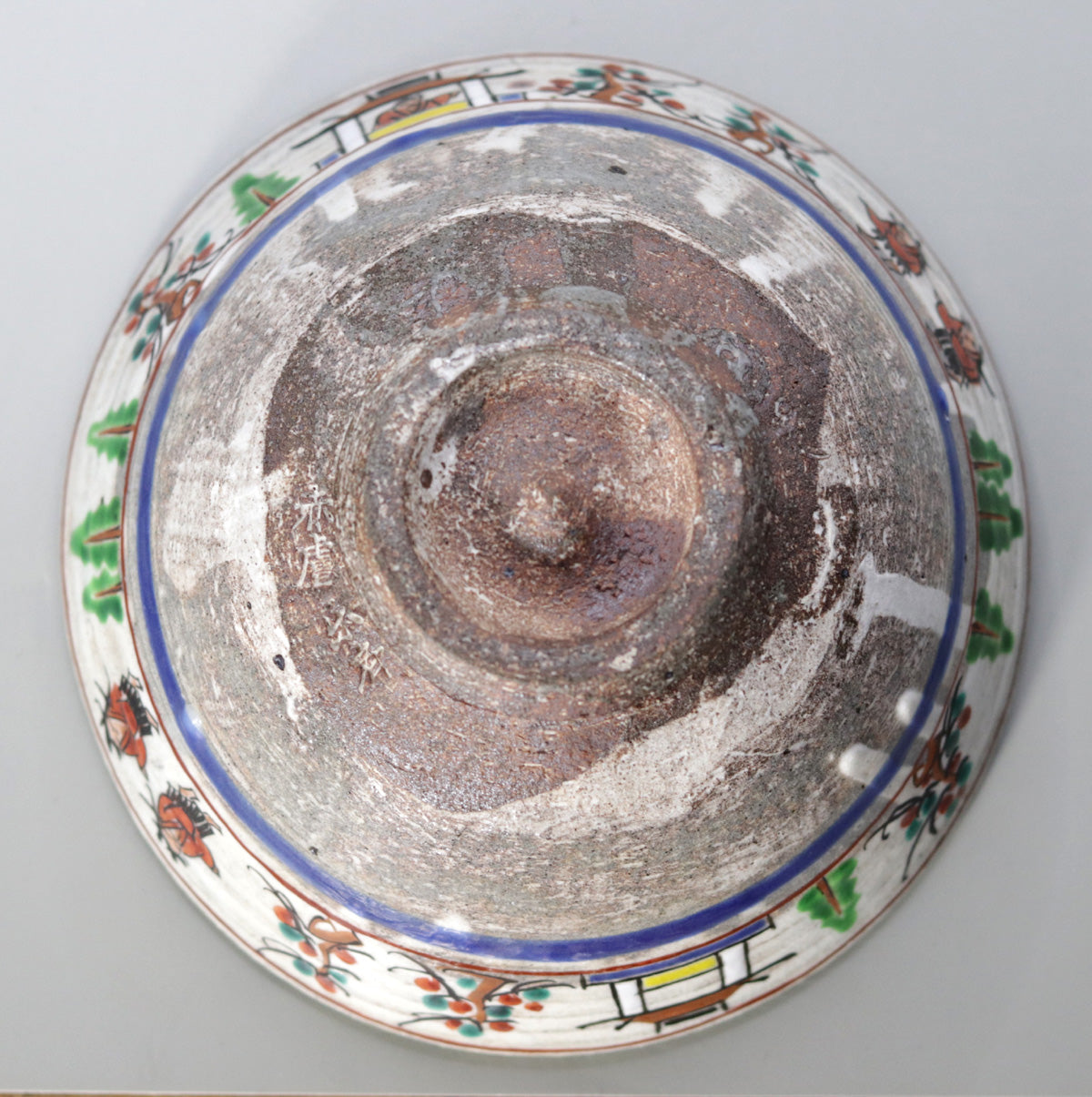
The bowl has a neat shape with a slightly narrower base, and the bowl widens gently from the inside to the rim, allowing the tea whisk to rotate naturally and create fine bubbles. The clay used for the bowl is rough and iron-rich, and the spots and scorches that appear during firing create a "wabi" aesthetic. The bare base is exposed on the lower outside, revealing a rough texture reminiscent of the roughness of Momoyama pottery.
2. Glaze and color design
The entire body is covered in a pale white makeup, and then a transparent glaze is applied on top, resulting in a soft appearance with a warm cream color shining through the white base. The indigo blue gosu belt around the shoulders visually tightens the vessel and creates a striking contrast with the complementary color relationship with the green of the matcha. The rust-colored iron glaze around the rim acts as a "frame" that enhances the saturation of the overglaze.
3. The narrative nature of Narae designs
The Nara paintings on the white strips represent three elements that symbolize the imperial culture of the ancient capital of Nara:
A pavilion for court nobles <br data-start="579" data-end="582">A nobleman in a crimson robe stands behind the bamboo blinds as if listening to gagaku music, bringing the elegance of the Heian period to the tea ceremony.
Evergreen Pine and Plum Blossoms <br data-start="643" data-end="646">The pine represents permanence and longevity, while the red and white dots of the plum blossoms symbolize rebirth and heralds of spring, creating an air of festivity all year round.
The Clown Musician <br data-start="704" data-end="707">The musician (or Bugaku performer) who appears at the end of the obi suggests a musical rhythm to the tea ceremony, and the story progresses with each turn of the tea bowl.
Onishi Rakusai lightly depicts these motifs using extremely fine iron lines and Japanese paints such as copper green, cinnabar, and ochre, creating a sense of continuity reminiscent of a picture scroll.
4. Technical brilliance
Two-layer makeup and wiping off <br data-start="878" data-end="881">In order to intentionally allow the rough surface of the clay to show through thinly, a white makeup is applied and then partially wiped off with a sponge. This creates a mysterious scene reminiscent of a plain with snow remaining on it.
Scenes from layered firing <br data-start="977" data-end="980">Faint traces of layered firing remain on the inside, subtly retaining the "kiln marks" so beloved by tea masters.
Durability of the overglaze <br data-start="1038" data-end="1041">The piece is fired after painting, allowing the colors to sink into the glaze just enough to prevent fading even after years of use.
5. Functional beauty at the tea ceremony
The pure white glaze on the inside is brilliant, and the jade green of the matcha tea shines like a mirror. The blue of the gosu obi and the green of the matcha tea, along with the vermilion, green, and yellow of the exterior, create an impromptu color harmony when held in the hand, enhancing the visual effect the moment it is presented to the guest. The lightweight design and low center of gravity make it easy to handle and practical, preventing it from slipping on the cloth.
The "wabi" of rough clay and the "elegance" of Narae painting. The skillful integration of these two distinct aesthetic sensibilities with the gosu band and iron rim is the true charm of Onishi Rakusai's Narae painting tea bowls. When placed at a tea ceremony, guests will unravel the story as they turn the bowl, savoring the contrast between the clay surface and the colored painting, and will enjoy a "journey through time and space" unfolding within a single bowl.
Share
-
[I will send it to you quickly and carefully]
We carefully package each product in a way that suits it best.
Also, delivery times vary depending on the piece (vessel, etc.).
Items that already come with a box will be shipped within 1-3 days of the order date.
For items that require a box to be made after your order, it will take approximately 30 days for production to be completed and then shipped.
In either case, once we have confirmed your order, we will contact you by email to inform you of the delivery date.
-
[Requests when purchasing pottery]
Even products that look the same may differ slightly in color, shape, size, etc.
The way the glaze is used, the power of the kiln, the firing method, the season, and the humidity also affect the appearance of the pottery.
Please understand the individuality of each piece of pottery and enjoy the unique warmth of handmade.