Persimmon incense holder by Rakusai Onishi
Persimmon incense holder by Rakusai Onishi
Couldn't load pickup availability
Width: 5.7cm x 5.7cm Height: 3.8cm
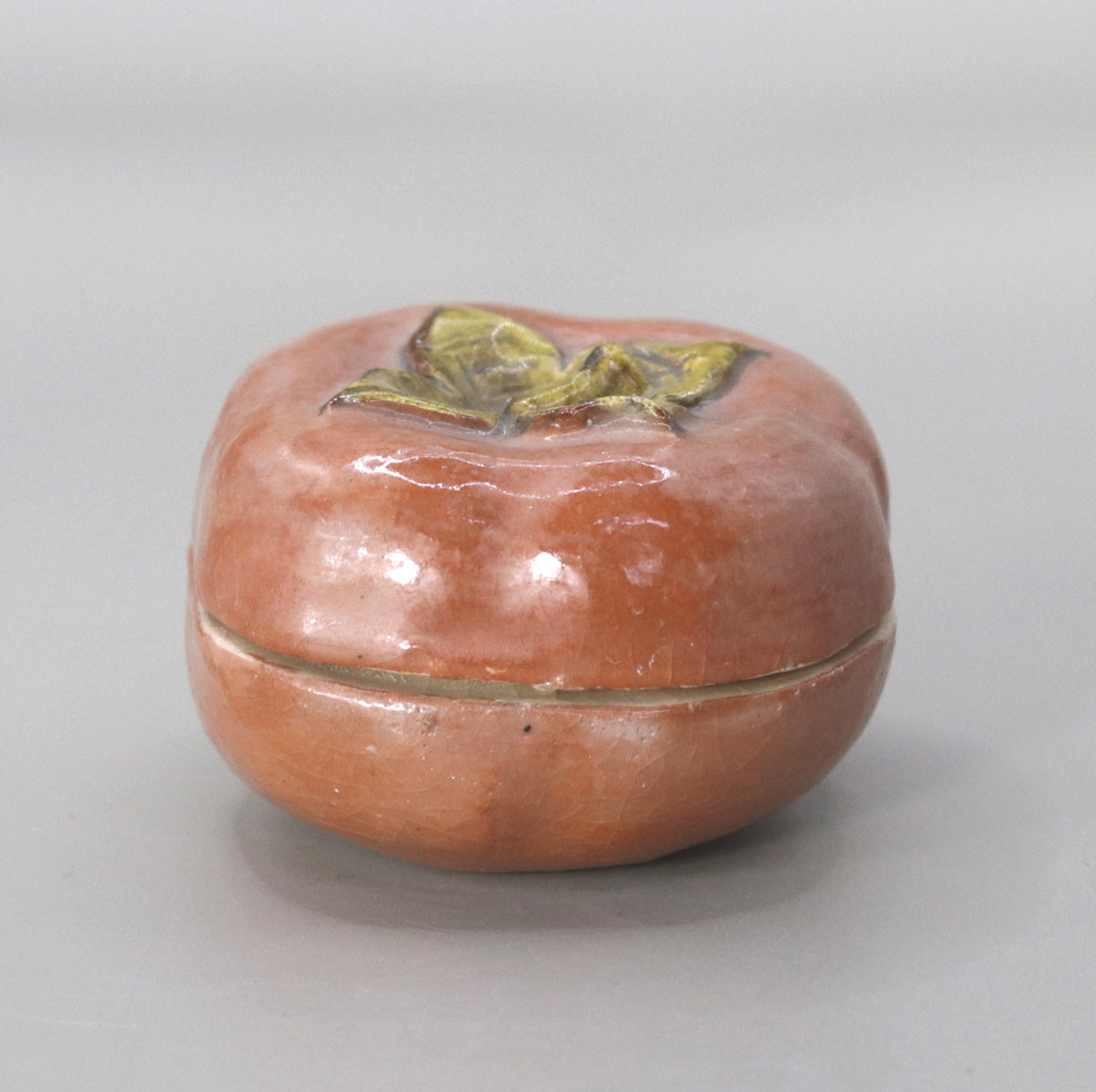
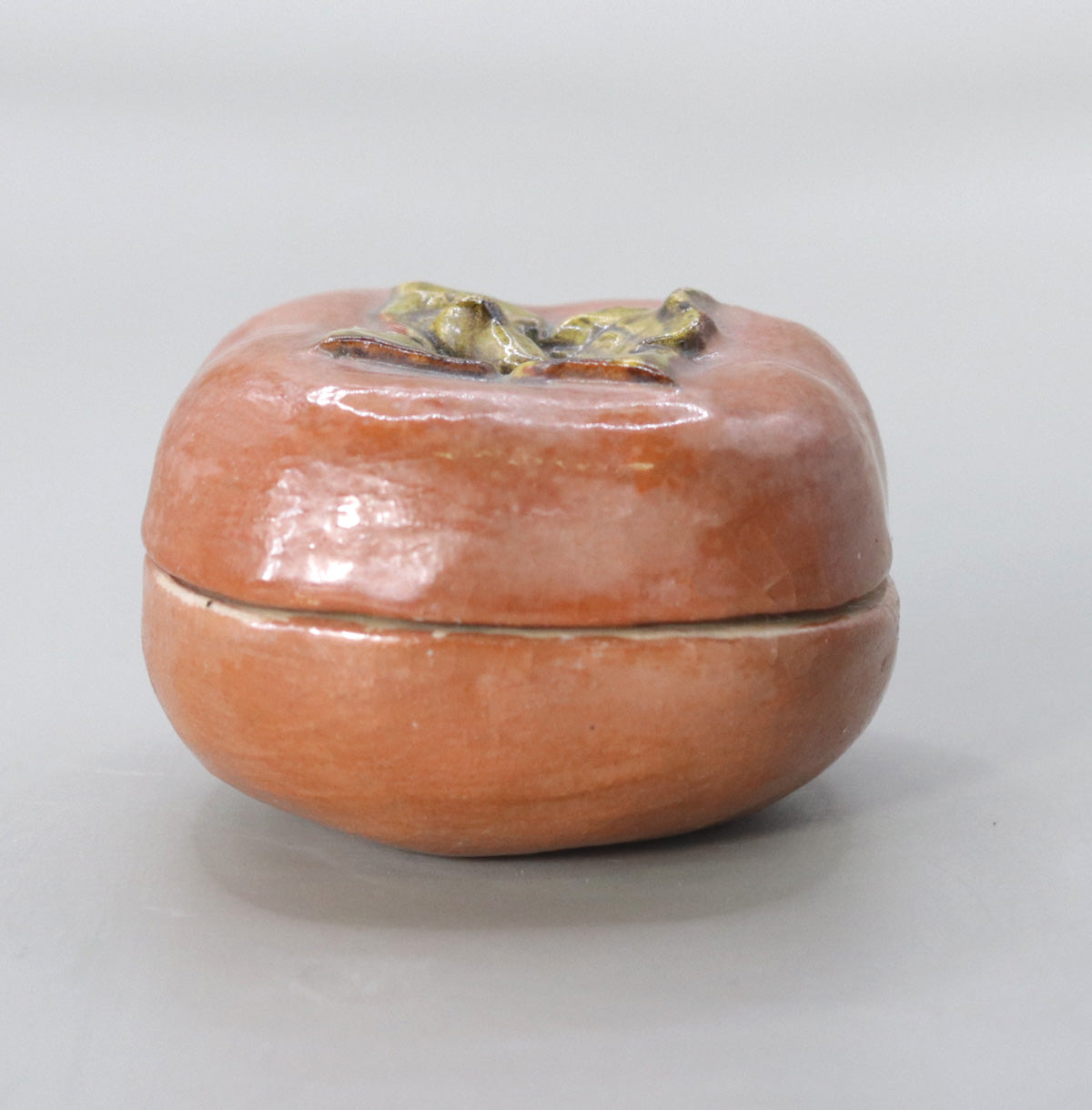
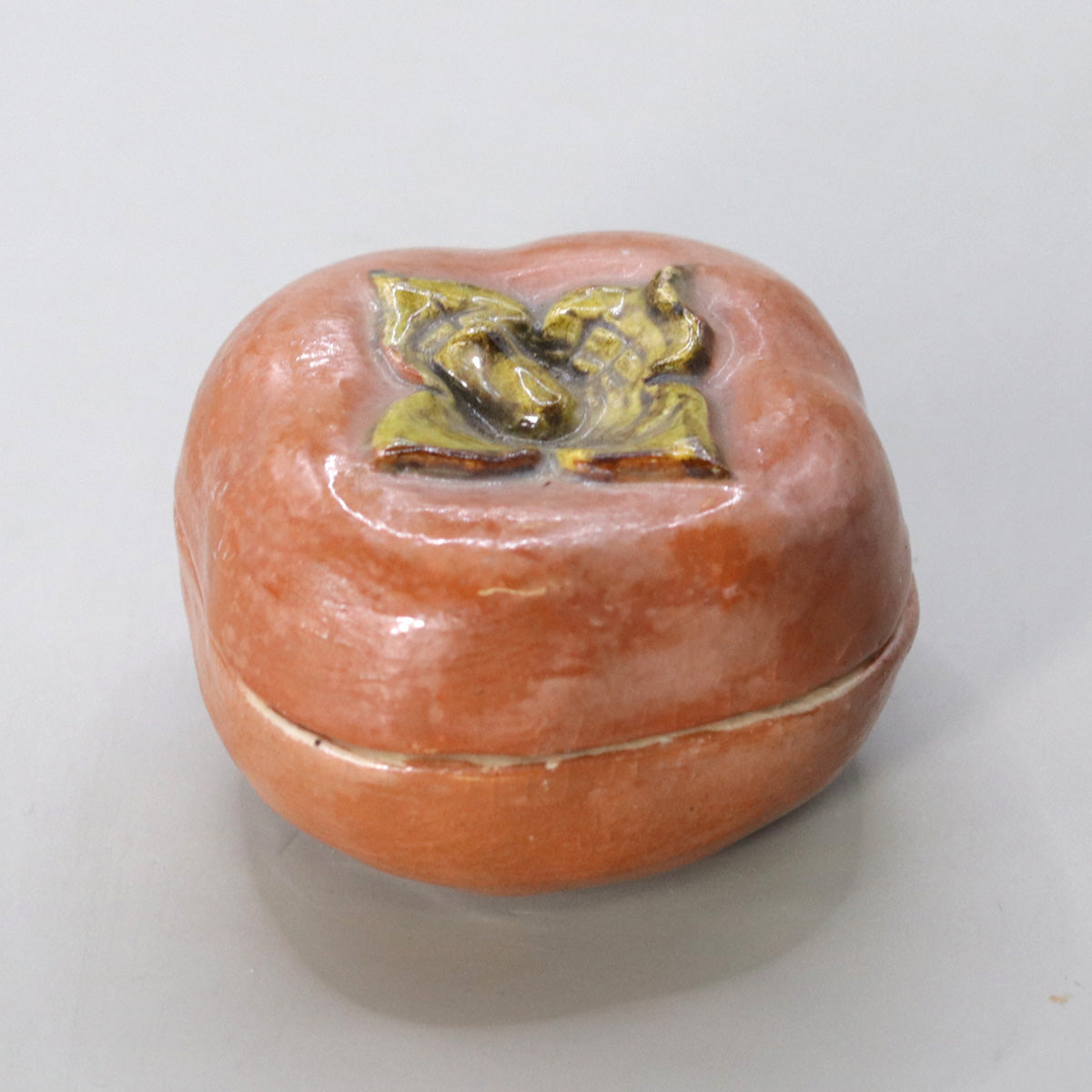
Persimmon incense container (kaki-kogo) by Onishi Rakusai
--The crimson of autumn fruits is in the palm of my hand, and the fragrance of nectar is wrapped around it--
1. Overview of the work
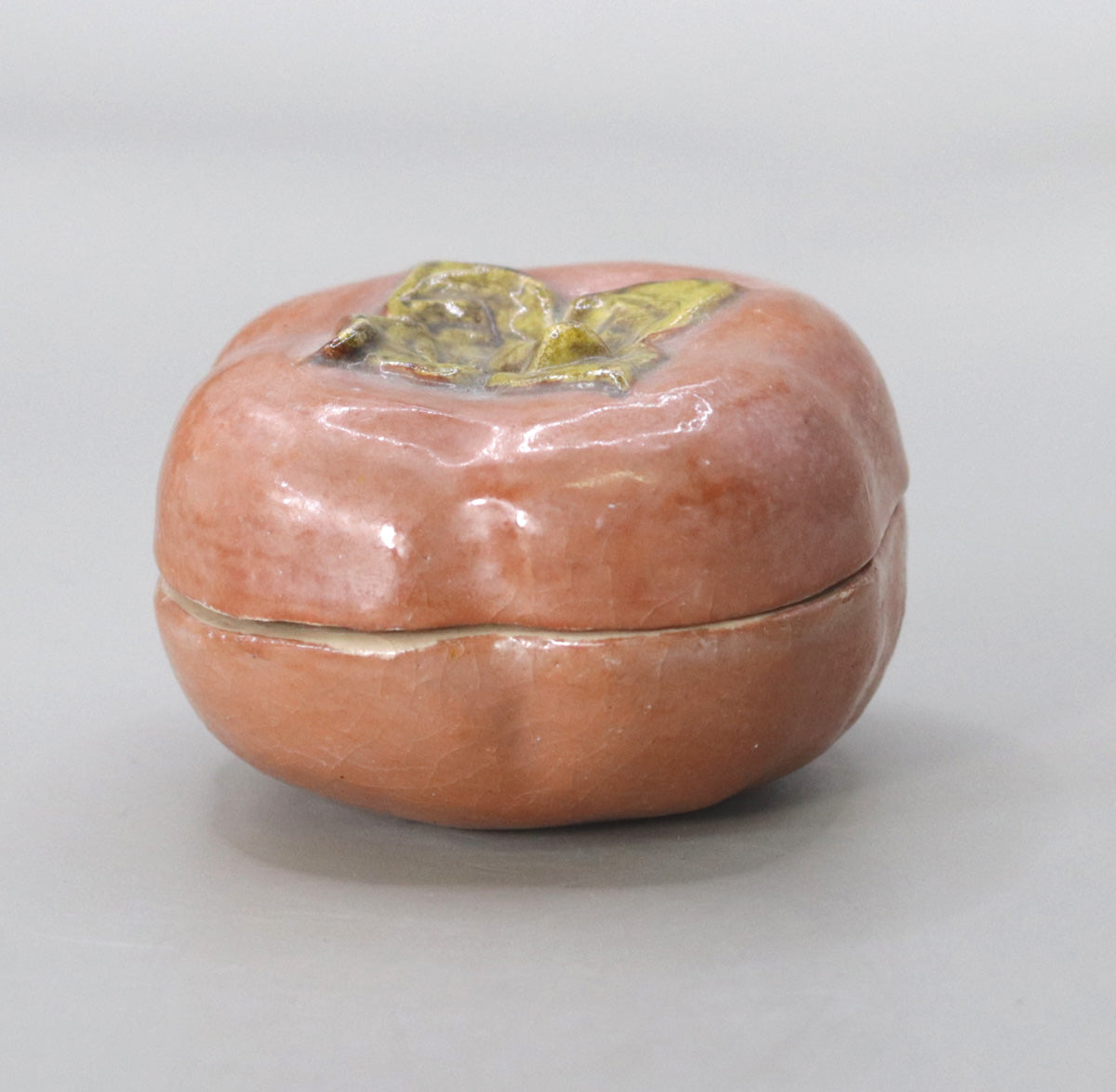
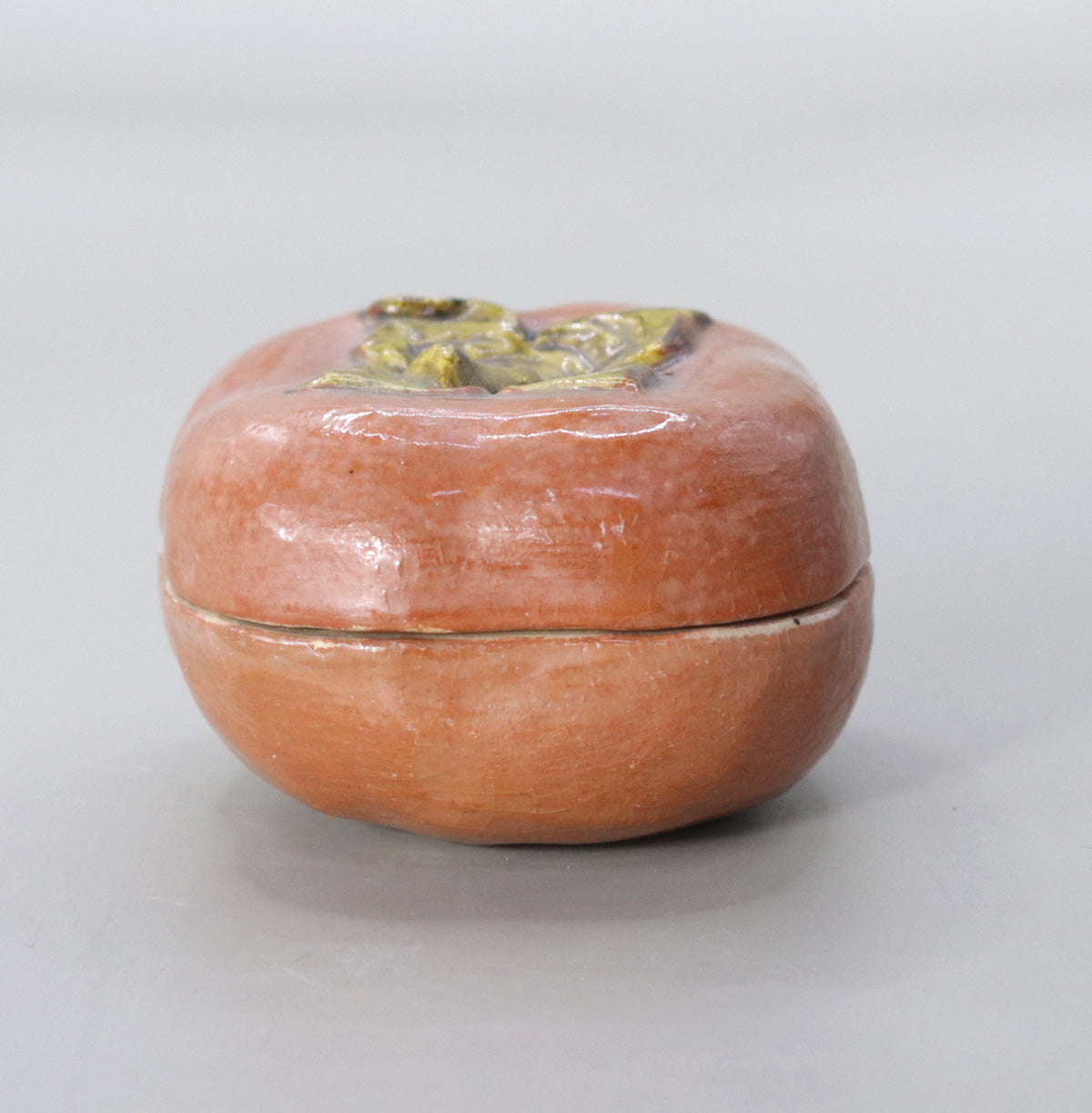
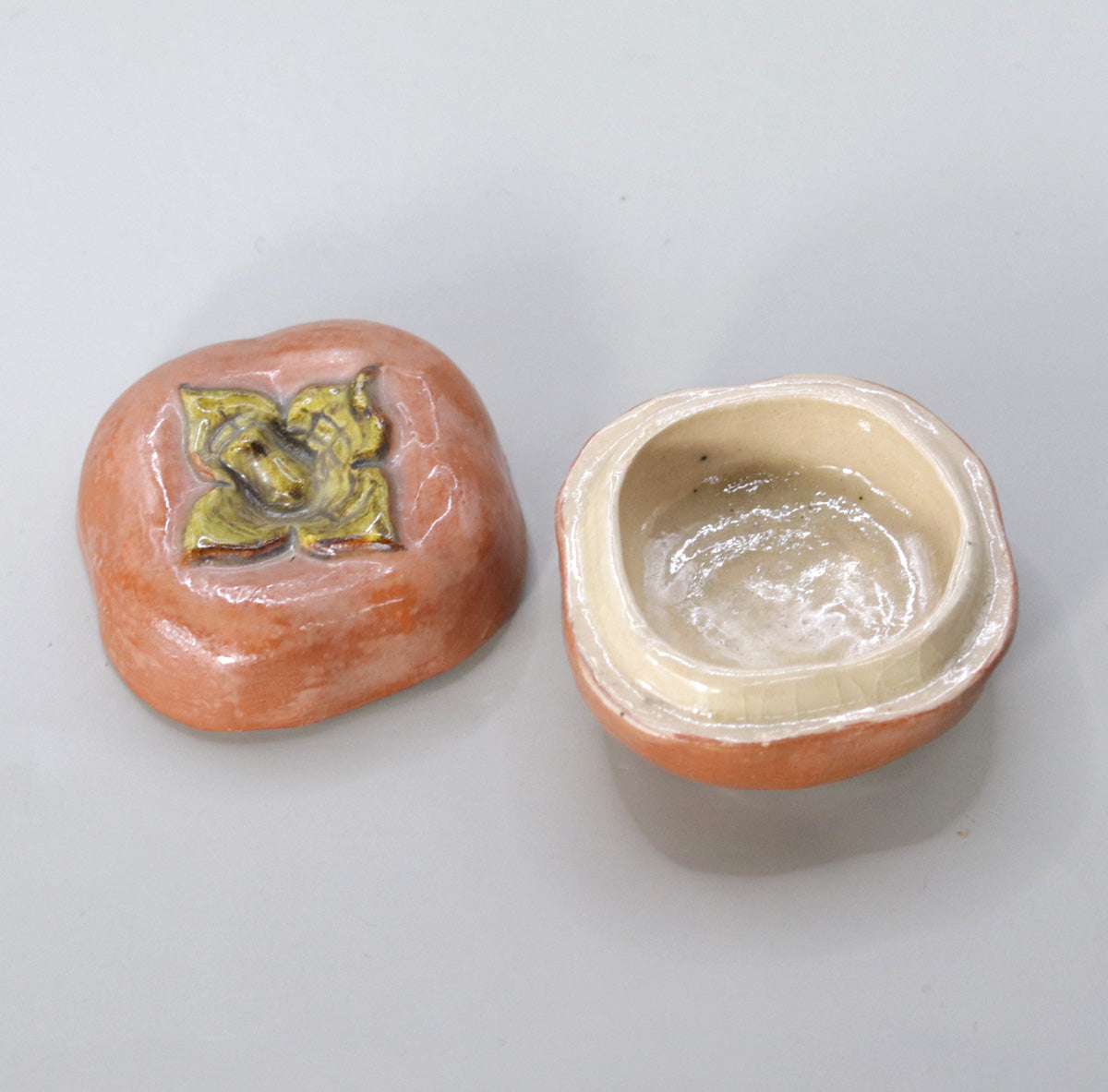
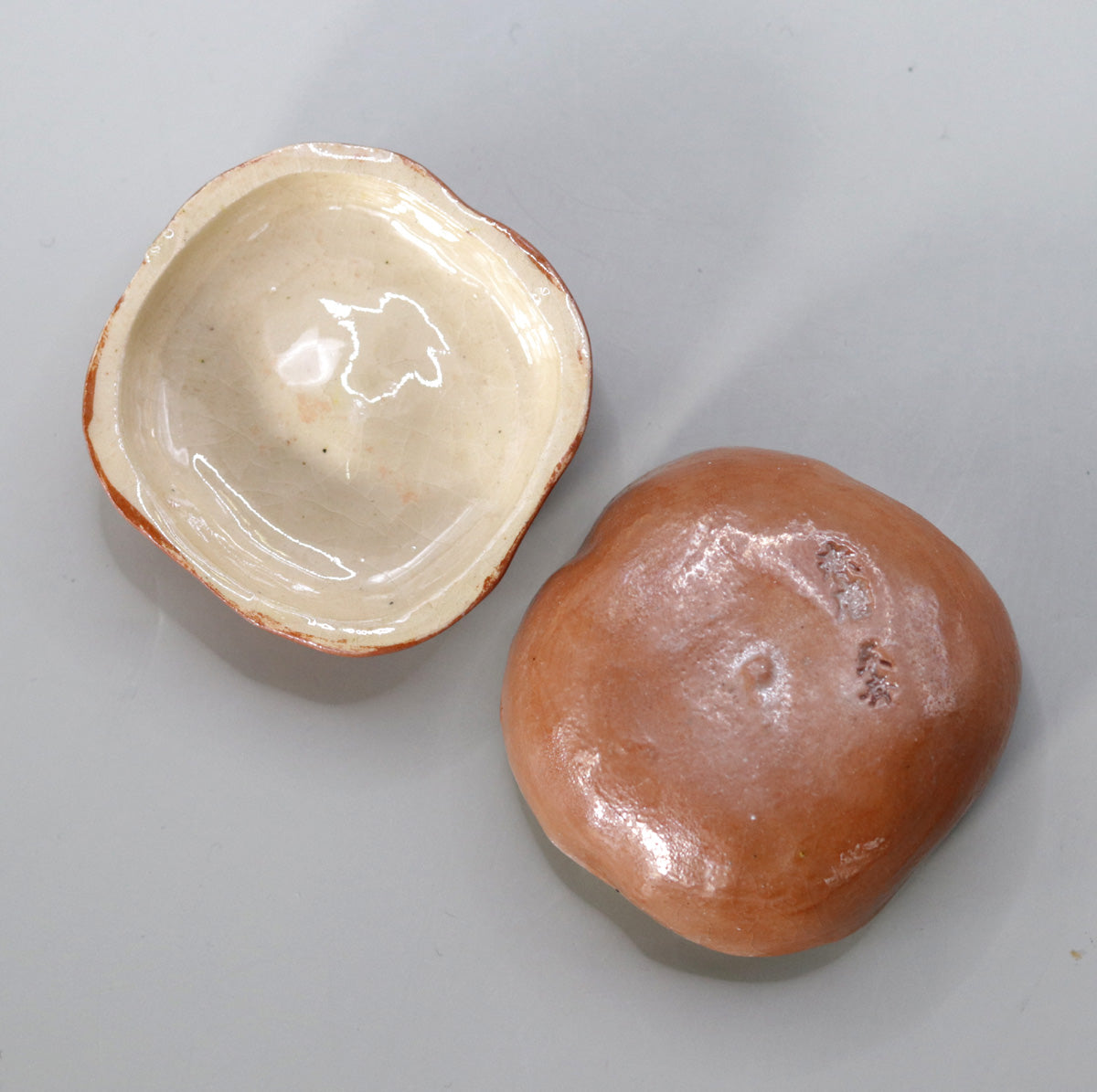
This persimmon-shaped incense holder was created by Yatsushiro Onishi Rakusai of Akahada ware in Nara. Its dimensions are about the size of a clenched fist, and it realistically replicates the smooth firmness, soft indentations, and green of the calyx of a ripe persimmon. The body is divided into two parts, a lid and a body, and is designed to contain the incense. The lustrous, slightly transparent vermilion-orange glaze evokes the fruit itself, absorbing the autumn sunlight.
2. Form and design
| part | Modeling and coloring | Key Points of the Ashi Prize |
|---|---|---|
| pericarp | A thick layer of iron-red glaze is applied, highlighting the cloudiness and crazing in places. | Combining the freshness of ripe persimmons with the wabi taste of natural mottling |
| calyx | Copper-green glaze gives yellow-green to dark green color, and leaf veins are engraved. | The complementary color contrast with the peel emphasizes the three-dimensional effect |
| Lid alignment | The natural curve of the peel is used as a design to hide the steps. | A sense of unity that makes the dividing line of the incense holder invisible |
3. Glaze tones and techniques
The iron- red glaze blends with the iron in the Akahada clay, producing a warm vermilion-orange color when fired in reduction at around 1240°C. The silver-gray color that appears in parts is a result of kiln changes caused by fluctuations in oxidation-reduction, and is used to reflect the subtle color variations on the surface of a ripe persimmon.
Copper-green glaze applied <br data-start="665" data-end="668">The calyx is covered with a feldspar glaze that uses copper as a coloring agent, creating a gradation from dark green in the concentrated areas to yellow-green in the lighter areas.
Sculptural molding <br data-start="734" data-end="737">A unique technique in which two thin, cup-shaped pieces are pulled on a potter's wheel, joined together to form a sphere, and then twisted by hand to even out any irregularities. This ensures ample internal space while achieving a balance that does not impair the plumpness of the exterior.
4. Persimmons and the Tea Ceremony - Cultural Background
A symbol of autumn <br data-start="871" data-end="874">Persimmons are also known as Japan's national fruit, and are such a representative fruit of the season that the saying goes, "When the fruit turns persimmon color, autumn has arrived."
The famous tea room painting "Six Persimmons"
The Zen painting "Six Persimmons" is a representative work that is hung at tea ceremonies in autumn, and has been cherished as a painting that embodies the concept of wabi-sabi.
Offerings for Moon Viewing and Harvest <br data-start="1104" data-end="1107">At the "Moon Viewing" ceremony on the fifteenth night of the lunar month, persimmons are offered alongside chestnuts and sweet potatoes, and are also commonly served at moon-viewing tea ceremonies.
For this reason, persimmon incense containers are especially popular before opening the hearth from mid-autumn to frosty weather , and are used to celebrate the harvest and pray for the safety and prosperity of guests.
5. Arrangements at tea ceremonies
| Tea ceremony season | Tool group proposal | Recommended incense | effect |
|---|---|---|---|
| Mid-autumn and harvest moon (full moon) | Scroll "Clear Wind and Bright Moon", Flowers: Usu and Amago, Tea Bowl: Ido | Kara piece | It reminds me of persimmons changing color under the moonlight. |
| Kannazuki - Opening of the hearth | Scroll "Fukujuumi Muryo", Flower: Persimmon twig | Incense paste "Zuiun" | Celebrating the harvest and the new hearth fire |
| Shimotsuki Shigure Tea Ceremony | Scroll "Once in a Lifetime" Flower: Camellia | Sandalwood + Borneo | Expressing the luster of persimmons washed by light rain |
6. Onishi Rakusai's ceramics philosophy
Onishi Rakusai's motto is to "reflect the climate and auspicious signs of Nara in modern tea ceremony pottery," and he continues to energetically create works that feature seasonal auspicious fruits (persimmons, eggplants, etc.) as well as deer, temple bells, and shibo (decorative ornaments). In this piece, he makes use of the soft texture of the Akahada clay, while condensing the vitality of the fruit through the contrast between the red iron glaze and the green copper glaze. He has achieved a high level of fusion between the aesthetic appeal of a palm-sized sculpture and the functional beauty of an incense holder.
The "Persimmon Incense Container" is a tea set that gently embodies the gratitude that comes with the autumn harvest. Opening the lid releases a sweet fragrance, and the subtle crazing reflected in the vermilion orange peel speaks of the deepening autumn colors that come with the passage of time. Please use it at the turning point of the seasons, and enjoy the warm earthiness and fresh colors that are unique to Onishi Rakusai.
Share
-
[I will send it to you quickly and carefully]
We carefully package each product in a way that suits it best.
Also, delivery times vary depending on the piece (vessel, etc.).
Items that already come with a box will be shipped within 1-3 days of the order date.
For items that require a box to be made after your order, it will take approximately 30 days for production to be completed and then shipped.
In either case, once we have confirmed your order, we will contact you by email to inform you of the delivery date.
-
[Requests when purchasing pottery]
Even products that look the same may differ slightly in color, shape, size, etc.
The way the glaze is used, the power of the kiln, the firing method, the season, and the humidity also affect the appearance of the pottery.
Please understand the individuality of each piece of pottery and enjoy the unique warmth of handmade.