Three Eggplant Lid Rest by Rakusai Onishi
Three Eggplant Lid Rest by Rakusai Onishi
Couldn't load pickup availability
Width: 5.8cm x 5.0cm Height: 5.0cm
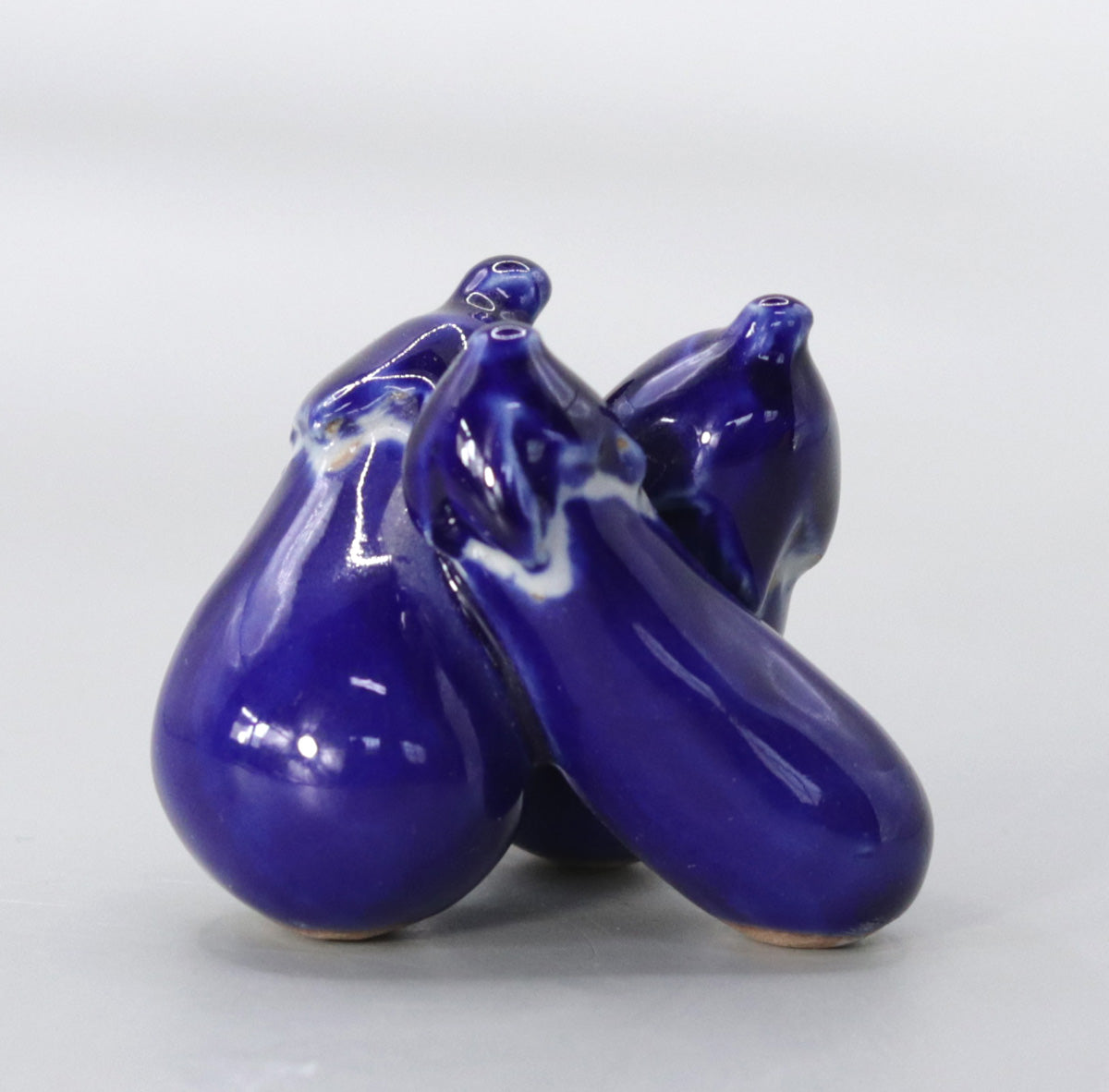
Three-Eggplant Lid Rest (San-Nasubi Futaoki) by Onishi Rakusai
--The auspicious omen "One Fuji, two hawks, three eggplants" is added to the edge of the water jar --
1. Overview of the work
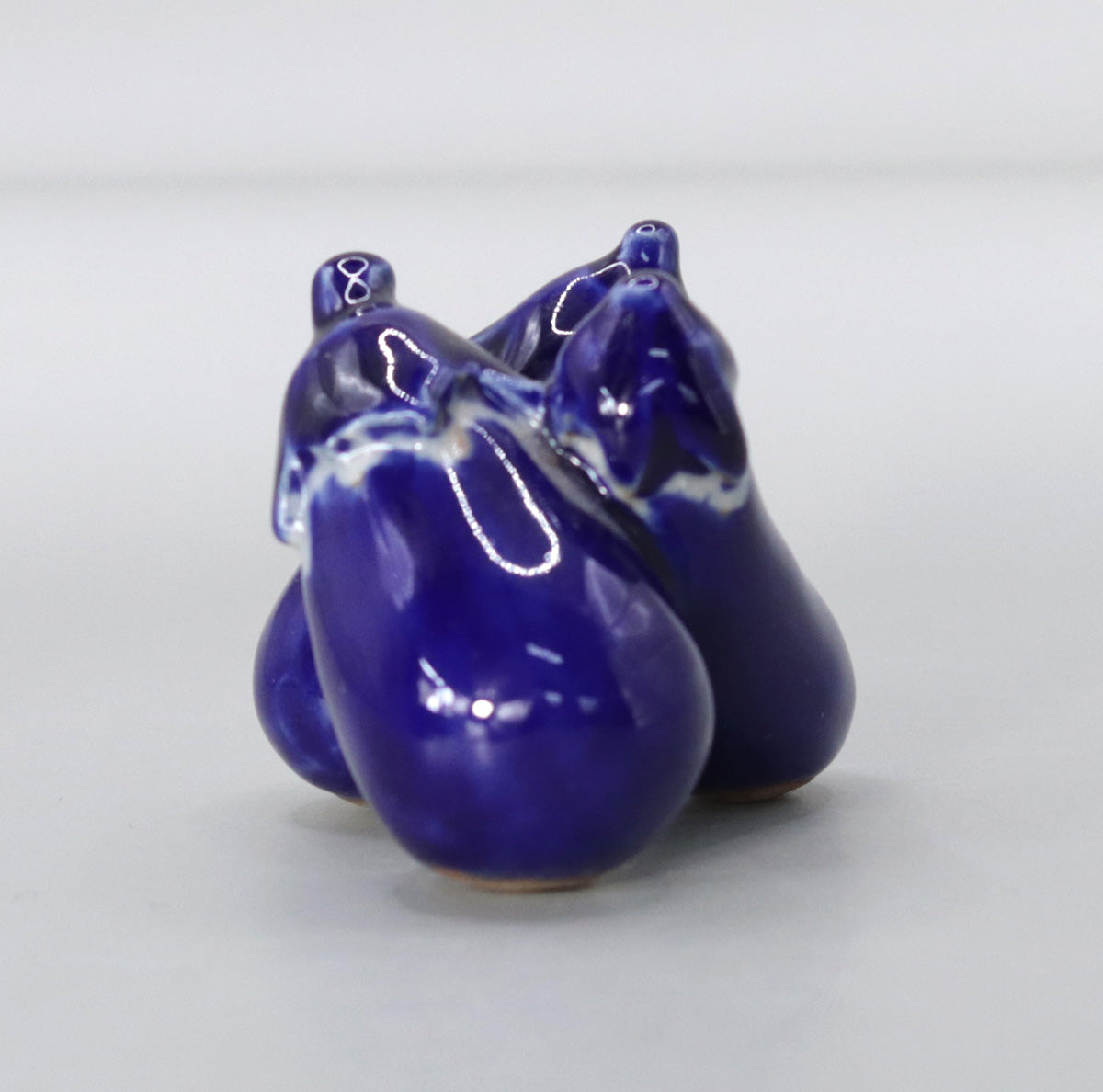
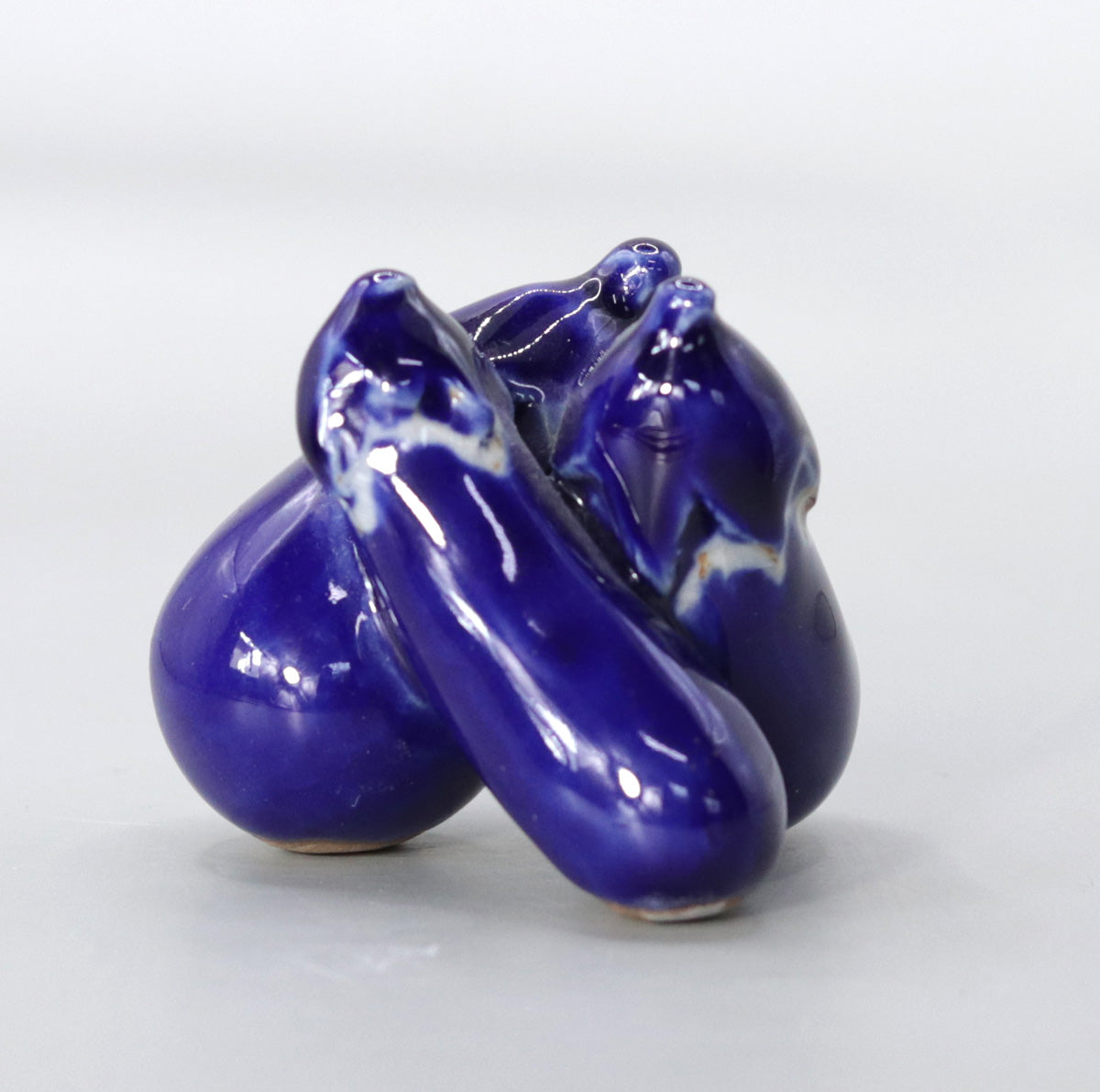
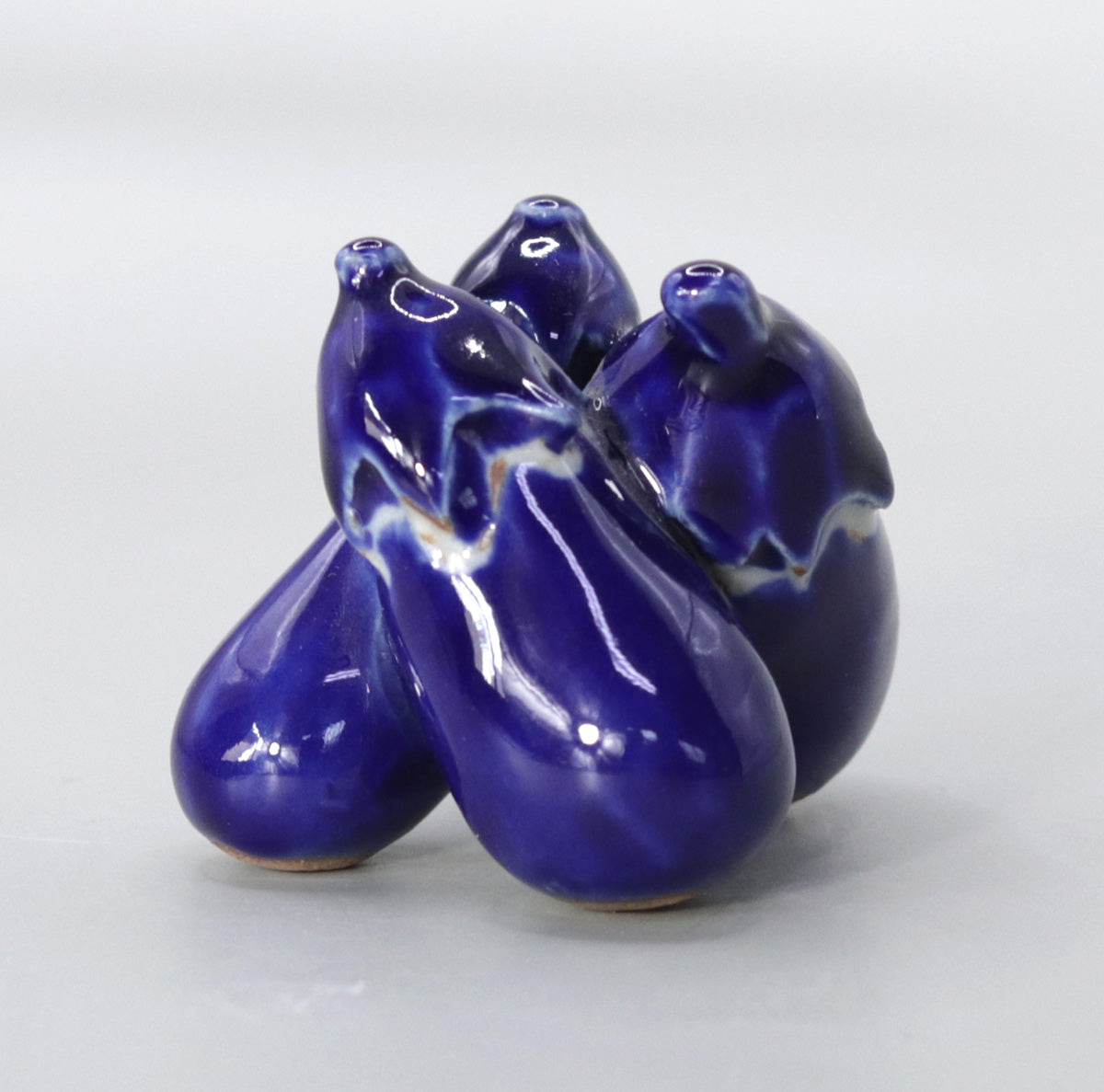
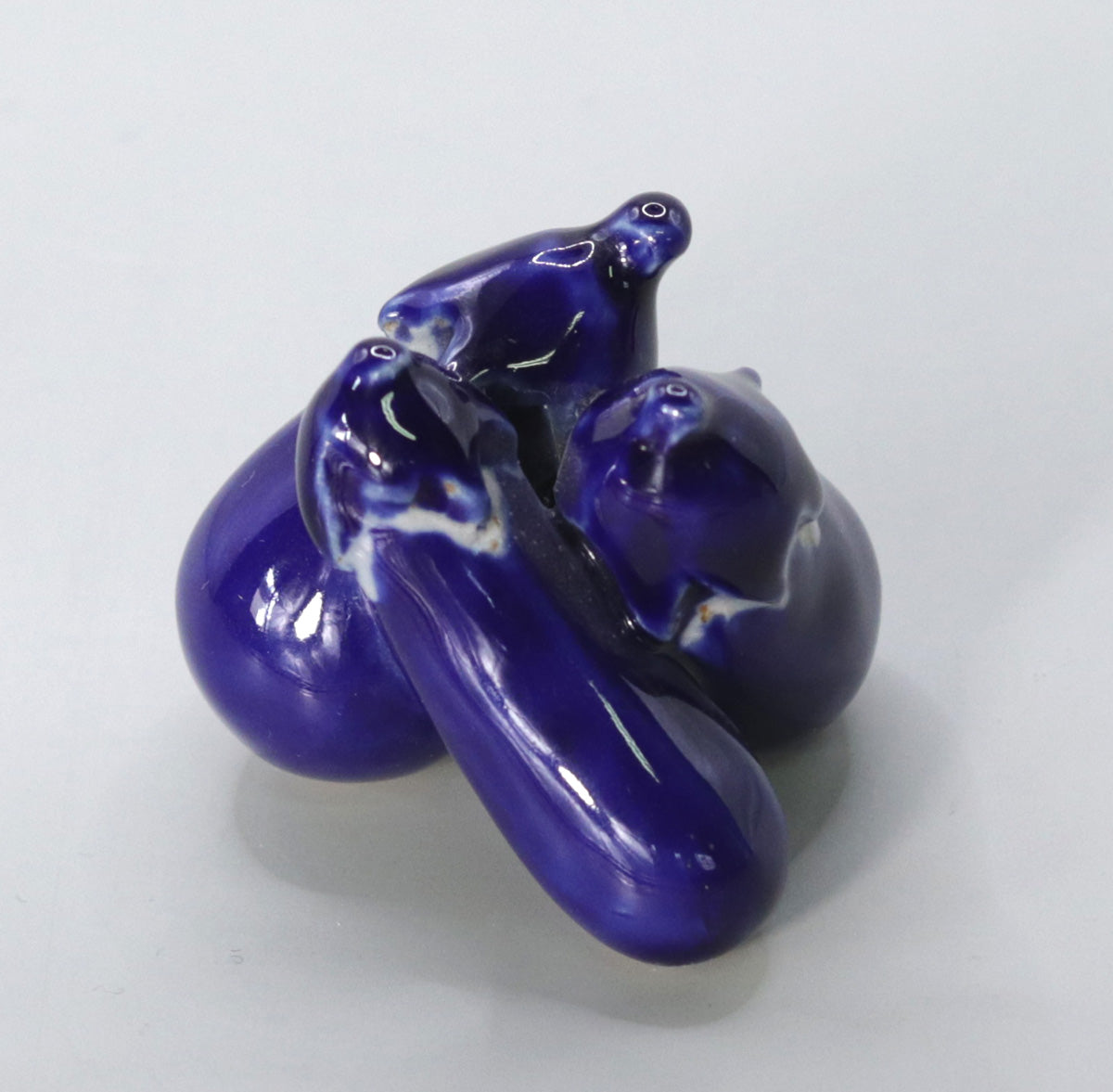
This eggplant-shaped lid rest was created by Onishi Rakusai, a potter of Akahada ware from Nara, in the Yashiro region. The three eggplants nestle together to form the Chinese character "品" (hin), providing a sense of stability that can firmly support the weight of the kettle lid when a ladle is placed on it. While it is a small piece that fits in the palm of your hand, the lustrous color of the deep lapis lazuli glaze gives it a presence that brings a cool breeze to the scenery of the tea room.
2. Beauty of form and function
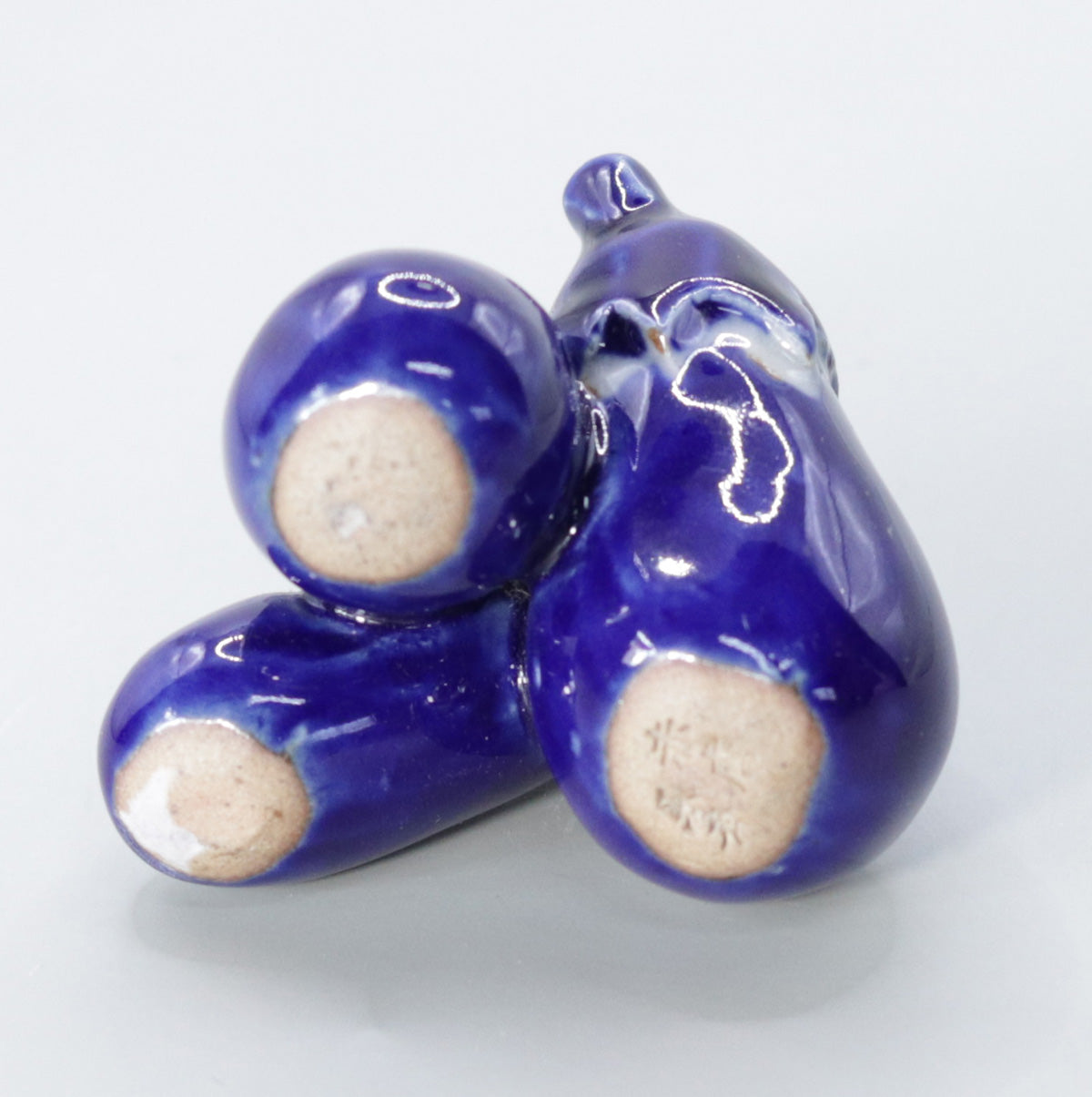
Triangular structure created by three strands <br data-start="273" data-end="276">By bundling three eggplants together, it naturally creates three-point support, so the kettle lid will not tilt no matter which side is facing forward. The fact that it can be used as a decorative piece, whether placed on the floor or placed on top of another, regardless of the front is a practical advantage of the lid rest.
A pronounced stem and a firm body <br data-start="382" data-end="385">The stem of the eggplant is raised sharply to create a visual accent, while the body is slightly more rounded than the real thing, emphasizing its "plump fruit." Highlights change depending on the viewing angle, highlighting the gradation of the lapis lazuli glaze.
3. The beauty of glazes and firing
The lapis lazuli glaze that covers the entire body is a cobalt-based feldspar glaze that has a deep indigo-purple color due to reduction firing at around 1240°C. A thin layer of white glaze is applied around the stem, and the white that flows during firing creates a border that emphasizes the contrast with the purple-blue color. The slight milky opacity that appears is a fusion of the limestone contained in the Akahada clay and the silica in the glaze, creating a scene that resembles the flickering flames.
4. The auspiciousness of eggplant motifs
Eggplants are associated with the word "achieve" (to achieve), and have long been popular as an auspicious motif representing success in life and the fulfillment of one's greatest wishes . Furthermore, as seen in the proverb "One Fuji, two hawks, three eggplants," seeing an eggplant in one's first dream of the New Year is considered a third auspicious sign. Using an eggplant lid rest can also be seen as a way to quietly pray for the fulfillment of guests' aspirations at a tea ceremony.
5. Positioning among the seven types of lid rests
There are seven basic designs for lid rests known as the "Seven Types of Lid Rests," and the eggplant has been a favorite of tea masters since ancient times, along with the gourd, chestnut, trefoil, crab, trivet, and snow wheel. Among these, the eggplant is a playful design that adds a cool and charming touch to the tableware when placed together.
6. Seasonal combinations
| Tea ceremony season | Ideas and production | Recommended flowers/stem | Incense |
|---|---|---|---|
| Midsummer (June to Doyo) | Emphasizing the coolness of the lapis lazuli glaze, it is perfect for "Summer Purification" and Tanabata celebrations. | Tsuyukusa and Sandalwood Scroll "Uninterrupted Clear Stream" | Sandalwood-based incense |
| Early Autumn (Hokkaido ~ White Dew) | "A Scenery Awaiting the Harvest" in line with eggplant season | The axis of a balance pole, flowers of lady's mantle | A piece of aloeswood |
| New Year's first kettle | The lucky charm of "One Fuji, two hawks, three eggplants" | Scroll "Laughter brings good fortune" by Kazue Wakamatsu | Incense paste "Zuiun" |
7. Onishi Rakusai's approach to pottery making
Onishi Rakusai has adopted the philosophy of "bringing the elegance and auspiciousness of Nara into modern tea ceremony pottery," and has enthusiastically created pieces that feature symbols of Yamato such as deer, temple bells, and crested eaves, as well as the auspicious vegetable eggplant. In this piece, he has established a unique aesthetic that blends tradition and modernity by applying a rich lapis lazuli glaze to the soft clay body characteristic of Akahada clay. The prayer for "achievement" is condensed into the small stage of the lid rest, sublimating it into a tool that gently connects host and guest.
Shining in a deep lapis lazuli color, the Three Eggplant Lid Rest is a versatile tea ceremony utensil that combines the coolness of midsummer with the auspicious sign of the New Year. When held in the palm of your hand, a subtle shimmer of light appears on the glazed surface, subtly representing the wish for the fulfillment of the three wishes that the three eggplants grant. Please enjoy Onishi Rakusai's skillful sculpting and the exquisite tones of the glaze at any time of the year.
Share
-
[I will send it to you quickly and carefully]
We carefully package each product in a way that suits it best.
Also, delivery times vary depending on the piece (vessel, etc.).
Items that already come with a box will be shipped within 1-3 days of the order date.
For items that require a box to be made after your order, it will take approximately 30 days for production to be completed and then shipped.
In either case, once we have confirmed your order, we will contact you by email to inform you of the delivery date.
-
[Requests when purchasing pottery]
Even products that look the same may differ slightly in color, shape, size, etc.
The way the glaze is used, the power of the kiln, the firing method, the season, and the humidity also affect the appearance of the pottery.
Please understand the individuality of each piece of pottery and enjoy the unique warmth of handmade.