


White glaze streamline rectangular incense burner Yu Okada
White glaze streamline rectangular incense burner Yu Okada
Couldn't load pickup availability
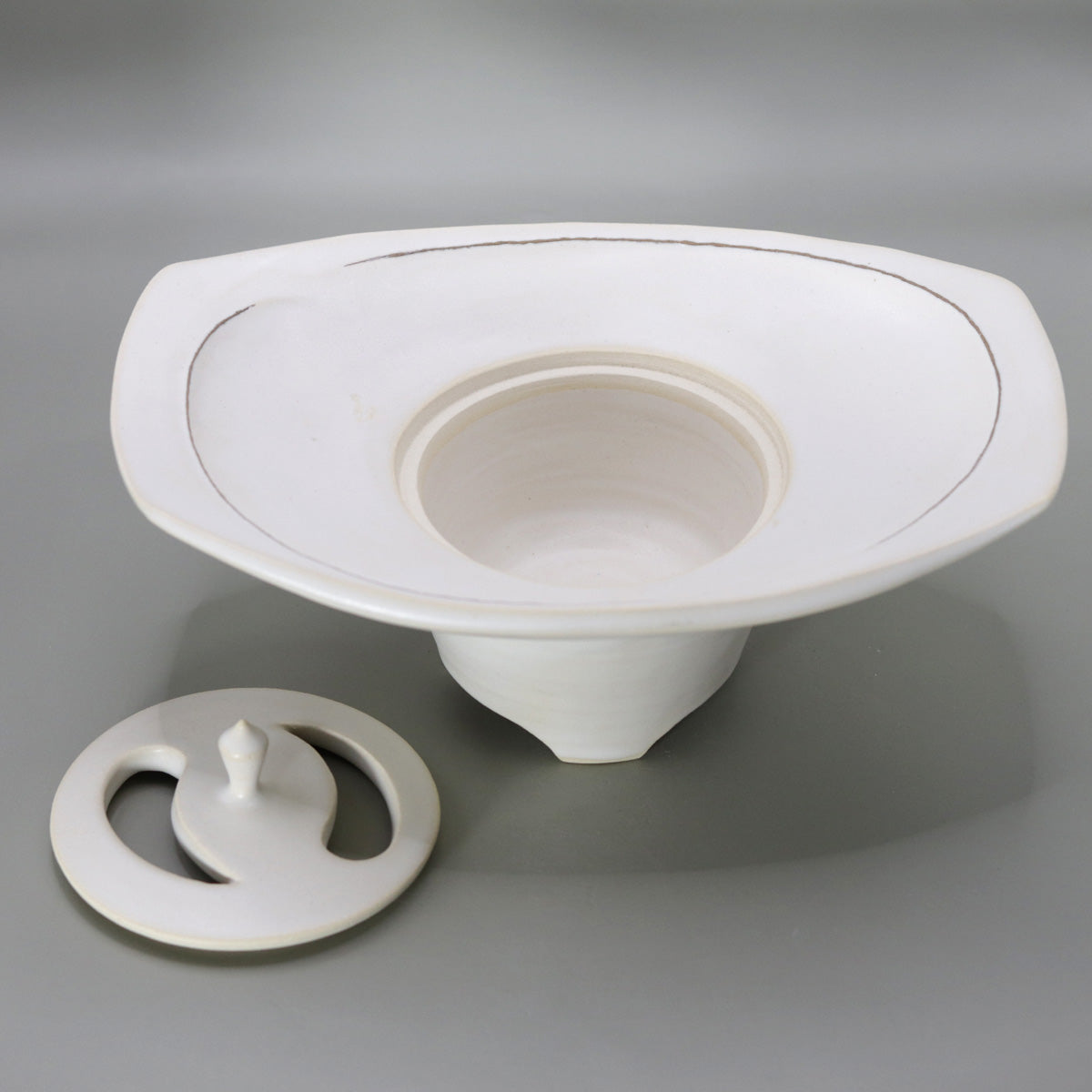
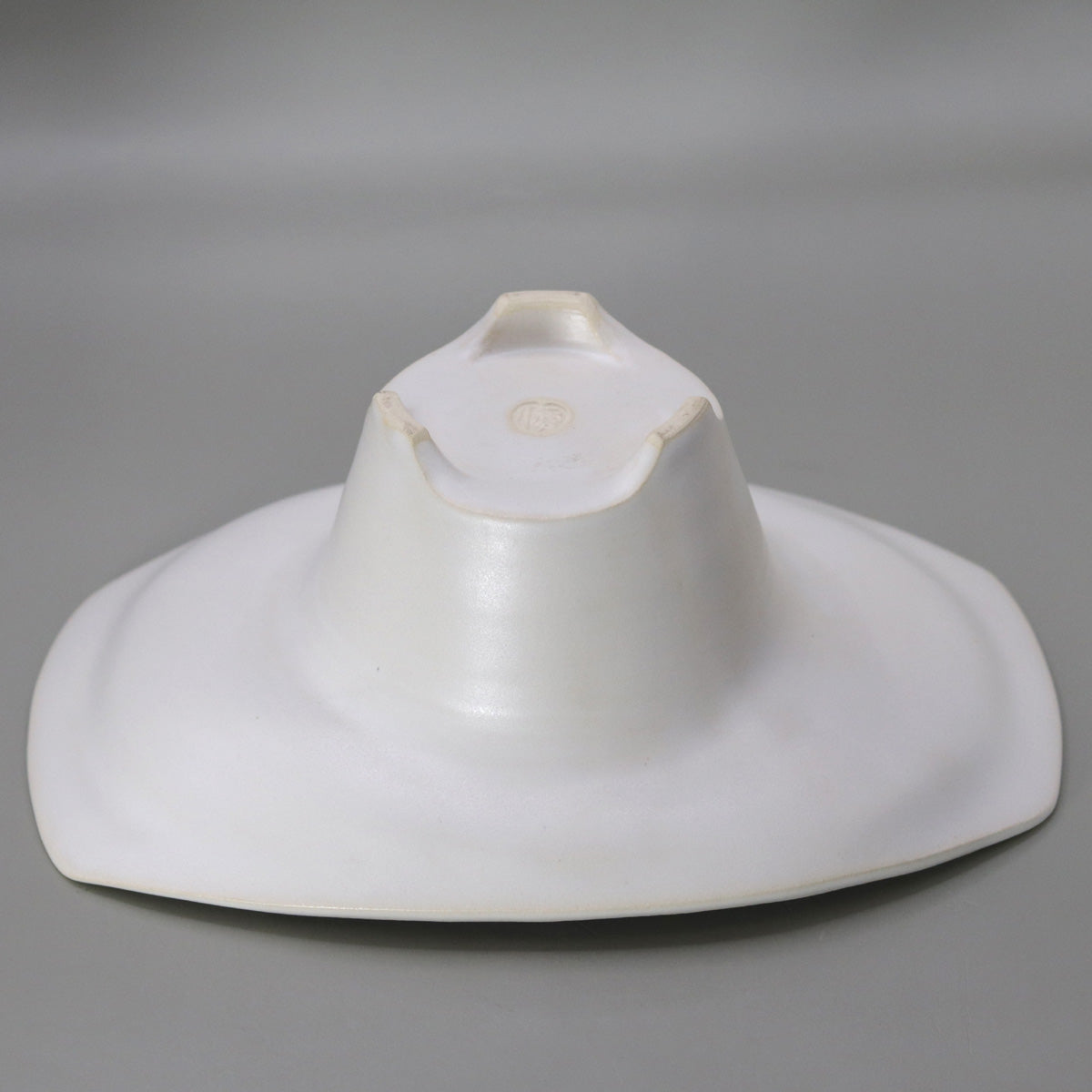
Width: 24.0cm x 17.0cm Height: 9.6cm
White glazed rectangular incense burner with flowing lines (Hakuyu Ryusen Chohokei Koro) by Okada Masaru - "A vessel that evokes the gentle swaying of the moonlit water surface, releasing incense."
The incense burner creates a fragrant atmosphere
In tea ceremonies and the art of incense, incense is burned to set the mood in a room and purify it before welcoming guests. This rectangular incense burner quietly supports such time and space. The pure texture of the white glaze softly reflects light, and the streamlined edges guide the incense smoke as if to indicate a path for the wind.
The tranquility of white glaze
Unlike white porcelain, the white glaze has a soft milky white hue that changes color depending on the light, from ivory to pale snow. A very faint beige outline appears around the edge of the glaze, giving the entire piece a gentle warmth.
Matching at tea and incense ceremonies
| Purpose | Interest | Key points of the production |
|---|---|---|
| Early autumn evening | A stick of sweet Japanese incense such as sandalwood or clove. The rectangular shape of the vessel evokes the horizon at sunset. | When the lights in the seating area are kept low, the shadows from the edges extend onto the tatami mat, creating the long autumn shadows. |
| Night Stories | The sound of aloeswood can be heard faintly, and the silver-colored handles reflect the candle flame. | The incense stand is made of black lacquer and deep rosewood, highlighting the contrast between the serenity and darkness of the white glaze. |
| Kodo practice session | The three fragrances of Kyara, Roku and Managa are alternated in order, and you can enjoy watching the streamlined patterns overlap with the smoke trails. | The incense burner and incense tray are all made of white porcelain, creating a unified "scenery of white." |
History and design background
Japanese incense burners have evolved in a wide variety of forms, from Tang Dynasty celadon tripod incense burners to Momoyama period Raku incense containers and Edo period blue and white incense burners. While this piece is part of that lineage, it also transcends time by combining the simplicity of the white glaze - the "strength of plainness" reminiscent of Rikyu's wabi - with the modernism of flowing lines and the abstract forms of modern ceramics. The engraved lines and ridges capture the fog and wind of Uji's coal mines that Okada Masaru sees every day, creating a quiet resonance between the classic and the modern.
Message from the artist
Okada Masaru's production philosophy is "Let the wind blow gently inside and outside the vessel," and in this incense burner he visualized the movement of the wind through the "openness" of the tripod and the "flow" of the rectangle. The tranquility of the white glaze accentuates the fragrance of the incense, creating a refreshing breeze throughout the room every time it is burned.
Conclusion
The pale white of the white glaze, flowing lines, and the gentle rising of incense smoke - the white glazed rectangular incense burner adjusts the temperature of the space the moment it is placed, adding a clear, lingering impression to the "once-in-a-lifetime" experience of tea ceremony or incense ceremony. Please use it for a long time, along with seasonal fragrant woods and incense, and enjoy the taste of the white glaze, which deepens with time.
Share




-
[I will send it to you quickly and carefully]
We carefully package each product in a way that suits it best.
Also, delivery times vary depending on the piece (vessel, etc.).
Items that already come with a box will be shipped within 1-3 days of the order date.
For items that require a box to be made after your order, it will take approximately 30 days for production to be completed and then shipped.
In either case, once we have confirmed your order, we will contact you by email to inform you of the delivery date.
-
[Requests when purchasing pottery]
Even products that look the same may differ slightly in color, shape, size, etc.
The way the glaze is used, the power of the kiln, the firing method, the season, and the humidity also affect the appearance of the pottery.
Please understand the individuality of each piece of pottery and enjoy the unique warmth of handmade.