Crane incense holder by Rakusai Onishi
Crane incense holder by Rakusai Onishi
Couldn't load pickup availability
Width: 7.2cm x 4.0cm Height: 4.5cm
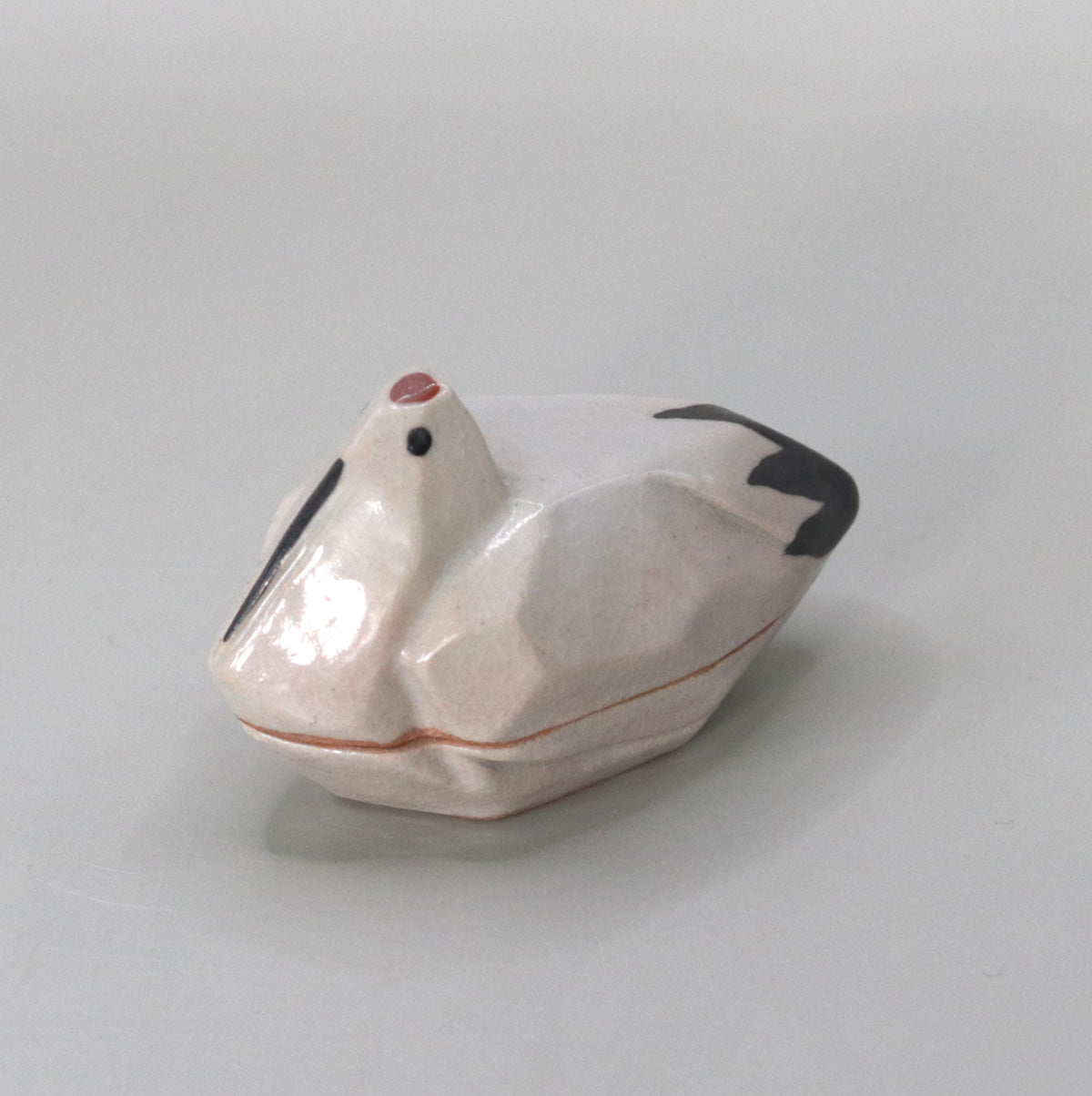
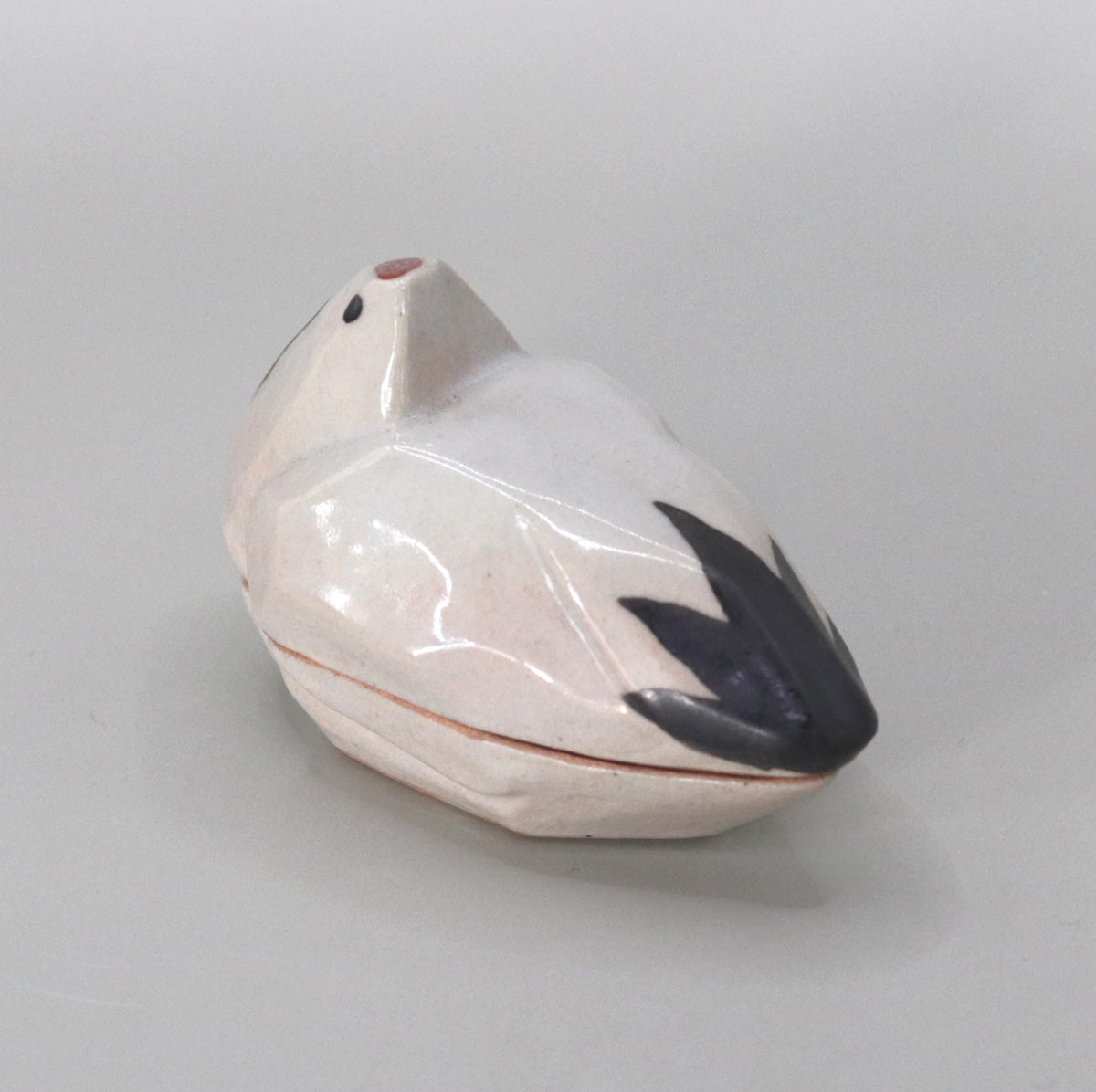
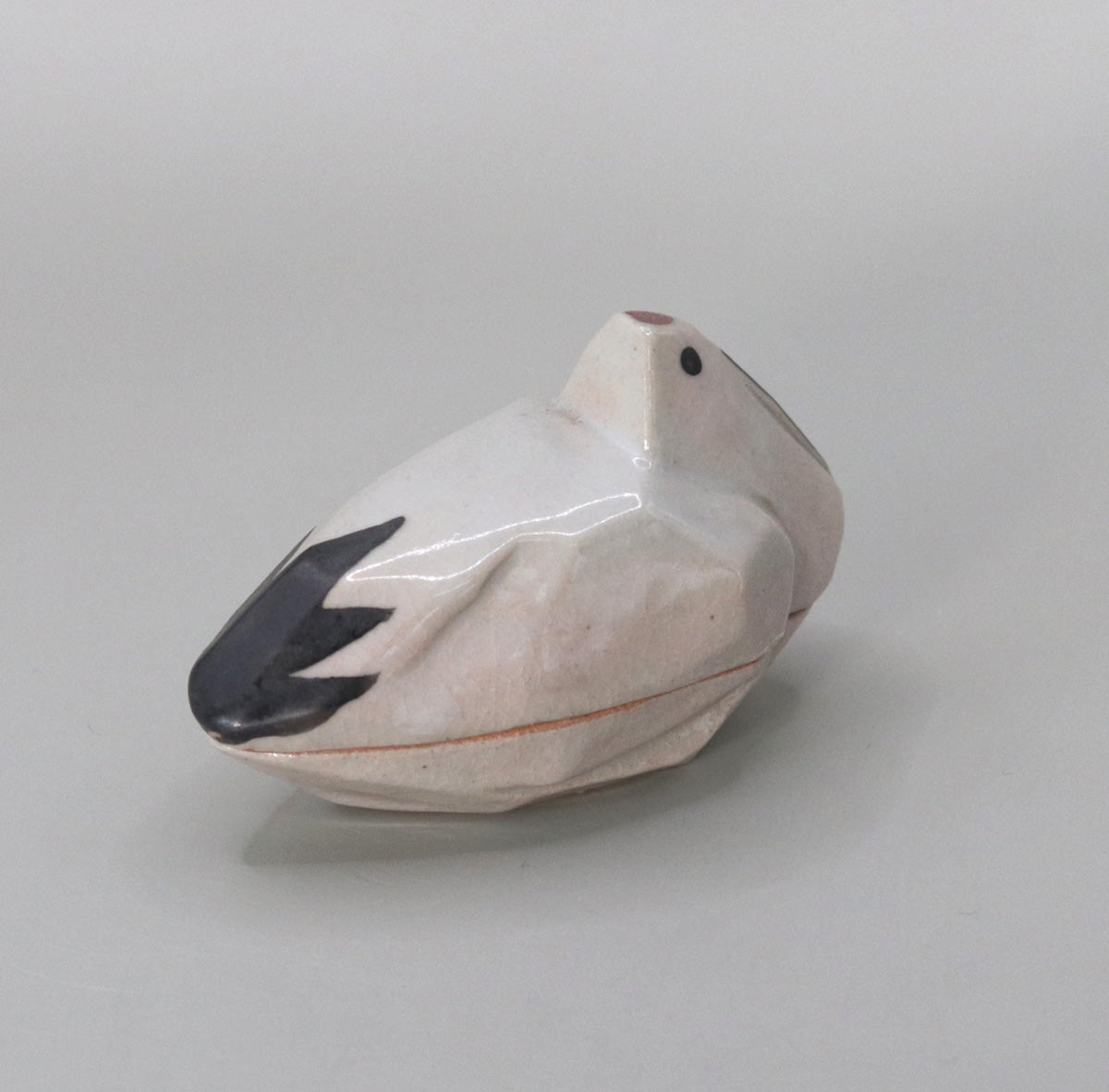
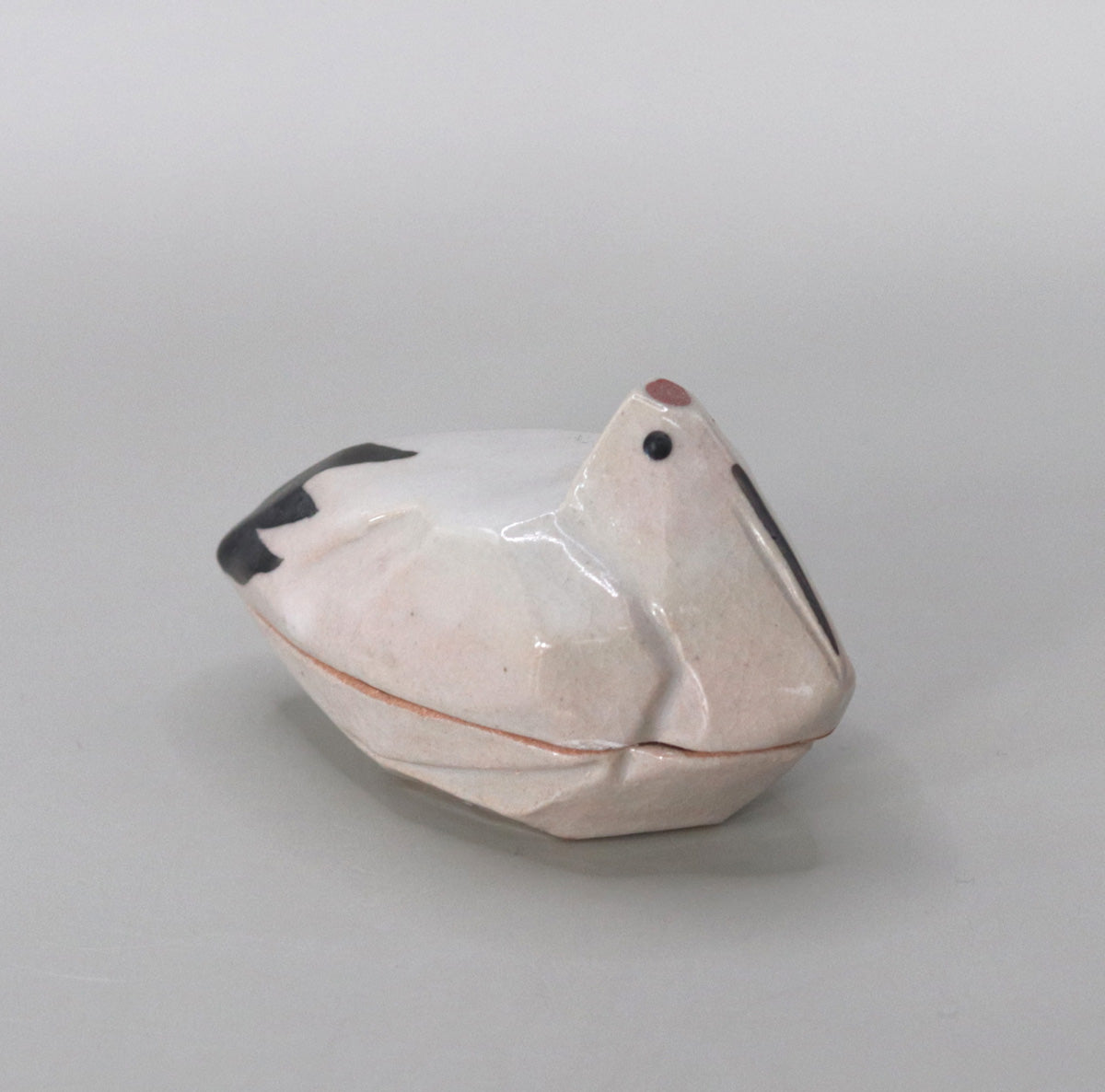
This piece by Onishi Rakusai is an incense holder with a crane motif, known as an auspicious bird. The angled, polyhedral shape and minimalist brushstrokes are skillfully combined to create an abstract design that is both delicate and refined. Below, we will introduce the appeal of this piece in detail from five perspectives.
1. Beauty of Form - Refinement of Polyhedral Form
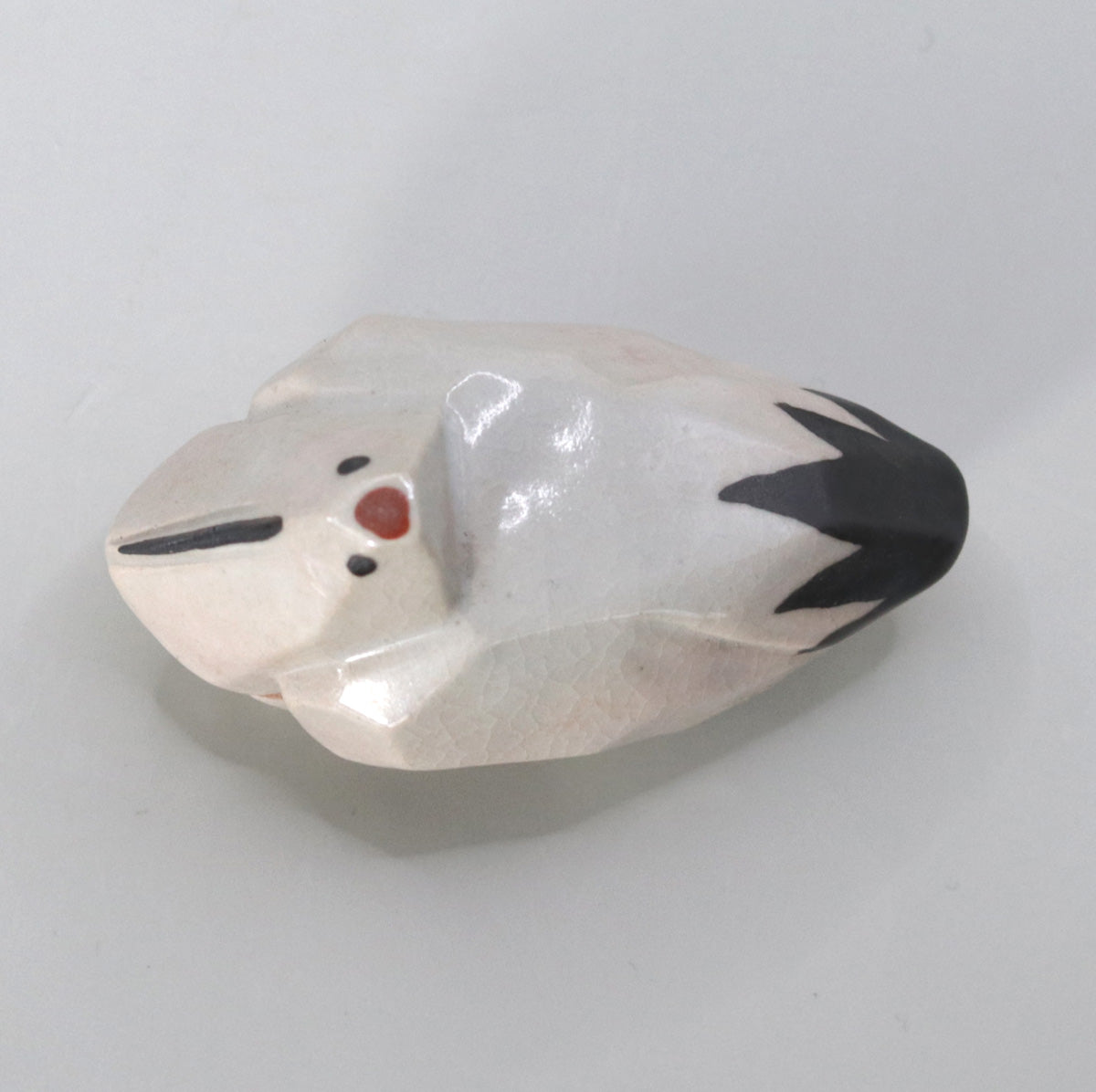
Sculptural Form <br data-start="210" data-end="213">Sharp chamfers are applied from the body to the tip of the tail, and the surface reflects light beautifully whenever it hits it. This creates a sense of movement that makes you feel like a crane is flapping its wings, even though the figure is still.
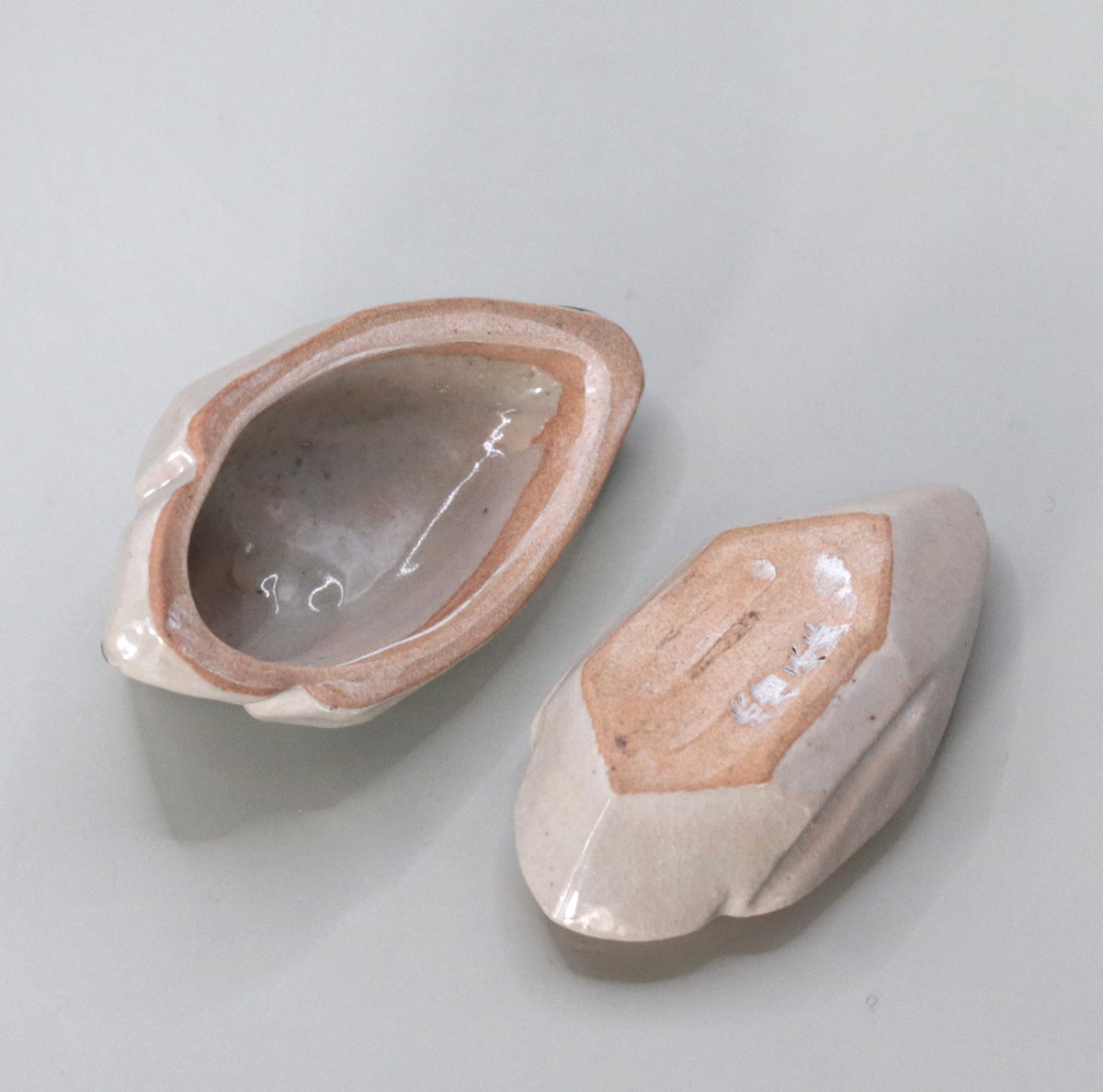
Low center of gravity for stability <br data-start="318" data-end="321">The base is designed to be wide, making it practical and less likely to tip over even if the lid is opened and closed repeatedly while using incense charcoal for tea ceremony.
The ridge from the neck to the beak <br data-start="387" data-end="390">The neck rises in a straight line, and a single ridge that naturally connects to the beak expresses the elegance of the crane while maintaining a balance between realism and abstraction.
2. Glaze and coloring - Serene white and symbolic colors
The texture of the soft white glaze <br data-start="511" data-end="514">The glaze that envelops the body is a milky white with a slight hint of pink, and the fine crazing caused by reduction firing creates a subtle shadow.
The crane's crane, a symbol of the crane, is depicted with a single spot of vermilion pigment, and the surrounding area is raised to emphasize its three-dimensionality and luster.
Ink drawing of the beak and tail feathers <br data-start="650" data-end="653">The beak, boldly drawn in iron-based black glaze, and the black brush marks on the tail feathers add a sharp tension to the overall tranquility and serve to balance the center of gravity of the painting.
3. Technique - Hand-formed molding and overglaze firing
Hand-twisted as a single piece <br data-start="764" data-end="767">The body is hand-twisted into a block, and then carved into a polyhedron. By deliberately leaving the carving marks, the roughness of the material and the artist's breath are made visible.
Double bisque firing and clear glaze application <br data-start="852" data-end="855">After molding, the piece is bisque fired twice to stabilize the glaze's water absorption before a clear glaze is applied, giving the glaze surface a uniform luster.
Low-Temperature Overglaze Painting <br data-start="927" data-end="930">The red and black overglaze paint is fired at 750-800°C to ensure the freshness and durability of the colors. In particular, the brushwork on the beak is painted with a "kaeshi brush," which quickly returns the paintbrush, resulting in sharp, crisp lines.
4. Functionality for tea ceremonies
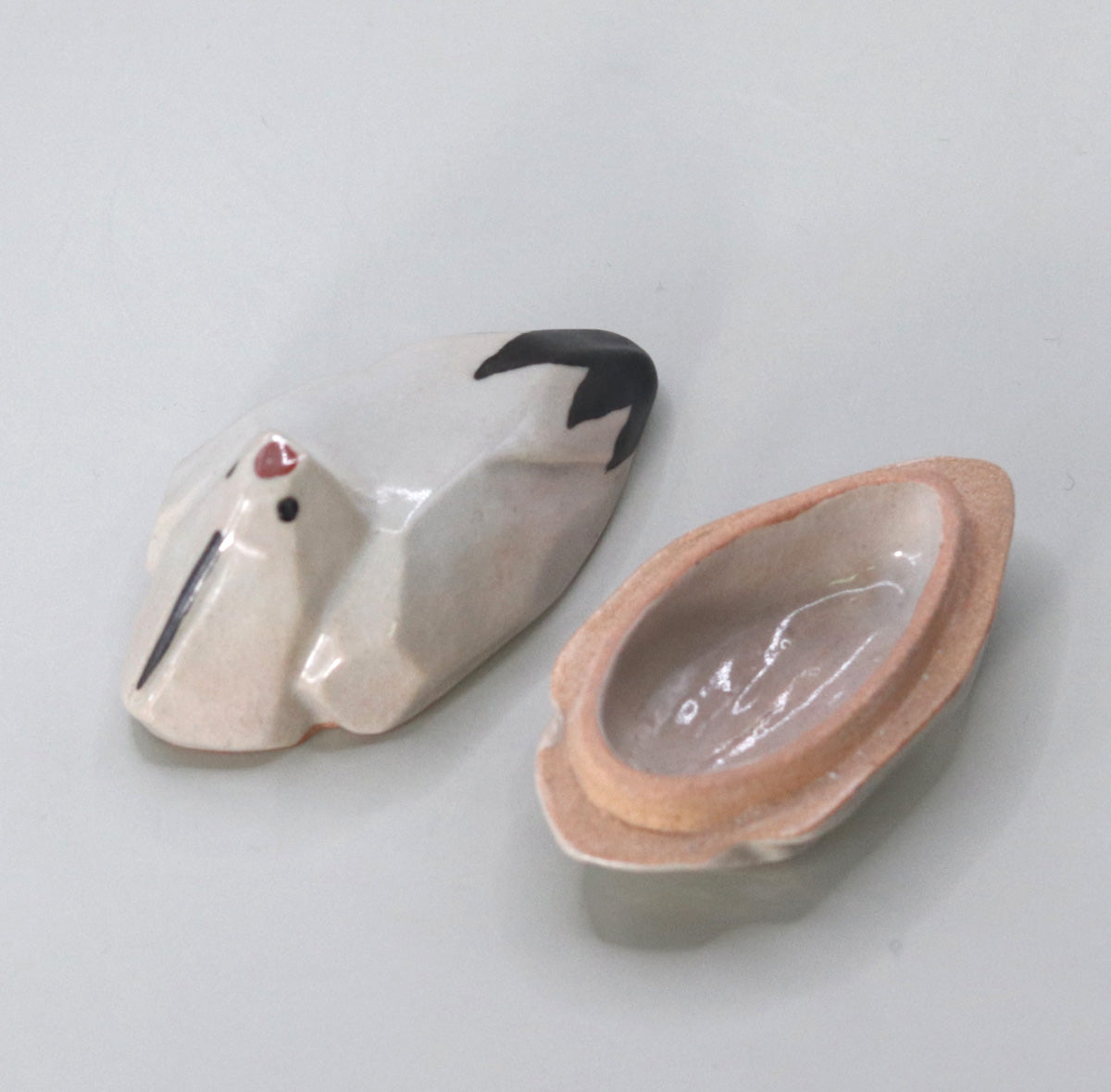
Capacity and airtightness <br data-start="1047" data-end="1050">The interior is shallow and dish-shaped, making it easy to store fragrant wood or incense paste.The fitting parts are precisely cut to fit together, so when you turn the lid it lightly sticks to the container, maintaining airtightness.
Wide range of combinations <br data-start="1130" data-end="1133">The crane is a symbol of longevity and good fortune, and is suitable for a wide range of occasions, including the first tea ceremony of the New Year, celebrations for 60th and 77th birthdays, as well as moon-viewing in autumn and cherry blossom viewing in spring.
Easy to carry <br data-start="1212" data-end="1215">The chamfered structure makes it easy to grip with your fingers and allows for natural positioning, making it suitable for complex tea ceremonies that involve connecting the lid rest and incense holder.
5. Cultural and symbolic significance
Cranes are sacred birds that are mentioned in the Kojiki and Manyoshu, and were also popular motifs in the screen paintings of Heian aristocrats and Noh costumes. In particular, the red-crowned crane has been regarded as a "sacred bird of the heavenly realm," a harbinger of the future that guides the birds through the clouds. This work expresses this sublimity in an extremely abstract way,
Combining both classicism (the traditional auspicious bird) and modernity (a minimalist form), it symbolizes both "continuity" and "renewal" in the tea ceremony. Though small, the rhythm of light created by the ridges of the polyhedron, the tension created by the subtle colors of the red crane and ink painting, and the serene white that envelops the incense - Onishi Rakusai's Crane Incense Container is a masterpiece that brings a pure atmosphere to the tea room the moment it is placed in the palm of your hand. When placed at a tea ceremony, guests will be able to admire the auspicious bird and the wafting fragrance, and enjoy a moment of sharing in good fortune.
Share
-
[I will send it to you quickly and carefully]
We carefully package each product in a way that suits it best.
Also, delivery times vary depending on the piece (vessel, etc.).
Items that already come with a box will be shipped within 1-3 days of the order date.
For items that require a box to be made after your order, it will take approximately 30 days for production to be completed and then shipped.
In either case, once we have confirmed your order, we will contact you by email to inform you of the delivery date.
-
[Requests when purchasing pottery]
Even products that look the same may differ slightly in color, shape, size, etc.
The way the glaze is used, the power of the kiln, the firing method, the season, and the humidity also affect the appearance of the pottery.
Please understand the individuality of each piece of pottery and enjoy the unique warmth of handmade.