
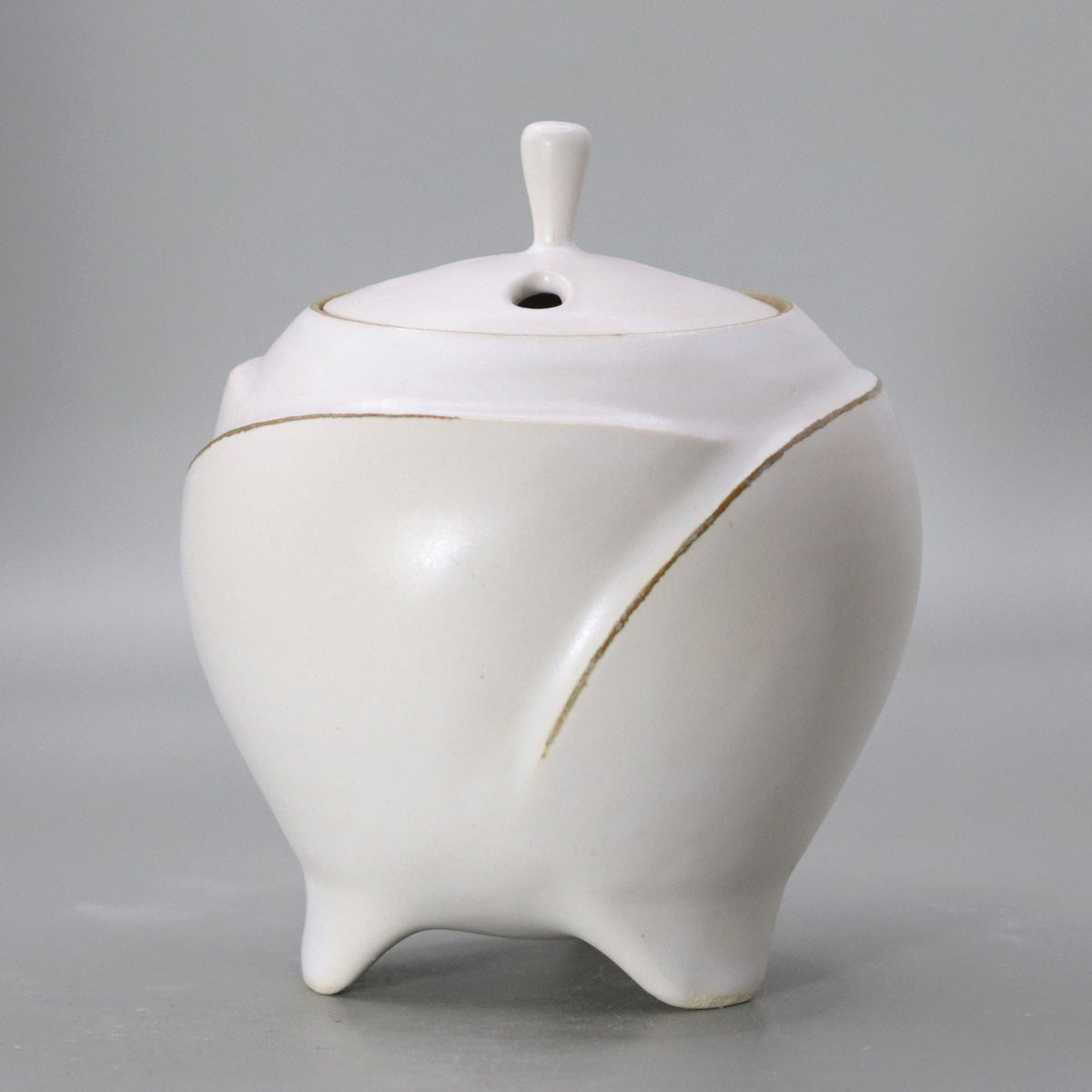
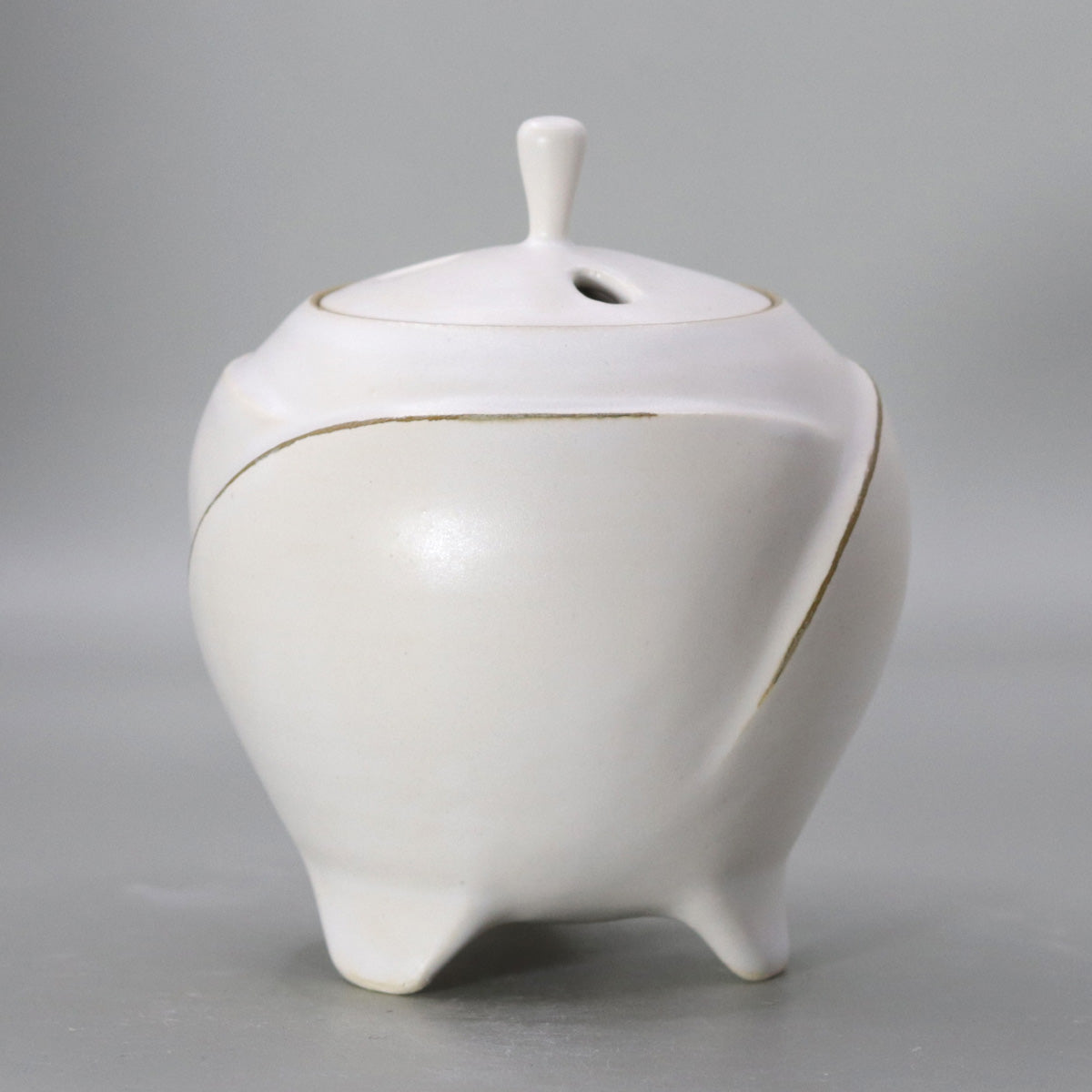
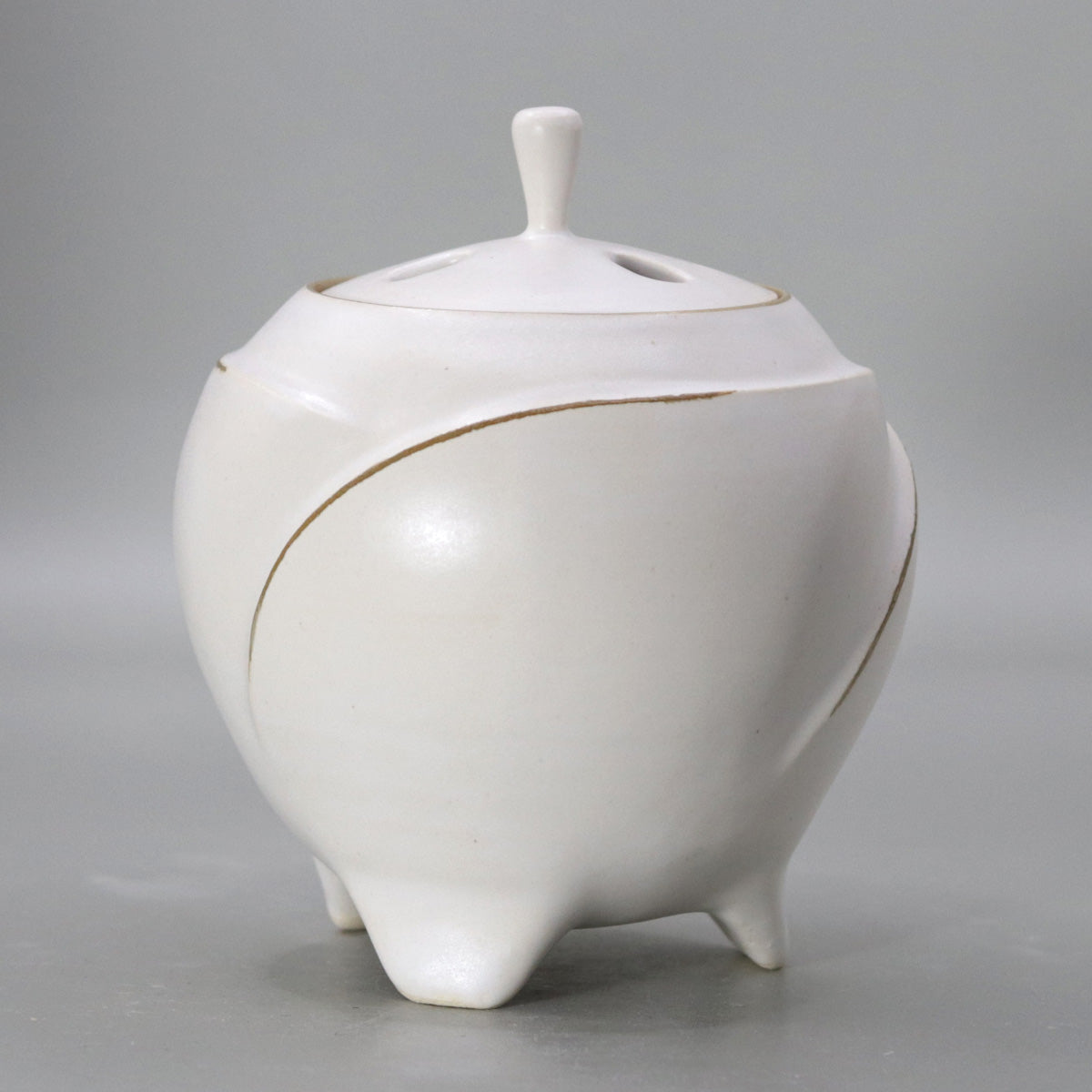
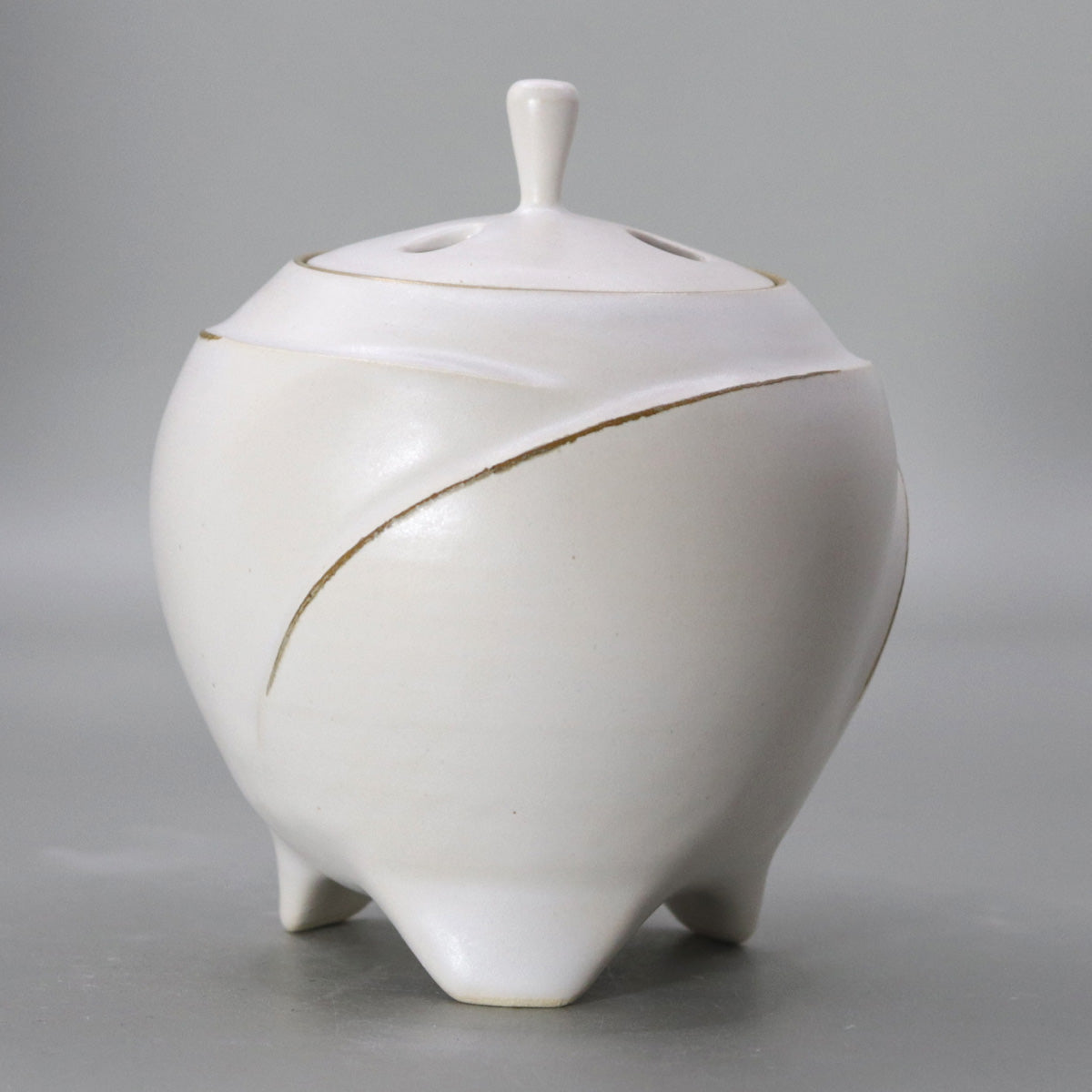
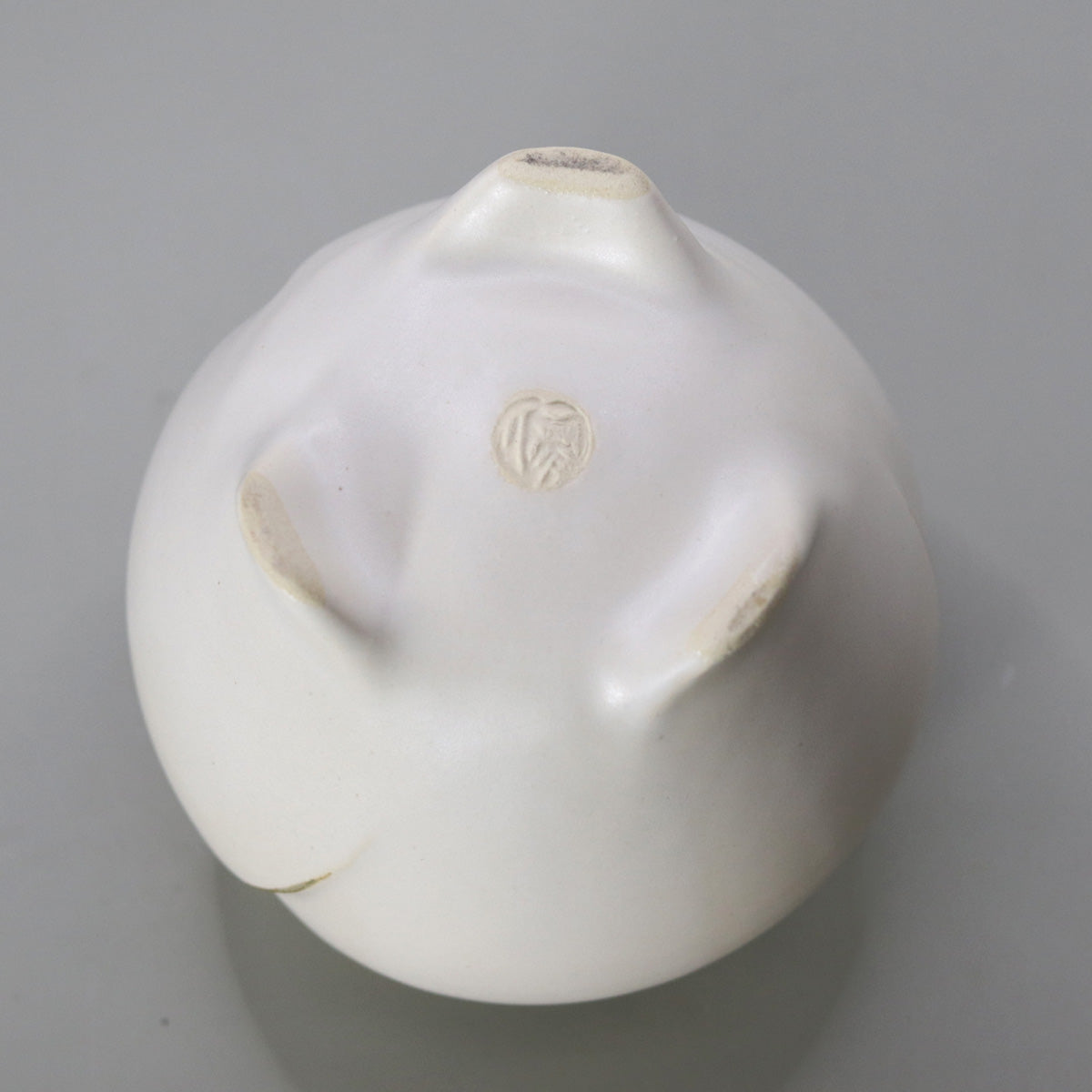
White Glazed Ridge Incense Burner by Okada Yu
White Glazed Ridge Incense Burner by Okada Yu
Couldn't load pickup availability
Width: 12.0cm Height: 13.8cm
"White Glazed Ridgeline Incense Burner" by Masaru Okada - A tranquil sculpture surrounding the fire
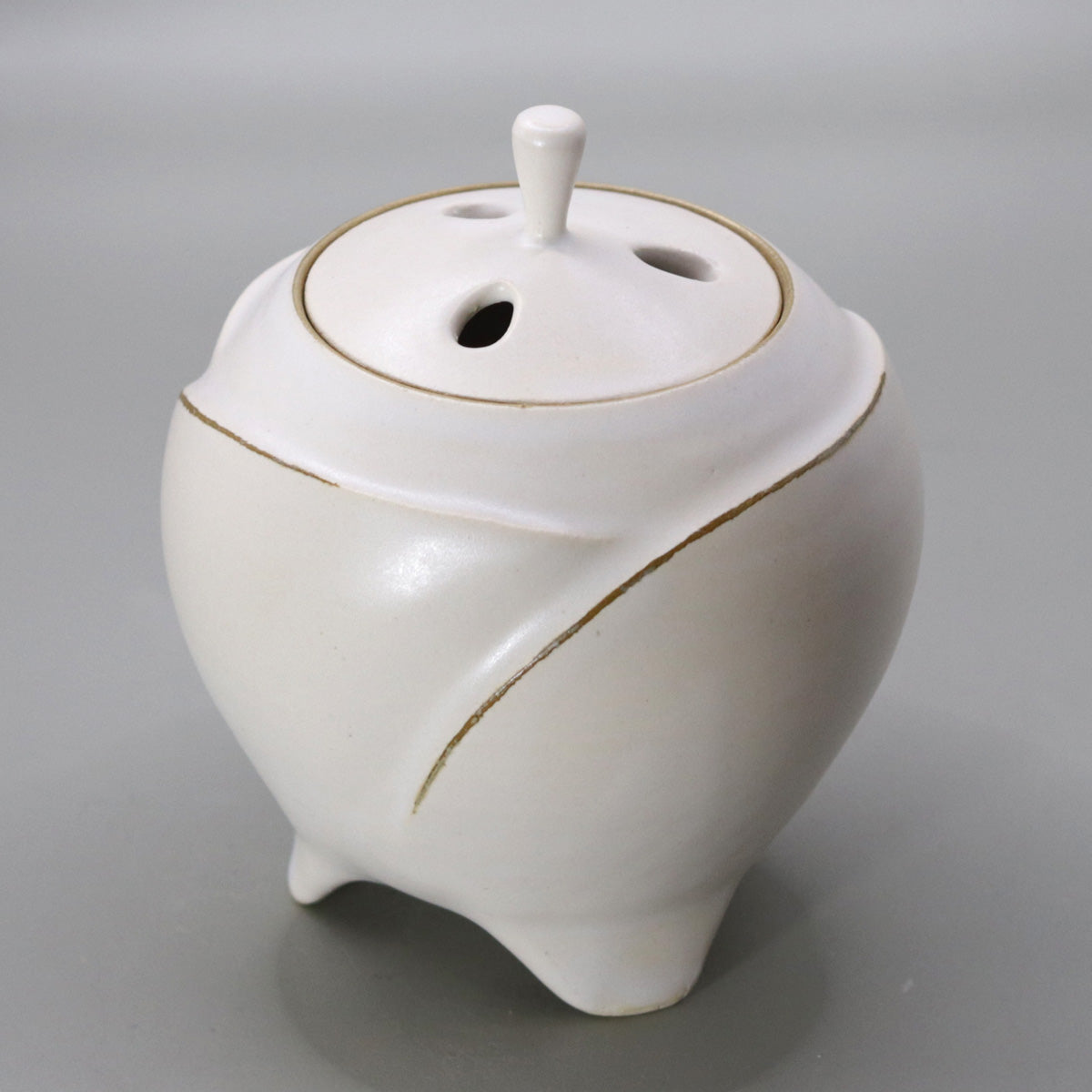
The White Glazed Ridgeline Incense Burner by Okada Masaru is a modern incense burner that stands gracefully on three legs, with subtle ridges running across its pure white ceramic surface . The coexistence of the soft curves that encase the fire pit and the sharp cutting lines neatly crystallizes the duality of "stillness" and "movement," "warmth" and "coldness." Below, we will introduce its appeal in detail in five chapters covering history, technique, design, spirituality, and combinations .
1. Historical Background - The Intersection of Incense Burners, Chanoyu, and Kodo
Incense burners were imported as Buddhist ceremonial implements during the Nara and Heian periods, and then during the Muromachi period, with the rise of the practice of monkō (smelting incense), Chinese celadon incense burners and Kyoto ware incense burners were developed. In tea rooms, they are used in pairs with incense containers for the opening of the hearth or as decorations for the New Year, and their subtle fragrance awakens the five senses of guests. While drawing on this tradition, Okada Masaru has sublimated incense tools into three-dimensional abstract sculptures , presenting a new image of the incense burner that harmonizes with modern spaces.
2. Techniques and Materials - The Wonder of Shadows Created by White Glaze and Ridges
3. Design - Comparison of the tripod, ridges, and handles
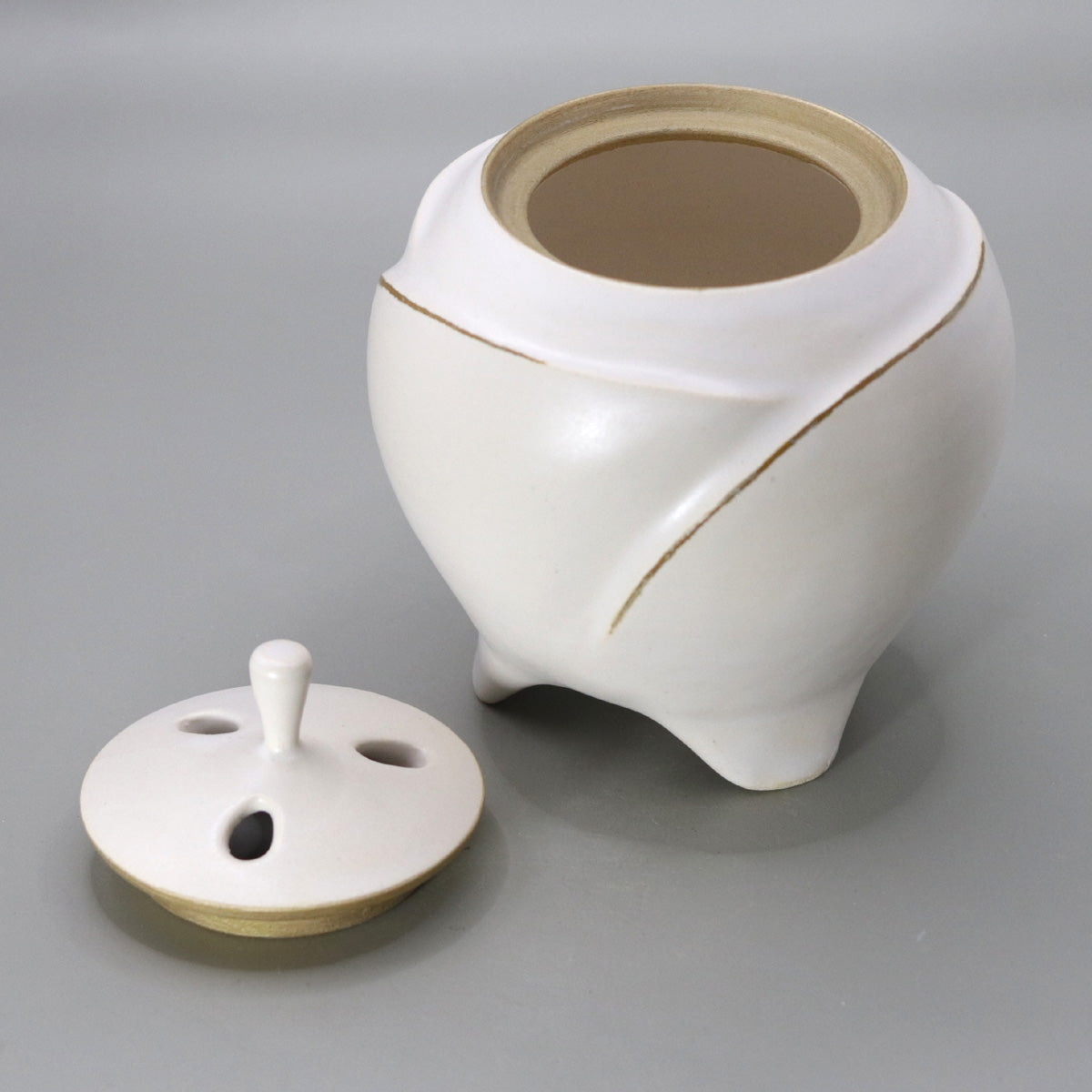
Tripod Structure <br data-start="821" data-end="824">The three-point support, derived from the ancient bronze "Kanae" (triple), provides visual stability while absorbing shaking. The legs are tapered inward, achieving both delicacy and strength.
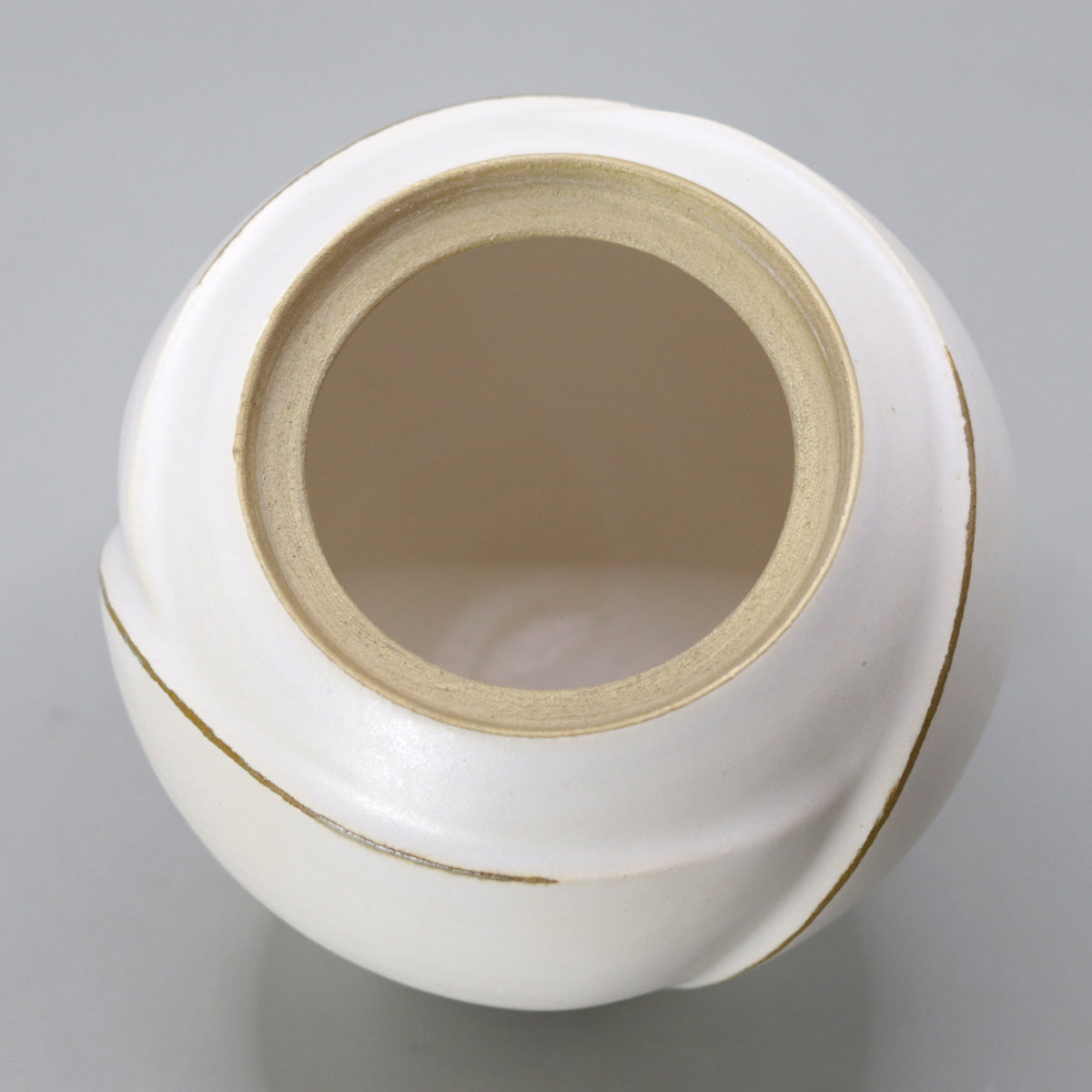
Rhythm of the Ridges <br data-start="911" data-end="914">The ridges that run diagonally across the body symbolize the spirals of incense smoke rising from the fire pit. A flash of light cuts through the silence of the white porcelain, releasing dynamic tension into the space.
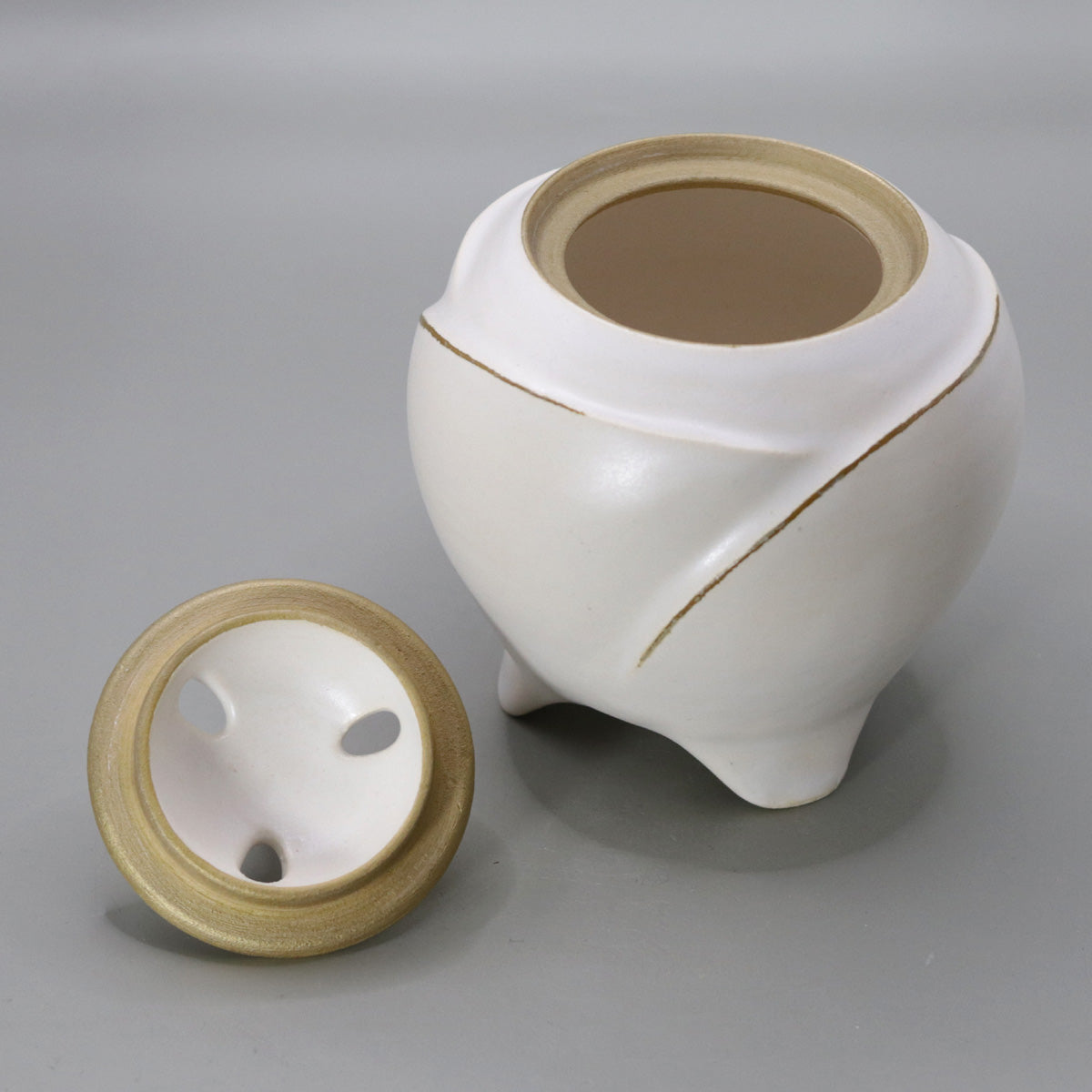
The teardrop-shaped handle captures the exact moment a drop falls, and its oval shape fits snugly against the finger, creating a refreshing aftertaste when opening and closing the lid. The fire hole is located in the center, enhancing the efficiency of heat and incense extraction, adding to its functional beauty.
4. Spirituality - Purification and white space in "white"
White represents "innocence and infinity" in Zen. Okada Masaru's white glaze changes temperature slightly depending on the light source, and the more it is used, the more it acquires a glossy luster and takes on a unique landscape. The ridges represent "artificiality," the curved surfaces represent "nature," and the tripod represents the harmony between "heaven, earth, and man." Together with the smoke from the burning agarwood and aloeswood, it will serve as a guidepost to clear away distractions from the mind .
The White Glazed Ridgeline Incense Burner is a masterpiece that perfectly integrates the functions of abstract sculpture and tea ceremony utensils . The light, upright form of the tripod and its slicing ridges add rhythm to the serenity of the white porcelain, purifying the space with the incense smoke. It will blend naturally into tea ceremonies as well as modern living rooms and art galleries, becoming a "tranquil focal point" where the ritual of using fire intersects with contemporary design.
— Embracing flame and incense within its stripped white.
This philosophy will leave a deep impression as it stimulates the user's five senses and over time.
If you could provide us with detailed information such as dimensions, box inscription, and price, we would be happy to add further combination ideas and historical supplements. Please feel free to contact us.
Share
-
[I will send it to you quickly and carefully]
We carefully package each product in a way that suits it best.
Also, delivery times vary depending on the piece (vessel, etc.).
Items that already come with a box will be shipped within 1-3 days of the order date.
For items that require a box to be made after your order, it will take approximately 30 days for production to be completed and then shipped.
In either case, once we have confirmed your order, we will contact you by email to inform you of the delivery date.
-
[Requests when purchasing pottery]
Even products that look the same may differ slightly in color, shape, size, etc.
The way the glaze is used, the power of the kiln, the firing method, the season, and the humidity also affect the appearance of the pottery.
Please understand the individuality of each piece of pottery and enjoy the unique warmth of handmade.