
Shrimp bowl by Rakusai Onishi
Shrimp bowl by Rakusai Onishi
Couldn't load pickup availability
Width: 11.8cm Height: 7.8cm
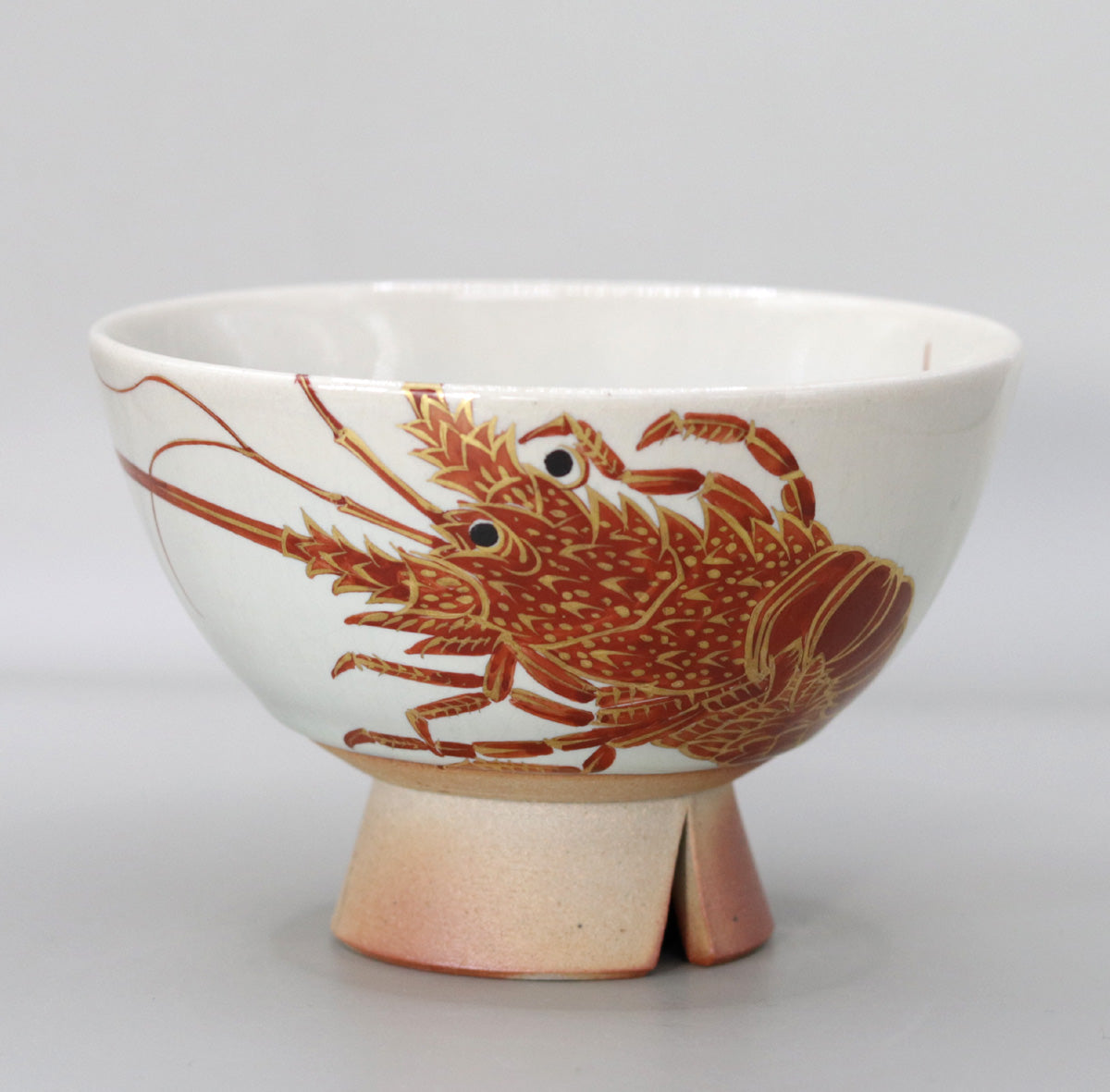
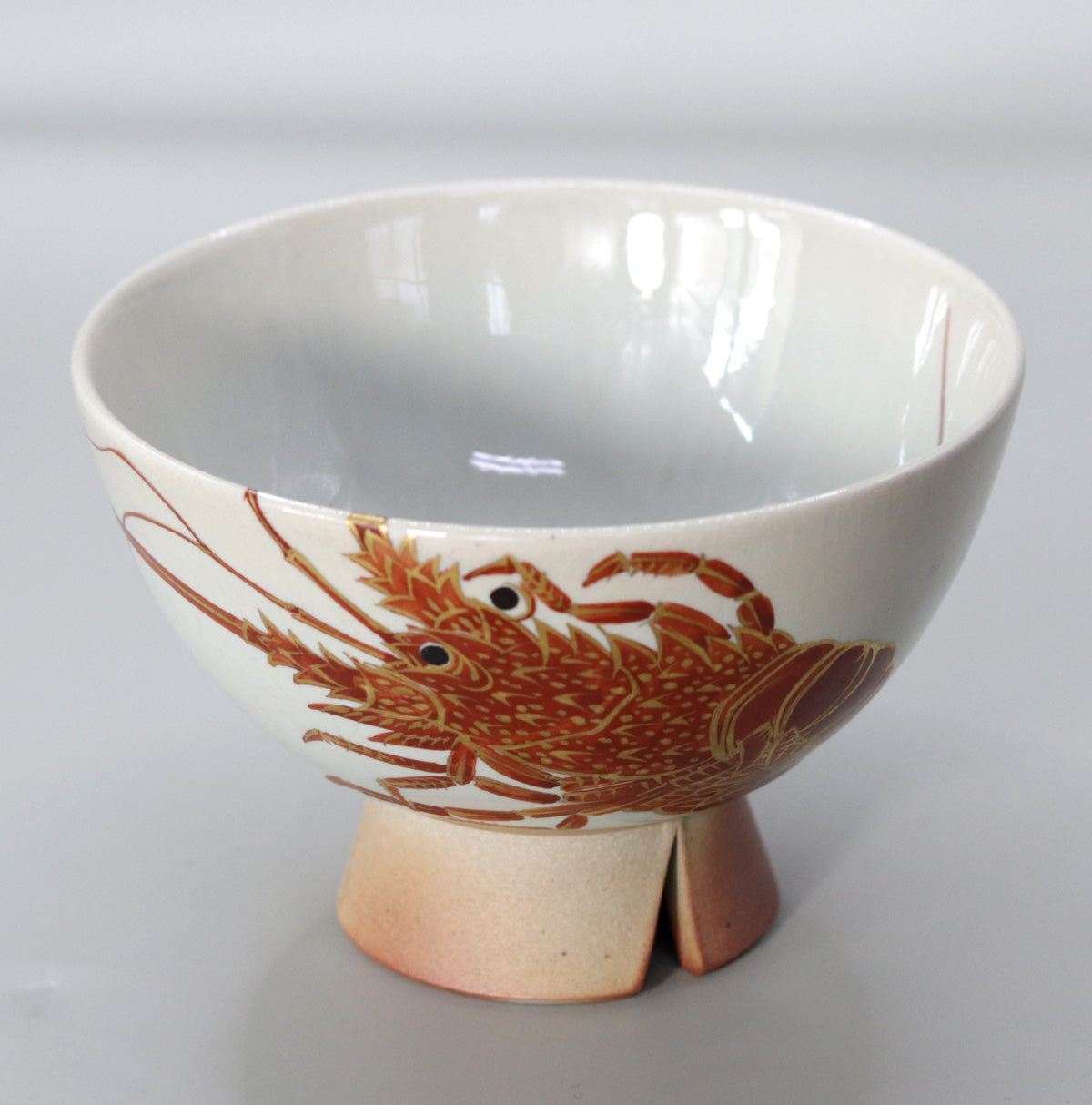
This work by Onishi Rakusai features a large, majestic spiny lobster against a pure white glaze, creating a bowl that simultaneously expresses auspiciousness and dynamism. Since ancient times, spiny lobsters have been considered a symbol of good fortune, signifying longevity, prosperity of descendants, and promotion, and have been used as New Year's decorations and at weddings. In this piece, the lobster fills the tea bowl, evoking a celebratory spirit and the vitality of the sea. Below, we will explain its appeal in detail from five perspectives.
1. Shape and clay
The elegant proportions of the body <br data-end="283" data-start="280">The body gently extends from the inside to the rim, creating an ideal ratio that makes it easy to create an even foam in the matcha.
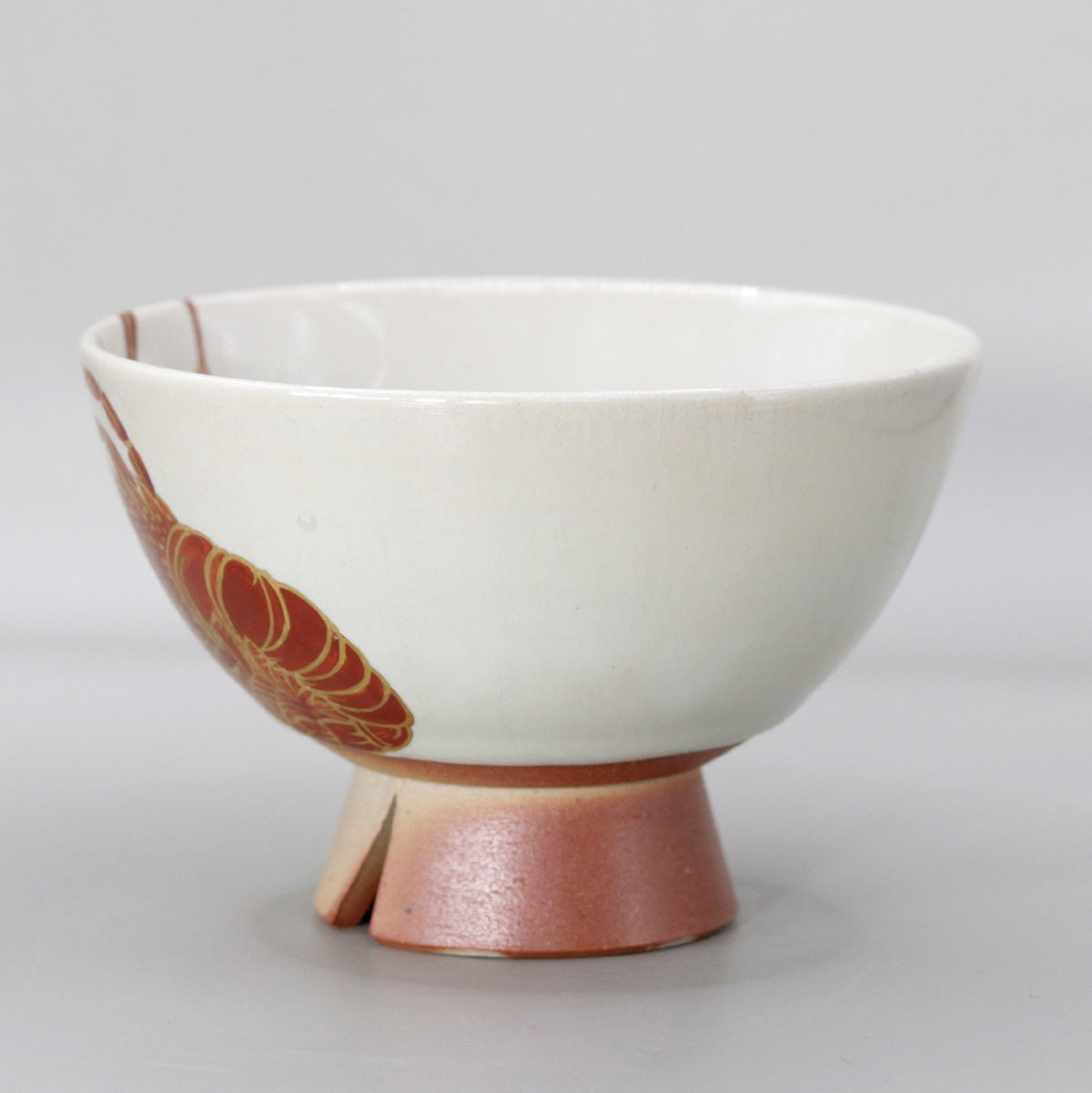
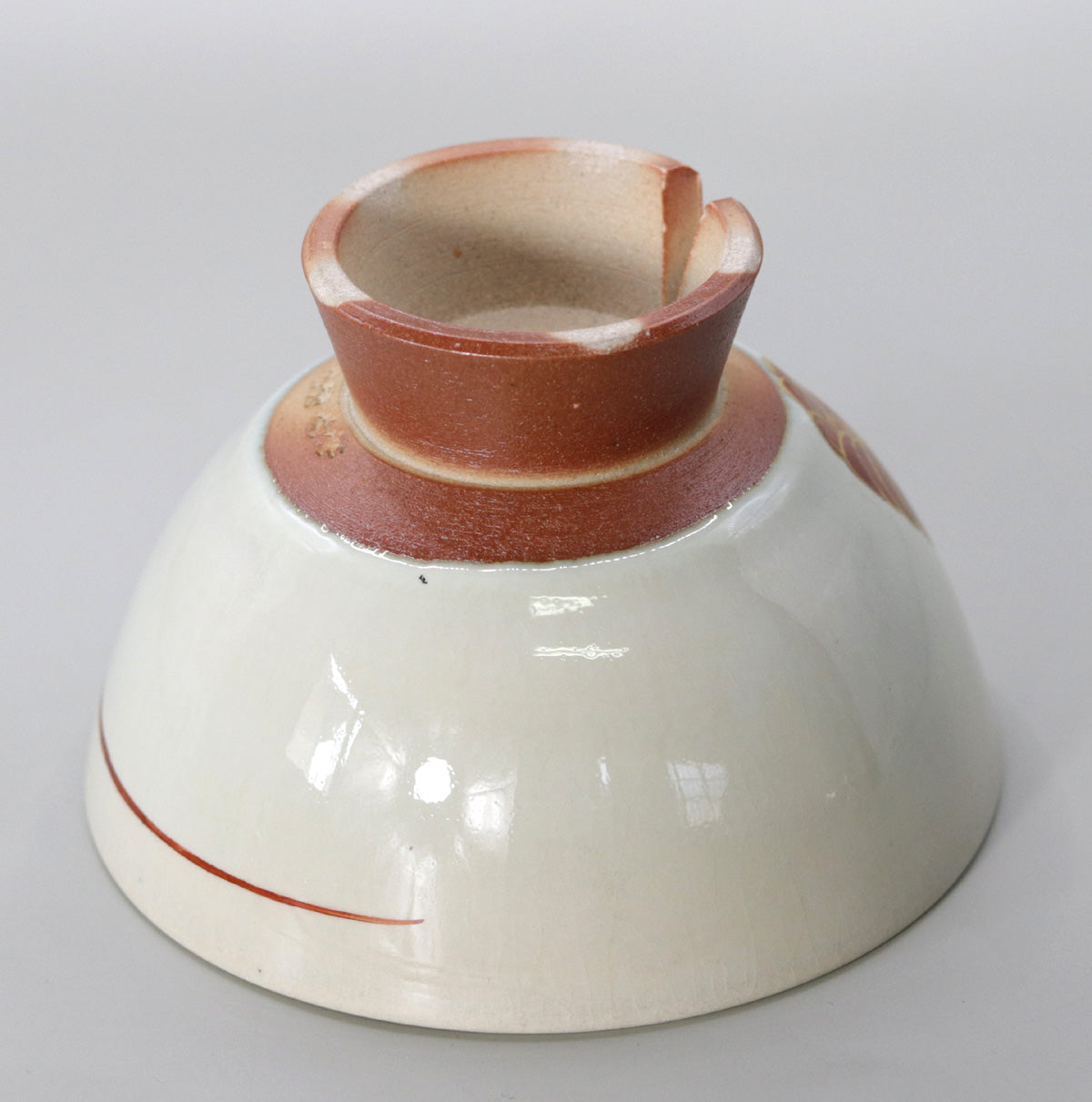
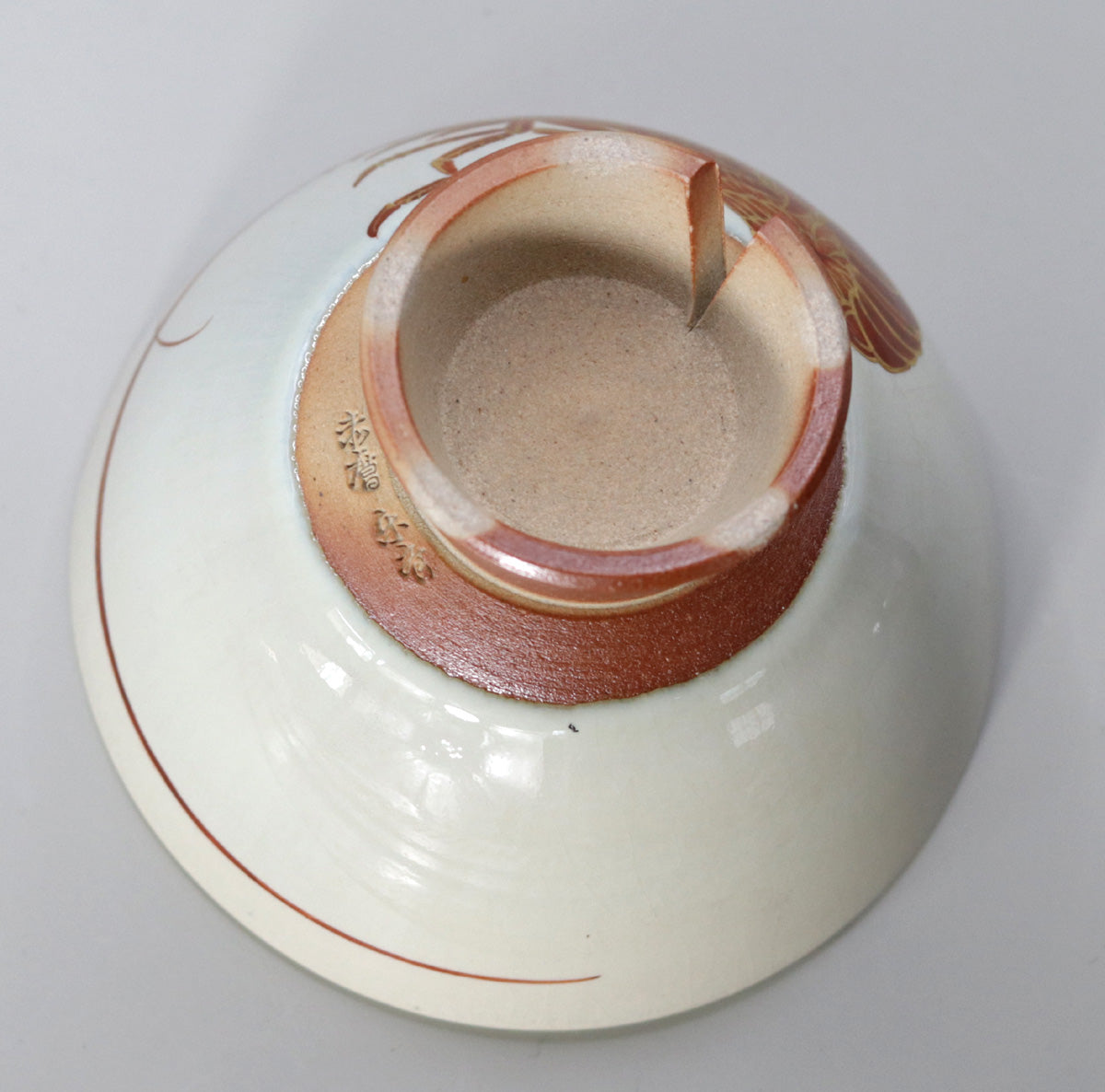
Split foot <br data-end="353" data-start="350">The foot retains the strength inherent in the Go ware style, while also achieving a modern sense of stability. The base contains a small amount of iron, and the reduction firing process produces a subtle cherry blossom-colored fire color that adds a touch of elegance, reminiscent of the vermilion of a celebratory banquet.
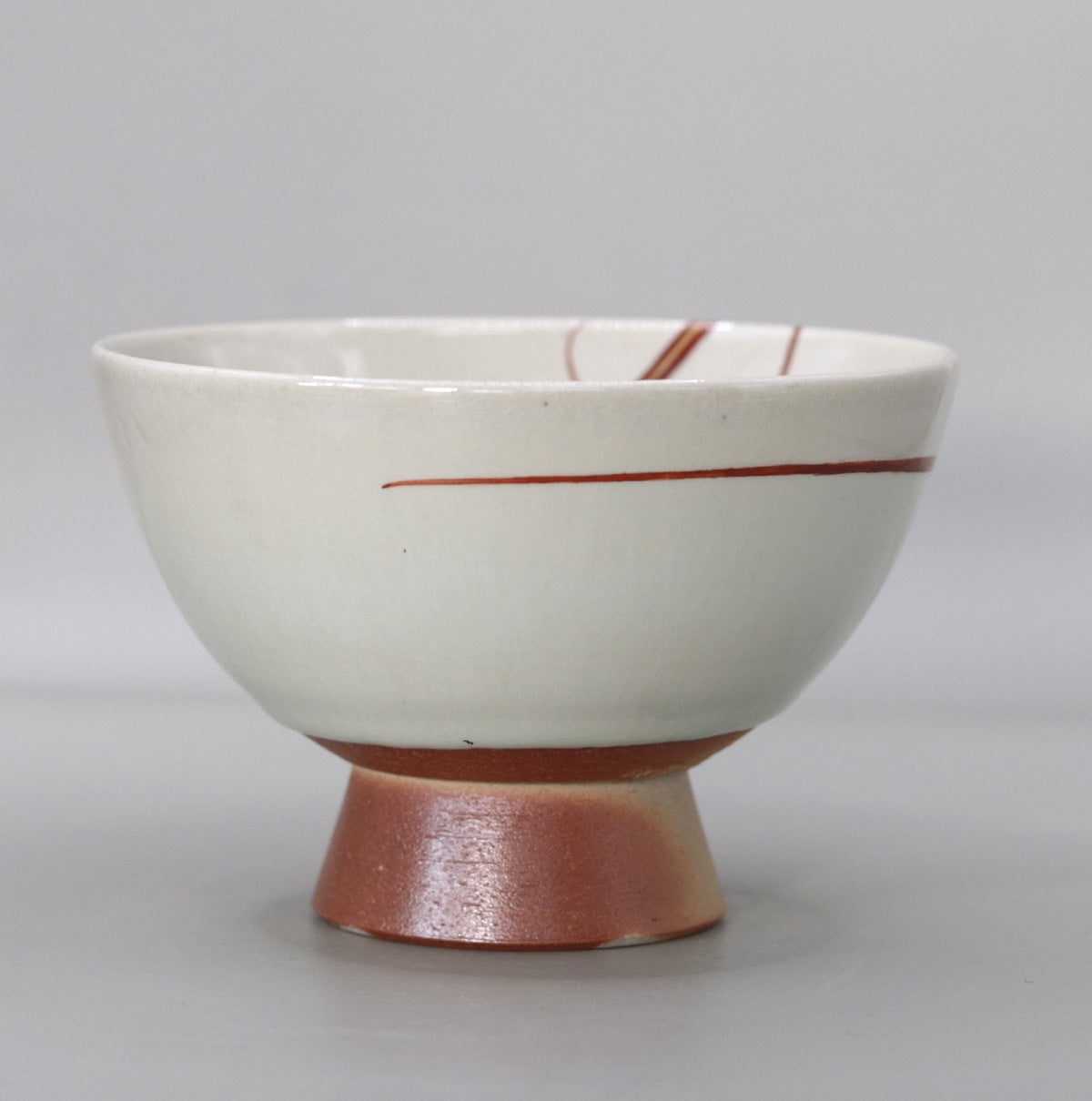
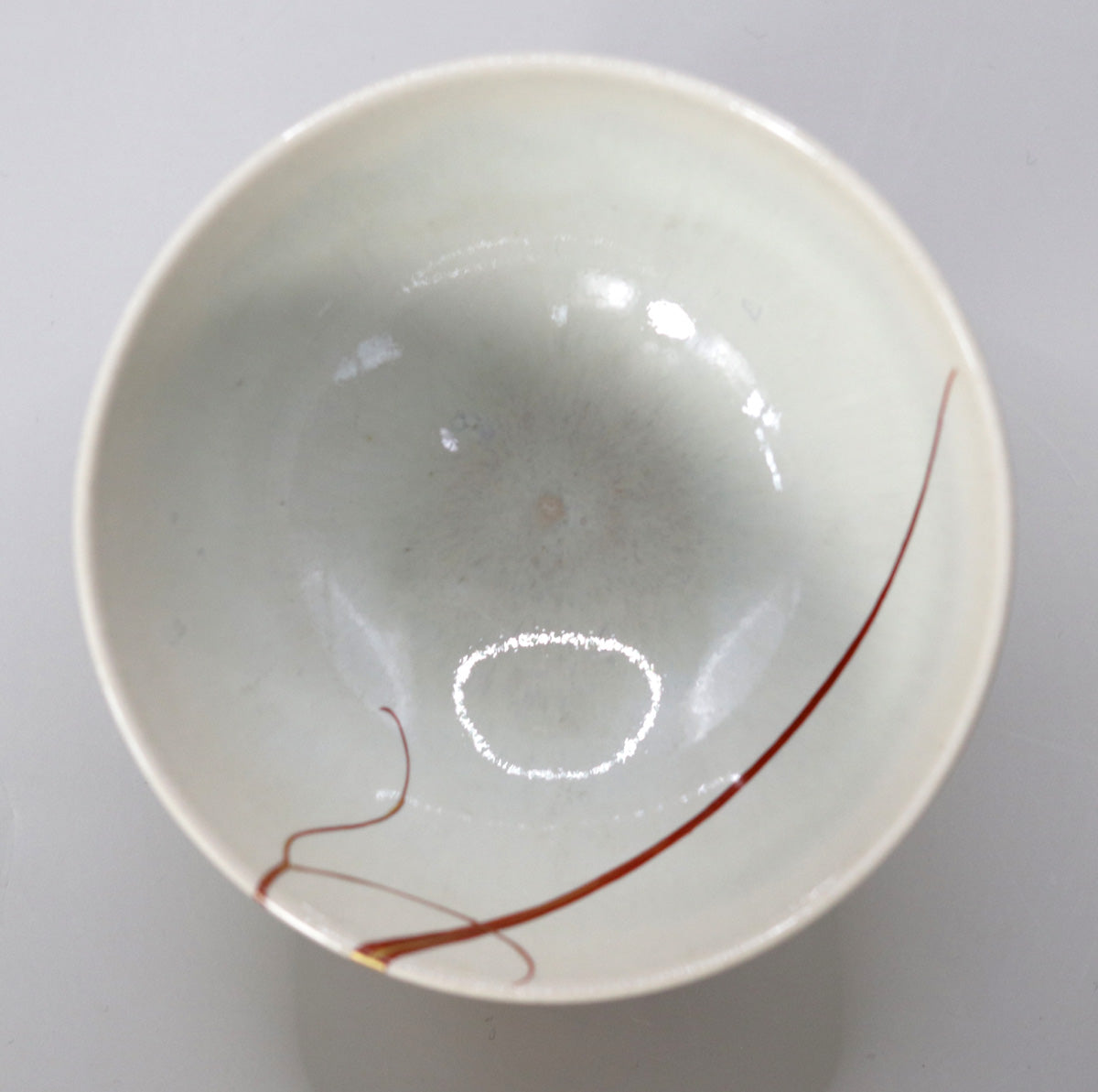
The stage for the snow-white glaze <br data-end="482" data-start="479">The snow-white glaze that covers the exterior and interior surfaces has a glassy luster and an extremely smooth texture. It catches the light softly, highlighting the red of the spiny lobster and making the green of the matcha look vibrant.
2. Design - The auspicious and dynamic nature of the spiny lobster
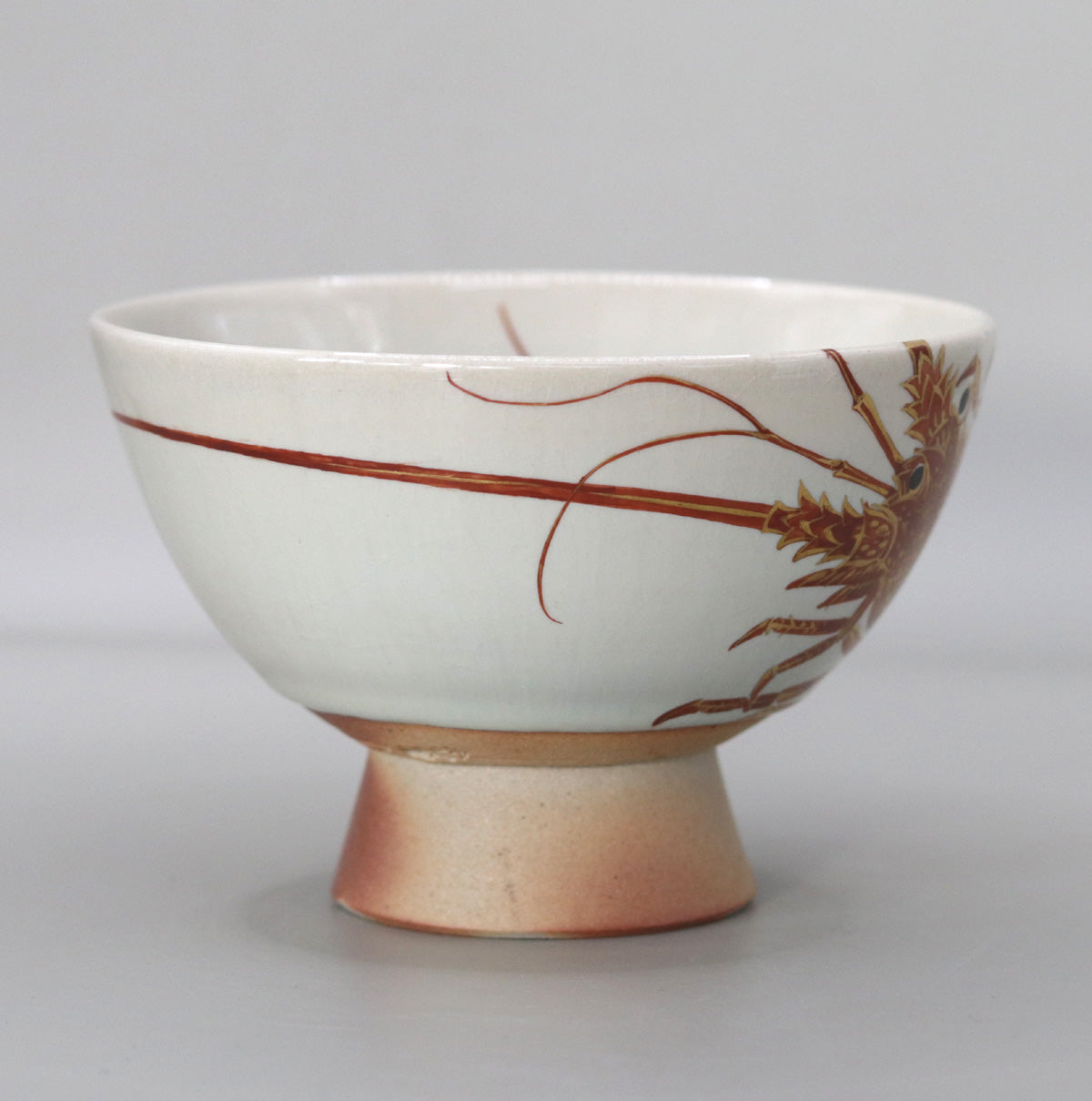
Bold composition <br data-end="600" data-start="597">By allowing the shrimp's carapace to overflow across the entire body, from the head to the tail fan, different parts are revealed each time the bowl is turned, creating the visual effect of the shrimp swimming around.
A medley of red paint and gold paint <br data-end="697" data-start="694">The shell is painted with iron-red paint, and the joints, spines, and spots are painted with gold paint to emphasize its three-dimensionality and opulence. The eyes are coated with black glaze to give them a glossy finish and a lively expression, which is also an excellent feature.
Long, flowing antennae and legs <br data-end="804" data-start="801">The antennae and walking legs, drawn in one go with a fine brush, evoke the shrimp's characteristic bouncing momentum and the flowing lines in the water, imbuing the still life with a sense of movement.
3. Techniques - The sophistication of Kyoto-style colored ware
Red enamel application <br data-end="908" data-start="905">By applying a thick layer of iron-red paint and re-firing it at a low heat, the shell becomes uneven, giving it a tactile realism.
Fine gold linework <br data-end="981" data-start="978">The gold paint is fired at around 800°C to ensure a shine that is resistant to peeling. By highlighting the spots and knots with gold, it adds a touch of elegance befitting a celebratory piece.
Contrast with white glaze <br data-end="1062" data-start="1059">The "beauty of white space" created by leaving a large area of pure white glaze outside the painted areas further enhances the gorgeous shrimp design, creating the effect of combining modern minimalism with classical decoration.
4. Functional beauty at the tea ceremony
Matcha-worthy <br data-end="1178" data-start="1175">The inside is uniformly glazed with a plain white glaze, allowing the green of the matcha to shine like a mirror. During the tea ceremony, the red and gold of the shrimp are reflected on the tea surface, creating a cheerful, celebratory atmosphere.
A wide range of seasons and occasions <br data-end="1269" data-start="1266">This design has an extremely wide range of meanings, and is suitable for the first tea ceremony of the New Year, tea ceremonies to celebrate longevity such as the 60th and 77th birthdays, and even auspicious occasions such as promotions and opening new businesses.
Stable handling <br data-end="1349" data-start="1346">The high base allows your fingers to rest naturally, making it easy to hold, and the thin rim feels light on the lips, making it extremely practical despite its apparent volume.
5. Cultural background and modernity
In samurai society, spiny lobsters were considered a symbol of dignity, so much so that their shape was imitated in the "ebido" armor (shrimp body), and they were also favored in the tea ceremony as a design to pray for longevity and continued military fortune. This piece reconstructs this traditional motif with a refreshing color scheme of white glaze, red enamel, and gold, giving it a lightness that will look great in modern tea ceremonies and interiors. While inheriting the lineage of "kirei sabi," Onishi Rakusai has elevated this piece to a bridge between classic and modern by using a refined white base with subdued earthiness.
A spiny lobster swimming vigorously through the pure white ocean - its gorgeous red and gold colors succinctly express the celebratory spirit of wishing for longevity and prosperity. When placed at a tea ceremony, the heartbeat of celebration will resonate within the bowl, and conversations with guests will naturally become filled with joy and celebration. Onishi Rakusai's lobster tea bowl is an exquisite piece suitable for auspicious occasions, combining auspiciousness and dynamism, the "beauty of utility" and the "beauty of storytelling."
Share
-
[I will send it to you quickly and carefully]
We carefully package each product in a way that suits it best.
Also, delivery times vary depending on the piece (vessel, etc.).
Items that already come with a box will be shipped within 1-3 days of the order date.
For items that require a box to be made after your order, it will take approximately 30 days for production to be completed and then shipped.
In either case, once we have confirmed your order, we will contact you by email to inform you of the delivery date.
-
[Requests when purchasing pottery]
Even products that look the same may differ slightly in color, shape, size, etc.
The way the glaze is used, the power of the kiln, the firing method, the season, and the humidity also affect the appearance of the pottery.
Please understand the individuality of each piece of pottery and enjoy the unique warmth of handmade.