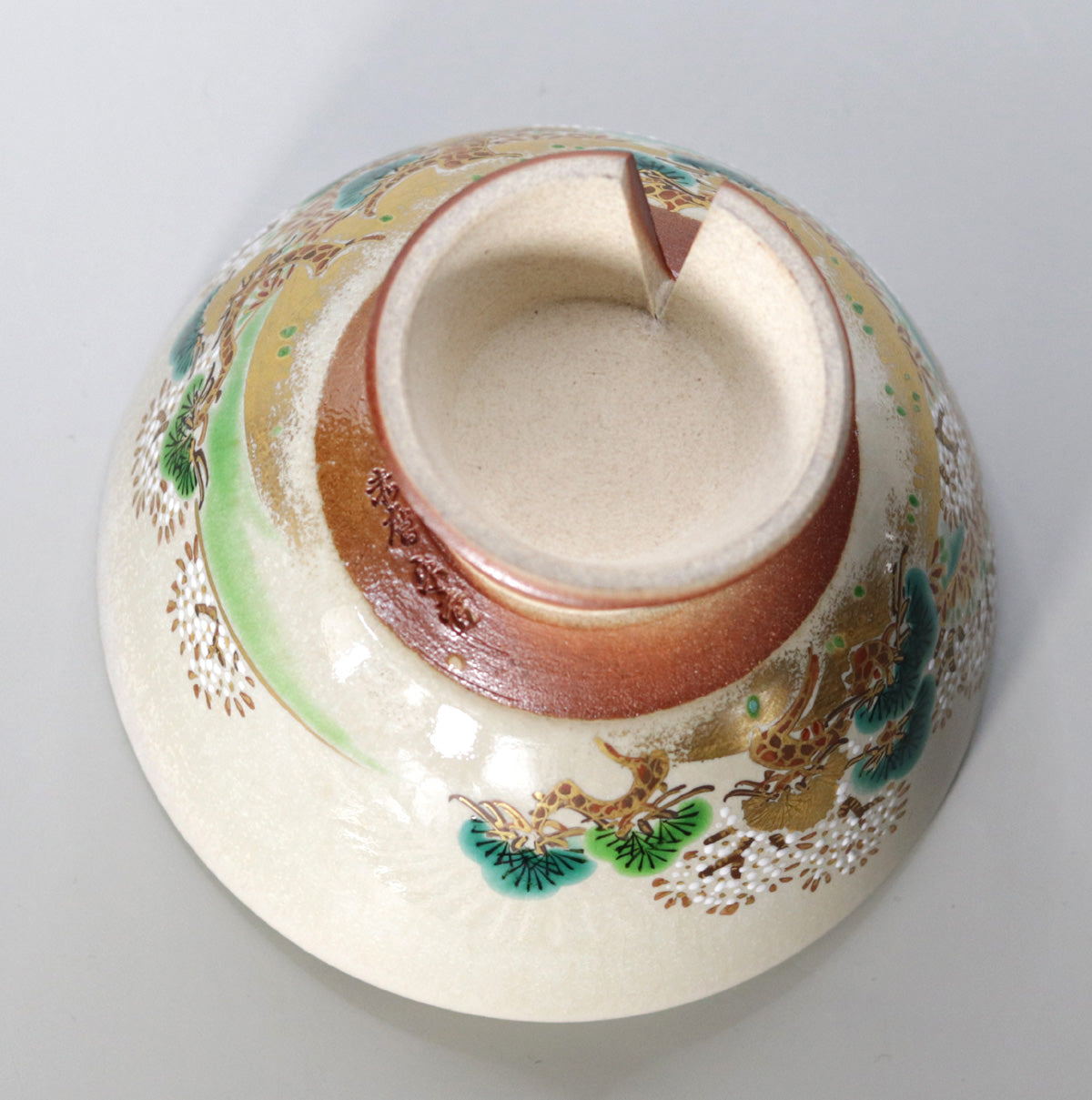
Yoshinoyama Tea Bowl by Rakusai Onishi
Yoshinoyama Tea Bowl by Rakusai Onishi
Couldn't load pickup availability
Width: 11.7cm Height: 8.1cm
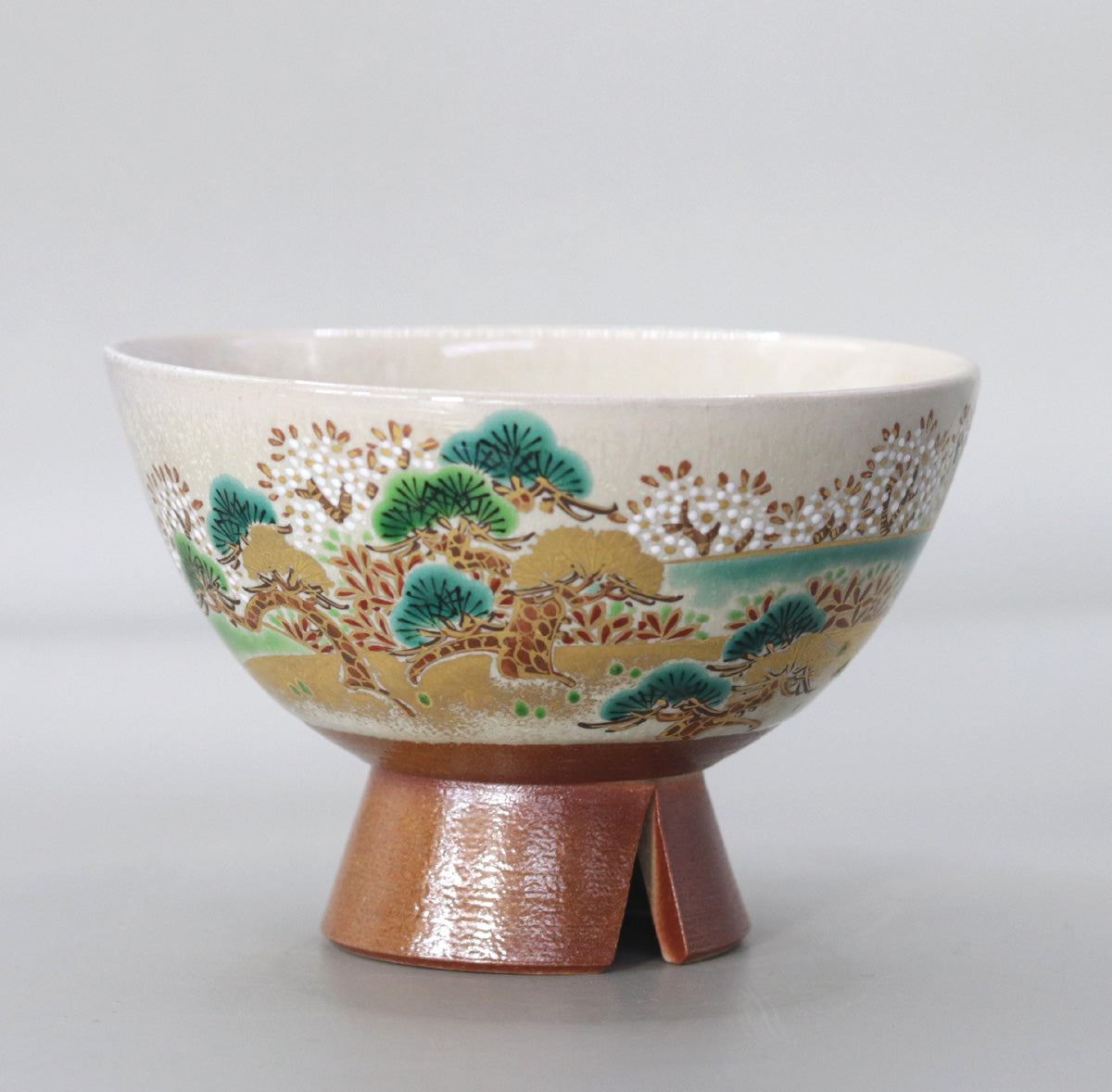
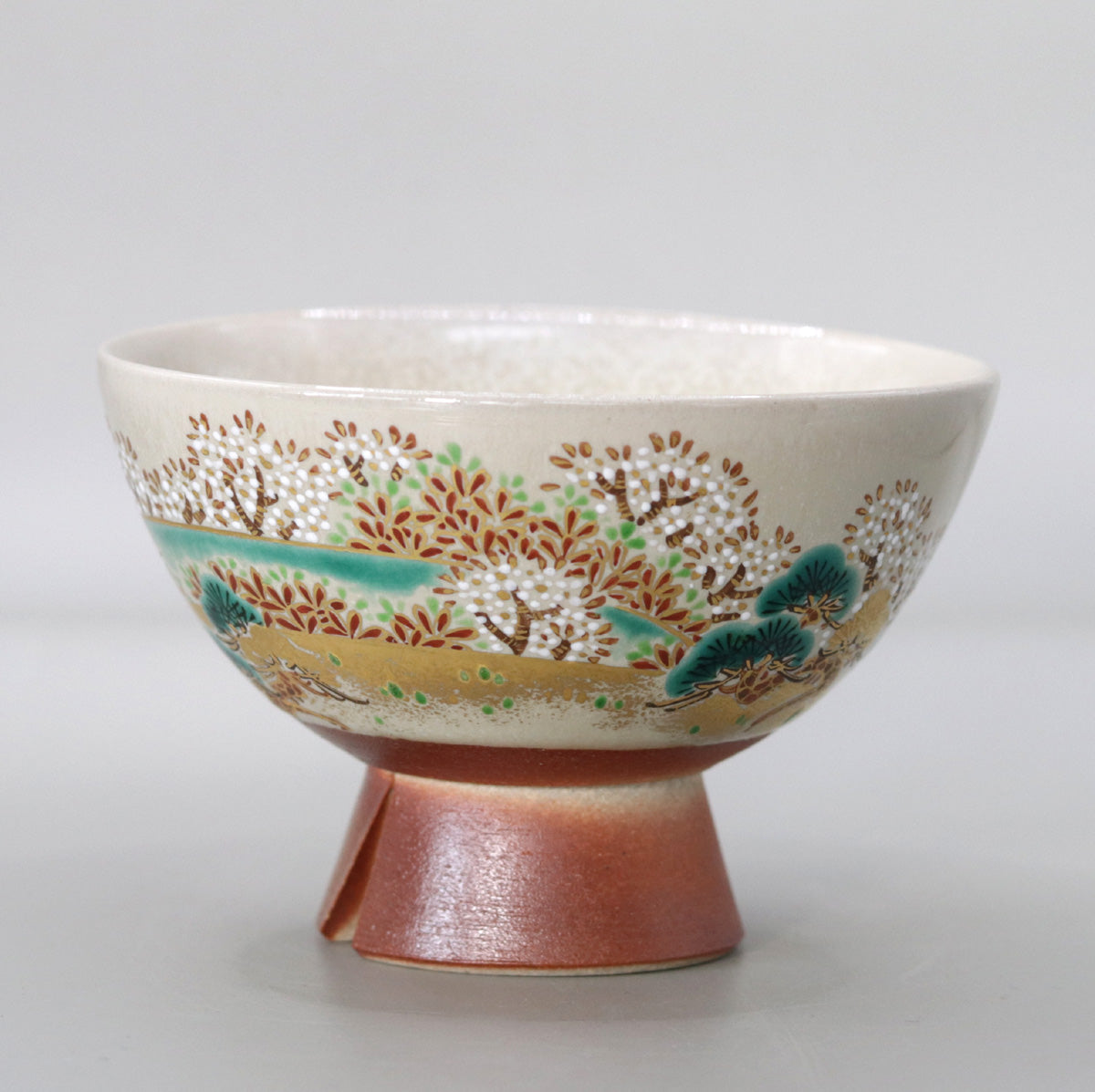
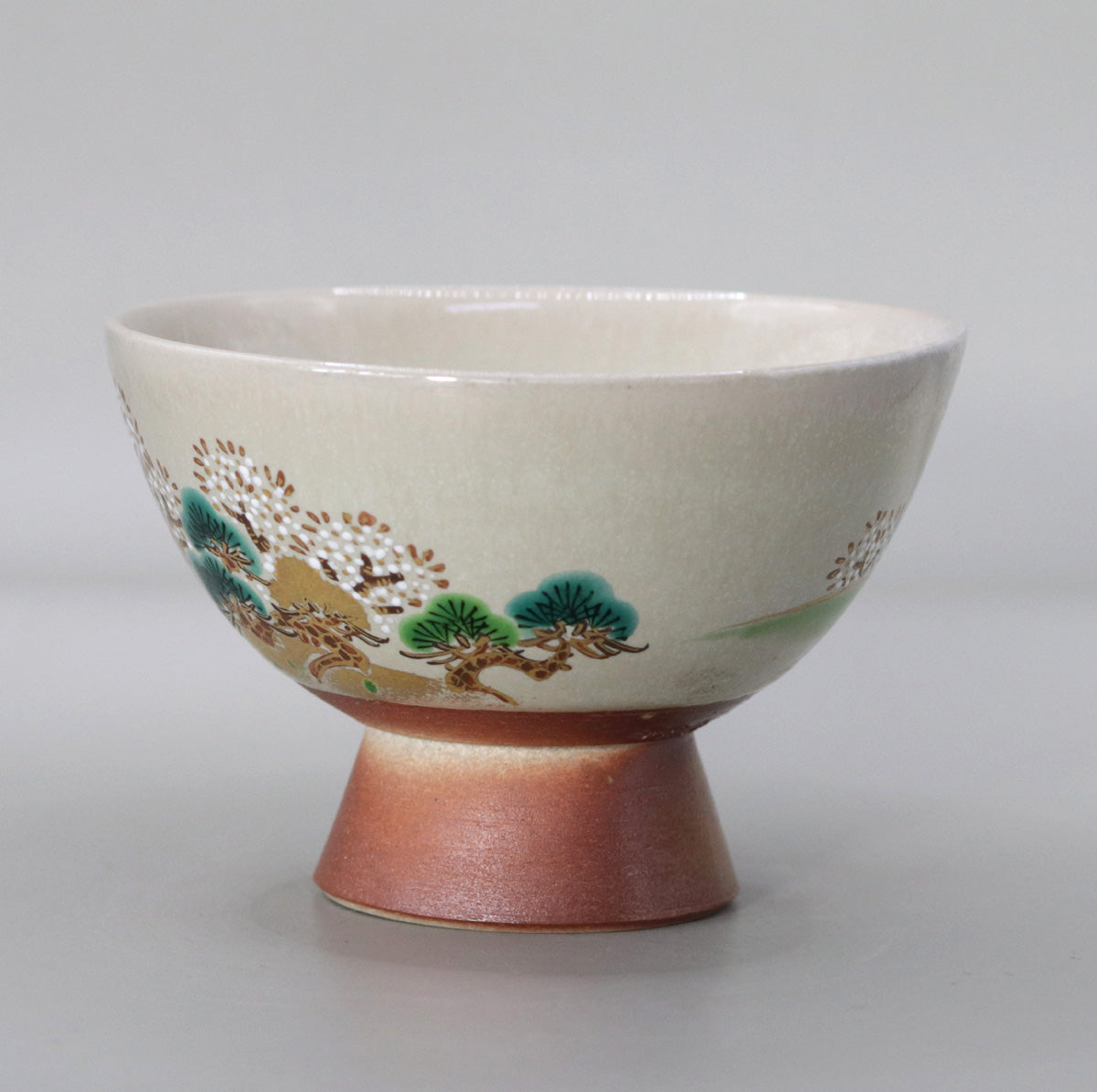
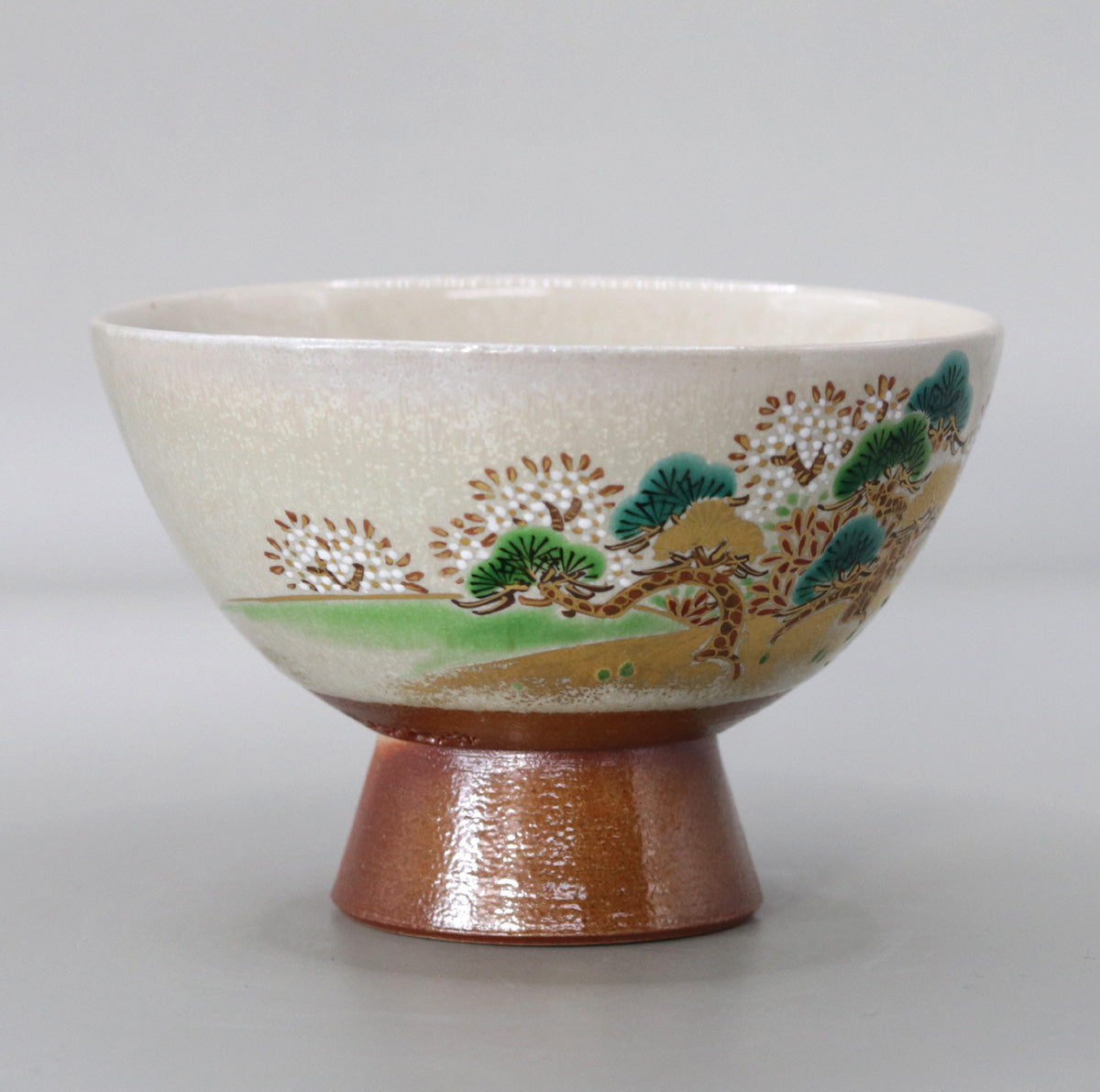
Onishi Rakusai's "Yoshinoyama Tea Bowl" is a masterpiece that depicts the Yoshino mountain range, famous since the Manyo period for its "Thousand Cherry Blossoms," with overlapping pine trees, cherry blossoms, and mountainside, like a picture scroll. By layering verdigris, red clay, and white deposits on a pale yellowish white glaze, and then applying gold paint, the bowl creates a landscape that seems to capture Mount Yoshino in full bloom in the palm of your hand. Below, we will introduce its charm in detail from five perspectives.
1. Shape and clay
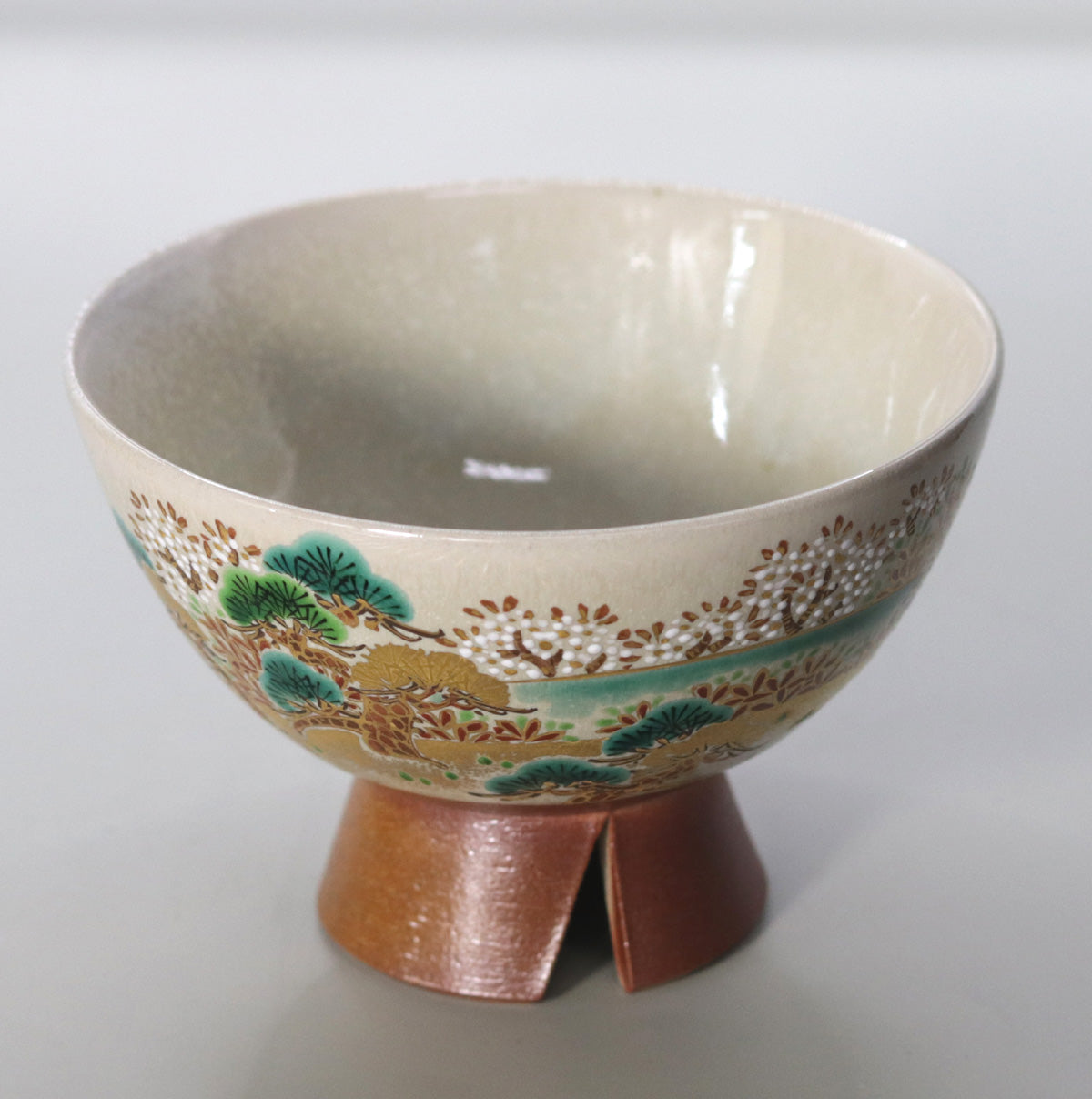
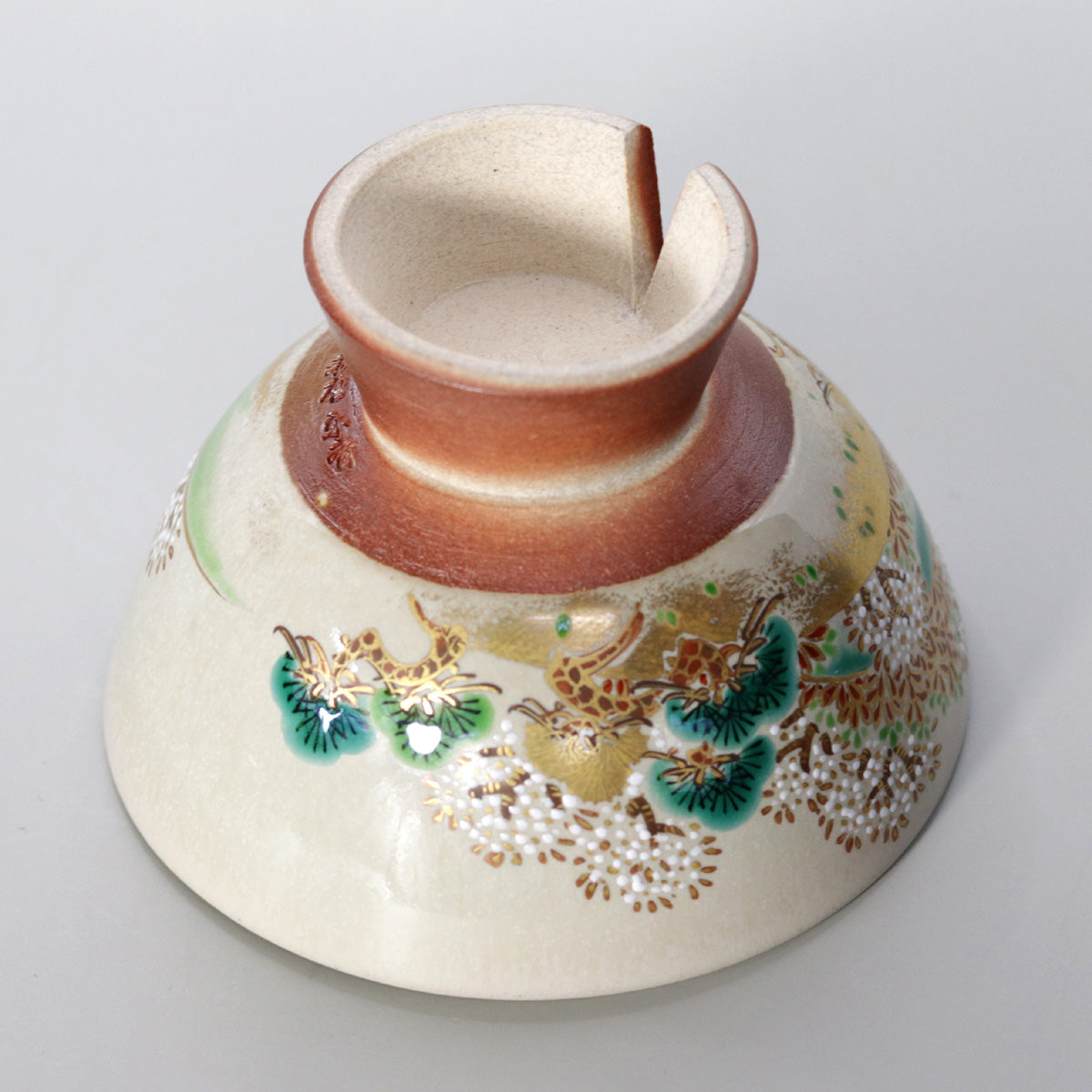
Three-sided split base reminiscent of Goki style <br data-start="248" data-end="251">The base is cut on three sides in a "sakeashi" style, giving a modern refinement to the Goki style, which originated from Korean rice bowls. It has a good grip and creates a sense of stability when handling it at a tea ceremony.
A neat bowl shape with a full body <br data-start="347" data-end="350">The proportions that gently bulge from the inside to the rim ensure that the tea whisk hits the cup evenly, resulting in beautifully shaped foam.
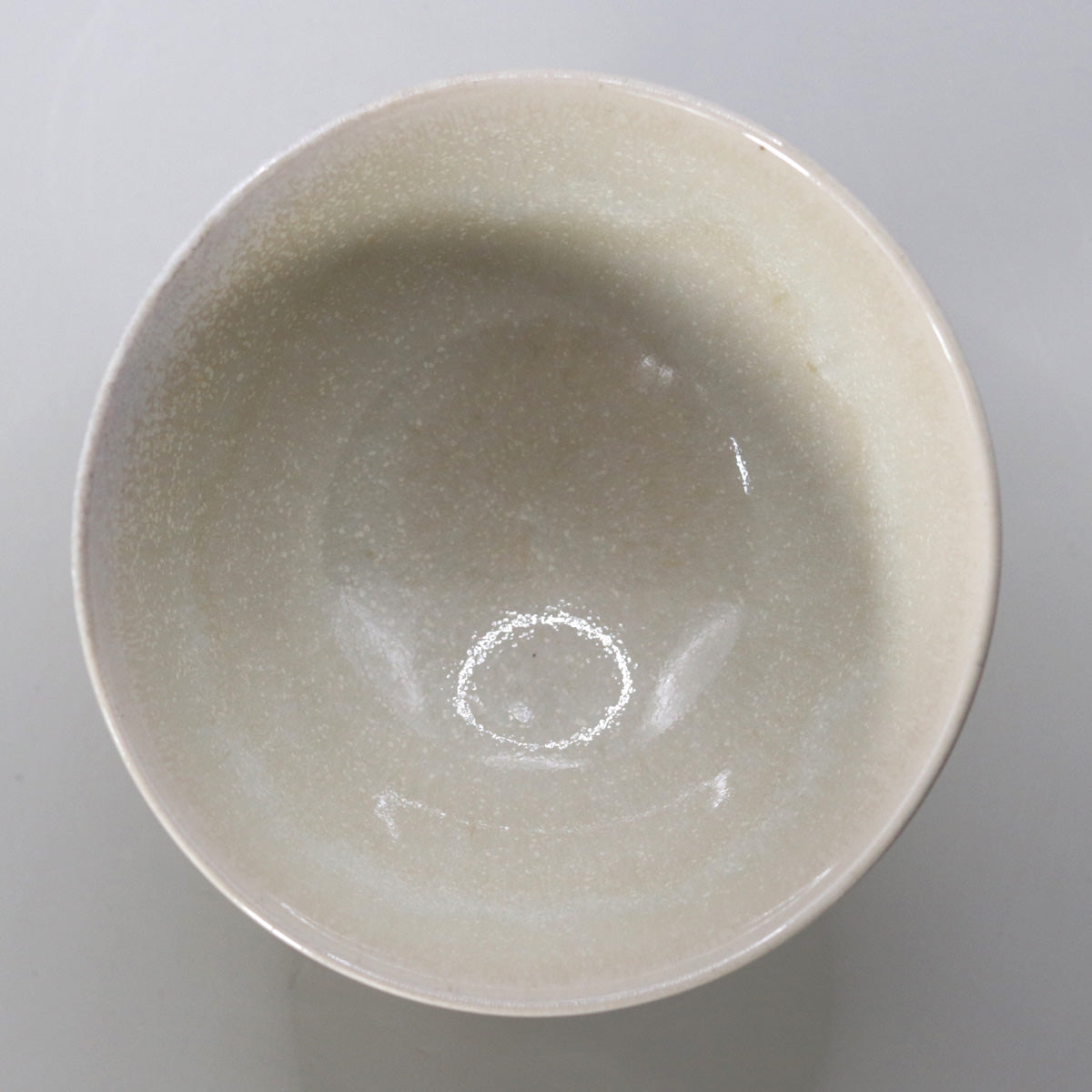
White glaze with crazing <br data-start="424" data-end="427">The white glaze that covers the entire body is riddled with fine crazing and has a pale yellow hue, creating a soft setting reminiscent of the hazy mountain air in spring.
2. Design - Yoshinoyama Quartet
Senbonzakura Obi <br data-start="528" data-end="531">Cherry blossoms are densely dotted in white paint on the upper part of the bowl, with the core pressed in gold paint. When you turn the tea bowl around, the cherry blossom obi becomes continuous, creating an uninterrupted "cherry blossom cloud" of 1,000 cherry blossoms.
Contrast between old and young pines <br data-start="620" data-end="623">The mountainside is dotted with pine trees, their trunks painted in red clay and their leaves painted in verdigris, creating a complementary color relationship with the cherry blossoms and tightening the picture. The lines that emphasize the undulations of the old pines evoke a sense of the eternity of Mount Yoshino.
Layered colors of the mountain surface <br data-start="715" data-end="718">Three colors - red clay, green clay, and pale yellow - are lightly applied to create the layered mountain surface with a sense of perspective, giving the vessel a sense of depth.
Pointillism of Spring Mist <br data-start="781" data-end="784">The speckled splashes of verdigris and ochre suggest pollen and young buds swaying in the spring mist, adding a sense of movement and a sense of the seasons.
3. Technique - The pinnacle of Kyoto-yaki color painting
The three-dimensional effect of white porcelain <br data-start="883" data-end="886">The cherry blossoms are thickly placed using a technique that mainly uses white lead, and a glossy finish is achieved by re-firing at a low temperature.
Layered color painting <br data-start="947" data-end="950">The depth and durability of the color is ensured by applying verdigris and red clay twice and firing at different temperatures.
Fine lines drawn in gold paint <br data-start="1011" data-end="1014">Extremely fine lines drawn in gold paint are used on the core of the cherry blossoms and the veins of the pine needles, enhancing their elegance and dignity.
4. Functional beauty at the tea ceremony
Matcha looks great <br data-start="1086" data-end="1089">The inside is a plain white glaze, allowing the green of the matcha to stand out brightly. The comb-like crazing casts gentle shadows on the tea surface, evoking the mist of spring mountains.
Storytelling Stage <br data-start="1160" data-end="1163">As the tea bowl is turned, the scenery changes from cherry blossoms to pine trees to the mountainside, allowing the host to deepen his conversation with his guests by sharing anecdotes related to Yoshino, such as "Yoshitsune's Hiding Tower" and "Saigyo's Cherry Blossoms."
Versatile for all seasons <br data-start="1243" data-end="1246">Although it is a cherry blossom design, it also features pine trees, making it suitable for use not only in spring but also in the seasons of fresh greenery and autumn leaves, making it an excellent piece that can be worn all year round.
5. Cultural background and modernity
Ever since the Kokinshu (Collection of Ancient and Modern Art), Mount Yoshino has been the subject of numerous poems and illustrated scrolls as a place of cherry blossoms and faith. While building on this classical imagery, this work has been reconstructed in a modern way using a trio of white porcelain, verdigris, and gold paint, giving it a lightness that stands out in a modern tea ceremony. Continuing the tradition of "kirei sabi," Onishi Rakusai has skillfully blended the simplicity of the earth with the splendor of the colored paintings, creating a new Yoshino illustrated scroll that bridges the past and present.
The scent of a thousand cherry blossoms blooming in the white-glazed spring haze, the green of the pompous pine trees, and the reddish-brown of sunlight staining the mountainside - Onishi Rakusai's Yoshinoyama tea bowl is as if the very image of the "mountains welcoming spring" has been condensed into a single vessel. Placed at a tea ceremony, guests will sip matcha while enjoying the faint floral fragrance, and their thoughts will be transported to the distant Yoshino. This exquisite bowl combines function and elegance, with wabi (traditional Japanese style) and elegance.
Share
-
[I will send it to you quickly and carefully]
We carefully package each product in a way that suits it best.
Also, delivery times vary depending on the piece (vessel, etc.).
Items that already come with a box will be shipped within 1-3 days of the order date.
For items that require a box to be made after your order, it will take approximately 30 days for production to be completed and then shipped.
In either case, once we have confirmed your order, we will contact you by email to inform you of the delivery date.
-
[Requests when purchasing pottery]
Even products that look the same may differ slightly in color, shape, size, etc.
The way the glaze is used, the power of the kiln, the firing method, the season, and the humidity also affect the appearance of the pottery.
Please understand the individuality of each piece of pottery and enjoy the unique warmth of handmade.