
Nerikomi blue star birth tea bowl Suwa Sozan
Nerikomi blue star birth tea bowl Suwa Sozan
Couldn't load pickup availability
Width: 13.9cm Height: 6.4cm
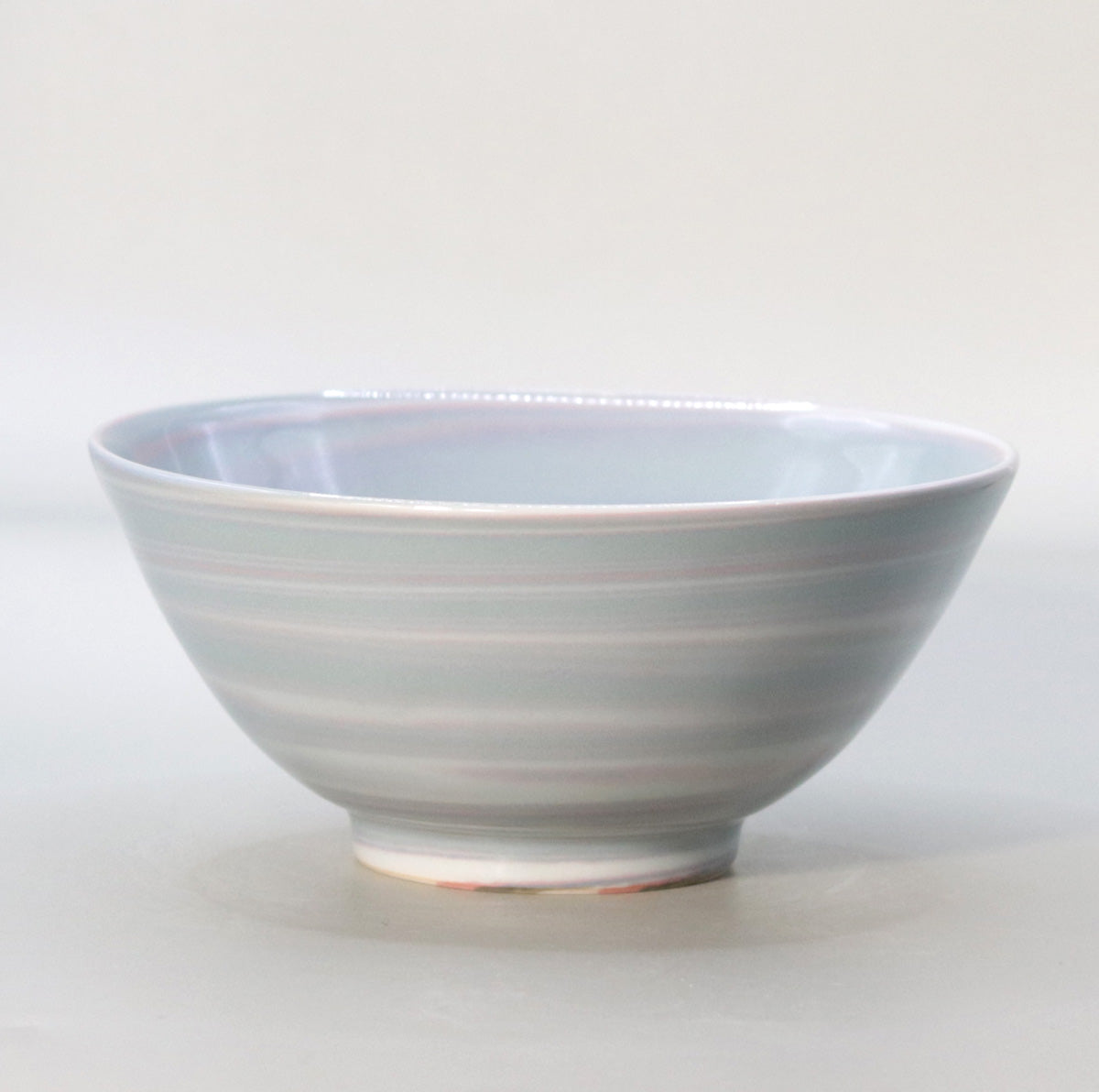
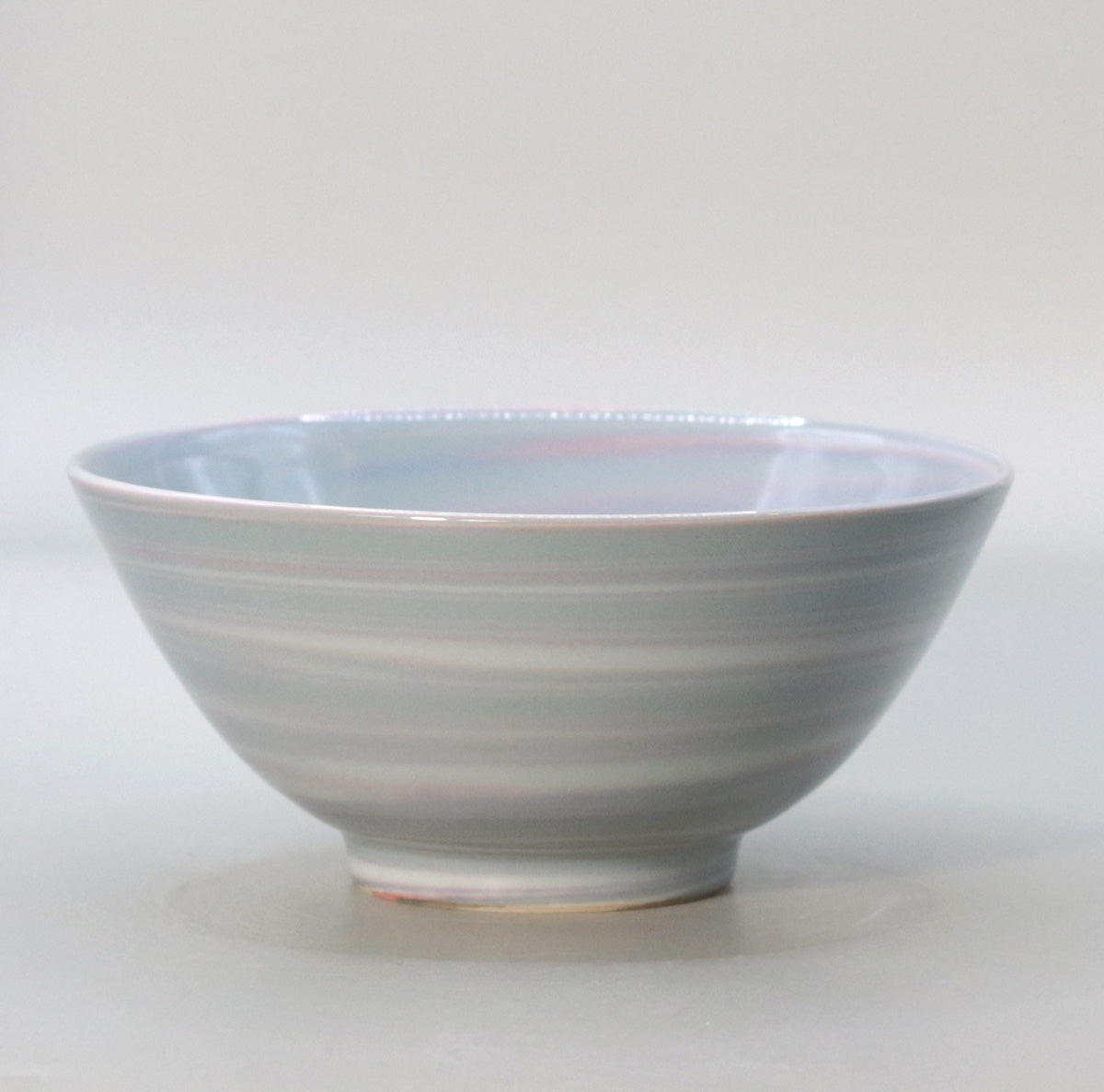
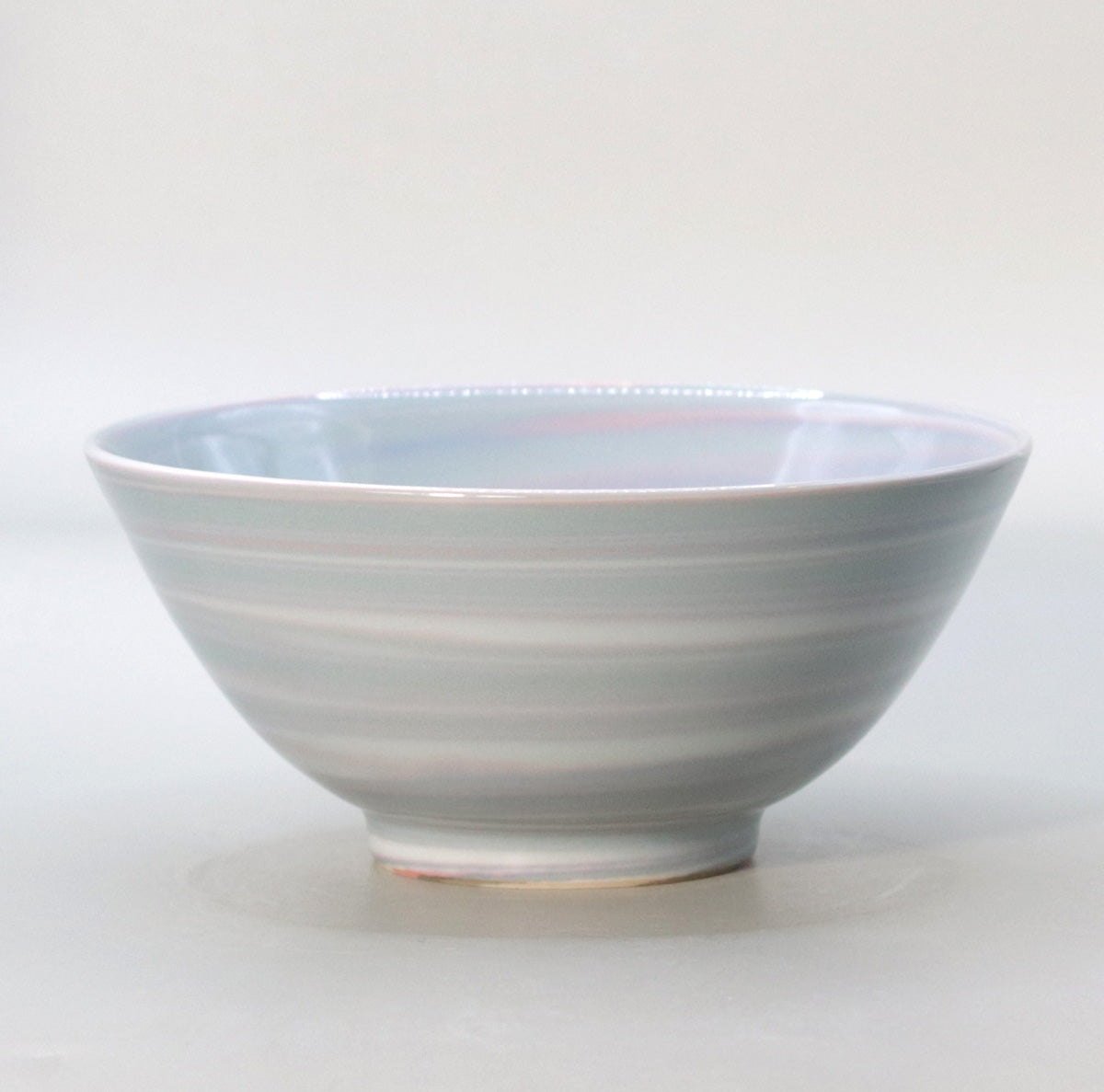
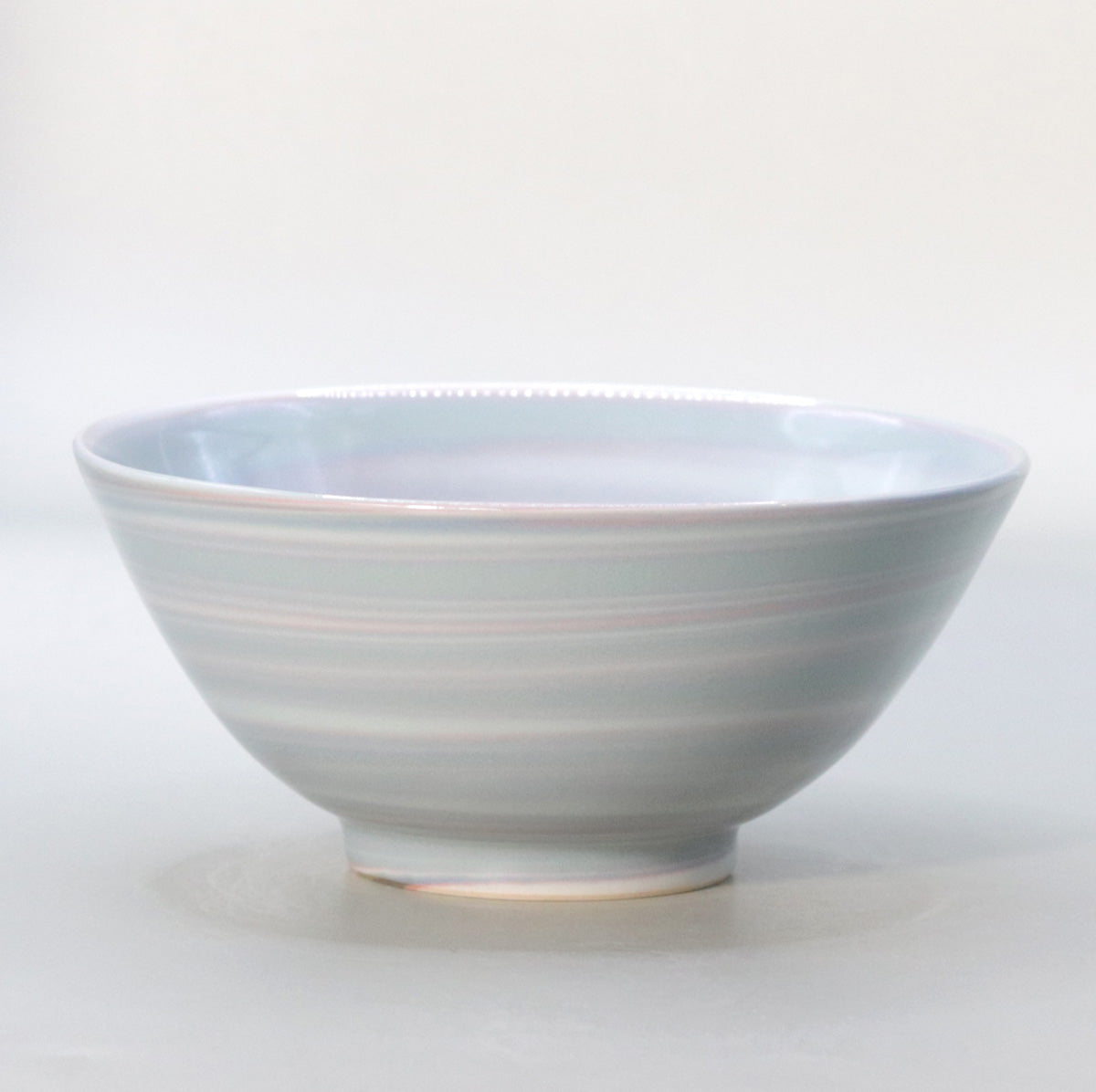
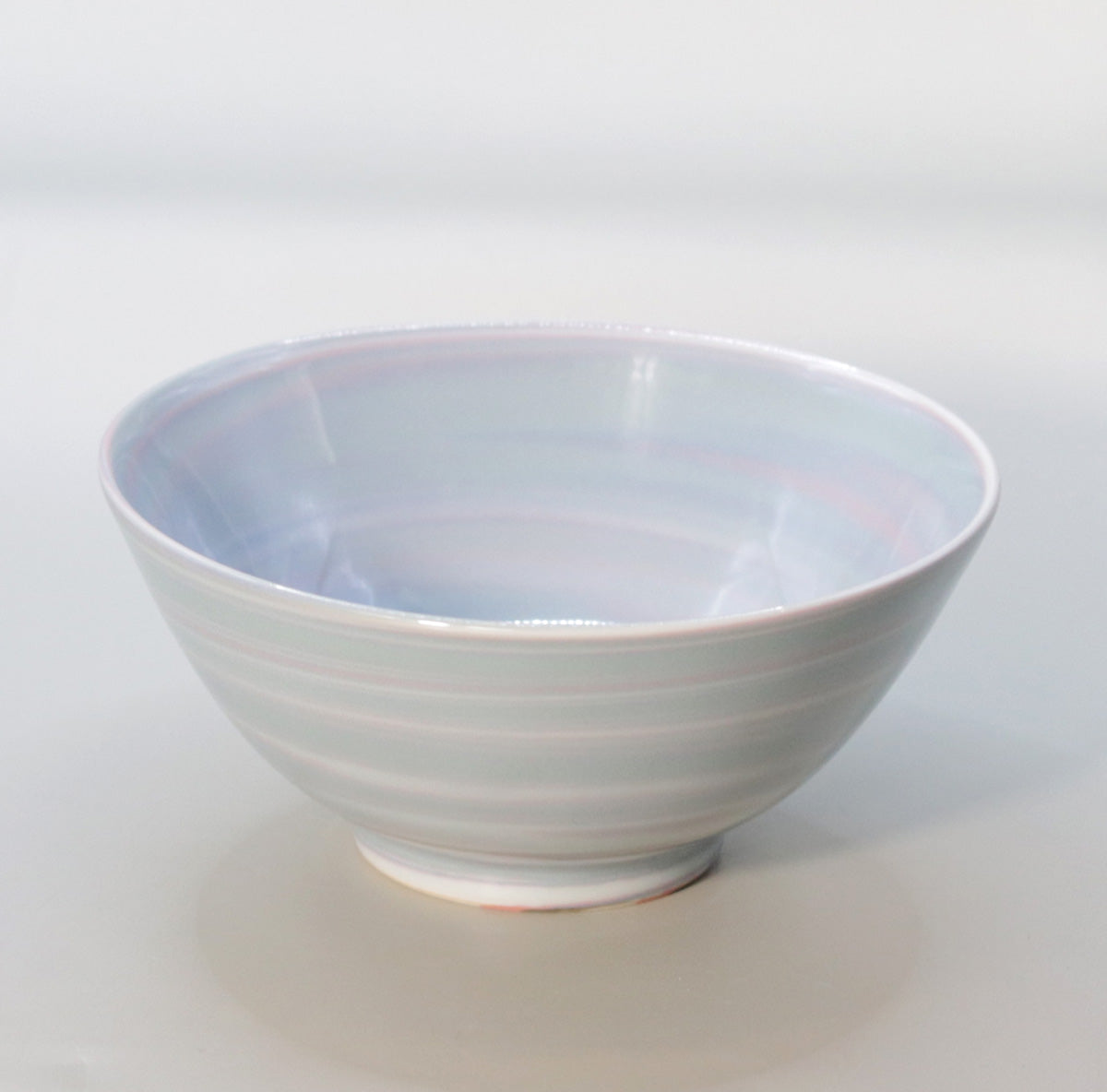
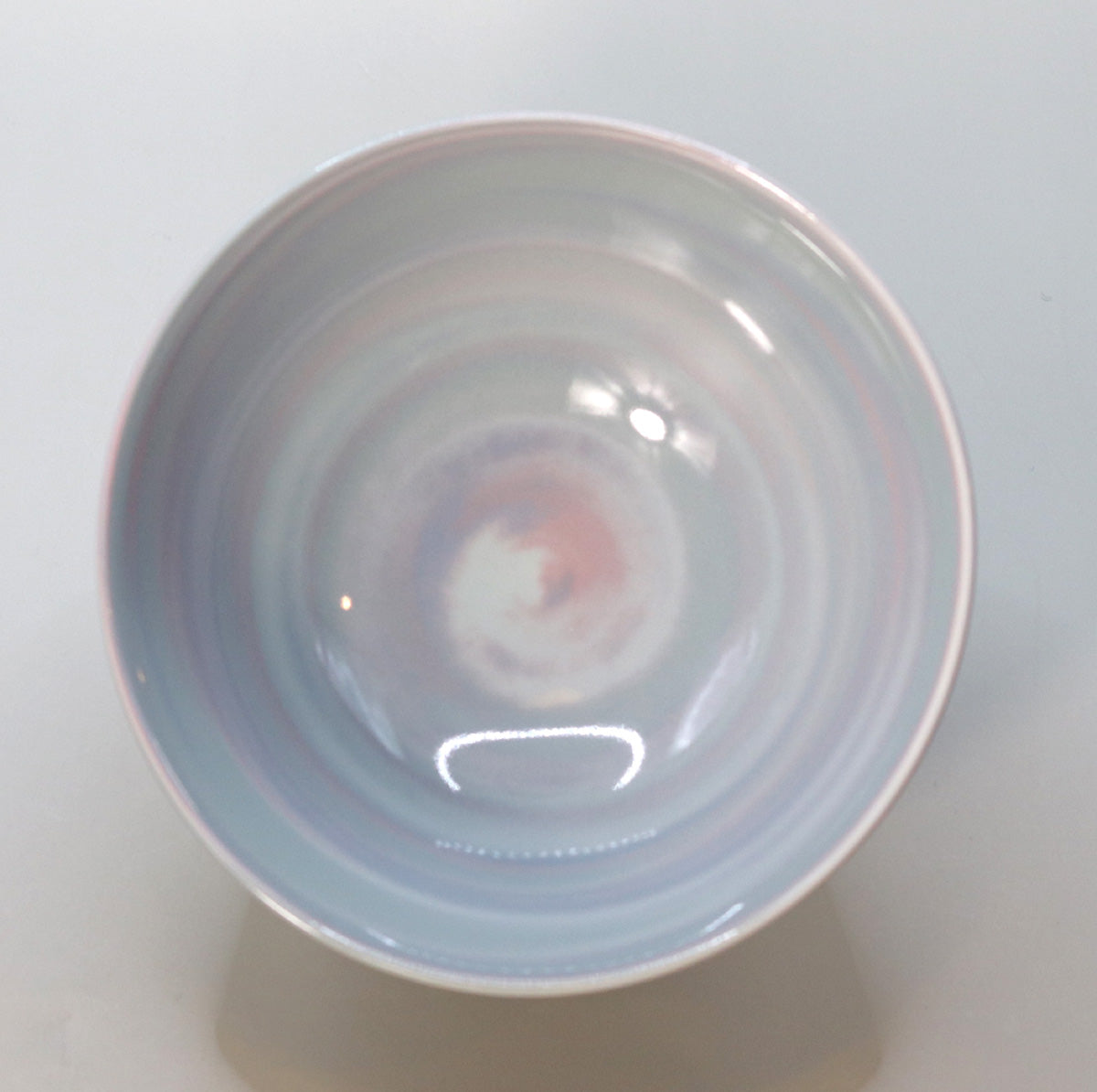
This "Nerikomi Celadon Seitan Tea Bowl" is a matcha bowl created using the "nerikomi" technique, in which layers of four-colored porcelain clays—white porcelain, celadon, blue porcelain, and red porcelain—are layered and ground in one go on a potter's wheel. The moment a new star is born from a nebula in the distant universe, a pink glow is emitted—the name "Seitan" (Star Birth) came from the desire of Suwa Sozan IV to capture this scene within the bowl's surface. The pale jade-colored celadon base, with deep indigo and sparkling crimson spiraling, reflects the majestic drama of the universe within its gentle, uncontrived form.
molding
Modestly cambered rim
The rim is slightly curved outwards, allowing for smooth handling of the tea whisk and a soft feel on the lips. The pale pink line running along the rim evokes the sky at dawn and gives rhythm to the outer perimeter of the vessel.
Shallow spreading prospects
The inside of the cup is shallow, and the kneaded pattern gently converges towards the bottom. When the matcha is poured, the green liquid surface shines like a nova at the center of a nebula, forming a visual focus.
Light elevation
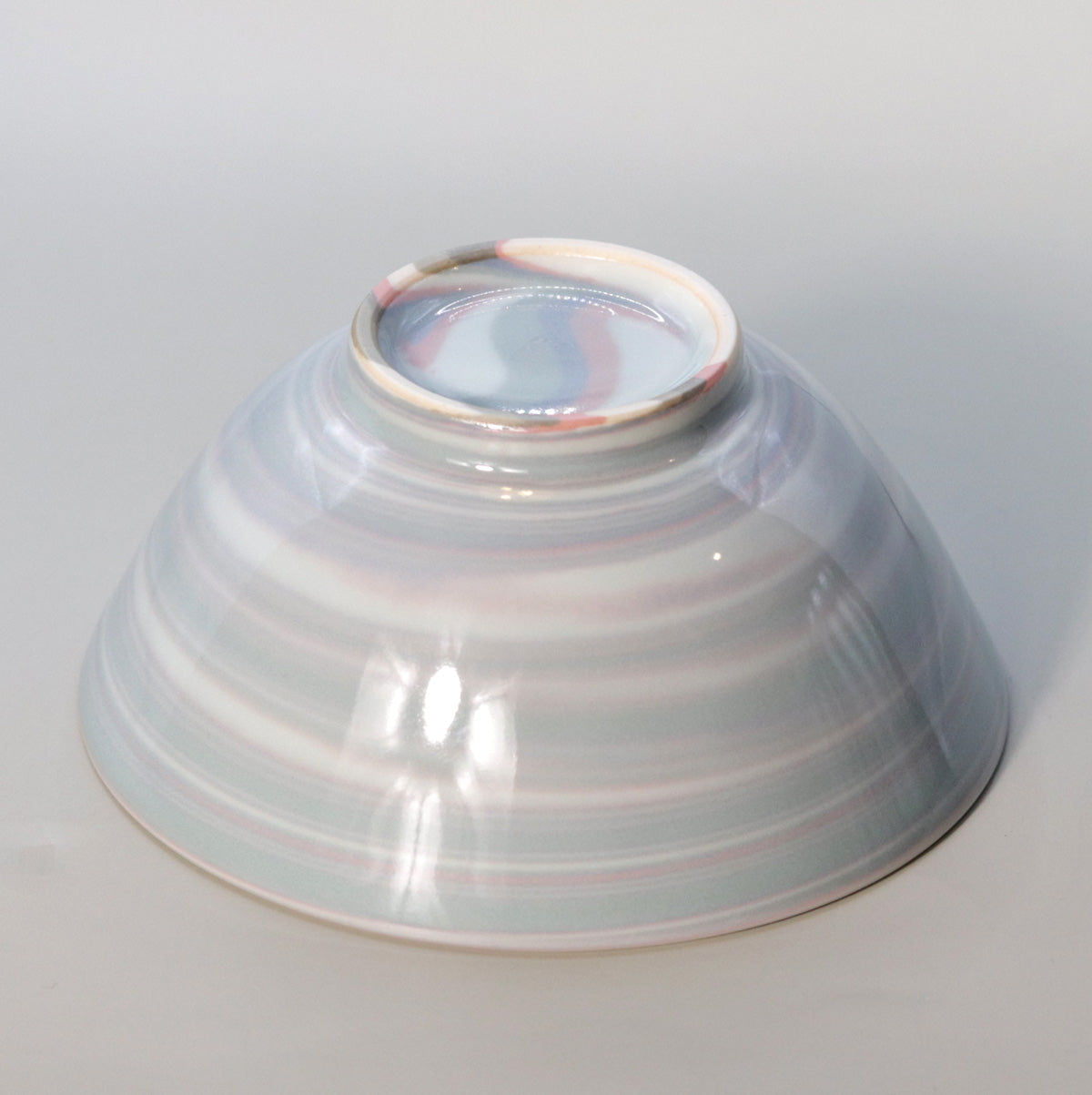
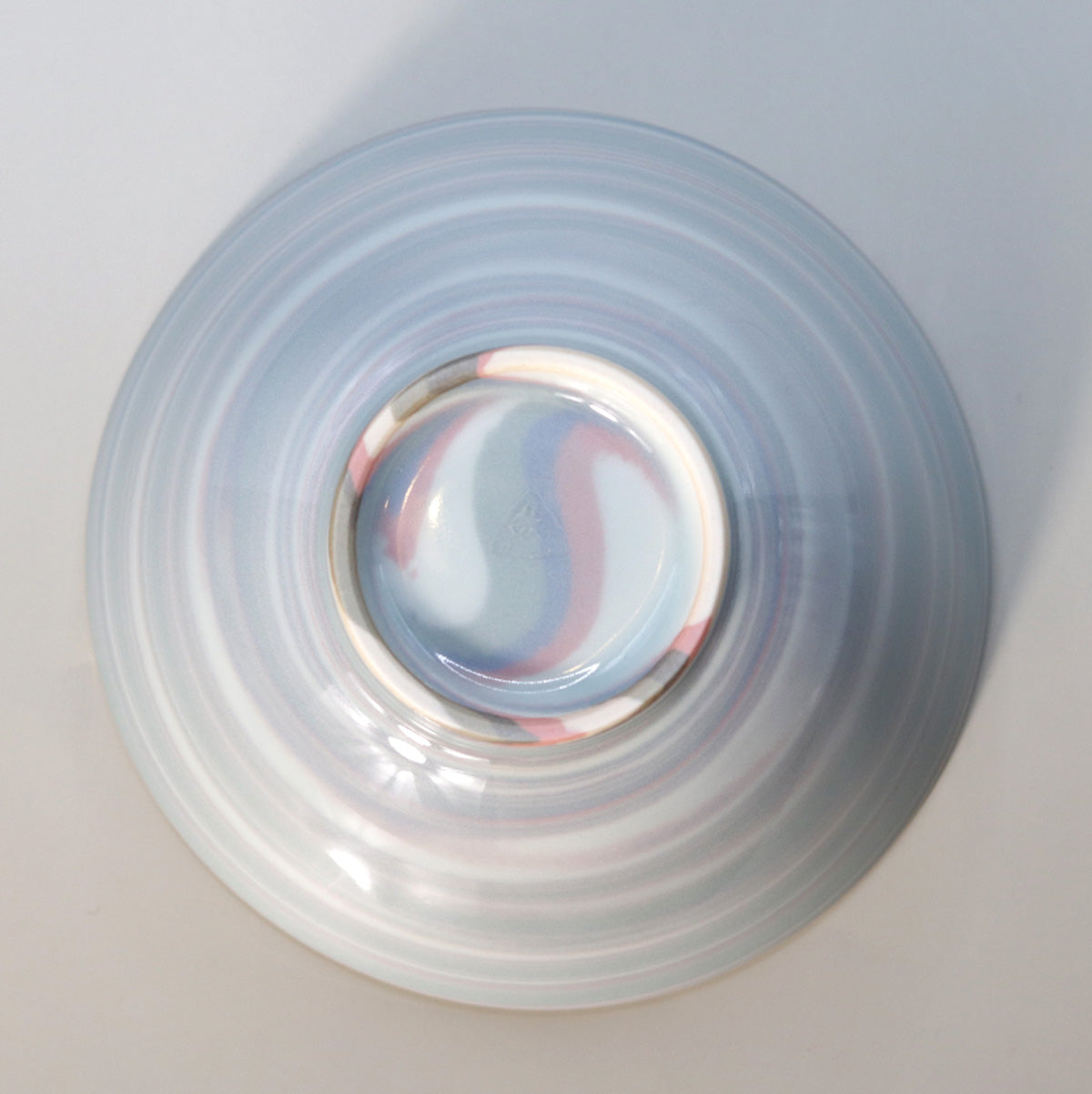
The base is carved low and flares outwards slightly. It feels stable in the palm of your hand, and combines a light appearance with practicality. The crimson layer is intentionally exposed at the base, suggesting the glow of the stars.
Nerikomi technique and glaze tone - Depth of layers that embraces nebulae
Layered structure of four-colored porcelain clay <br data-start="709" data-end="712">White porcelain, celadon porcelain, blue porcelain, and red porcelain are rolled out in order into plates, stacked in a thousand layers, rolled into a cylinder, and formed into a core before being shaped on a potter's wheel. As the clay rotates, the layers form a spiral, and stripes reminiscent of the vortex of a galaxy spontaneously appear. No two tea bowls have the same appearance.
A veil of transparent celadon glaze <br data-start="840" data-end="843">After shaping, a highly transparent celadon glaze is applied over the entire surface and then reduced firing is performed. The glaze layer acts as a glassy membrane that envelops the internal layered pattern and catches the light, creating depth and a soft blur. The celadon layer evokes the stillness of the deep sea, the crimson layer suggests the heat of a star being born, and the celadon layer gives the whole piece clarity.
The feel of the glaze surface <br data-start="987" data-end="990">The glaze surface is smooth and feels as if it is sticking to your fingertips. While you can visually appreciate the colors of the kneaded ware, the tranquility of the texture soothes the mind through the palm of your hand.
Harmony with Matcha <br data-start="1374" data-end="1377">The vivid green of the matcha emerges in four colored layers, creating a visual effect as if the "core of the universe" has been born inside the tea bowl.
Lighting Effects <br data-start="1447" data-end="1450">When illuminated by the warm light of lanterns or candles, the crimson layer glows softly, while the blue layer emphasizes the depth of the starry sky. The mysterious scenery is particularly striking at night.
history
The lineage of Nerikomi
The nerikomi technique originated in the Nara period by nerijozu, and was developed in Satsuma and Kyoto ware in the late Edo period. Suwa Sozan IV has combined the Suwa family tradition, which is based on celadon, with the nerikomi technique, opening up new possibilities for modern celadon that expresses a cosmic vision.
The story of the birth of a star
The cosmic designs seen in the underglaze red and blue-and-white porcelain of Jingdezhen from the Yuan and Ming dynasties are reinterpreted in a modern way using a layered structure of four-colored porcelain clay. The color of the red porcelain is produced using copper as the main coloring agent, and is stabilized by reduction cooling. Cobalt is used in the blue porcelain layer, and by balancing it with the iron in the celadon layer, a deep color tone is achieved without compromising transparency.
Fourth generation Suwa Sozan
Suwa Sozan IV (born in Kyoto in 1970) was trained by Suwa Sozan III and lacquer artist Nakamura Sotetsu XII, and succeeded to the title in 2002. With a background in celadon research, he utilizes a variety of techniques, including Hotarude, Tobiseiji, and Nerikomi celadon , and upholds the philosophy that "each piece should have a story to tell, and be completed in harmony with the user's heart." This tea bowl is imbued with the desire to bring the "brilliance of a nova emerging from a nebula" to the palm of your hand, bringing a deep breath of cosmos into the moment of your tea ceremony.
The "Nerikomi Celadon Star Birth Tea Bowl" is a masterpiece that depicts the repeated birth of stars in the distant universe, with the tranquil jade-colored celadon embracing the deep indigo ocean and a crimson nova, reflecting the birth of stars in the distant universe. It embodies dignity and elegance rather than extravagance, and when matcha is poured into it, the green light reflects the stars illuminating the night sky. This work, the culmination of the refined sculptural sense and nerikomi techniques of Suwa Sozan IV, brings the tranquil universe into the tea ceremony and is sure to bring infinite expanse and warm hope to the hearts of those who see it.
Share
-
[I will send it to you quickly and carefully]
We carefully package each product in a way that suits it best.
Also, delivery times vary depending on the piece (vessel, etc.).
Items that already come with a box will be shipped within 1-3 days of the order date.
For items that require a box to be made after your order, it will take approximately 30 days for production to be completed and then shipped.
In either case, once we have confirmed your order, we will contact you by email to inform you of the delivery date.
-
[Requests when purchasing pottery]
Even products that look the same may differ slightly in color, shape, size, etc.
The way the glaze is used, the power of the kiln, the firing method, the season, and the humidity also affect the appearance of the pottery.
Please understand the individuality of each piece of pottery and enjoy the unique warmth of handmade.