
Powder-drawn horse cup Dohachi Takahashi
Powder-drawn horse cup Dohachi Takahashi
Couldn't load pickup availability
Width: 12.3cm Height: 9.98cm
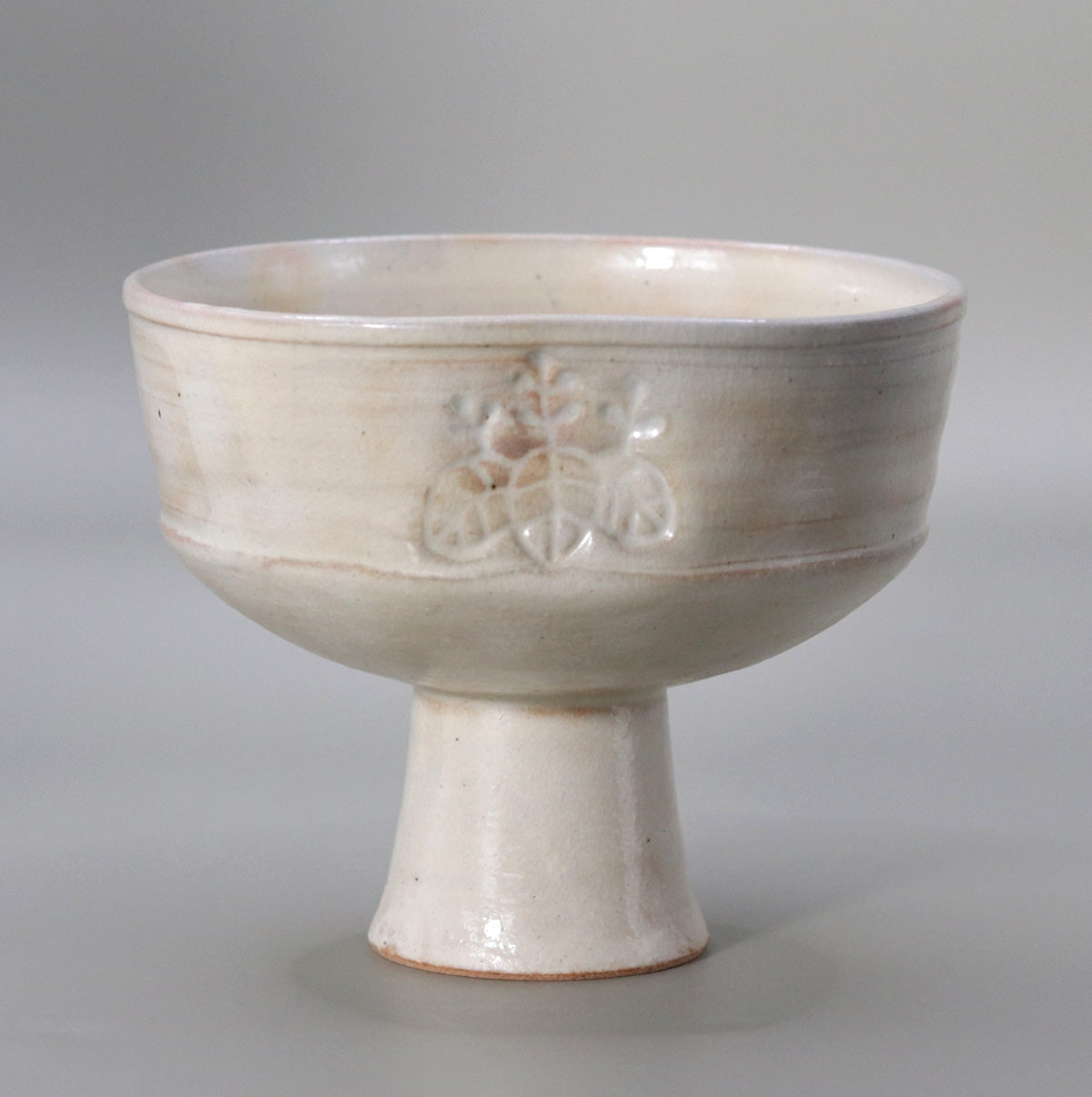
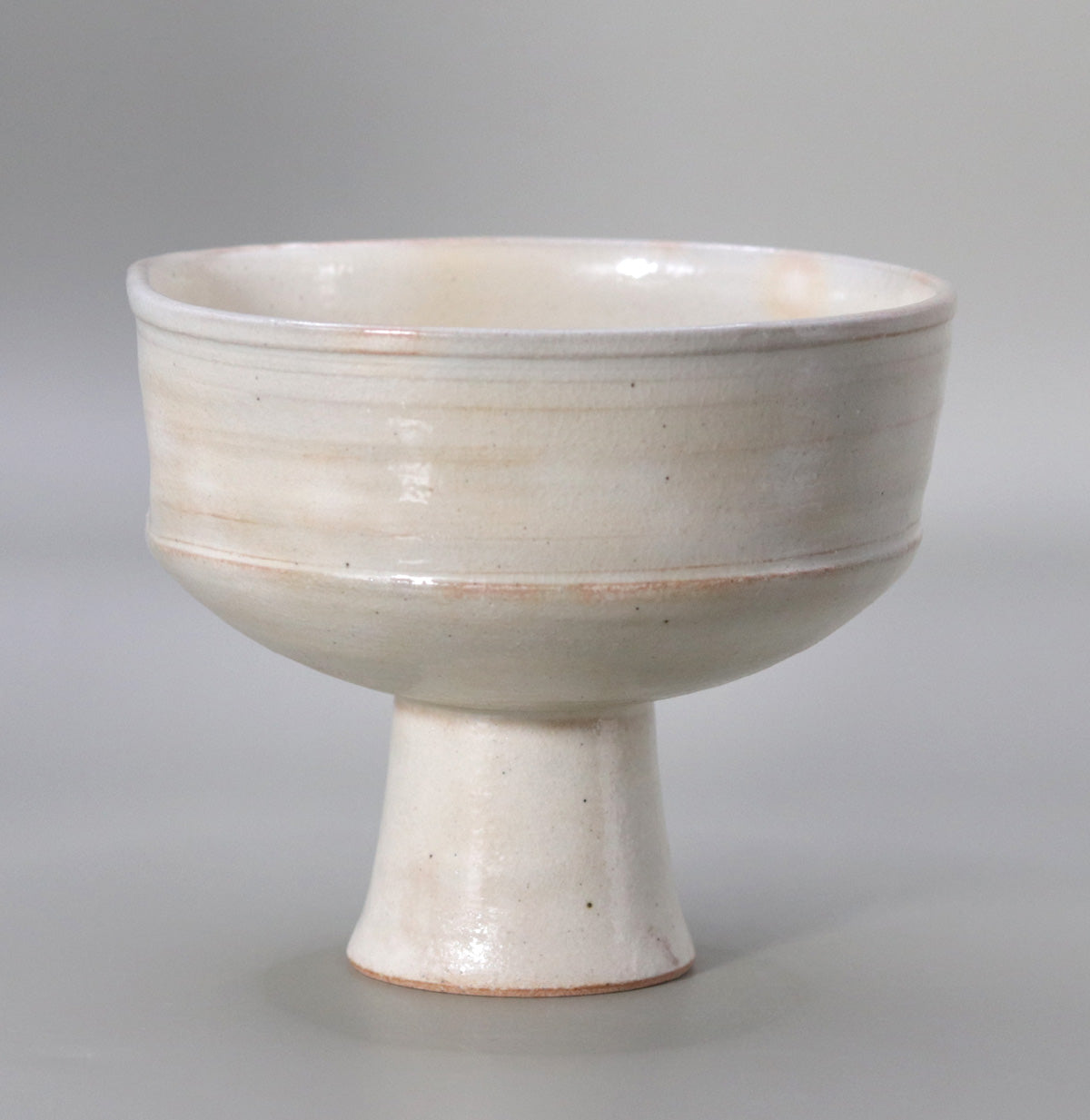
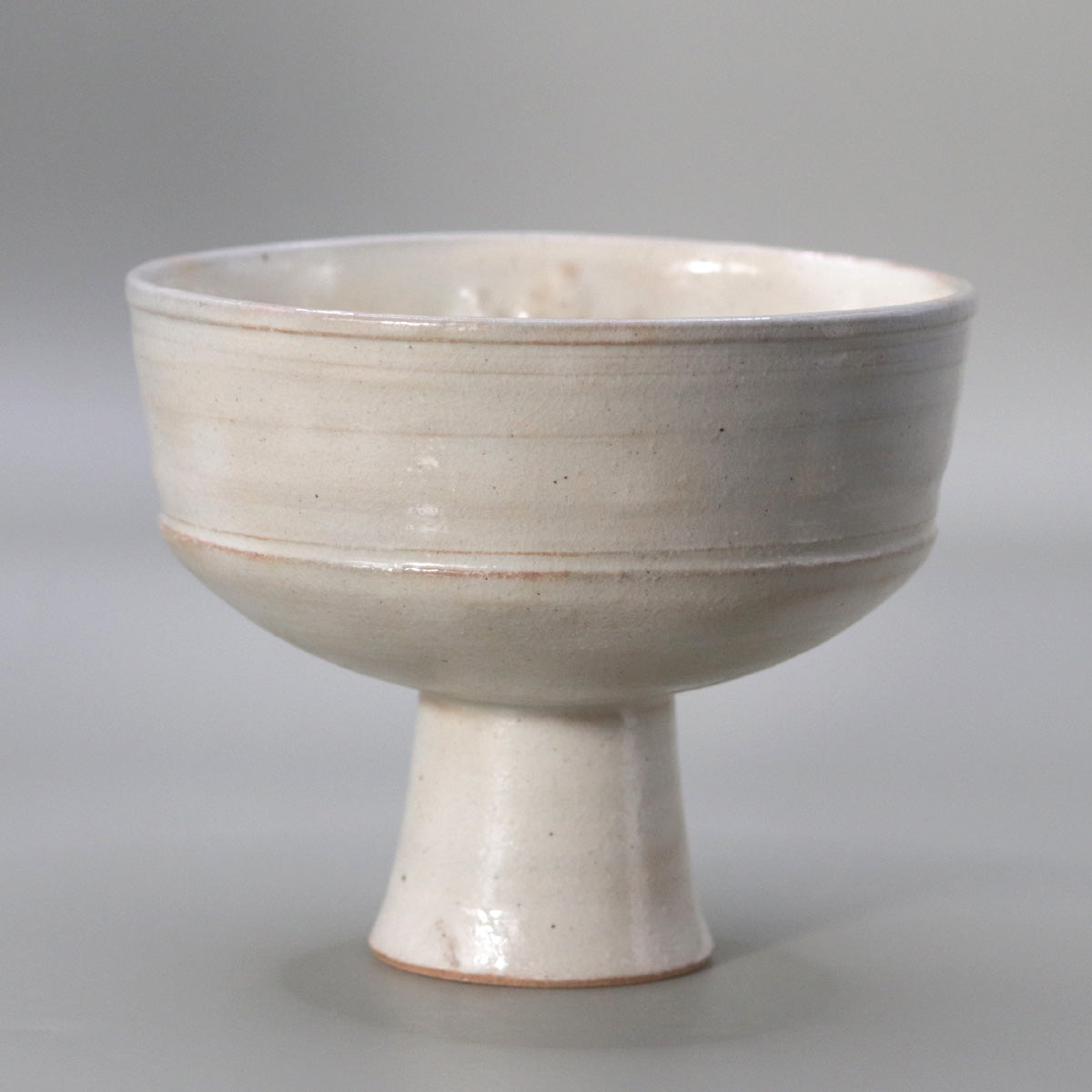
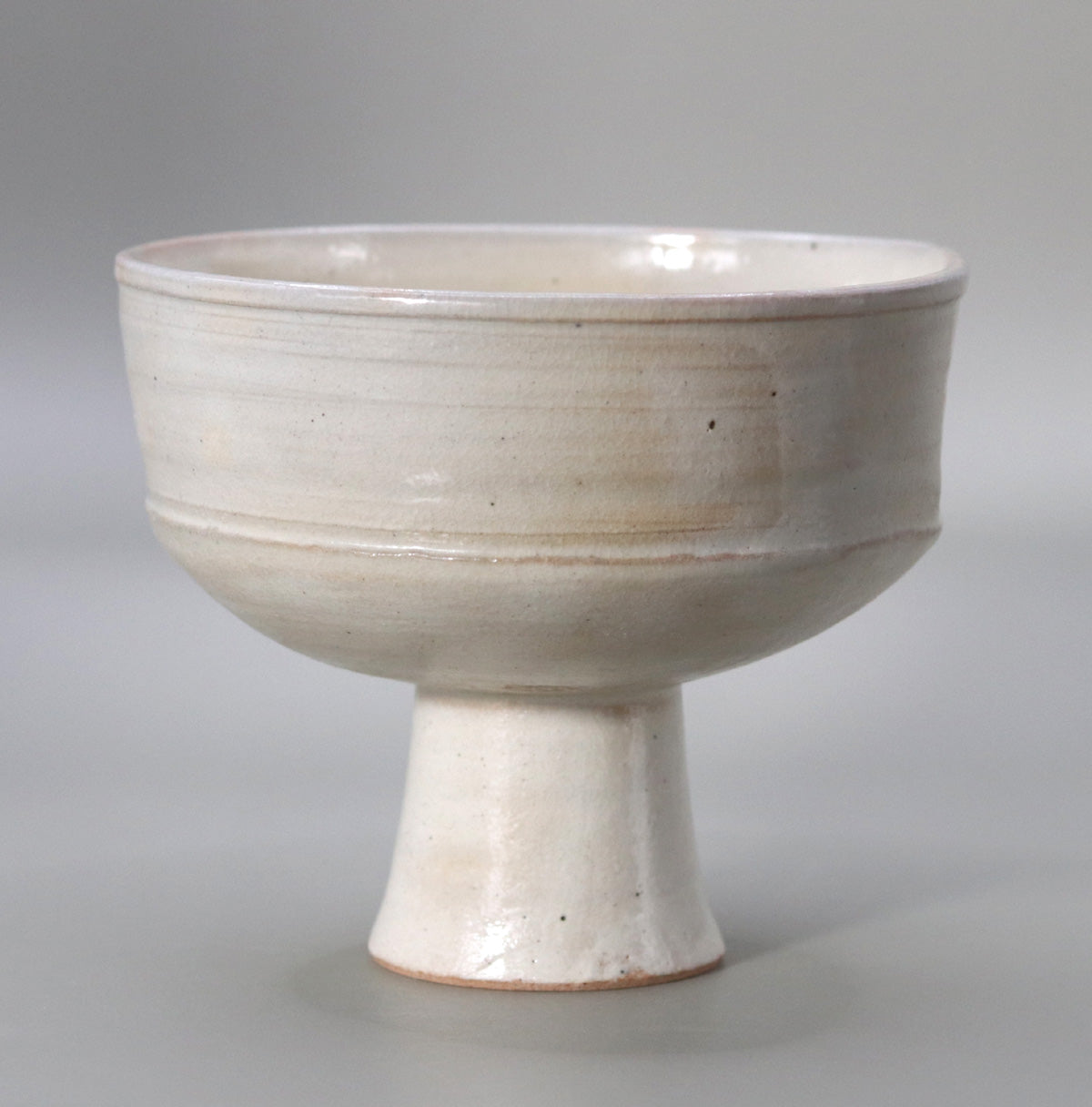
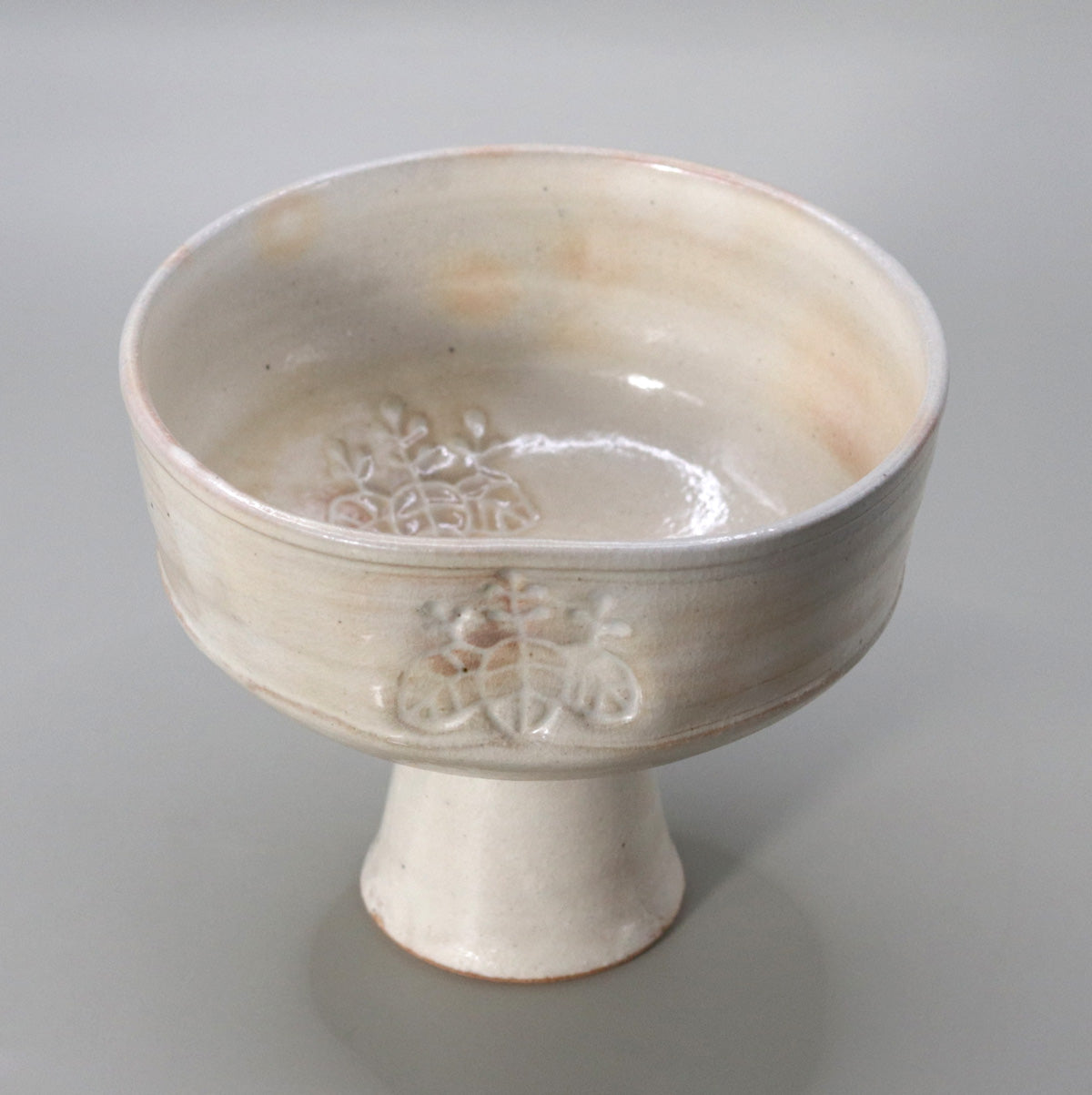
The slightly reddish milky white powder glaze creates a soft appearance, and the slender, high-footed, horse-riding sake cup shape creates a dignified presence, making this a masterpiece that crystallizes Takahashi Michihachi's unique refinement and eye for antique style. Below, we will explain its appeal in detail from five perspectives.
The elegance and practicality of the horse-riding sake cup design
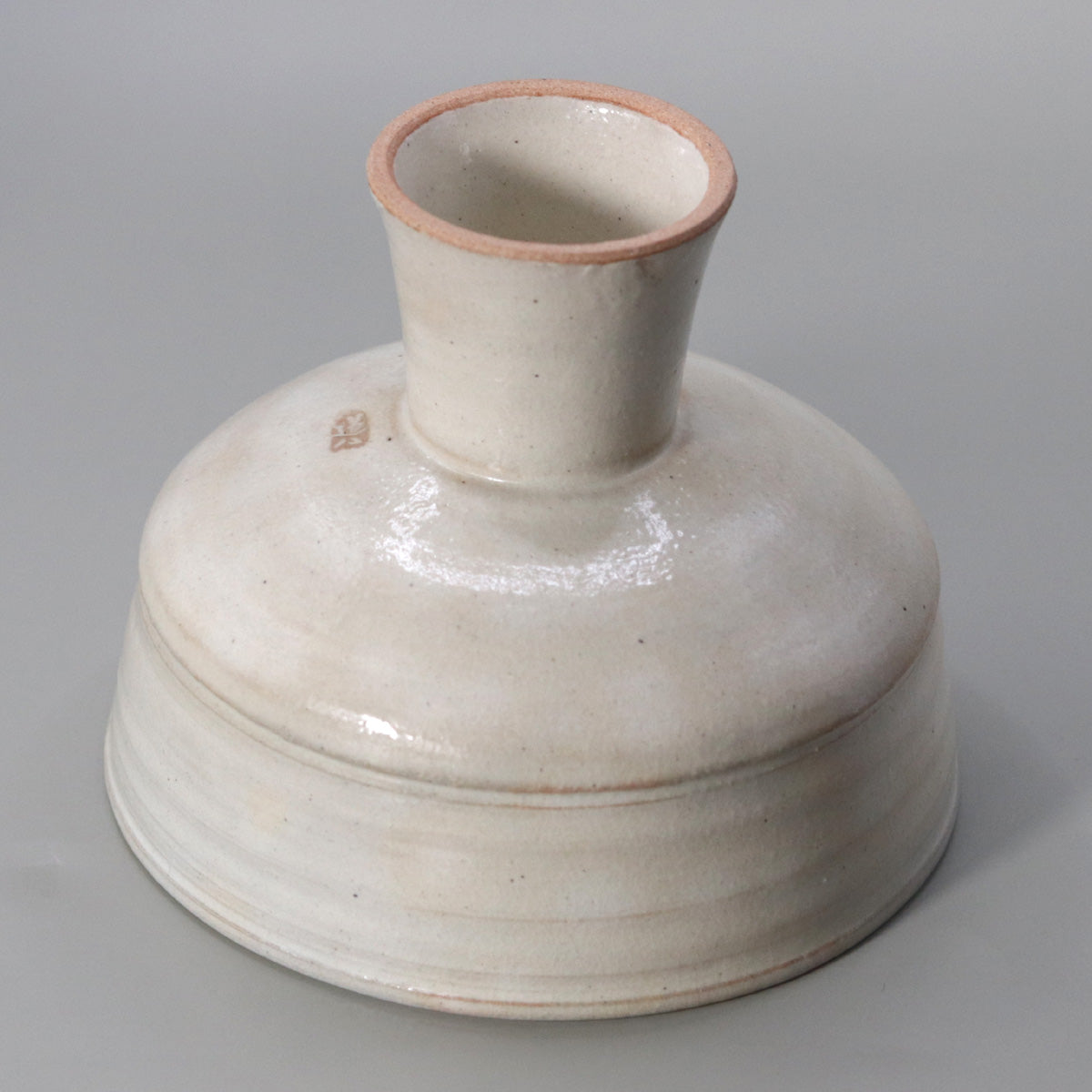
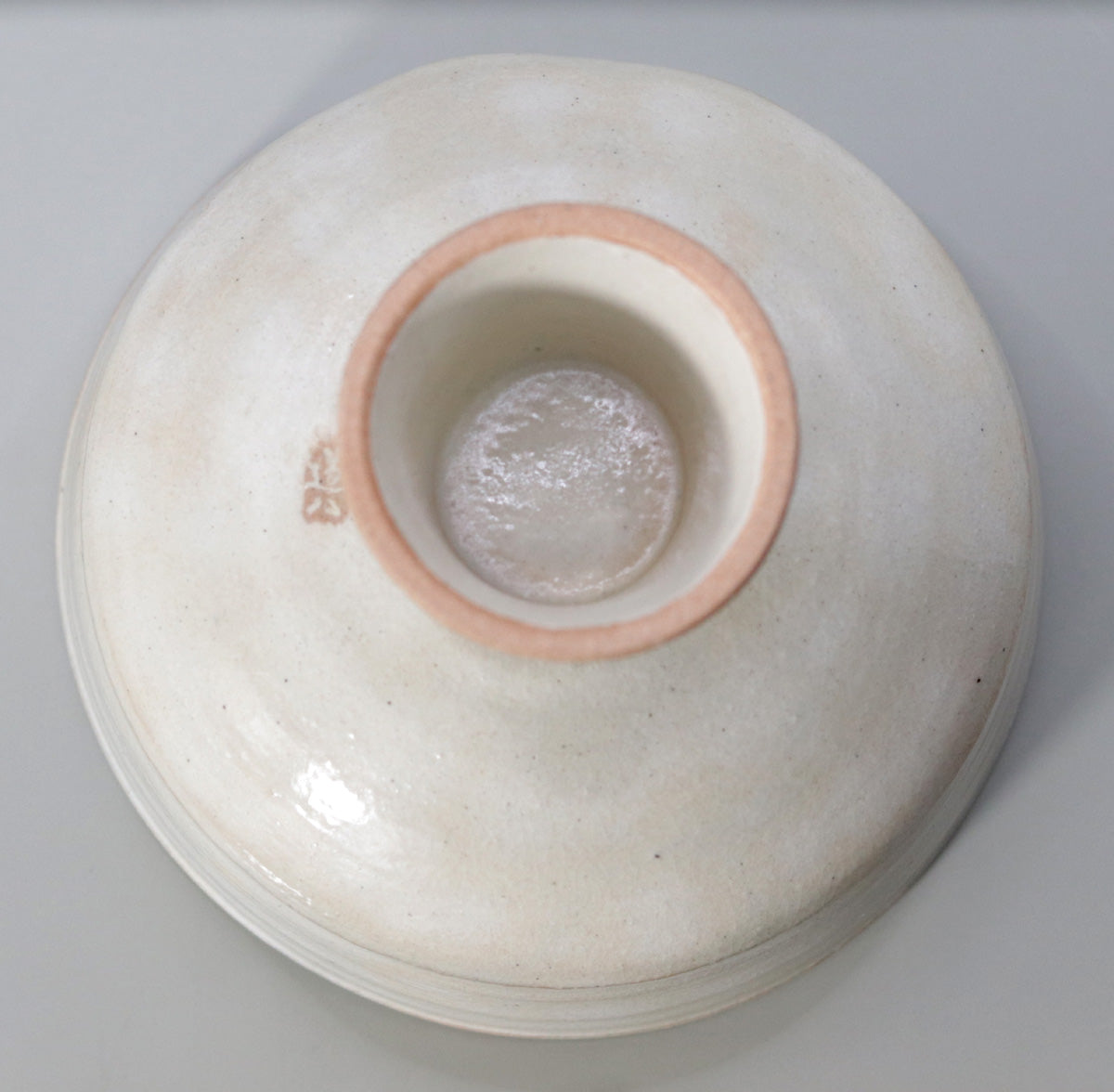
The term "bajohai" (horseback sake cup) originates from a vessel with a high base that allowed military commanders to easily raise the cup while on horseback. This piece transfers this design to a tea bowl, with a bulging body and a trumpet-shaped base, creating a light, airy appearance that makes the entire cup appear to float in the air when placed on the table. The rim is slightly curved outwards, providing functionality by allowing it to catch the foam of matcha in a generous amount.
Snow-white finish with a subtle red accent
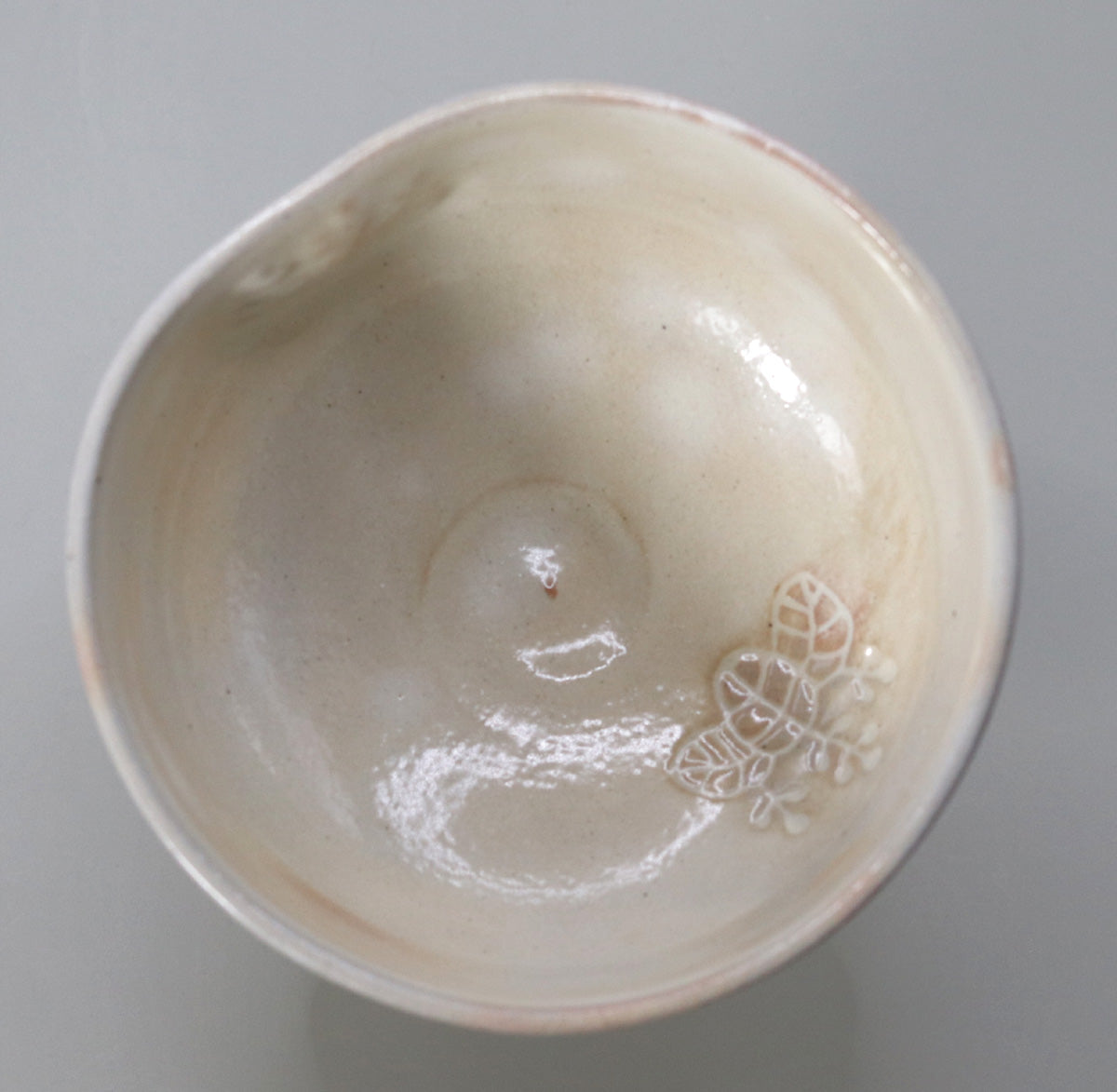
Kohiki, a technique in which a white glazing clay is applied to the clay body and then covered with a transparent glaze, is a technique that originated in the Buncheong porcelain of the Joseon Dynasty of Korea. In this piece, the iron of the base material is faintly visible beneath the white glazing, and pale cherry blossom-colored "Gohonde" patterns are scattered throughout. The light brown fire color that appears during firing adds warmth to the scene, and with repeated use, tea stains will seep into the crazing, developing the appearance of pale ivy leaves falling on snow-covered surfaces.
Paulownia crest relief on the body
On the front of the body, a paulownia crest, an auspicious motif also used in the previous candy-glazed horse-riding sake cup, is shallowly carved to give it a faint appearance. It is half-melted under the glaze, and its hazy, hazy appearance gives it a sculptural elegance that is different from painted painting. This pattern, which adds subtle shadows to the all-white world, brings rhythm and a sense of story to the tranquil surface of the vessel.
The magic of white glaze and reduction firing
The Kohiki process, in which a moderately thick layer of white clay is applied after bisque firing, and after drying a transparent glaze is applied and fired in a reducing flame, is difficult to determine the thickness of the coating and the degree of reduction, and requires advanced kiln-handling techniques that take into account crazing due to temperature differences and the appearance of the porcelain.By flowing the glaze evenly all the way down to the legs and wiping the tatami mat (ground surface) clean, we have achieved both visual unity and safety.
History - The "Mitate" of Kohiki and Bajou Sake
Kohiki tea bowls were imported from the Korean Peninsula in the late 16th century and were beloved by tea masters, earning them the nickname "the symbol of wabicha" (wabi tea). Meanwhile, the horse-mounted sake cup style was prized as a type of sake cup amid the trend toward the reverence of Chinese goods, and is said to have been adopted by tea masters in the Edo period as a playful way to "liken a sake cup to a tea bowl." By combining two different classical styles, this piece pays homage to the past while offering a modern interpretation that stands out in contemporary tea ceremonies.
The Takahashi Dohachi family has been known as a prestigious Kyoto ware colored enamel family since the late Edo period. The ninth generation master graduated from Kyoto Bunkyo Junior College, majoring in fashion design, and then went on to study molding and research at the Kyoto Prefectural Ceramic Technical College, and further solidified his technical foundation at the Kyoto Industrial Research Institute.
In 1996, he began to study pottery under his father, Dohachi Yashiro, and began making pottery in earnest.
In 2012, he took on the name of the 9th Takahashi Dohachi
His style, which combines the sense of form cultivated through clothing design with the traditional techniques of Kyoto ware, breathes new life into the Dohachika style and displays a refinement that stands out in modern tea ceremony and gallery spaces.
With its milky white powder-glazed lacquerware that quietly reflects the light and the paulownia crest that floats in soft shadows, this tea bowl is a rare find that combines the tranquility of wabi with a hint of celebration. When picked up, the base rests naturally on the fingers, and the light center of gravity gracefully guides the tea ceremony. Perfect for the first tea ceremony of spring or the lingering autumn tea ceremony, or even for everyday practice, the green of the matcha will shine brightly in the milky white bowl, completely transforming the atmosphere of the tea room. We hope you will treasure this bowl for many years to come, and enjoy the beauty of the powder-glazed lacquerware that deepens with age and the exceptional sculptural beauty of Takahashi Michihachi's work.
Share
-
[I will send it to you quickly and carefully]
We carefully package each product in a way that suits it best.
Also, delivery times vary depending on the piece (vessel, etc.).
Items that already come with a box will be shipped within 1-3 days of the order date.
For items that require a box to be made after your order, it will take approximately 30 days for production to be completed and then shipped.
In either case, once we have confirmed your order, we will contact you by email to inform you of the delivery date.
-
[Requests when purchasing pottery]
Even products that look the same may differ slightly in color, shape, size, etc.
The way the glaze is used, the power of the kiln, the firing method, the season, and the humidity also affect the appearance of the pottery.
Please understand the individuality of each piece of pottery and enjoy the unique warmth of handmade.