


Shigaraki Bamboo Flower Vase by Hideki Yanashita
Shigaraki Bamboo Flower Vase by Hideki Yanashita
Couldn't load pickup availability
Width 10.0cm Height 24.5cm
The coexistence of simplicity and elegance: giving Shigaraki clay to the form of a bamboo vase
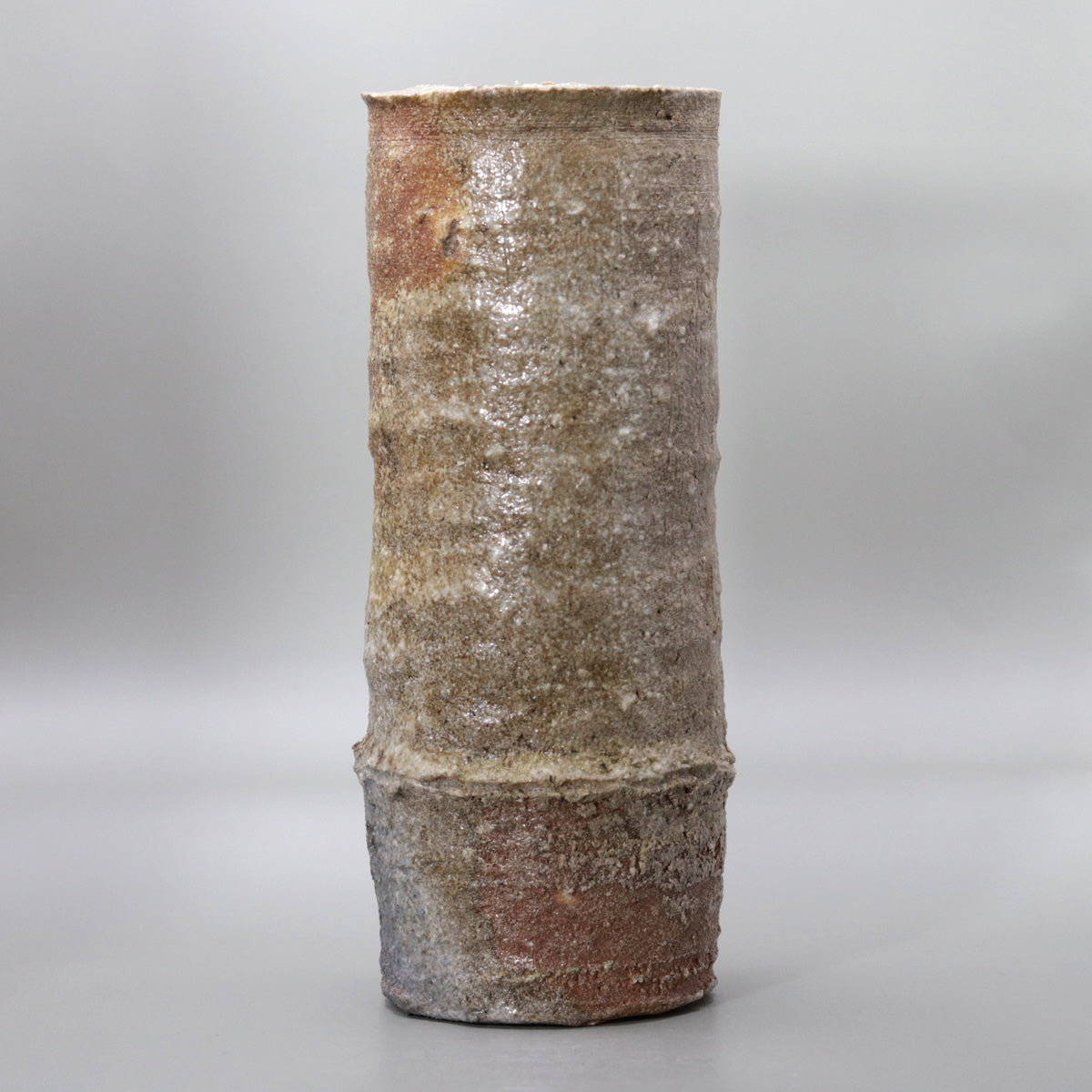
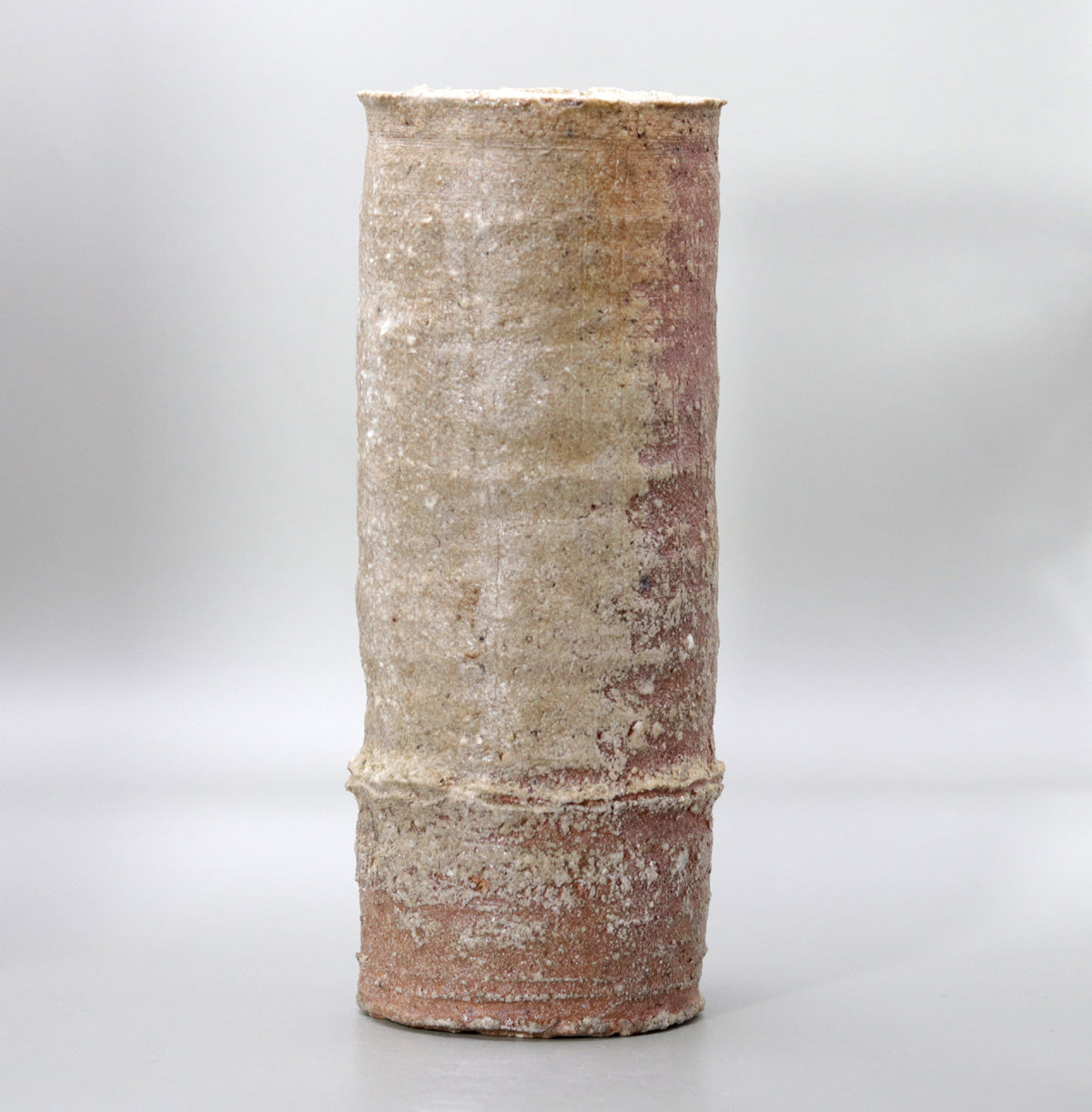
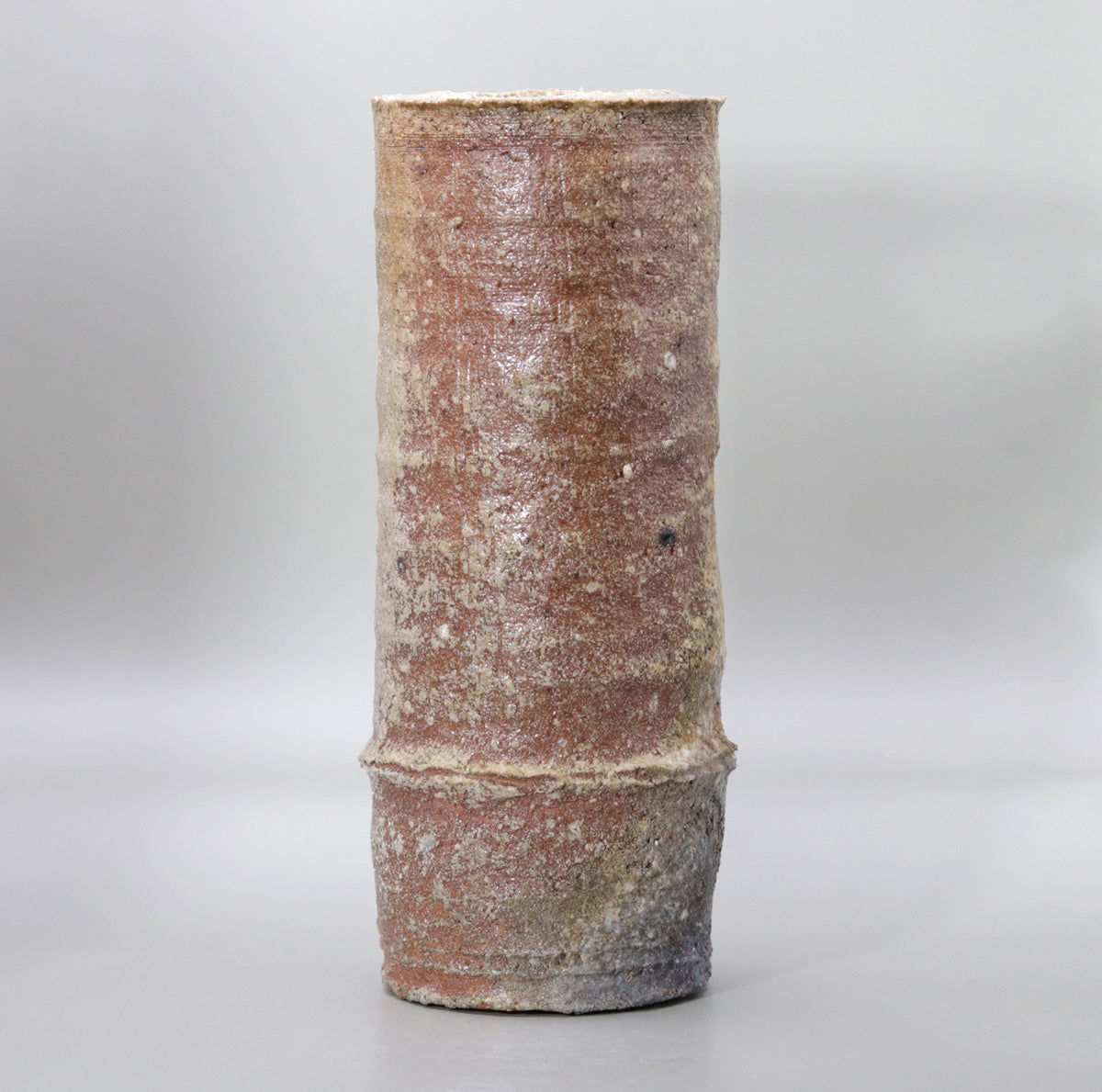
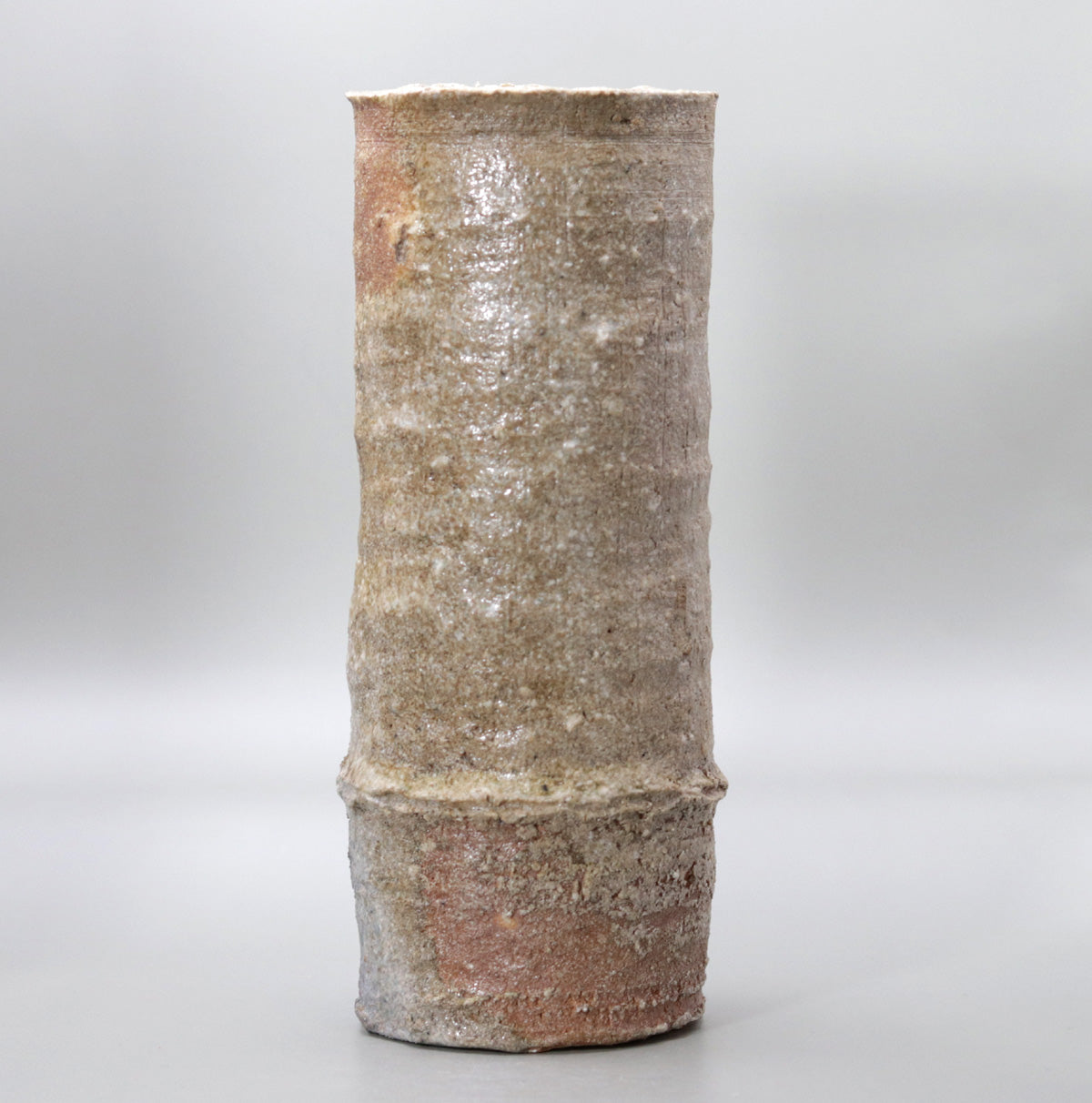
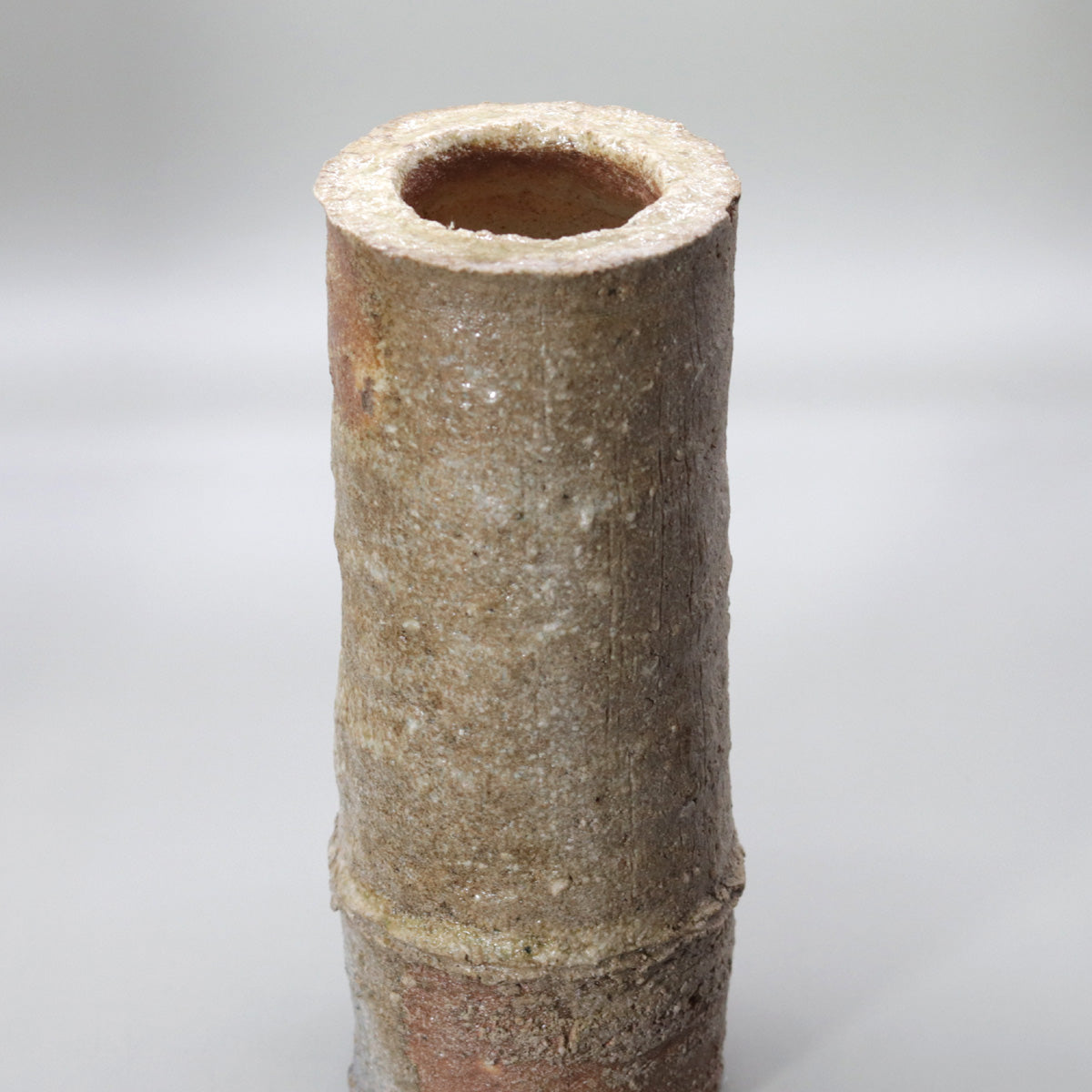
This piece, "Shigaraki Bamboo Vase," is a contemporary piece that transposes the shape of the standard "bamboo vase" used in the tea ceremony with the earthenware and firing techniques of Shigaraki. Bamboo vases were originally made from natural bamboo and are beloved for their rustic charm and for expressing the seasonal atmosphere in the tea room. Yanagishita Tokiki has reconstructed this "bamboo vase" using ceramics, giving the traditional form a new look and texture.
The expressions created by Shigaraki ware clay and firing
Shigaraki ware is a type of pottery that developed in the Shigaraki area of Koka City, Shiga Prefecture, and is said to have originated in the firing of roofing tiles for the construction of Emperor Shomu's Shigaraki Palace in 742. During the Muromachi period, it acquired the qualities of tea ceremony ware, and was repurposed into flower vases and water jars, imitating everyday utensils such as stone basins, demon buckets, and hemp buckets.
This piece also shows the firing process characteristic of Shigaraki ware:
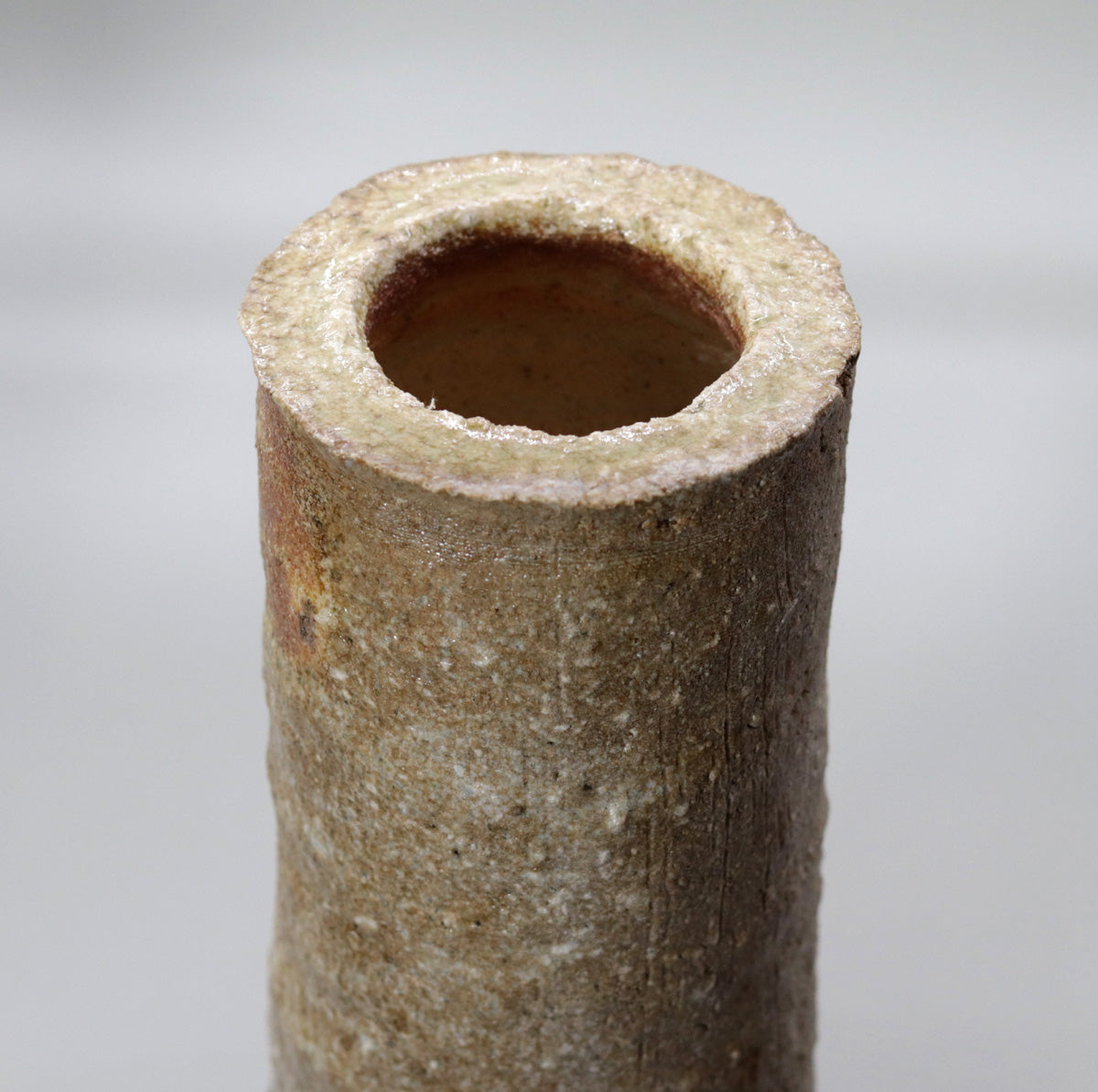
Ash covering : Wood ash falls on an unglazed base, creating a natural glaze
Glaze flow : The natural glaze melts and flows out
Dragonfly eyes : Round pools of glaze that form at the end of the glaze flow
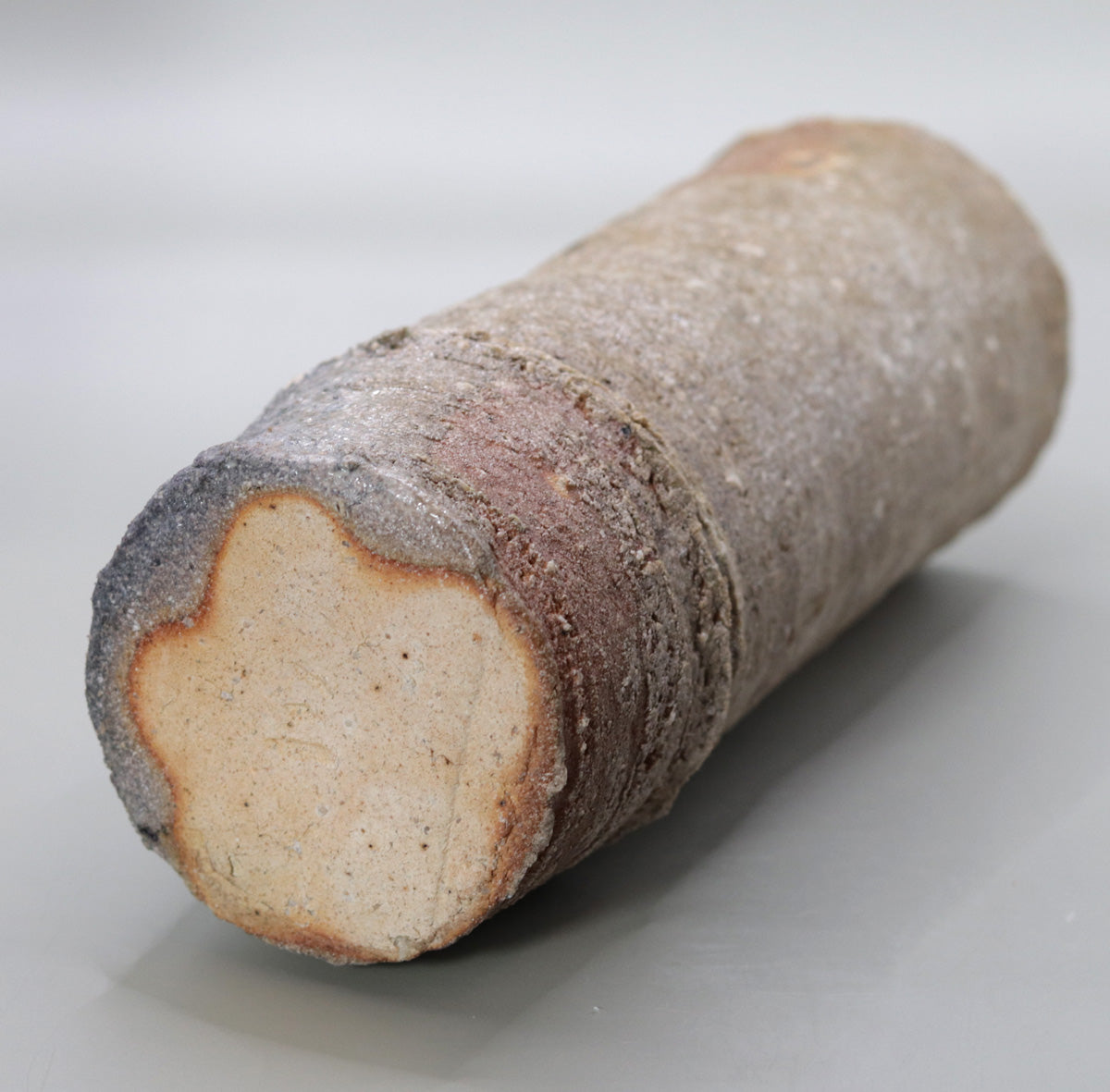
Fire color : Skin that has turned red due to a direct hit from flames
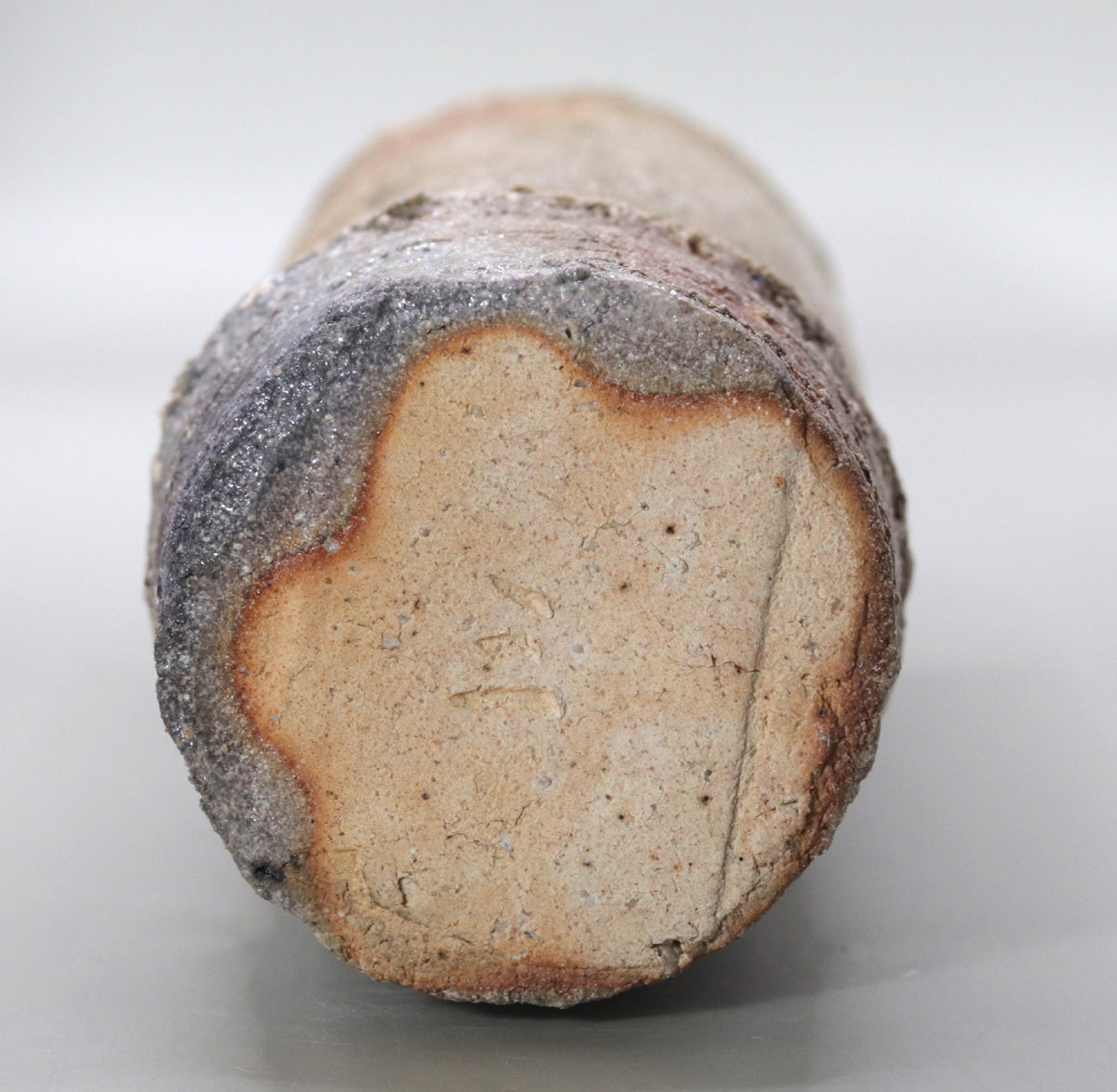
Scorched : Areas that are buried in ash and burned to a dark brown color
Stone pitting : Feldspar grains in the clay are exposed during firing and become white granules
All of these elements are manifested in the vessels by uncontrollable forces of nature, and they are the greatest attraction of Shigaraki ware.
Design and usability as a flower vase
This piece's slender, vertically tubular shape is designed specifically for holding a single plant or several branches, and it can be used in any environment, such as a tea room, a wall in a modern home, a tokonoma alcove, or in front of an axis. The varied glaze and roughness of the clay surface contrast well with seasonal flowers and wildflowers, and act as a backdrop that highlights the colors and lines of the flowers.
What is particularly noteworthy is the way the firing marks on the surface of the vessel create a correspondence with the flowers. For example, arranging autumn grasses in the fire-colored areas brings out the seasonal feeling more clearly, while spring wildflowers look great against the bleached, ash-covered surface.
Yanagishita Toki's Approach: Reconstructing Shigaraki Ware
Yanagishita Tokiki continues to create pottery in Iga, reconstructing a variety of traditional techniques, including Shigaraki, Iga, and Oribe, in a contemporary way. This work, "Shigaraki Bamboo Vase," also follows tradition, but does not simply follow it in form; through redesigning the shape and intentional control of the firing, it can be said to be an experimental result that develops the "expression of earth and fire" in a contemporary context .
The technique of reading the flow of wood ash during firing and shaping the piece while imagining the movement of the fire is not simply simple, but is backed by the logic and experience of the art of firing, and steadily expands the possibilities of Shigaraki as a material for tea ware.
The Shigaraki Bamboo Vase is a masterpiece that recreates the traditional bamboo vase used in the tea ceremony using Shigaraki pottery. The vessel's expression is complex yet not overly decorative, and it is designed to harmonize with nature and resonate with seasonal flowers.
This vase is the culmination of firing techniques, shaping design, and an understanding of the clay, and is highly refined as a flower vase that is both practical and aesthetically pleasing. This piece can also be considered a milestone in Mr. Yanagishita's reconstruction of Shigaraki.
Hideki Yanashita Profile
Ceramic artist 1967 –
Born in Tokyo, Yanagishita currently lives and works in Iga City, Mie Prefecture. Fascinated by pottery from the Momoyama period, he embarked on a career in ceramics. After training in Shigaraki , he built his own anagama kiln in Iga, Mie Prefecture, and opened the "Kanda Kiln." Under the tutelage of Sadamitsu Sugimoto, he delves deeply into the world of wabi-sabi from his own unique perspective, producing a diverse range of works, including Raku ware, Yakishime, Ido, and Oribe ware. An important theme in Yanagishita's creative endeavors is the pursuit of new heights , born from the incorporation of modern materials and unique approaches, while deeply studying the techniques and spirit of his predecessors. His works question essential beauty that transcends time and invite viewers into a deeper world of art.
Base of operations : Iga, Mie Prefecture
Share
-
[I will send it to you quickly and carefully]
We carefully package each product in a way that suits it best.
Also, delivery times vary depending on the piece (vessel, etc.).
Items that already come with a box will be shipped within 1-3 days of the order date.
For items that require a box to be made after your order, it will take approximately 30 days for production to be completed and then shipped.
In either case, once we have confirmed your order, we will contact you by email to inform you of the delivery date.
-
[Requests when purchasing pottery]
Even products that look the same may differ slightly in color, shape, size, etc.
The way the glaze is used, the power of the kiln, the firing method, the season, and the humidity also affect the appearance of the pottery.
Please understand the individuality of each piece of pottery and enjoy the unique warmth of handmade.