
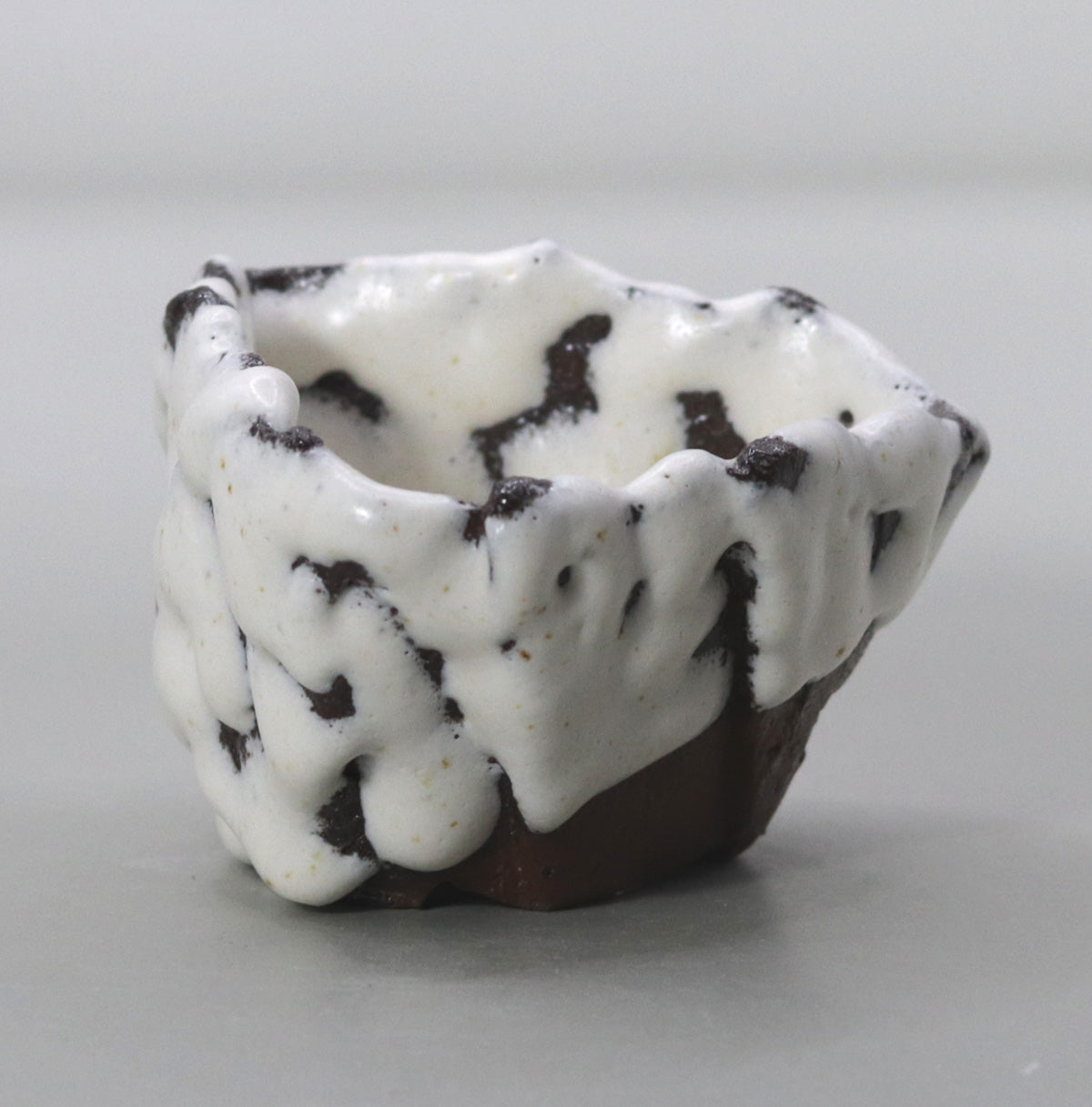
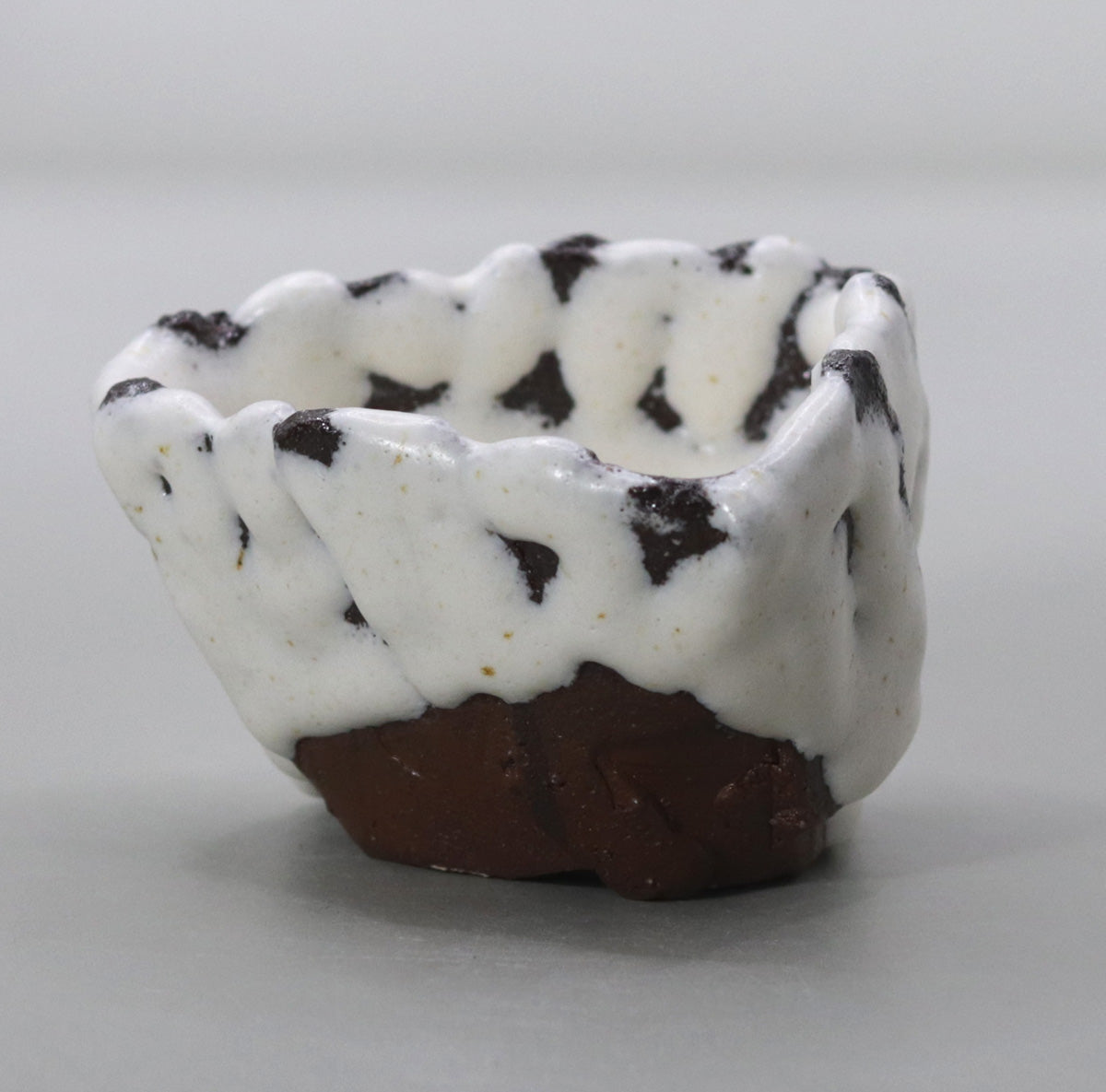
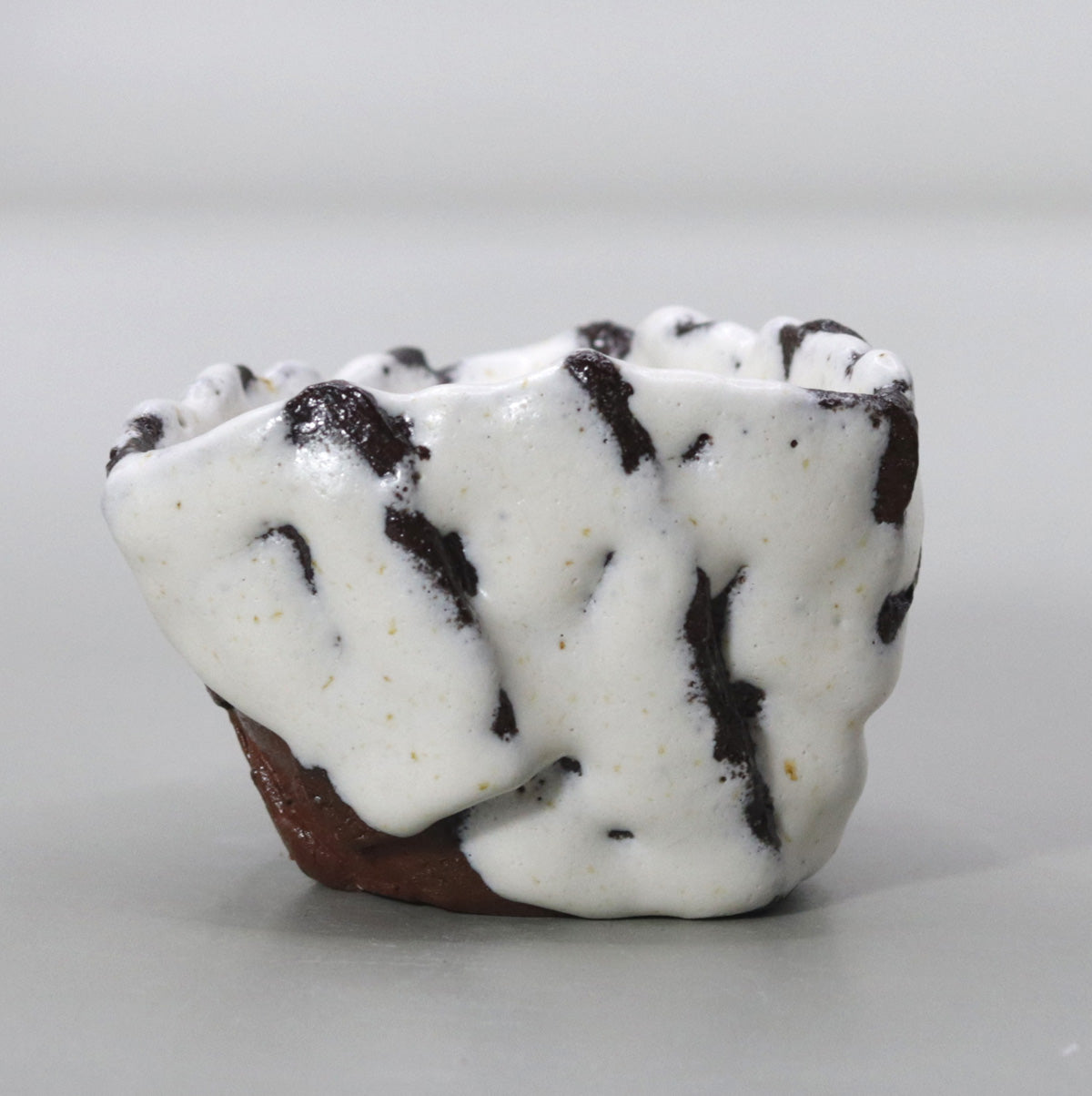
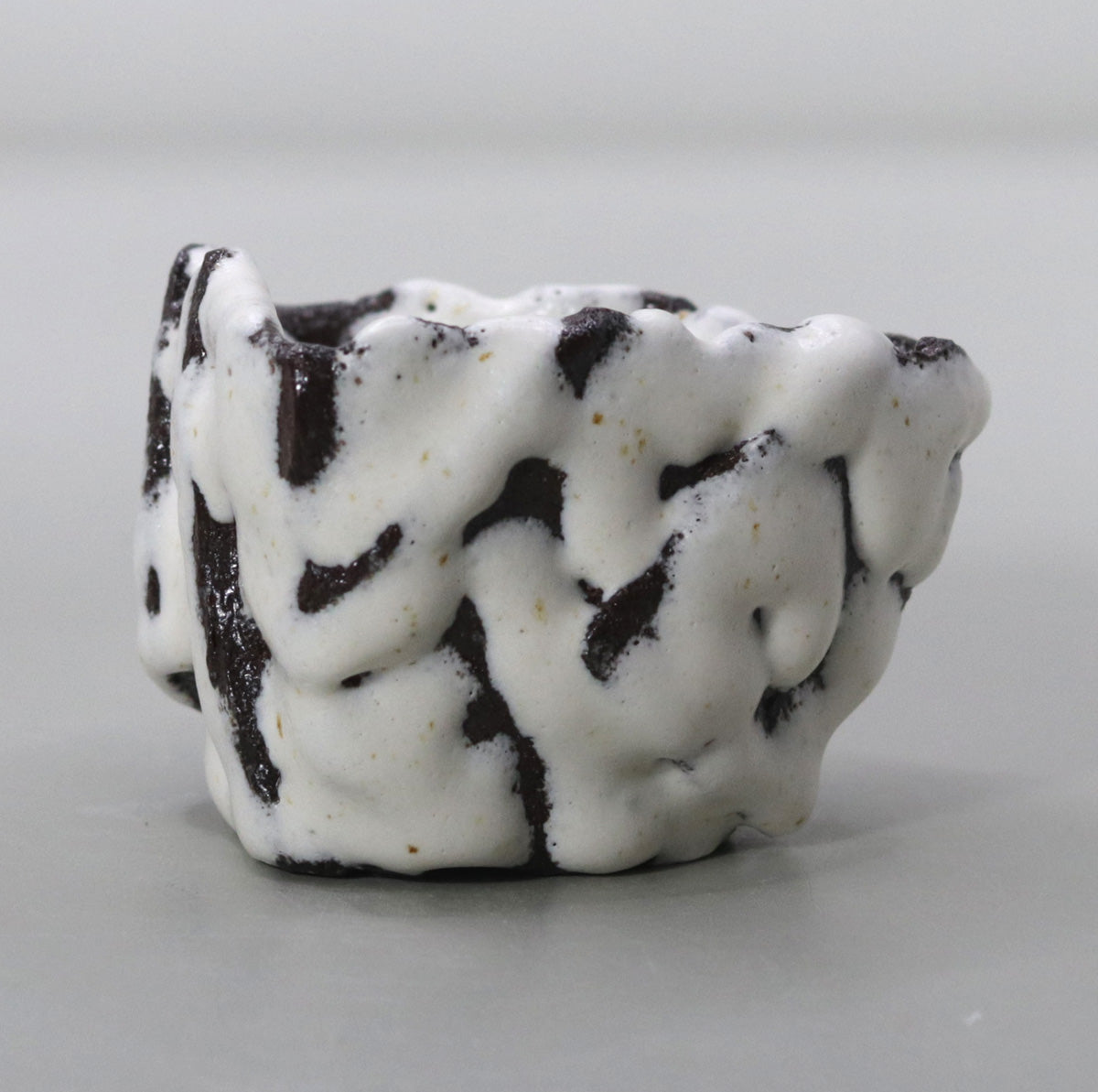
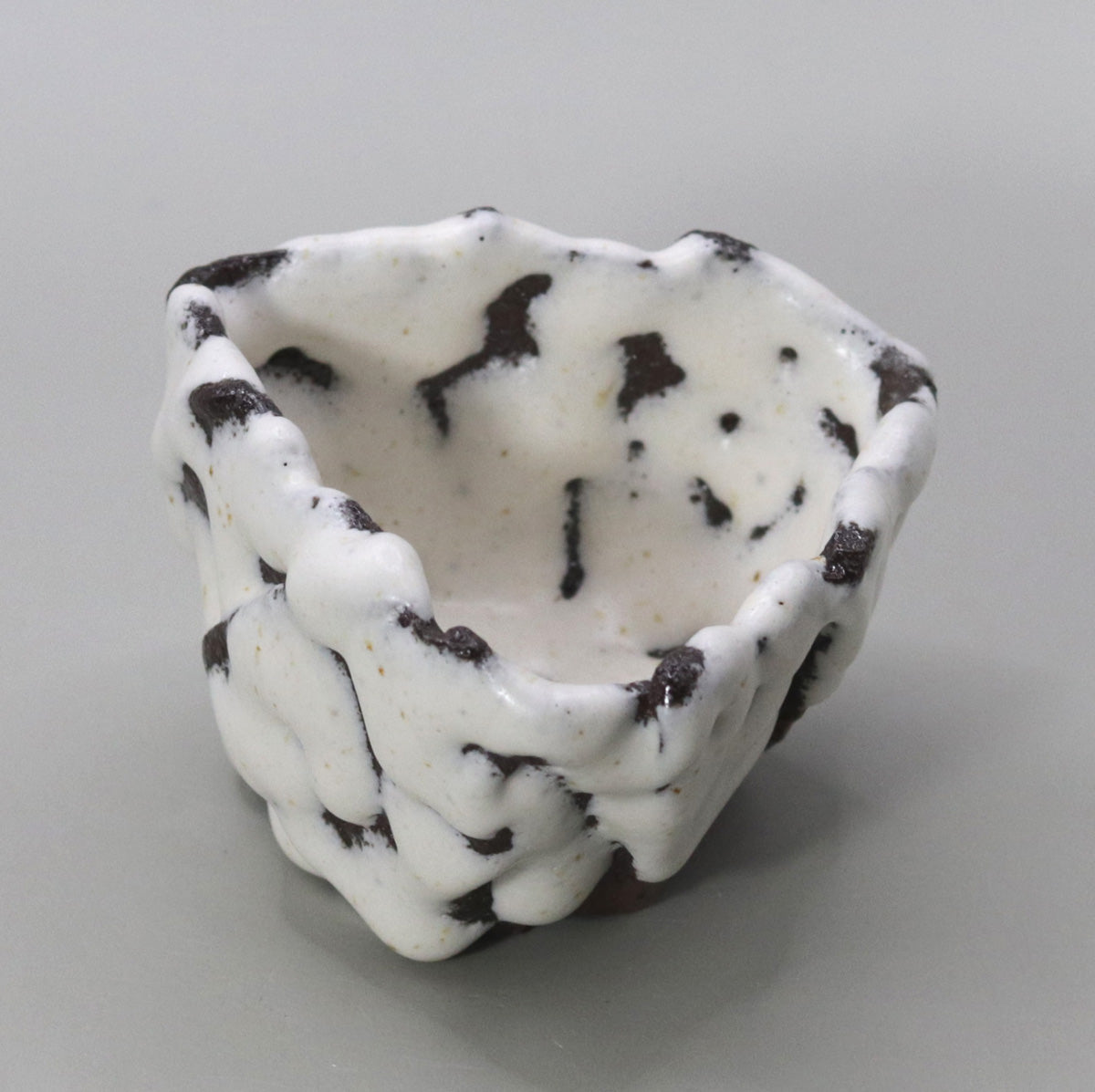
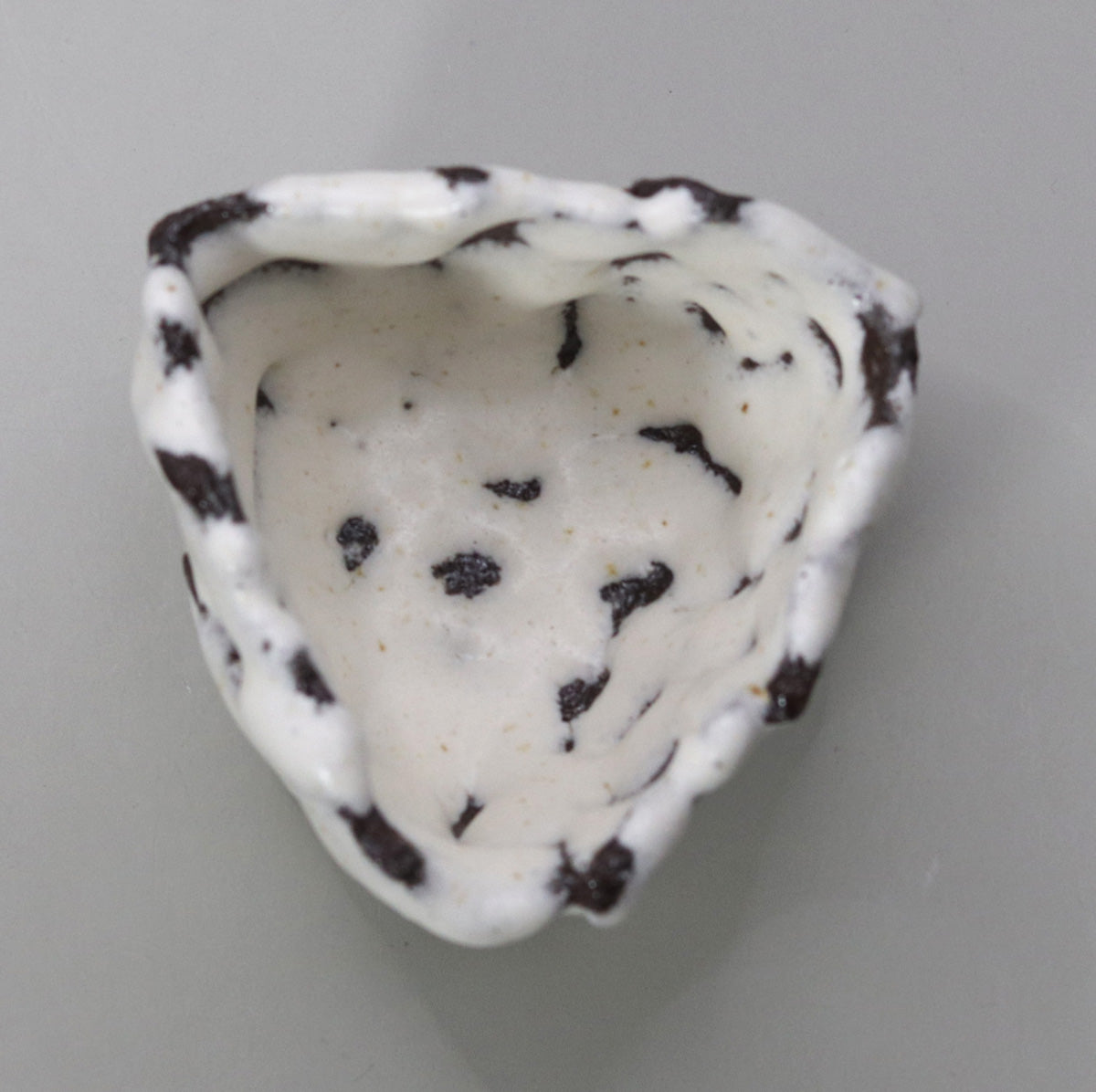
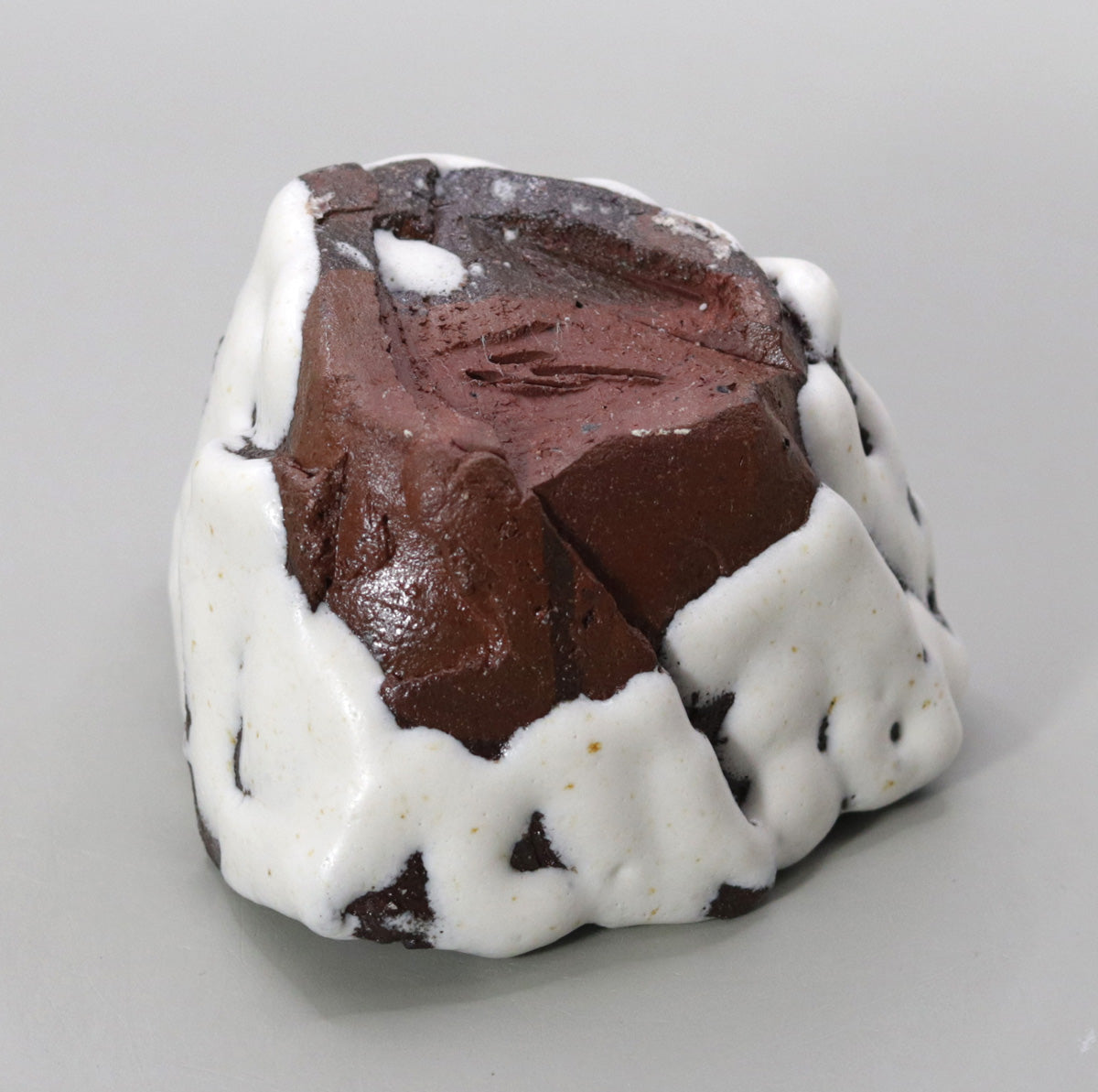
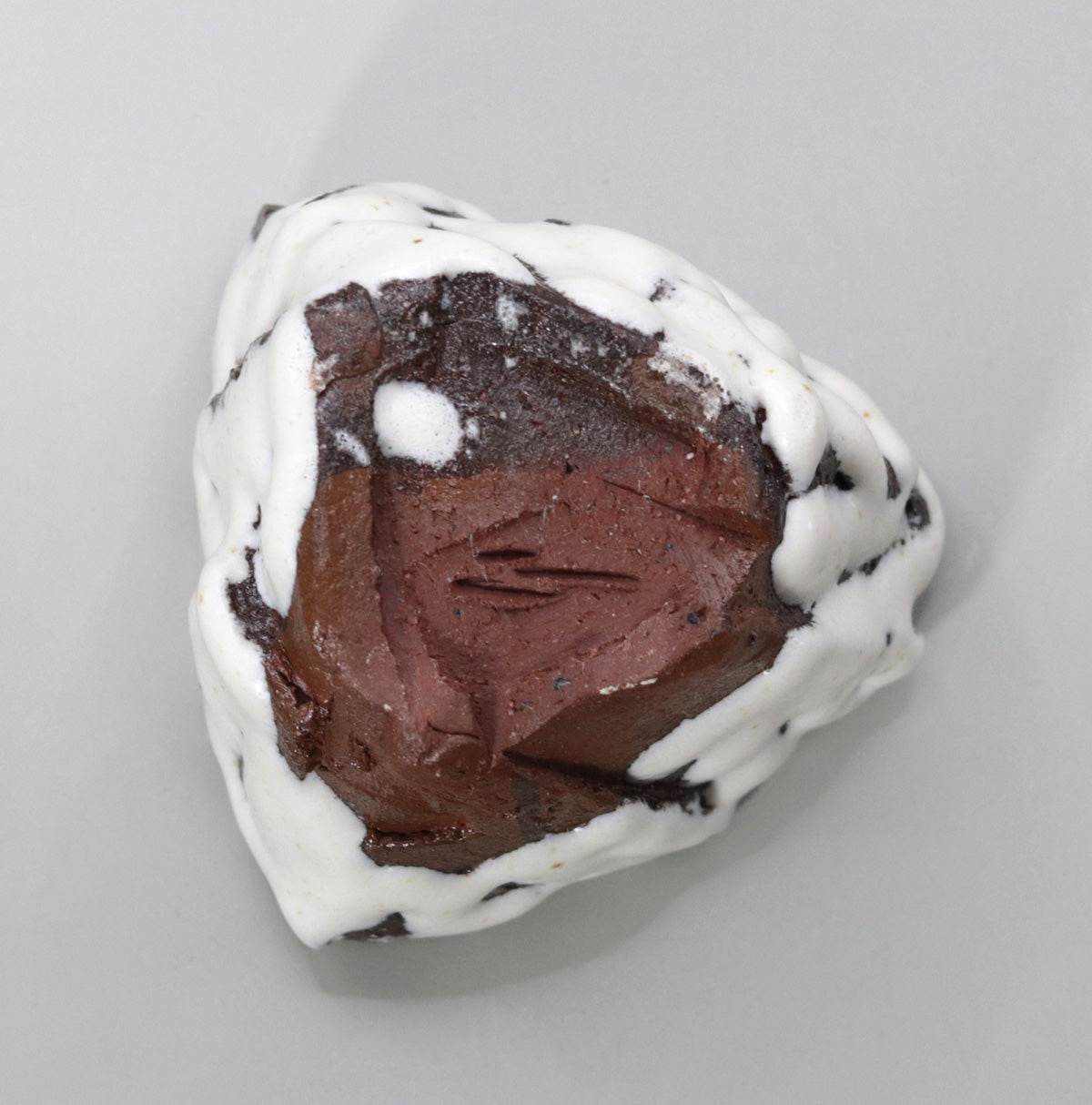
Straw white glazed sake cup by Masashi Nishibata
Straw white glazed sake cup by Masashi Nishibata
Couldn't load pickup availability
Width: 9cm Depth: 9cm Height: 6cm
This work by Nishibata Tadashi features a soft milky white glaze made primarily from straw ash, which, combined with the iron-rich Tamba clay, creates a charming landscape reminiscent of a river appearing on the surface of snow. The traces of the thick glaze slowly flowing down the side walls are like frozen snow melting in early spring, imbuing the surface with a dynamic rhythm and depth.
Form - A sculptural form that leaves a mark
The body is based on eight chamfered edges, each of which sways slightly inwards and outwards, creating ever-changing shadows depending on how the light hits it. Furthermore, thick layers of glaze accumulate along the seams of the chamfers, creating a three-dimensional accent reminiscent of an overhanging snow cornice. The rim sways gently like a wave, creating a different feel in the mouth depending on where your lips rest, adding a playful touch to any drinking gesture.
Colors and textures created by clay and glaze
The base is made from rough clay from Tanba, and the reddish-brown surface peeks through the thin glaze, infusing a warm breath into the milky white serenity. Iron appears as dark brown speckles, evoking the natural feel of the shade of rocks and trees left in a marsh after snow melts. Tiny crazing can be seen in the glaze, and over the years of use, sake and hand oils will seep into the piece, allowing you to enjoy the process of it maturing from white to pale gray.
Functional beauty as a sake cup
The small size makes it perfect for sipping a small amount of sake, and the slightly wider opening allows the aroma to linger softly within the cup. The thinly carved rim gently touches the tip of the tongue, allowing the poured sake to flow smoothly. The base has no raised base, and the center of the eight-sided chamfer naturally rises, so it fits snugly in the palm of your hand and can be used steadily with one hand.
A nexus of tradition and modernity
Straw white glaze is a classic material associated with Shino and Haikamo ware of the Momoyama period, but this piece, with its sculptural form with protrusions and bold flow of glaze, powerfully presents a modern sense of form. Nishibata Tadashi respects the "improvisation of earth and fire," and while refraining from deliberate decoration, he has made the most of chance to fix a unique scene on the surface of the vessel.
Silence and dynamism in the palm of your hand
The tranquility of the milky white and the dynamic flow of the glaze, the warmth of the red clay and the coolness of the iron flecks - these opposing elements come together in a single sake cup, bringing a quiet tension and a warm aftertaste to a drinking party. When cold sake is poured into the cup, the contrast between black and white shines brightly on the surface, while when hot sake is poured into the cup, the milky white glaze becomes slightly hazy, evoking the image of steam floating in a snowy landscape.
Nishibata Tadashi's straw white glazed sake cup is like a small universe that fits in the palm of your hand, conveying the poetry of nature woven by earth and fire. The more you use it, the more the scenery deepens, and it becomes a vessel that houses your own story, so please cherish it for a long time.
Tadashi Nishibata Biography
Born on February 24, 1948. Started making pottery in 1969. 1976. Hyogo Prefectural Exhibition Encouragement Award. 1986. Selected for the Japan Traditional Crafts Exhibition for the first time. 1988. Selected for the Japan Traditional Crafts Exhibition. Japan Traditional Crafts Exhibition. Japan Crafts Association President's Award. 1989. Selected for the Japan Ceramic Art Exhibition. Nogawa Memorial Award, Handon no Kai. 1991. Selected for the Japan Traditional Crafts Exhibition. Selected for the Japan Ceramic Art Exhibition. Grand Prize at the Tea Ceremony Forms Exhibition. 1992. Selected for the Japan Traditional Crafts Exhibition. Excellence Award at the Tea Ceremony Forms Exhibition. Hyogo Prefecture Emerging Artist Encouragement Award. Invited to exhibit at the NHK-sponsored Paris - 100 Contemporary Japanese Ceramics Exhibition. Excellence Award at the Tea Ceremony Forms Exhibition. 1993. Selected for the Japan Traditional Crafts Exhibition. Solo exhibition at Sogo Hiroshima store. Kyoto Chemin. 1994. Selected for the Japan Traditional Crafts Exhibition. Solo exhibition at Nihonbashi Mitsukoshi Main Store. 1995. Selected for the Japan Traditional Crafts Exhibition. Solo exhibition at Sogo Hiroshima store. 1996. Selected for the Japan Traditional Crafts Exhibition. Awarded the Excellence Award at the Tea Ceremony Design Exhibition, solo exhibition at Nihonbashi Mitsukoshi Main Store
1997 Encouragement Award at the Tea Ceremony Design Exhibition 1998 Selected for the Japan Traditional Crafts Exhibition Solo exhibition at Mitsukoshi Nihonbashi Main Store Selected for the Japan Traditional Crafts Exhibition 2000 Solo exhibition at Mitsukoshi Nihonbashi Main Store Solo exhibition at Mitsukoshi Fukuoka 2001 Selected for the Japan Traditional Crafts Exhibition 2002 Solo exhibition at Mitsukoshi Nihonbashi Main Store Solo exhibition at Gallery Dojima 2003 Solo exhibition at Touchingston, USA 2004 Grand Prize at the Tea Ceremony Design Exhibition at Sogo Hiroshima 2005 Exhibited at the Akashi City Museum of Culture and Hyogo Ceramics Exhibition Purchase of Akadobedai, Hyogo Ceramic Art Museum Solo exhibition at Gallery Dojima, Mitsukoshi Nihonbashi Main Store 2006 Grand Prize at the Tea Ceremony Design Exhibition Selected for the Japan Traditional Crafts Exhibition at the Museum of Fine Arts, Boston and the New York Japan Society Gallery Solo exhibition at Yokohama Takashimaya Touchingston, USA Father and Son Exhibition at Matsuyama Takashimaya Toshunkai Exhibition, Sogo Yokohama. Encouragement Award at the Tea Ceremony Art Exhibition. Selected for the Japan Traditional Crafts Exhibition in 2008. Selected for the Japan Traditional Crafts Exhibition. Solo Exhibition, Yokohama Takashimaya, Mitsukoshi Nihombashi, Santa Fe, Touchingston, USA. Toshunkai Exhibition, Funabashi, Seibu, Sogo Hiroshima. Invited to the Japanese Ceramics Exhibition in 2009. Solo Exhibition, Gallery Dojima, Sendai Mitsukoshi, 2010. Sogo Kobe. Exhibited in the Musee Tomo Grand Prize Exhibition, Contemporary Tea. Solo Exhibition, Yokohama Takashimaya, Touchingston, USA. Invited to the Japanese Ceramics Exhibition. Solo Exhibition, Joan B. Marvis, New York, USA. Invited to the Japanese Ceramics Exhibition in 2013. Exhibited in the "Contemporary Famous Bowls" exhibition at the Musee Tomo, Kanmi Kikuchi Memorial. Solo Exhibition, Mitsukoshi Nihombashi, Santa Fe, Touchingston, USA. Gallery Miyazaki, Sogo Kobe, Chiba Sogo, 2014. Solo Exhibition, Mitsukoshi Nihombashi, 2015. Received the Hyogo Prefecture Cultural Award in 2016. Exhibited at Higashihiroshima City Museum of Art for "Ceramics that Color Our Lives - Food Ware" Exhibited at Joan B. Marvis' 40th Anniversary Exhibition in 2017.
2018 Solo Exhibition at Nihonbashi Mitsukoshi Main Store
Share
-
[I will send it to you quickly and carefully]
We carefully package each product in a way that suits it best.
Also, delivery times vary depending on the piece (vessel, etc.).
Items that already come with a box will be shipped within 1-3 days of the order date.
For items that require a box to be made after your order, it will take approximately 30 days for production to be completed and then shipped.
In either case, once we have confirmed your order, we will contact you by email to inform you of the delivery date.
-
[Requests when purchasing pottery]
Even products that look the same may differ slightly in color, shape, size, etc.
The way the glaze is used, the power of the kiln, the firing method, the season, and the humidity also affect the appearance of the pottery.
Please understand the individuality of each piece of pottery and enjoy the unique warmth of handmade.