
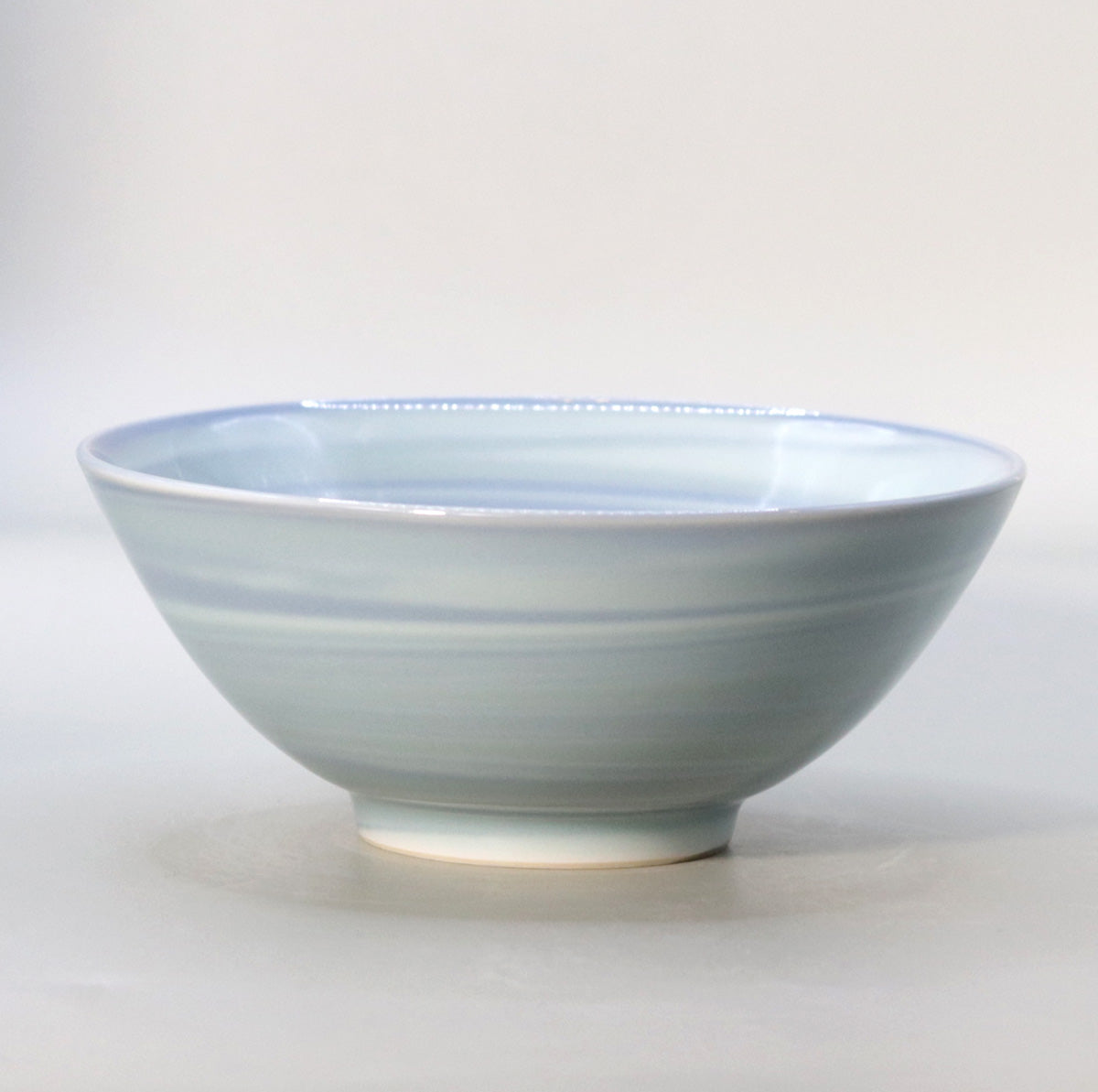
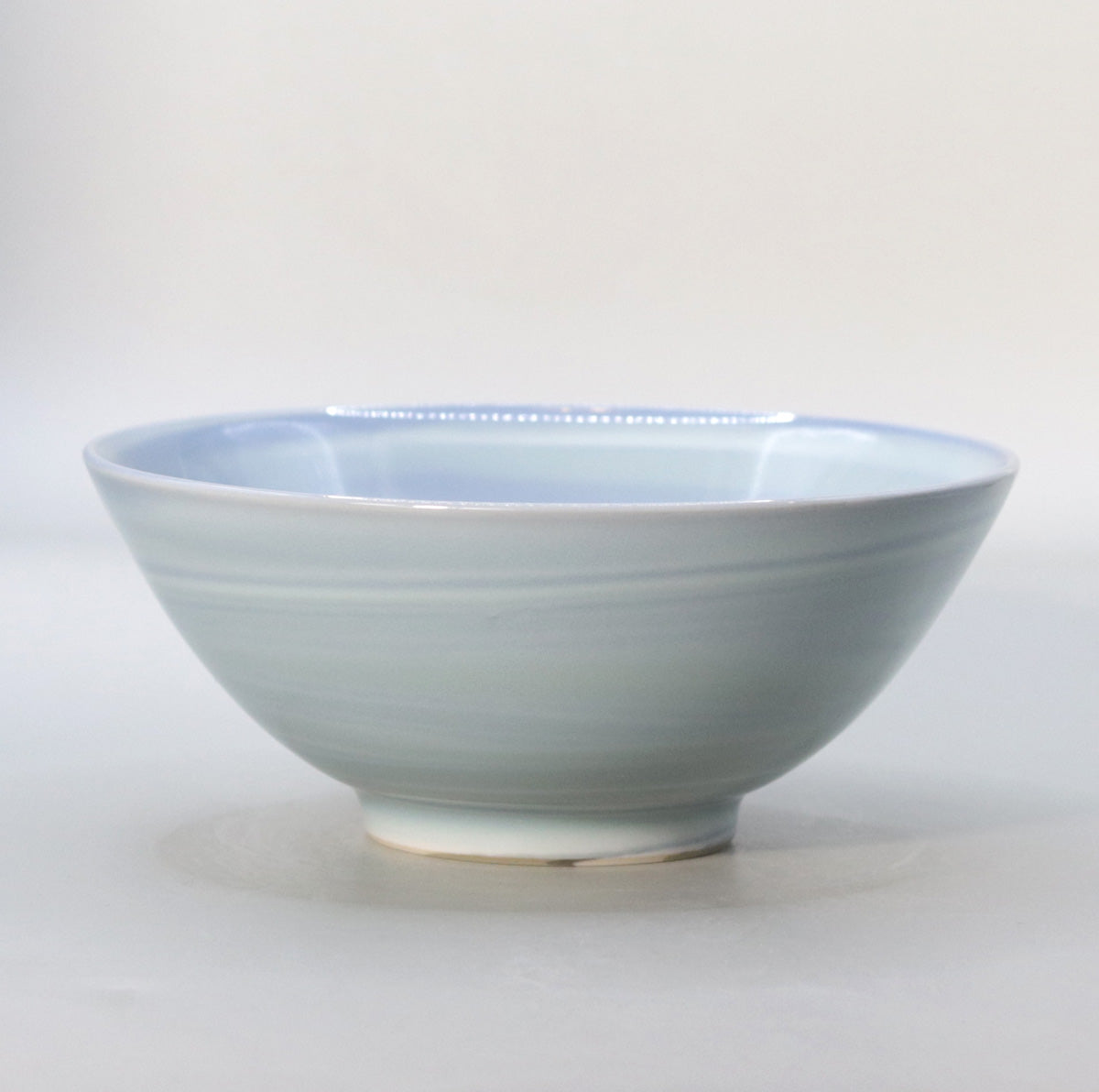
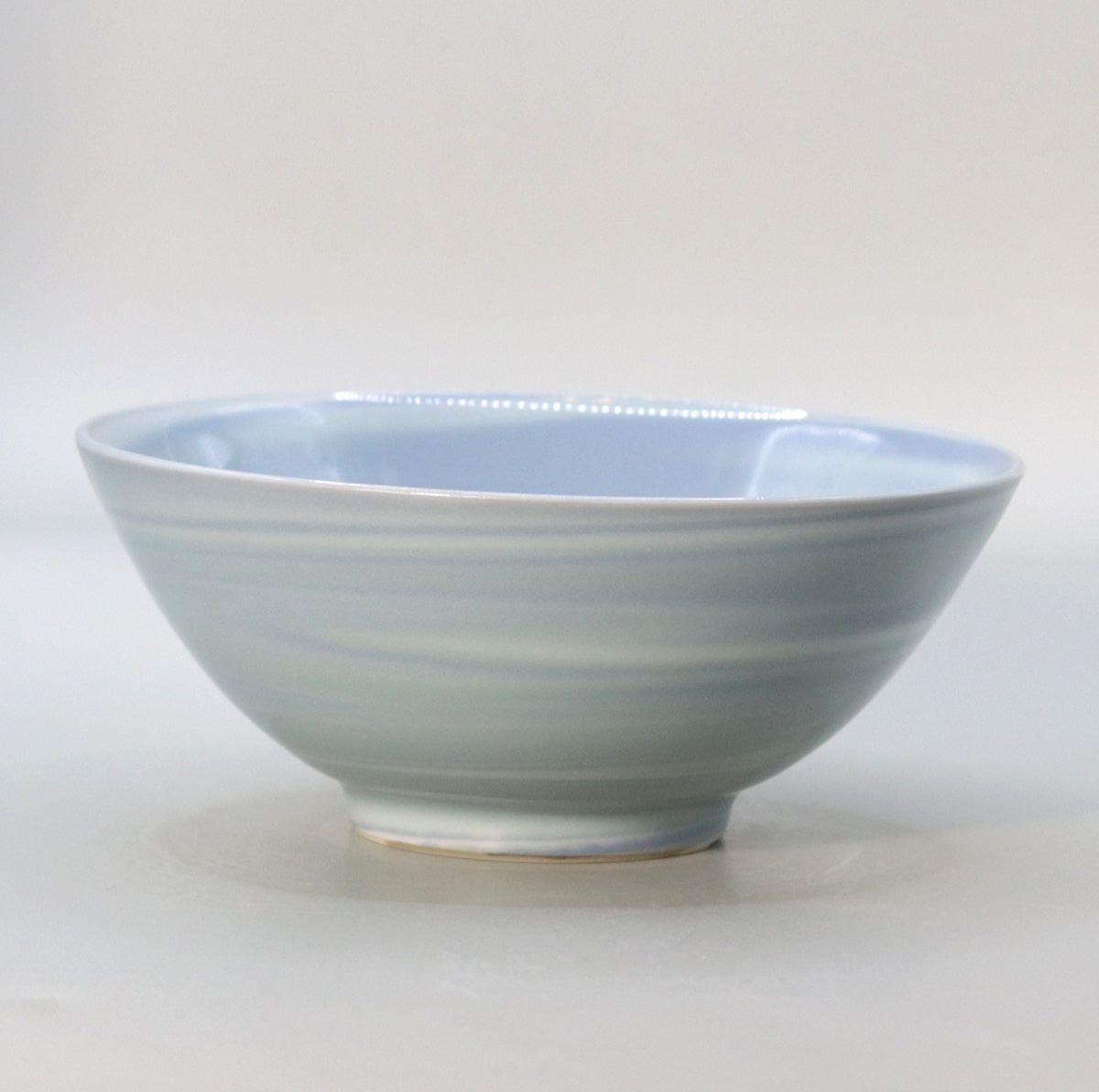
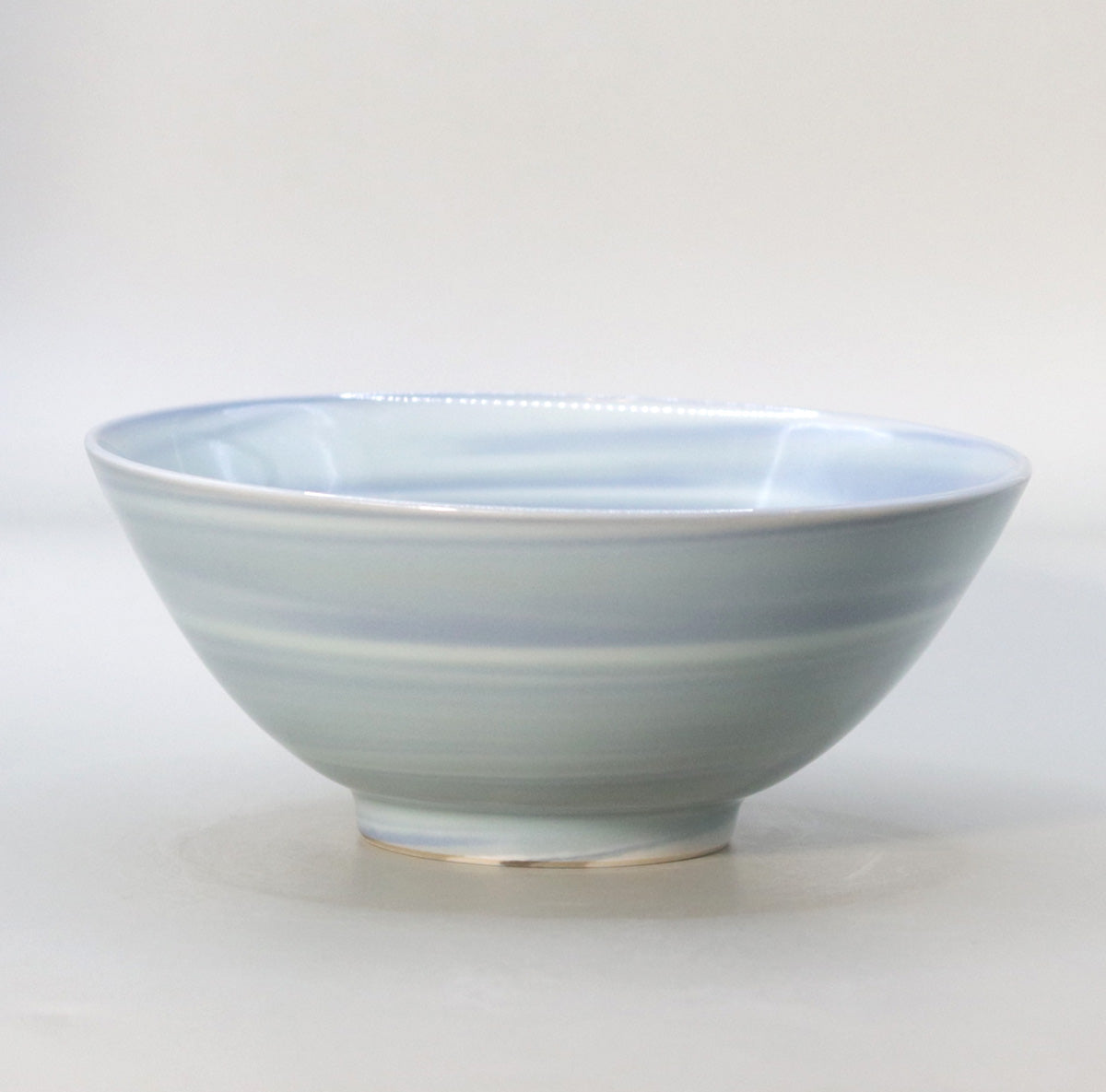
Kneaded celadon tea bowl, Suwa Sozan
Kneaded celadon tea bowl, Suwa Sozan
Couldn't load pickup availability
Width: 14.5cm Height: 6.1cm
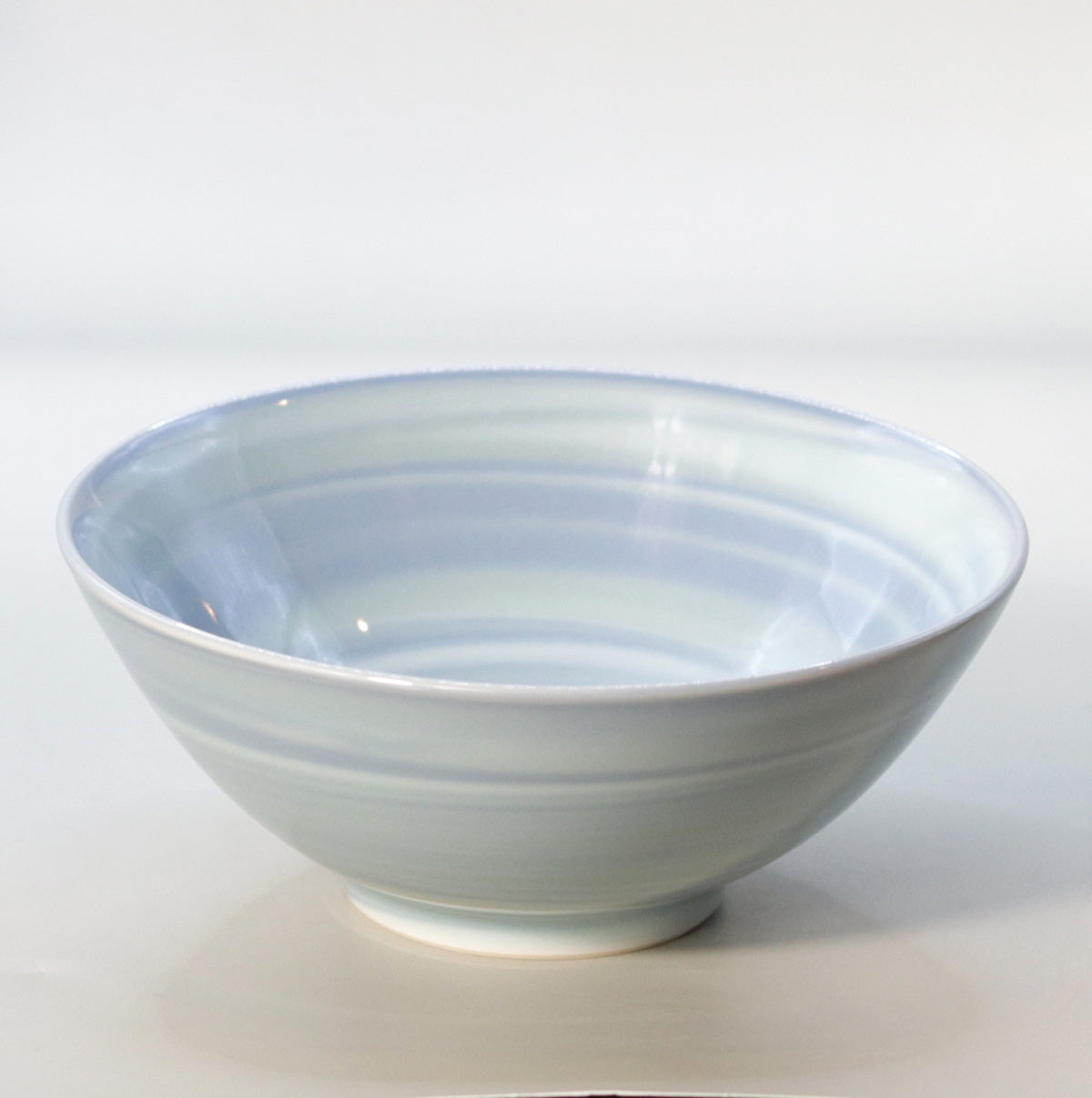
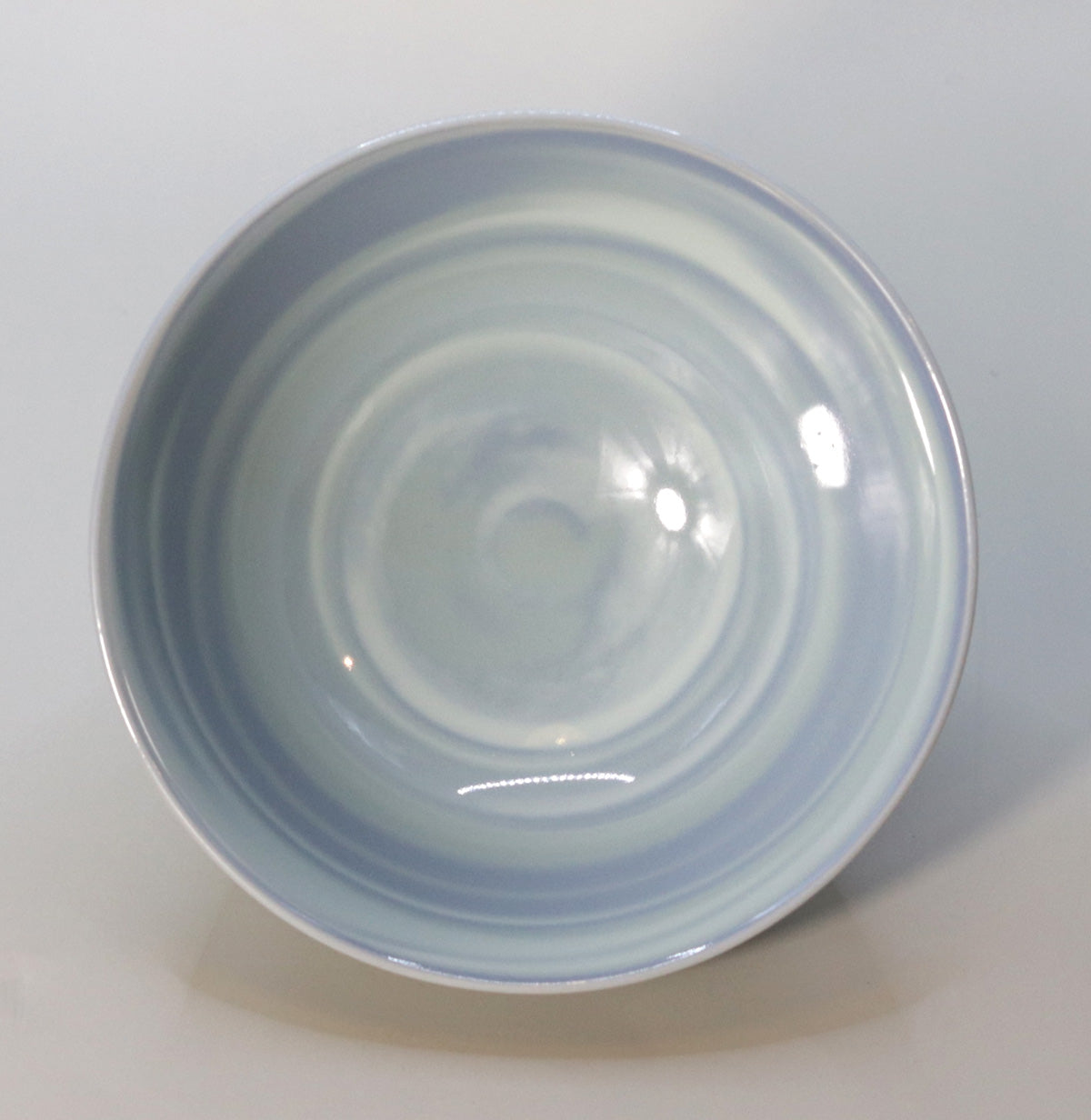
This piece, the "Nerikomi Celadon Tea Bowl," is a matcha bowl made using the "nerikomi" technique, in which three types of porcelain clay - white porcelain, celadon, and indigo porcelain - are layered one on top of the other and then turned in one go on a potter's wheel. The boundaries between the layers form a gentle spiral as the potter's wheel rotates, giving the bowl an abstract image reminiscent of the vortex of the galaxy or the Milky Way in the night sky. Its elegant yet gentle form, without any sense of artificiality, blends quietly into the atmosphere of the tea ceremony, gently capturing the user's movements and the atmosphere of the place.
molding
Curved rim
The rim is slightly curved outwards, so it does not interfere with the use of the chasen when preparing matcha. The blue-and-white layer that appears on the rim has a faint glow, like the ridgeline of a clear blue sky.
Shallow prospect
The inside of the bowl is shallow, and the kneaded pattern gently converges towards the bottom. When matcha is poured into the bowl, the green liquid surface shines like the moon's shadow filling the center of the night sky, creating a tranquil contrast throughout the bowl.
High ground design
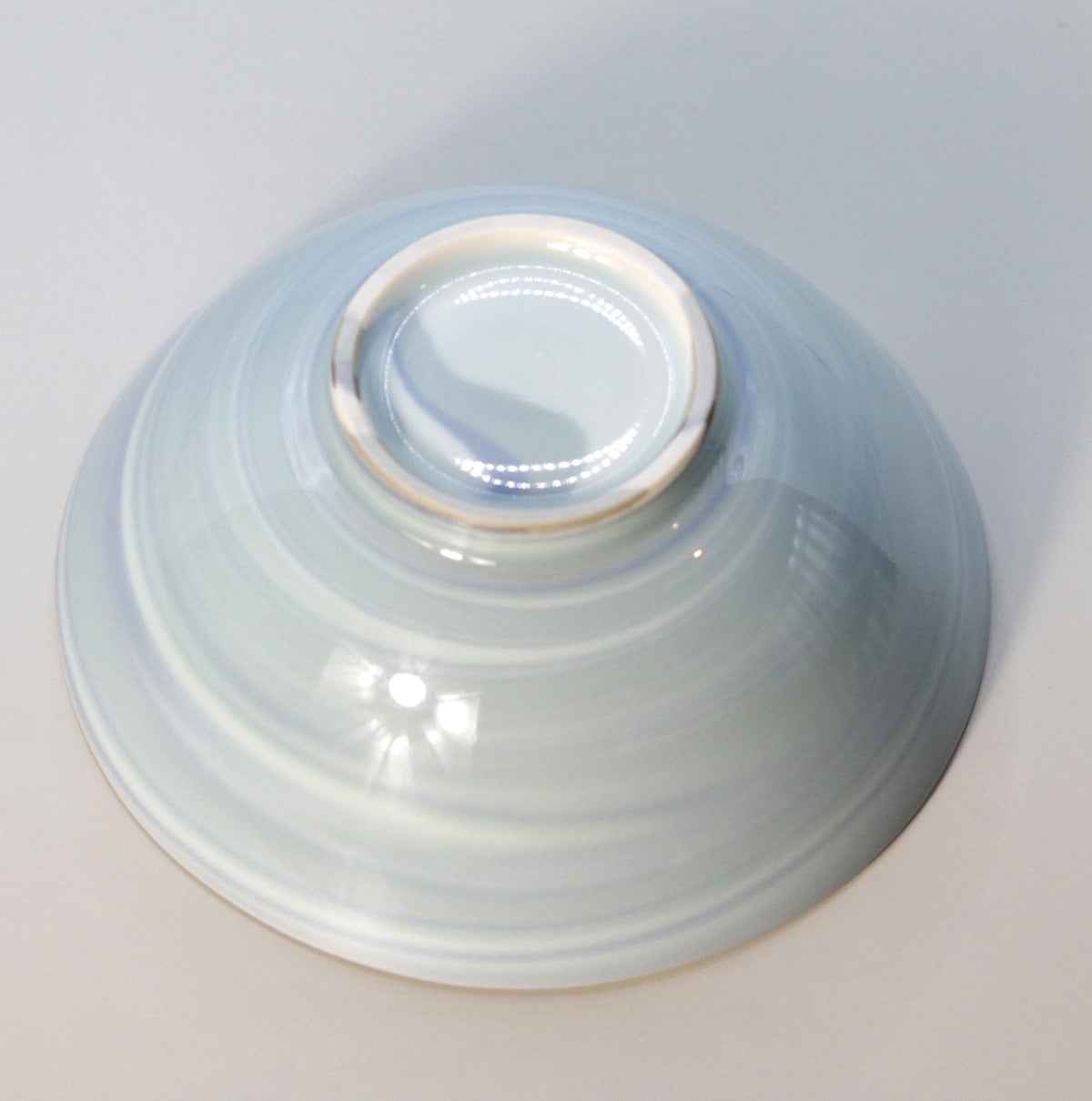
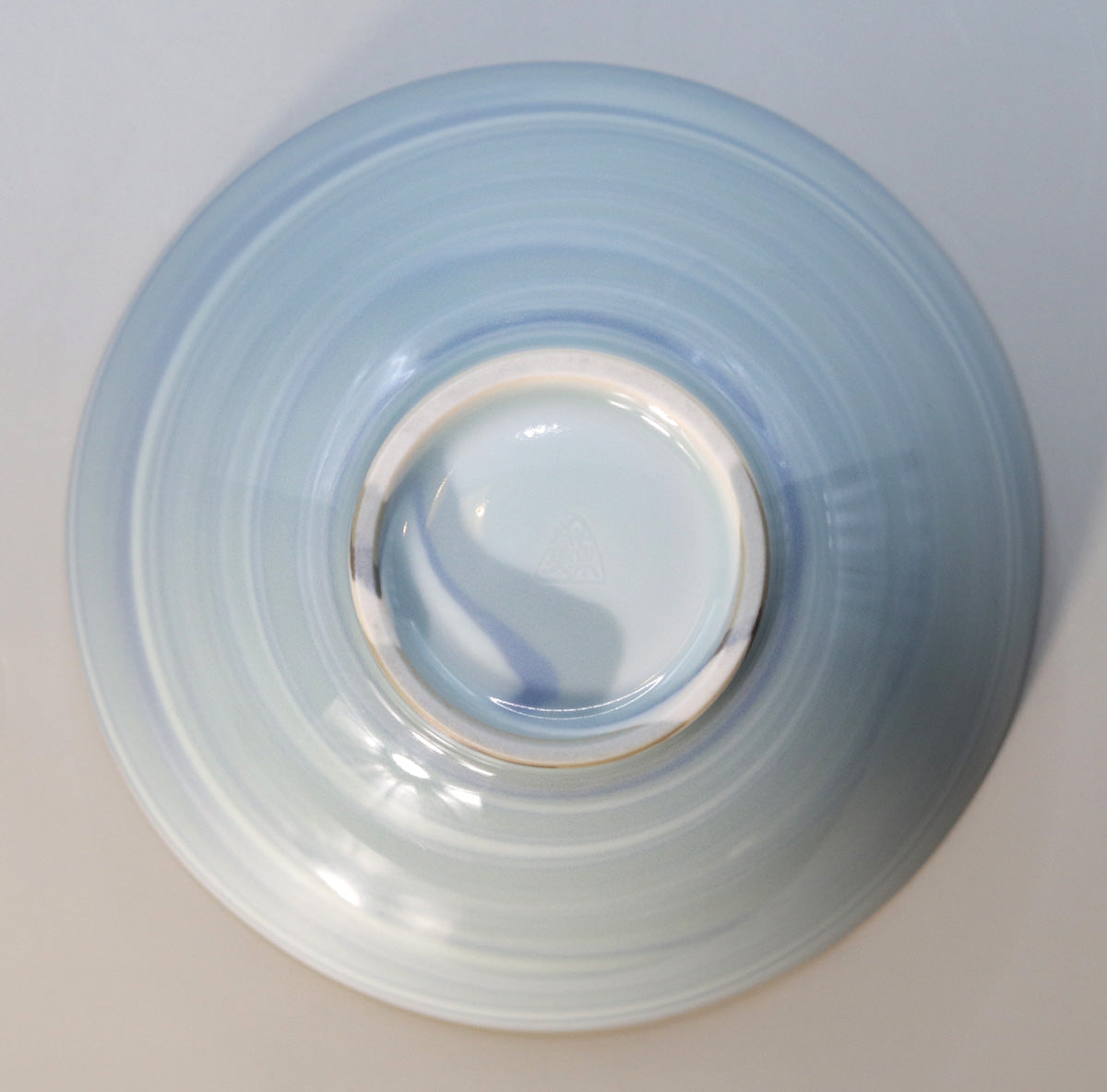
The base is carved out slightly low and gently flares outwards, providing a stable feel when held in the palm of your hand, and achieving both a light appearance and practicality.
Depths that reflect the universe
Layered structure of porcelain clay <br data-start="626" data-end="629">White porcelain, celadon porcelain, and indigo porcelain are layered in this order and rolled out into a plate so that the cross section is of uniform thickness. This is then rolled into a cylinder to form the core clay, and then pulled up on a potter's wheel. As the clay rotates, the layers stretch in a spiral, creating random ripples, so no two tea bowls look the same.
The role of the transparent glaze <br data-start="755" data-end="758">After shaping, a highly transparent celadon glaze is applied over the entire surface and then reduced firing is performed. The glaze layer acts as a glassy veil, softly enveloping the internal layered pattern and giving it depth. Depending on the angle of the light, the boundaries between the layers blur and blend together, giving the piece the appearance of a night sky with floating nebulae.
The feel of the glaze surface <br data-start="897" data-end="900">The glaze surface is smooth and free of any minute irregularities, so it feels as if it clings to the palm of your hand. While you can enjoy the kneaded patterns visually, the stillness of the texture is also felt by your fingertips, allowing you to concentrate on the tea ceremony without being distracted.
Harmony with Matcha <br data-start="1282" data-end="1285">The vibrant green of the matcha stands out against the three layers of blue, creating a visual focal point that gives the impression that the "core of the universe" has been born at the center of the interior.
Lighting Effects <br data-start="1353" data-end="1356">When lit by the warm light of a lantern or candle, the glassy surface of the glaze reflects a faint light reminiscent of the twinkling of stars, enhancing the mysterious atmosphere at night.
history
The lineage of Nerikomi
The Nerikomi technique originated from the Neriagede (Neriage-de) artisans of the Nara period, and developed in Satsuma and Kyoto ware in the late Edo period. Suwa Sozan IV has fused this tradition with the aesthetics of the Suwa family, which is centered on celadon porcelain, and elevated it into a means of expressing a modern view of the universe.
Expanding the expression of celadon
The "Sozan Celadon" style established by the first Suwa Sozan was a style that perfected the monochromatic jade green color, but the fourth generation has incorporated color and rhythm through multi-layering, expanding the horizons of celadon expression.
Fourth Suwa Sozan
Suwa Sozan IV (born in Kyoto in 1970) was raised under the tutelage of Suwa Sozan III and lacquer artist Nakamura Sotetsu XII, and assumed the title of fourth master in 2002. Building on his research into celadon, he has developed a diverse range of scientific approaches, including Hotarude (hotari-de) and Tobi-seiji (hi-seiji), as well as this Nerikomi-seiji (nerikomi) celadon. Based on his belief that "a piece of work contains a story, and is completed when it intertwines with the user's heart," he has entrusted his vessels with grand themes such as the universe, stars, and time. He says that he wants his tea bowls to give the user the feeling of "holding the galaxy in the palm of their hand."
The "Nerikomi Celadon Tea Bowl" is a masterpiece that simultaneously embraces the timelessness of a nebula and the transparency of a clear sky within a quiet swirl of white porcelain, celadon, and indigo. When matcha is poured into it, the green light illuminates the twinkling stars in the night sky, transforming the moment of tea ceremony into a deep breath of the universe. This tea bowl, which envelops the venue with elegance and tranquility rather than luxury, reflects the very personality of Suwa Sozan IV and speaks eloquently of the possibilities of modern celadon.
Share
-
[I will send it to you quickly and carefully]
We carefully package each product in a way that suits it best.
Also, delivery times vary depending on the piece (vessel, etc.).
Items that already come with a box will be shipped within 1-3 days of the order date.
For items that require a box to be made after your order, it will take approximately 30 days for production to be completed and then shipped.
In either case, once we have confirmed your order, we will contact you by email to inform you of the delivery date.
-
[Requests when purchasing pottery]
Even products that look the same may differ slightly in color, shape, size, etc.
The way the glaze is used, the power of the kiln, the firing method, the season, and the humidity also affect the appearance of the pottery.
Please understand the individuality of each piece of pottery and enjoy the unique warmth of handmade.