
Iron-glazed wood grain tea bowl by Rakusai Onishi
Iron-glazed wood grain tea bowl by Rakusai Onishi
Couldn't load pickup availability
Width: 12.7cm Height: 8.1cm
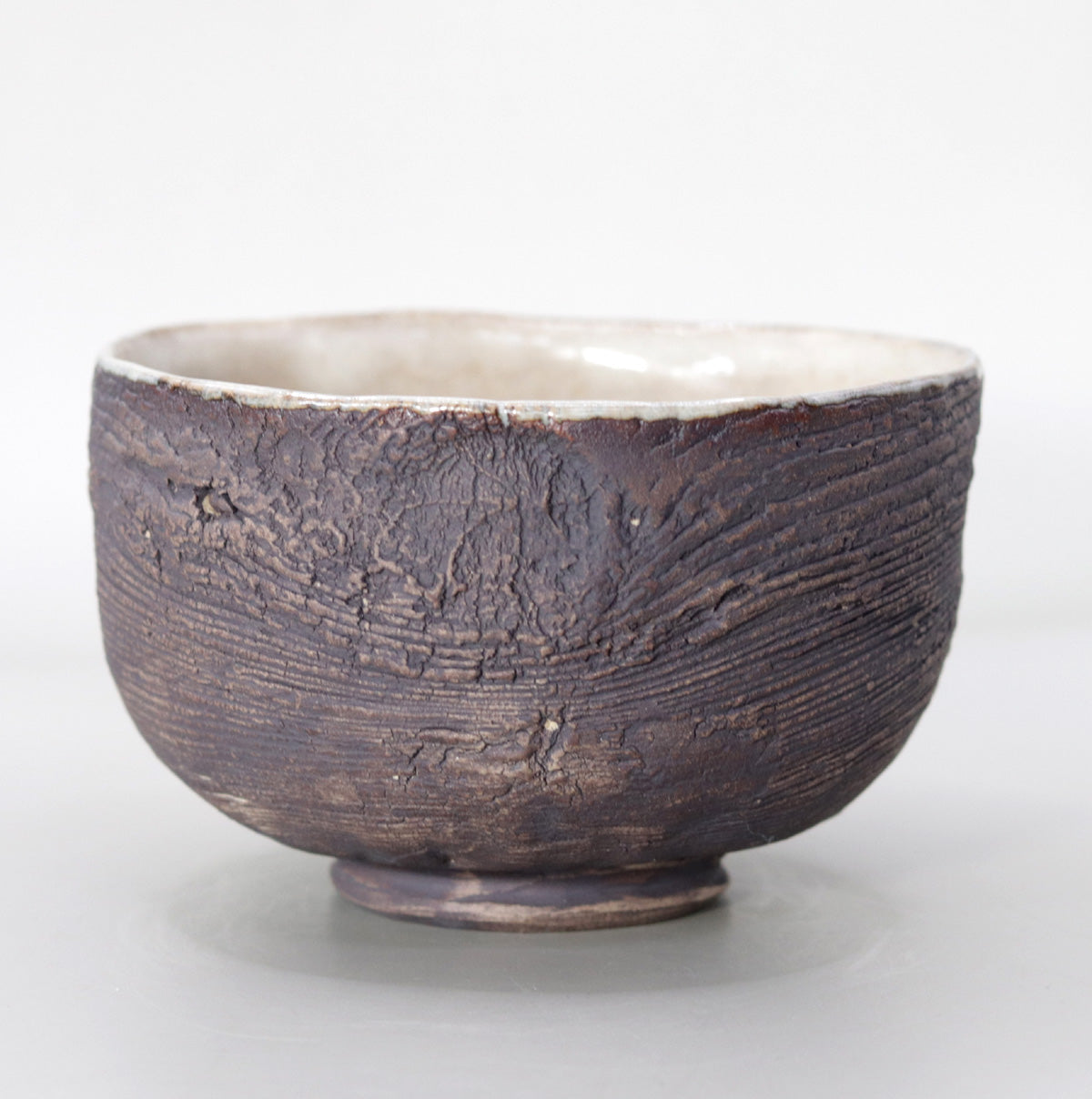
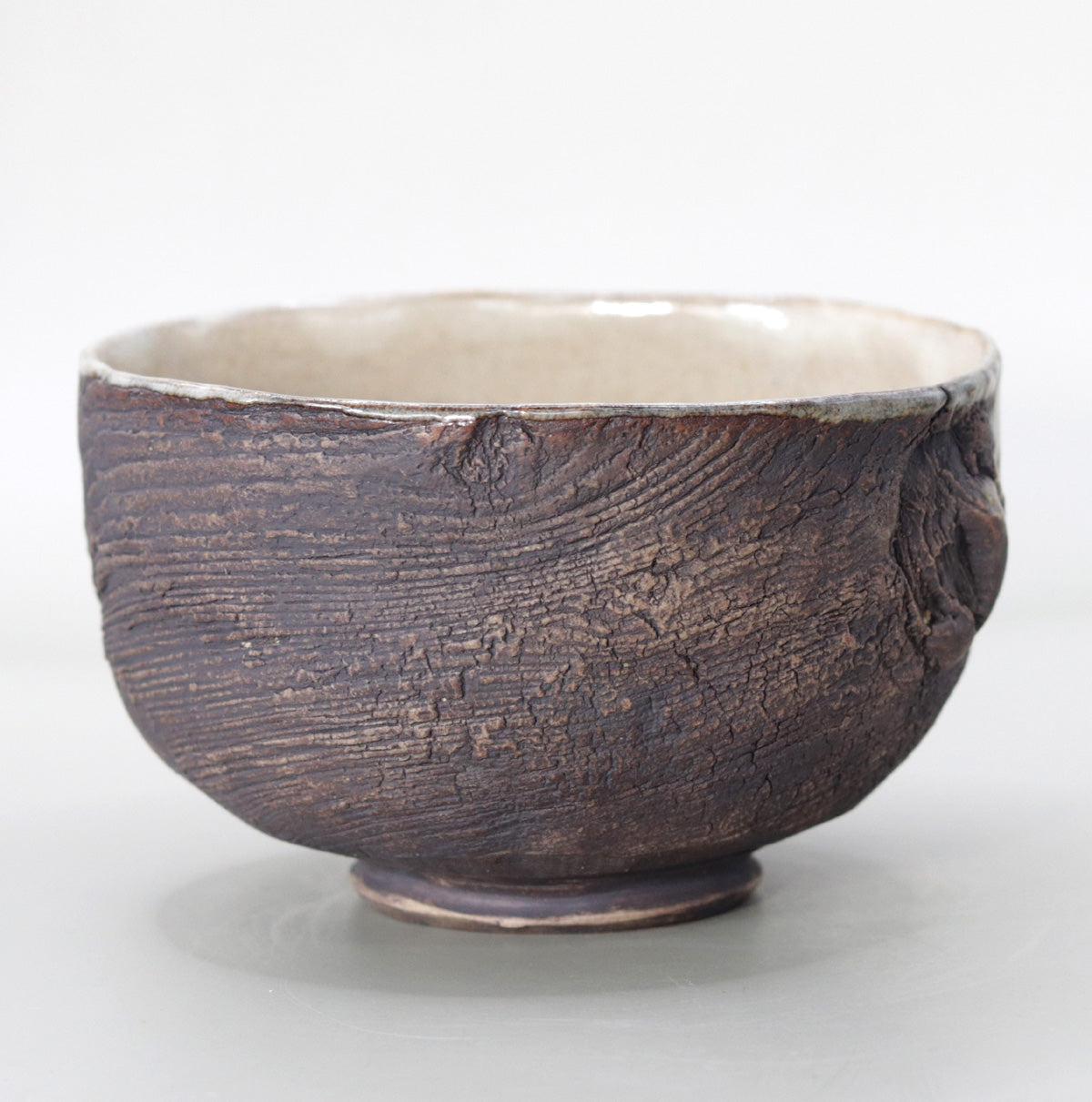
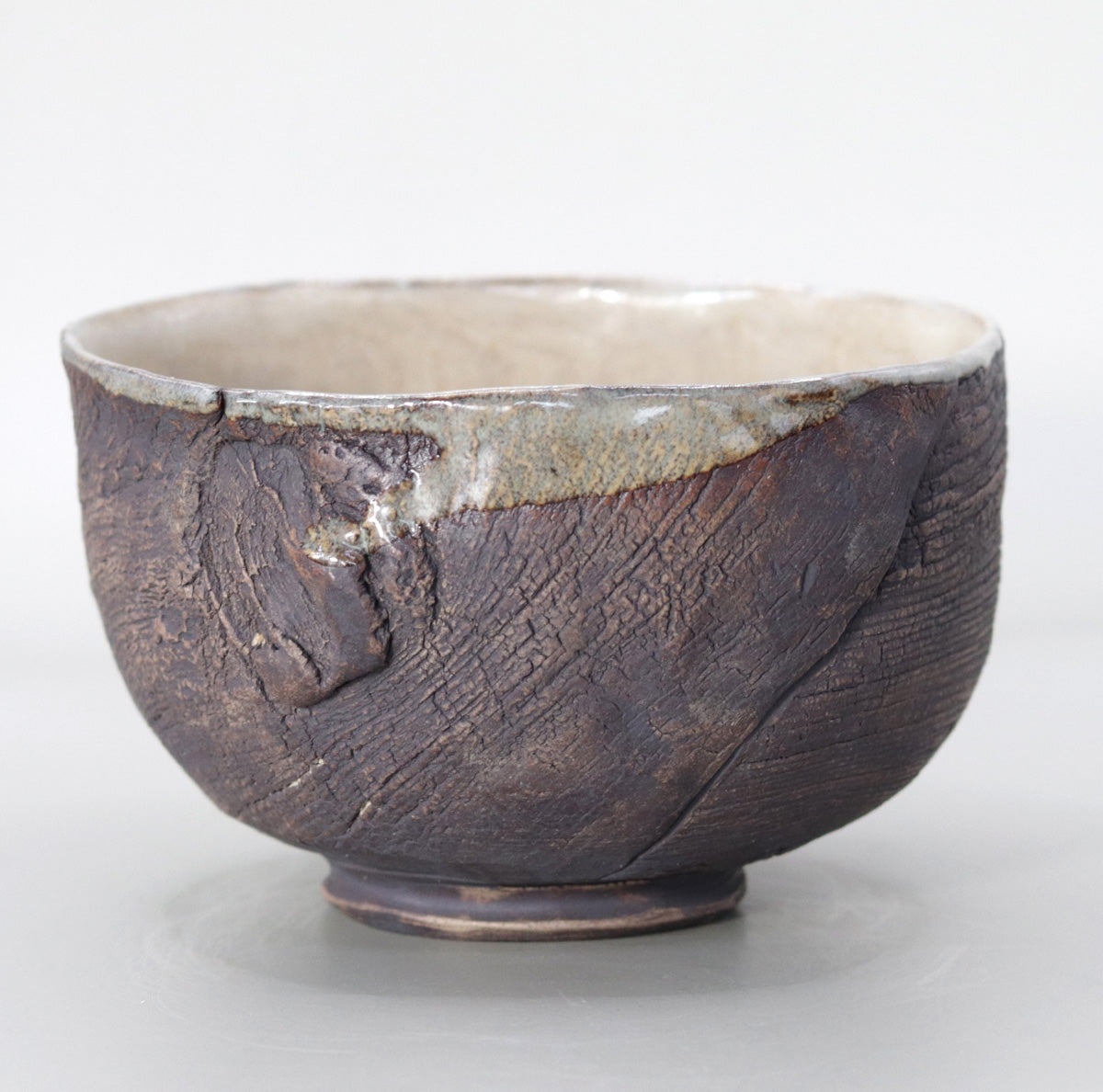
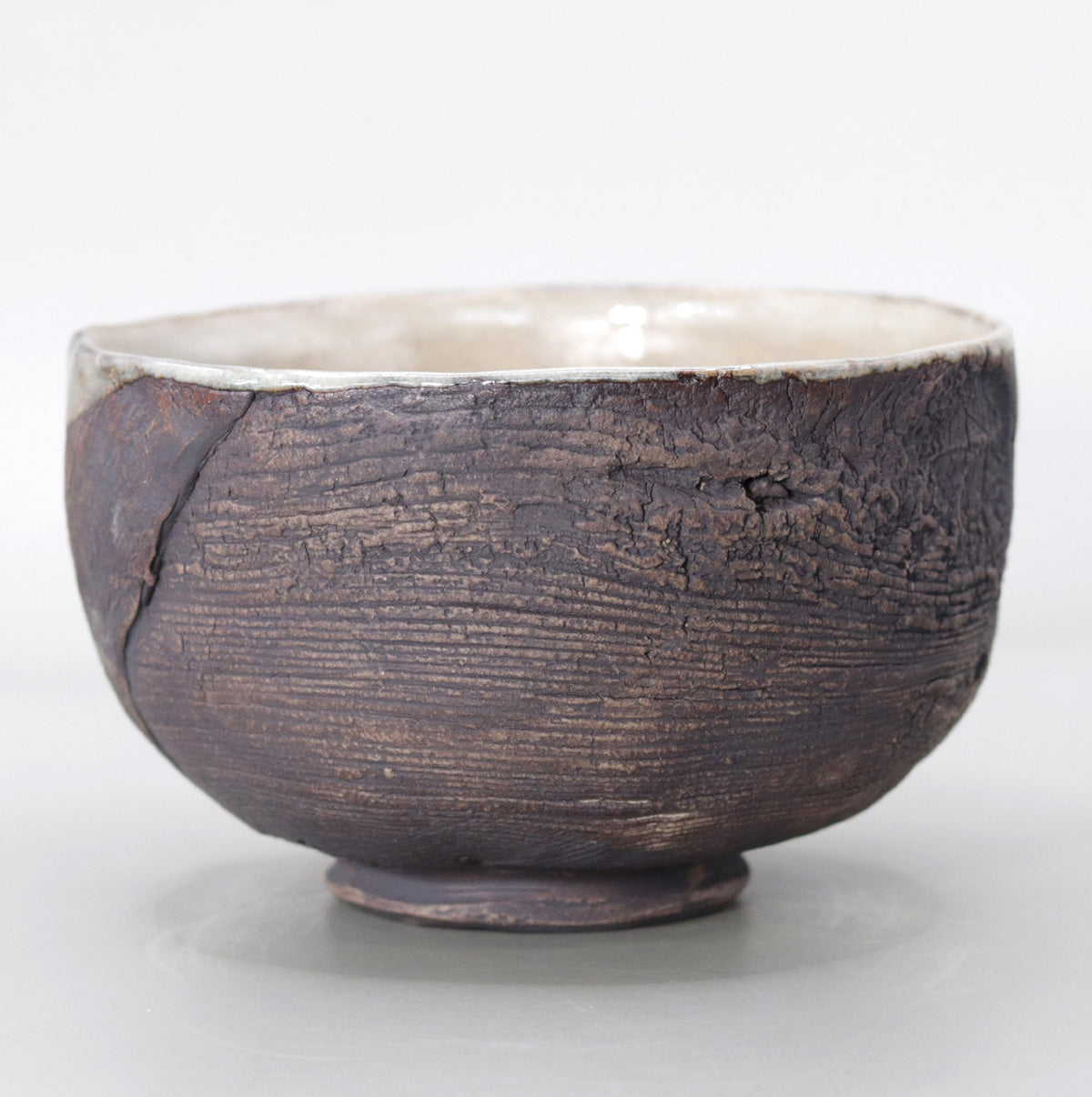
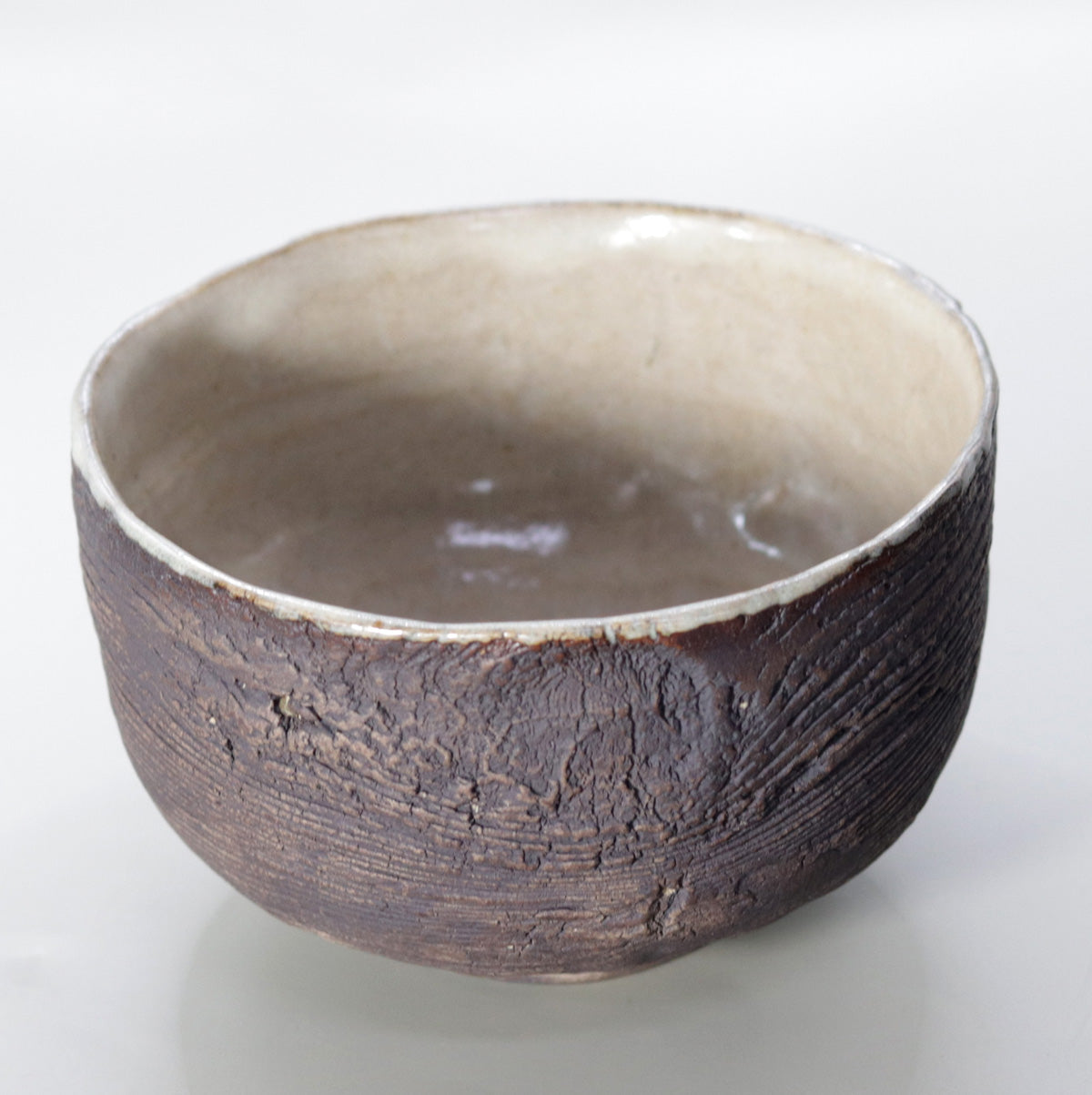
This piece by Onishi Rakusai features a deeply fired iron glaze blending with a wood grain pattern reminiscent of tree rings, creating a bowl that brings to the tea ceremony a primordial scene woven by earth and fire. The texture, which embodies both roughness and tranquility, can be said to be a work that sublimates the spirit of wabi in a modern way. Below, we will explain its appeal in detail from five perspectives.
1. Beauty of form - A refined form with a quiet undulation
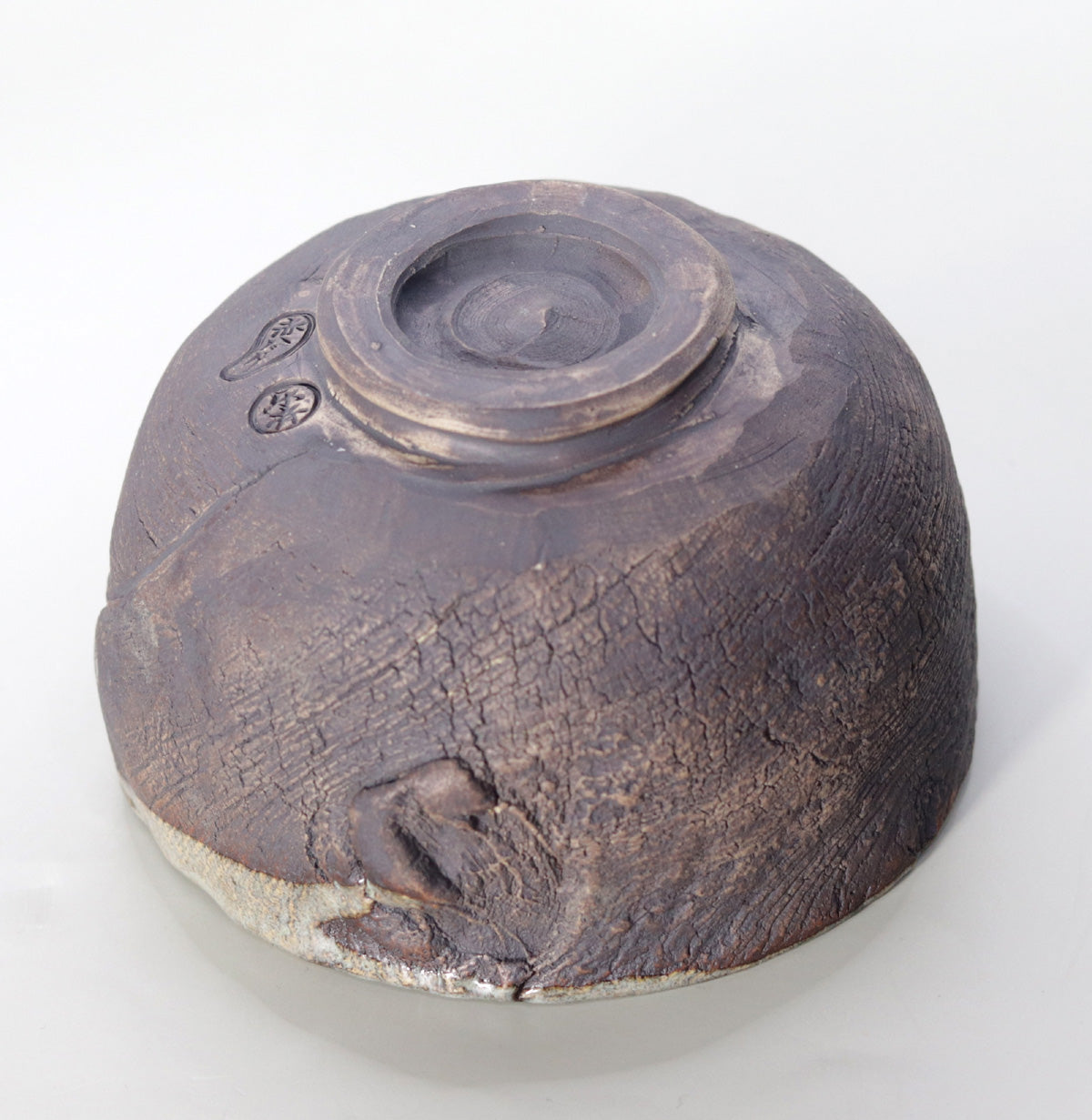
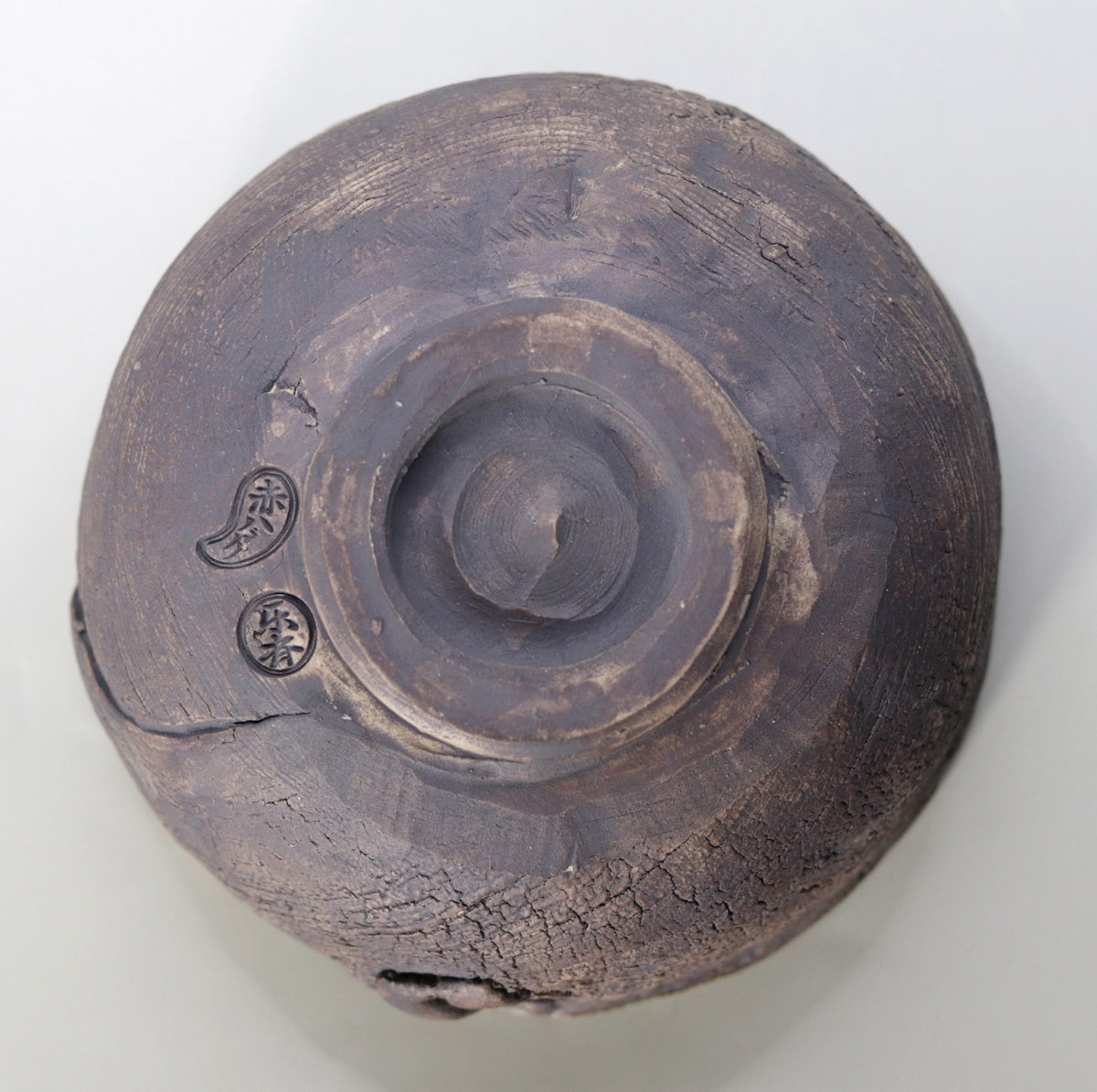
The slightly oval rim and high, rounded body gently taper towards the inside, while maintaining the soft sway characteristic of hand-formed tea. The base is trimmed to a small size, and the overall center of gravity is kept low, giving the teacup a sense of stability and quiet tension when held in the hand. The teacup drains water well when the whisk is held in the cup, and the balance naturally complements the movements of the tea ceremony.
2. Glaze and texture - The synergy of iron glaze and wood grain
The depth of the iron glaze <br data-start="410" data-end="413">The iron glaze that covers the outside displays a multi-layered color that shifts from reddish-black to inky black, and the subtle luster caused by kiln changes sparkles like stardust at night. The high iron oxide content and the high-temperature firing, which was performed in a slightly reducing manner, gave it a rich metallic color.
Creating the wood grain pattern <br data-start="533" data-end="536">Rather than creating a "rope pattern" by wrapping a rope around the base material and transferring it, the wood grain is created by deliberately scraping and spatula marks, and then reducing the firing process to allow the iron to create shades of light and dark, creating a pattern. The way the natural tree rings emerge gives the impression that the fire has regenerated the "wood in the earth."
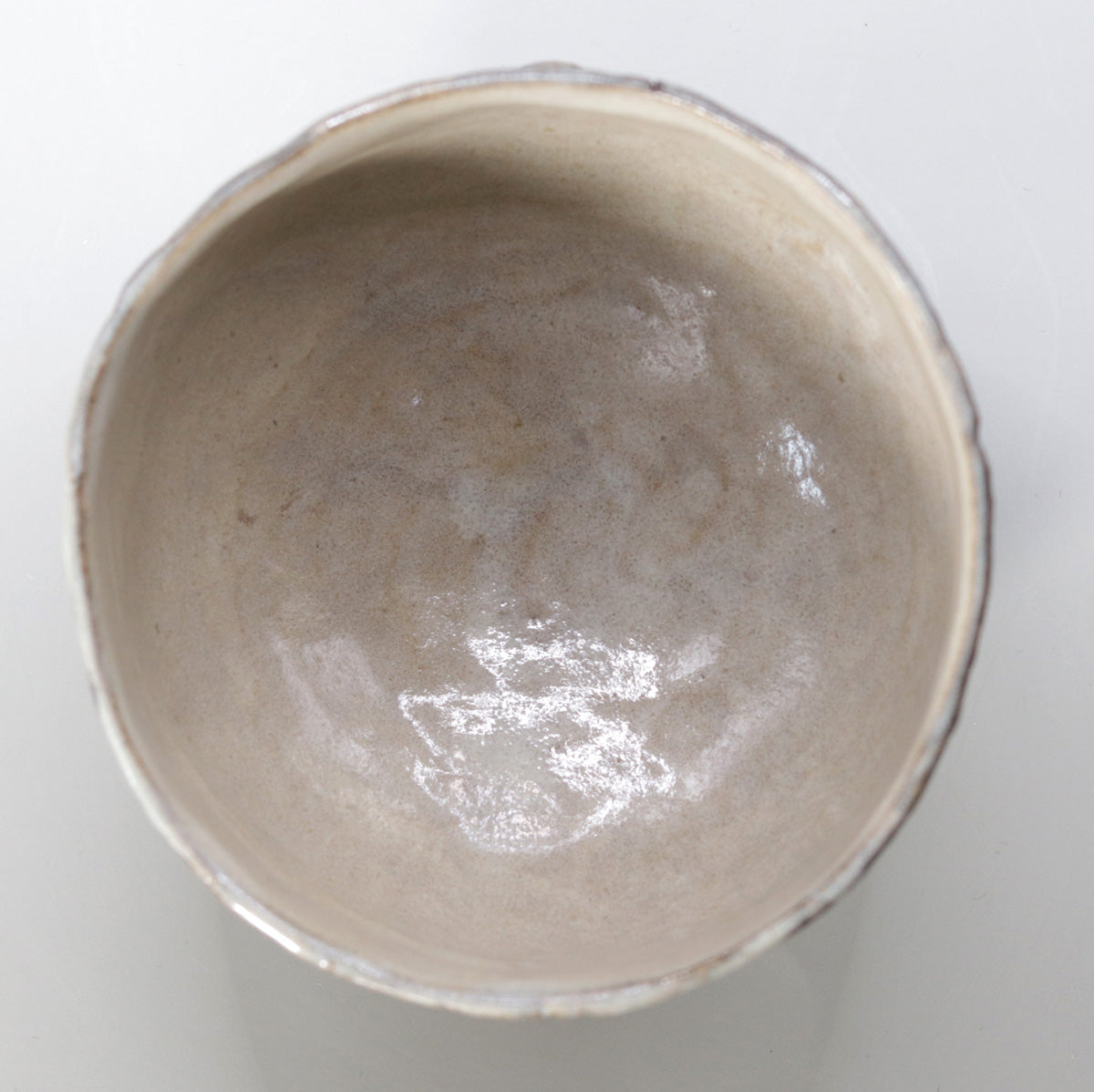
A contrasting interior <br data-start="677" data-end="680">The inside is covered in a milky white glaze, and the pale grayish-white mirror finish brings out the pure green of the matcha. The contrast between the rough exterior and the fresh interior visualizes the beauty of "yin and yang" sought after in the tea ceremony.
3. Techniques - How to utilize iron clay and the secrets of firing
Onishi Rakusai chose rough clay that is high in iron, and used hammering to form the clay rather than using a potter's wheel to firmly tighten the base. After forming, he smoothed and scraped the surface while it was still half-dry during the drying stage, leaving small irregularities that make it easier for the glaze to collect in certain areas.
The firing process alternates between reduction and oxidation in stages, and the piece is placed close to the fire to emphasize the flow of the flame. The iron on the fired surface dissolves and oxidizes, taking on nuances of char and silver, resulting in a more three-dimensional appearance of the wood grain.
4. Functional beauty at the tea ceremony
Looks great with matcha <br data-start="1037" data-end="1040">The pale white glaze on the inside evens out the foam on the surface of the matcha, while reflecting the green like light snow. The deep iron color on the outside gently transfers the heat of your hands, making it suitable for warm tea in the winter.
Pleasure of the senses of touch <br data-start="1129" data-end="1132">The grain-like ridges provide subtle resistance to the fingertips, and the roughness that remains in the hand directly conveys the texture of the clay. After guests have finished drinking their tea, they can relive the ``memories of earth and fire'' by caressing the bowl.
5. Aesthetic Sense and Historical Background
While drawing inspiration from the Momoyama period Kuroraku and the earthen landscapes of Iga and Shigaraki, what makes this work unique is its focus on wood grain. Wood grain symbolizes the "uncontrolled nature" of Zen, and is connected to the "appearance of natural objects" pursued by the wabi tea style since Sen no Rikyu. By deliberately minimizing decorative elements and foregrounding the patterns drawn by the clay itself, Onishi Rakusai has redefined wabi for the modern era.
The deep layering of the iron glaze and the undulating wood grain pattern make it seem as if the time that a tree has taken hundreds of years to carve out is sealed within a single bowl. When you hold it in your hand, the rough exterior and the tranquility within resonate with the drinker's own breathing and heartbeat.
When this piece is used at a tea ceremony, the five elements of earth, wood, fire, water, and wind are instantly brought into balance, and guests are naturally drawn to the present moment. Onishi Rakusai's iron-glazed mokume tea bowl is a masterpiece that quietly embodies the essence of the tea ceremony: "seeing the universe in a single bowl."
Share
-
[I will send it to you quickly and carefully]
We carefully package each product in a way that suits it best.
Also, delivery times vary depending on the piece (vessel, etc.).
Items that already come with a box will be shipped within 1-3 days of the order date.
For items that require a box to be made after your order, it will take approximately 30 days for production to be completed and then shipped.
In either case, once we have confirmed your order, we will contact you by email to inform you of the delivery date.
-
[Requests when purchasing pottery]
Even products that look the same may differ slightly in color, shape, size, etc.
The way the glaze is used, the power of the kiln, the firing method, the season, and the humidity also affect the appearance of the pottery.
Please understand the individuality of each piece of pottery and enjoy the unique warmth of handmade.