


Kenzan's Sake Cup with a Picture of Shiba Hydrangea by Kousai Miyagawa
Kenzan's Sake Cup with a Picture of Shiba Hydrangea by Kousai Miyagawa
Couldn't load pickup availability
Height: 7.5cm Width: 6.5cm
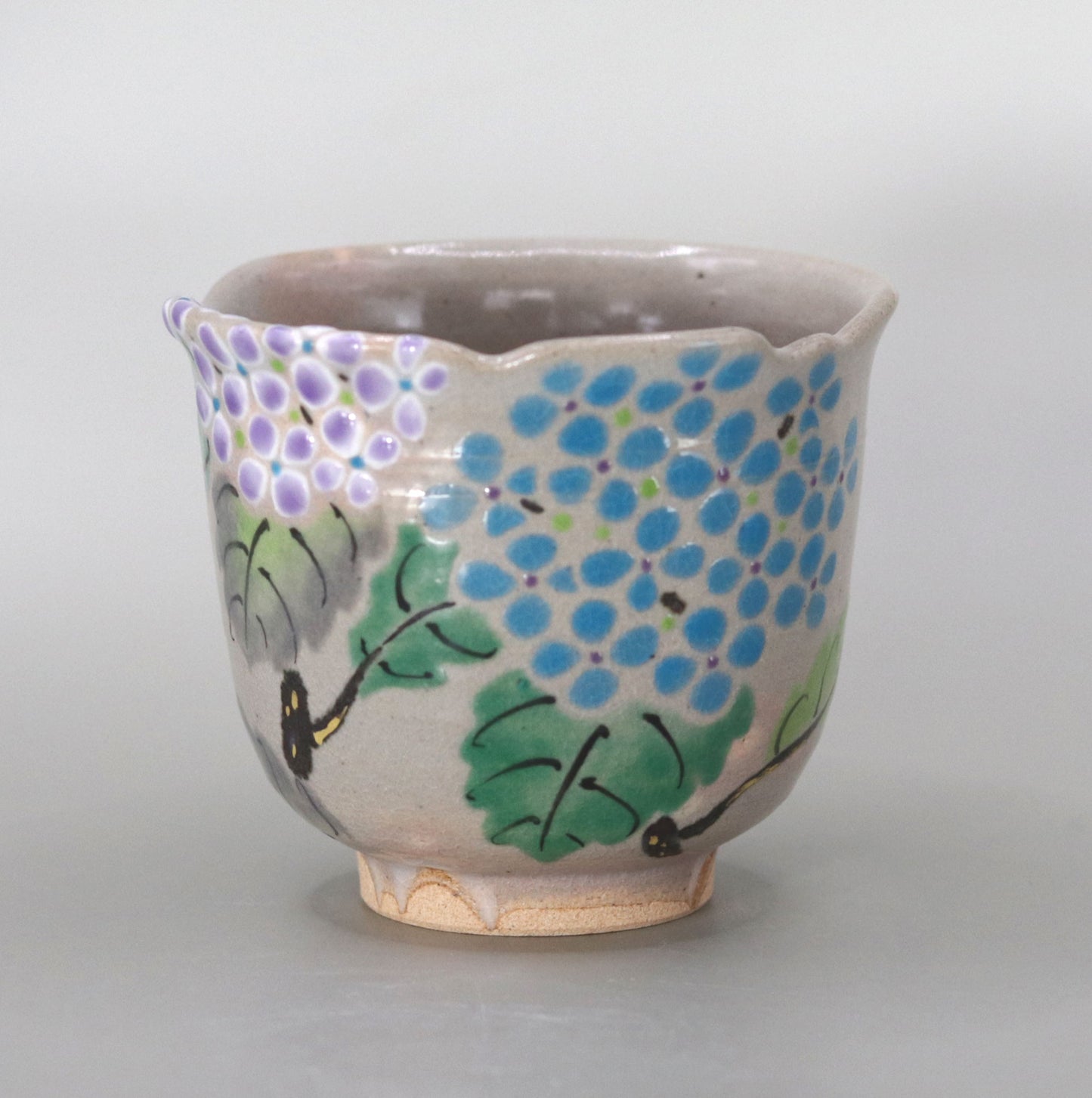
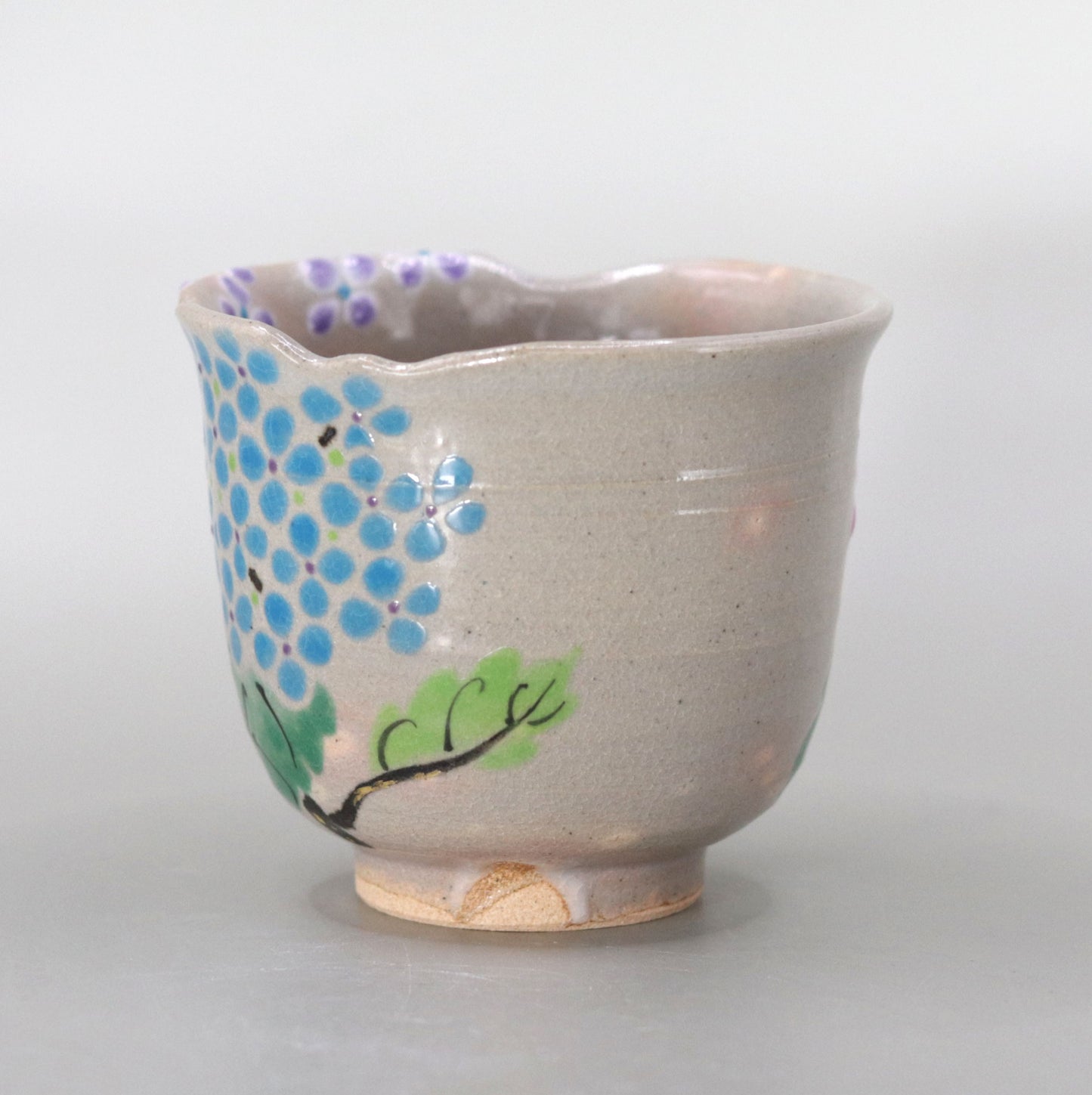
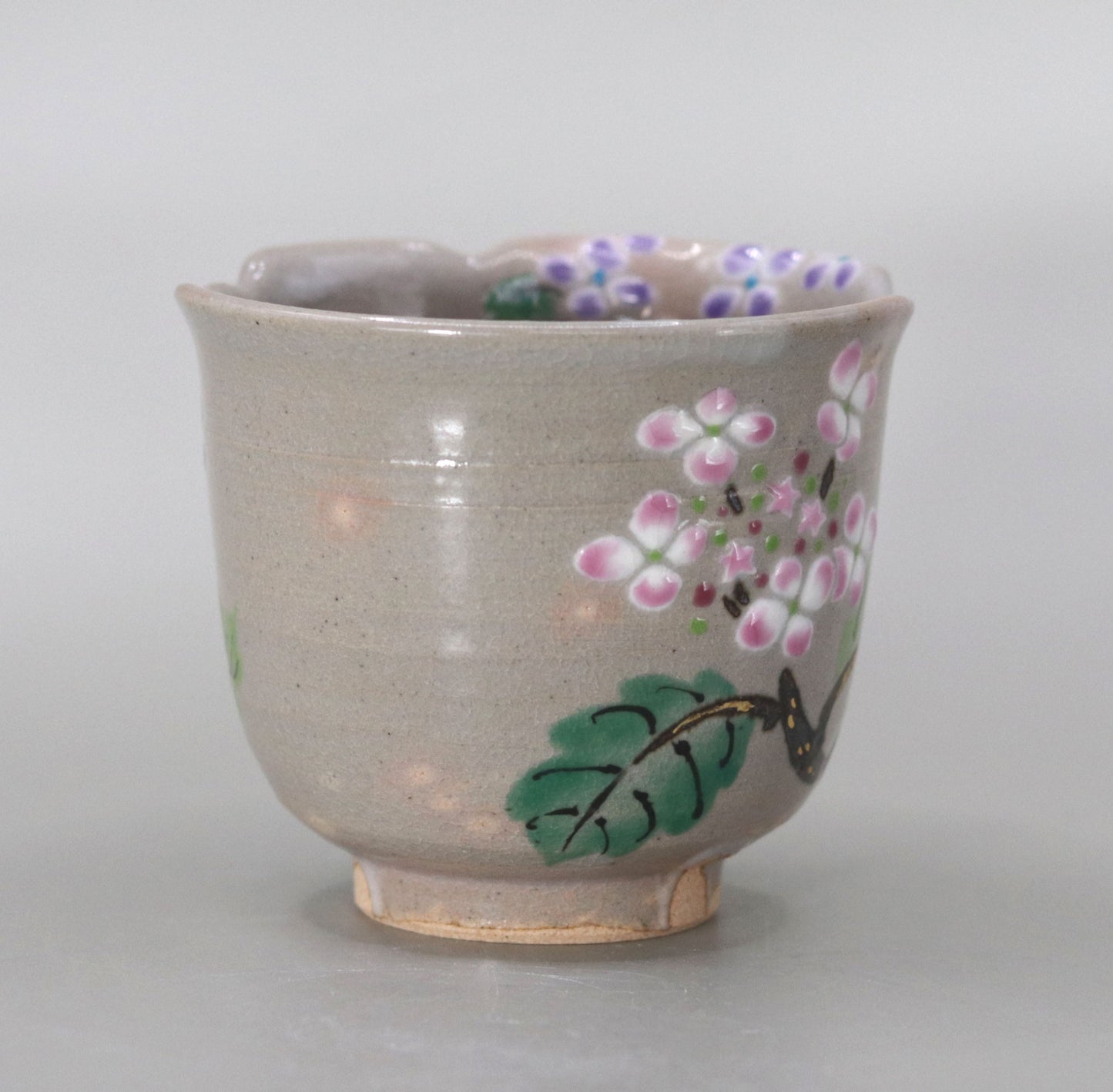
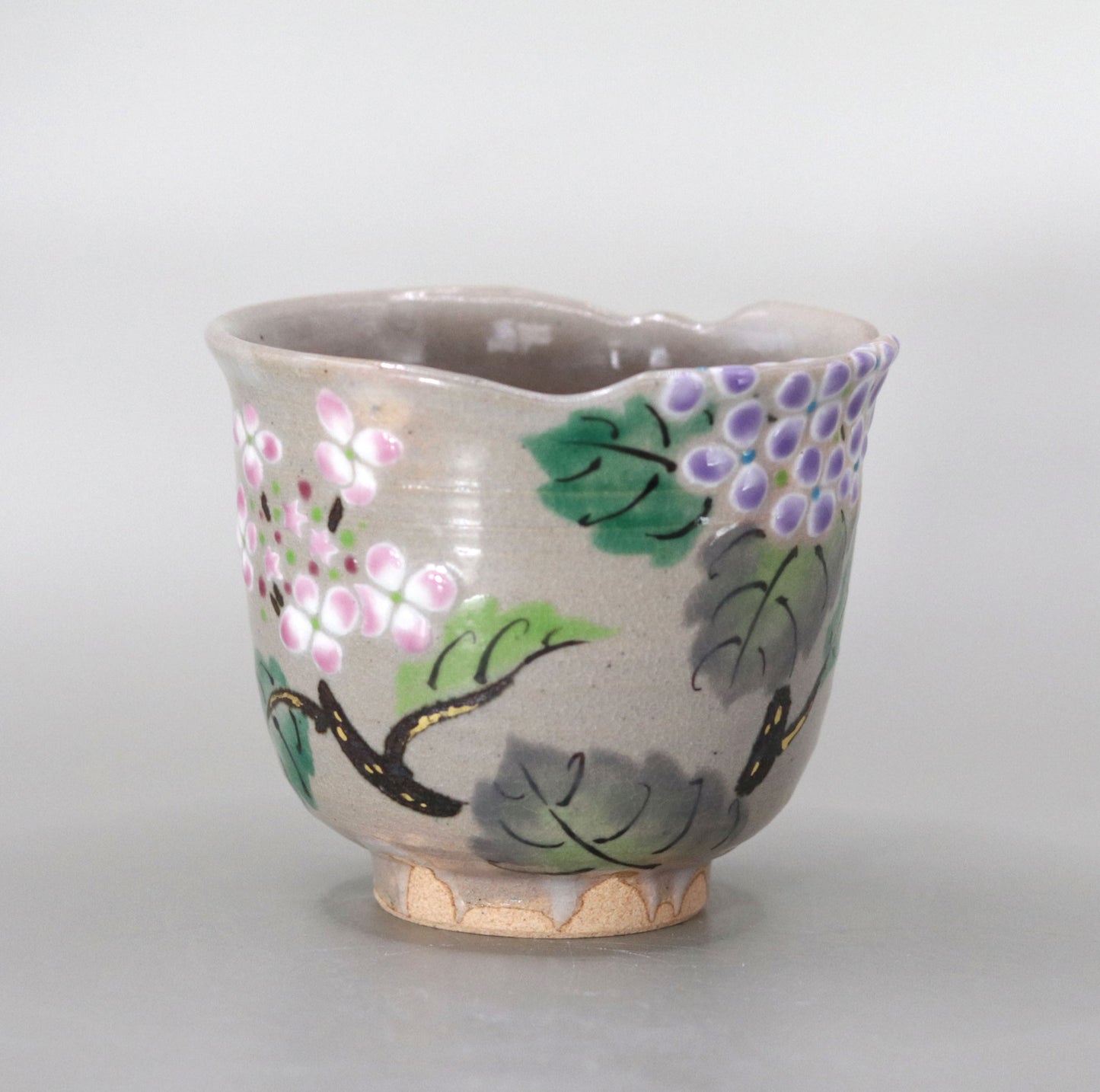
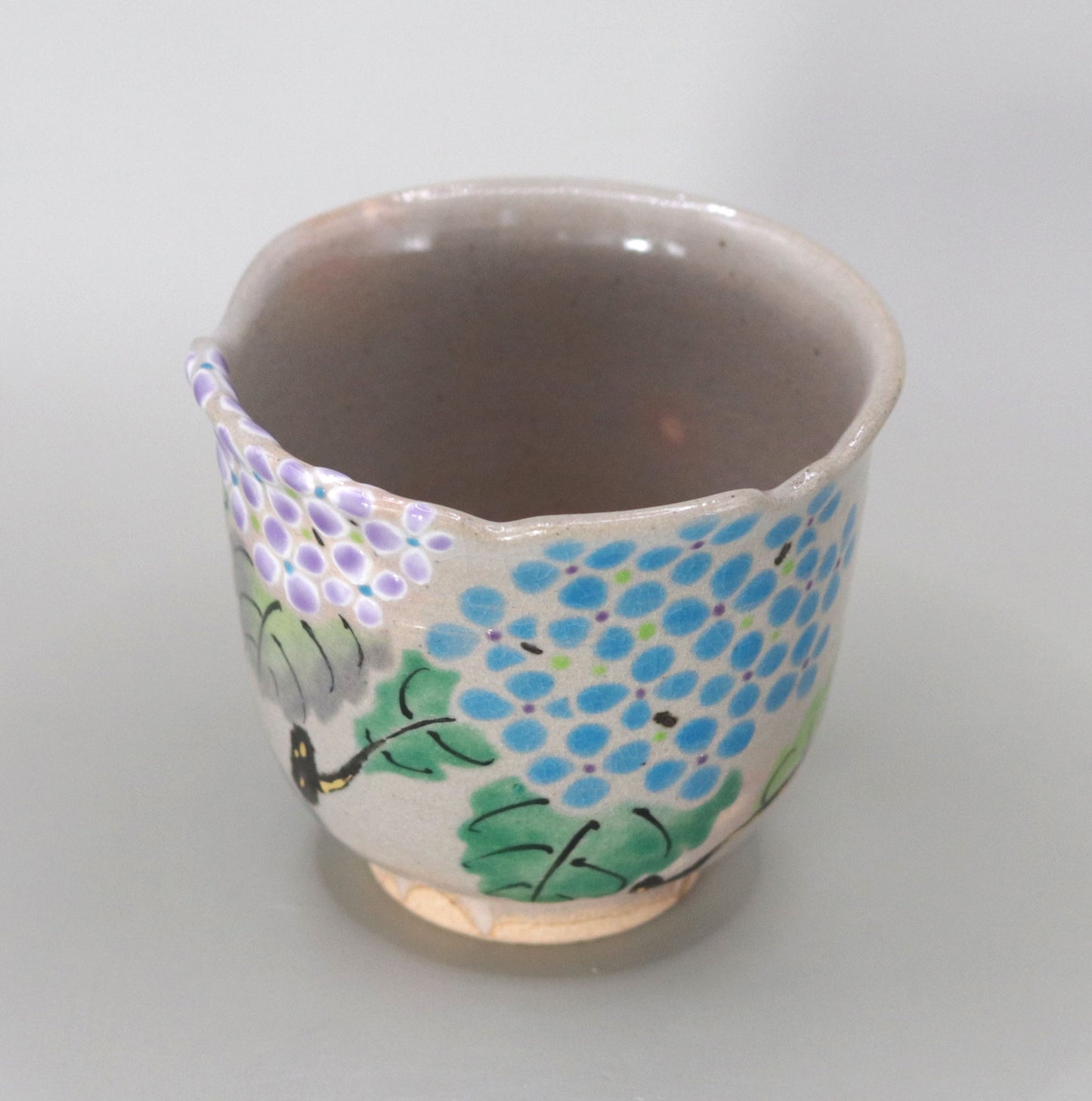
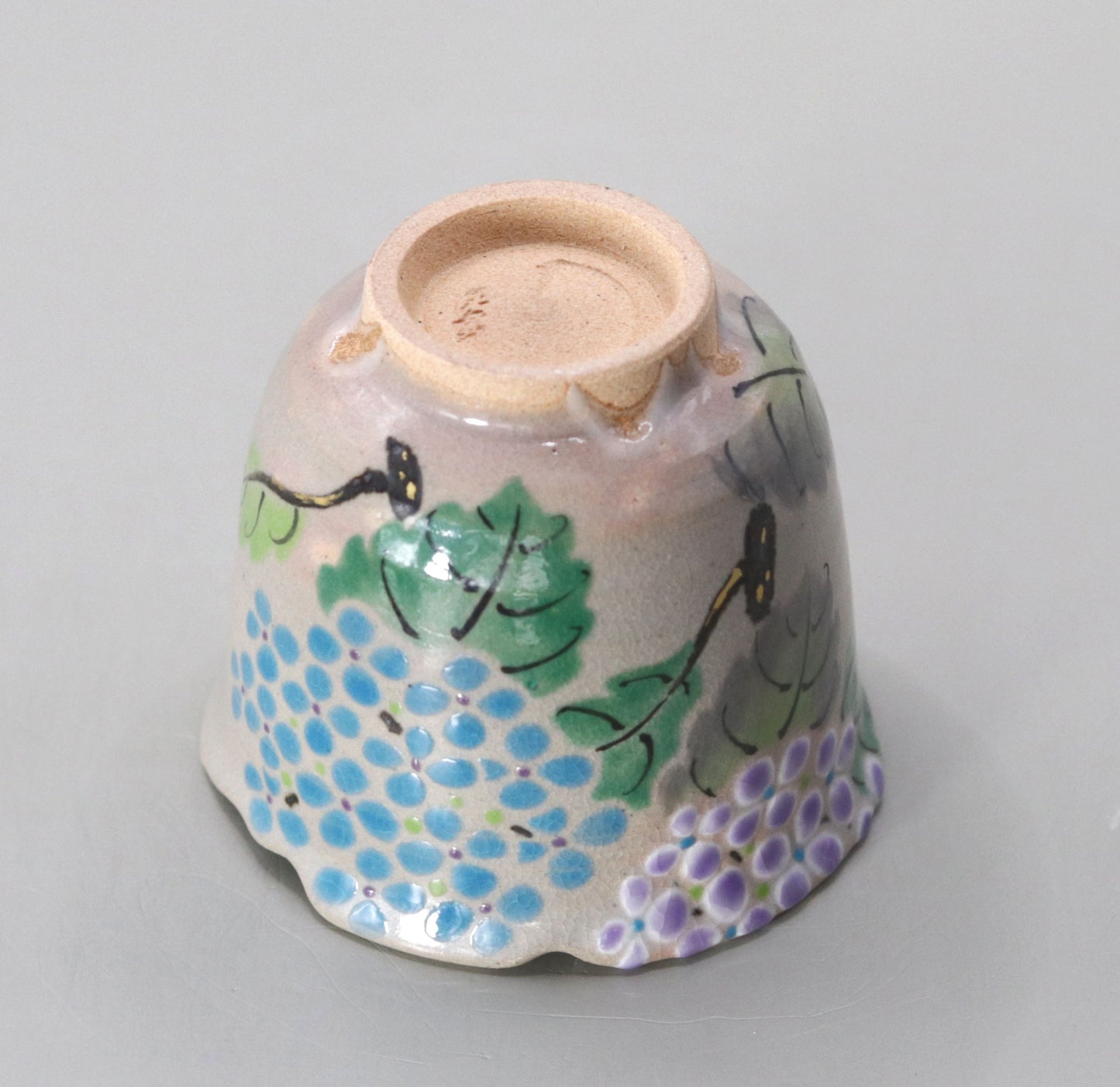
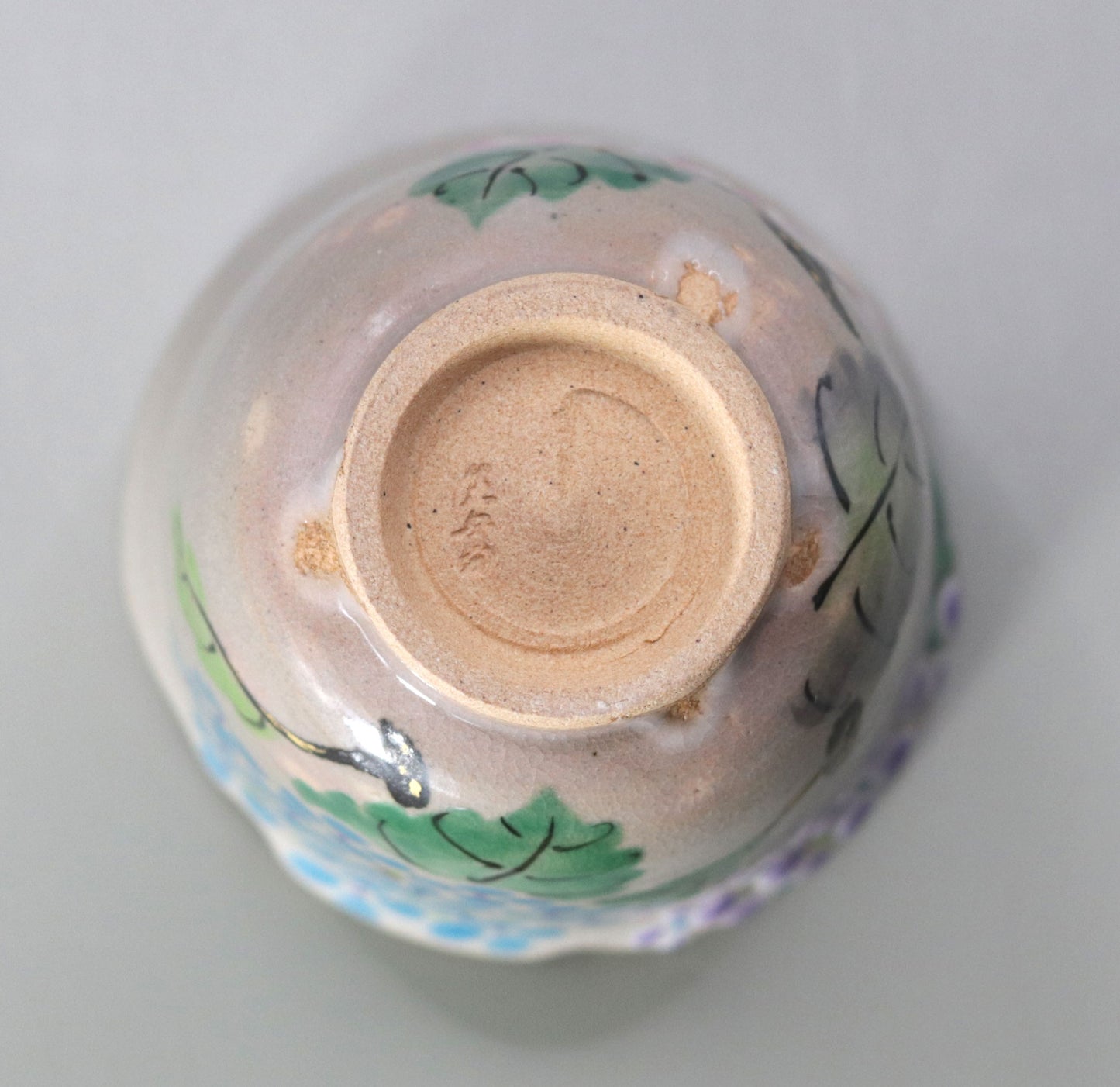
"Kenzan copy of Shibayohana sake cup by Miyagawa Kosai" is a beautiful piece that combines traditional Kyoto ware techniques with a delicately painted motif of the unique Shibayohana flower. This sake cup is more than just a sake cup; it is also appreciated as a work of art that can be enjoyed for its picturesque beauty.
The charm of Shiba Yoka's paintings
The Japanese yolk is a flower that is familiar to the Japanese landscape, and its elegance and profoundness are part of its charm. The picture of the Japanese yolk painted on this sake cup has the following special charm.
1. Vitality and Change
One of the most distinctive features of the Japanese yew flower is that its color changes depending on the acidity of the soil. With a wide variety of hues, including blue, purple, and pink, this flower has come to symbolize vitality and change. In the depiction of the Japanese yew flower, the rich changes in color evoke emotions and images in the viewer. In this work, too, the delicate colors of the flower are exquisitely depicted, conveying the power and transience of life.
2. The atmosphere of the rainy season
Shibayo-ka flowers are known to bloom in full glory during the rainy season. The beauty of the moist petals wet with rain and the droplets that collect on the leaves evokes the atmosphere unique to the rainy season. This natural state is also expressed in the Shibayo-ka flowers depicted in Miyagawa Kosai's works, which, while quiet, strongly convey the changing of the seasons. The viewer is reminded of the scenery of Japan's rainy season and is able to sense the beauty of the harmony between rain and flowers.
3. Japanese Atmosphere
The Japanese lantern flower has occupied an important place in traditional Japanese gardens and landscapes. For this reason, this flower holds a special place in the hearts of the Japanese people. The painting of the Japanese lantern flower on this sake cup is reminiscent of Japanese gardens and scenes after the rain that have been beloved since ancient times, and evokes in the viewer a deep sense of Japanese culture.
4. Modest beauty
Although the petals of the Japanese lantern plant are small and modest, when they grow in clusters they radiate a magnificent beauty. This modest charm resonates with the hearts of Japanese people and leaves a deep impression on viewers. Although not flashy, the flower's beauty increases when you take the time to appreciate it, truly exuding the "beauty in tranquility."
Shibayohana and its other names
The Japanese hydrangea is also known by other names such as "Seven Changes" and "Flower of the Eight Immortals" because its color often changes. Due to its diverse colors, the flower is deeply rooted in Japanese culture as a flower that carries various emotions and symbols. This work also depicts the colorful Japanese hydrangea, and its changing hues give the entire piece movement and depth.
Function and beauty as a sake cup
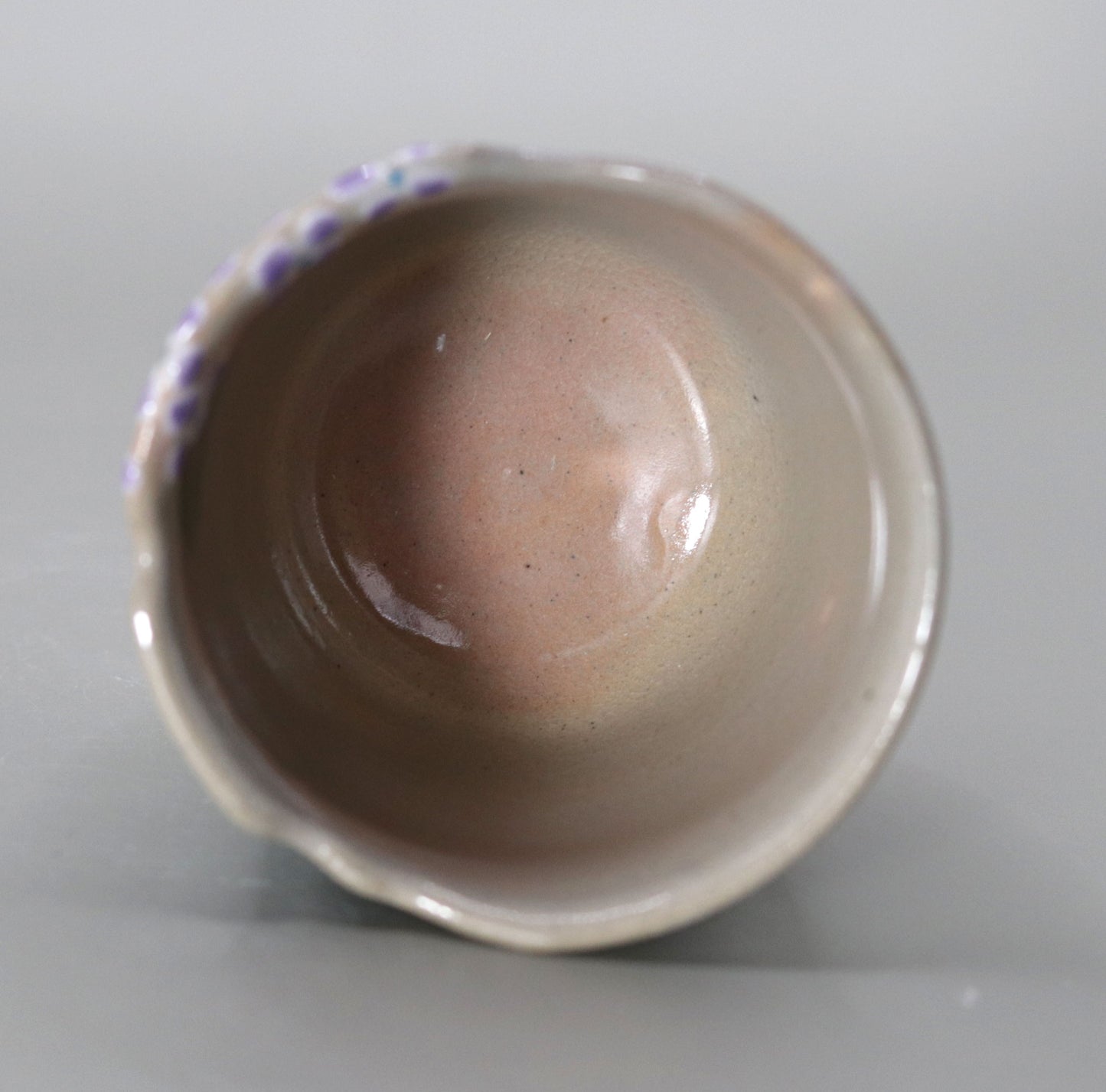
This "Kenzan Copy Shibayohana Sake Cup" is also very comfortable to use as a sake cup, being slightly larger than a guinomi (small sake cup) and characterized by a shape that fits comfortably in the hand. Its lightness and pleasant feel as a vessel not only give satisfaction to the viewer, but also provide the sensory pleasure of drinking sake while enjoying the painted image.
Kenzan's copy and Miyagawa Kosai's techniques
"Kenzan Copy" is a work that inherits the style of Ogata Kenzan, who was active during the Edo period, while adding a unique interpretation. Kenzan's style is characterized by a bold yet simple and refined beauty, and the artist skillfully incorporates these techniques. Influenced by his brother Ogata Korin, Kenzan's style incorporates many floral motifs that incorporate the gorgeousness of the Rinpa school. The painting of Shibayohana is one such example, and expresses a simple yet profound beauty.
The Miyagawa family's straw ash glaze and the tradition of Makuzu ware
The Miyagawa Kosai family has used straw ash glaze for generations, which gives their pieces a distinctive soft and warm texture. The straw ash glaze has a white or bluish hue and gives the entire piece a plump appearance, the beauty of which is particularly evident in this piece. This glaze is a traditional technique used by Nonomura Ninsei, and holds a particularly important place in Makuzu ware.
Makuzu ware is a pottery technique used by the Miyagawa family since the Edo period, and their works are highly acclaimed both in Japan and overseas. Pieces depicting delicate motifs such as Japanese hydrangeas are the culmination of the Miyagawa family's techniques and aesthetic sense, and continue to be loved throughout the ages.
In this way, this is an extremely refined piece that expresses the depth of Japanese culture and the beauty of nature. It evokes in the viewer a sense of Japanese elegance and the changing seasons, and at the same time can be enjoyed as a piece of tableware for everyday use, making it an extremely appealing piece.
Share
-
[I will send it to you quickly and carefully]
We carefully package each product in a way that suits it best.
Also, delivery times vary depending on the piece (vessel, etc.).
Items that already come with a box will be shipped within 1-3 days of the order date.
For items that require a box to be made after your order, it will take approximately 30 days for production to be completed and then shipped.
In either case, once we have confirmed your order, we will contact you by email to inform you of the delivery date.
-
[Requests when purchasing pottery]
Even products that look the same may differ slightly in color, shape, size, etc.
The way the glaze is used, the power of the kiln, the firing method, the season, and the humidity also affect the appearance of the pottery.
Please understand the individuality of each piece of pottery and enjoy the unique warmth of handmade.