
Tenmoku glaze sake cup by Okada Yu
Tenmoku glaze sake cup by Okada Yu
Couldn't load pickup availability
Width: 9.2cm Height: 4.6cm
Tenmoku glaze sake cup
- Created by Masaru Okada -
Work summary
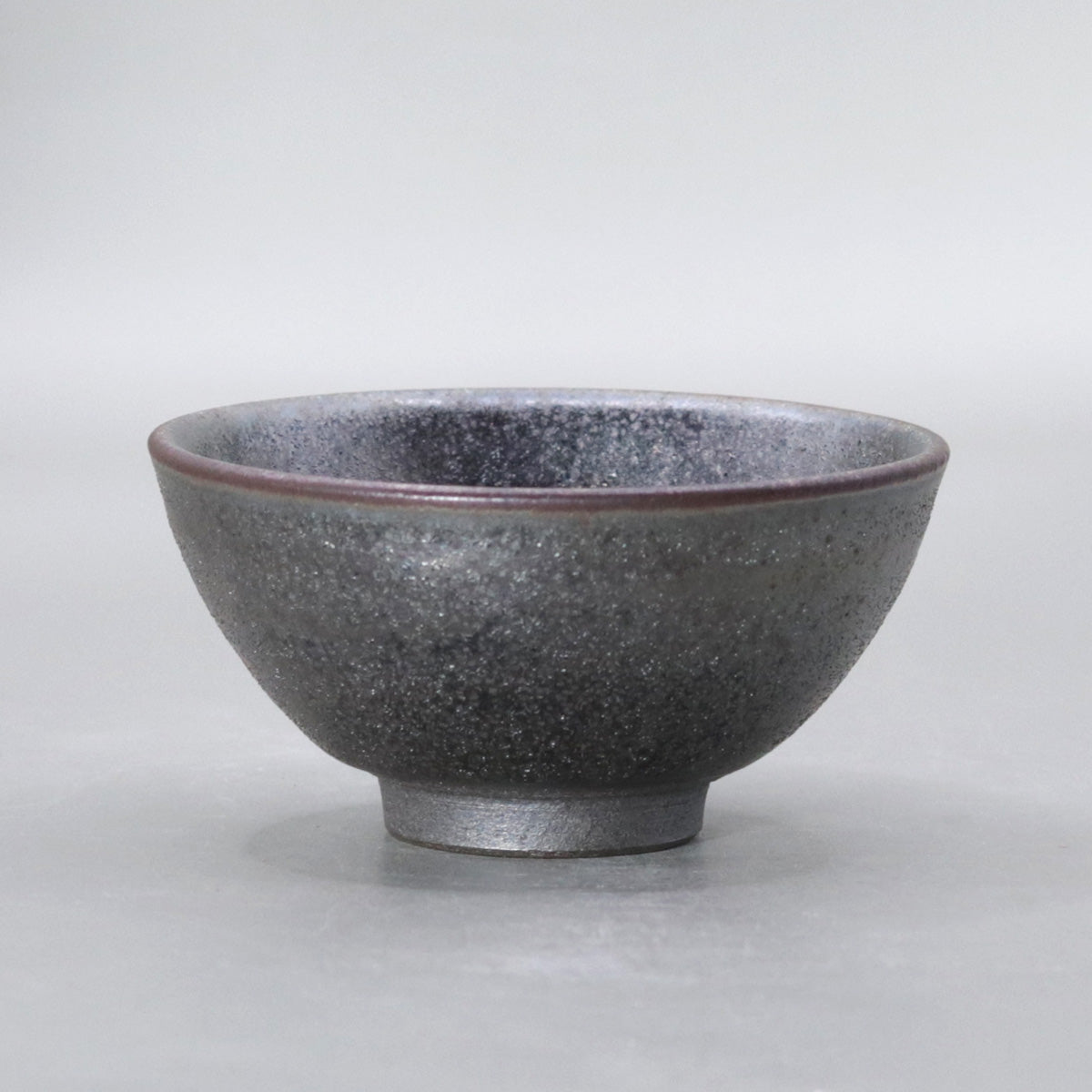
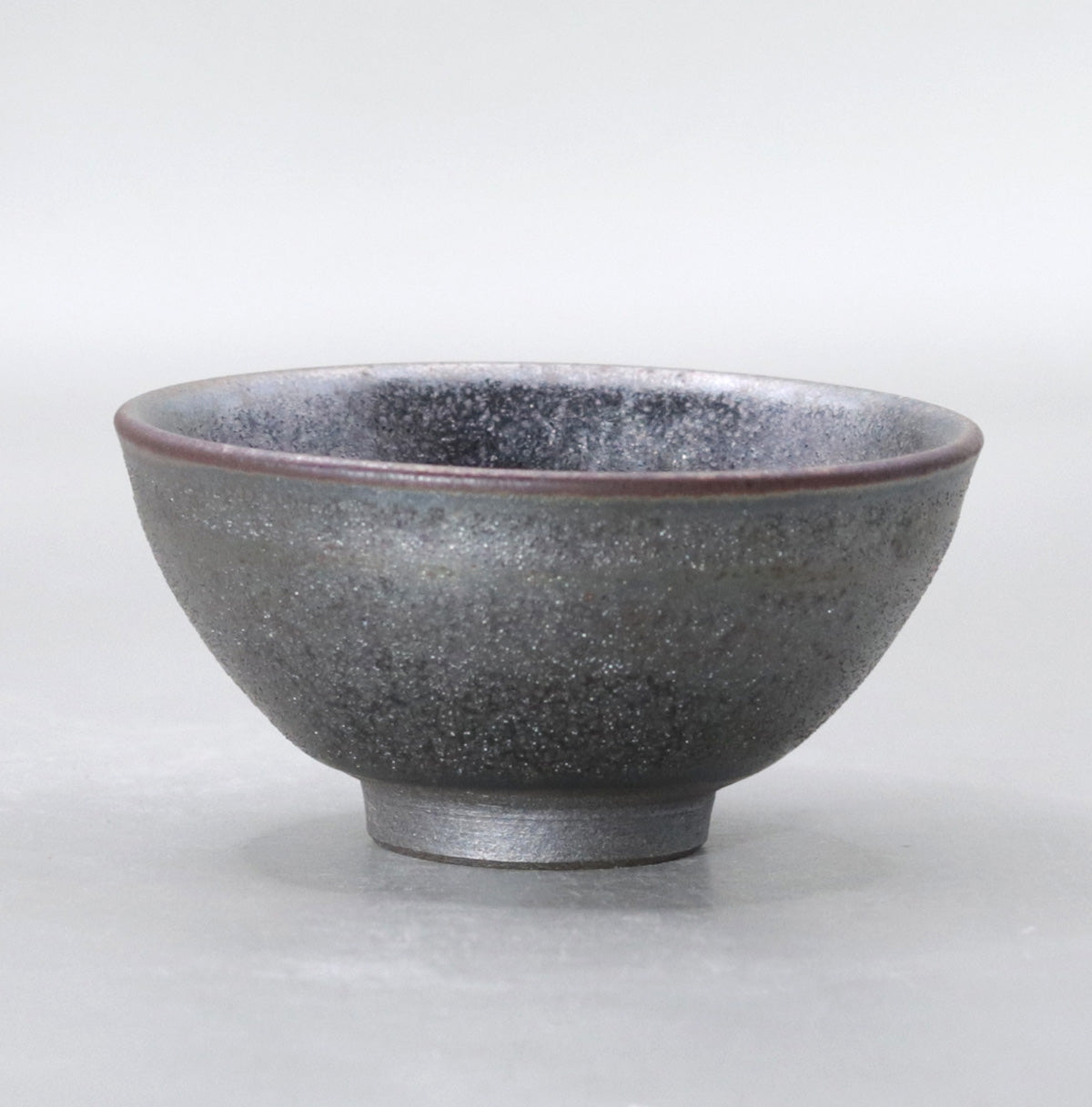
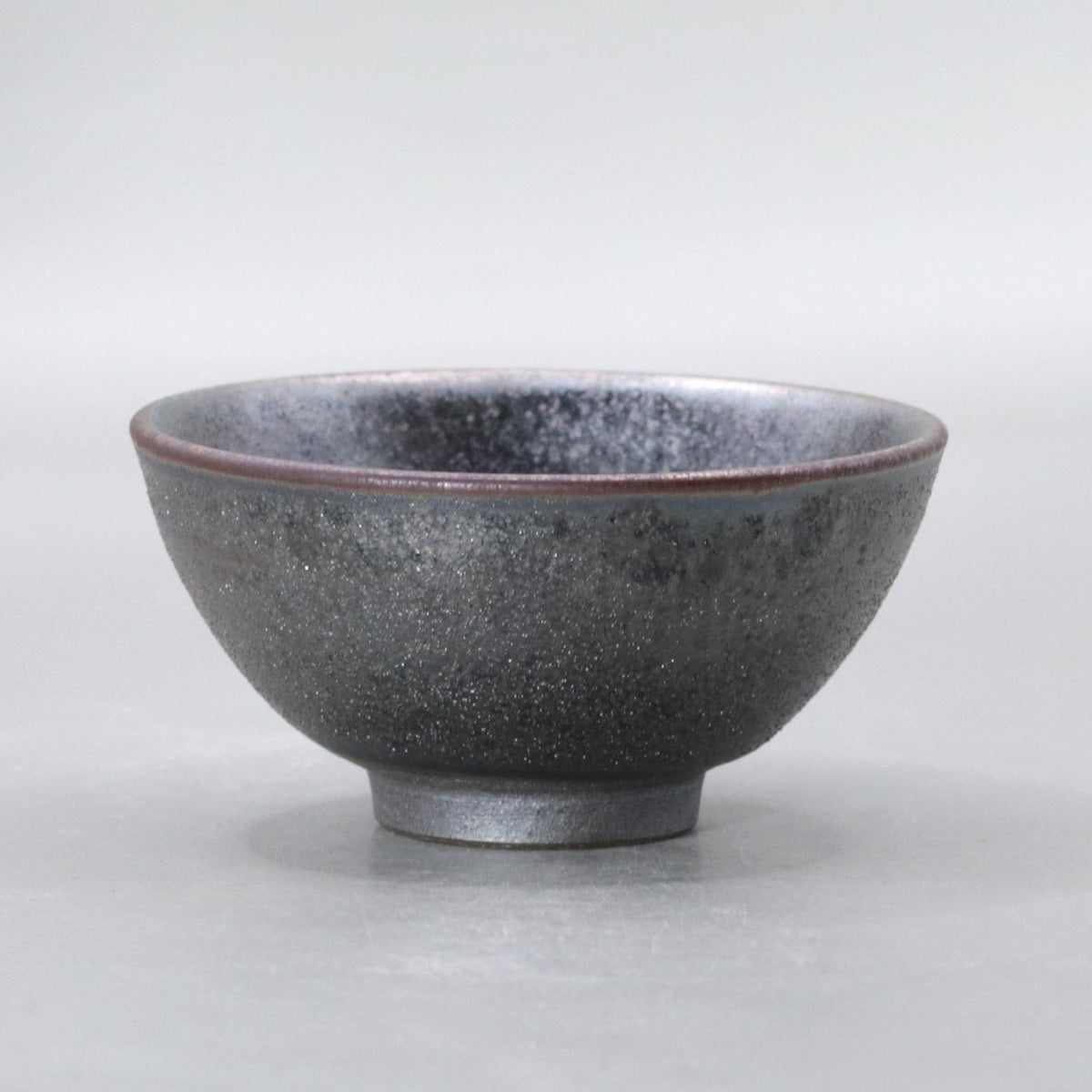
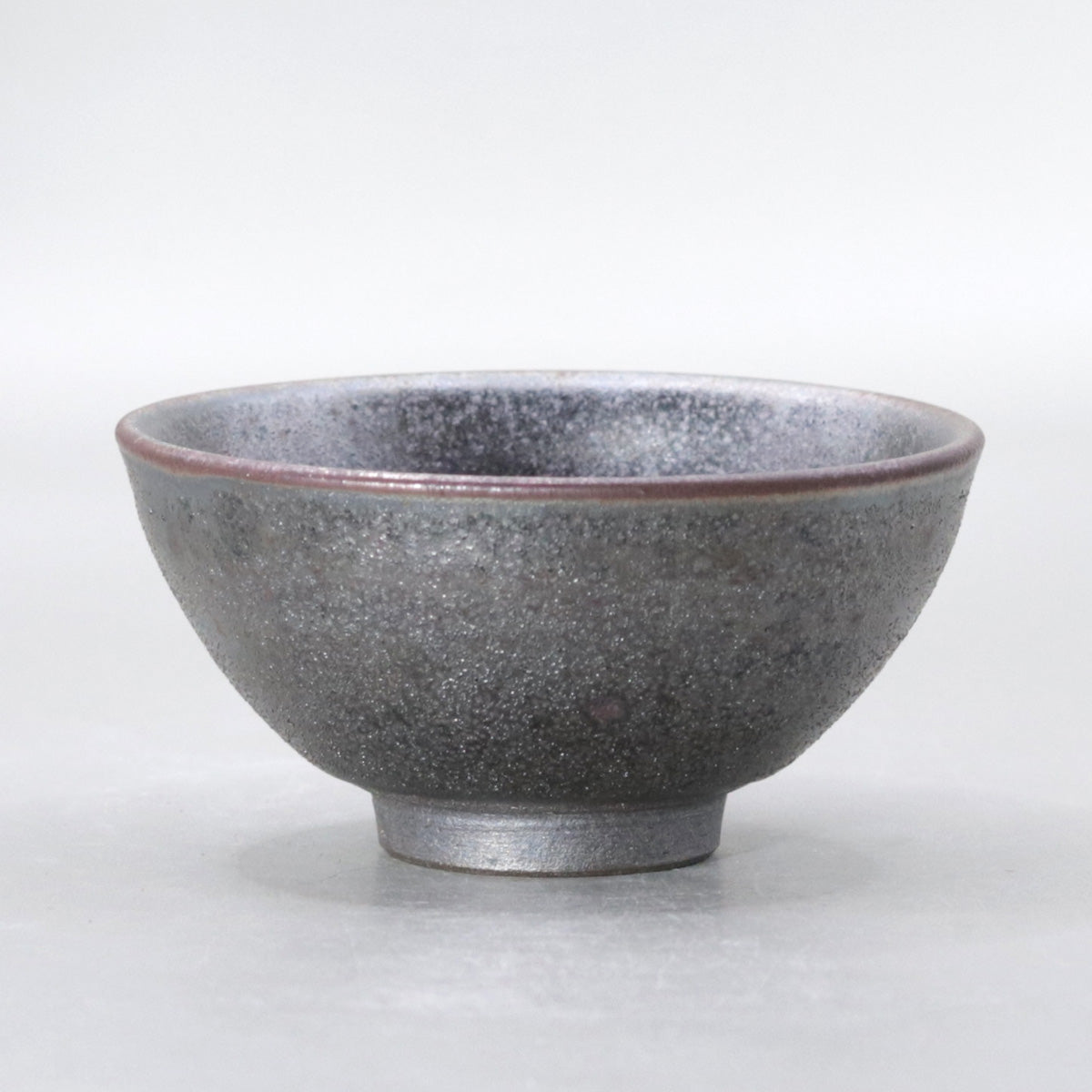
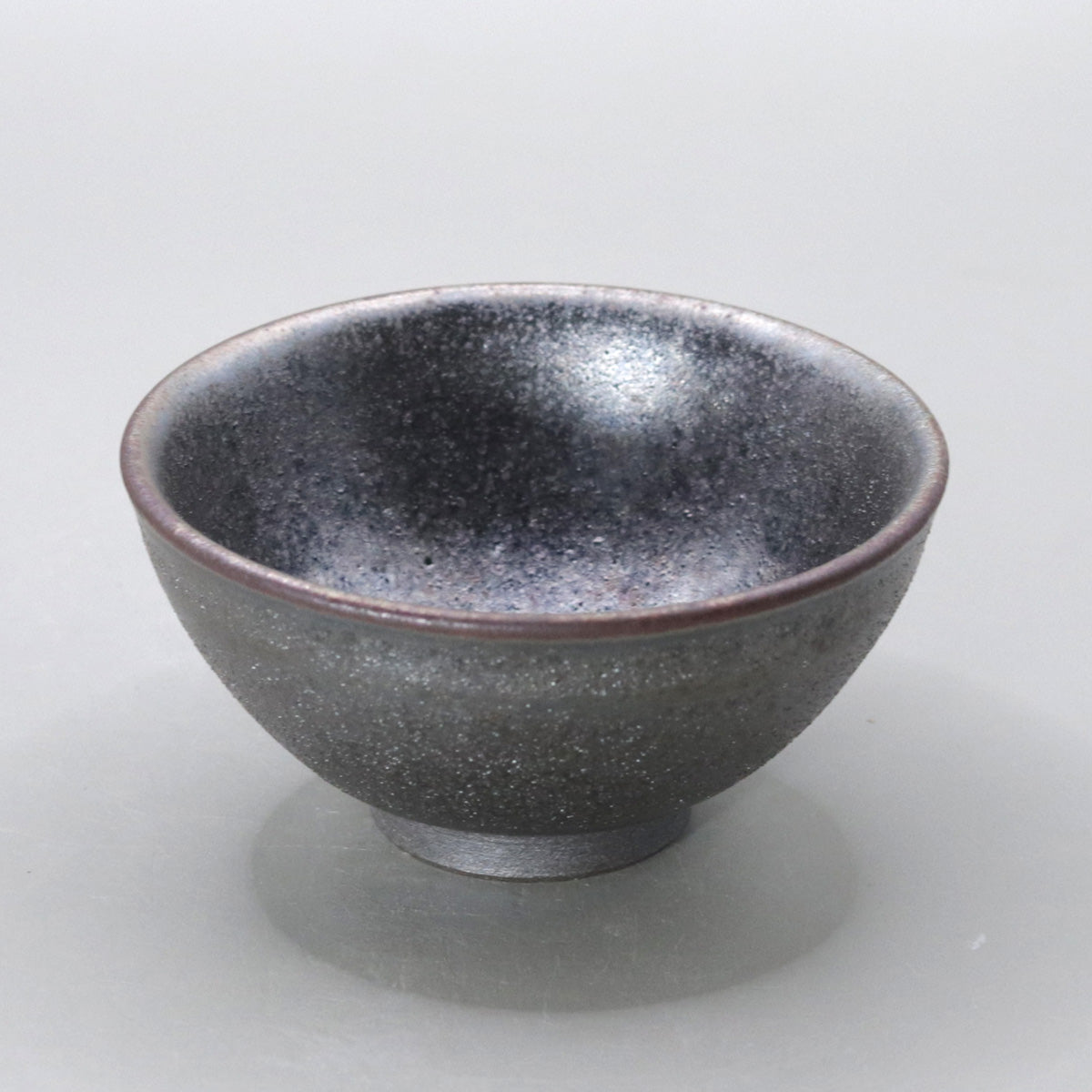
This is a Tenmoku-glazed sake cup made by Okada Masaru, a potter in the Uji coal mines of Kyoto. The slightly curved rim and low foot create a sense of stability, while the minute iron crystals floating in the deep black glaze give the simple shape a quiet tension.
Characteristics of the design
Rim : The slightly reddish rim is slightly turned up to make it gentle on the palate, while also creating a visually soft, dropped shoulder.
Body : The body remains almost hemispherical, but after being shaped on the potter's wheel, it is lightly pressed down with the fingertips to create a subtle undulation on the surface that retains the earthenware, creating a sense of shadow even in the black glaze.
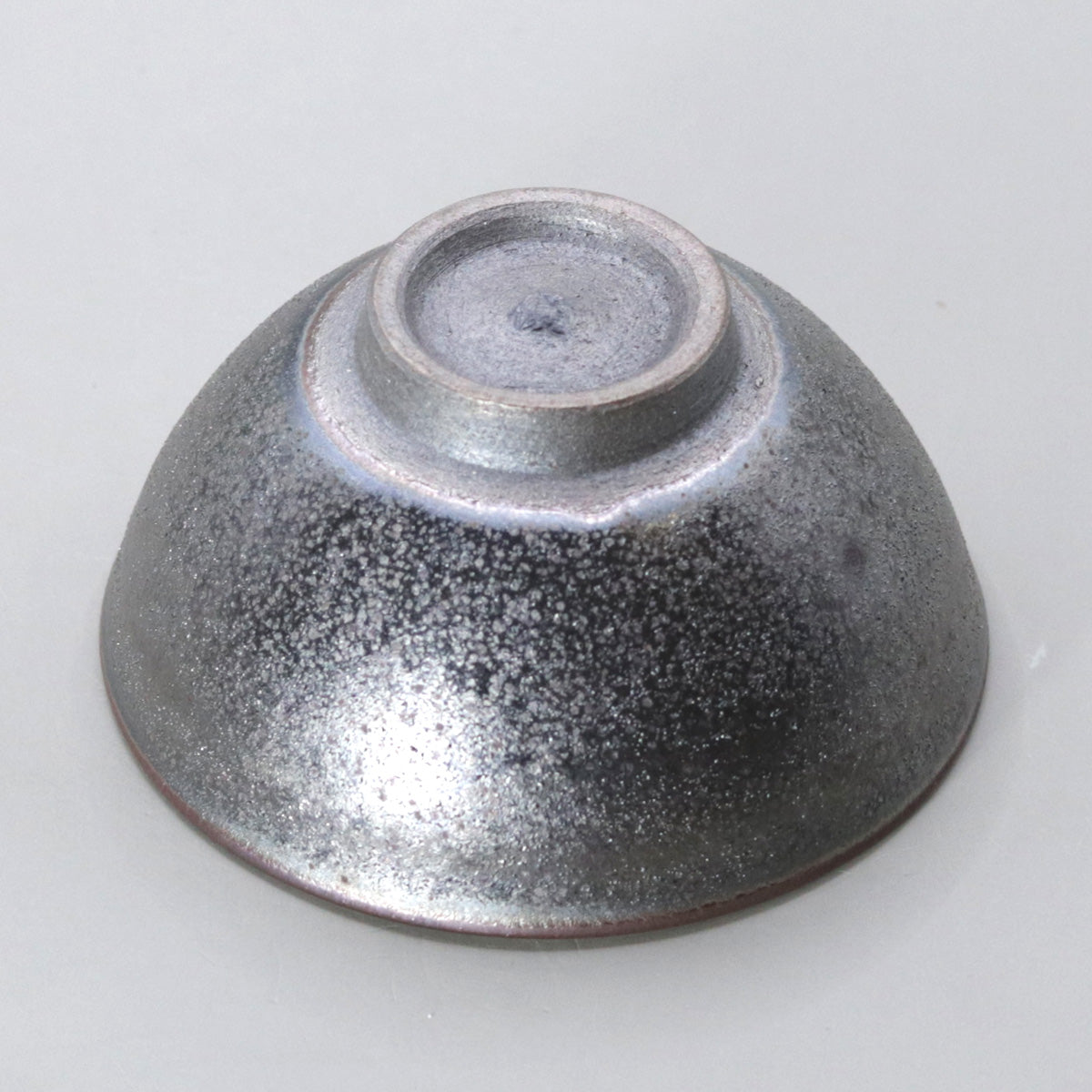
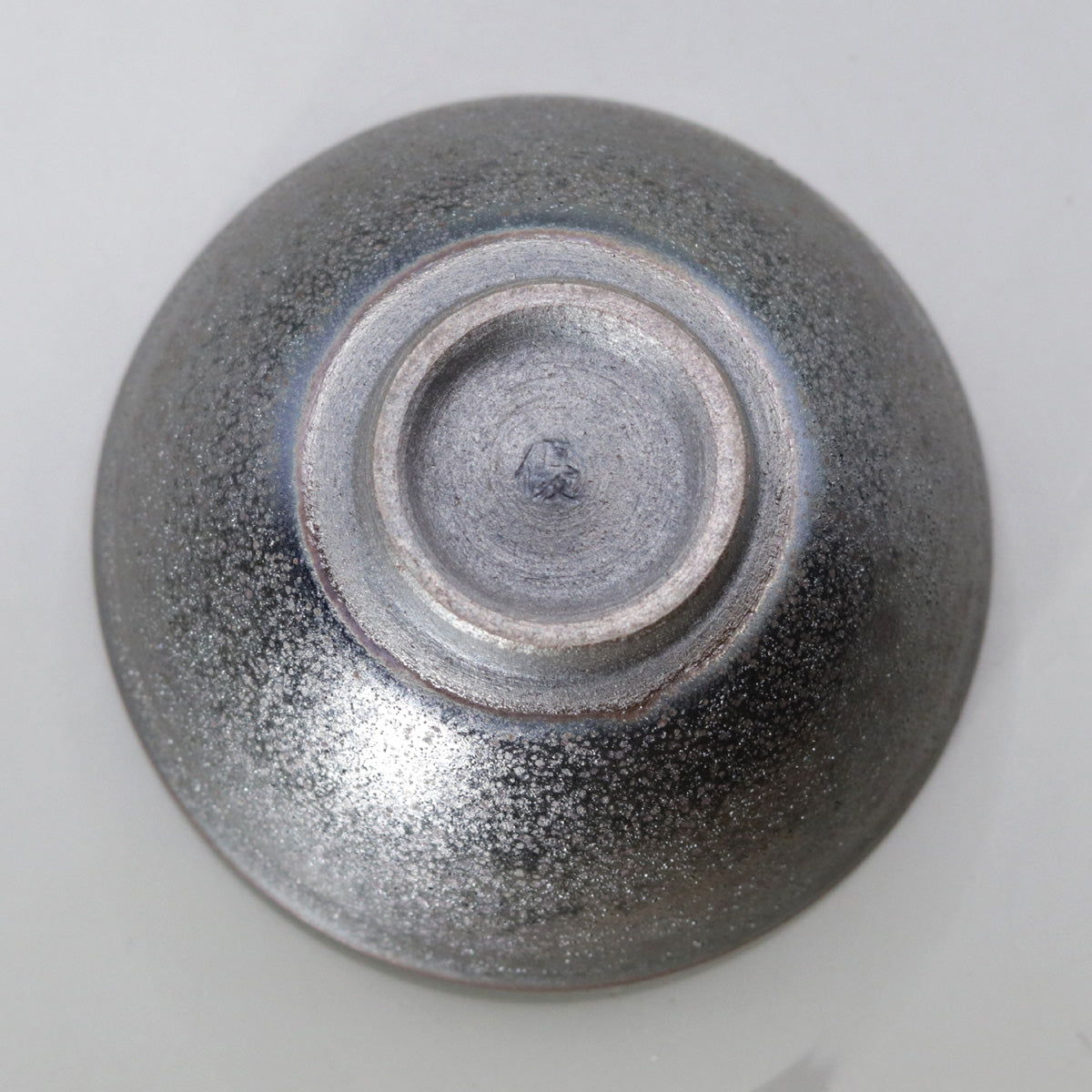
Base : Small and sharply carved. A practical design that keeps the center of gravity low when pouring sake and reduces strain on the wrist when lifting the sake cup.
Glaze and Technique
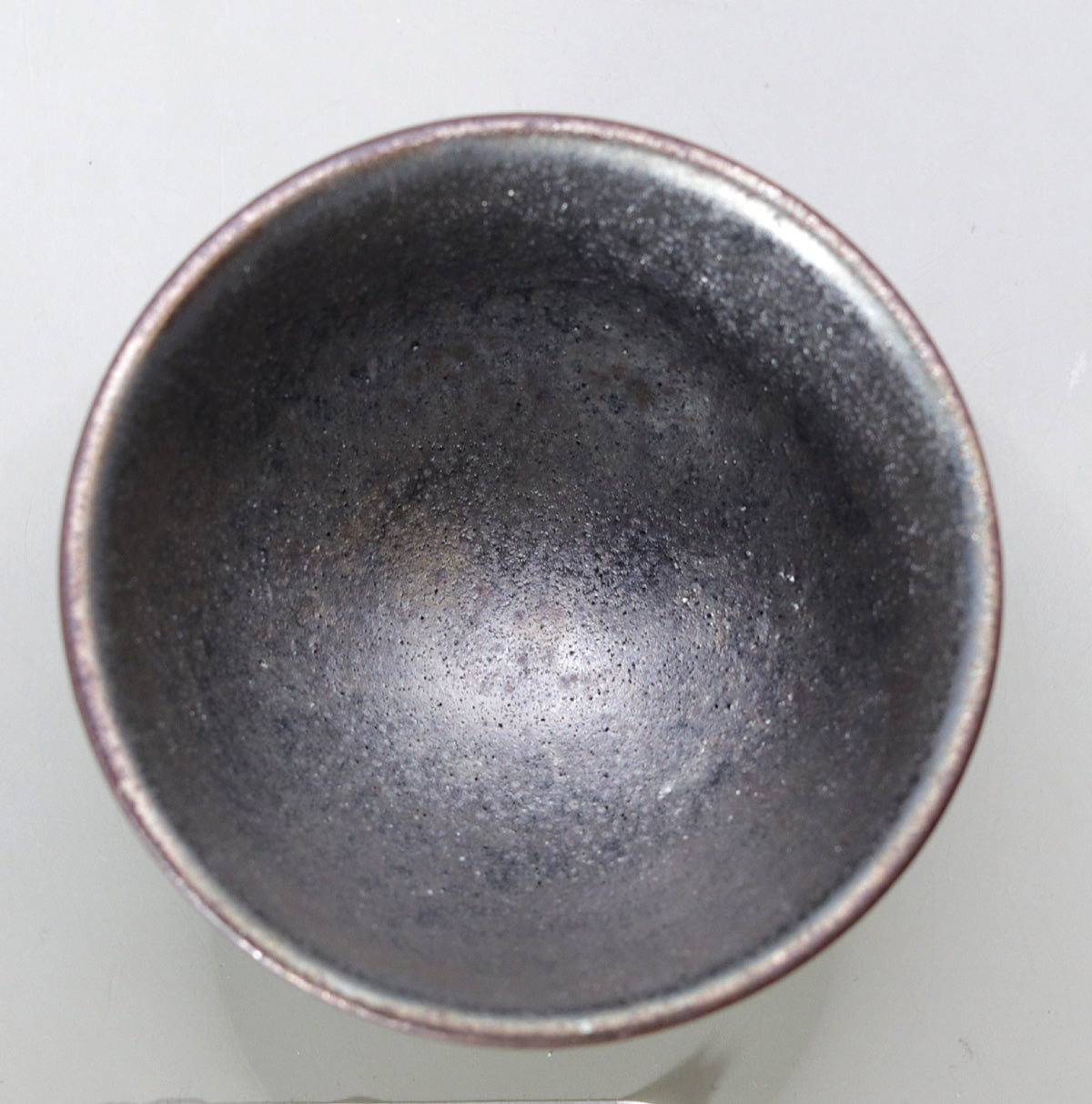
Tenmoku glaze : A feldspar glaze containing a high amount of iron is fired in a reducing flame. The complex fluctuations of oxidation and reduction in the kiln create a black lacquer-like base with finely scattered silver-gray oil droplet-like crystals, creating a visual effect reminiscent of tiny stars in the night sky.
Firing : Okada Masaru uses a unique "fluctuation firing" method, which involves applying a strong reduction flame and then a short oxidizing flame to the piece, resulting in both a matte and glossy texture in one cup. This technique is based on knowledge gained from studying the texture of Kotenmoku ware, which originated in the Jian Kiln in Fujian Province during the Song dynasty.
Historical background
Tenmoku glaze is said to have originated when a Japanese Zen monk brought back black-glazed bowls from Mount Tenmoku in China, and has been highly prized in the Japanese tea ceremony since the Kamakura period. The phenomenon of oil droplets and yohen crystals appearing in the black glaze is highly random, and has long been referred to as the "mystery of kiln change." For modern artists to consistently reproduce this effect, the amount of iron in the raw materials, the firing temperature curve, and the cooling speed all need to be meticulously controlled.
Aesthetic Intention and Spirituality
This sake cup features a deep black glaze that reflects the Zen Buddhist view of impermanence, and the coincidental oil droplet crystallization that symbolizes "a once-in-a-lifetime encounter." When sake is poured onto the tranquil mirrored surface, the liquid sparkles like moonlight, enhancing both the visual and gustatory sensations.
How to use and points to note
Suitable for cold and room temperature sake : The slightly rough glaze surface helps to maintain the temperature of cold sake, allowing you to enjoy the contrast with the texture.
Light for viewing : When viewed under a warm light source such as an incandescent lamp or candlestick, the silver-gray oil droplets are more likely to emerge, allowing you to enjoy different views between day and night.
Also suitable as a tea bowl : The slightly raised inner wall is typical of the "Tenmoku style" and is suitable for matcha and gyokuro.
This sake cup is the culmination of the "controlled coincidence" that Okada Masaru has pursued for many years. Sipping a cup while gazing at the universe hidden within the black glaze will envelop your everyday life in elegance.
Share


-
[I will send it to you quickly and carefully]
We carefully package each product in a way that suits it best.
Also, delivery times vary depending on the piece (vessel, etc.).
Items that already come with a box will be shipped within 1-3 days of the order date.
For items that require a box to be made after your order, it will take approximately 30 days for production to be completed and then shipped.
In either case, once we have confirmed your order, we will contact you by email to inform you of the delivery date.
-
[Requests when purchasing pottery]
Even products that look the same may differ slightly in color, shape, size, etc.
The way the glaze is used, the power of the kiln, the firing method, the season, and the humidity also affect the appearance of the pottery.
Please understand the individuality of each piece of pottery and enjoy the unique warmth of handmade.