


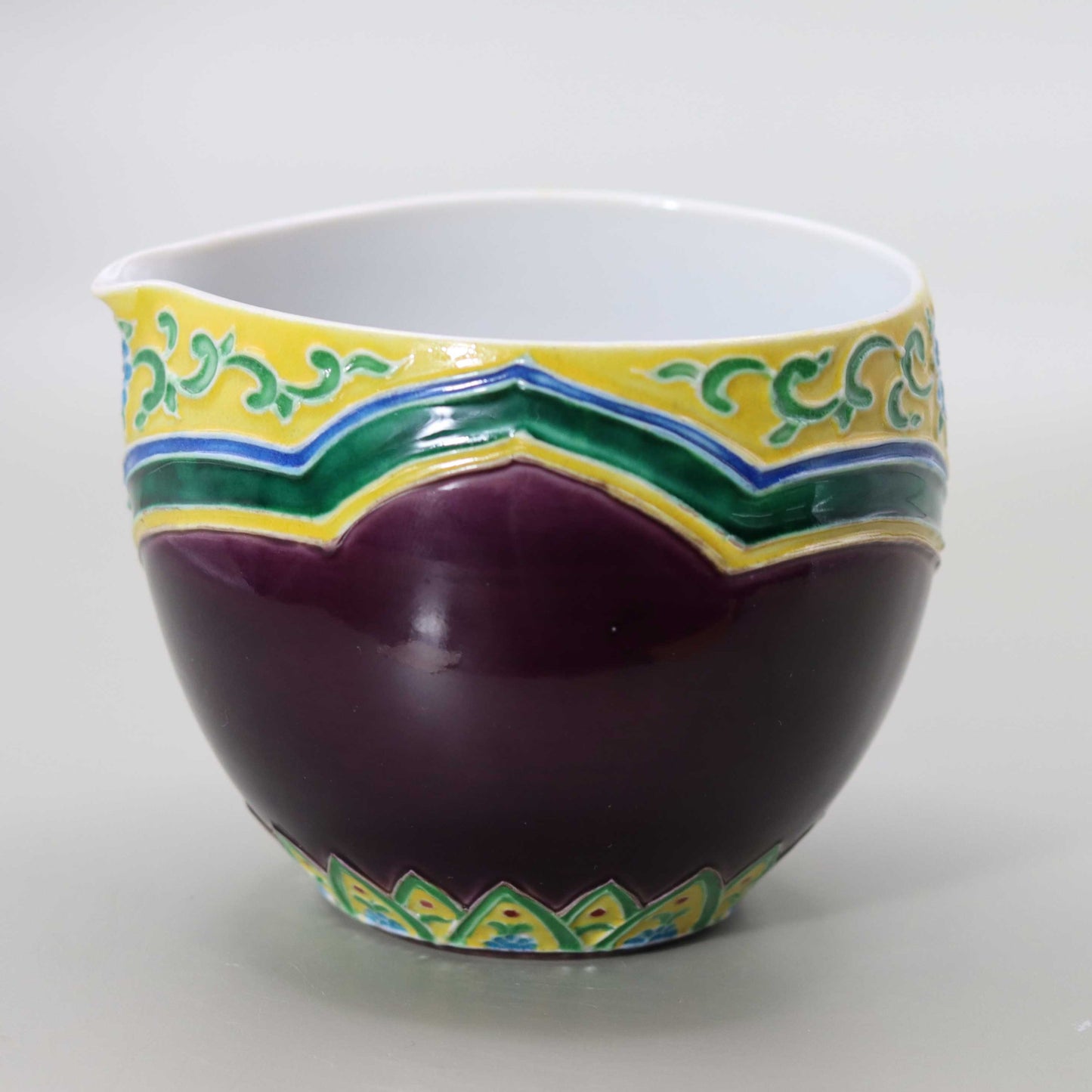
Purple Kochi Chrysanthemum Arabesque Design Katakuchi by Miyagawa Kosai
Purple Kochi Chrysanthemum Arabesque Design Katakuchi by Miyagawa Kosai
Couldn't load pickup availability
Height: 8.0cm Width: 9.0cm x 10.0cm
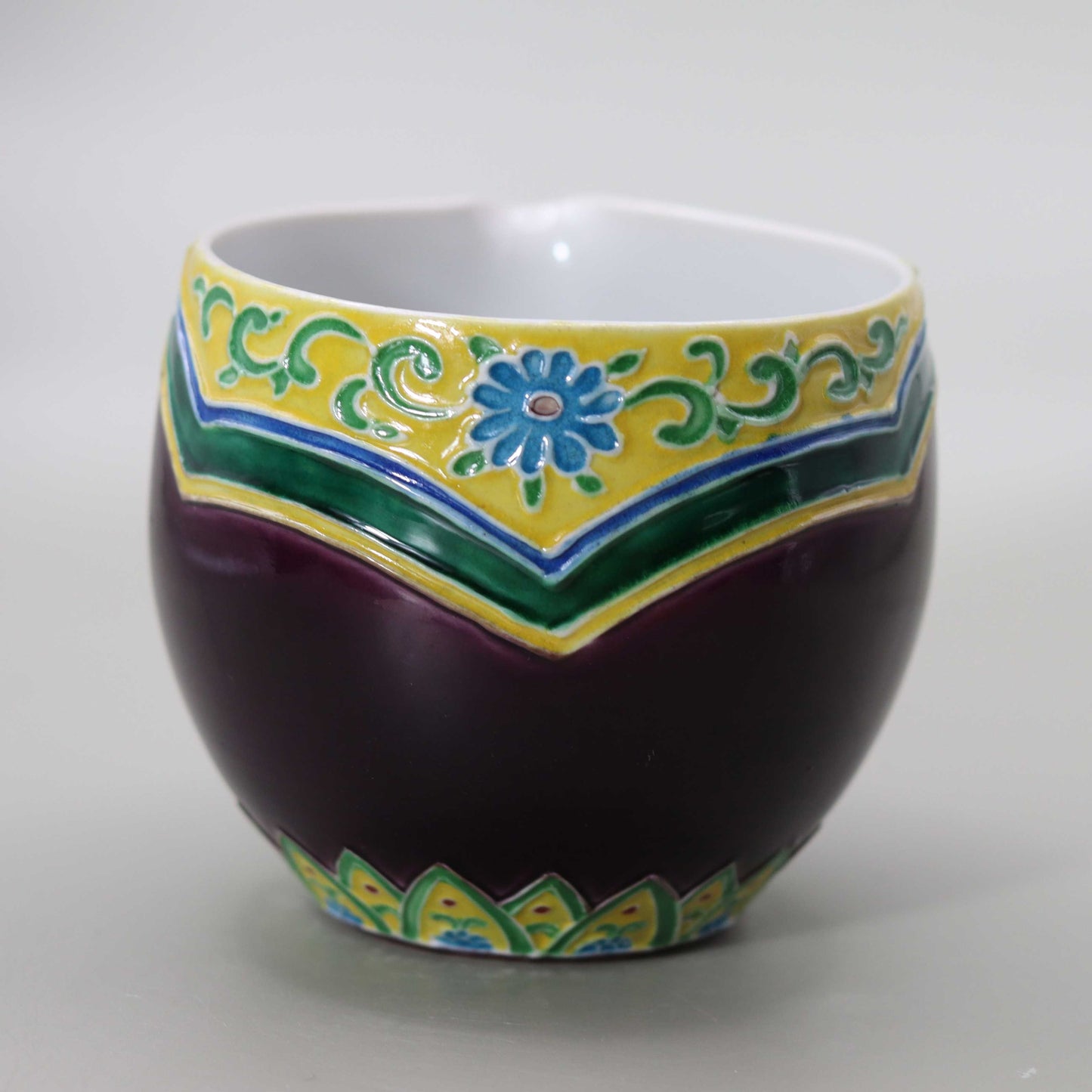
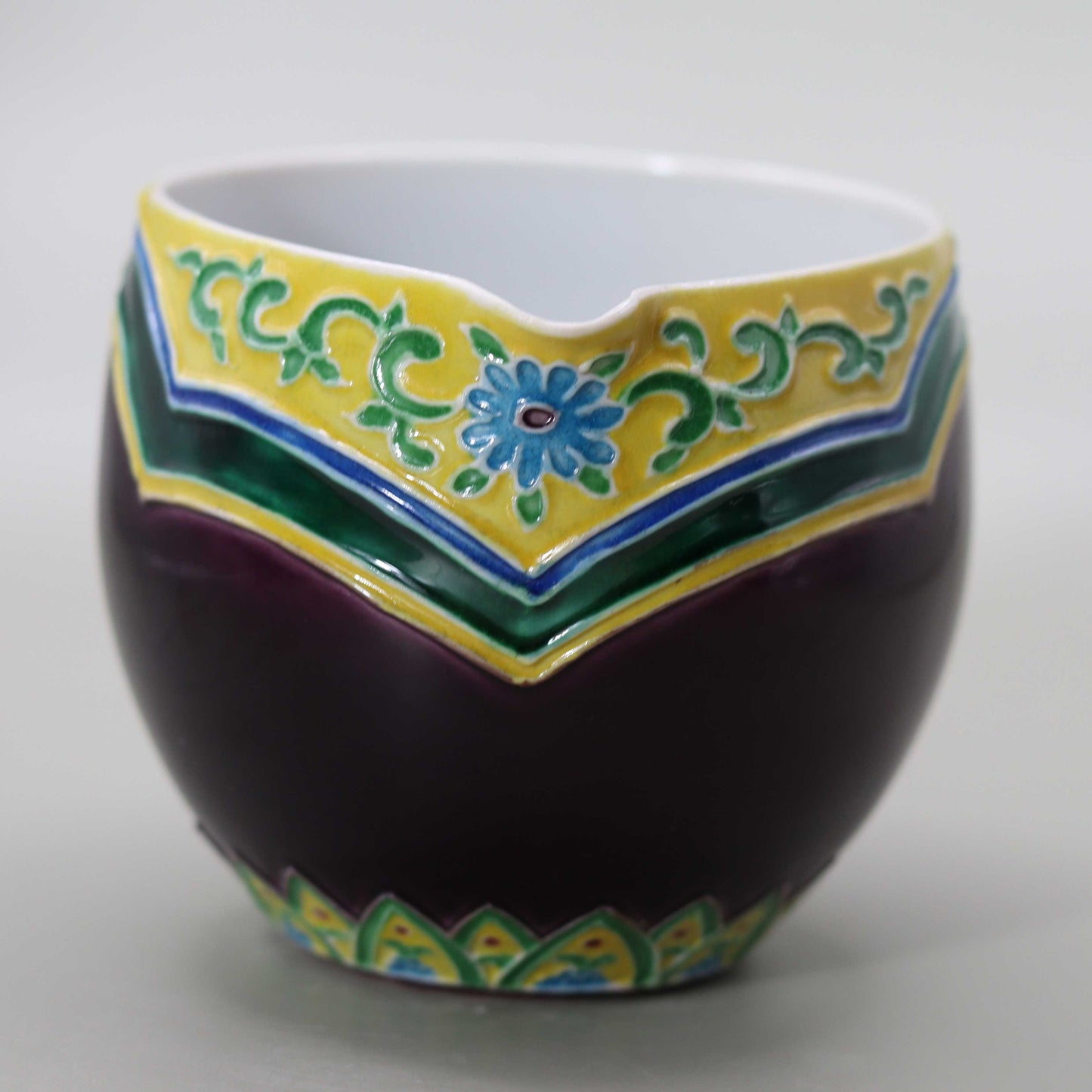
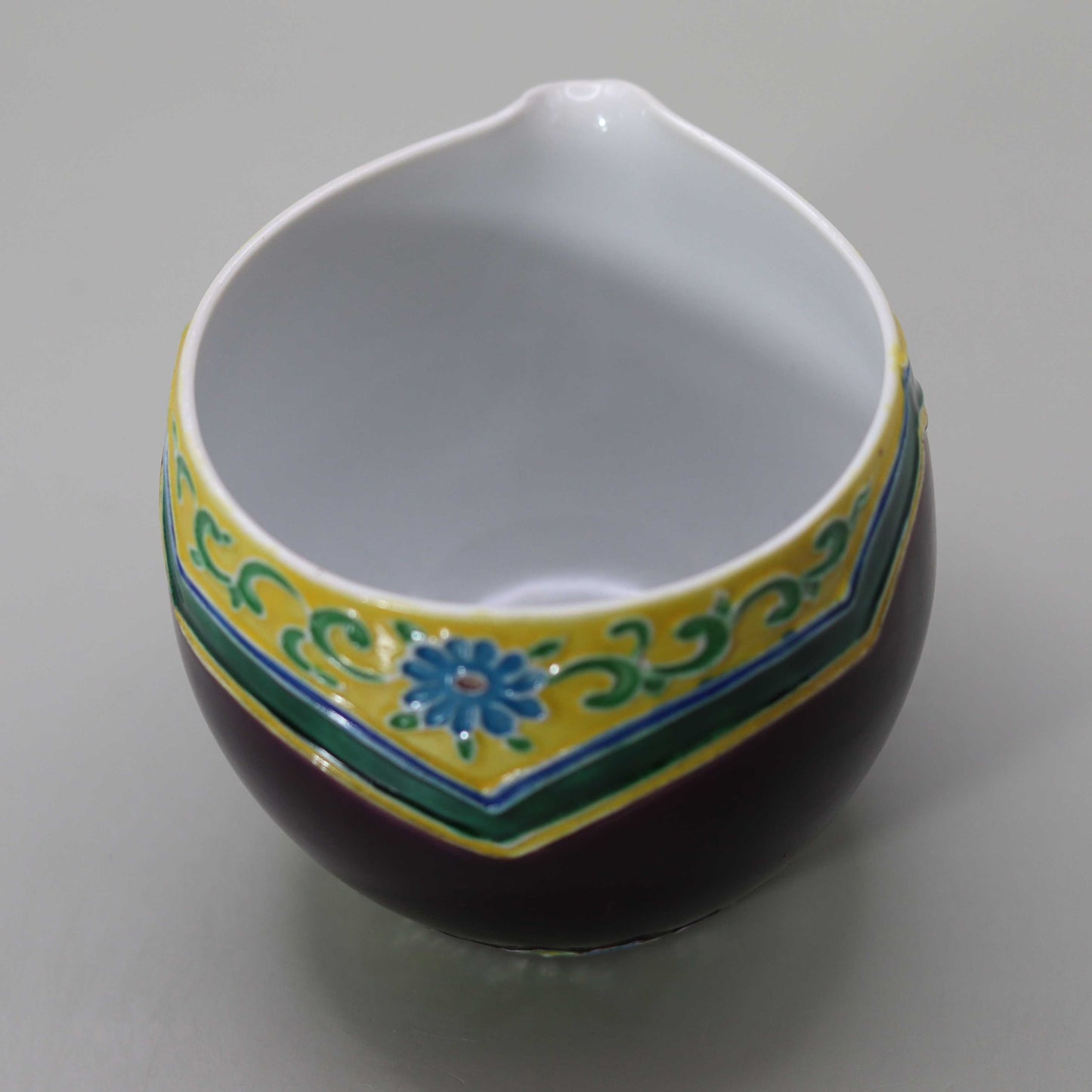
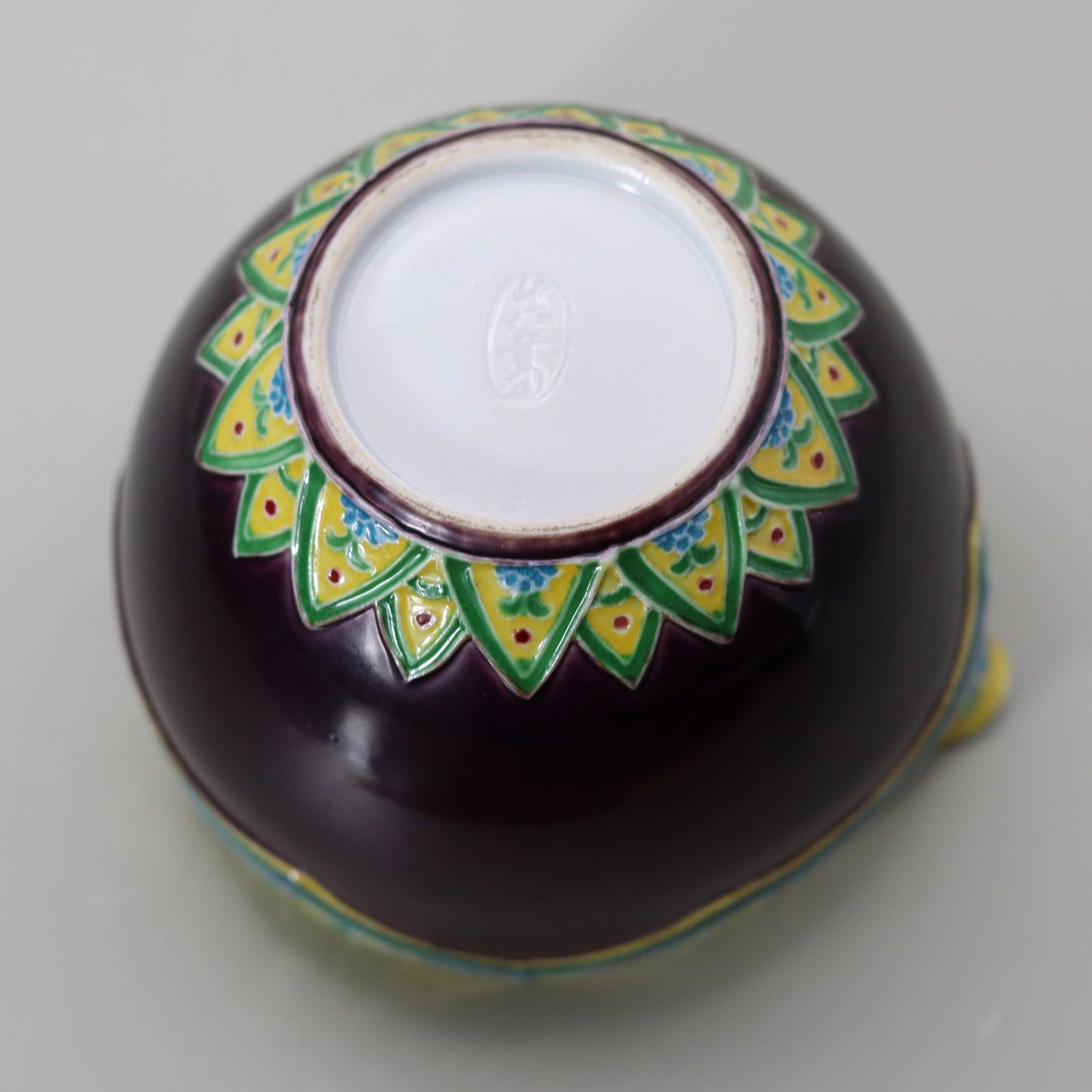
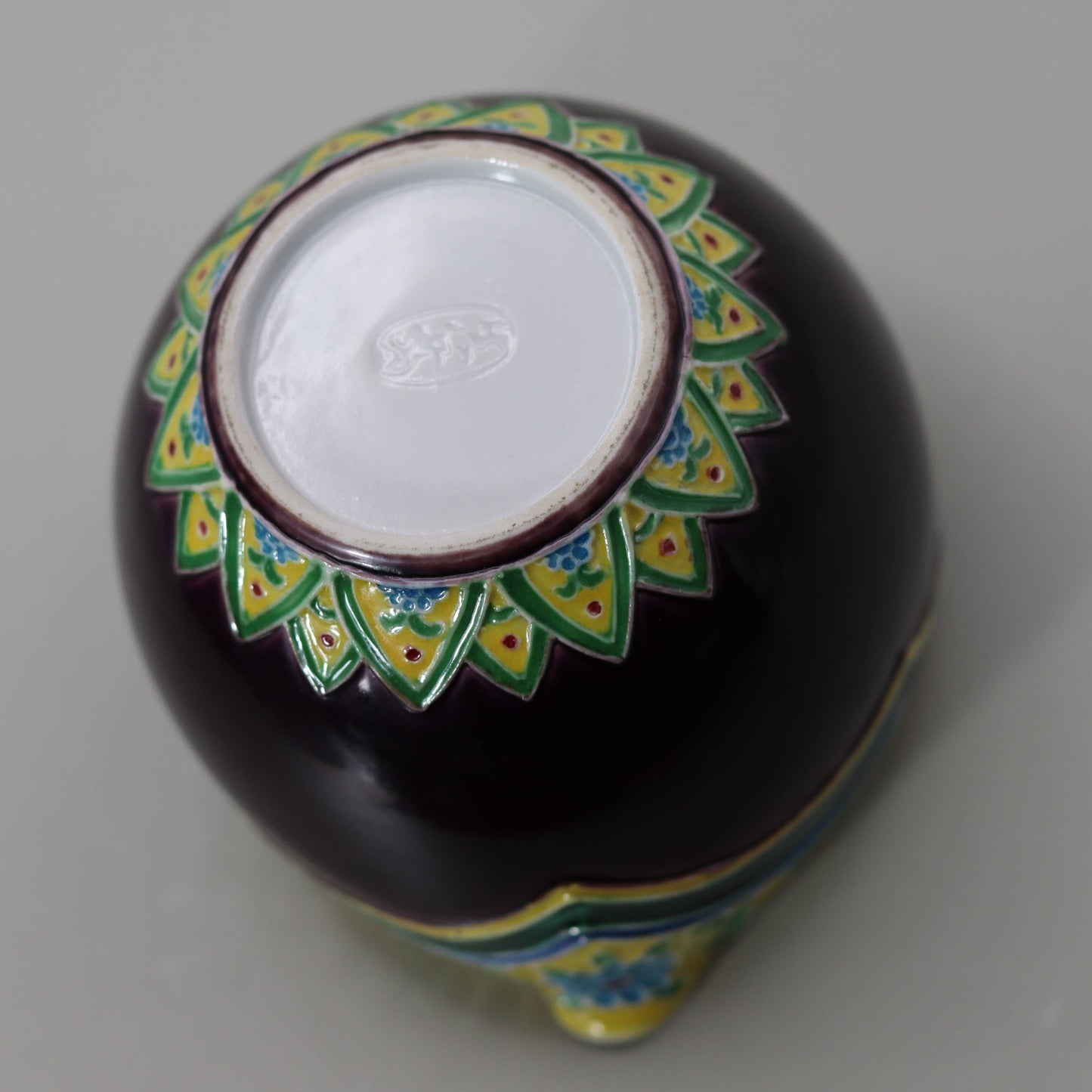
This masterpiece, created by Miyagawa Kosai, embodies Kyoto tradition. This katakuchi (sake cup) features a distinctive deep purple color and a beautiful chrysanthemum arabesque pattern on its surface. The chrysanthemum pattern has long symbolized immortality and longevity, based on its medicinal properties, while the arabesque pattern, with its endless vines, symbolizes longevity and prosperity. These auspicious motifs were highly valued as wedding furnishings during the Edo period, and remain popular today for their auspicious qualities.
Katakuchi characteristics and history
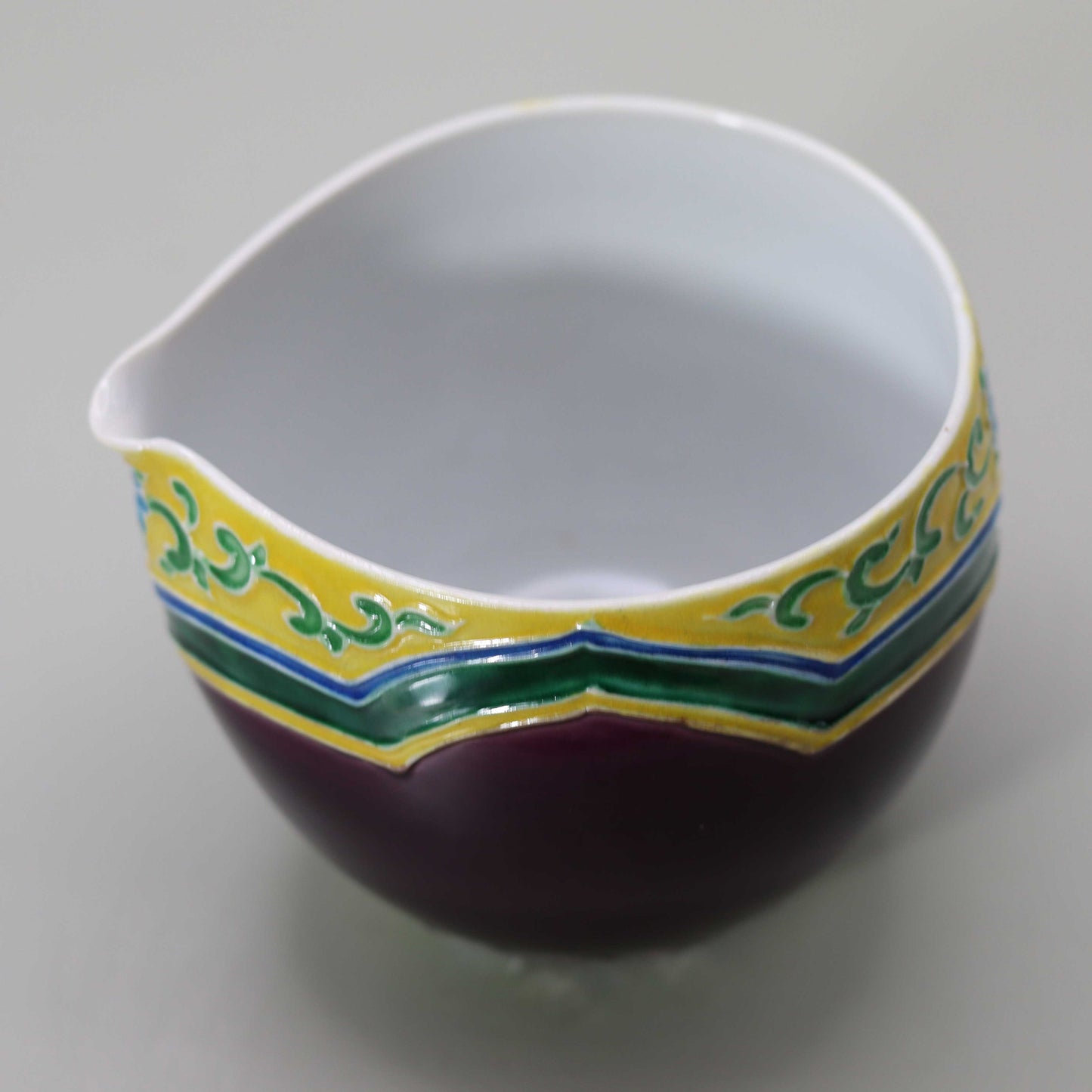
Katakuchi is a traditional vessel with a spout on one side of the rim, and has been loved in Japan since the Jomon and Yayoi periods. This shape is used especially for serving sake, and its wider opening compared to a tokkuri allows you to fully enjoy the aroma of the sake. Katakuchi, which can be used in a variety of ways, has continued to be used in a variety of ways at the dinner table and at tea ceremonies from ancient times to the present day.
Techniques and their development
"Koshi" is a technique that originated in Cochinchina, the region of present-day Vietnam, and its name became widespread under the influence of the Chinese dynasty. This technique was later developed into Kyoto ware, and many tea utensils were produced to meet the demand, especially for tea ceremonies. In this piece, the vibrant purple is expressed using the Koshi technique, and the chrysanthemum arabesque pattern painted on top creates a beautiful contrast. This katakuchi, which combines the traditions of Kyoto ware with the Koshi technique, is highly regarded as a tea ceremony utensil, combining sophisticated beauty with practicality.
The tradition and beauty of Makuzu ware
Makuzu ware is known for its particularly rich variety of techniques among Kyoto ware, encompassing a wide range of techniques including overglaze painting, blue and white porcelain, iron painting, kōchi porcelain, and gold lining. The Miyagawa Kosai family boasts a history of approximately 330 years, during which time they have inherited techniques such as Ninsei and Kenzan copies, and have produced many pieces that are in tune with the times. This piece beautifully combines these techniques, and strongly reflects the diversity and tradition of Makuzu ware.
The history of Miyagawa family pottery
The history of Miyagawa family pottery began around 1680, when the first generation Miyagawa Kobee Masakazu moved to Kyoto and began producing pottery. During its history, which dates back to the early Edo period, a wide variety of pottery has been produced in response to the changing times. When sencha tea was popular, they produced sencha tea utensils, and when the tea ceremony was in vogue, they produced tea utensils, and this tradition continues to this day. Today, the Miyagawa Kosai family's works are highly acclaimed both at home and abroad, with many fans, especially in the United States, the United Kingdom, France, and China.
Domestic and international evaluation and future
Its vibrant colors and intricate patterns have captivated many people, and it is a piece that embodies the techniques and traditions of Makuzu ware. Particularly beloved in the world of tea ceremony, this piece also plays a role in conveying Japanese beauty to the world. It is expected that Makuzu ware, which exudes the elegance and splendor of Kyoto, will continue to be highly acclaimed both at home and abroad, and its charm will be conveyed to many people.
Share
-
[I will send it to you quickly and carefully]
We carefully package each product in a way that suits it best.
Also, delivery times vary depending on the piece (vessel, etc.).
Items that already come with a box will be shipped within 1-3 days of the order date.
For items that require a box to be made after your order, it will take approximately 30 days for production to be completed and then shipped.
In either case, once we have confirmed your order, we will contact you by email to inform you of the delivery date.
-
[Requests when purchasing pottery]
Even products that look the same may differ slightly in color, shape, size, etc.
The way the glaze is used, the power of the kiln, the firing method, the season, and the humidity also affect the appearance of the pottery.
Please understand the individuality of each piece of pottery and enjoy the unique warmth of handmade.