Blue gourd ear bottle Suwa Sozan
Blue gourd ear bottle Suwa Sozan
Couldn't load pickup availability
Width: 13.0cm Height: 20.6cm
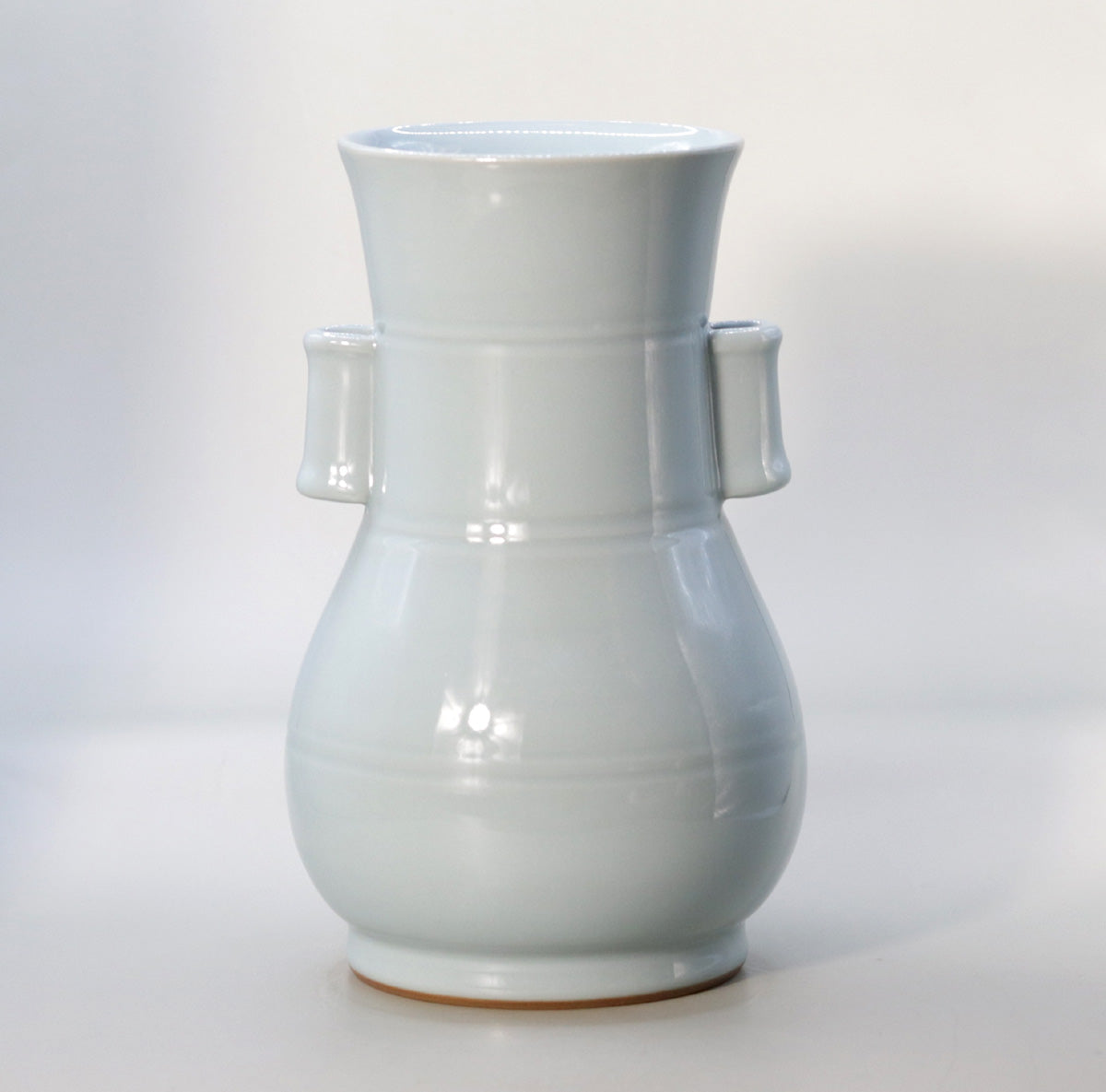
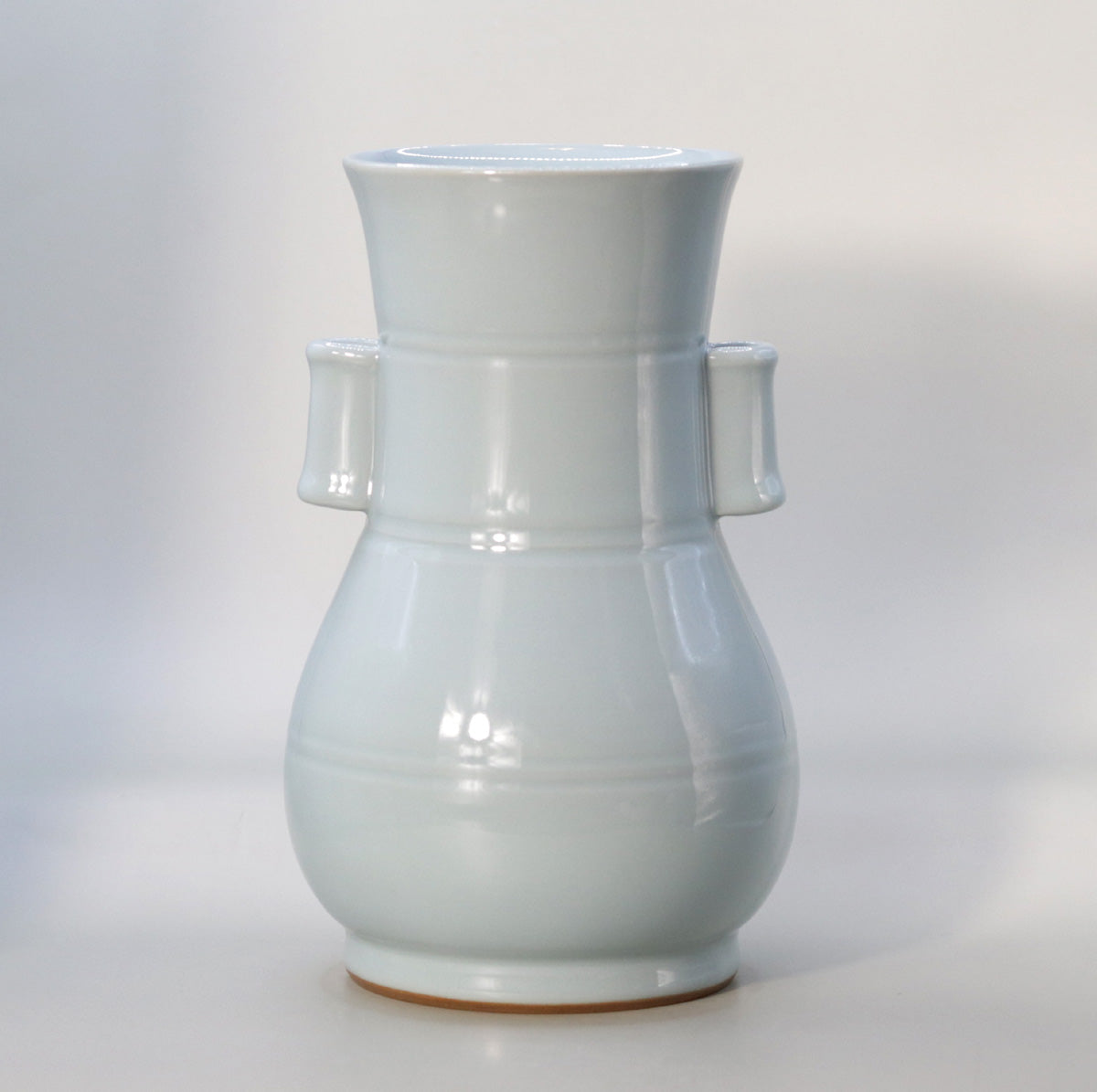
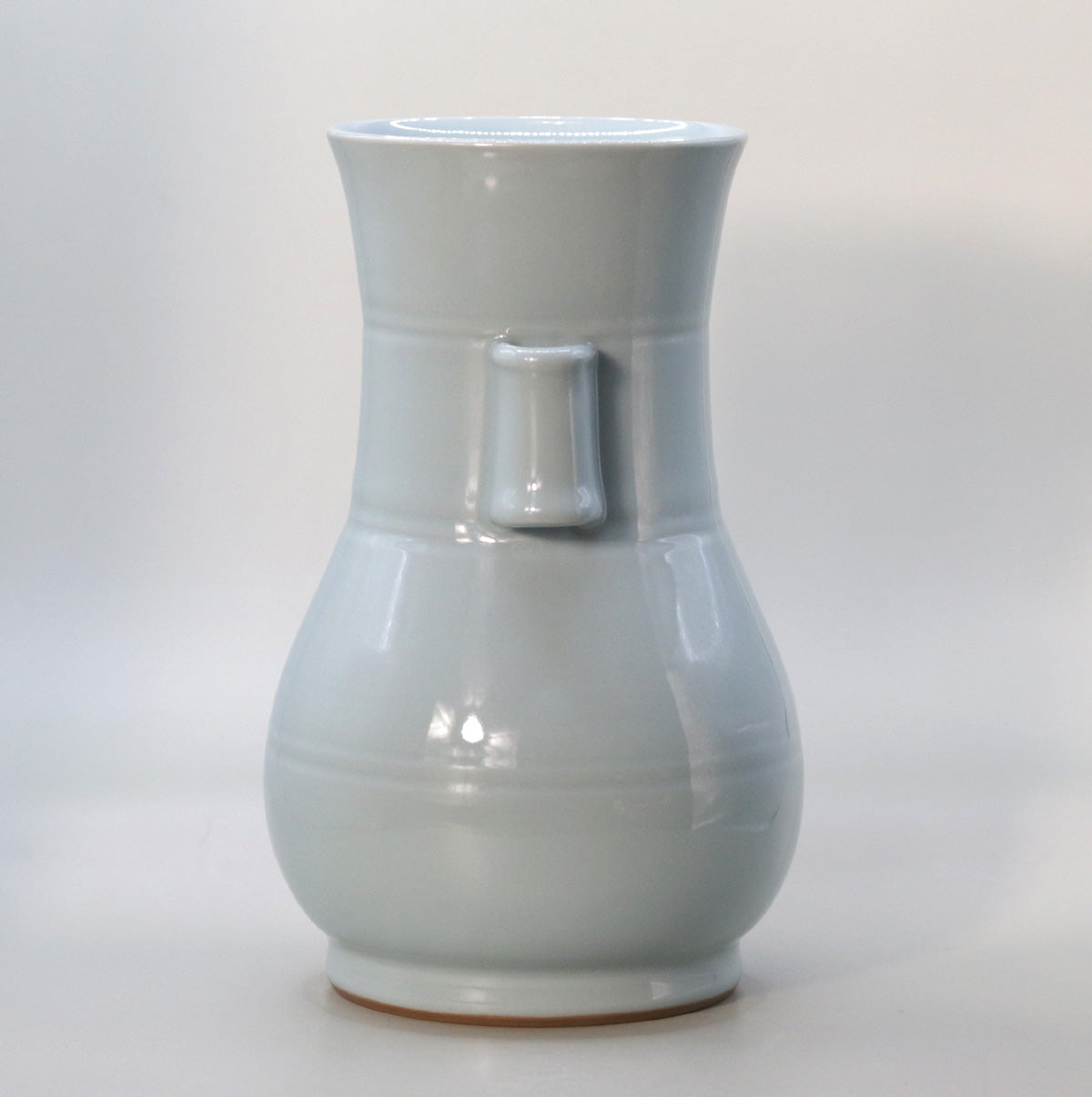
The "Seiji Kanjihei" celadon vase was created by the fourth generation Suwa Sozan , and is modeled after the famous Kinuta Seiji celadon from the Longquan kiln of the Southern Song dynasty. While faithfully inheriting the glaze color of "Sozan Celadon," which the first generation Suwa Sozan perfected after 25 years of research, it has been elevated to a refined appearance that fits in with modern tea ceremonies and interior decorating.
molding
Kanji
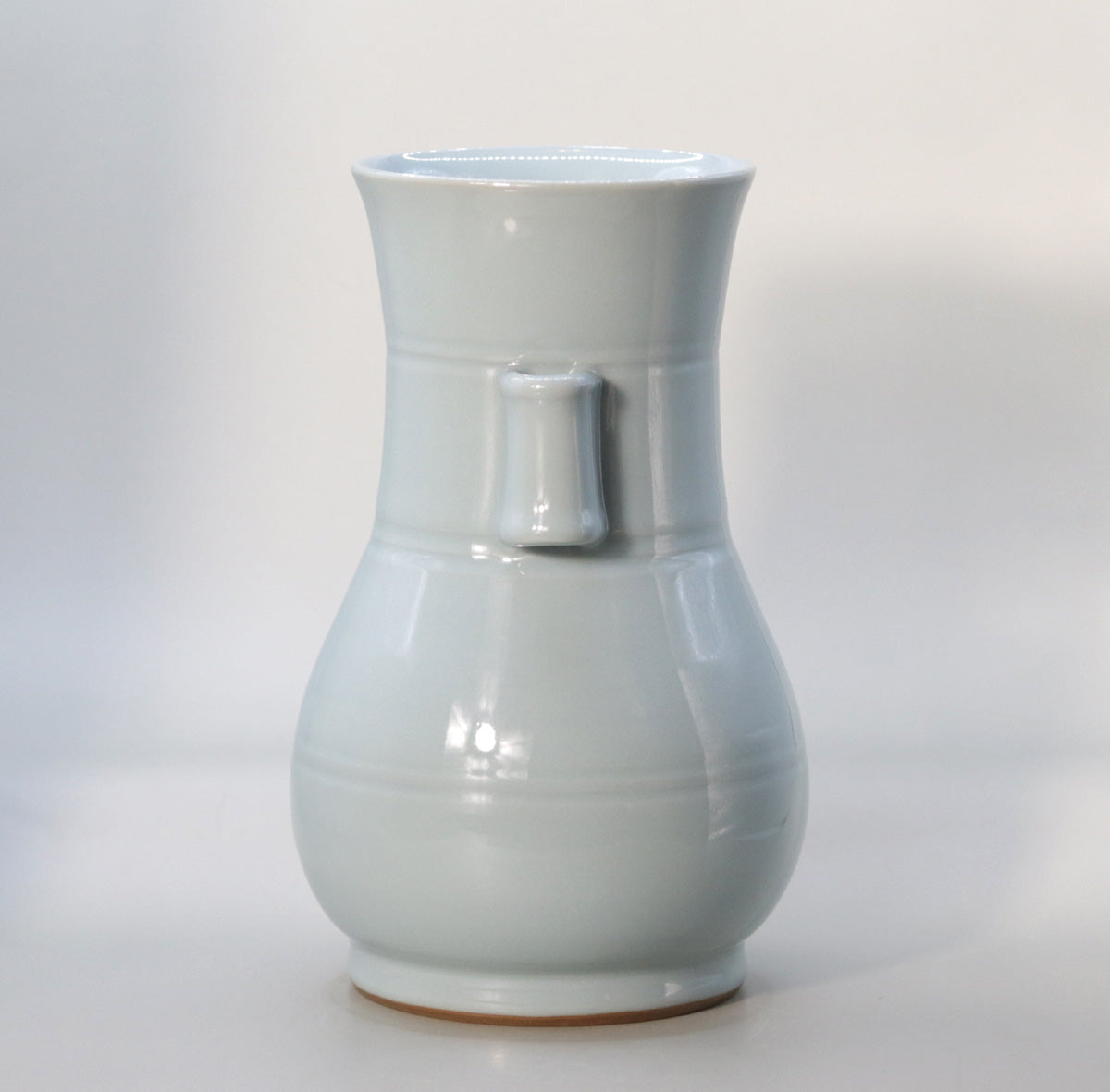
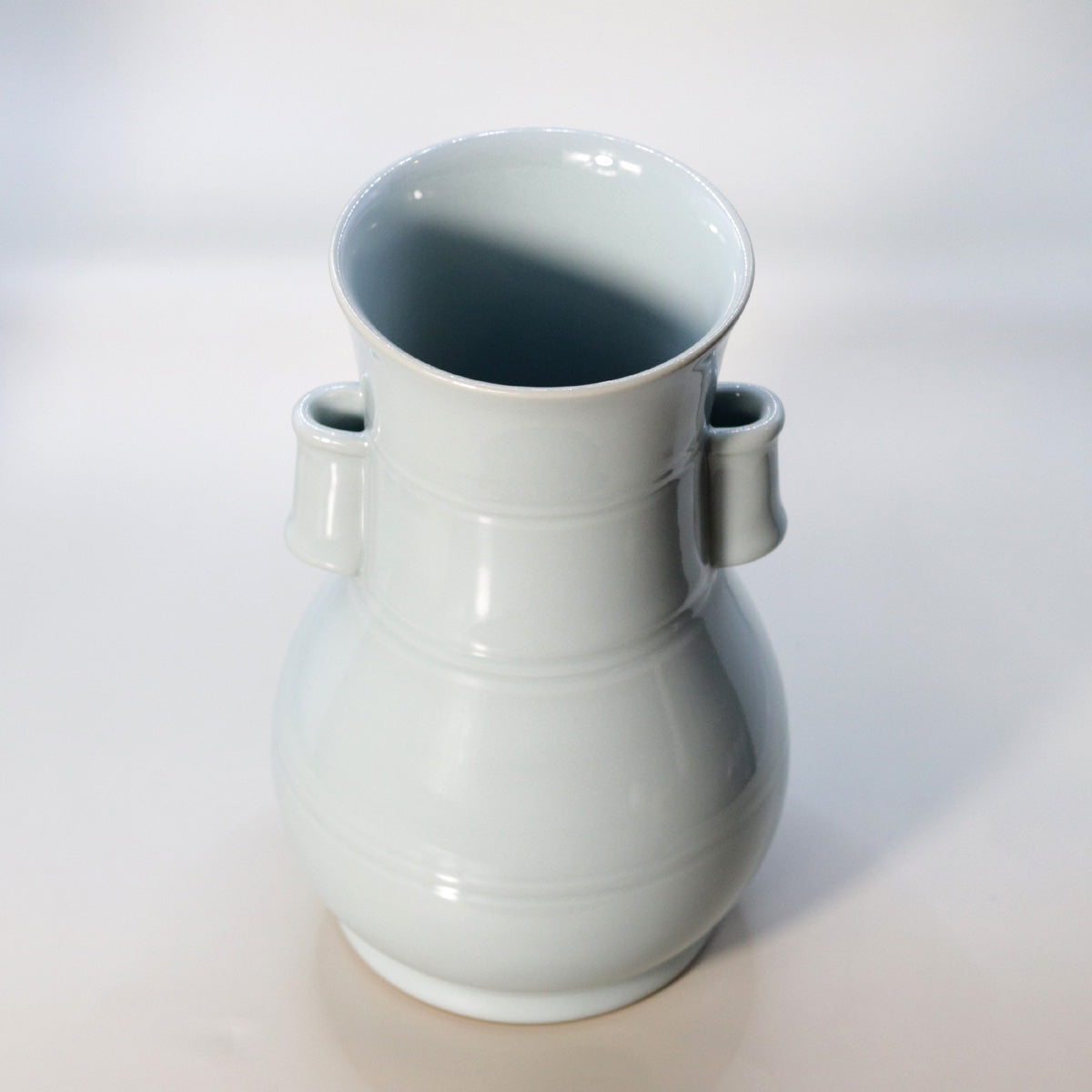
The pair of ears at the boundary between the body and neck have traditionally been used to hang bottles from strings. Suwa Sozan IV created a very shallow depression on the inside of the ears and slightly bulged the outer edges, achieving both soft shading and a comfortable grip.
Rhythm from the torso to the neck <br data-end="350" data-start="347">The lower part is plump and rounded, tapering gently at the shoulders before joining the tubular neck. A thin, band-like carving, one in the center of the neck and one at the bottom of the torso, adds a finishing touch to the overall look.
Outward-flipping rim <br data-end="456" data-start="453">The rim flares outward slightly, creating a shape that naturally holds the floral motifs. A very thin layer of glaze has accumulated on the inside, making the pale jade color stand out even more deeply.
Glaze Tone - The Spirit of Sozan Celadon
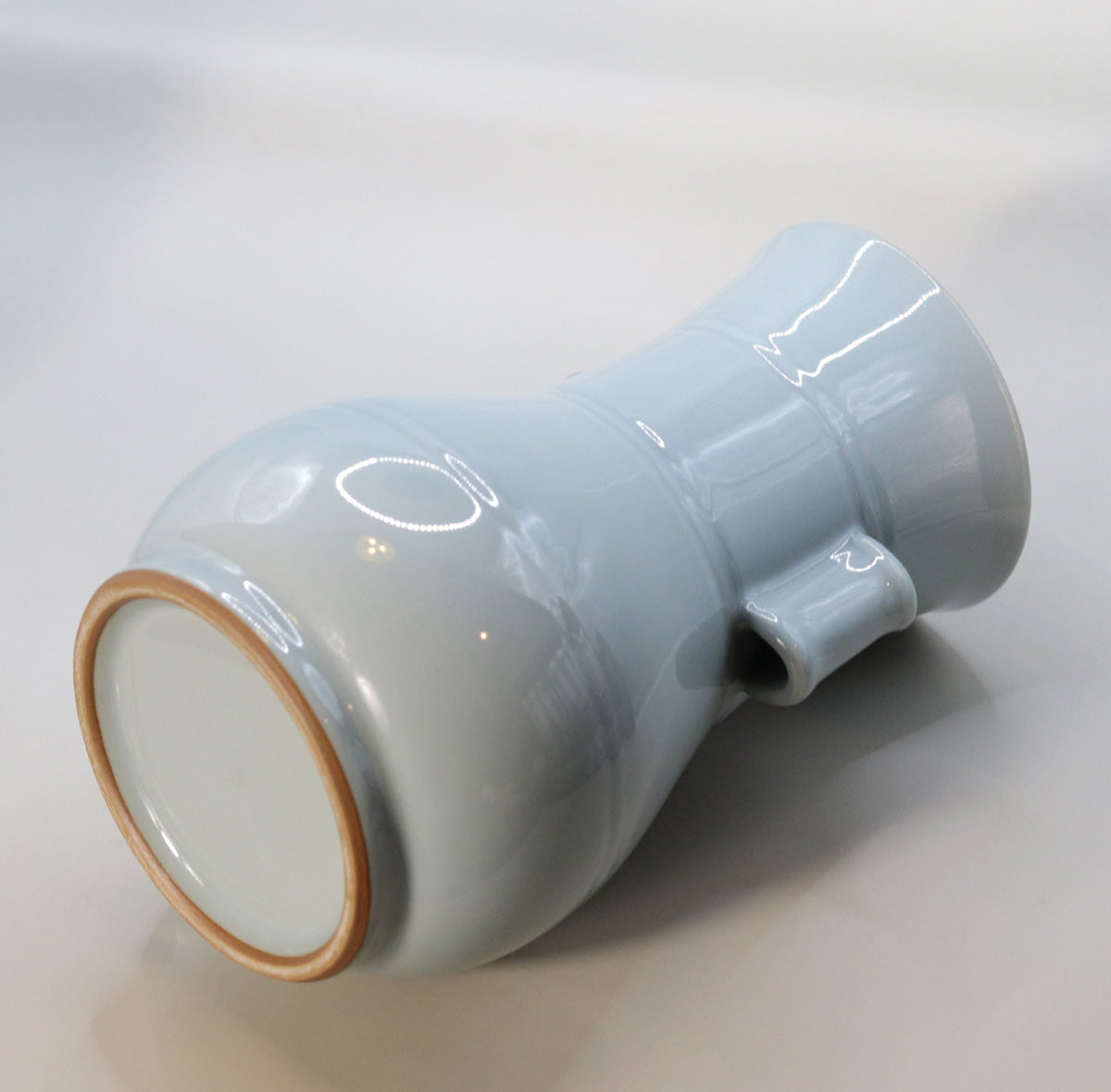
The trace amounts of iron contained in the clay melt in the reducing flame, creating a highly transparent blue-green color. As you can see in the photo, the glaze accumulates slightly thicker at the base of the nuki-mimi and in the recesses of the obi-grill, creating a deep shadow and gradation. This is proof that the fourth generation has meticulously reproduced the technique established by the first generation Suwa Sozan , "designing the iron in the clay and glaze as a single unit."
Historical background and significance of the design
The pierced ear vase is a vessel shape highly prized by the Southern Song court and literati, and is one of the typical motifs of Longquan celadon. Originally used as a ritual or ceremonial vessel, it was believed that hanging it up high on a string through the ears would ward off evil spirits. Suwa Sozan IV, the founder of the Suwa family , captured this spirituality while adjusting the dimensions and center of gravity to suit Japanese flower vase culture. By maintaining the golden ratio of the diameter of the opening, the diameter of the body, and the diameter of the foot, the vase achieves both a beautiful appearance and a sense of stability when placed on a shelf or alcove.
Use in tea ceremonies and formal occasions
Securing the flower arrangement <br data-end="968" data-start="965">The delicate band around the neck acts as a retainer, preventing the flower from moving even when placed alone.
Reflection of light <br data-end="1025" data-start="1022">The soft luster created by the thick glaze shimmers like a pale mirror in the light of candles and lanterns.
A combination of four seasons <br data-end="1090" data-start="1087">Colorful flowers such as yellow buttercup and peach blossom in spring, hibiscus and iron wire in summer, yellow cosmos in autumn, and nandina in winter blend well with the jade green glaze, enhancing the charm of each season.
Suwa Sozan IV
Suwa Sozan IV was born in Kyoto in 1970. He was trained by Suwa Sozan III and lacquer artist Nakamura Sotetsu XII, and succeeded to the title of fourth master in 2002. While continuing the celadon research of the first master, he has also experimented with a variety of expressions, such as the kneading technique and plaster molding, and believes in infusing each piece with a story. In this piece, he has entrusted the symbolism of the nukimimi ear with a tale of rebirth and good fortune, in which "ancient ritual vessels are reborn for the modern tea ceremony."
The "Celadon Open-Eared Vase" is a masterpiece that blends the elegance of Southern Song Longquan kiln celadon with the exquisite sculptural sense of Suwa Sozan IV. The protective prayer contained in the open-eared vase, the tranquility of the clear blue, and the capacity to welcome flowers - all these elements come together in harmony to bring a pure atmosphere to the space of a tea ceremony or interior decoration. The brilliance of "Sozan Celadon", passed down from the first generation, lives on in this work and will quietly nourish the souls of those who see it.
Share
-
[I will send it to you quickly and carefully]
We carefully package each product in a way that suits it best.
Also, delivery times vary depending on the piece (vessel, etc.).
Items that already come with a box will be shipped within 1-3 days of the order date.
For items that require a box to be made after your order, it will take approximately 30 days for production to be completed and then shipped.
In either case, once we have confirmed your order, we will contact you by email to inform you of the delivery date.
-
[Requests when purchasing pottery]
Even products that look the same may differ slightly in color, shape, size, etc.
The way the glaze is used, the power of the kiln, the firing method, the season, and the humidity also affect the appearance of the pottery.
Please understand the individuality of each piece of pottery and enjoy the unique warmth of handmade.