


Blue porcelain tea bowl Masao Tagai
Blue porcelain tea bowl Masao Tagai
Couldn't load pickup availability
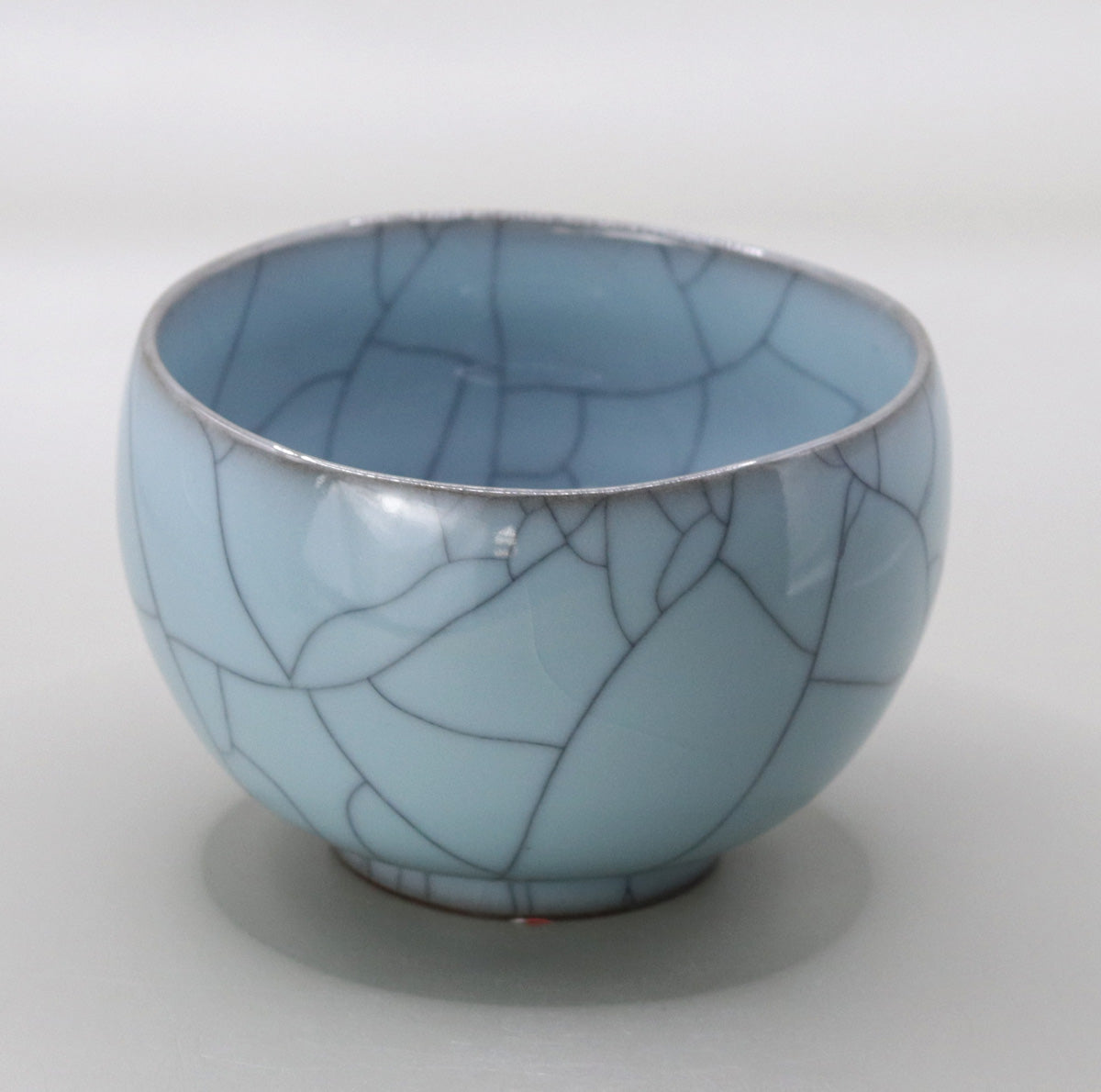
Width: 12.5cm x 12.5cm Height: 8.2cm
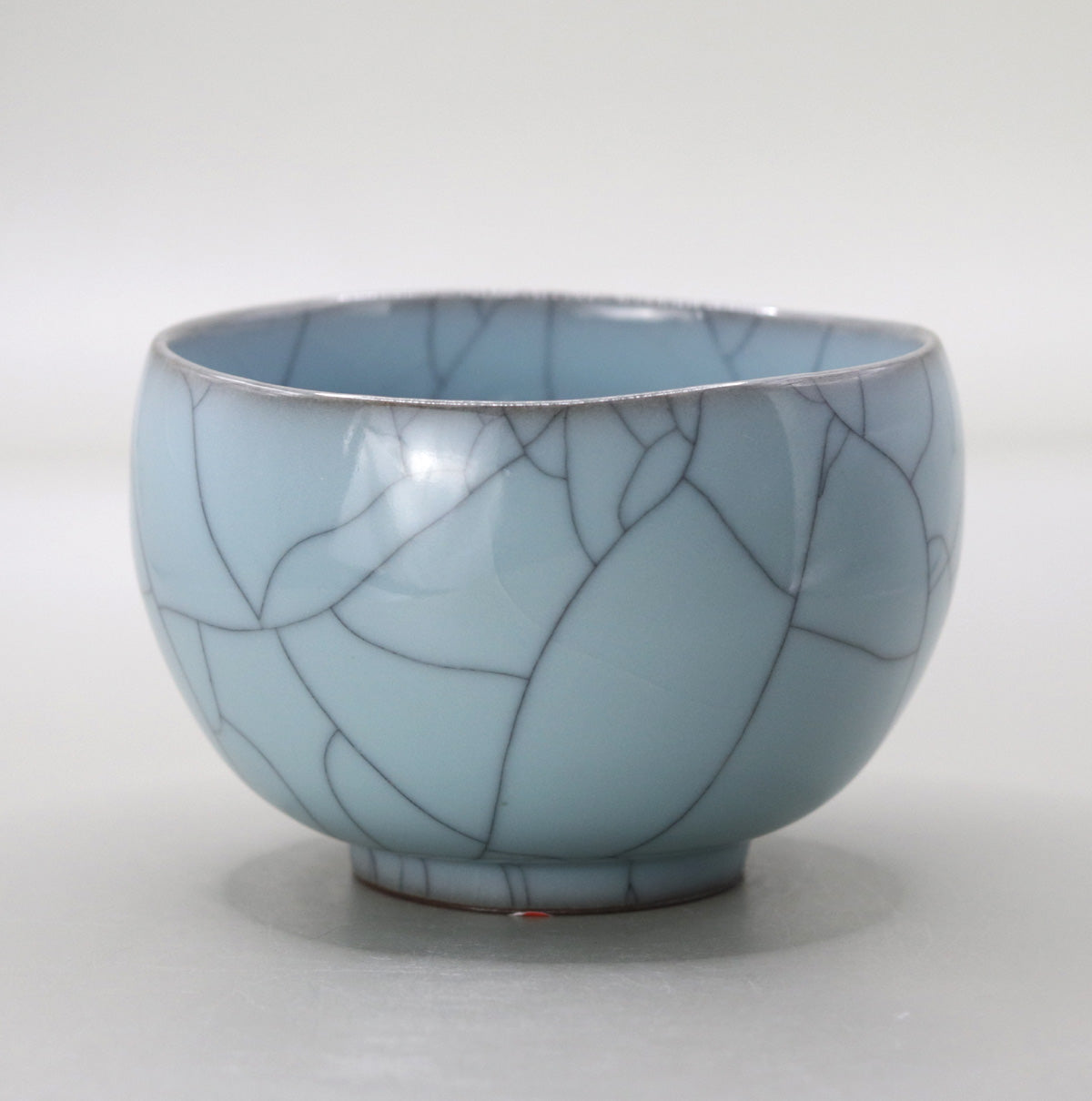
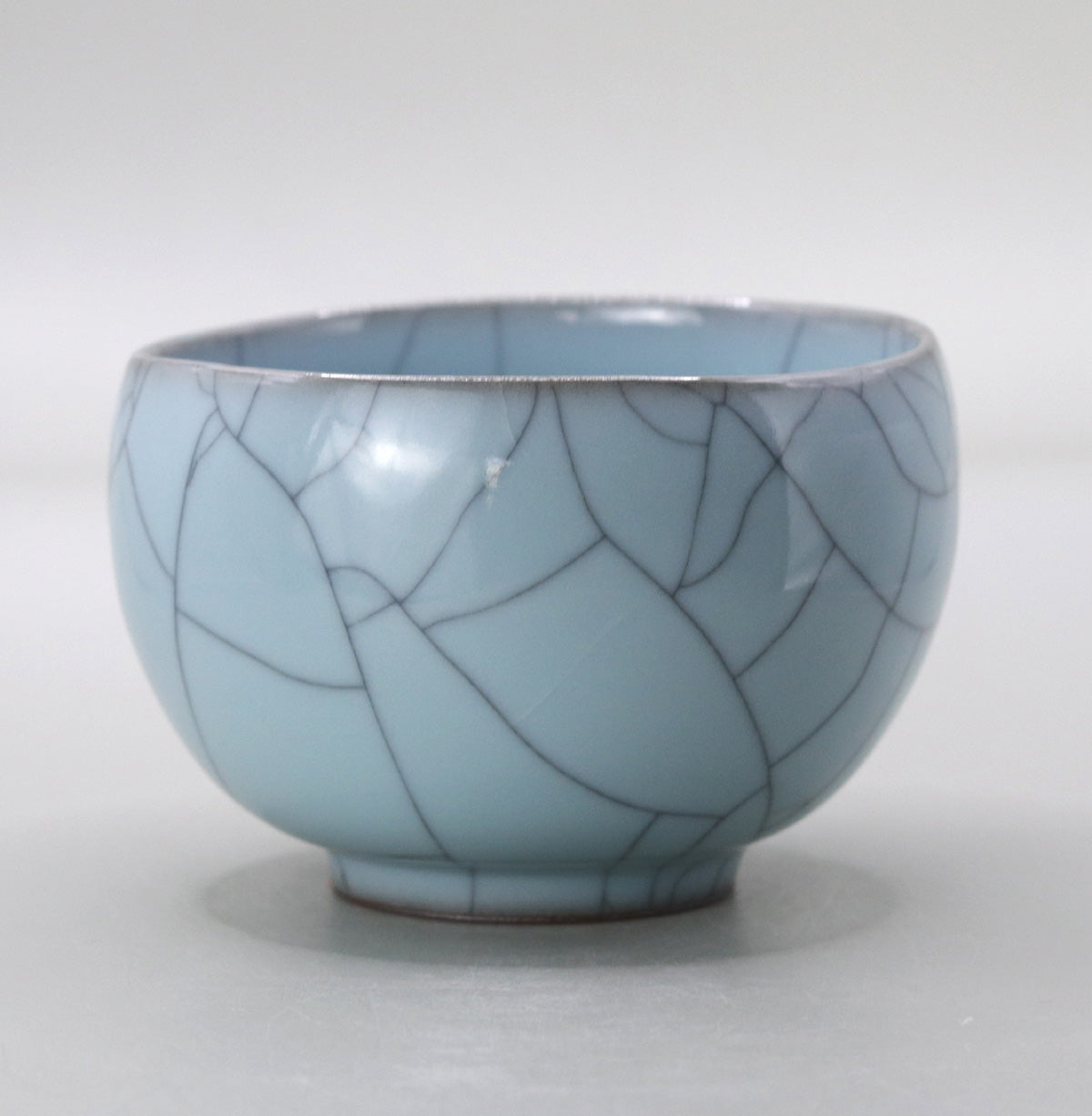
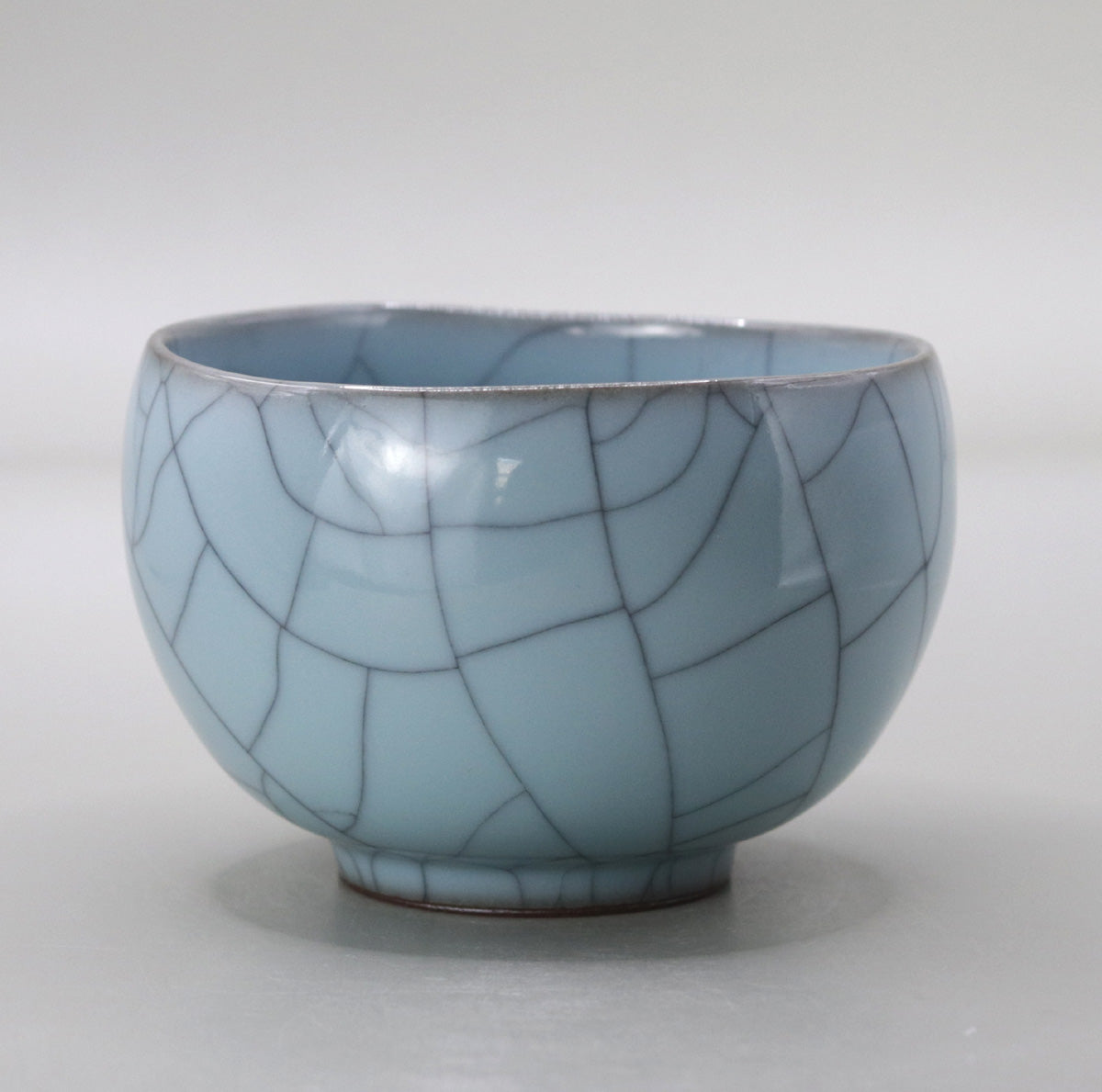
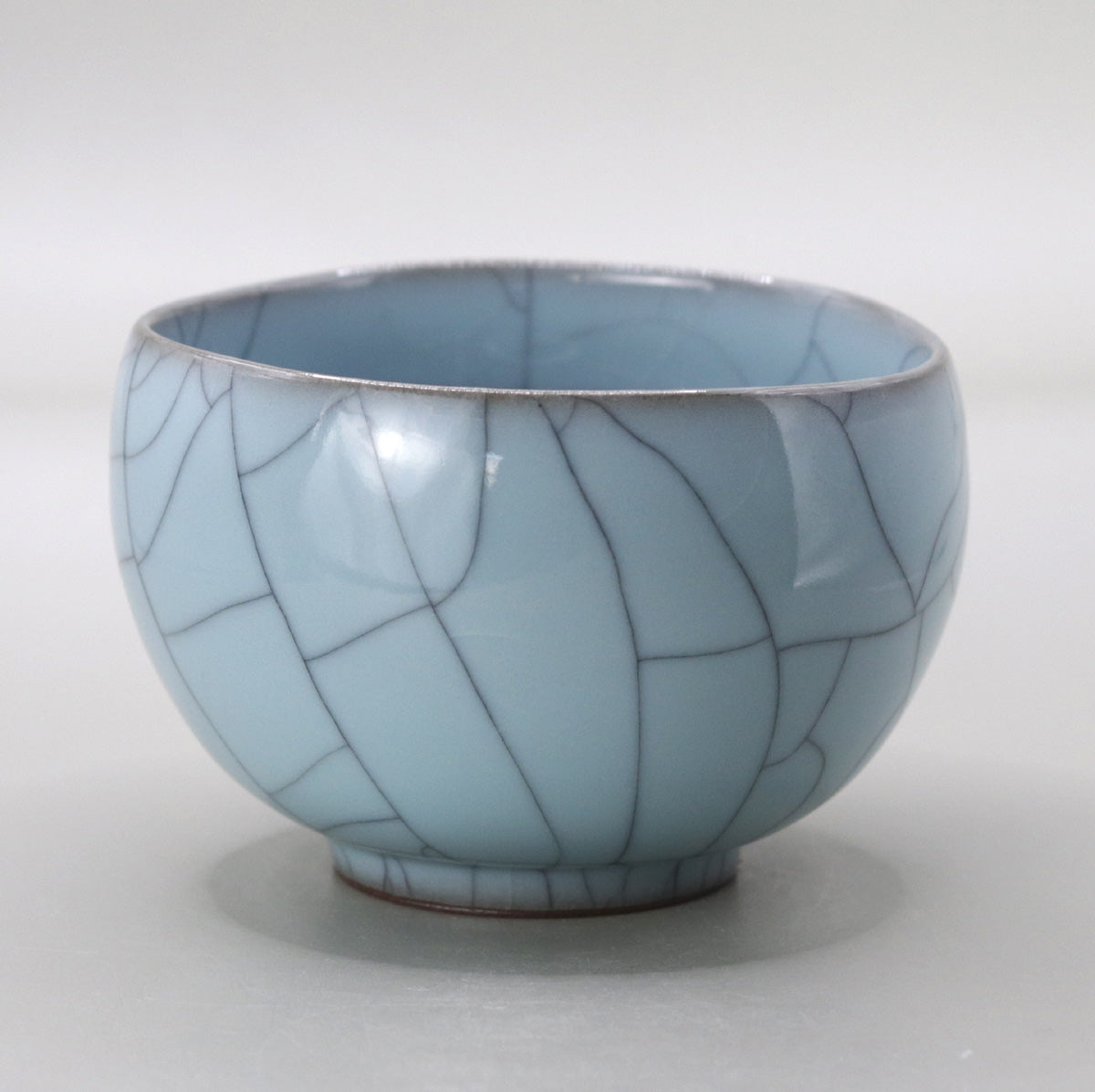
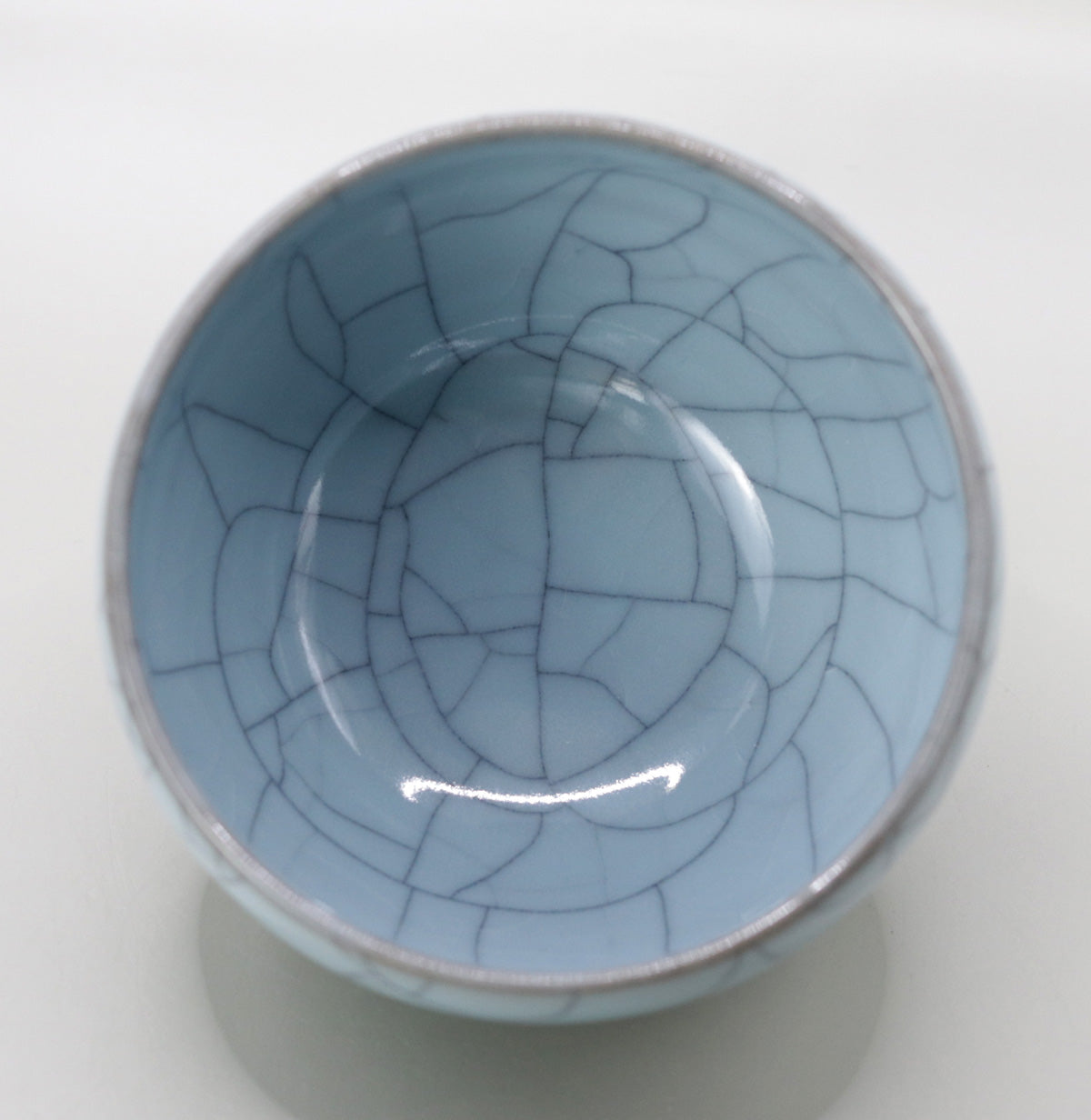
This piece is a celadon tea bowl with a large, open "okan'nyu" (crazing pattern) running through its transparent blue surface. The thick, glassy layer of glaze is filled with a gentle blue reminiscent of the surface of a lake, while bold, wide, spider-web-like cracks spread across it. The craze lines are dyed in ink, giving the pattern a three-dimensional appearance and creating a sense of powerful movement amidst the stillness. A slight rust color appears on the rim, adding a finishing touch to the pale blue world.
molding
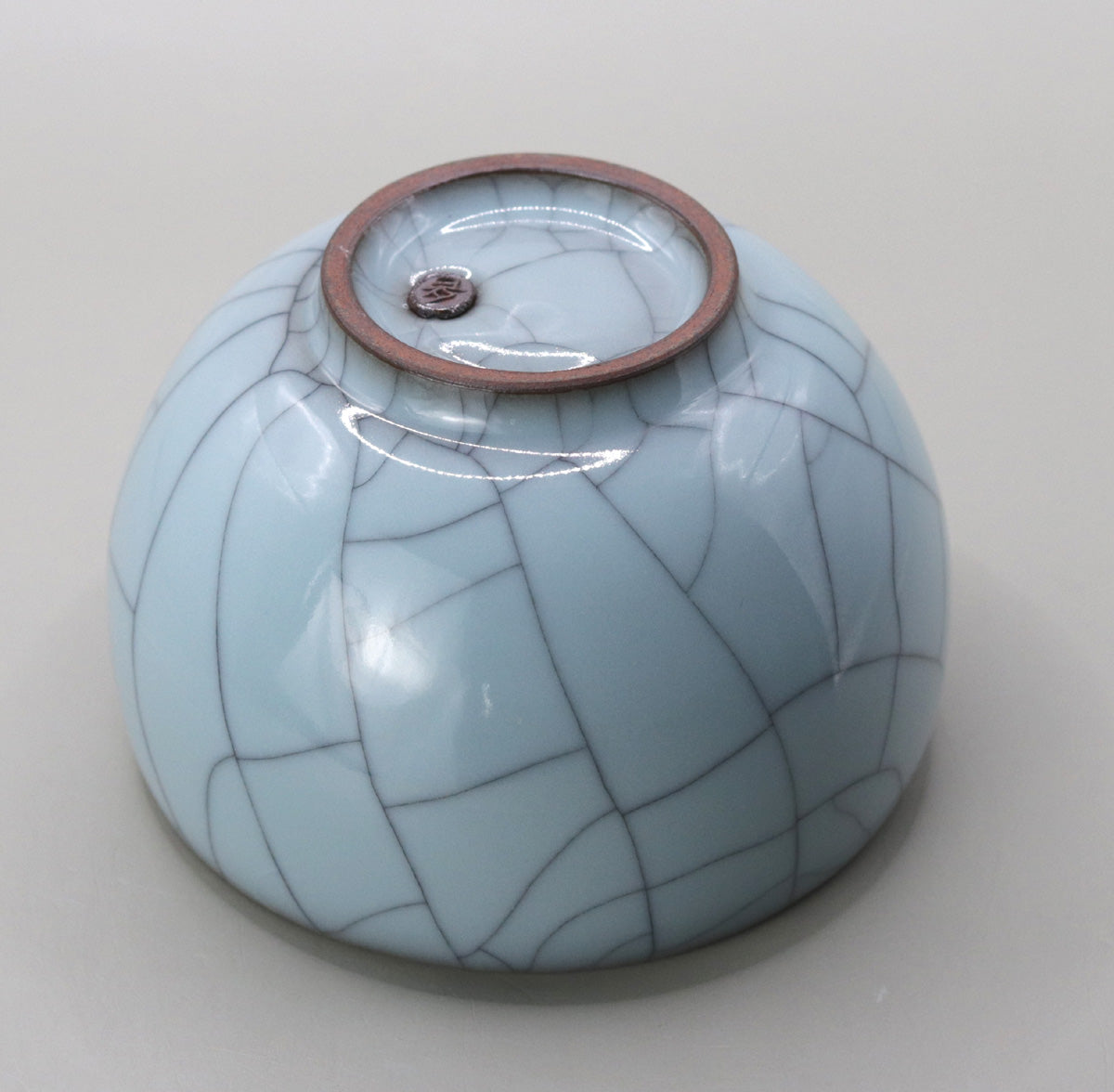
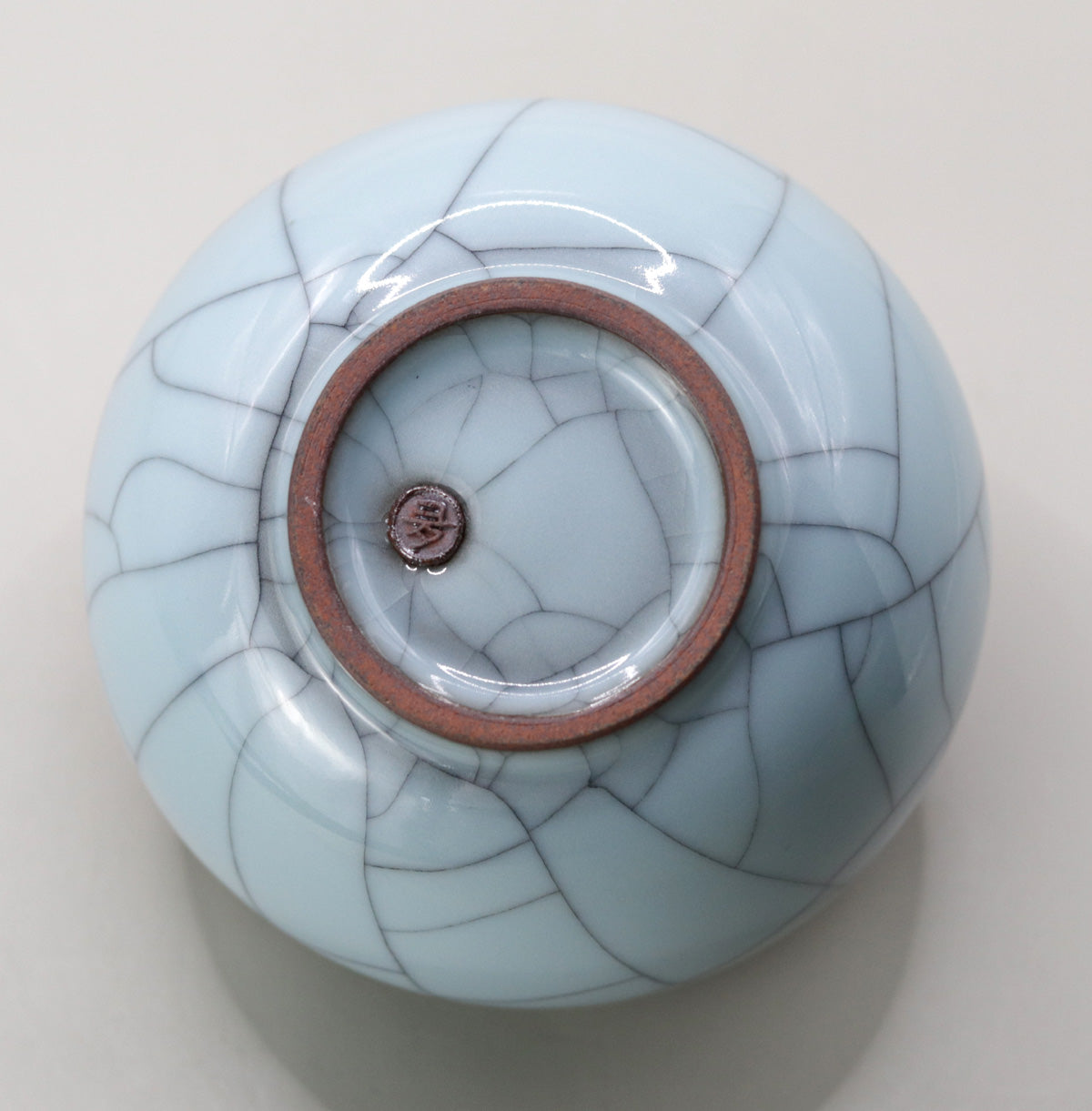
The bowl shape has a plump body and a slightly tapered base, resembling the silhouette of a "gyokuenwan" (round-rimmed bowl). The base is gently curved, almost horizontal, and is designed to ensure uniform foam when the tea whisk is applied. The base is kept low, so when you pick it up, the center of gravity of the entire bowl fits comfortably in your palm, achieving both stability and lightness.
blue glaze
By controlling the iron content in the glaze and using a process called "reduction removal" to allow oxidation in the latter half of the reduction firing, we have achieved a clear blue color that is free of reddish hues.
Large intrusion
The difference in the coefficient of expansion between the clay and the glaze is intentionally set large, causing thick cracks to form in the glaze layer during the cooling process after firing. This results in dynamic lines that are different from the usual thin cracks.
Ink dyeing
After firing, brown colored water is boiled and soaked in to color the cracks and grooves, emphasizing the crack pattern. As the tea stains accumulate over the years of use, the shading of the lines deepens.
history
Celadon is said to have reached its peak during the Song dynasty in China, but in Japan it was reinterpreted as a design of wabi (traditional Japanese aesthetic) within the tea ceremony culture from the Momoyama period onwards. In particular, the sensibility to actively appreciate "crazing" as a part of the scenery is a uniquely Japanese development, and this piece recreates that aesthetic sense using modern techniques. Masao Tagai aimed for a mid-range color between the deep blue of Ryusen kilns and the pale blue of Ru kilns, and by incorporating crazing into his design, he has established a unique style that bridges the gap between classic and modern.
Tea ceremony ideas
Dark Brown : A rich jade green overlaps with a glassy blue, creating a sense of depth as if peering into the bottom of a lake.
Light Brown : The white foam floats against a background of bold cracks, creating a movement reminiscent of lightning flashing through the clouds.
Changes over time : With repeated use, tea will seep into the cracks, creating a gradation from ink to amber, and the entire bowl will develop a soft, antique color.
Viewing
Rhythm of the cracks : The cracks run in varying thicknesses and thicknesses, and the shadows change depending on the amount of light that hits them, creating a dynamic look.
Glaze thickness : When observing the side with transmitted light, slight layers of color are visible in the glaze, giving the piece a sense of depth reminiscent of the deep ocean.
The beauty of the aged iron rim : The rust on the rim takes on a black luster with use, tightening the pale blue and ink lines and highlighting the outline of the bowl.
This work by Tagai Masao combines the clarity of the celadon glaze with the strength of the large crazing, creating a bowl with a strong visual impact. The calm blue surface of the lake is engraved with a crack pattern that deepens over time, adding a touch of color to your tea ceremony as a "living vessel" that breathes with the user. We hope you will enjoy nurturing this piece in your hands over the years and learning to appreciate the unique story that will be carved into it along with the crack pattern.
Share
-
[I will send it to you quickly and carefully]
We carefully package each product in a way that suits it best.
Also, delivery times vary depending on the piece (vessel, etc.).
Items that already come with a box will be shipped within 1-3 days of the order date.
For items that require a box to be made after your order, it will take approximately 30 days for production to be completed and then shipped.
In either case, once we have confirmed your order, we will contact you by email to inform you of the delivery date.
-
[Requests when purchasing pottery]
Even products that look the same may differ slightly in color, shape, size, etc.
The way the glaze is used, the power of the kiln, the firing method, the season, and the humidity also affect the appearance of the pottery.
Please understand the individuality of each piece of pottery and enjoy the unique warmth of handmade.