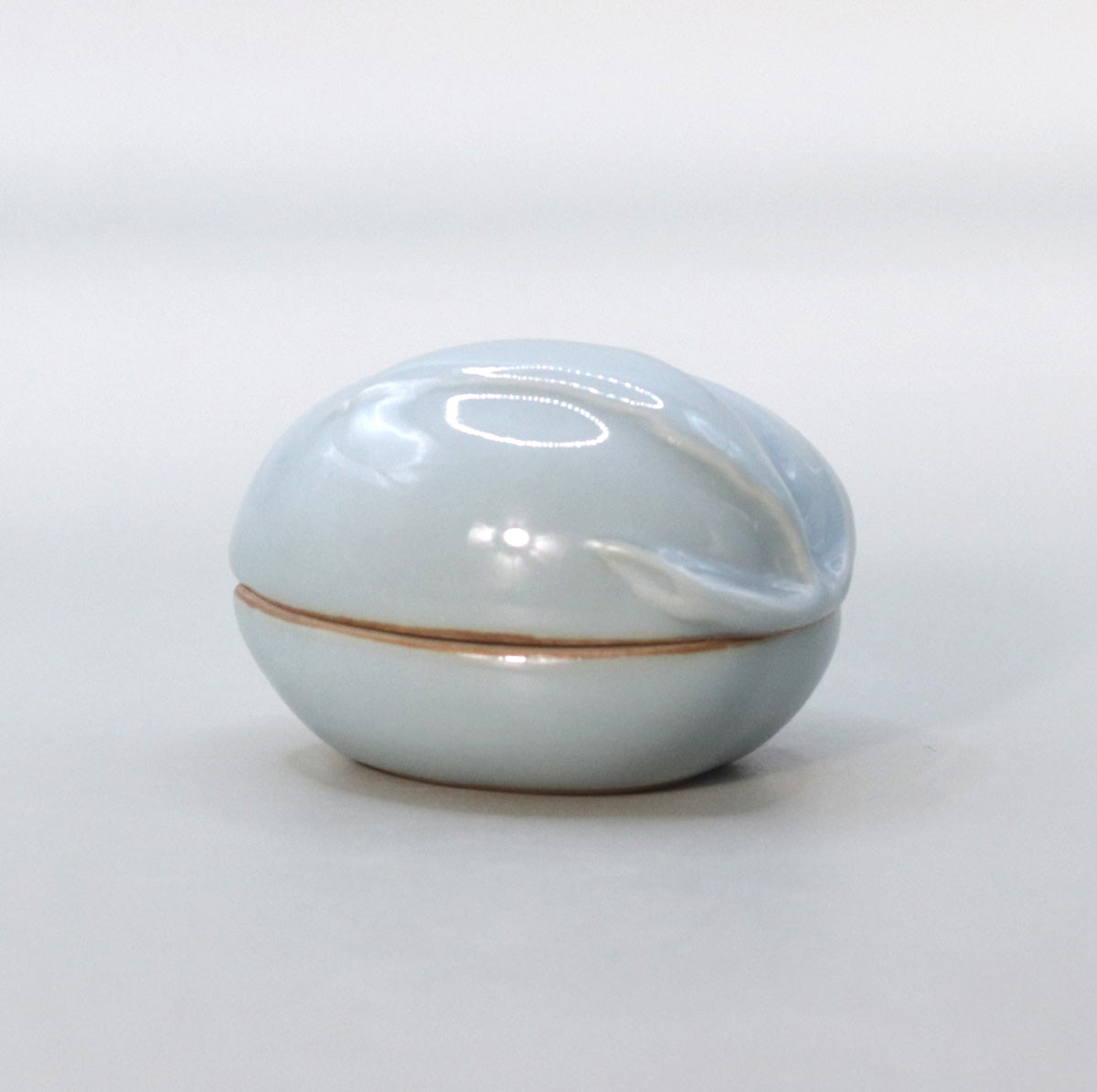
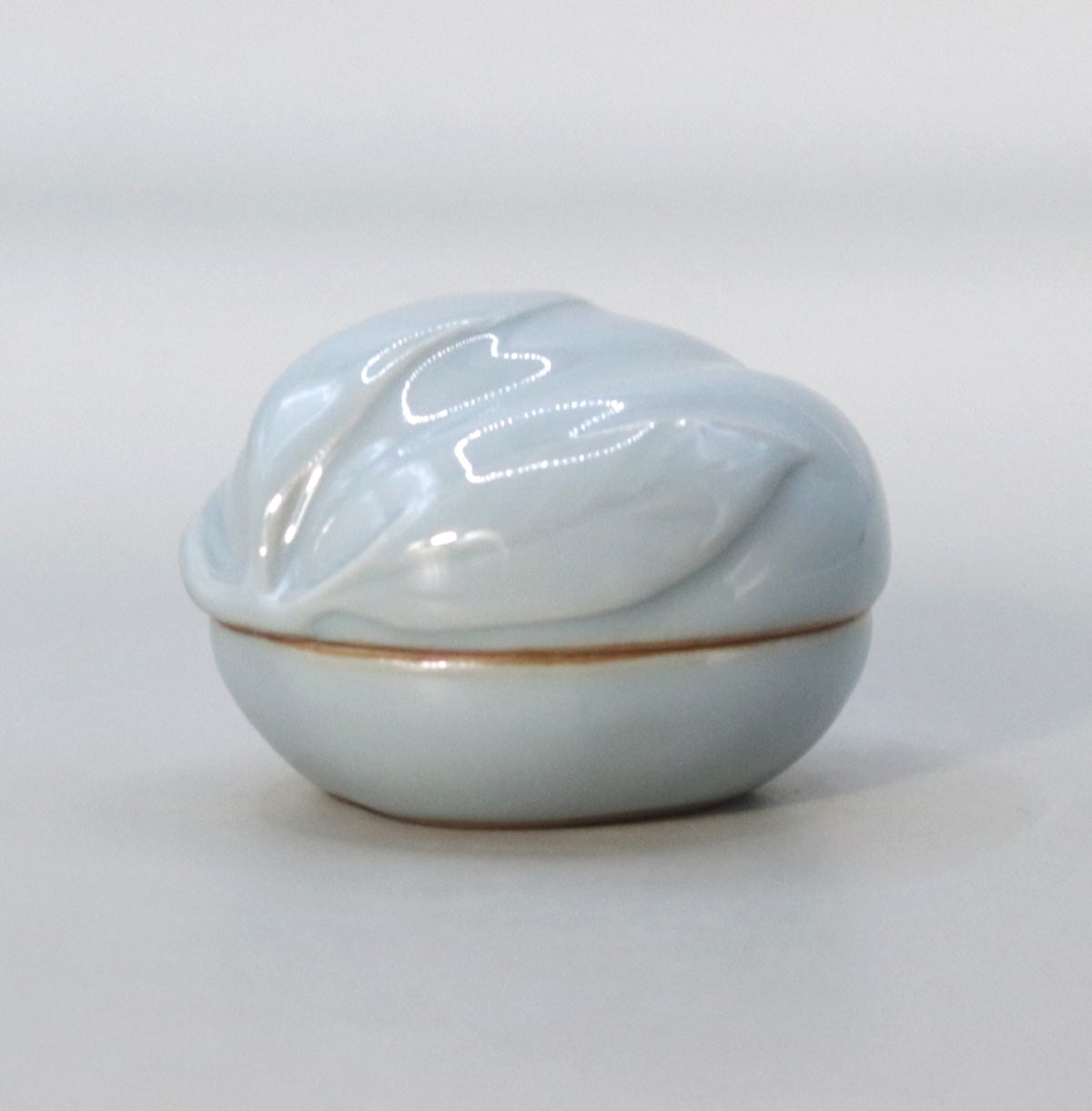
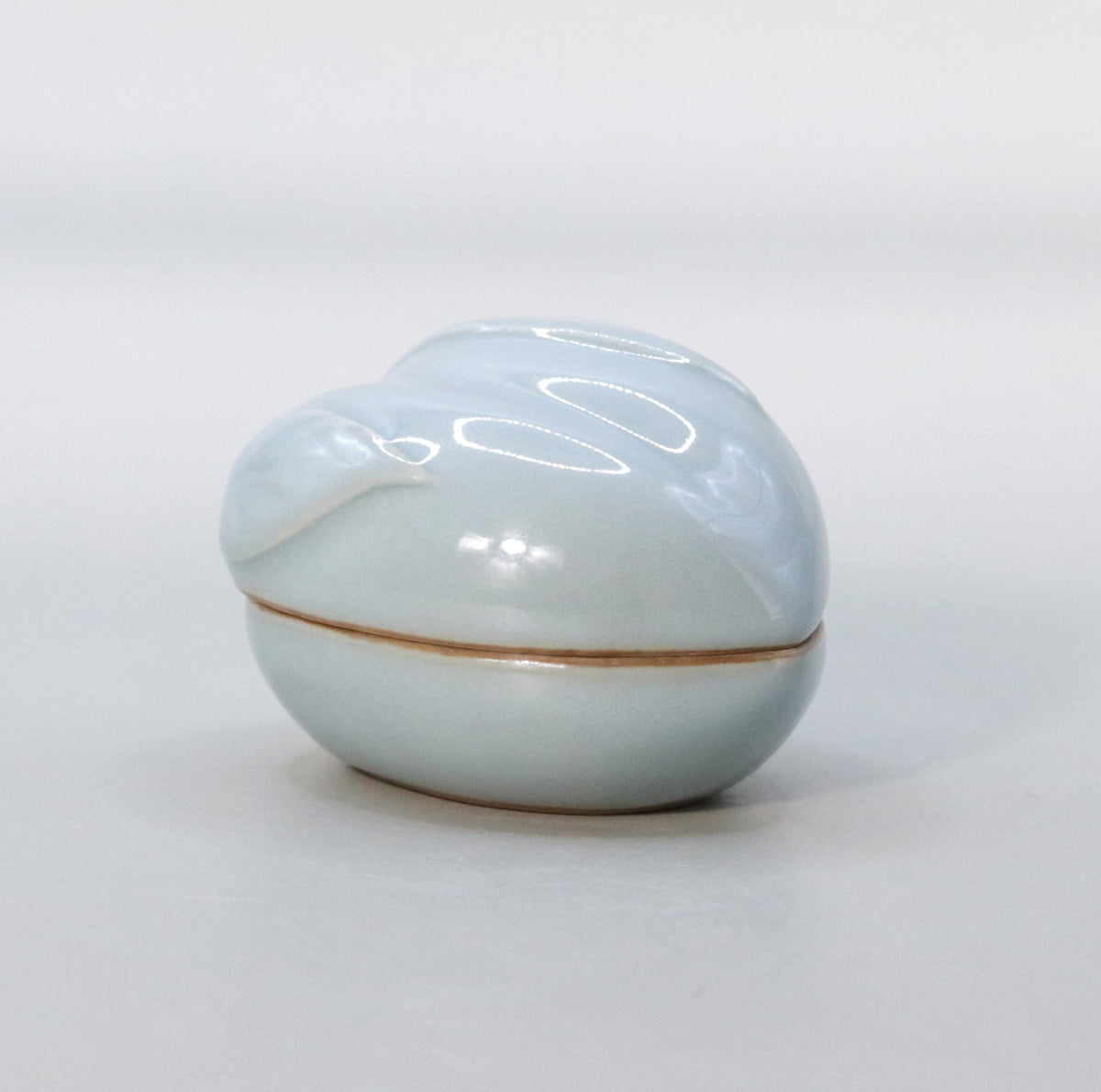
Blue gourd peach incense Suwa Sozan
Blue gourd peach incense Suwa Sozan
Couldn't load pickup availability
Width: 6.1cm Height: 4.2cm
What is an incense container?
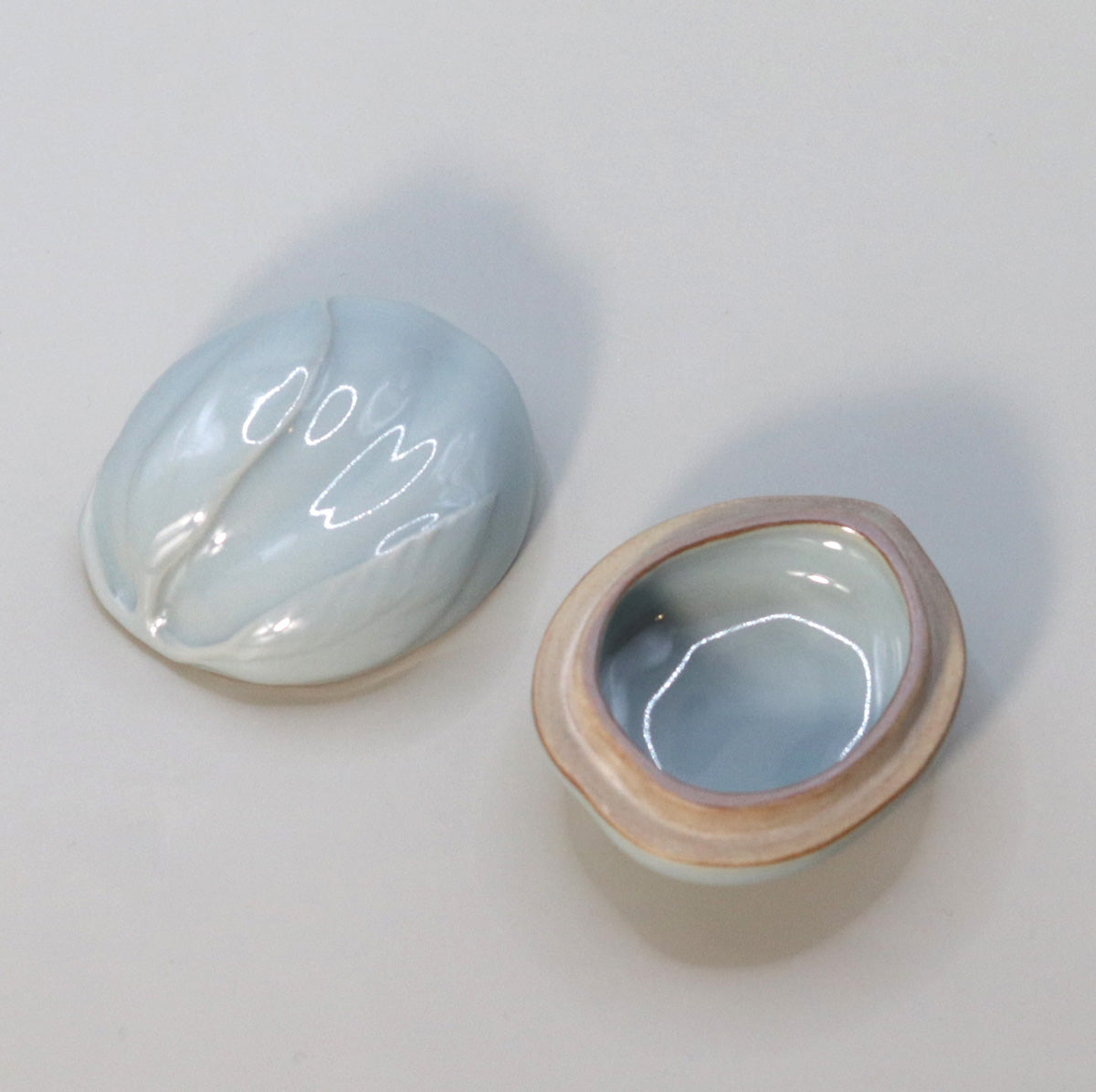
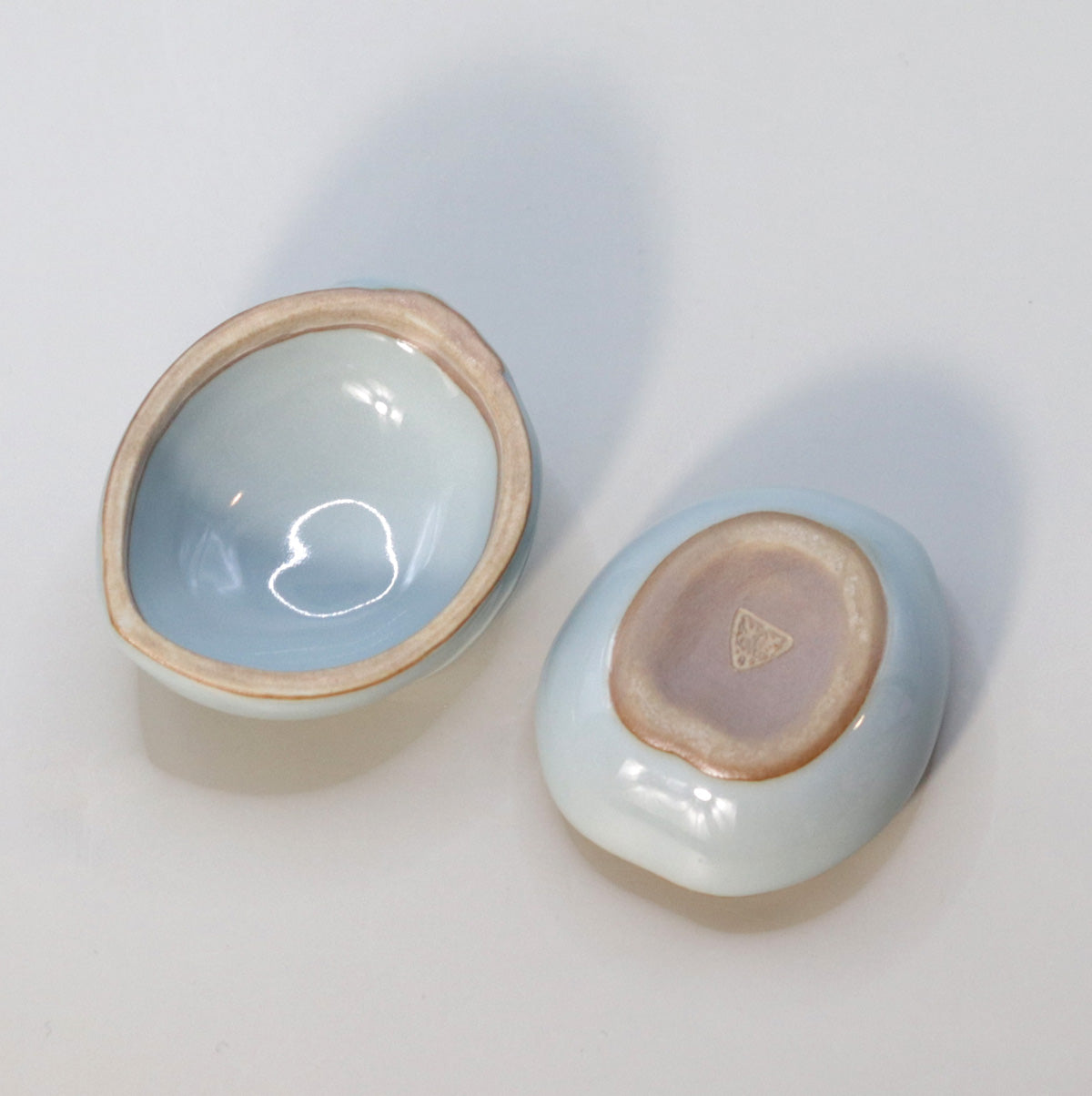
An incense container is a lidded container used to store incense in the tea ceremony.It is one of the smallest and most spiritual tea ceremony utensils, and is offered for viewing in front of guests during the hearth season and brazier season.
The small size of the vessels allows them to condense the artist's aesthetic sense, creative ability, and playfulness.Incense containers are not simply containers for fragrance; by capturing symbols of the seasons, festivals, mythology, and nature in their shapes, they become special objects that bring stories and poetry to the tea ceremony.
Peach - a symbol of good fortune and longevity
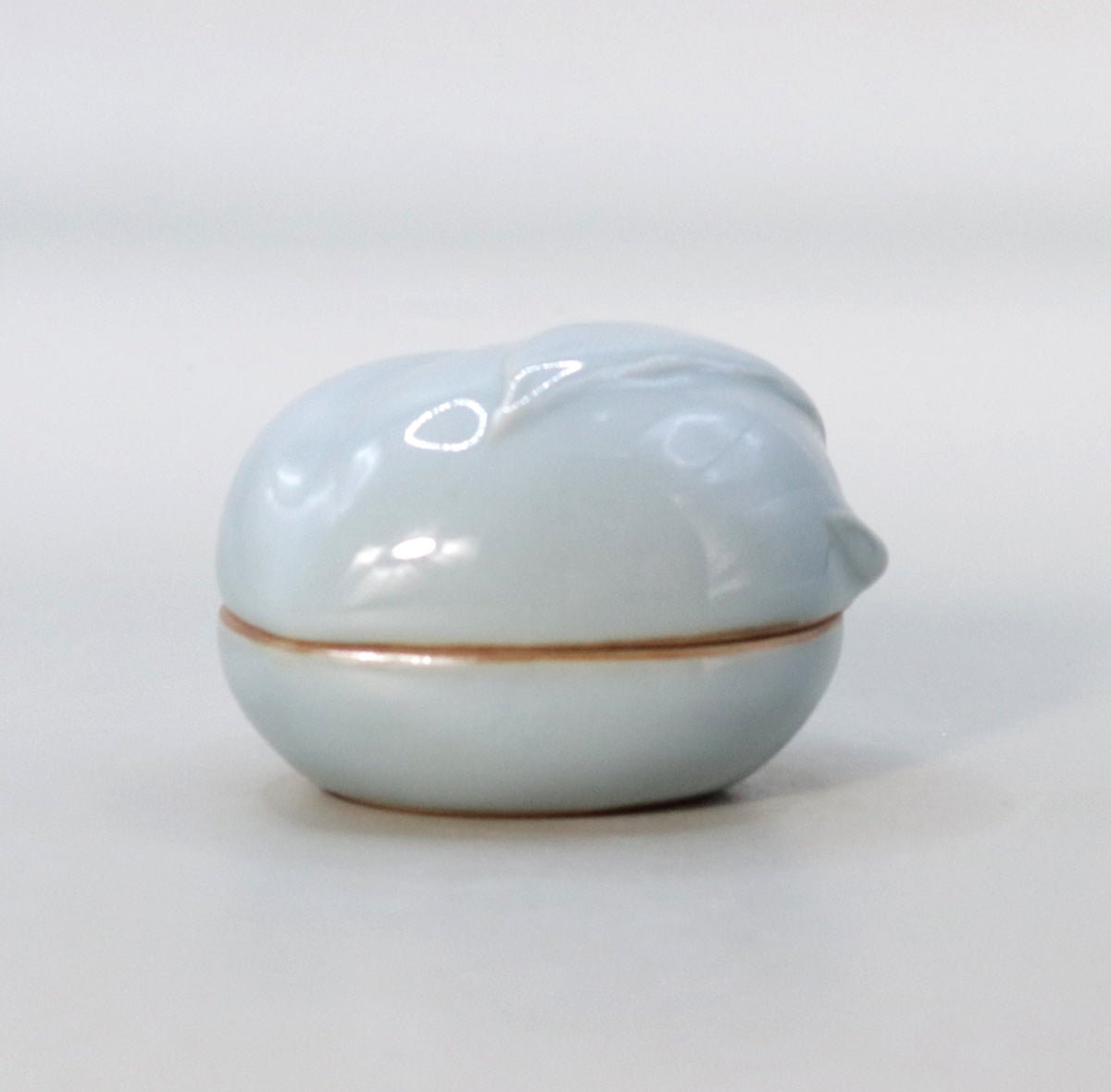
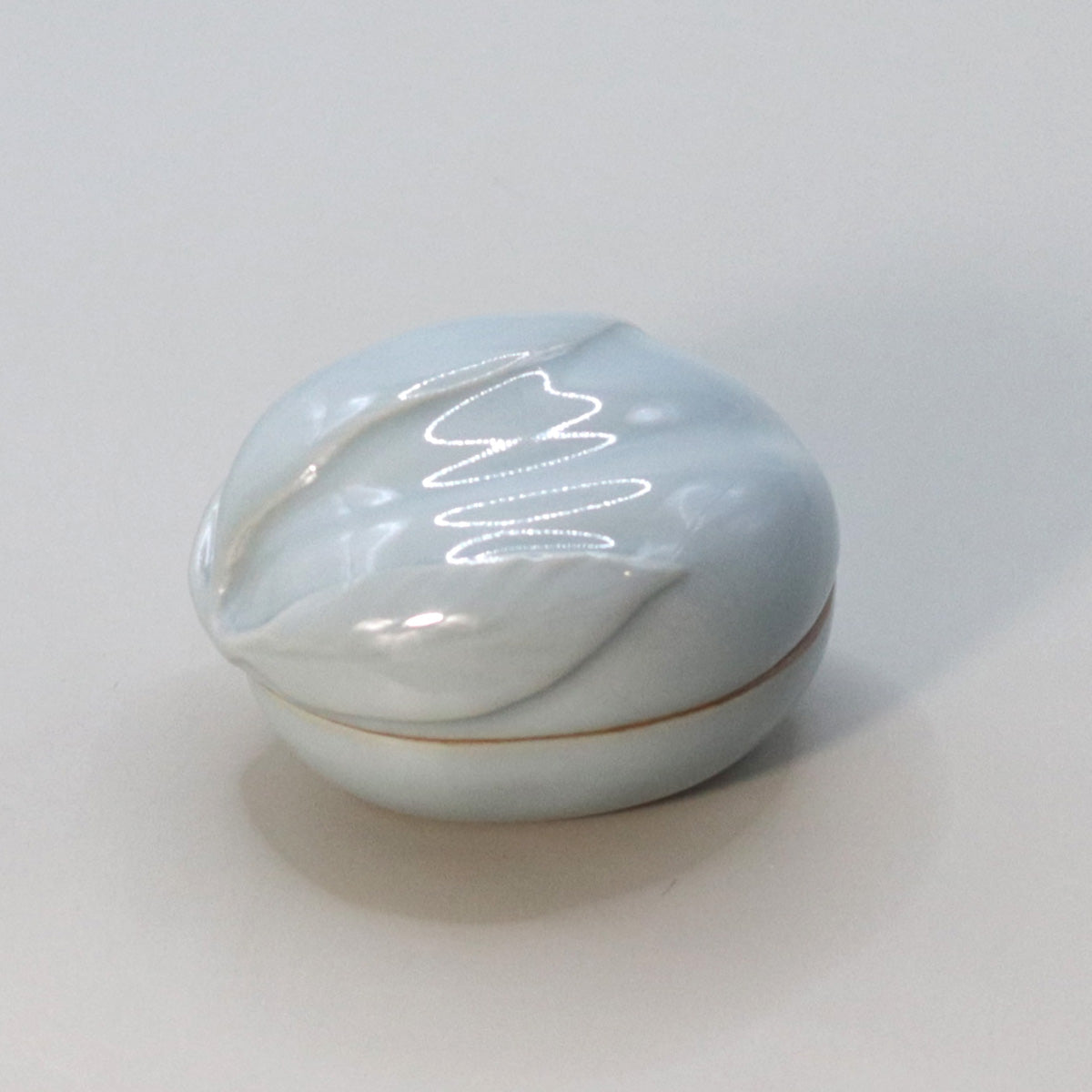
This work, "Celadon Peach Incense Container," is, as its name suggests, a piece shaped like a peach. It is not merely a realistic depiction; it is a design that carefully blends the auspiciousness and spirituality of peaches into the symbolic shape of an incense container .
Peaches have been revered in ancient China as a fruit symbolizing longevity, protection from evil, and the arrival of spring . In mythology, there is a scene in which the Queen Mother of the West cultivates a fairy peach, which grants immortality, and so the peach also has the significance of being a fruit of the fairy world. Especially from the Song dynasty onwards, peach-shaped incense holders became a frequent subject of ceramic design, and were beloved by literati .
The ingenuity of the design and composition
This work, created by Suwa Sozan IV, reaches the pinnacle of realism through reinterpretation that goes beyond mere imitation .
First of all, the overall form naturally expresses the rounded fullness of the fruit, while the ridges on both sides are slightly shaded, creating a visual sense of three-dimensionality and stability.
The joining line between the lid and body is cleverly designed to follow the cracks in the peach, making the joint less noticeable and maintaining a sense of unity . The leaf-shaped protrusions naturally guide the eye towards the vessel, and are poetic accents that breathe life into the piece.
Sozan Celadon - In Silence
The glaze is based on a reproduction of the "Kinuta Celadon" that the first Suwa Sozan took 25 years to perfect, and is now covered in the pale, clear jade color that is unique to Sozan Celadon , further refined by the fourth generation.
The glaze has accumulated somewhat thickly on the ridges of the peach and the undulating parts of the leaves, creating soft shadows and varying shades of color , creating a scene that seems as if light and shadow are playing on the surface of the vessel.
The transparency of the glaze and the deep blue hue give the vessel a quiet majesty, even though it is small. At the moment when incense is burned during the tea ceremony, a universe is born in the cup's hands when the lid is removed - this is the power of Sozan celadon.
Tea ceremony space and incense container
When this work is used in a tea ceremony, its meaning and presentation are multi-layered.
In spring, in keeping with the themes of the Peach Festival and a profusion of flowers, the arrangement of flowers and plants creates a sign of life, and in autumn, the arrangement of auspicious fruits that herald the coming harvest adds a subtle touch of elegance to the tranquil scenery.
Furthermore, when the incense container is viewed alongside the rich aroma of matcha, the story it tells sparks a quiet conversation between the tea master and the guest . The "power of silence" of the incense container is the very foundation that supports the subtle beauty of the tea ceremony.
history
Although celadon incense holders with realistic designs like this one once existed in the Longquan kilns of the Song dynasty, most of them have been passed down only in fragments. This work was created by Sozan after meticulous research into the structure and aesthetic sense of these handed-down pieces, and has been reconstructed with a modern level of perfection and precision.
Not a reproduction, but inheritance and creation . This is where the fourth generation pottery-making philosophy is condensed.
Artist profile and thoughts
Suwa Sozan IV was born in Kyoto in 1970 and grew up under the tutelage of his father, Suwa Sozan III, and his mother, lacquer artist Nakamura Sotetsu XII. Since taking over as the IV in 2002, in addition to traditional celadon works, he has developed a freer style of work using motifs such as the universe, stars, dawn, and spring haze , and is challenging himself to create modern celadon expressions using a variety of techniques such as nerikomi, hotaru-de, and tobi-seiji.
Furthermore, when creating pottery, he always values the teachings of his mother, which was to "create vessels while imagining the story of the person who will use them," and he believes that "vessels are only complete when they are used." This piece, too, is destined to quietly embrace the heart of the user.
The "Celadon Peach Incense Container" is not simply a ceramic work of art. It is a quiet work of art that blends together ancient Chinese thought, the tableware culture of the Southern Song Dynasty, the spirit of the Japanese tea ceremony, and modern aesthetics .
The smoothness of the piece in the palm of your hand, the way the glaze shimmers in the light, and the story entrusted to the shape of the peach—all of these, in the quiet act of placing the incense, create a dialogue between the piece, the person, and the timeless .
Residing within this small vessel is a form of beauty and prayer that has remained unchanged since ancient times.
Share
-
[I will send it to you quickly and carefully]
We carefully package each product in a way that suits it best.
Also, delivery times vary depending on the piece (vessel, etc.).
Items that already come with a box will be shipped within 1-3 days of the order date.
For items that require a box to be made after your order, it will take approximately 30 days for production to be completed and then shipped.
In either case, once we have confirmed your order, we will contact you by email to inform you of the delivery date.
-
[Requests when purchasing pottery]
Even products that look the same may differ slightly in color, shape, size, etc.
The way the glaze is used, the power of the kiln, the firing method, the season, and the humidity also affect the appearance of the pottery.
Please understand the individuality of each piece of pottery and enjoy the unique warmth of handmade.