Celadon lotus tea bowl, Suwa Sozan
Celadon lotus tea bowl, Suwa Sozan
Couldn't load pickup availability
Width: 15.5cm Height: 7.0cm
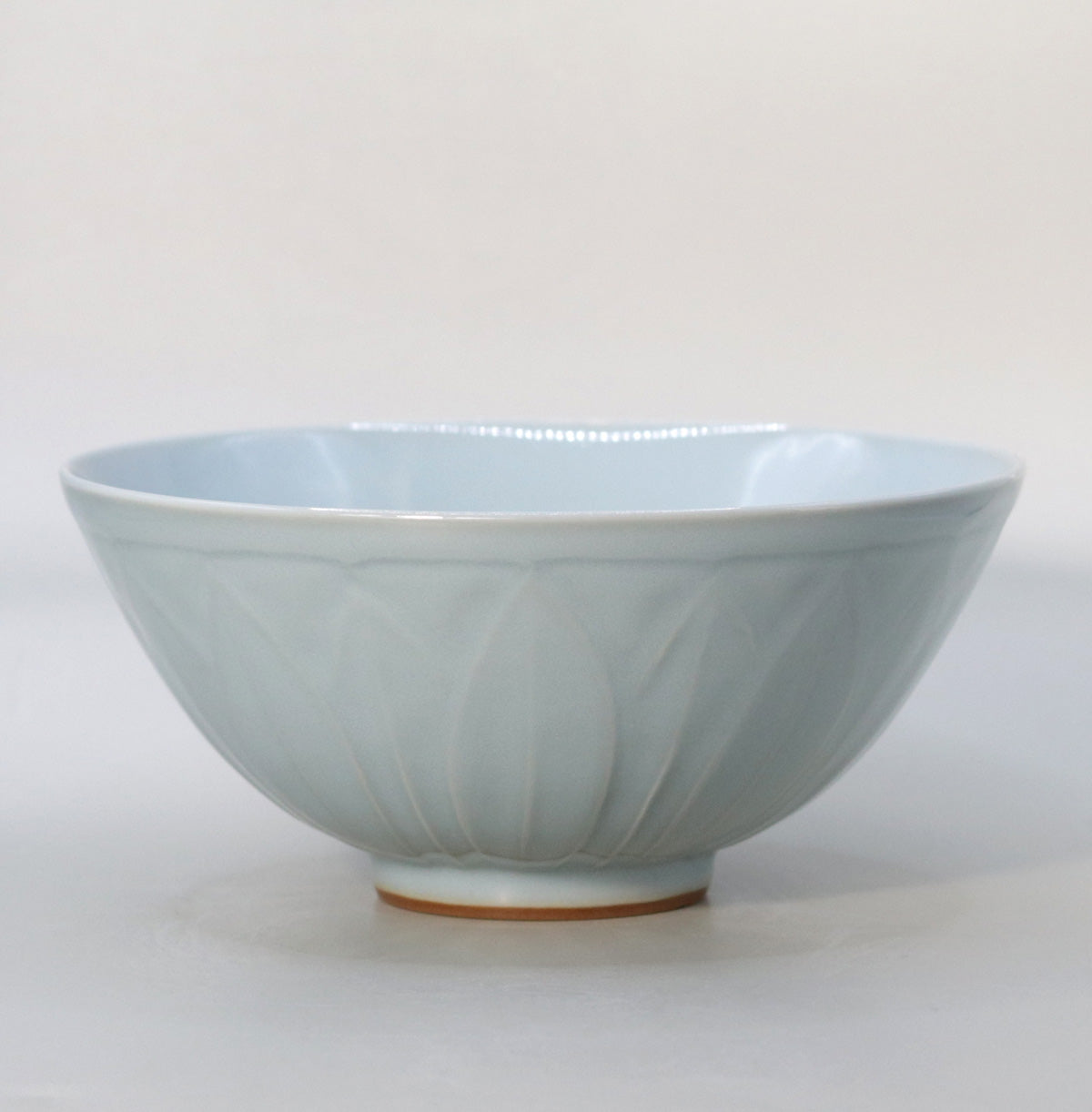
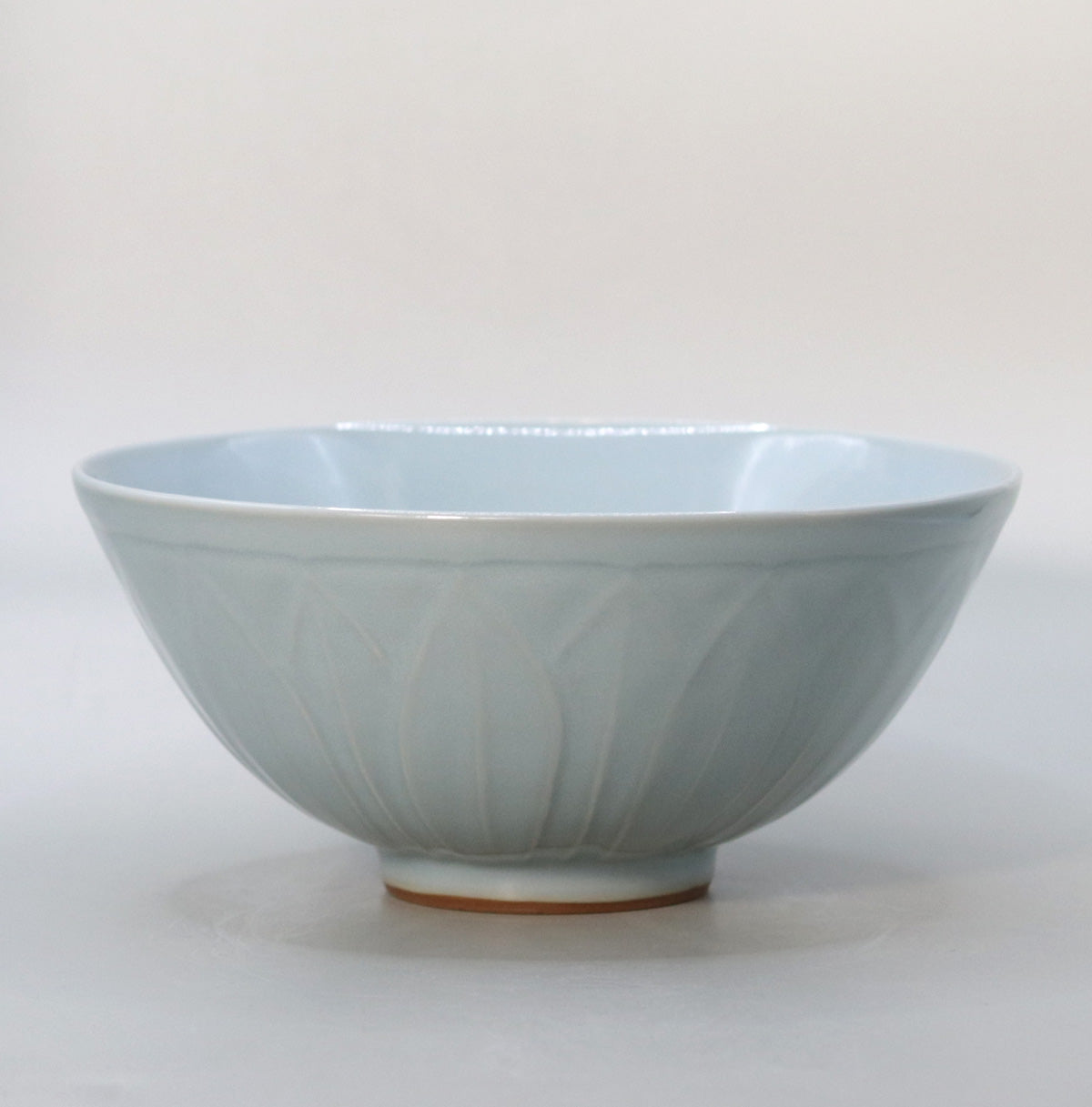
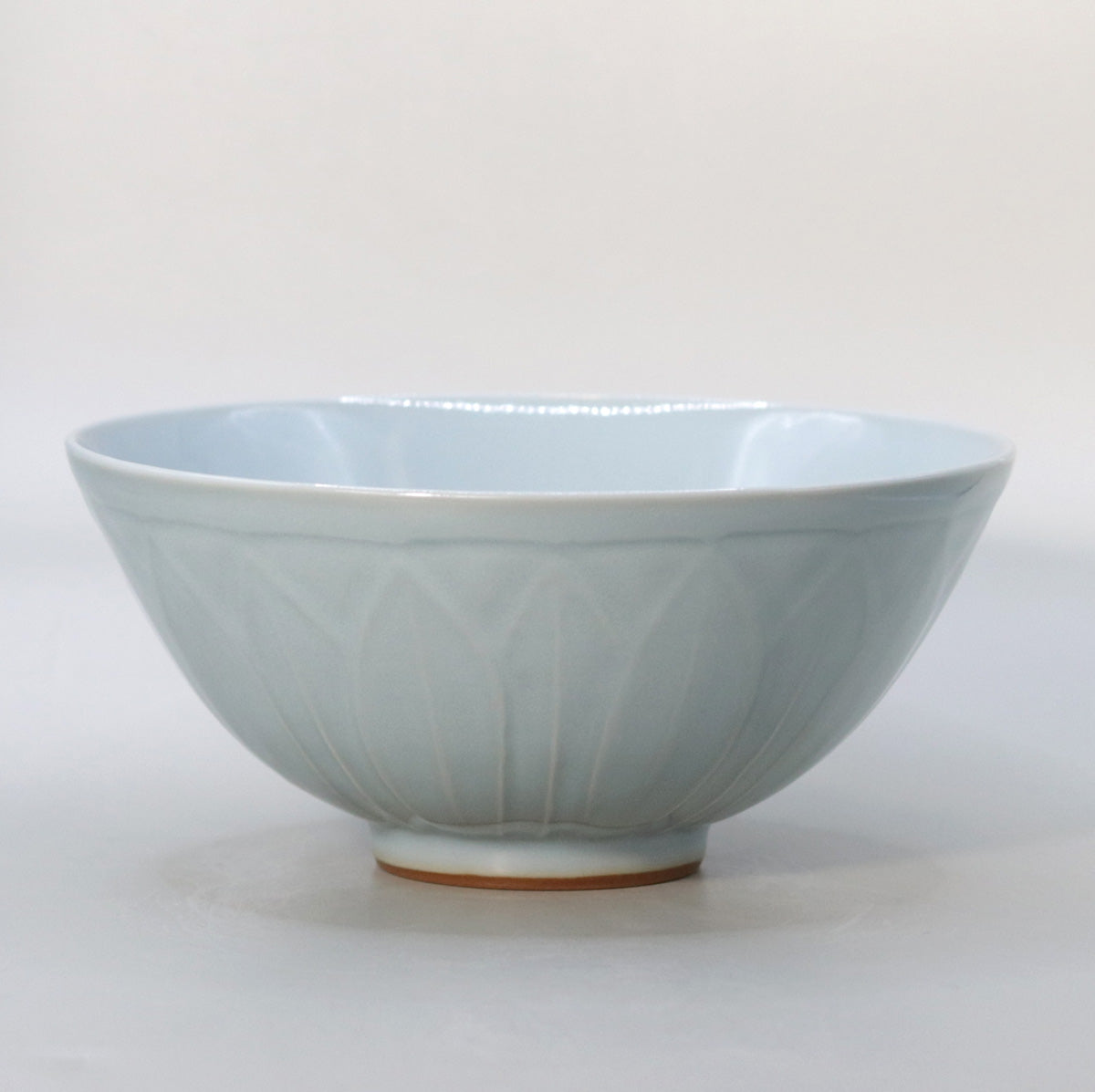
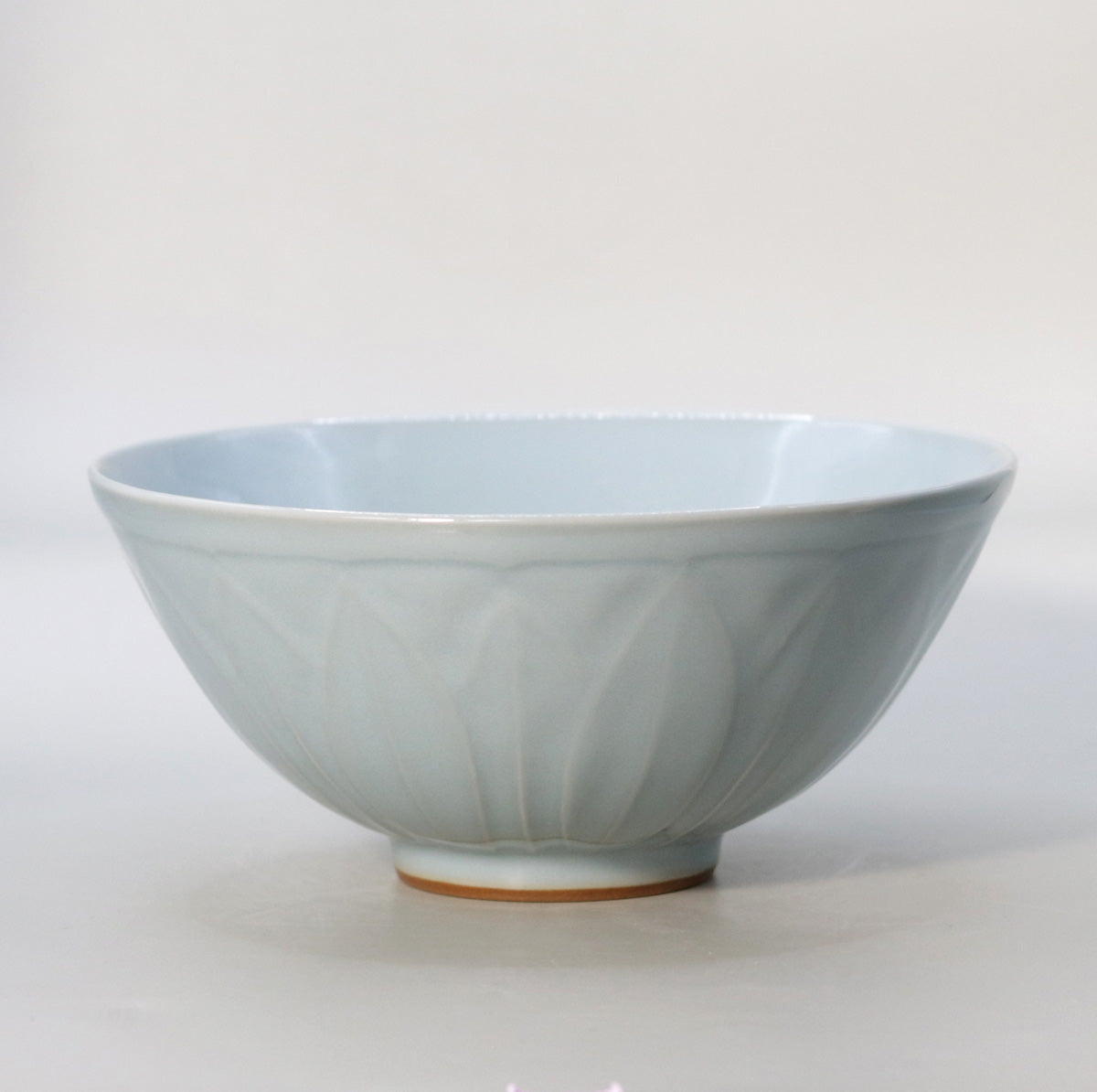
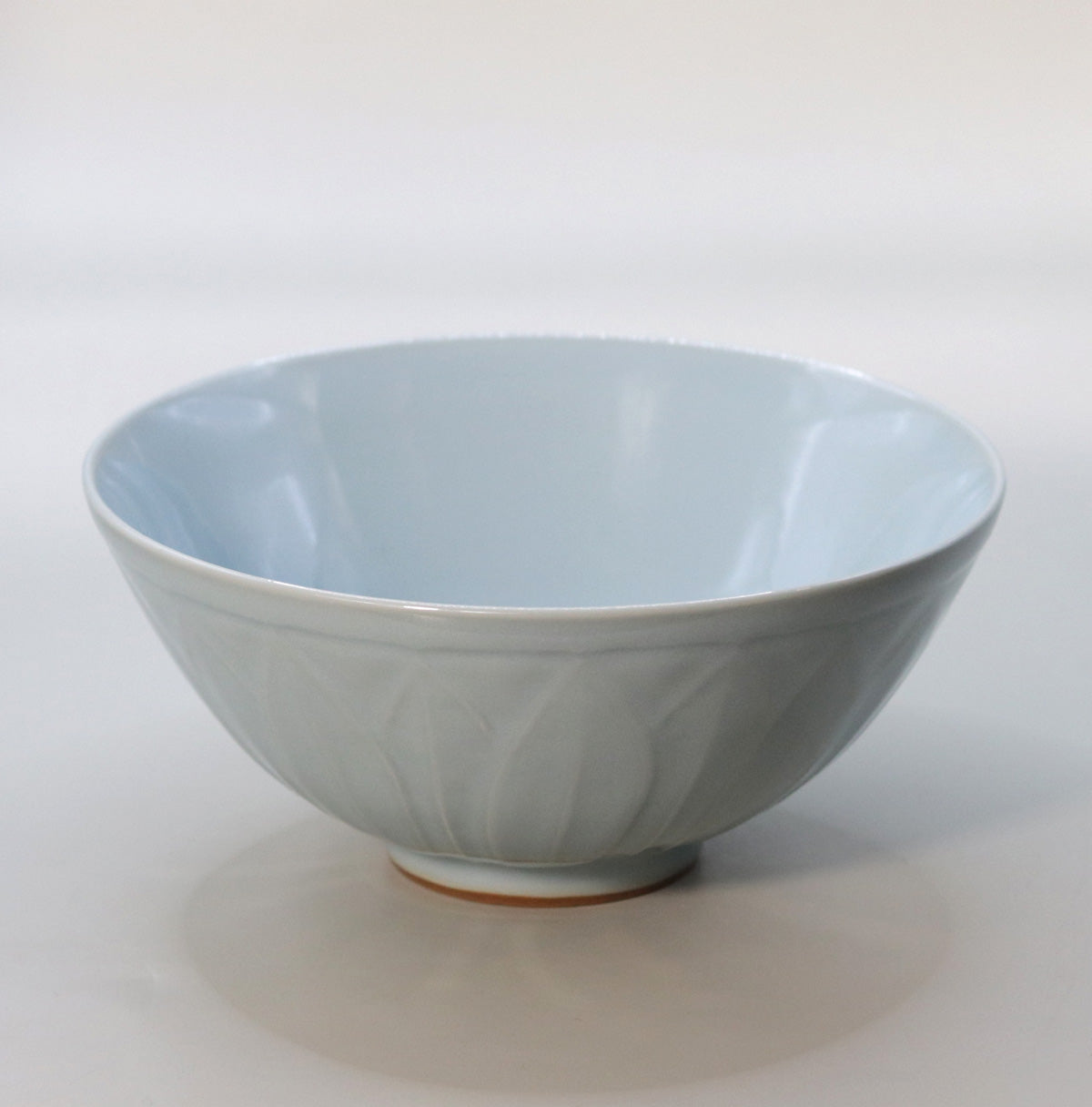
This "Celadon Lotus Petal Tea Bowl" is modeled after the Kinuta Celadon tea bowls fired in the Longquan kilns of the Southern Song dynasty, and was created by the fourth generation Suwa Sozan, who has inherited the jade color of "Sozan Celadon" that the first Suwa Sozan explored for 25 years. The lotus petal pattern that runs around the outside symbolizes the purity and rebirth of the lotus flower, quietly inviting the spirit of "harmony, respect, purity and tranquility" to the tea ceremony.
molding
Connections and prospects
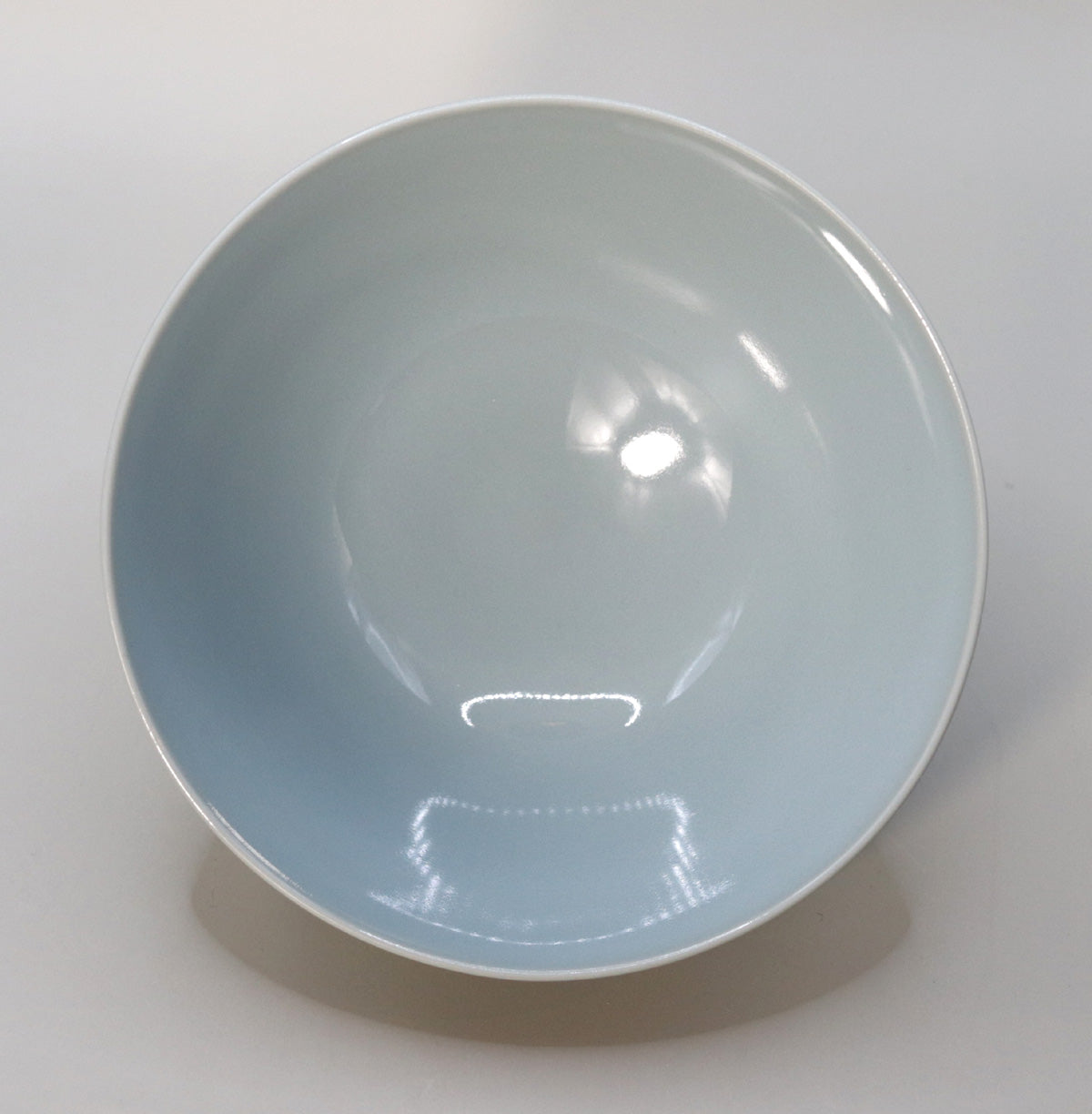
The rim is slightly curved outwards, and has a delicate thickness that does not interfere with whisk handling or the taste. The inside gently widens into a mortar shape, and when matcha is poured, the green liquid surface gently rises like a mirror.
Lotus petal carving
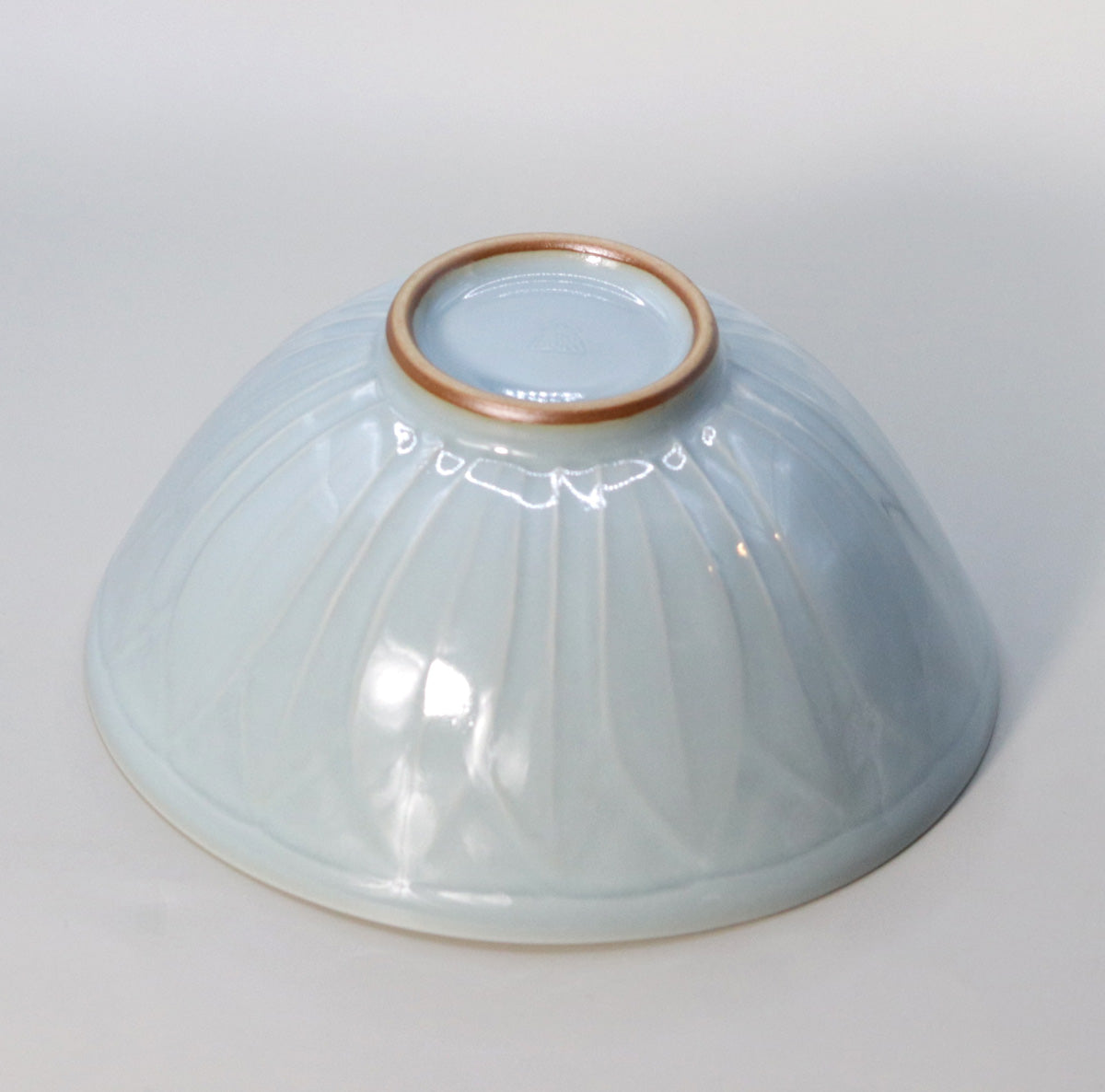
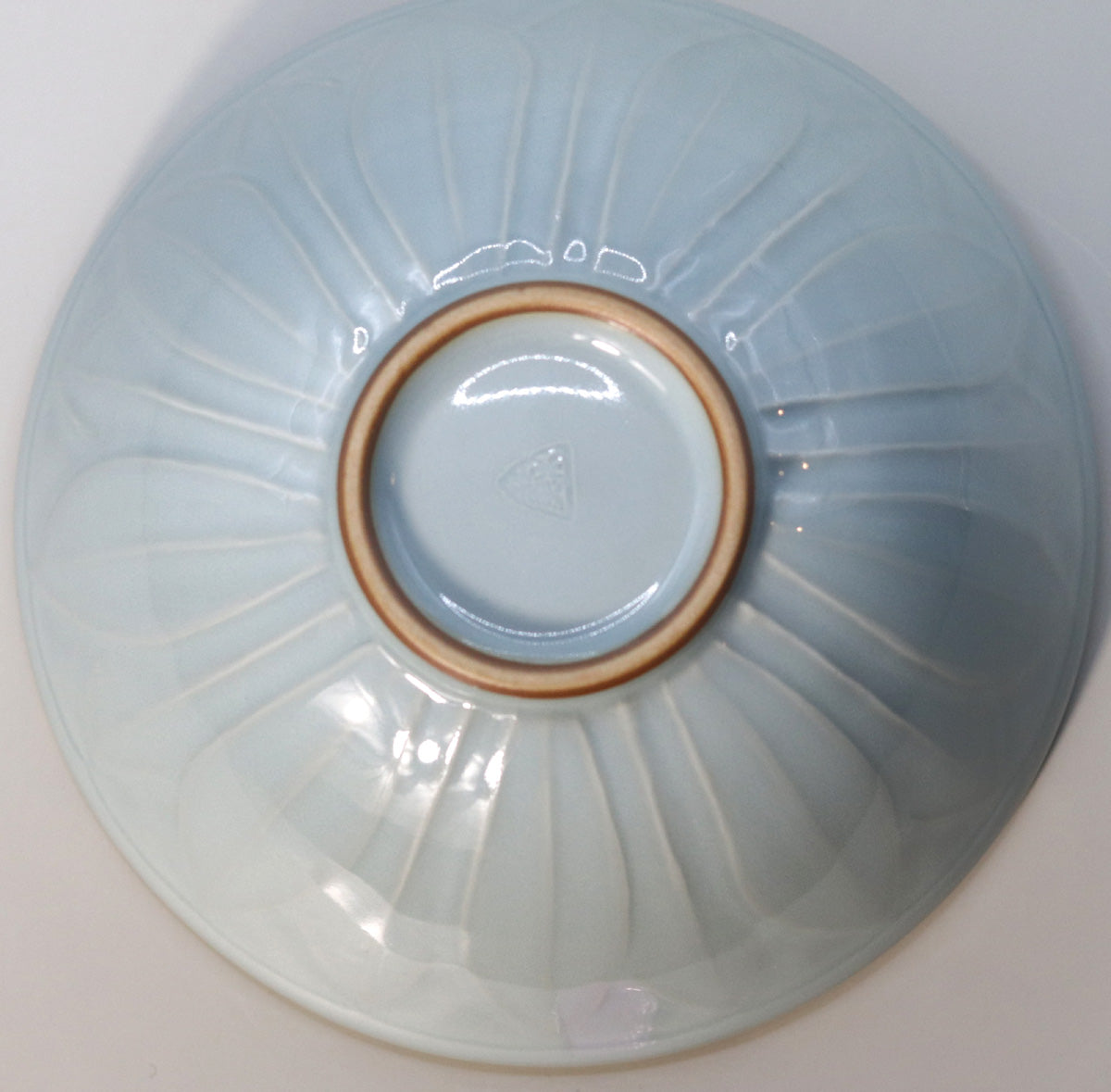
The outside of the body is engraved with a series of lotus petals. The carving is neither too deep nor too shallow, and as the celadon glaze accumulates and casts a faint shadow, the thickness and overlapping of the lotus petals softly emerge. Another highlight is the "hidden joint" technique, in which the beginning and end of the carving do not overlap, resulting in a visually continuous circular joint.
High ground and center of gravity design
The base is cut slightly lower and the inside of the base is sharply carved to reduce weight. This keeps the center of gravity low when filled with water, increasing stability during the tea ceremony. The iron spots on the clay that can be faintly seen on the side of the base are a small testament to the style that has been passed down since the first generation.
Glaze Tone - The clarity of "Sozan Celadon"
Deep jade color <br data-start="659" data-end="662">The trace amounts of iron (approximately 1%) contained in the clay and glaze are converted during reduction firing, resulting in a highly transparent blue-green color. The thickness of the glaze on the ridges of the lotus petals creates faint shadows depending on the light, emphasizing the three-dimensional effect.
Color differences between the inside and outside <br data-start="772" data-end="775">The inside is a bright light blue because the glaze is uniform in thickness, while the outside is carved to reveal the shades of jade, with the two layers of blue quietly echoing each other.
The feel of the glaze surface <br data-start="844" data-end="847">The glaze surface is evenly melted glassy, and is smooth enough to stick to your fingertips. When you hold it in your palm, you can feel the slight heat and feel as if you are one with the vessel.
history
The origin of lotus petal writing
During the Southern Song dynasty, the Longquan kiln frequently used lotus flowers, a Buddhist symbol, in its celadon ware, which were highly prized in the imperial court and Zen temples. This work captures this spirituality, reconstructing the number and rhythm of the lotus petals to suit the dimensions of a Japanese tea ceremony.
The lineage of Kinuta Celadon restoration
The first Suwa Sozan completed Sozan celadon in 1907 and was certified as an Imperial Household Artist in 1917. The fourth Suwa Sozan has maintained the same formula and stabilized the clear jade color.
Adaptation to modern tea ceremonies
The easy-to-handle size makes it suitable for both thin and thick tea. Its light weight makes it easy to use as a shelf display or for carrying around in tea ceremonies.
Harmony with Matcha <br data-start="1600" data-end="1603">The vibrant green of the matcha stands out against the pale light blue of the interior, creating a scene reminiscent of new buds floating in a lotus pond.
Interacting with Light <br data-start="1663" data-end="1666">When the warm light of a lantern or candle is shone on the vessel, soft shadows flicker along the ridges of the lotus petals, and the entire vessel breathes quietly like the surface of water.
Suwa Sozan IV
Suwa Sozan IV (born in Kyoto in 1970) was trained by Suwa Sozan III and lacquer artist Nakamura Sotetsu XII, and succeeded to the title in 2002. Building on his research into celadon, he explores a variety of techniques, including hotarude, tobiseiji, and nerikomi celadon, while upholding the philosophy that "each piece should have a story to tell, and be completed in harmony with the user's heart." The lotus petal design on this tea bowl evokes the "purifying moment when a lotus flower blooms on the surface of the water at dawn," conveying a desire to convey a quiet sense of purification during the tea ceremony.
The "Celadon Lotus Petal Tea Bowl" blends the tranquility of the jadeite color with the purity of the lotus petals, making it a masterpiece that revives the elegance of Southern Song Dynasty kinuta celadon for the modern tea ceremony. When matcha is poured into it, the green light reflects the lotus pond, inviting the tea ceremony to a tranquil Pure Land scene. This piece, the culmination of Suwa Sozan IV's refined sense of form and controlled glaze, envelops the space with dignity and tranquility rather than extravagance, and is sure to bring a breath of pure peace and rebirth to the hearts of those who see it.
Share
-
[I will send it to you quickly and carefully]
We carefully package each product in a way that suits it best.
Also, delivery times vary depending on the piece (vessel, etc.).
Items that already come with a box will be shipped within 1-3 days of the order date.
For items that require a box to be made after your order, it will take approximately 30 days for production to be completed and then shipped.
In either case, once we have confirmed your order, we will contact you by email to inform you of the delivery date.
-
[Requests when purchasing pottery]
Even products that look the same may differ slightly in color, shape, size, etc.
The way the glaze is used, the power of the kiln, the firing method, the season, and the humidity also affect the appearance of the pottery.
Please understand the individuality of each piece of pottery and enjoy the unique warmth of handmade.