
Blue porcelain tea bowl Suwa Sozan
Blue porcelain tea bowl Suwa Sozan
Couldn't load pickup availability
Width: 12.7cm Height: 7.0cm
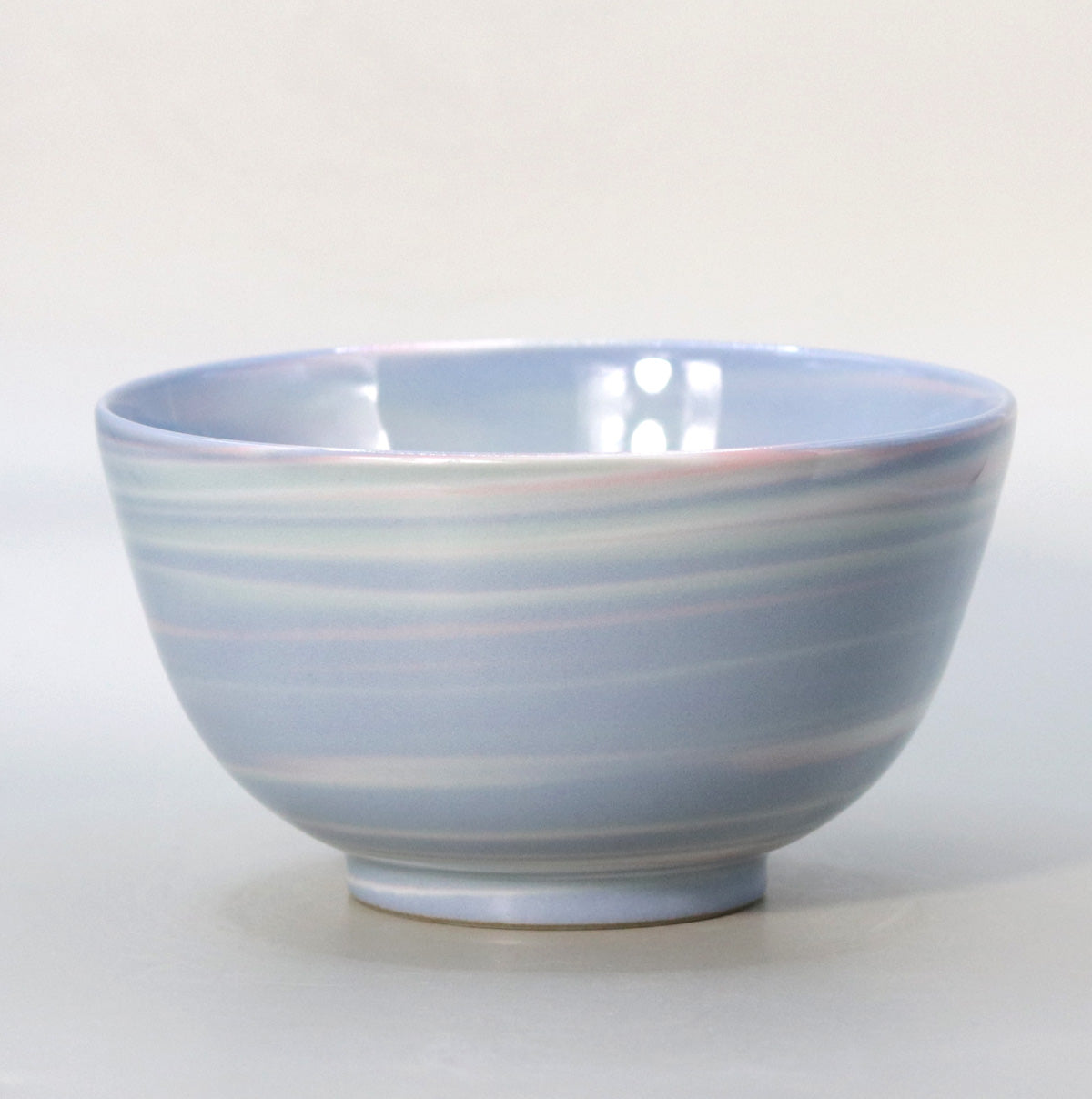
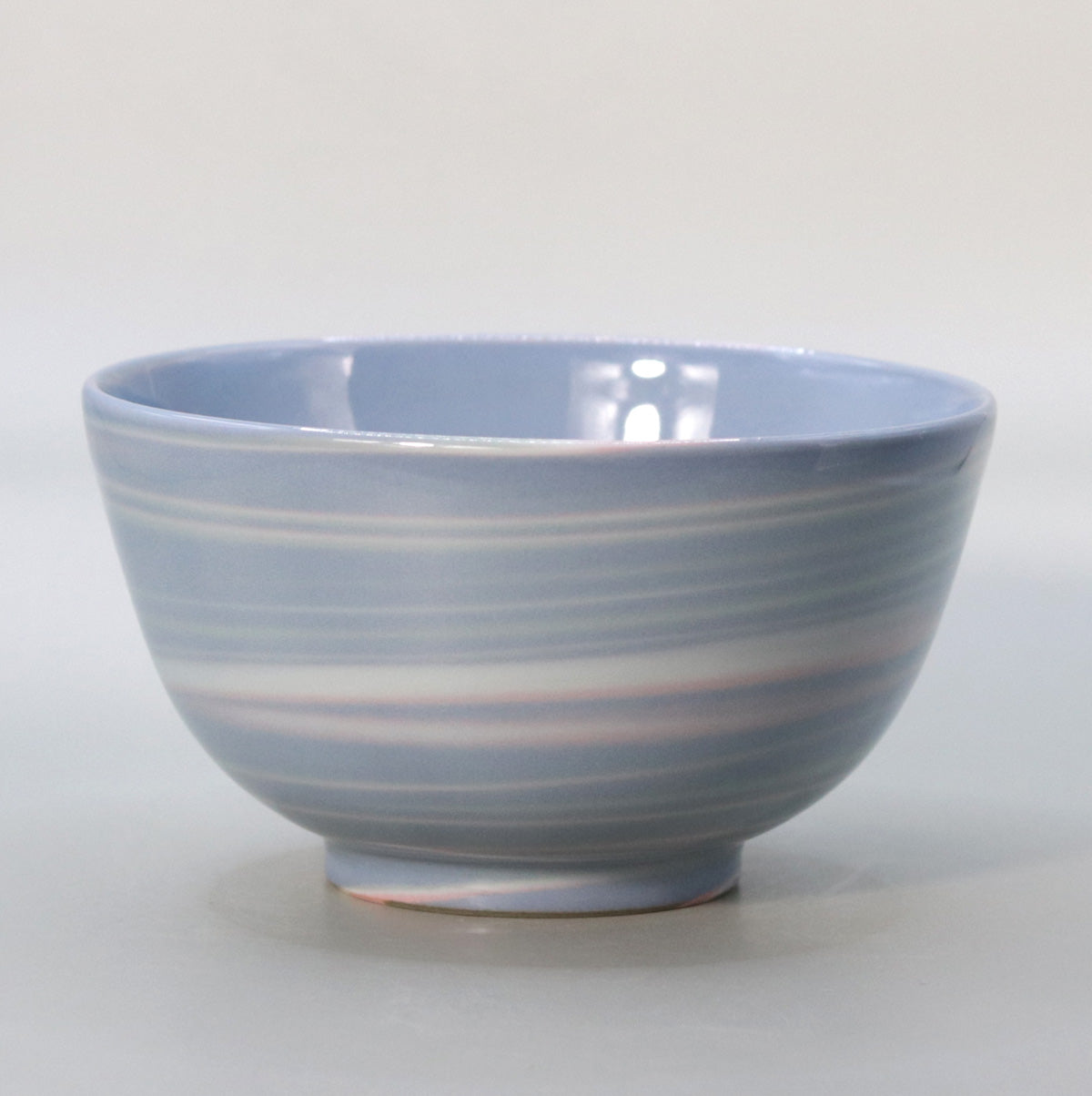
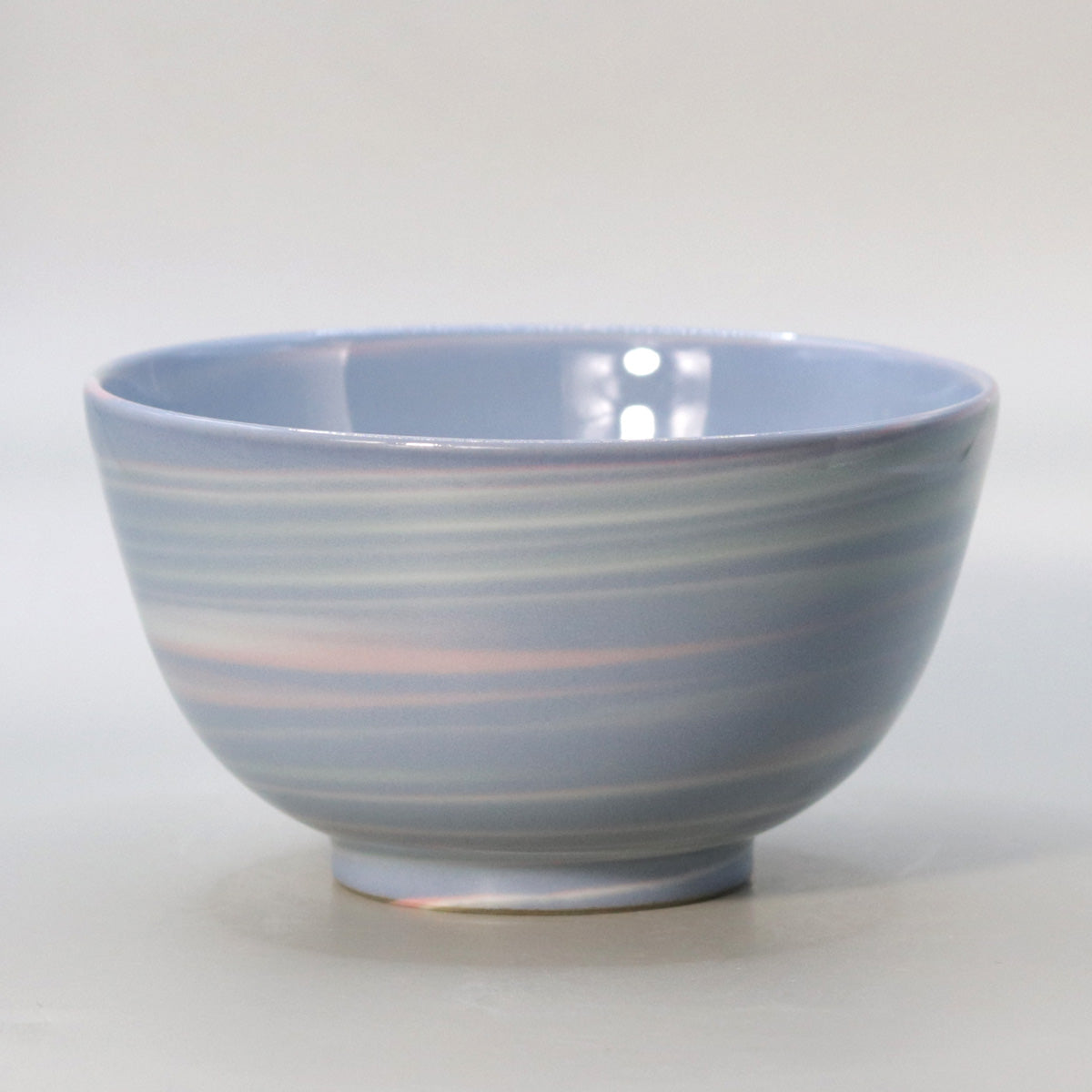
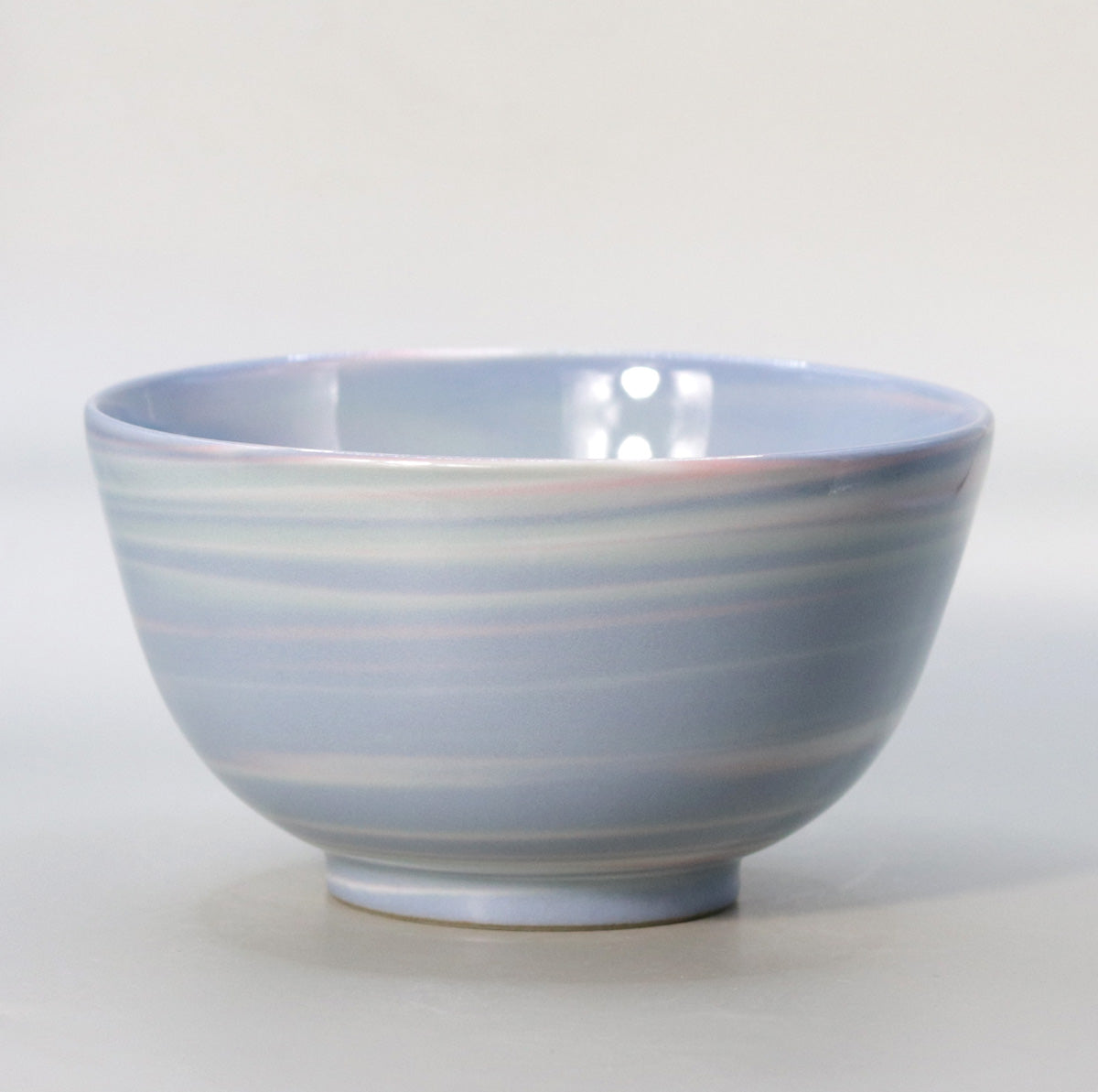
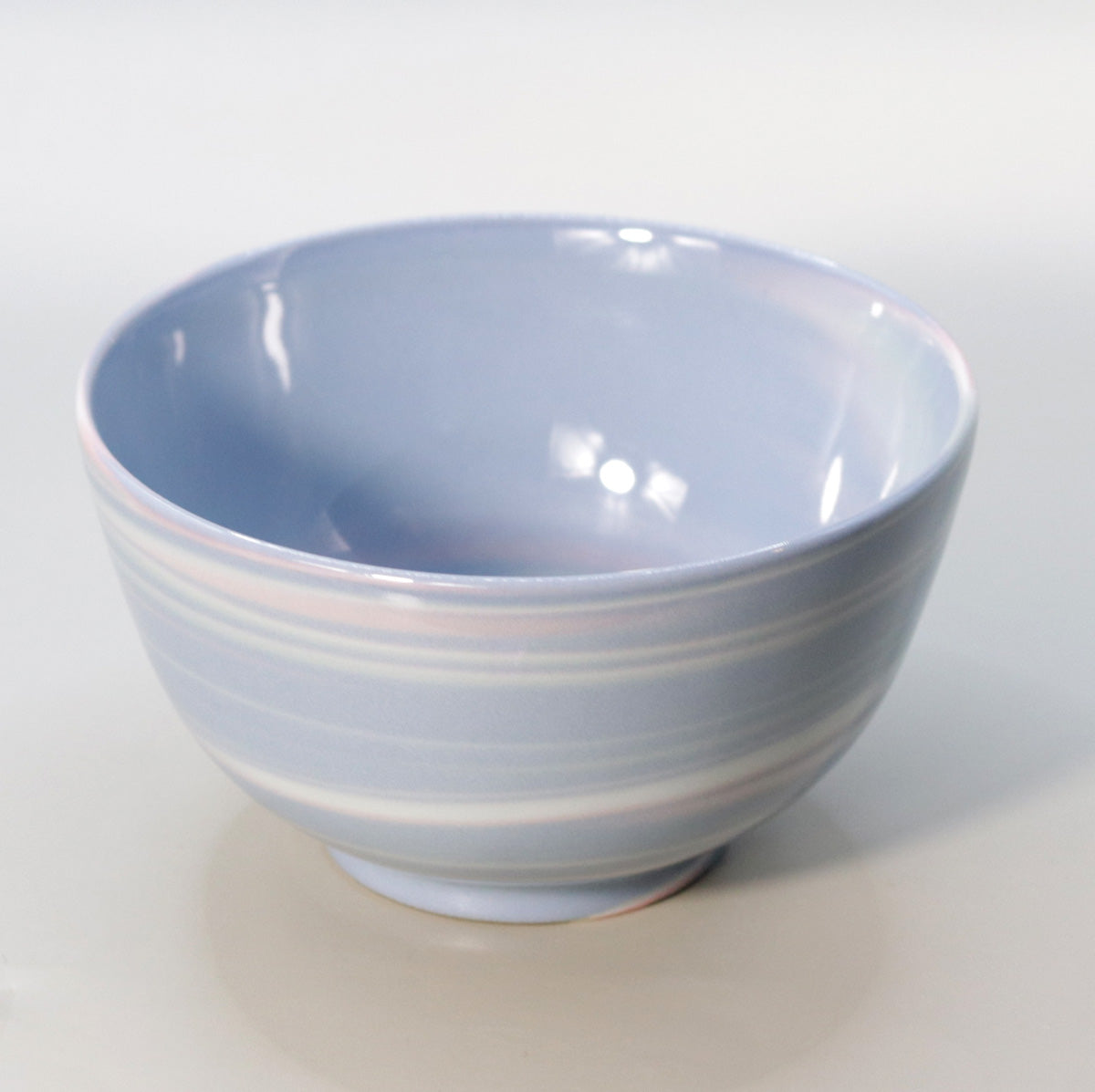
The "Nerikomi Celadon Dawn Tea Bowl" is a matcha bowl created using the "nerikomi" technique, in which white and red porcelain are inserted into a celadon-based clay and then turned in one go on a potter's wheel. The deep ultramarine darkness, adorned with a faint pink, transitions into eastern clouds. To capture the air of dawn within the vessel's surface, Suwa Sozan IV designed the celadon layer to be as thick as possible, then layered thin layers of white and red porcelain on top to create a soft gradation. The indigo of the quiet night air and the pale pink of the dawn light beginning to paint the distant sky blend together in the jade-colored celadon glaze, allowing the boundary between night and morning to breathe gently in the palm of your hand.
molding
Curved rim
The rim is slightly curved outwards, allowing for smooth use of the tea whisk and a smooth feel on the lips. The pale blue porcelain line running along the rim suggests the deep afterglow of the morning sun, and the jade green of the glaze pools enhances the pale pink.
Gentle body expansion and step cutting
The body is modestly carved in two stages, three-dimensionally expressing the layers of clouds floating in the dawn sky. The carved ridges slightly shift the kneaded layers, creating a rhythm reminiscent of the flow of air.
Shallow spreading prospects and high ground
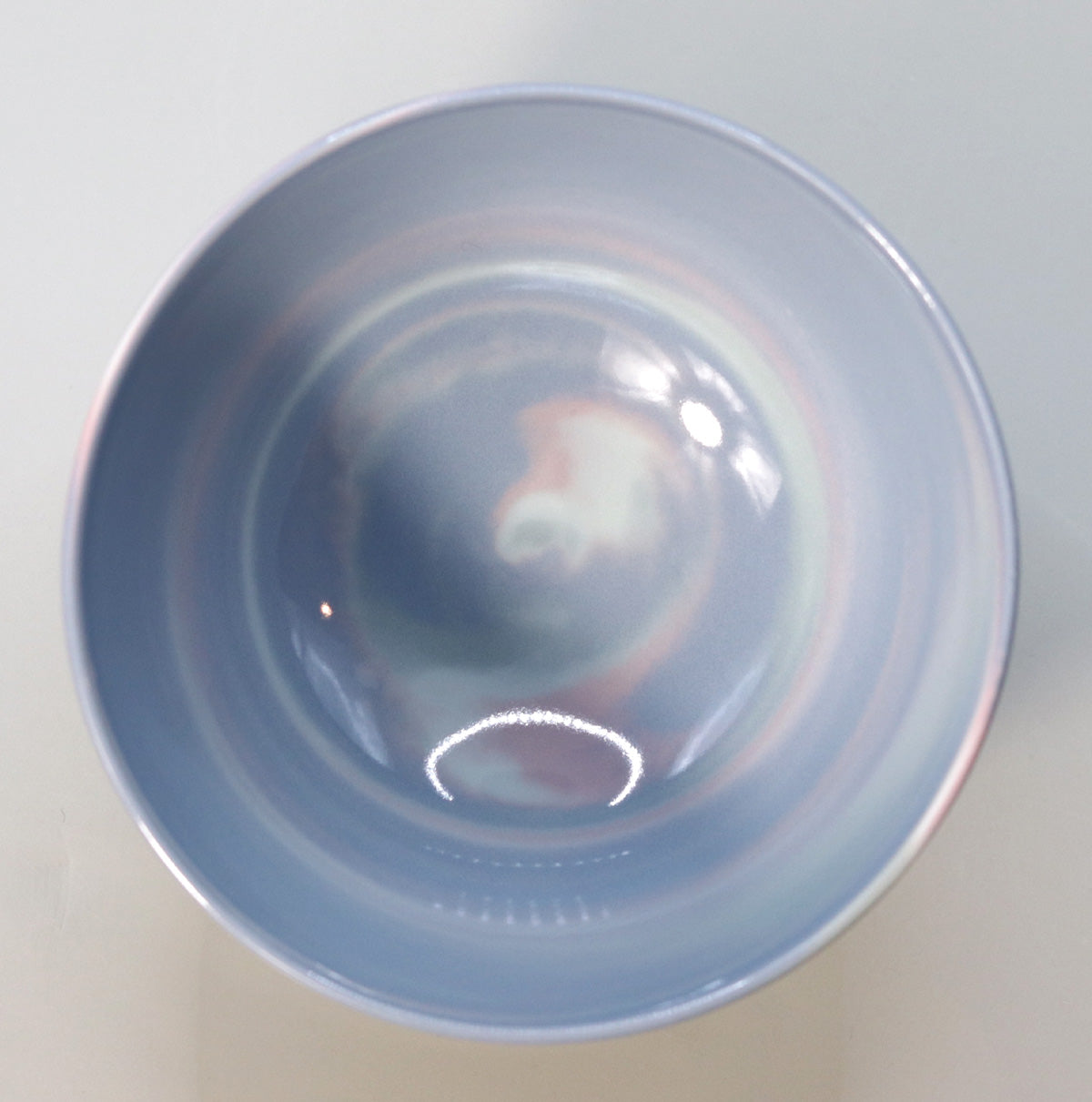
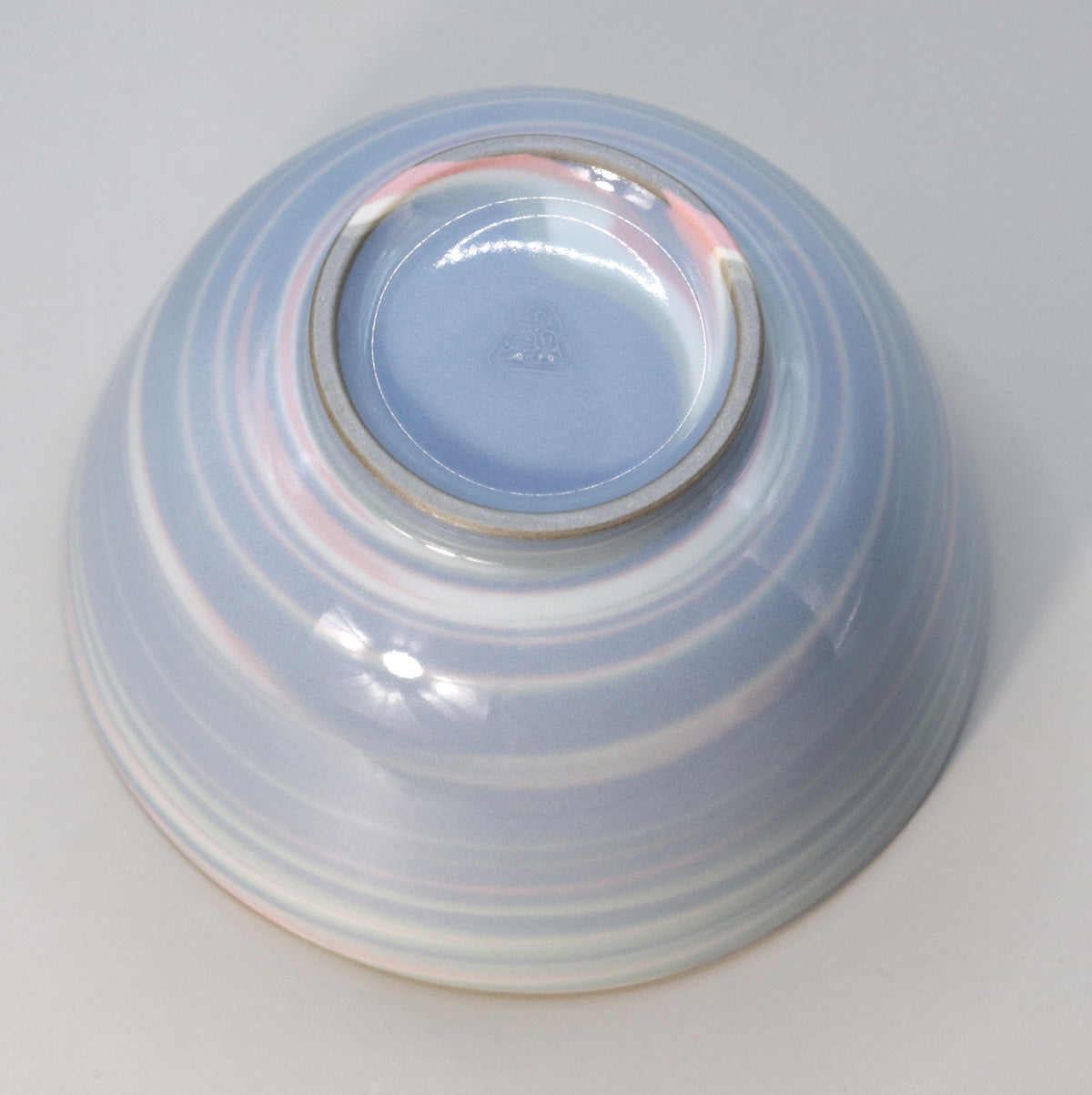
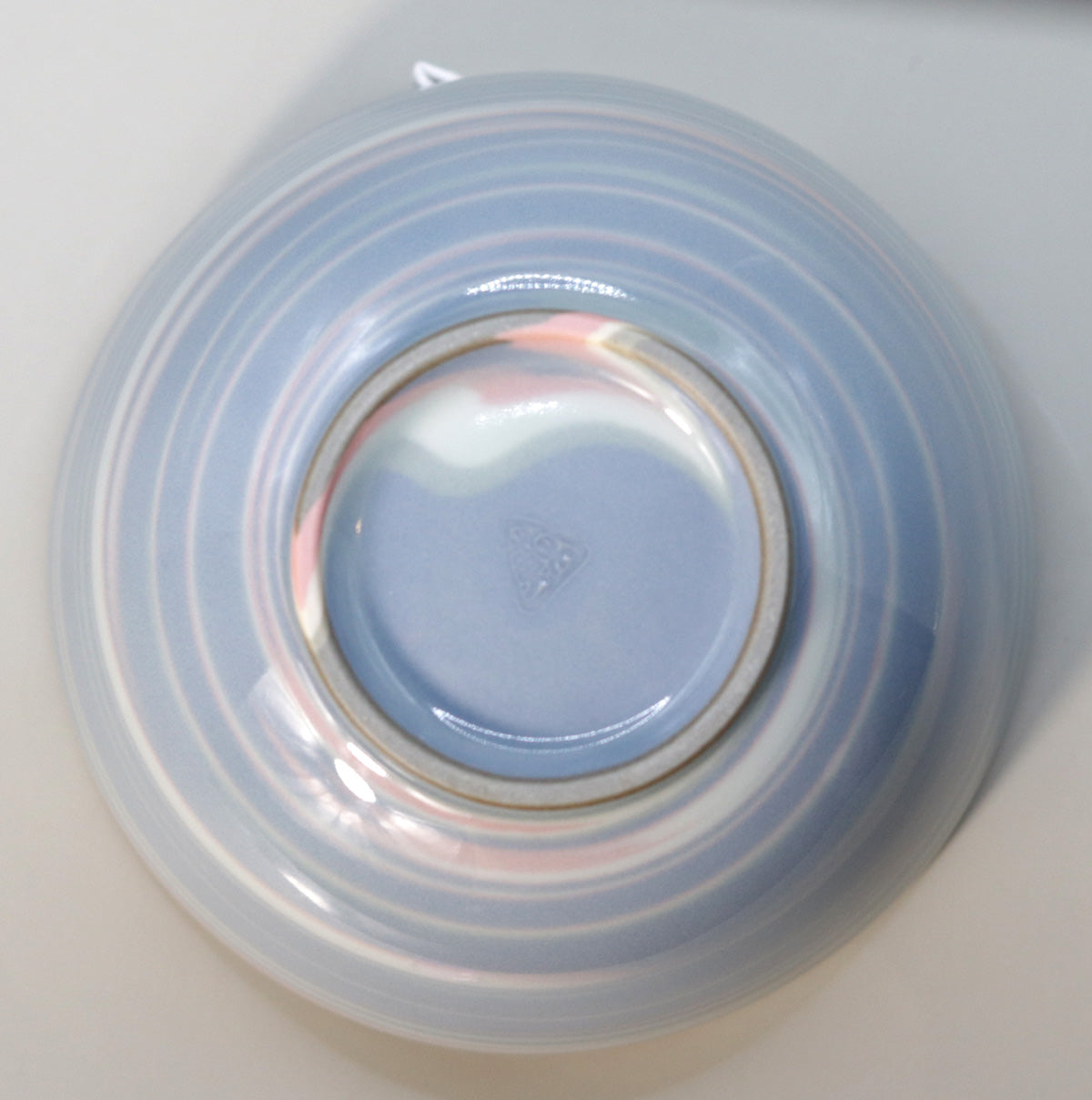
The inside of the cup is shallow, and the kneaded pattern gently converges towards the bottom. When matcha is poured into it, the green liquid surface is reminiscent of the first day rising into the dawn sky. The base is carved out low, and the shape gently widens outwards, making it both comfortable to hold and light.
Kneading and Glazing - Layers of depth embracing the dawn sky
Layered structure of porcelain clay <br data-end="744" data-start="741">Indigo porcelain is at the bottom, with celadon, white porcelain, and red porcelain layered in thin strips on top of that. This is then rolled out into a plate and rolled into a cylinder, which is then used as a core clay to form on a potter's wheel. As it rotates, the layers form horizontal stripes, and the color tones that change from night to morning appear spontaneously.
A veil of transparent celadon glaze <br data-end="861" data-start="858">After shaping, the entire piece is covered in a highly transparent celadon glaze and then reduced-fired at around 1265°C. The glaze layer acts as a glassy membrane that softly envelops the internal layered pattern and produces a faint, misty blur when exposed to light. The celadon layer evokes the stillness of night, the red layer the rose hue of dawn, the white layer the mist of daybreak, and the celadon layer gives the piece a clear, serene appearance.
The feel of the glaze surface <br data-end="1018" data-start="1015">The glaze surface is smooth and smooth, with a moist feel that clings to your fingertips. Along with the visual gradation, the tranquility of the texture soothes the mind through the palm of your hand.
Harmony with Matcha <br data-end="1410" data-start="1407">The vivid green of the matcha emerges in the layered pattern, creating a visual effect as if the "breath of dawn" is residing inside the tea bowl.
Lighting Effects <br data-end="1480" data-start="1477">When illuminated by the warm light of lanterns and candles, the crimson layer glows softly, while the blue layer deepens the pre-dawn silence. The mysterious scenery is particularly striking in the evening seating.
Dawn Scene
The color scheme is reminiscent of the passage "Purple clouds at dawn" that follows "Akebono" in "The Pillow Book." The gradation from indigo to crimson is overlaid with white mist, transferring the scene from classical literature onto the vessel.
The development of nerikomi celadon
Building on the monochromatic celadon mastered by the first Suwa Sozan , the fourth generation introduced color and rhythm through multi-layering. The Akatsuki tea bowl is considered a milestone in modern celadon, combining tranquility with subtle changes in color tone.
The challenge of blue-and-white porcelain
Because celadon uses cobalt pigments, the color can easily become cloudy if the balance with the celadon glaze is incorrect. In this piece, the celadon layer is made as thick as possible, but the timing of switching between the reducing flame and the oxidizing flame is adjusted in seconds to achieve a deep blue color without losing its transparency.
Suwa Sozan IV
Suwa Sozan IV (born in Kyoto in 1970) was trained by Suwa Sozan III and lacquer artist Nakamura Sotetsu XII, and succeeded to the title in 2002. Drawing on his research into celadon, he makes full use of a variety of techniques, including Hotarude, Tobiseiji, and Nerikomi Celadon, and upholds the philosophy that "each piece should have a story to tell, and be completed in harmony with the user's heart." This tea bowl embodies the "quiet hope floating between night and morning" in its nerikomi layer, with the hope of delivering the breath of dawn to the moment of tea ceremony.
The "Nerikomi Celadon Dawn Tea Bowl" is a masterpiece that embraces the tranquility of deep indigo with the pale crimson of dawn light, wrapped in a jade-colored celadon glaze. When matcha is poured into it, the green light dyes the dawn sky, inviting a literary atmosphere and a sense of the changing seasons into the tea ceremony. This work, a crystallization of the outstanding technique and poetic sensibility of Suwa Sozan IV, envelops the setting with dignity and serenity rather than extravagance, and is sure to bring a sense of calm hope and signs of rebirth to the hearts of those who see it.
Share
-
[I will send it to you quickly and carefully]
We carefully package each product in a way that suits it best.
Also, delivery times vary depending on the piece (vessel, etc.).
Items that already come with a box will be shipped within 1-3 days of the order date.
For items that require a box to be made after your order, it will take approximately 30 days for production to be completed and then shipped.
In either case, once we have confirmed your order, we will contact you by email to inform you of the delivery date.
-
[Requests when purchasing pottery]
Even products that look the same may differ slightly in color, shape, size, etc.
The way the glaze is used, the power of the kiln, the firing method, the season, and the humidity also affect the appearance of the pottery.
Please understand the individuality of each piece of pottery and enjoy the unique warmth of handmade.