Width: 14.3cm Height: 8.6cm
The beauty of refreshing blue
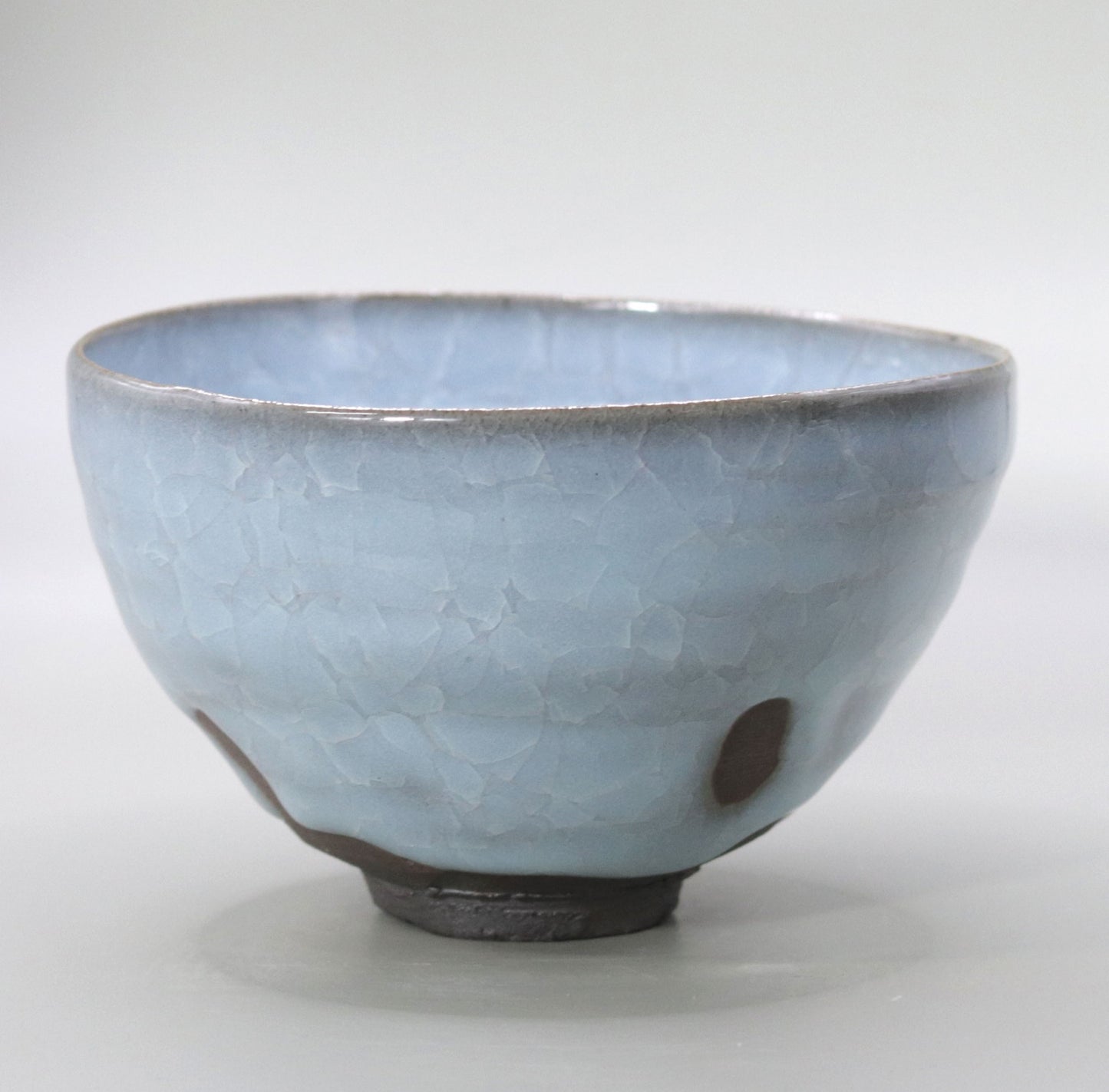
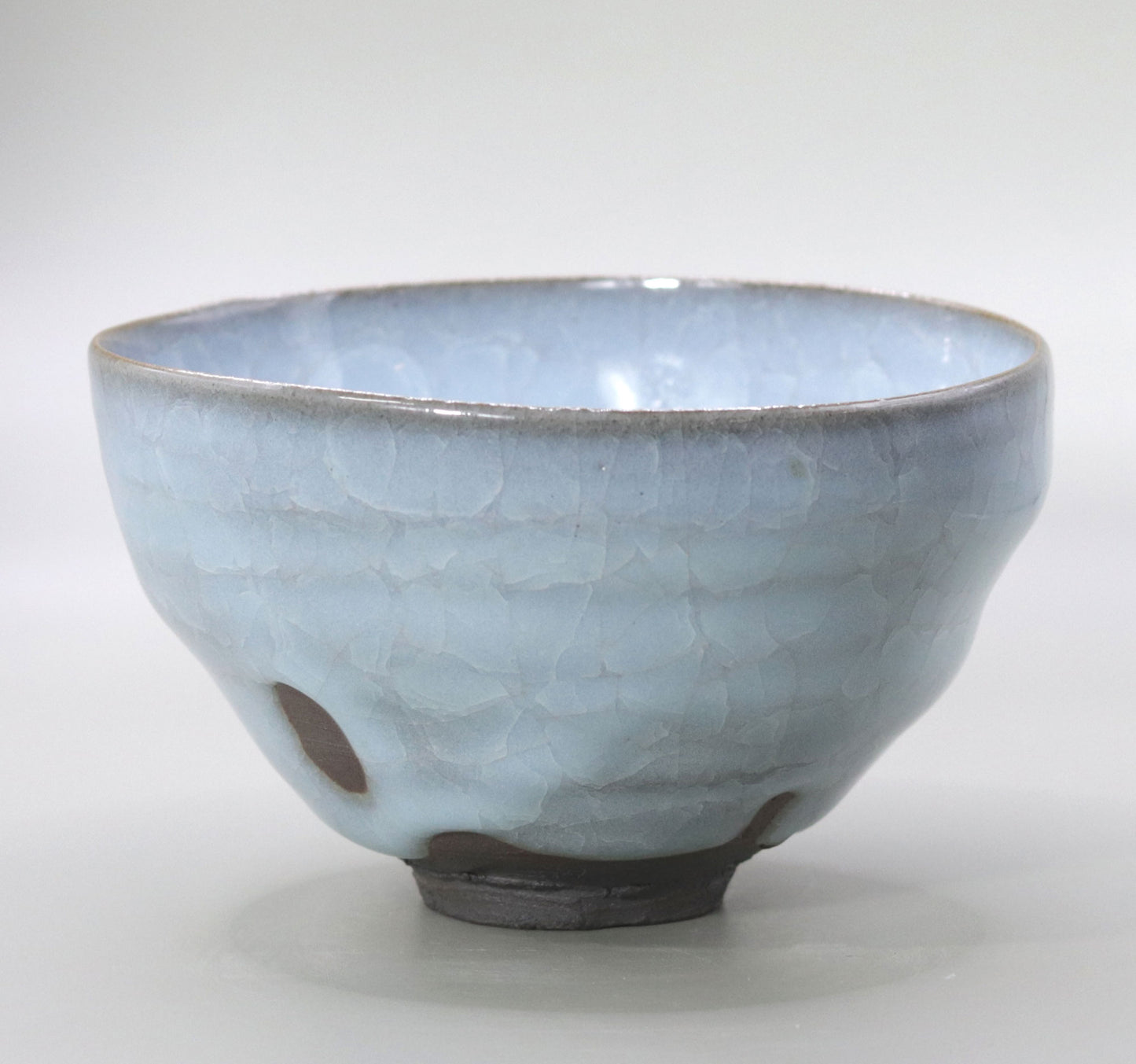
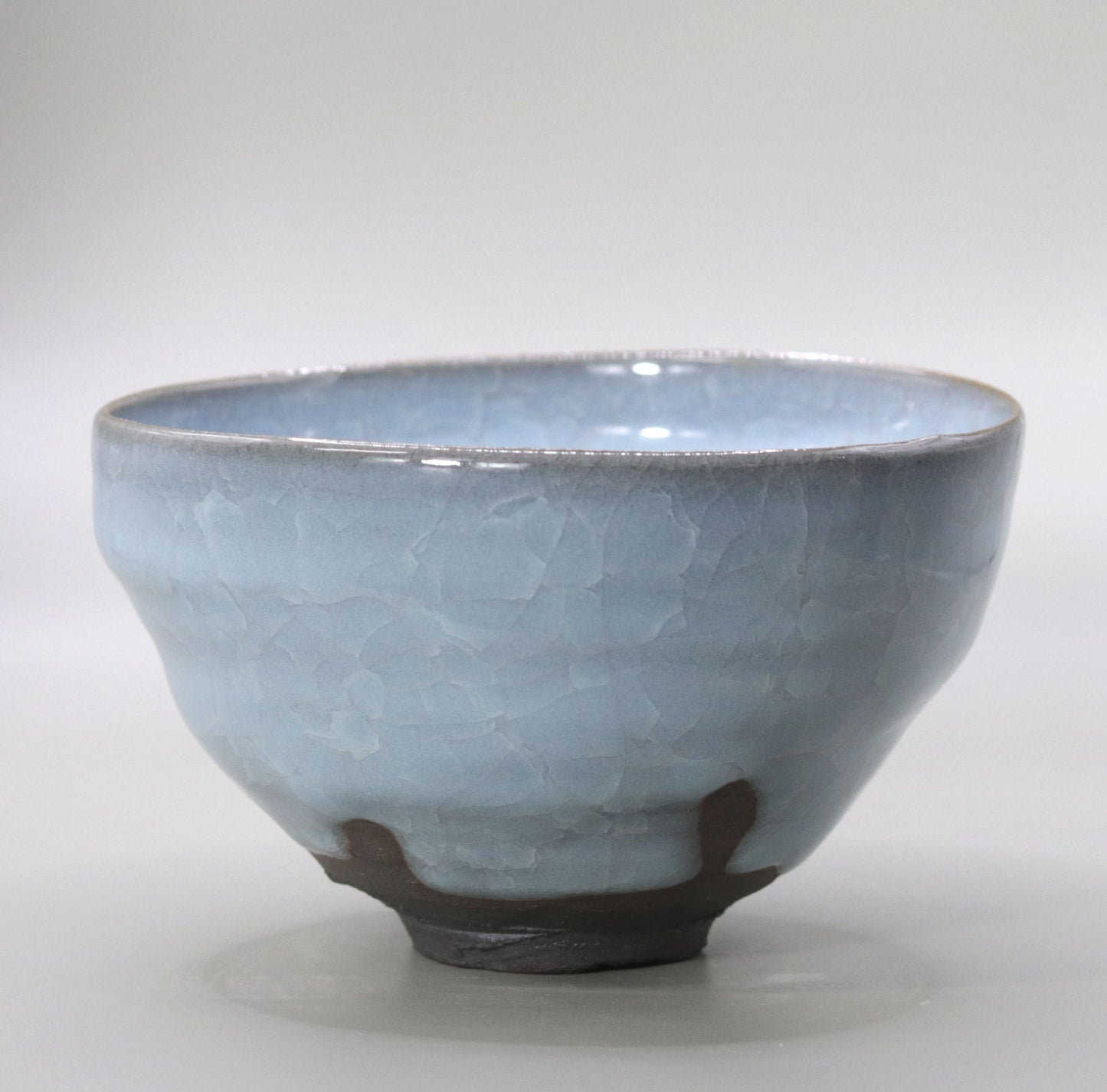
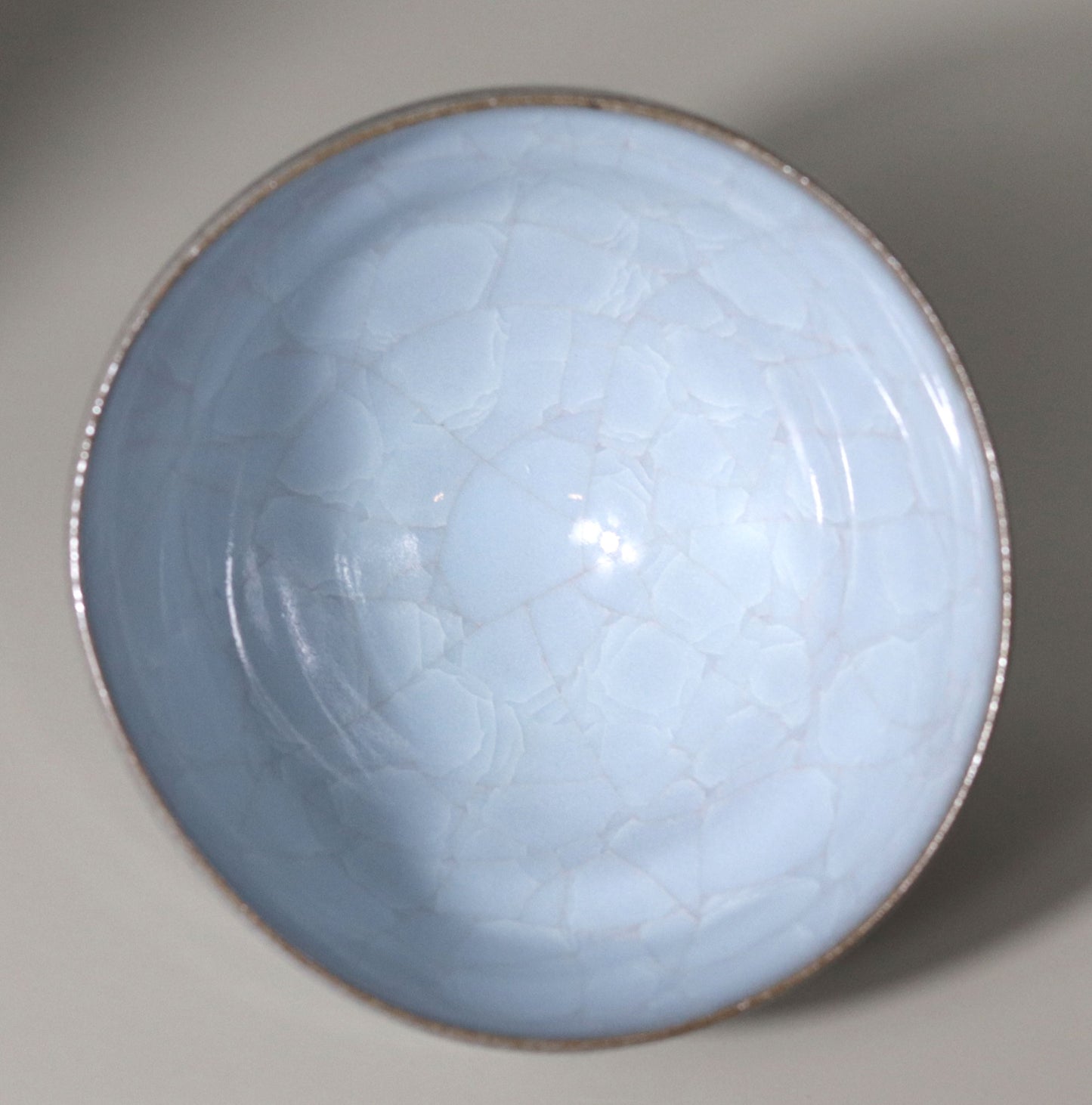
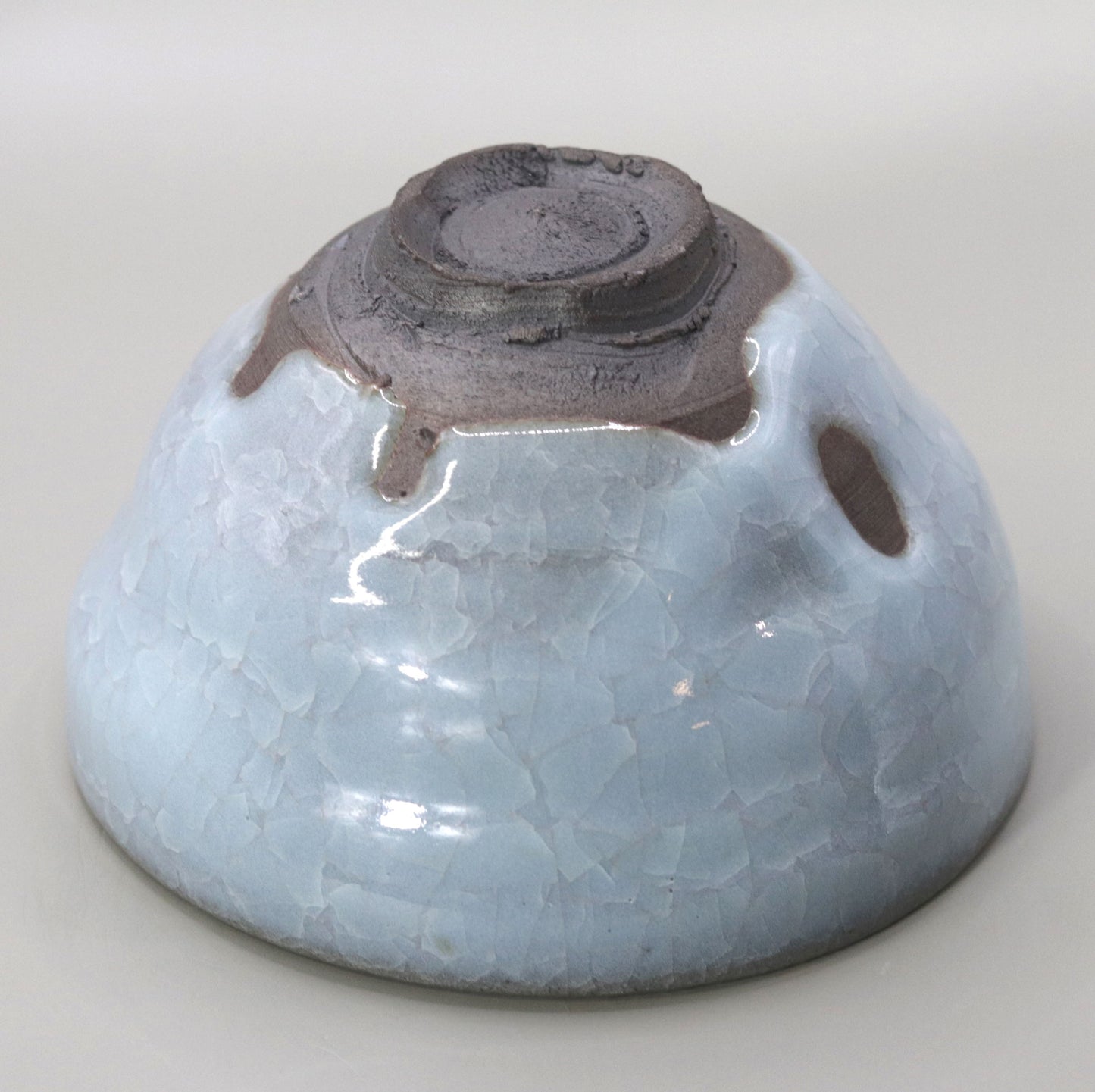
The Moon White Porcelain Tea Bowl by Ikai Yuichi is a truly eye-catching piece with its cool blue color . The blue embodies the serenity and transparency of moonlight shining in the night sky, bringing deep peace to the soul. The crazing (crack pattern) that occurs in the glaze spreads throughout the piece, revealing a new expression each time you look at it, so you will never tire of looking at it. Serene yet powerful beauty is the essence of this tea bowl.
Harmony with the roughness of the hill
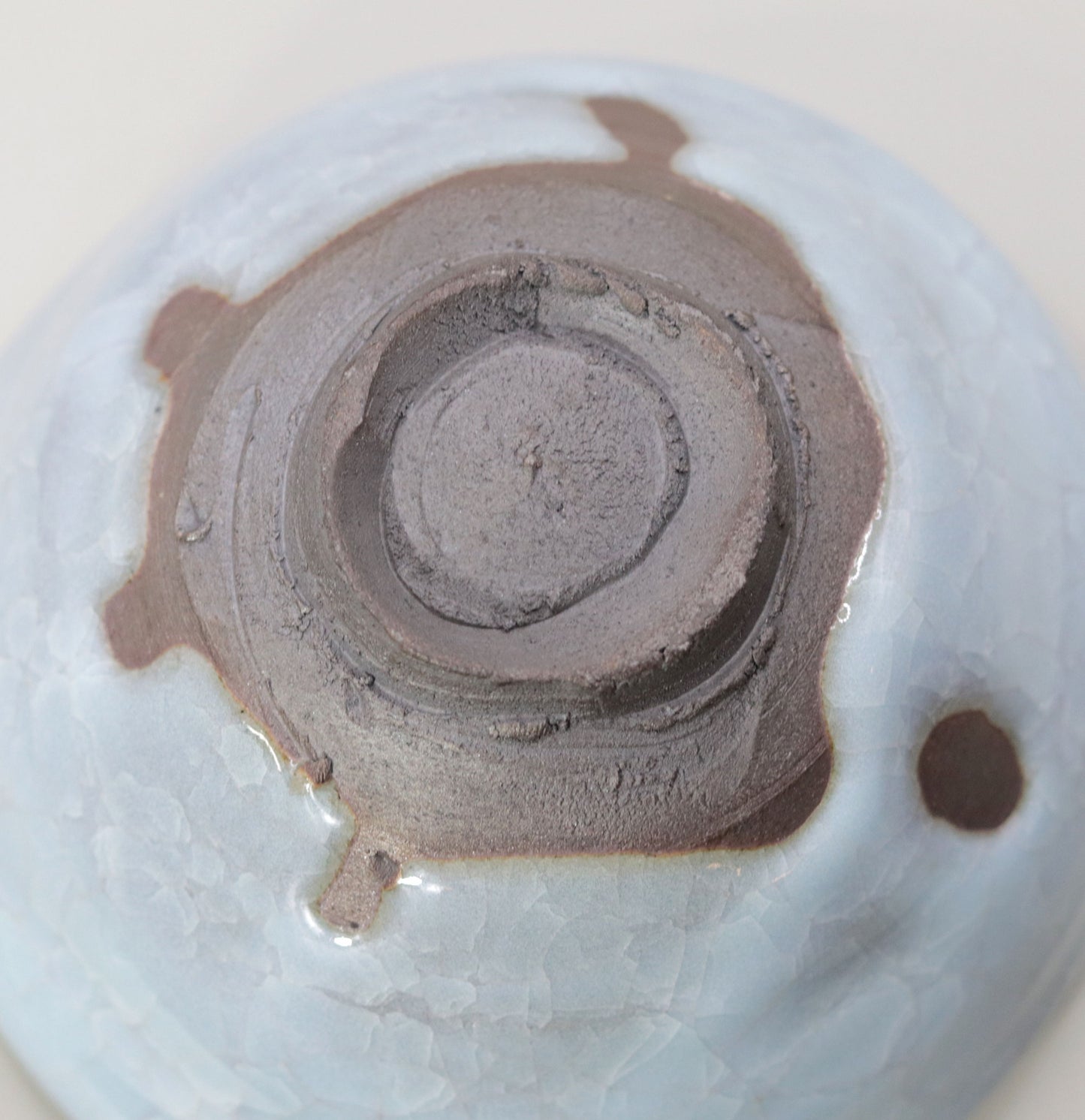
One of the distinctive features of this tea bowl is the carving of the base . Generally, the base is finished smoothly and neatly, but this piece has bold roughness , which harmonizes exquisitely with the overall shape. The contrast between the smoothness of the glaze and the rough texture of the base enhances the unique sense of balance of this tea bowl.
Use of premium materials
This "Moon White Porcelain Tea Bowl" uses high-quality materials , both the glaze and the clay , demonstrating the artist's exceptional skill. The glaze has a luster reminiscent of high-quality celadon , captivating the viewer. This piece demonstrates Ikai Yuichi's commitment to materials and the exceptional skill he uses to make the most of them.
Artistic strength and timeless beauty
Not only is this tea bowl suitable for special occasions such as tea ceremonies, but it also has the artistic value of being enjoyable to look at on a daily basis . The beauty of the glaze and form gives it a presence that draws the viewer in even when it is simply placed there. Behind this lies the fundamental strength that is inherent in Ikai Yuichi's work, and it harbors an immortal beauty that remains unchanged over time. The overall sense of dynamism gives the piece a powerful sense of vitality even amidst its silence.
Yuichi Ikai Biography
1963 (1963)
・Born into a pottery merchant in Gojozaka, Kyoto
1983 (1983)
・Graduated from the molding department of Kyoto Prefectural Pottery Training School
1984 (1984)
・Completed ceramics training at Kyoto Municipal Industrial Testing Center
・Under the guidance of the late Shimizu Uichi, a holder of important intangible cultural properties,
June: Kibei Kiln opens (from the shop name, Tsuboya Kibei the Sixth)
・Studied under Shimizu Uichi and Yasutaka
1985 (1985)
・First time selected for the Japan Crafts Association Kinki Branch Exhibition (continuously selected thereafter)
・Participated in the Cheramista Exhibition
1986 (1986)
・First time selected for the Japan Traditional Crafts Exhibition
1987 (1987)
・Permitted to exhibit at the Family Exhibition Horai-kai (Ikebukuro Seibu) and Uzuki-kai (Osaka Matsuzakaya)
・Received the Matsushita Award at the Japan Crafts Association Kinki Branch Exhibition
・Dog Exhibition: Leading the Way in Kyoto, Kyoto Daimaru
1988 (1988)
・Participated in Chabikai Kyoto Myrieme
1989 (1989)
・Founding of the Earth Children Association (named by Shimizu Uichi)
・Received the Encouragement Award at the Japan Crafts Association Kinki Branch Exhibition
1990 (1990)
・First solo exhibition at Kuroda Touen in Ginza
・Solo exhibition at Zuigyoku, Itabashi
1993 (1993)
・Solo exhibition at Mitsukoshi, Osaka (continues to be held)
1994 (1994)
・Certified as a full member of the Japan Kogei Association
・Solo exhibition at Gallery Kiyomizu, Matsuyama (continues to be held)
・Received an encouragement award at the Saga Daikakuji Temple Flower Ceramics Exhibition
1995 (1995)
・Solo exhibition at Daimaru, Kyoto (continues to be held)
・Solo exhibition at Hankyu Kobe (continues to be held)
1996 (1996)
・Workshop moved to Hiyoshicho, Nantan City, Kyoto Prefecture
・Solo exhibition at Gallery Kurimoto, Nagaoka, Niigata (continues to be held)
・Exhibition of Contemporary Ceramic Artists Living in Kyoto, Kyoto Daimaru
1997 (1997)
・Ceramics: Three-Person Exhibition, Shinjuku Isetan (Takahiro Kondo and Masahiko Ichino)
1998 (1998)
・Kyoto Talented Artists Exhibition, Hiroshima Sogo
1999 (1999)
・Solo exhibition at Shimonoseki Daimaru
2000 (2000)
・Solo exhibition at Yu Tokyo Palace Hotel (continues to be held)
・Solo exhibition at Rakuchu Rakugai Gallery, Kyoto Kiyomizu-yaki Complex
・Exhibited at the Tsinghua University International Ceramic Art Exhibition in Beijing, China
2001 (2001)
・Received the highest award, the Kinki Prize, at the 30th Kinki Exhibition of Japanese Traditional Crafts
・Solo exhibition at Tenmaya, Mihara, Hiroshima
2002 (2002)
・Solo exhibition at Crafts Now in Ginza, Tokyo
・Solo exhibition at Mitsukoshi Main Store, Nihonbashi, Tokyo
・Exhibited at the CRIA Exhibition, Kyoto Art Center
2003 (2003)
・Received the Shiga Prefecture Board of Education Award at the 32nd Japan Traditional Crafts Kinki Exhibition
・Ginza Kuroda Touen Celadon Exhibition (continues to be held)
・Solo exhibition at Meitetsu Department Store, Nagoya
・Exhibited at the Contemporary Korean-Japanese Ceramic Art Exhibition, KUMHO Museum of Art, Seoul
・Solo exhibition at Gion Konishi, Kyoto
2004 (2004)
・Appointed as judge at the 33rd Japan Traditional Crafts Kinki Exhibition
2005 (2005)
・Solo exhibition at Daimaru Art Gallery, Kyoto
・Specially selected for the 34th Japan Traditional Crafts Kinki Exhibition
2006 (2006)
・Three Ceramic Artists Exhibition, Kyoto Takashimaya
・Exhibited at the Contemporary Ceramic Artist Exhibition at Kobe Sogo
・Four Artists Exhibition Nara Kintetsu
・Solo exhibition at Gallery Wada, Ishibekoji, Kyoto (continues to be held)
・Solo exhibition at Dojima Gallery, Osaka (continues to be held)
・Solo exhibition at Mitsukoshi Main Store Art Gallery, Nihonbashi, Tokyo
2007 (2007)
・Solo exhibition at Rokujido, Ninenzaka, Kyoto
・Solo exhibition at Keihan Department Store, Moriguchi, Osaka
・Climbing kiln construction
2008 (2008)
・Solo exhibition at Gallery Uko, Yokohama Bashamichi
・Solo exhibition at Kintetsu Department Store, Saidaiji Temple, Nara
2009 (2009)
・Solo exhibition at Takashimaya, Kyoto
・Solo exhibition at Mitsukoshi Main Store Art Gallery, Nihonbashi, Tokyo
2010 (2010)
・Solo exhibition at Zuigyoku, Itabashi (continues to be held)
2011 (2011)
・Solo exhibition at JR Osaka Mitsukoshi Isetan, Umeda, Osaka
2012 (2012)
・Solo exhibition at Rokujido, Ninenzaka, Kyoto
・Solo exhibition at Fukuoka Mitsukoshi, Hakata
・Solo exhibition at Corridor Gallery Mon, Kasama, Ibaraki
2015 (2015)
・Solo exhibition at Hankyu Umeda Main Store, Osaka Umeda (continues to be held)
2016 (2016)
・Solo exhibition at Atelier Hiro, Yodoyabashi, Osaka (continues to be held)
2017 (2017)
・Established a workshop again in Gojozaka, Kyoto
2018 (2018)
・Solo exhibition at Gallery Yamazaki, Ningyocho, Nihonbashi, Tokyo (continues to be held)
2022 (Reiwa 4)
・Appointed Secretary General of the Kinki Branch of the Japan Kogei Association, a public interest incorporated association
・Appointed director of the Japan Kogei Association, a public interest incorporated association
・Appointed director of the Kyoto Ceramic Association, a general incorporated foundation
・Appointed as director of the Kyoto Kirin Foundation
・A pottery business that has been in business for generations in Gojozaka closes and begins renovations
2023 (Reiwa 5)
・"Tsuboya Kibe Kiln" showroom
A conversation with Yuichi Ikai