


Blue porcelain phoenix eared flower vase Suwa Sozan
Blue porcelain phoenix eared flower vase Suwa Sozan
Couldn't load pickup availability
Width: 12.1cm Height: 25.5cm
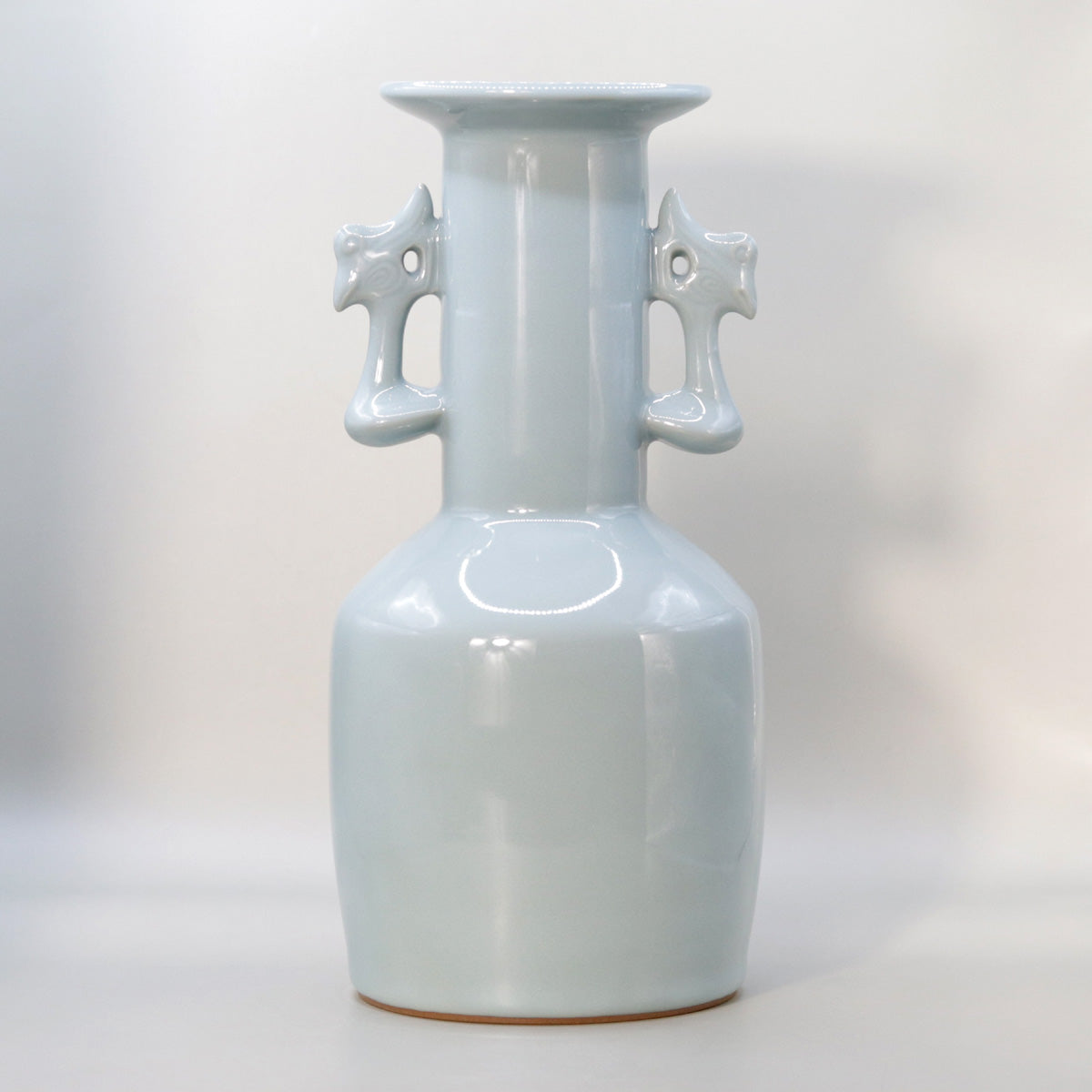
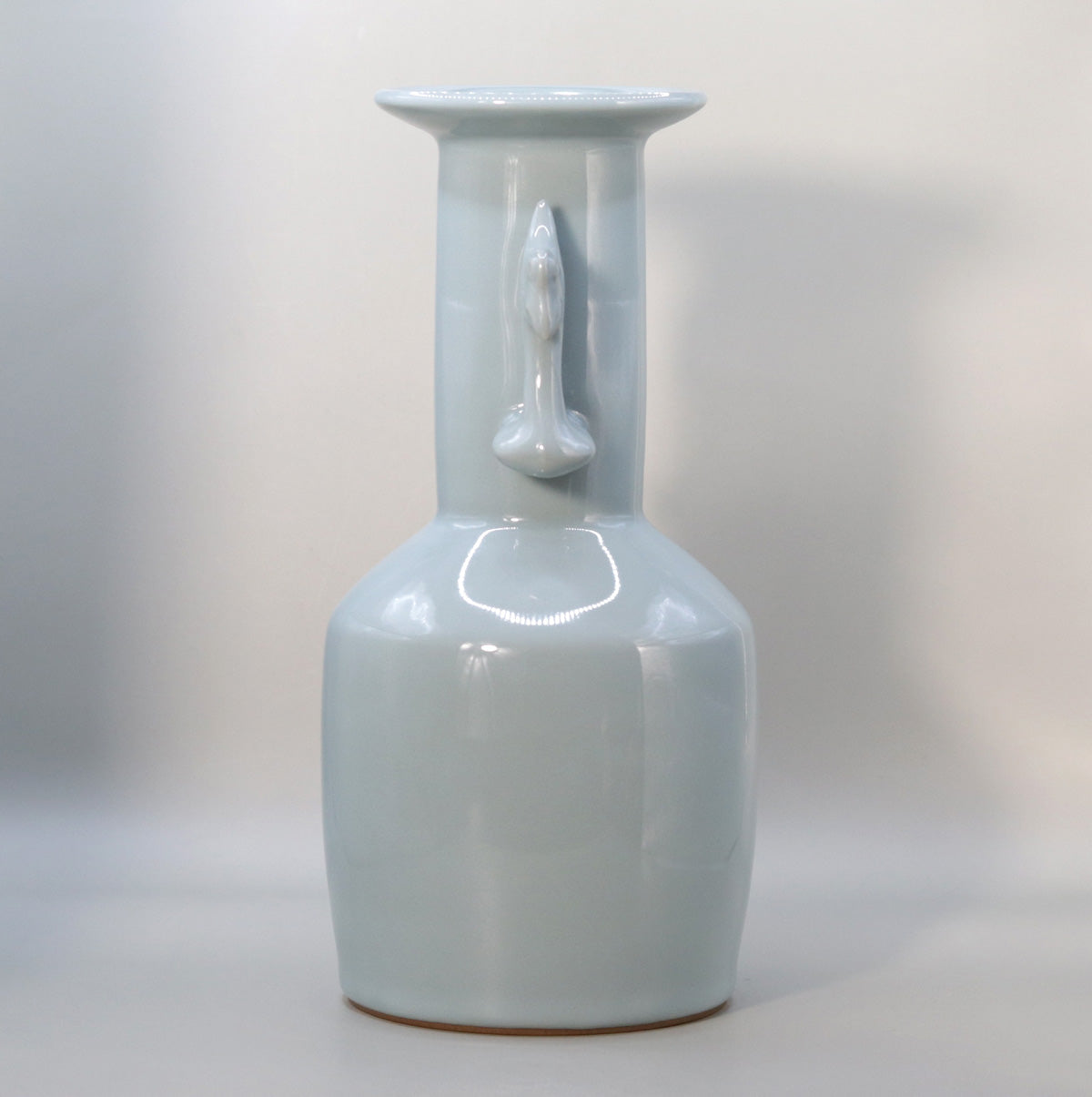
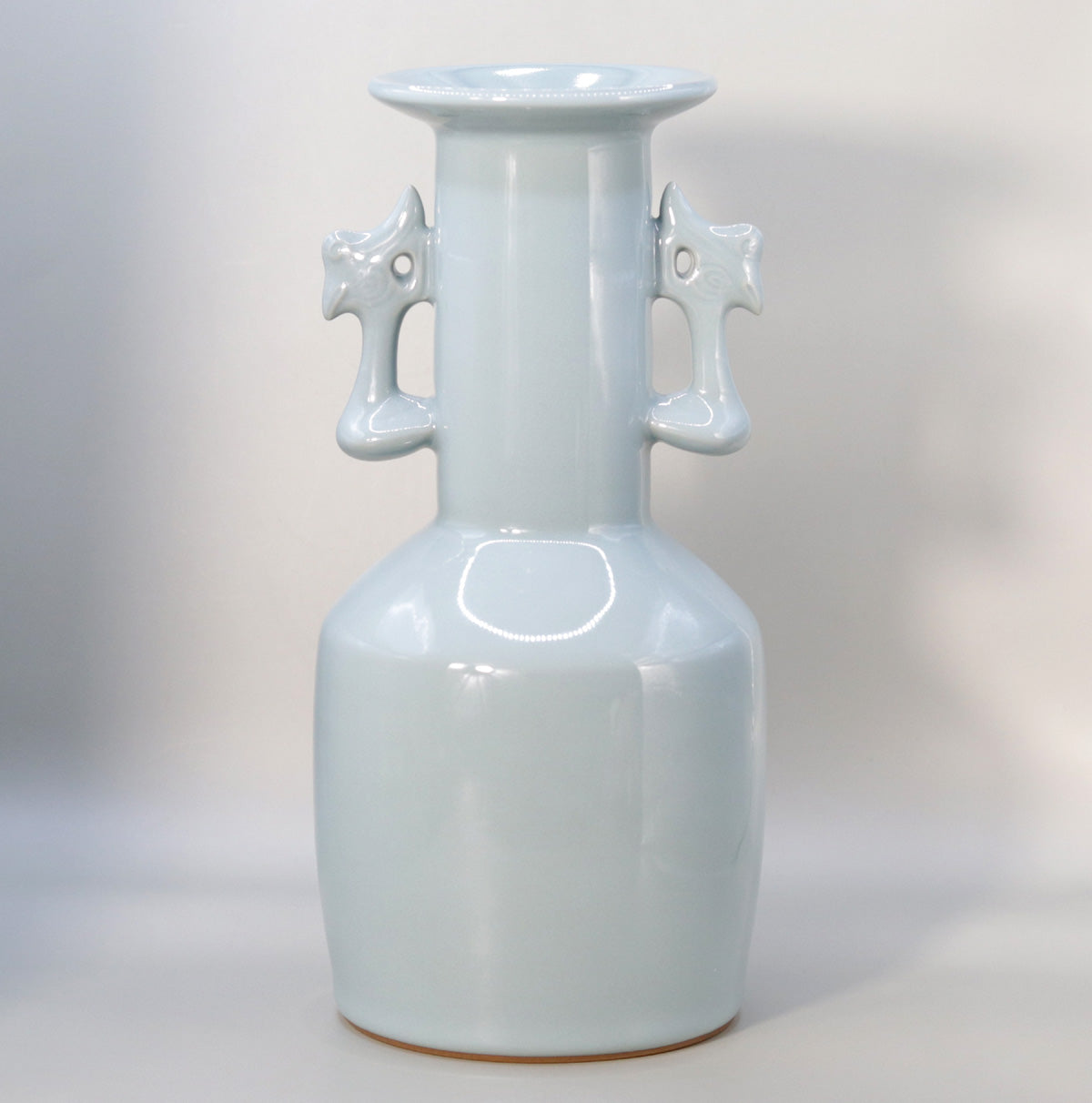
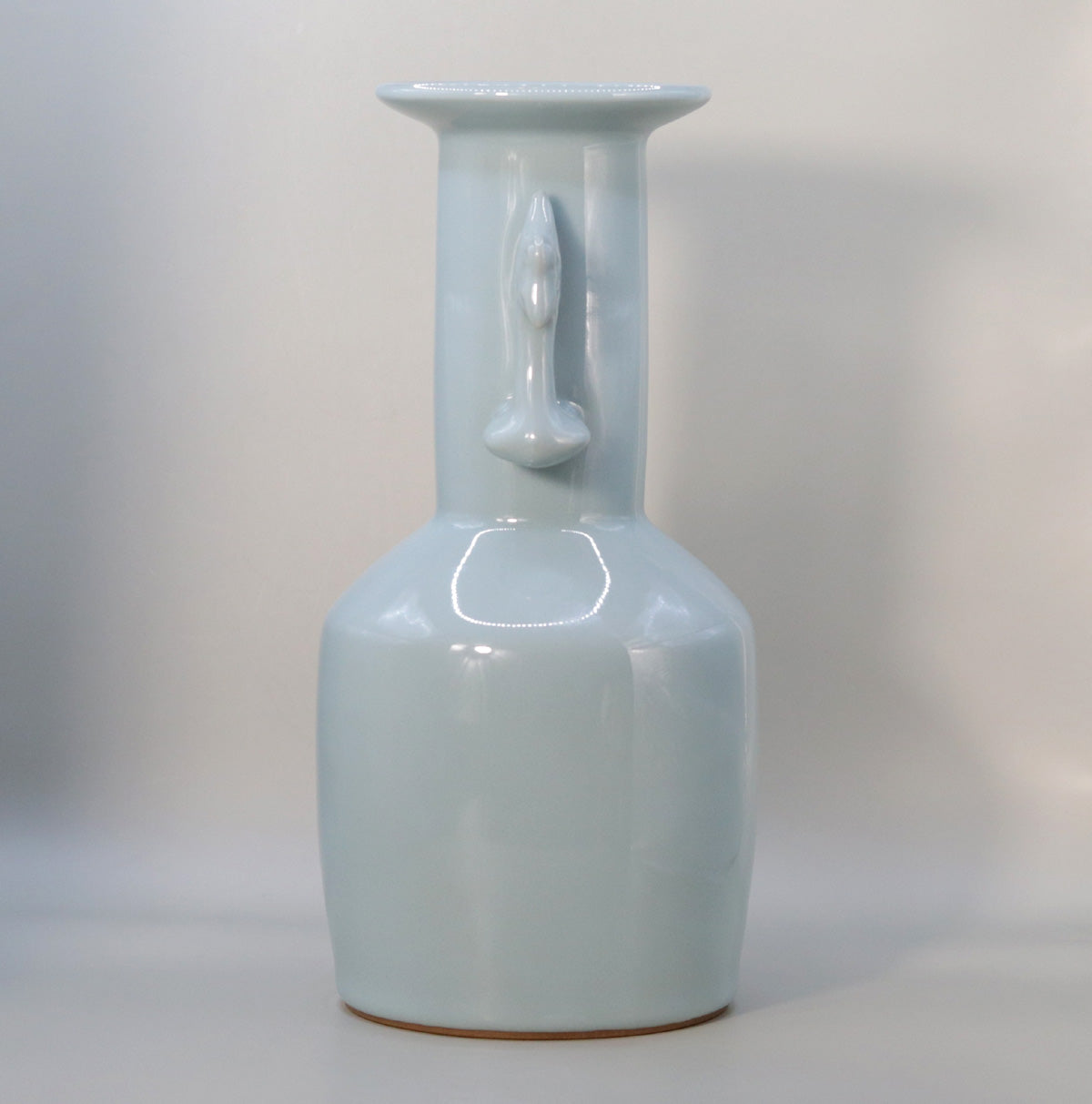
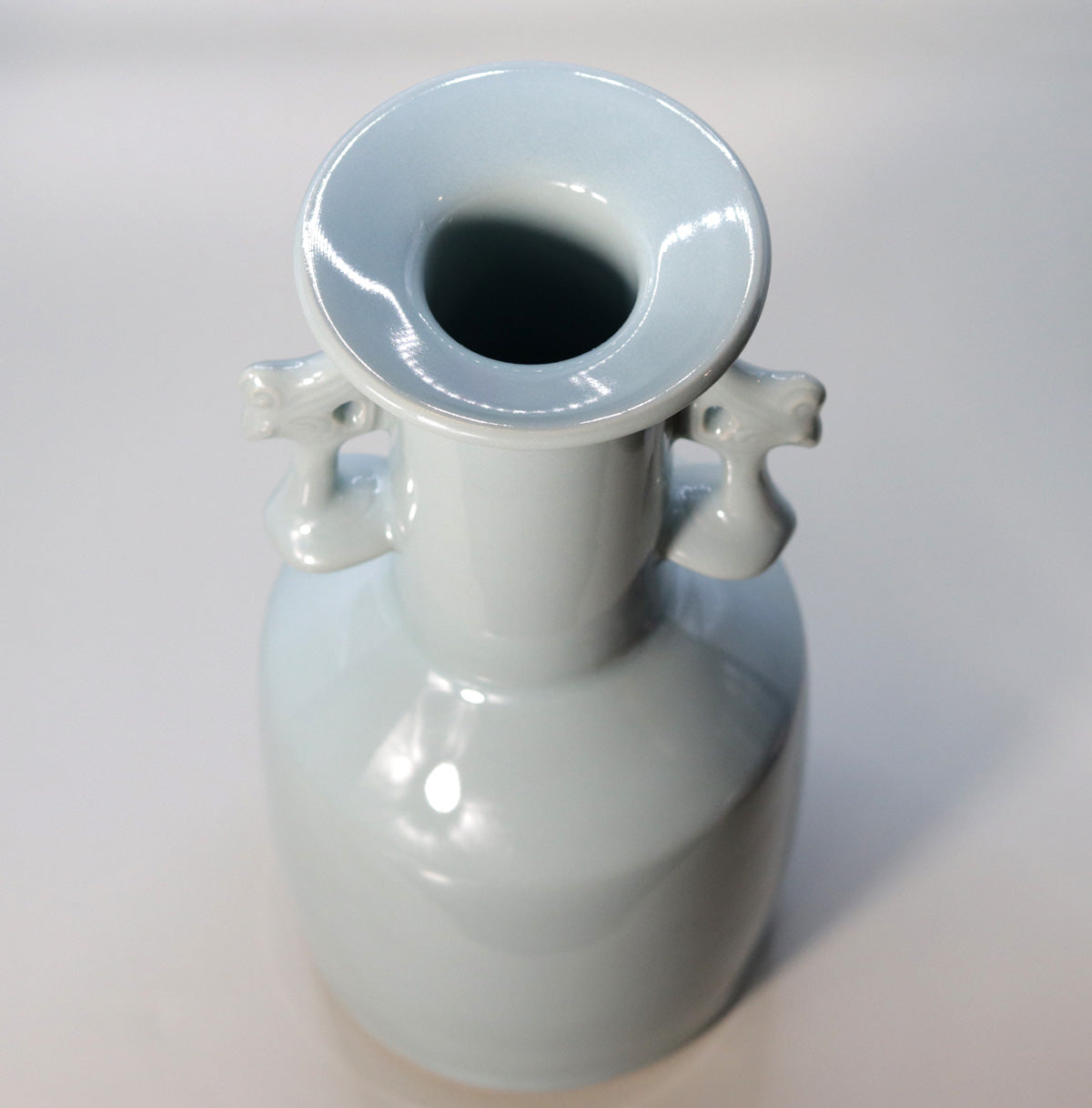
The "Celadon Vase with Phoenix Ears" is a work created by Suwa Sozan IV, and is modeled after Kinuta Seiji porcelain, renowned as the finest product from the Longquan kiln of the Southern Song dynasty, but reconstructed with a uniquely Japanese aesthetic. The phoenix ears on either side symbolize the sacred bird that brings good fortune, and in concert with the soft curves that flow from the rim to the body, create a graceful rhythm throughout the vessel. When placed at a tea ceremony or in a tokonoma alcove, it exudes a sense of tranquility that purifies not only the flowers but also the surrounding air.
molding
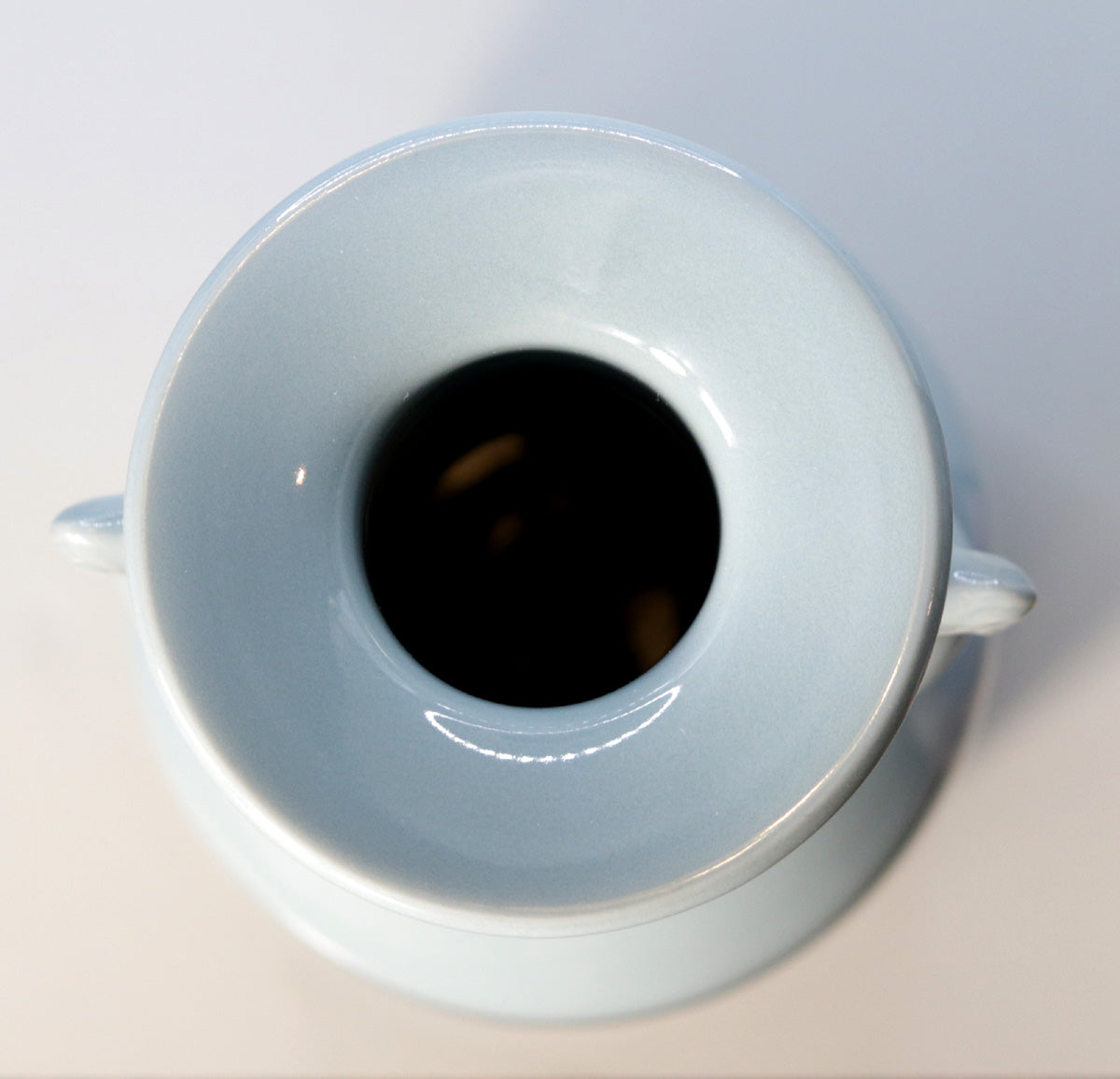
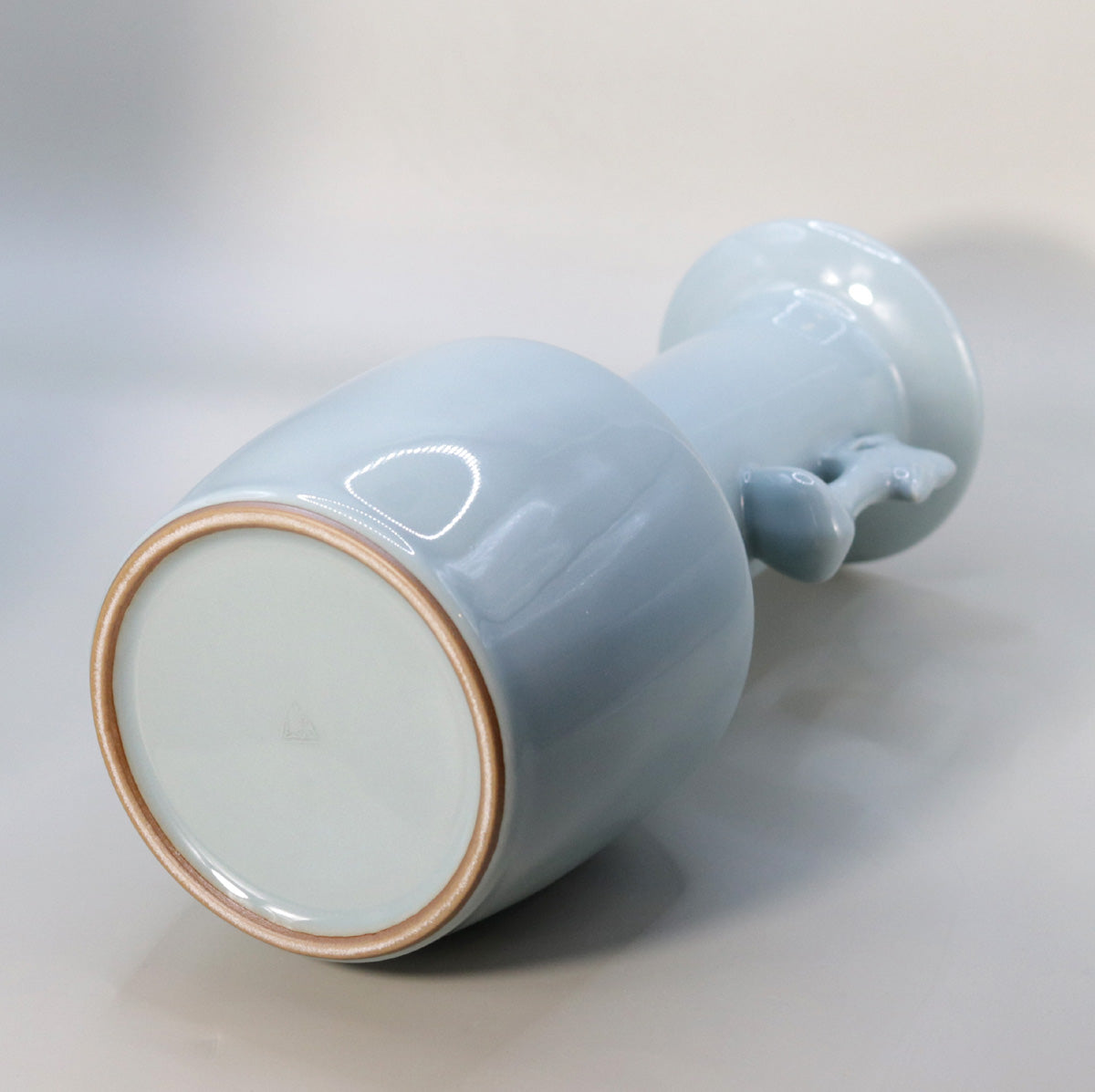
The silhouette of this piece follows the "phoenix eared vase" popular during the Southern Song dynasty, but the details have been adjusted to suit Japanese flower vase culture. By slightly narrowing the neck and giving the body a tautness, the stability of the flower arrangement is achieved while also looking beautiful. The phoenix ears are formed by hand twisting, without using a mold, and the overlapping feathers and fluttering tail feathers are delicately carved. The base of the ears is joined using a unique technique called "hidden joint," which ensures that the seams are inconspicuous after firing, a feature not to be missed.
Glaze Tone - The Color of Sozan Celadon Passed Down from the First Generation
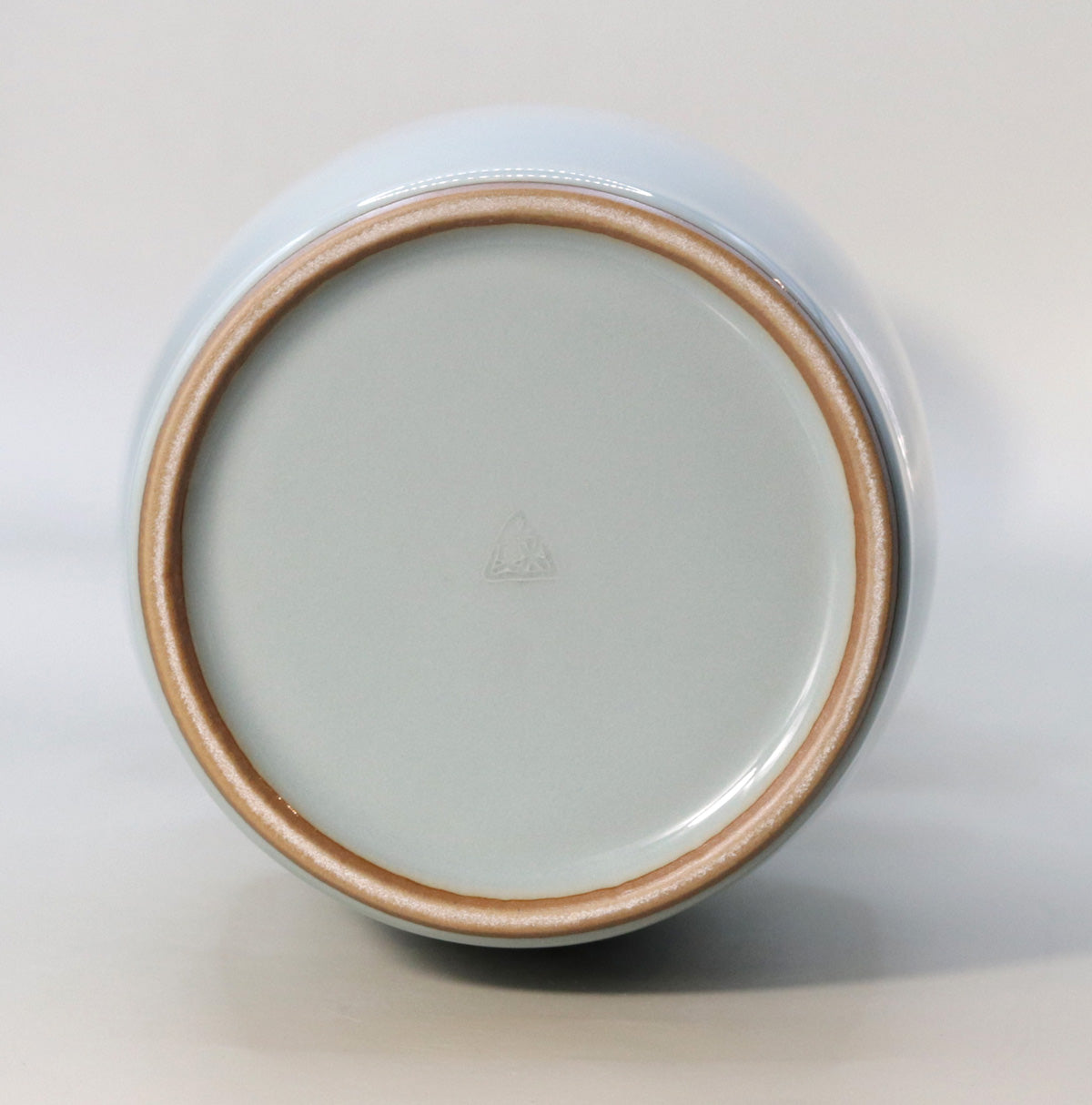
The glaze is a continuation of the "Sozan Celadon" that the first Suwa Sozan spent 25 years perfecting. A small amount of iron is kneaded into the clay and the color is developed through reduction firing, resulting in a blue-green reminiscent of jade. The fourth Suwa Sozan further adjusted the subtle temperature gradient, leaving a subtle shadow on the rim and the ridges of the phoenix-shaped ears, giving the piece a sense of depth that changes shade depending on the light. The depth of the "clarity" that results from the thick glaze is even more pronounced when filled with water, softly reflecting the colors of the flowers and plants placed inside.
history
Among the Longquan celadon wares prized at the Southern Song court, Kinuta celadon is a group of masterpieces with a particularly strong transparency and blue hue. It was Suwa Sozan I who was the first in Japan to reproduce this elegant blue. Completed in 1907, Sozan celadon was so highly acclaimed that he was certified as an Imperial Household Artist in 1917, and has since become synonymous with the Suwa family. While preserving this lineage, Suwa Sozan IV has also pursued new forms of expression, such as nerikomi celadon with themes of space and stars. This work is an excellent example that faithfully reproduces the elegance of Kinuta celadon while also possessing a dignified presence that blends seamlessly into modern living spaces.
Fourth generation Suwa Sozan
Suwa Sozan IV was born in Kyoto in 1970. Raised in a family of artists, with Suwa Sozan III as his father and Nakamura Sotetsu XII, a lacquer artist, as his mother, he graduated from the Kyoto Prefectural Pottery Technical College in 1996 and began working with his father. He succeeded to the name of the fourth generation in 2002. While celadon porcelain remains his primary focus, he has inherited the spirit of inquiry passed down from his father, including plaster mold shaping and research into diverse glazes, and believes in infusing each piece with a story. Furthermore, given Kyoto's geographical constraints, he is also known for his sustainable approach to production, using clay sourced from far away without waste.
Highlights of the work
Fluctuating light and shadow <br data-start="1332" data-end="1335">The subtle flowing patterns created by the thick glaze fluctuate in response to indoor light or a candle flame, causing the vase itself to change appearance like the surface of water.
The symbolism of phoenix ears <br data-start="1401" data-end="1404">The phoenix is a bird of auspicious origin that represents rebirth and good fortune, and is a popular motif at tea ceremonies, symbolizing the spirit of "harmony, respect, purity, and tranquility."
Use in tea ceremonies <br data-start="1473" data-end="1476">The colors of the glaze blend with the seasonal plants and trees - mountain cherry blossoms in spring, green maples in summer, Japanese pampas grass in autumn, and wintersweet in winter - and the flowers and vessels come together to create a beautiful scene.
The "Celadon Flower Vase with Phoenix Selvages" is a masterpiece that combines respect for the Southern Song Longquan kiln kinuta celadon and the culmination of four generations of Suwa family research into celadon. The auspicious wishes entrusted to the phoenix selvages, the profound history hidden within the crystal blue color, and practicality suited to modern tea ceremonies all come together to calm and clear the minds of those who view and use it. The brilliance of "Sozan Celadon," preserved and passed down by the fourth generation of Suwa Sozan , will surely continue to live on with the times, weaving new stories into the future.
Share
-
[I will send it to you quickly and carefully]
We carefully package each product in a way that suits it best.
Also, delivery times vary depending on the piece (vessel, etc.).
Items that already come with a box will be shipped within 1-3 days of the order date.
For items that require a box to be made after your order, it will take approximately 30 days for production to be completed and then shipped.
In either case, once we have confirmed your order, we will contact you by email to inform you of the delivery date.
-
[Requests when purchasing pottery]
Even products that look the same may differ slightly in color, shape, size, etc.
The way the glaze is used, the power of the kiln, the firing method, the season, and the humidity also affect the appearance of the pottery.
Please understand the individuality of each piece of pottery and enjoy the unique warmth of handmade.