
Kiln-painted tea bowl by Ogawa Bunsai
Kiln-painted tea bowl by Ogawa Bunsai
Couldn't load pickup availability
Width: 14.0cm x 14.0cm Height: 8.0cm
A mysterious picture scroll painted by flames - Kiln-effect tea bowl by Ogawa Bunsai VI (Kyo)
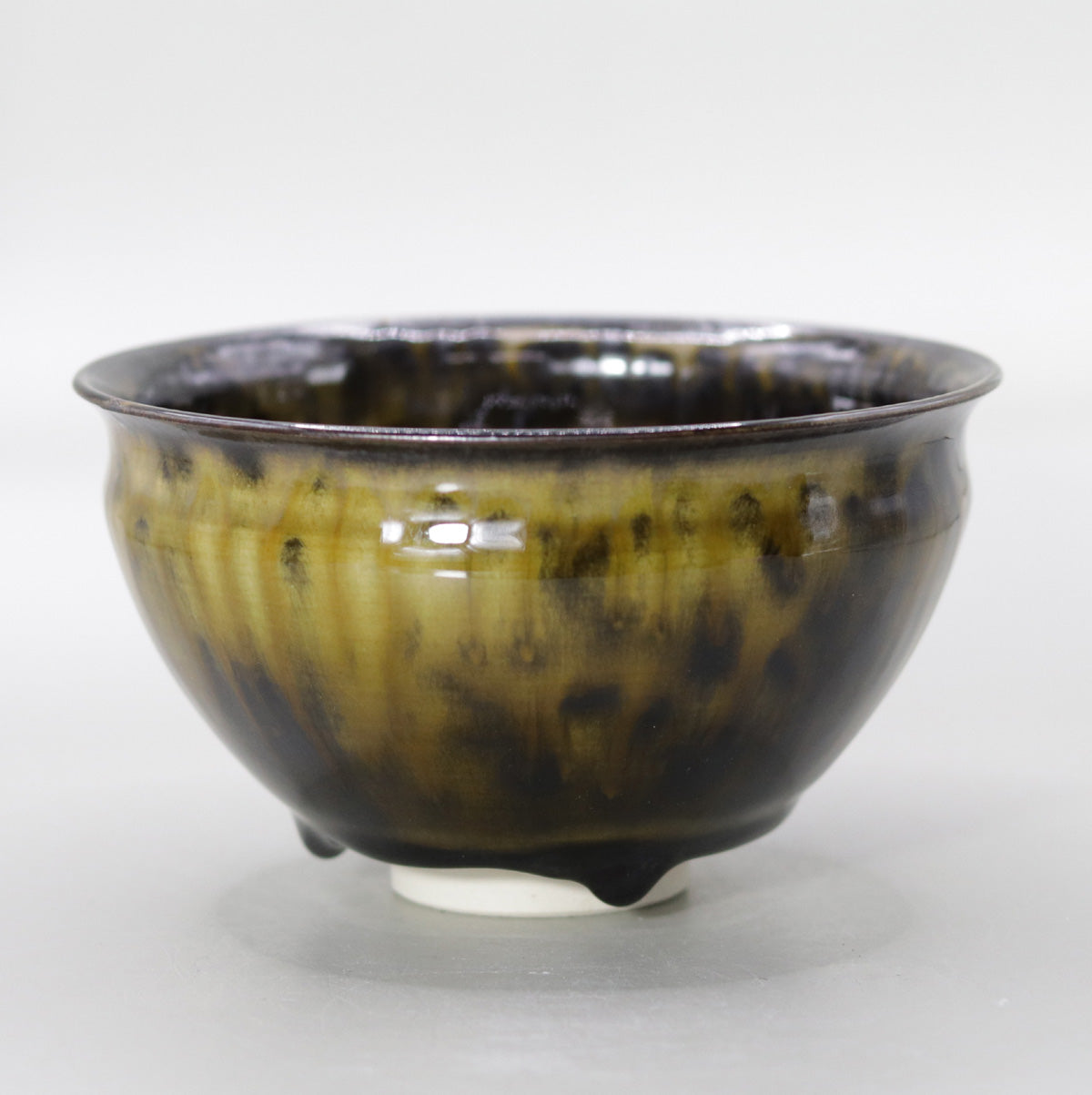
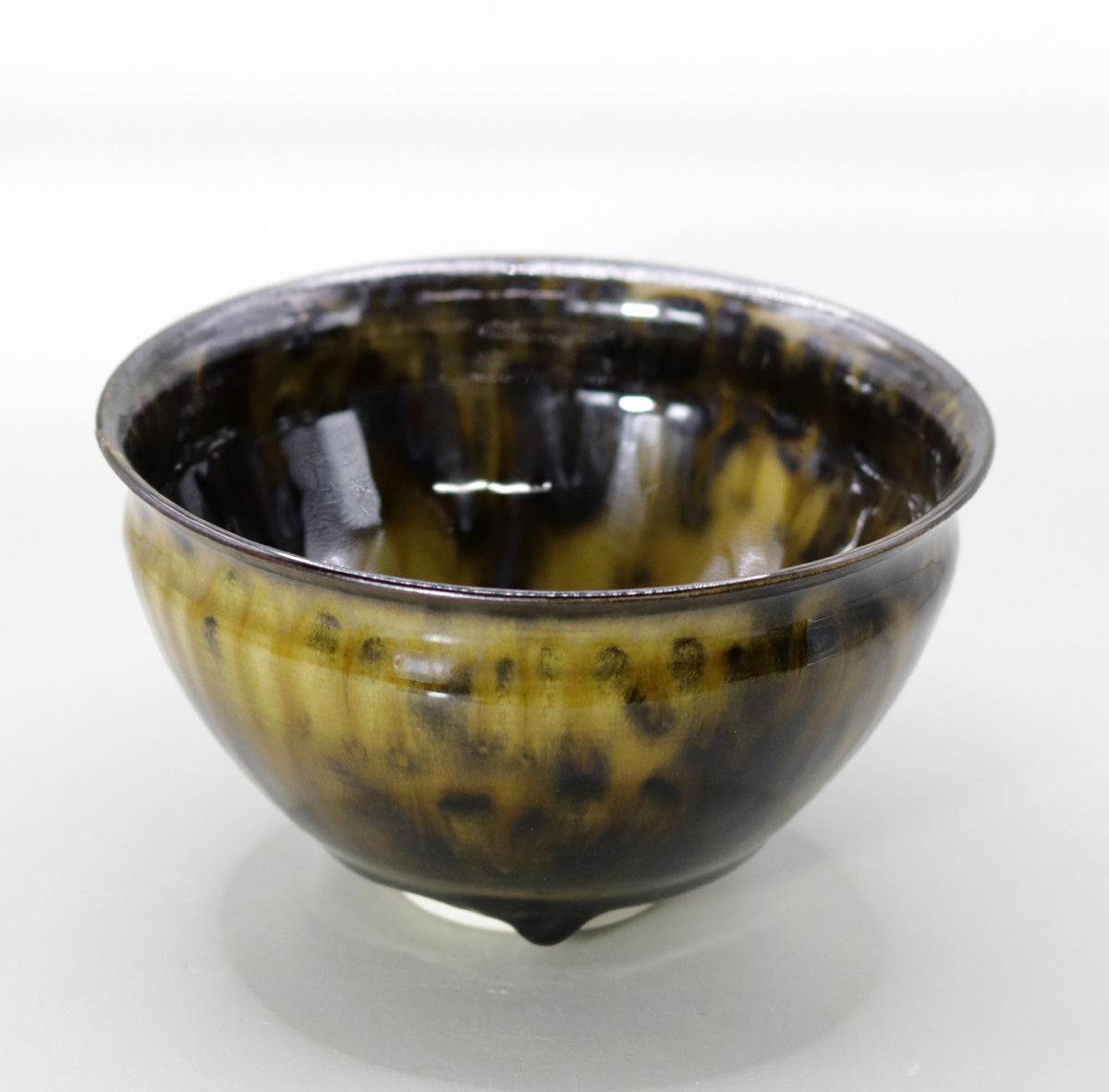
This "Yohen" tea bowl, created by the sixth generation Ogawa Bunsai (Kyo), is truly a work worthy of being called the "art of fire." The accidental changes in glaze that occur during firing - in other words, "yohen" - are particularly difficult to control within the realm of ceramic expression, and are a realm that transcends the artist's control and enters the realm of natural phenomena. However, Bunsai does not leave this coincidence as it is, but accepts it as a necessary beauty, adding deep prayer and constructed beauty to it, elevating it into a one-of-a-kind tea bowl.
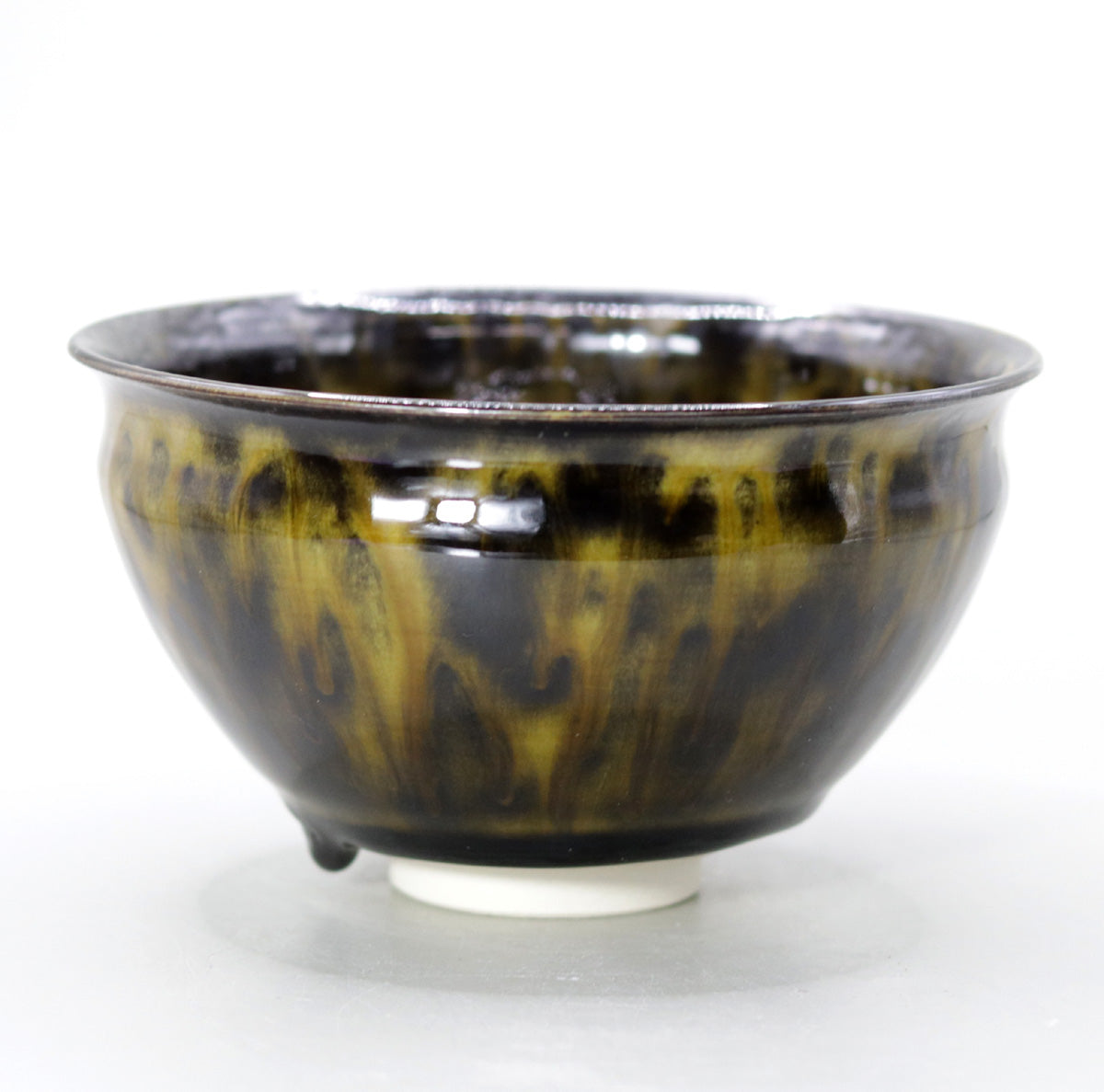
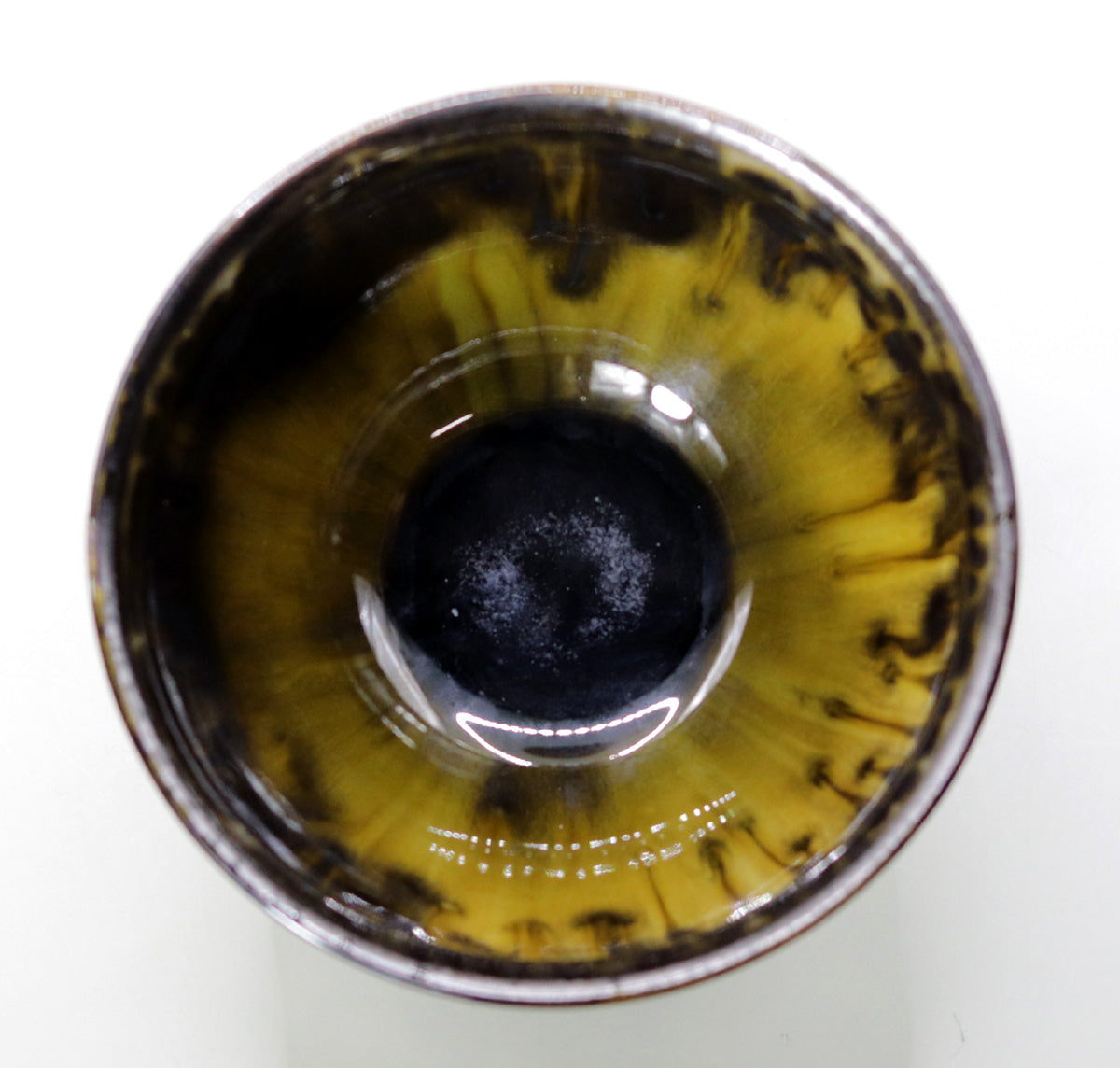
The glaze that envelops the entire vessel changes its appearance dramatically depending on the light. Under soft lighting, it appears dark, with shadows reminiscent of ink being smudged, while under natural light, dramatic kiln changes are revealed, with black clouds rising from a golden base. A dynamic glaze scene, like a momentary lightning strike or volcanic smoke, is condensed into a palm-sized vessel.
The expressive power of glazes that create a "landscape of flames"
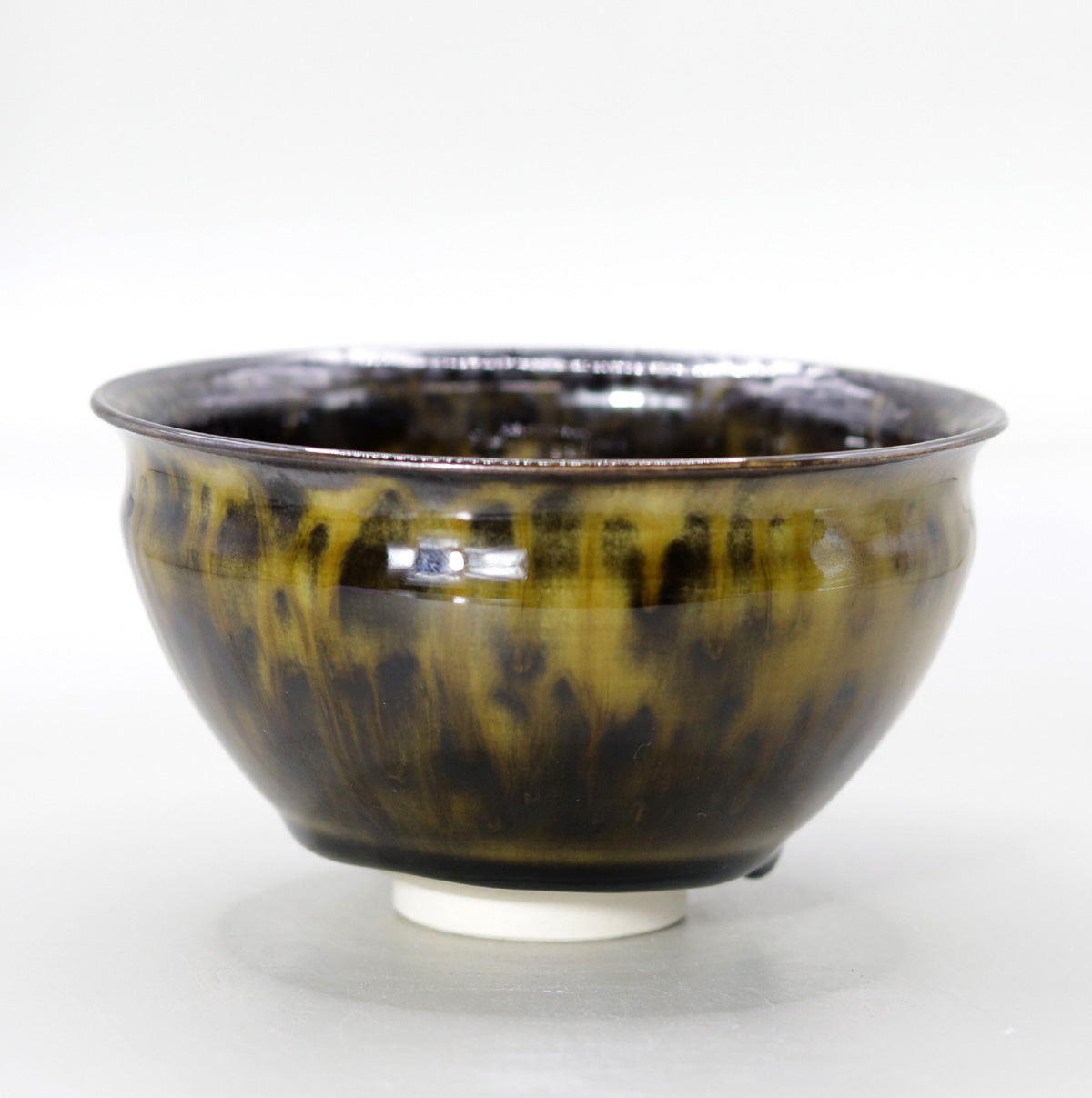
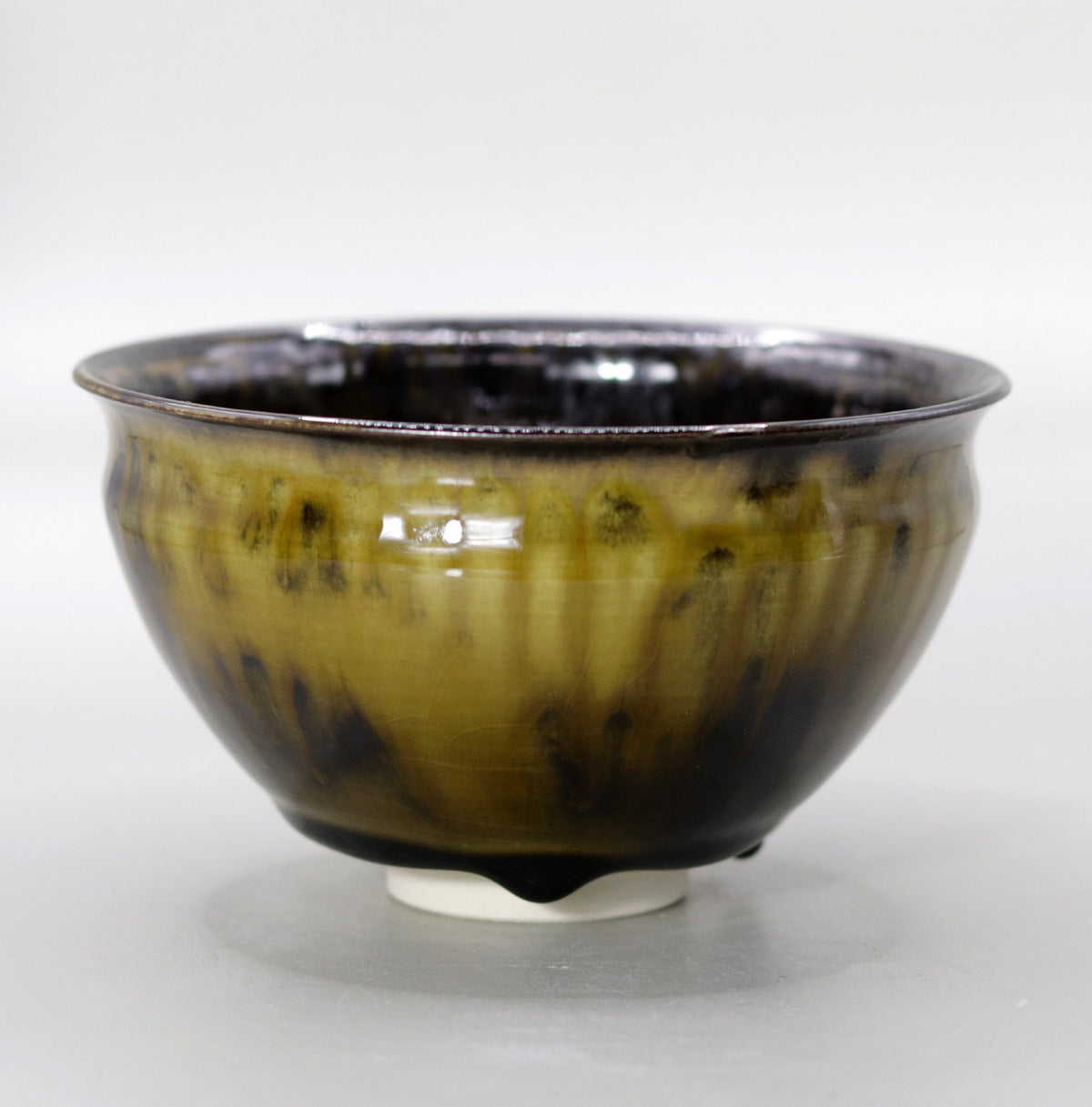
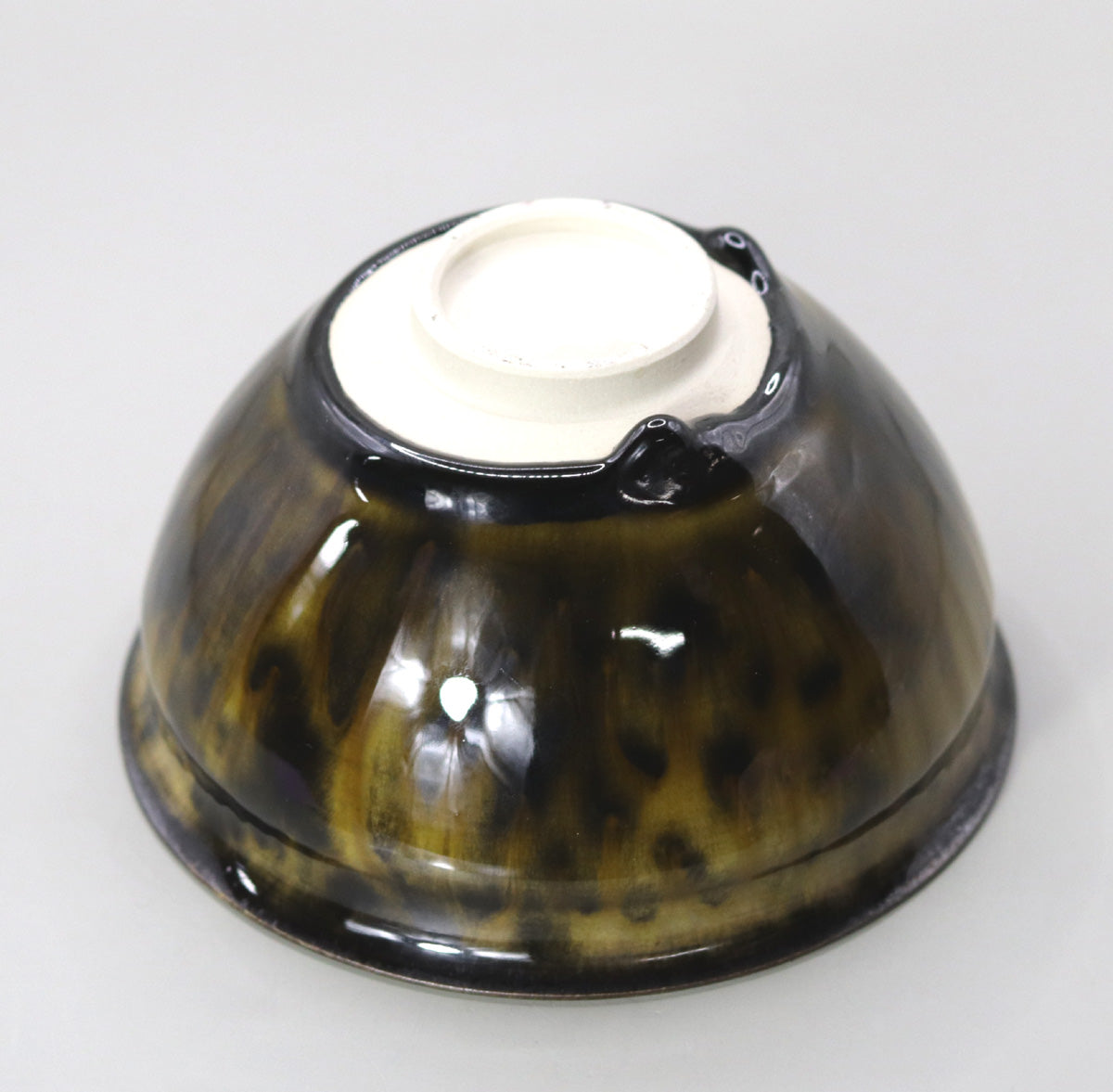
The greatest attraction of this kiln-fired tea bowl is the movement of the glaze. The three-dimensional landscape created by the gradation from yellowish brown to black is a "living expression" that can never be depicted with paint; it appears only at the moment when fire and glaze meet. The glaze melts in the high temperature of the kiln, flows slowly along the surface of the bowl, and hardens again as the firing progresses - this process leaves traces as if the fire itself had taken up a brush and painted the piece.
Furthermore, upon closer inspection, subtle nuances of blue and purple are mixed into the black glaze, revealing a mysterious layer reminiscent of a nebula stretching out in the depths of space. The colors hidden within the kiln changes are profound and exude a silent power, like the myriad colors hidden within achromatic color.
Reliable potter's wheel technique and the dignity of the design
The neatness of the shape is essential to bringing out the beauty of the glaze. This piece has an excellent balance between the tension of the body and the curvature of the rim, giving it a very stable appearance. The rim flares out ever so slightly, creating a quiet sense of openness throughout the vessel. This is the result of delicate manipulation that cannot be achieved by simply making it round, and is the result of the artist's "hand memory" gained from years of experience working with the potter's wheel.
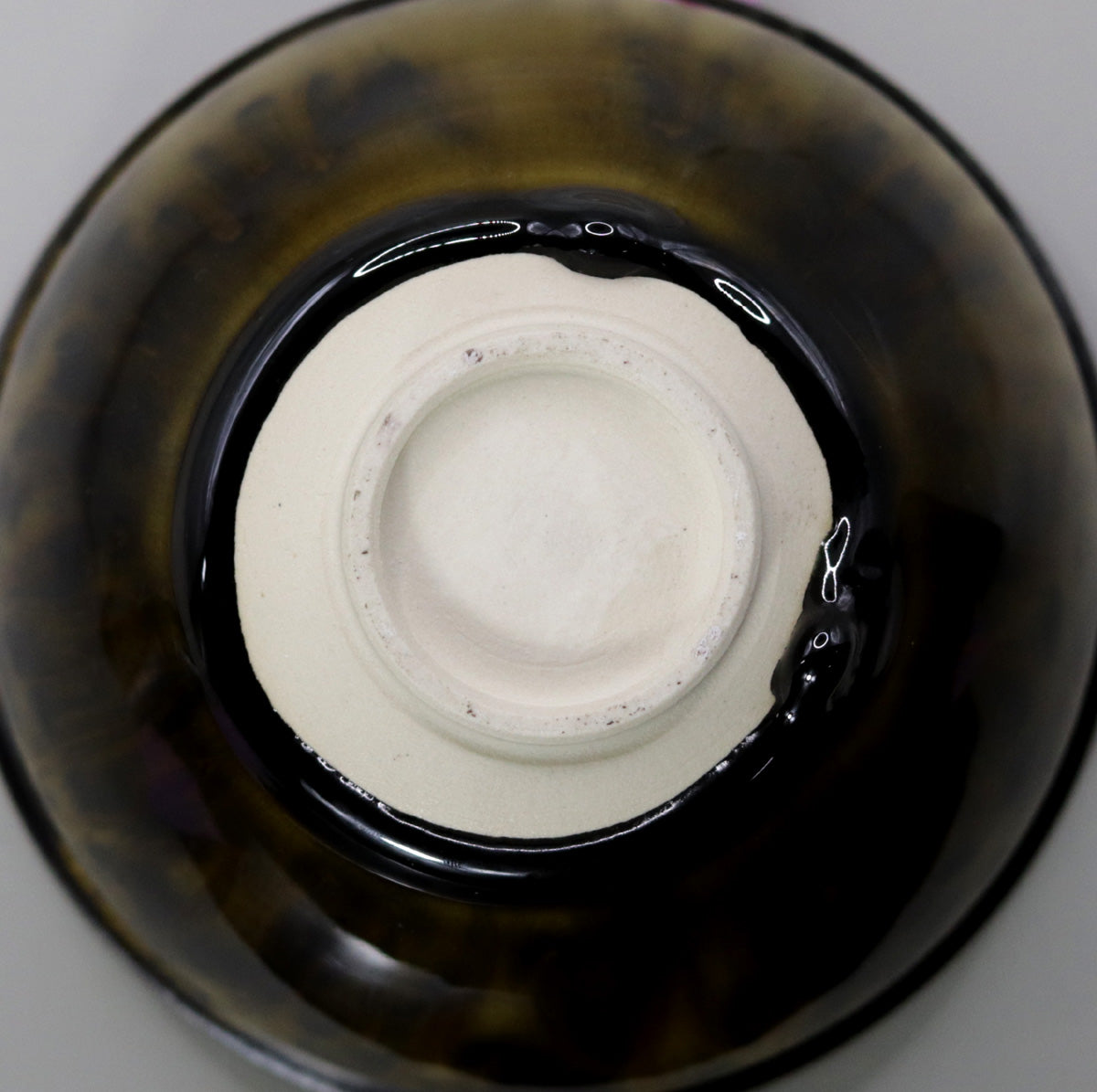
The white base of the base creates an exquisite contrast with the overall glaze, creating an effect that makes the bottom of the vessel appear to be filled with light. This slight "white space" draws the viewer's eye back and forth across the vessel, allowing them to appreciate the flow of the glaze and the three-dimensional effect even more deeply.
The atmosphere of kiln change dwells in the space of the tea room
The quiet power of this kiln-fired tea bowl is further enhanced during a tea ceremony. For example, the shimmering glaze of this tea bowl, in concert with a calligraphy hanging on the tokonoma alcove or a single flower placed in it, softens yet firmly tightens the atmosphere of the entire space. It is as if a silent conversation is being born, as if something is being said in silence.
Furthermore, when you actually make matcha, the vibrant green color is seamlessly reflected in the black and tan glaze, creating not only a visual impact but also a depth that creates a mental landscape. This is truly an experience in which the act of drinking matcha itself becomes a scene in an artistic scene.
The spirit of pottery making that communicates with nature
Although the sixth generation Ogawa Bunsai (Oki) is known for his works that mainly use green glazes, he has also worked seriously on kiln-transformed works like this one, which are "left to the kiln." This is an attitude that is similar to the "beauty of inaction," in that it involves surrendering oneself to the power of nature and the movement of fire, rather than trying to control everything oneself.
What lies within this work is a challenge to combine the intellect and creative ability of a contemporary artist with the sensibility that our predecessors called "wabi" and "sabi."It is also a response to the essential question of a ceramic artist: how to elevate the "unknown beauty" created by fire to the realm of fine art with human hands.
A record of combustion and silence contained in a single bowl
The more you look at this kiln-transformed tea bowl, the more new expressions it reveals. The same bowl will take on different looks in the morning light, in the silence of the night, or as the seasons change. This is not just a visual change, but a testament to the growing relationship between the bowl and its user.
Contained within each bowl is the memory of fire, the poetry of earth, and the artist's philosophy of silence. Please take a look. This bowl is not just something to "see," but something to "listen to." In the silence of the viewer, you will surely be able to hear the whispers of the glaze.
Share
-
[I will send it to you quickly and carefully]
We carefully package each product in a way that suits it best.
Also, delivery times vary depending on the piece (vessel, etc.).
Items that already come with a box will be shipped within 1-3 days of the order date.
For items that require a box to be made after your order, it will take approximately 30 days for production to be completed and then shipped.
In either case, once we have confirmed your order, we will contact you by email to inform you of the delivery date.
-
[Requests when purchasing pottery]
Even products that look the same may differ slightly in color, shape, size, etc.
The way the glaze is used, the power of the kiln, the firing method, the season, and the humidity also affect the appearance of the pottery.
Please understand the individuality of each piece of pottery and enjoy the unique warmth of handmade.