


Green and Green Flowers by Bunsai Ogawa
Green and Green Flowers by Bunsai Ogawa
Couldn't load pickup availability
Width: 8.0cm x 8.0cm Height: 20.0cm
Dripping Green - A Single Green Flower by Ogawa Bunsai (Kyo) VI
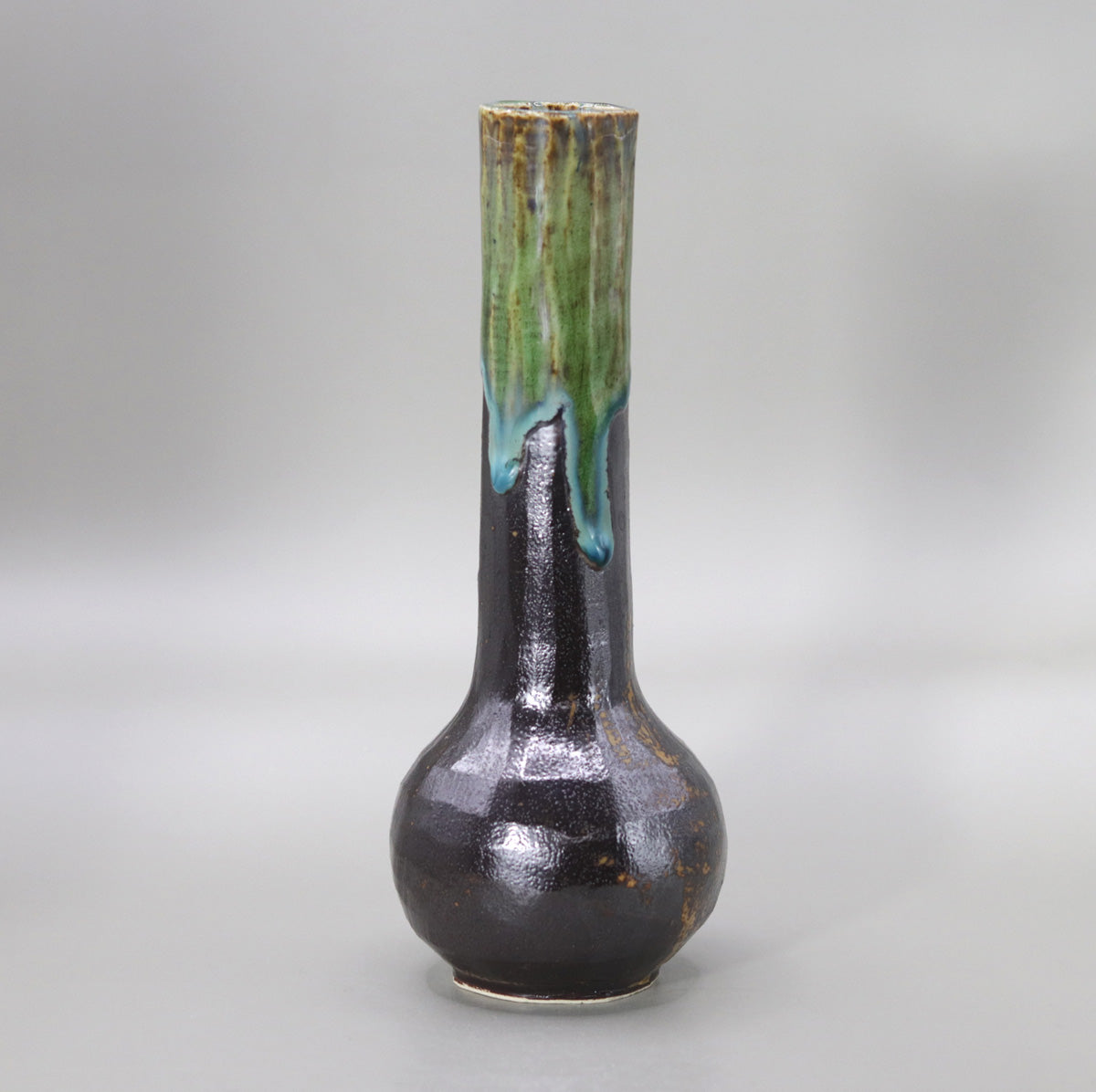
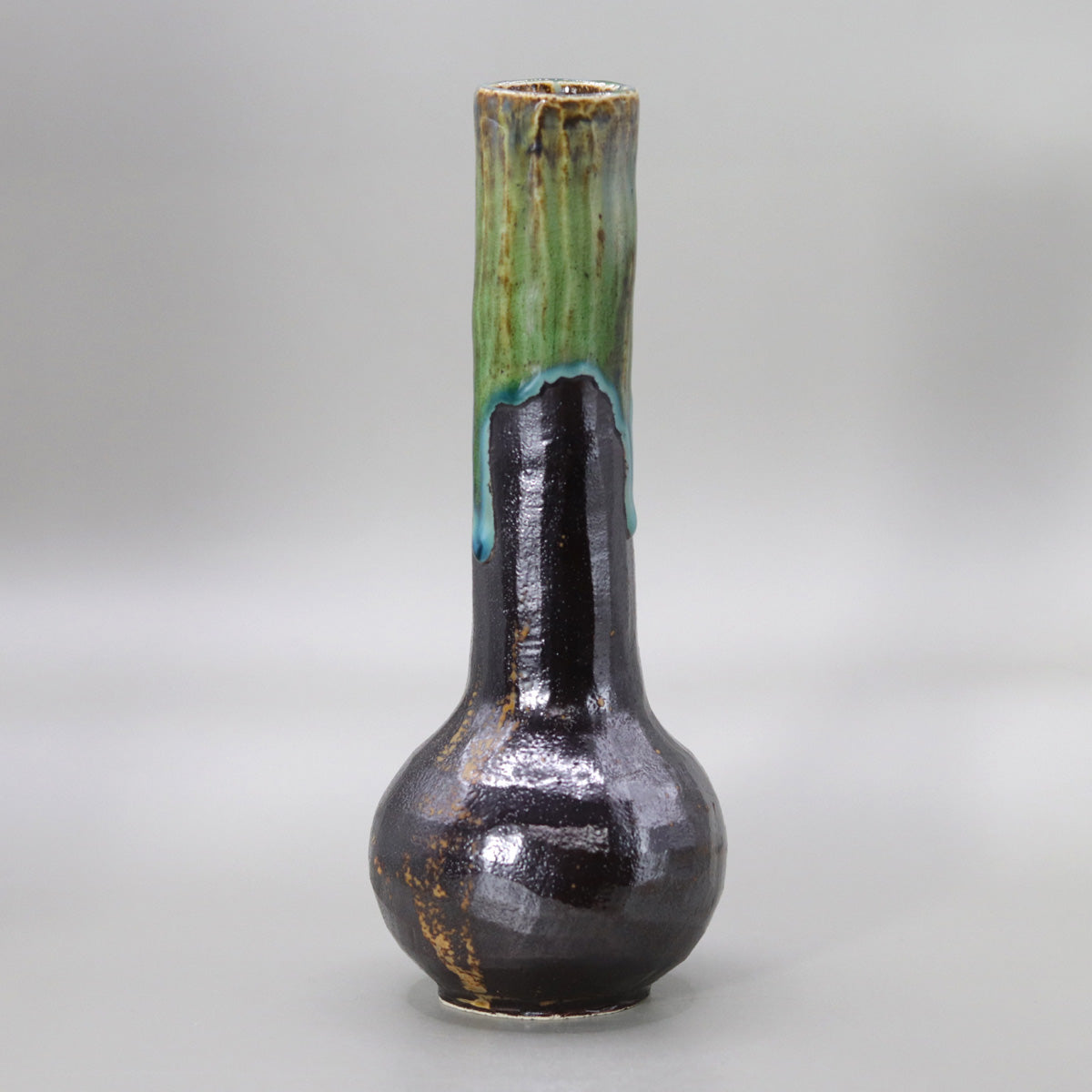
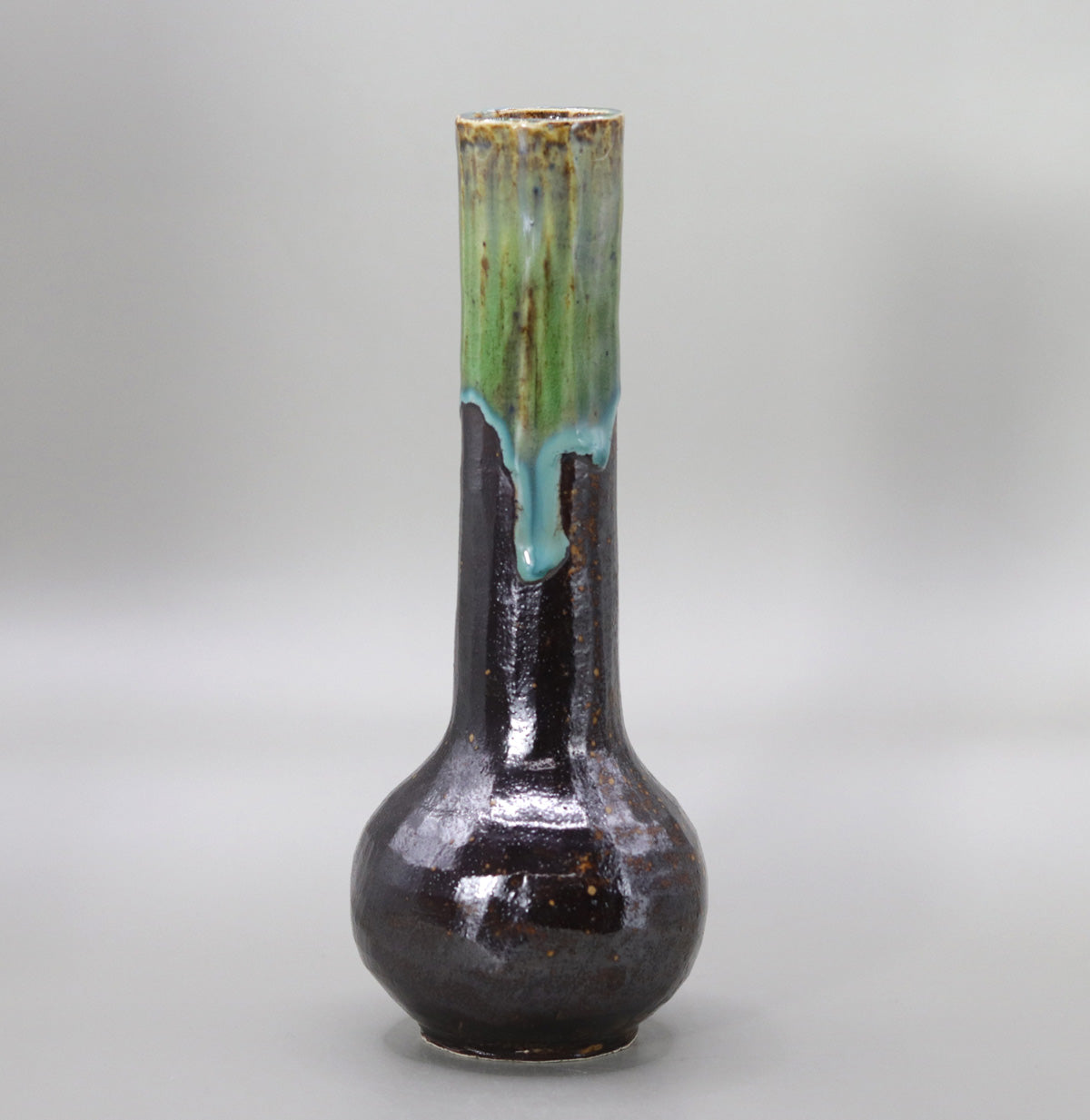
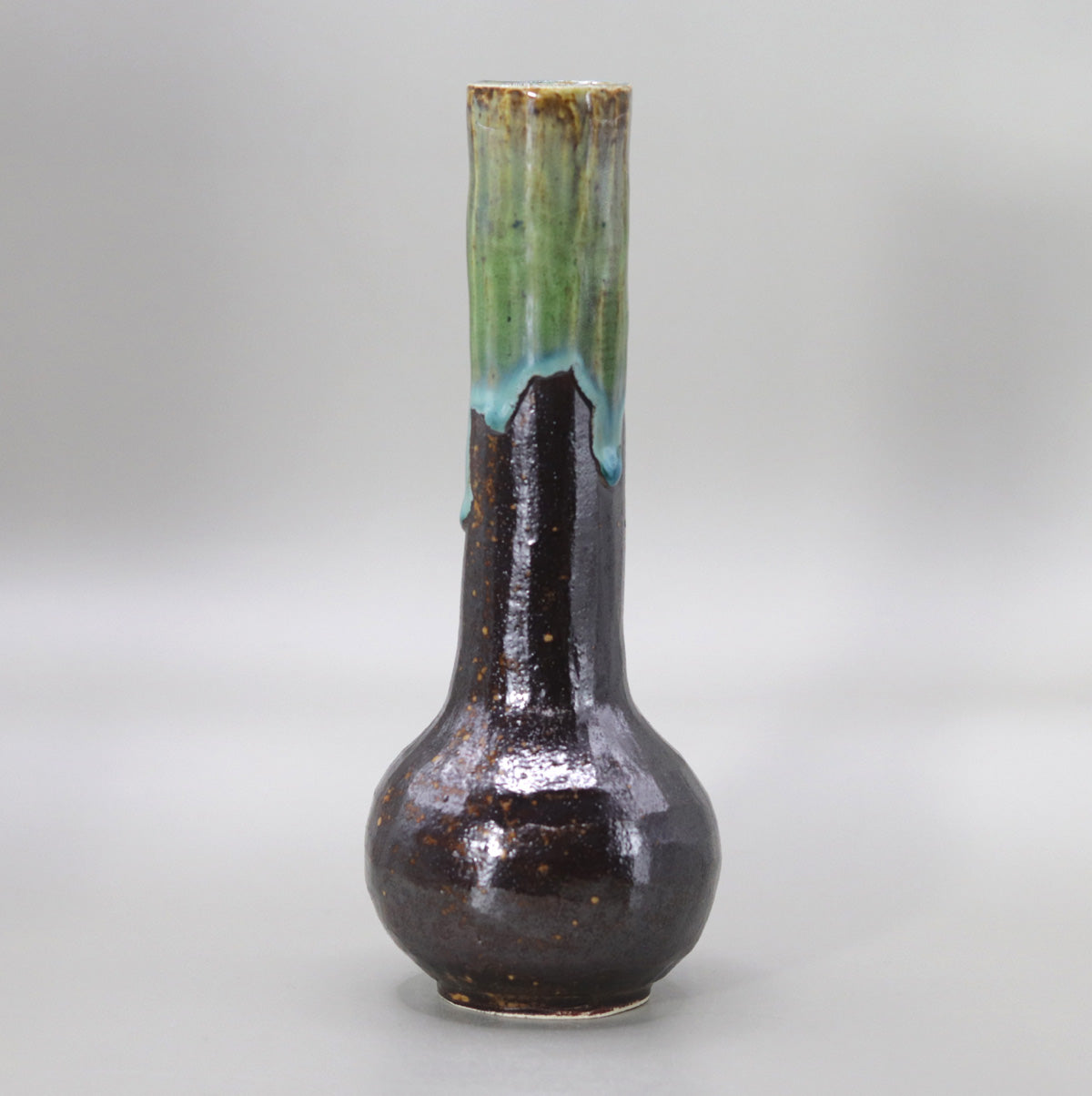
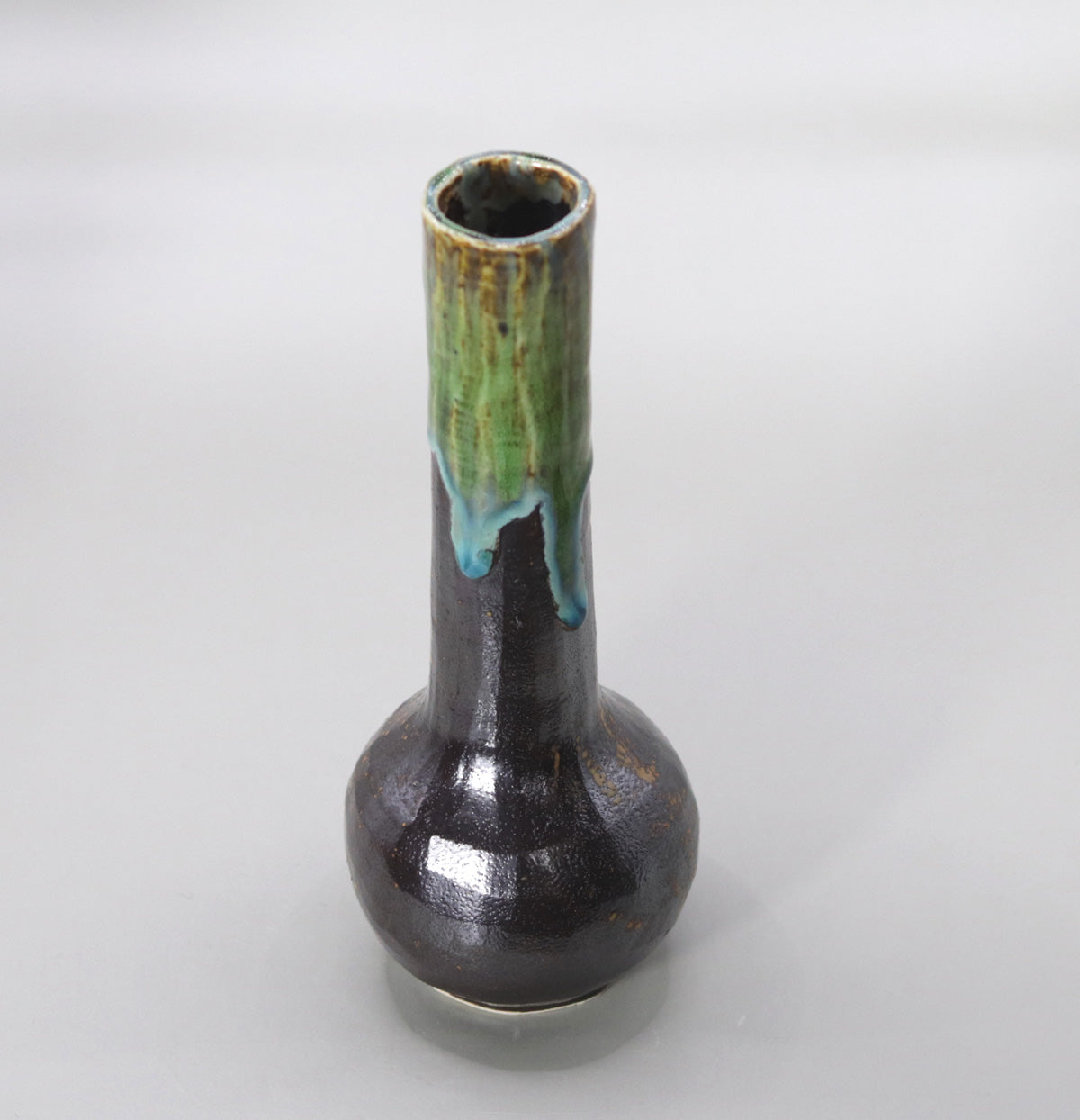
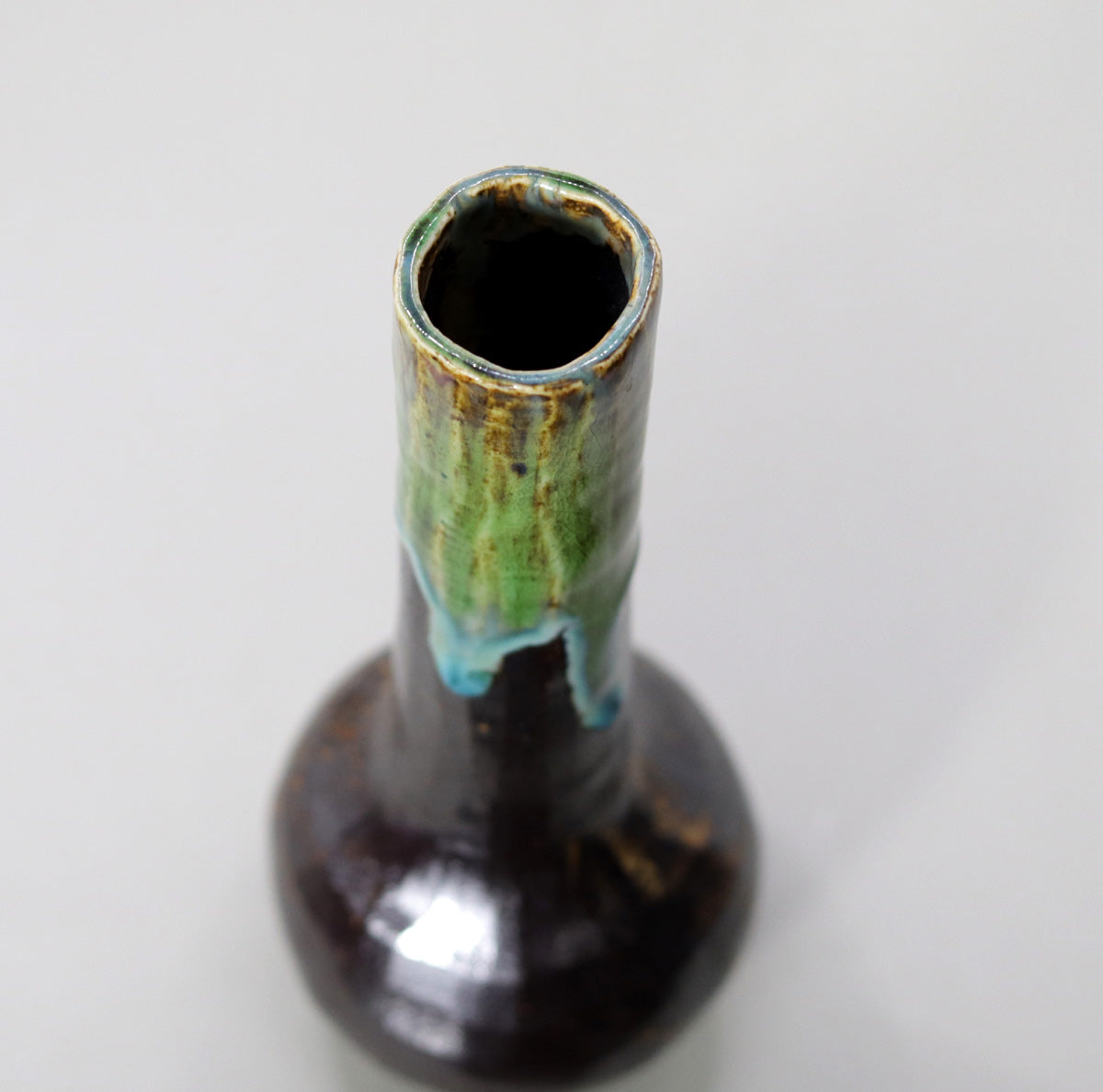
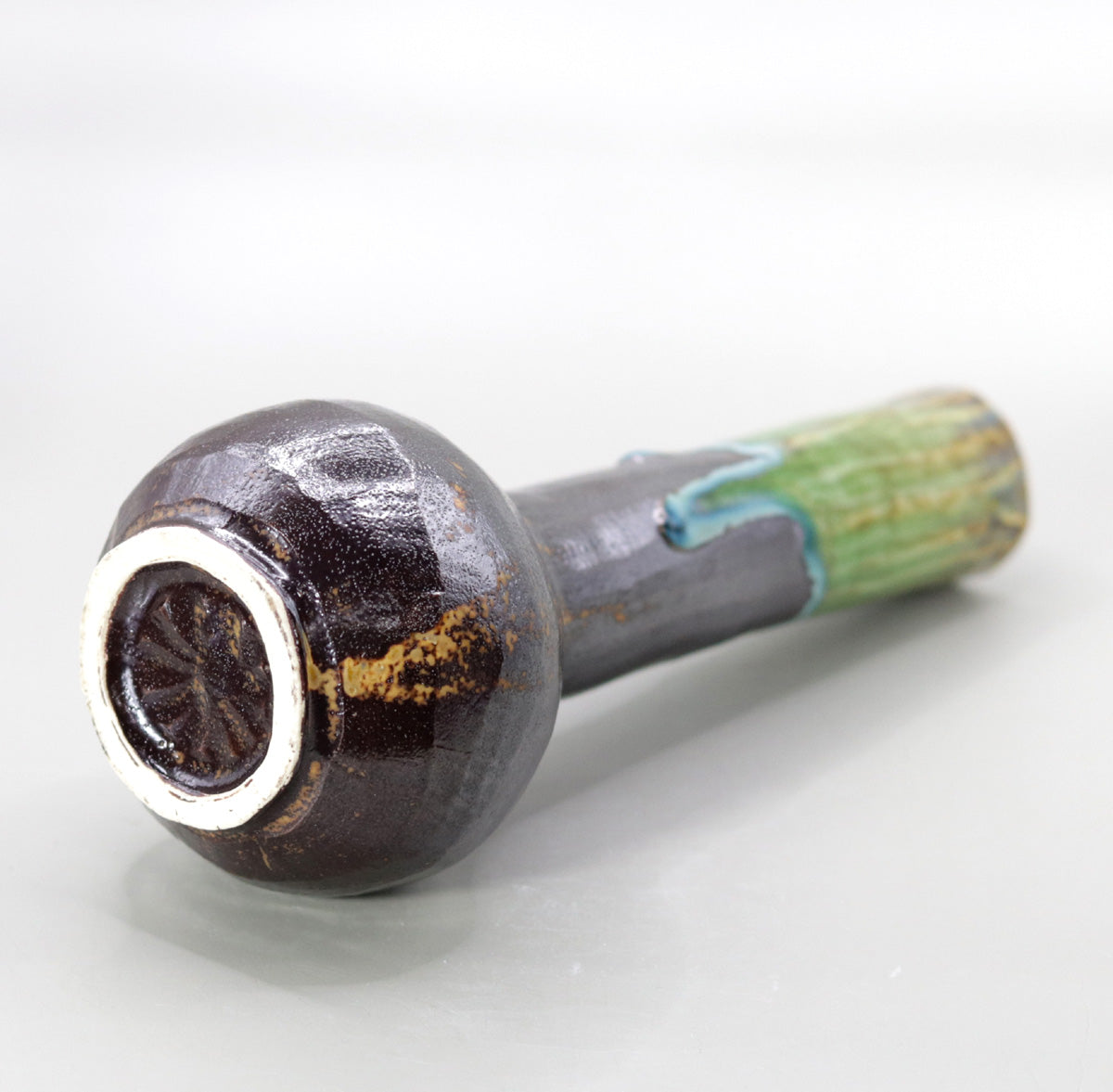
This "Emerald Green Single Flower" is a work by Ogawa Bunsai (Kyo) VI, which combines a dignified appearance with a rich sense of color. The slender, cylindrical neck and plump body give it a modest yet powerful presence, as if it is quietly holding its breath to welcome a single flower.
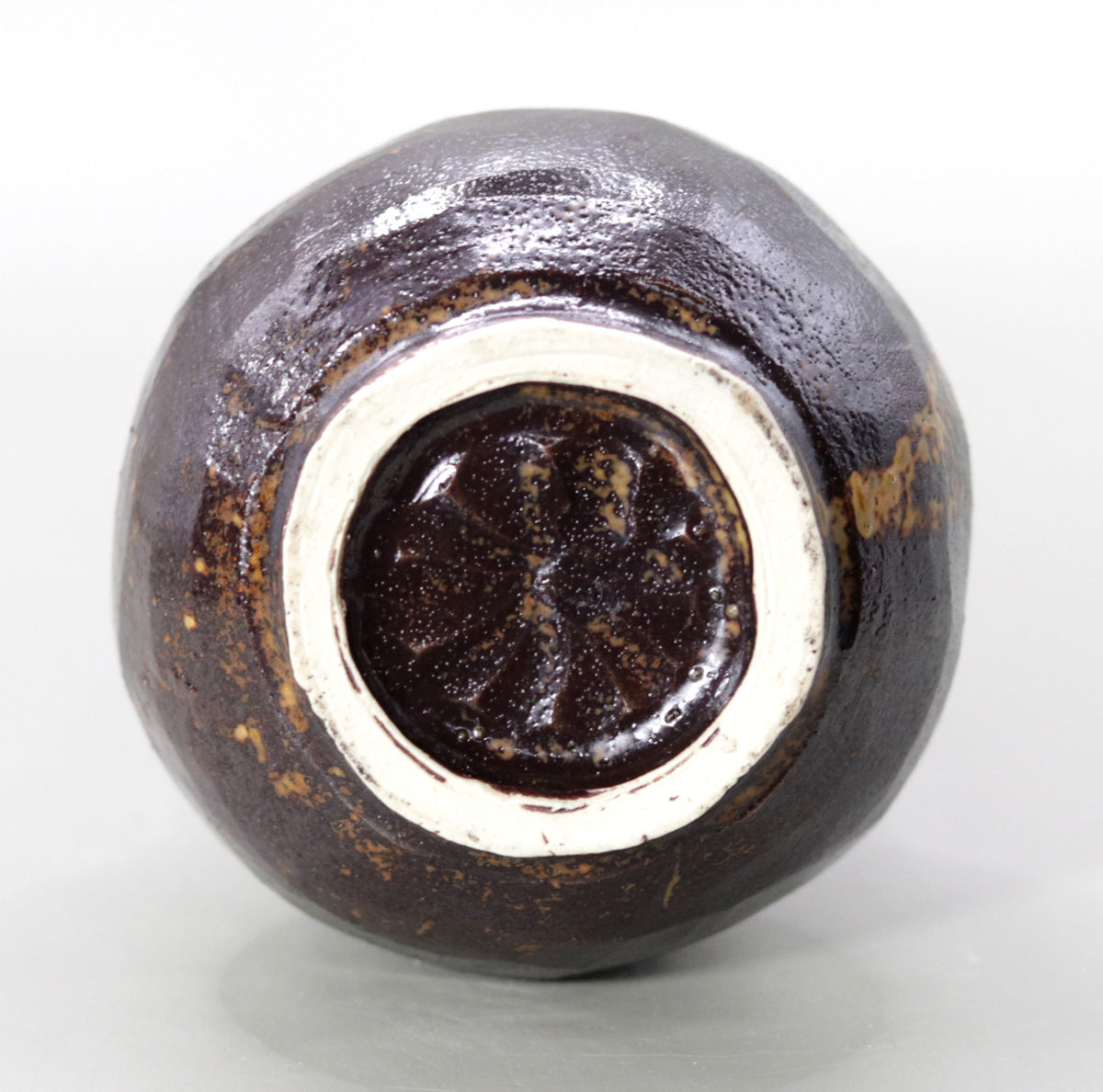
The highlight of this piece is the movement of the glaze as it flows down from the neck to the body. The emerald green glaze, synonymous with Bunsai, drips like mountain rain and blends into the black glaze of the body, evoking the viewer's imagination of the laws of nature itself. The sense of security brought by the green and the profound serenity hidden in the black. These two colors harmonize beautifully within this vessel, creating a powerful world that seems to symbolize "a place where life dwells."
If you place a single flower in this single flower arrangement, the vessel and nature, stillness and movement, intention and chance will intertwine, creating a sense of harmony in the space. For example, even an ordinary plant such as a single dewdrop flower blooming in the mountains or a withered camellia on the tip of a branch will take center stage in this vessel, emitting the dignified brilliance of life.
A beautiful design born from the weight of history and genealogy
The aesthetic sense and creative philosophy embodied in "Emerald Green Single Life" are deeply connected to the long history of Bunsai Kiln. The Ogawa family's beginnings date back to 1847, in the late Edo period. The first generation, Ogawa Bunsai (Bunsuke), studied kiln-building techniques in Kyushu and opened a kiln on Mt. Kase in Kizugawa City, Kyoto Prefecture. Recognized by the Ichijo family, he was given the character "sai" and the family crest, and so the company was founded under the name "Bunsai."
In 1873, having weathered the turmoil of the Meiji Restoration, the company relocated to Kyoto and opened a kiln on Gojozaka. Since then, Bunsai Kiln has produced ceramics continuously for six generations, making it a valuable lineage in the history of Japanese ceramics. While inheriting the techniques and spirit of its founder, the kiln has updated its aesthetic sense with each era, pioneering new horizons for Kyoto ware. This history lives quietly within the depths of this piece.
A wish for peace infused with greenery
Ogawa Bunsai (Ko), the 6th generation, is questioning the very essence of the Bunsai name that has been passed down through generations, and is attempting to redefine "beauty" in a modern context. After studying sculpture at graduate school and thoroughly studying ceramics at Kyoto's Technical College of Pottery and an industrial testing facility, he began making pottery under his father, the 5th Bunsai. Since officially taking on the name of the 6th generation in 2014, he has further deepened the scope of his expression, striving to find a balance between the "Bunsai style" and "his own style."
One thing that Mr. Bunsai has particularly focused on is the "exploration of the color green." While his father used a lot of red, he himself is fascinated by the color "green" and entrusts his spirituality to it. Green is a color that embraces people and gives them peace, just like the trees in the mountains. And above all, it is a symbol of "peace."
This spirit certainly resides in "Emerald Green Single Wheel." The flow of the emerald glaze is not merely a technique or decoration, but a "prayer" for the artist, symbolizing the cycle of life, human connections, and coexistence with nature. The dripping emerald onto the black glaze body is like a refreshing drop that soothes the harshness of modern times. It has the power to gently reach out to the viewer's heart and capture inexpressible emotions.
Poetry born between flowers and vessels
A single flower arrangement is not only a vessel for receiving flowers, but also a form that evokes the feeling of "space." The dignified standing form of this piece creates a "complete space" even before flowers are placed inside, and the world expands even more multi-layered with the flowers placed inside. There is no need to force yourself to place extravagant flowers inside. A single flower blooming in the wild, or even a withered branch, will stand out in this vessel, imbued with a poetic feeling.
The form of this piece is also highly functional. The stability of the body and the length of the neck allow the flowers to retain water well and are designed to fit naturally in the hand of the person arranging them. Its ease of use is proof that it is not merely an ornamental piece of pottery, but embodies the essence of Kyoto ware, which values "beauty of utility."
Beauty is a universal prayer - A "green lineage" that connects to the future
A constant thread running through the work of Ogawa Bunsai VI is his conviction that "beauty is a common language that connects the world." He chose to stick to green rather than inheriting his father's passion for red, precisely because he wished to distance conflict and create a "circle" where people join hands. And now, each piece of pottery he creates is imbued with the strong message that "art can be a bridge for peace."
The emerald-green glaze soothes the viewer's mind and brings out the life of the flowers even more.
It is more than just a "color"; it is a "thought" and a "prayer."
Bunsai Kiln - A place where skills and spirit are passed down
The Bunsai family is a traditional pottery family that began with the first Bunsuke, who was born in Kaga Province in 1809. He traveled to various pottery-producing regions, mastered kiln-building techniques in Arita, Hizen, and then opened a kiln in Kaseyama, Kyoto. From the Edo period to the Meiji period, and through the Showa, Heisei, and Reiwa eras, the family has continued to fire pottery for six generations without ever letting the fire go out.
Overcoming the hardships of losing the fourth generation successor in the war, the fifth generation Kinji revived the business, and the current sixth generation, Oki, is further deepening the techniques and spirit of the company. The company protects its climbing kiln, which has been designated a national registered tangible cultural property, and while based on tradition, it is committed to pioneering new forms of "beauty in utility" with modern sensibilities and expressiveness, and the philosophy of "innovation and inheritance" that has been in place since the company's founding still lives on today.
Share
-
[I will send it to you quickly and carefully]
We carefully package each product in a way that suits it best.
Also, delivery times vary depending on the piece (vessel, etc.).
Items that already come with a box will be shipped within 1-3 days of the order date.
For items that require a box to be made after your order, it will take approximately 30 days for production to be completed and then shipped.
In either case, once we have confirmed your order, we will contact you by email to inform you of the delivery date.
-
[Requests when purchasing pottery]
Even products that look the same may differ slightly in color, shape, size, etc.
The way the glaze is used, the power of the kiln, the firing method, the season, and the humidity also affect the appearance of the pottery.
Please understand the individuality of each piece of pottery and enjoy the unique warmth of handmade.