


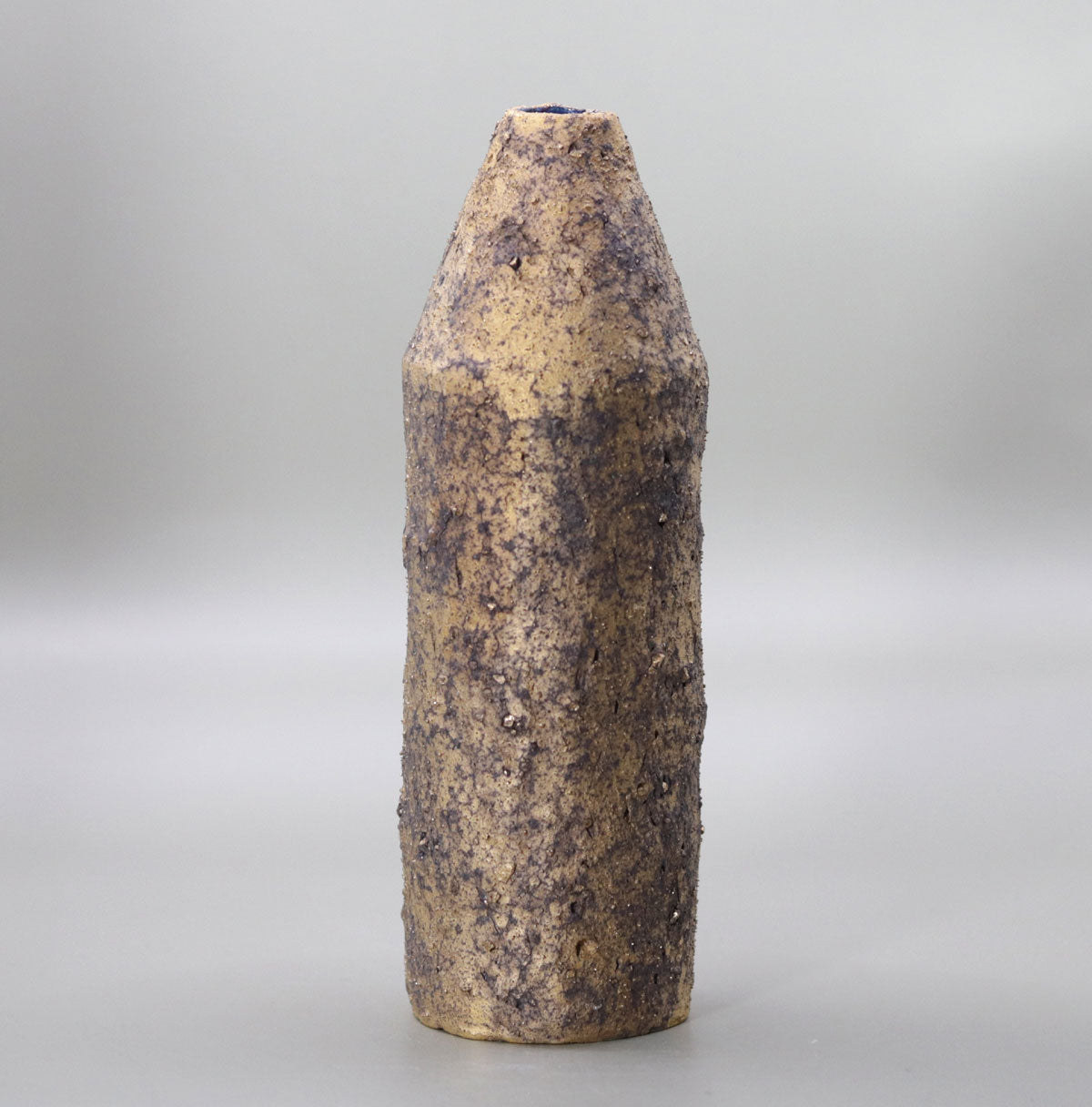
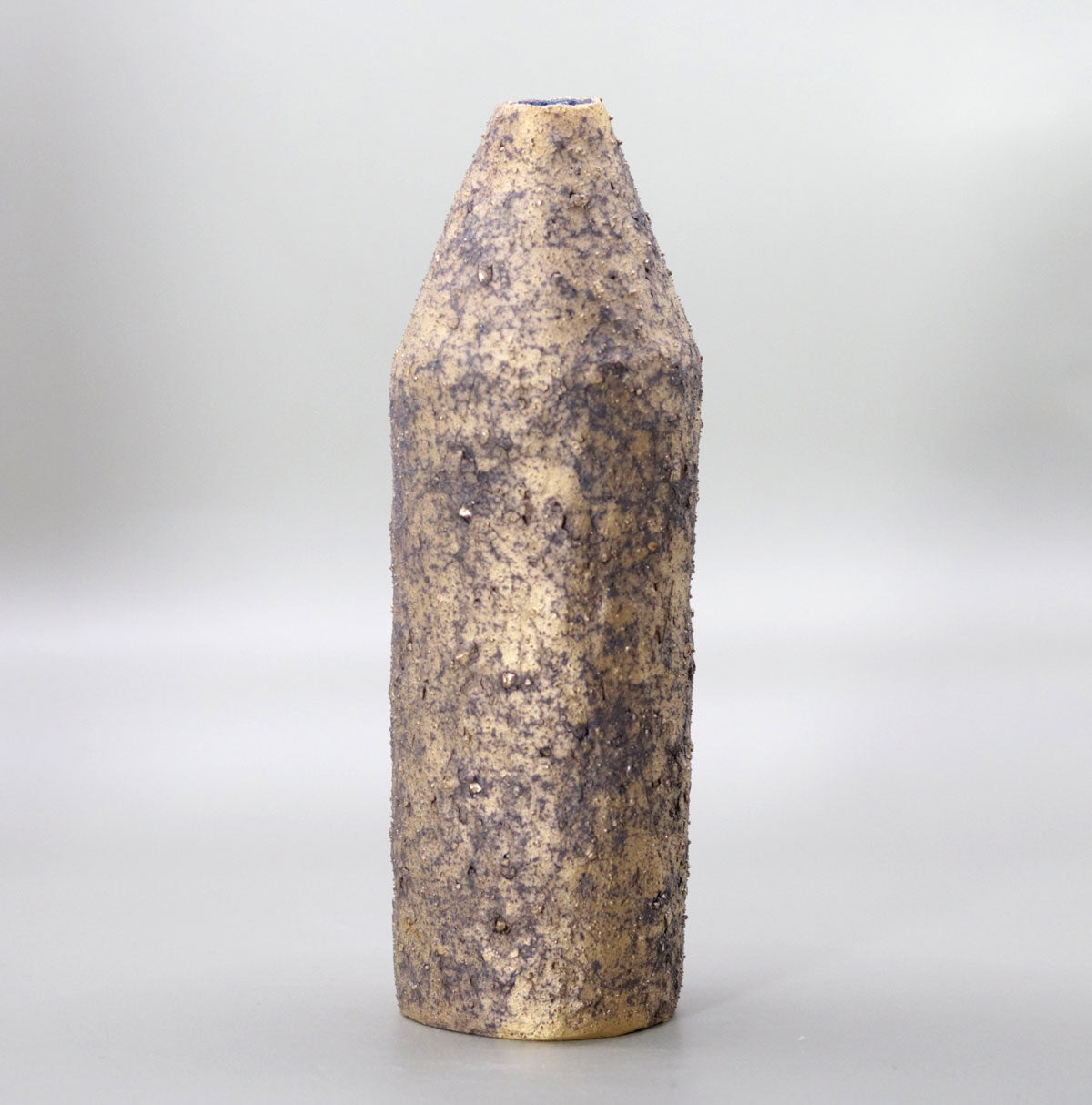
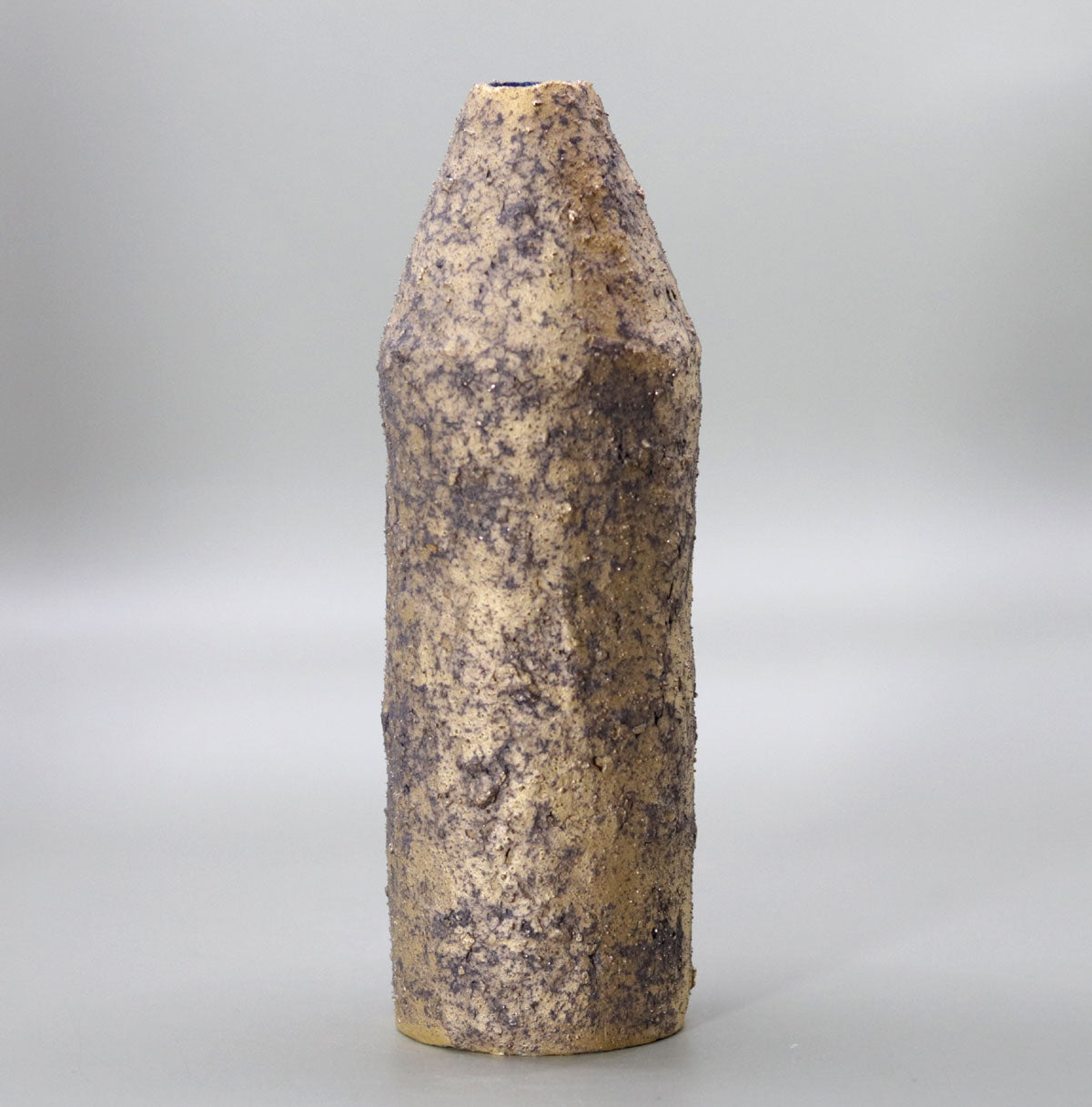
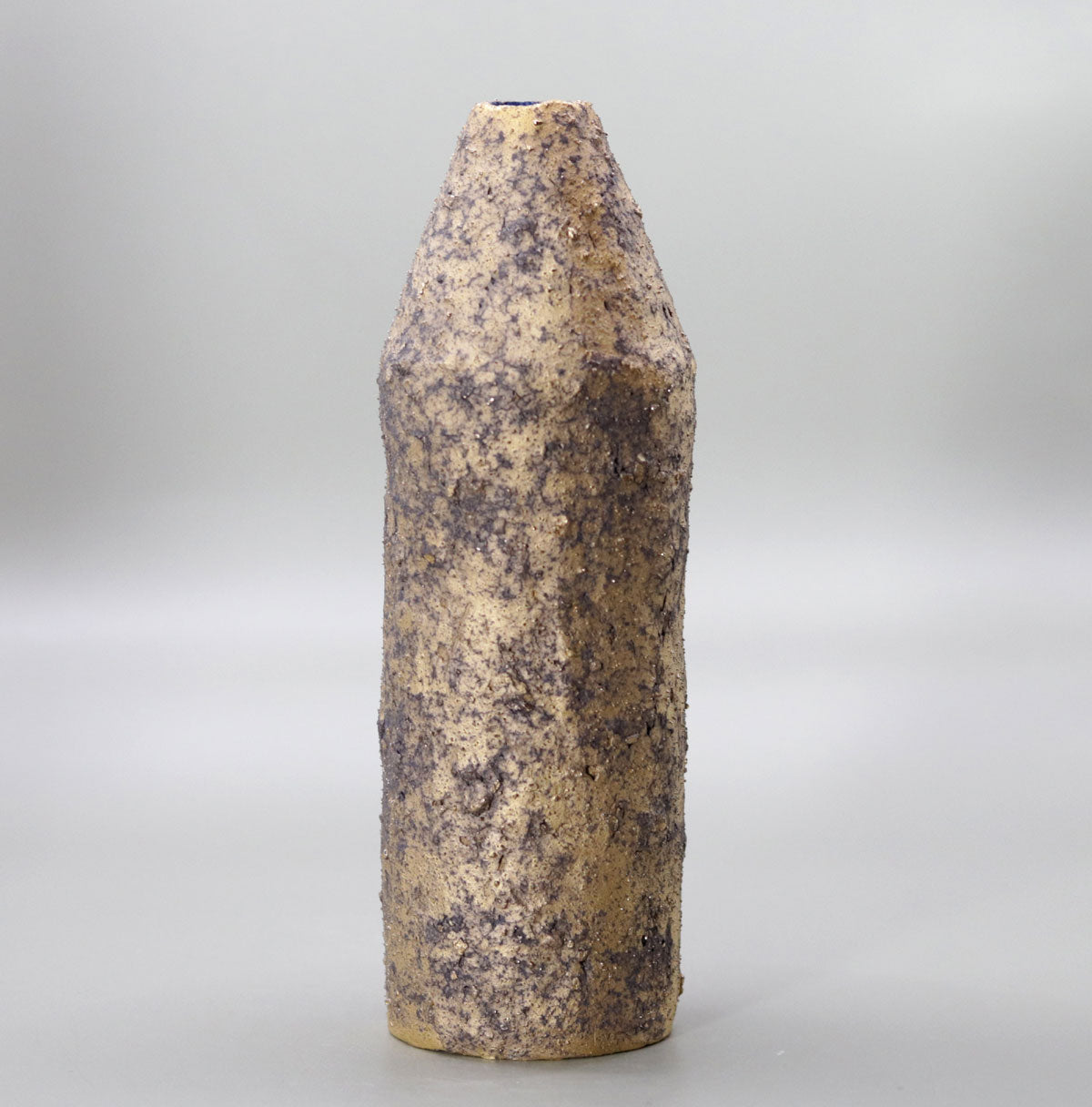
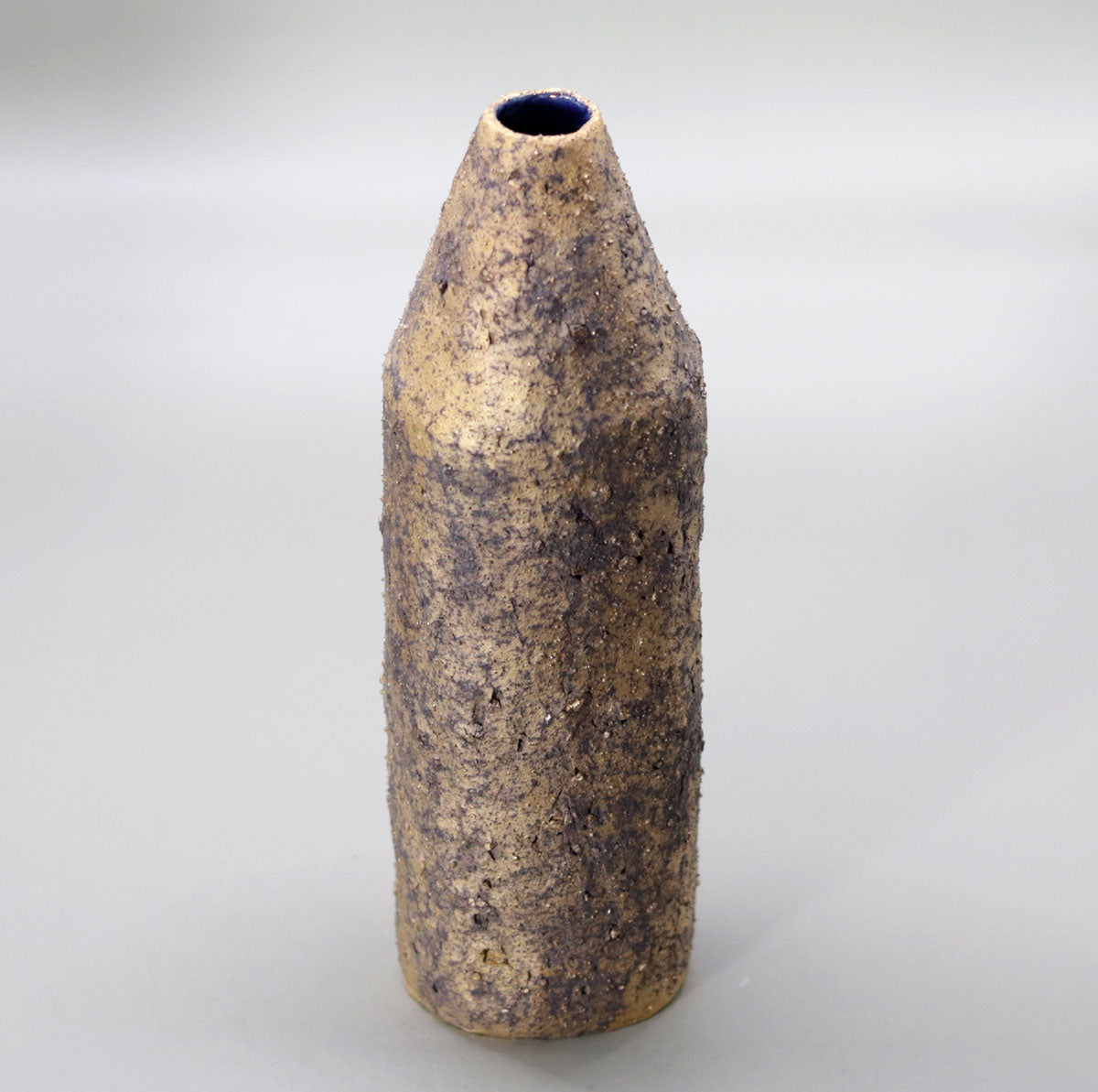
Vase made of auriferous clay by Yasushi Fujihira
Vase made of auriferous clay by Yasushi Fujihira
Couldn't load pickup availability
Width 7cm x 7cm Height 21cm
The aesthetics of gold, embodying the concepts of wabi and sabi
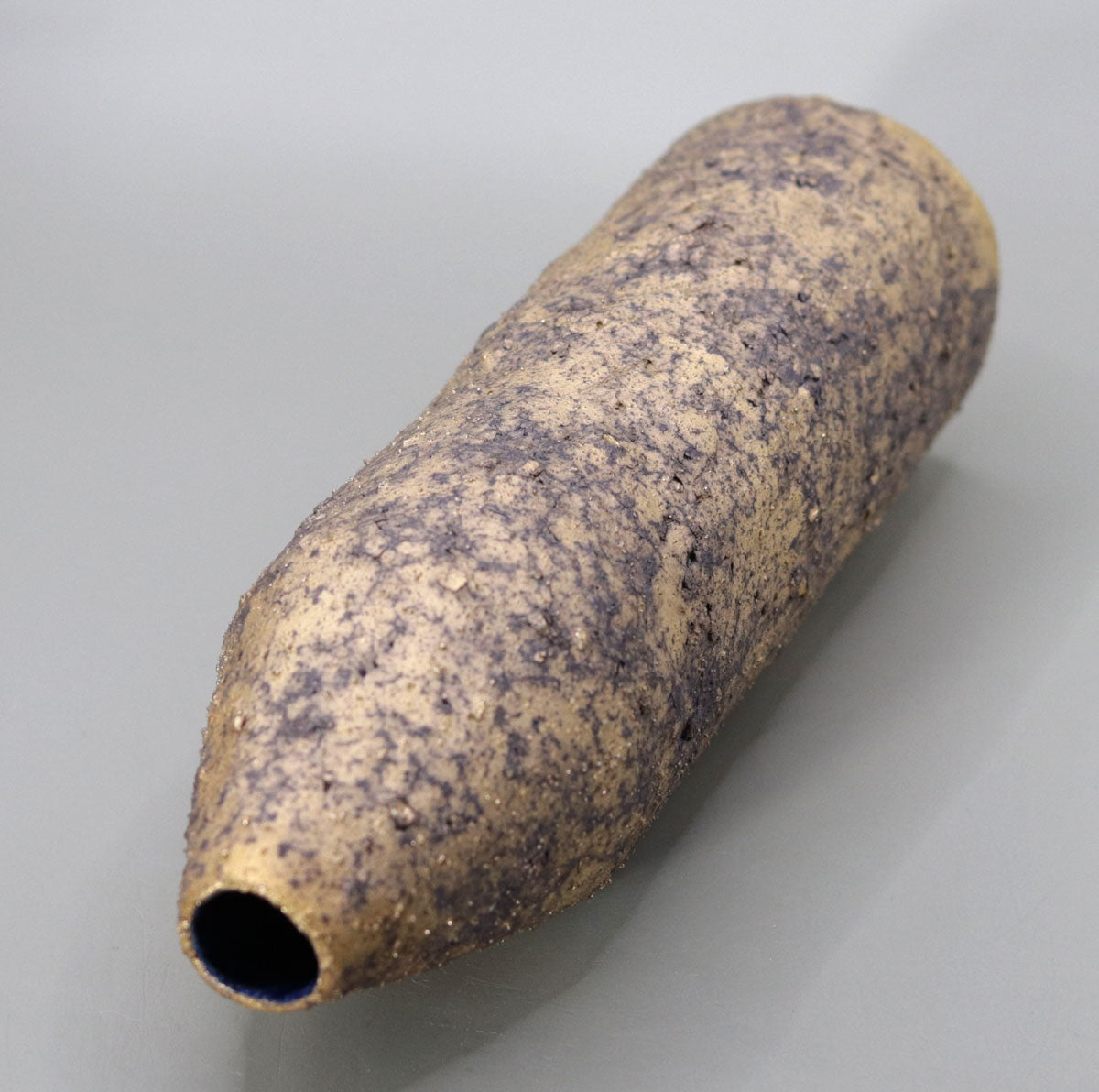
Among the flower vases created by Fujihira Yasushi, "Hana Ichirin" is a work that is particularly filled with poetry and elegance . The gold glaze that covers the entire slender cylindrical form has a depth that is reminiscent of iron rust, and it is filled with a tasteful beauty that goes beyond mere luxury. This smoky gold texture beautifully expresses the aesthetics of sabi . "Hana Ichirin" exudes the very spirit of wabi-sabi. It is neither extravagant nor bleak. Yet, it stands out for its strength and noble presence, hidden somewhere within its calmness.
A unique presence that brightens up any space
The appeal of this piece lies in its presence, which transforms the space wherever it is placed . It boasts unsurpassed beauty not only as a flower vase but also as an objet d'art. The deep navy blue that emerges when one peers inside the piece offers the viewer a new perspective and adds further depth to the piece. The contrast between the gold exterior and the navy blue interior creates a harmony of stillness and movement that is reminiscent of the transition between day and night. This ingenious design elevates "Hana Ichirin" beyond a simple flower vase, elevating it into a work of art that continues to captivate viewers.
Elegant beauty created by Yasushi Fujihira
His works beautifully combine traditional Kyoto ware techniques with modern sensibilities. "Hana Ichirin" is no exception. While the overall form is simple, his attention to detail shines through, with the subtle rust-like gold hue and the navy blue hidden within. What is particularly noteworthy about this piece is the depth imbued in the texture of the gold . It is not simply gold as decoration, but the warmth of rust that has developed over time and the expression that evokes a sense of nostalgia speak to Mr. Fujihira's unique style.
Hand-twisting techniques that give shape to the wabi-sabi aesthetic
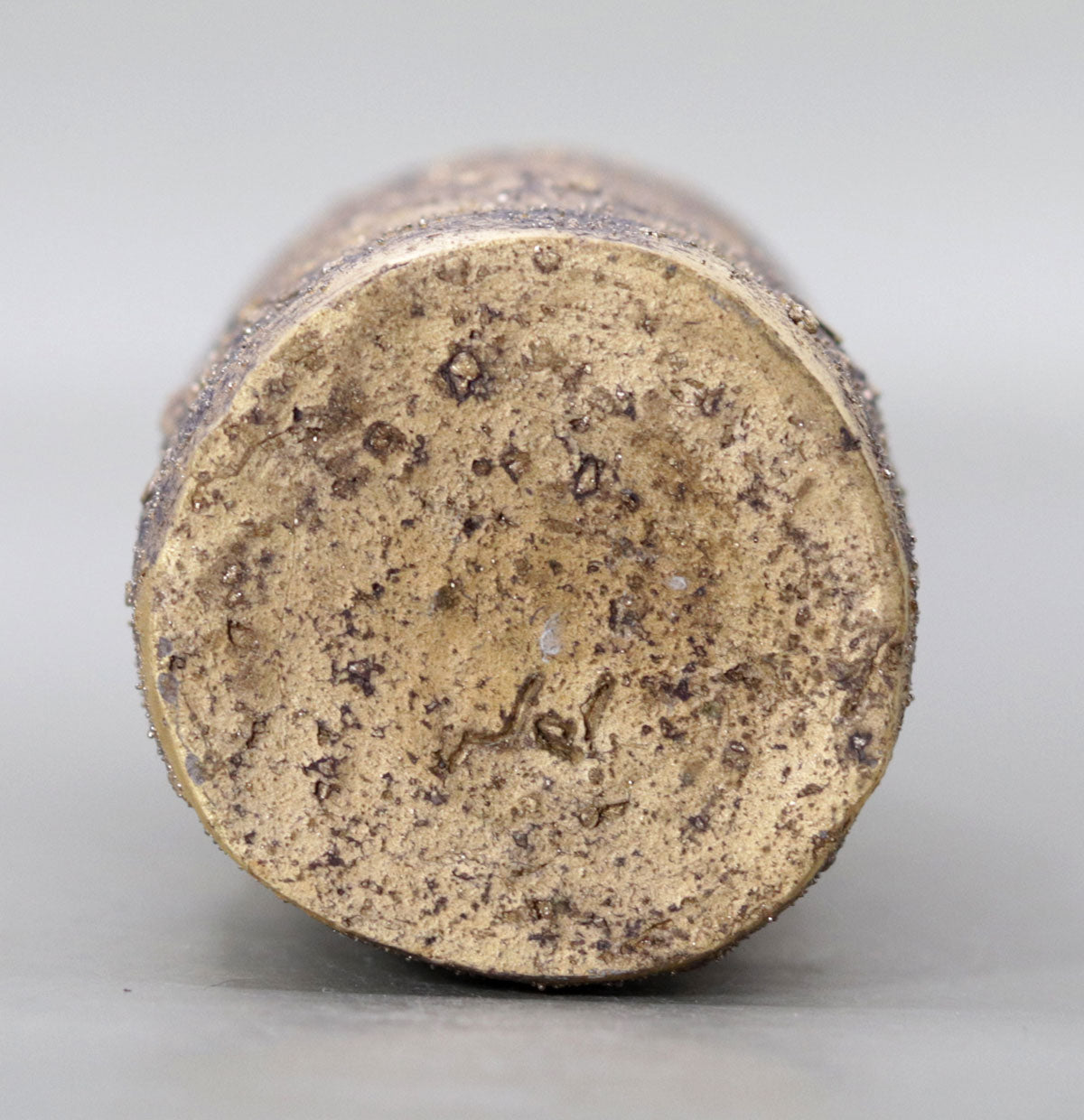
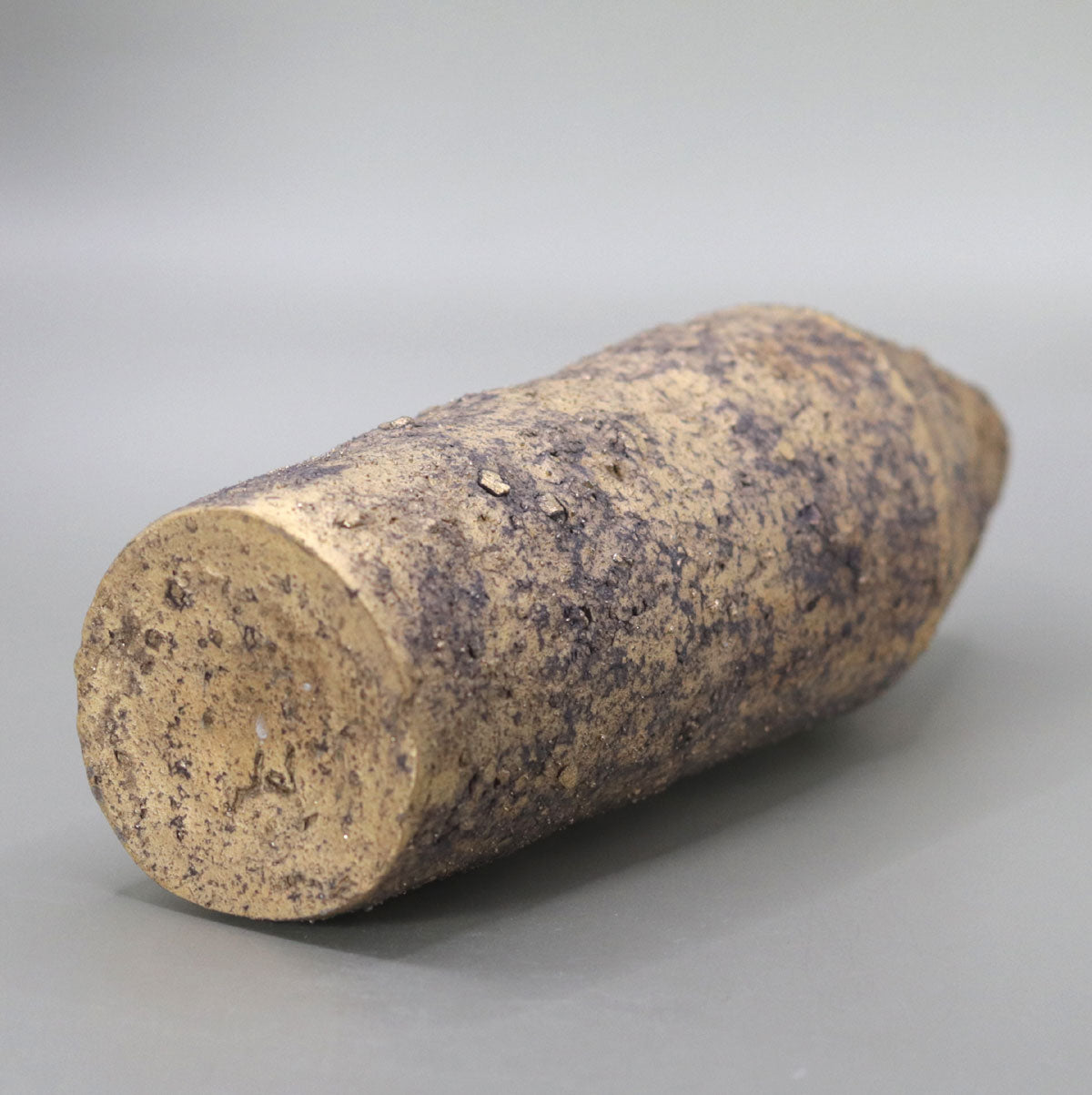
Even in the production of "Hana Ichirin," no potter's wheel is used, and the pieces are all hand- formed. This creates natural distortions and subtle imbalances, adding an organic warmth to the work. Meanwhile, the glaze finish and the well-proportioned cylindrical shape reflect advanced technique and taste. This contrast evokes the spirit of wabi-sabi while also conveying the sophistication of contemporary design.
The journey of Yasushi Fujihira: Inheriting tradition and weaving the future
Yasushi Fujihira was born in Kyoto Prefecture in 1963 and began his career as a ceramic artist. While inheriting the traditions of his father, the renowned ceramic artist Shin Fujihira, he is also breaking new ground with his own unique sensibilities. Below is a summary of his major career history.
- 1988 : Graduated from Kyoto Prefectural Pottery Vocational Training School
- 1990 : Received the Mayor's Award at the Kyoto Exhibition
- 1991 : Received the Encouragement Award at the "Ceramics Biennale"
- 1992 : Selected for the Kyoto Craft Biennale and the Asahi Ceramic Art Exhibition
As these awards show, his work has been highly praised both at home and abroad, and has captivated many people.
The rich experience brought by "Hana Ichirin"
"Hana Ichirin" is a work that embodies the exquisite harmony of wabi-sabi and splendor. The contrast of its gold and navy blue moves the viewer, and wherever it is placed, it will weave a new story into the space. Its possibilities are endless, both as a vase for everyday use and as an object to decorate a space. Why not experience the artistic sensibility of Yasushi Fujihira and the depth of Japanese aesthetics through "Hana Ichirin"?
≪Nei Fujihira Ceramics History≫
1963 Born in Kyoto Prefecture. Father: Shin Fujihira
1988 Graduated from Kyoto Prefectural Pottery Vocational Training School. Selected for the Nitten Exhibition (2 times thereafter).
1989 Akane Award at Kyoto Exhibition (1990 Mayor's Award) Selected for the Japan Ceramic Art Exhibition
1990 Selected for the Contemporary Asahi Craft Exhibition (four times thereafter)
1991 Ceramics Biennale Encouragement Award, All Kansai Art Exhibition Honorable Mention ('92 same award)
1992 Selected for the Kyoto Craft Biennale Selected for the Asahi Ceramic Art Exhibition
1993 All Kansai Art Exhibition, Kansai Award, 2nd Place
2008 Submitted to the Paramita Ceramic Art Grand Prize Exhibition
Share
-
[I will send it to you quickly and carefully]
We carefully package each product in a way that suits it best.
Also, delivery times vary depending on the piece (vessel, etc.).
Items that already come with a box will be shipped within 1-3 days of the order date.
For items that require a box to be made after your order, it will take approximately 30 days for production to be completed and then shipped.
In either case, once we have confirmed your order, we will contact you by email to inform you of the delivery date.
-
[Requests when purchasing pottery]
Even products that look the same may differ slightly in color, shape, size, etc.
The way the glaze is used, the power of the kiln, the firing method, the season, and the humidity also affect the appearance of the pottery.
Please understand the individuality of each piece of pottery and enjoy the unique warmth of handmade.