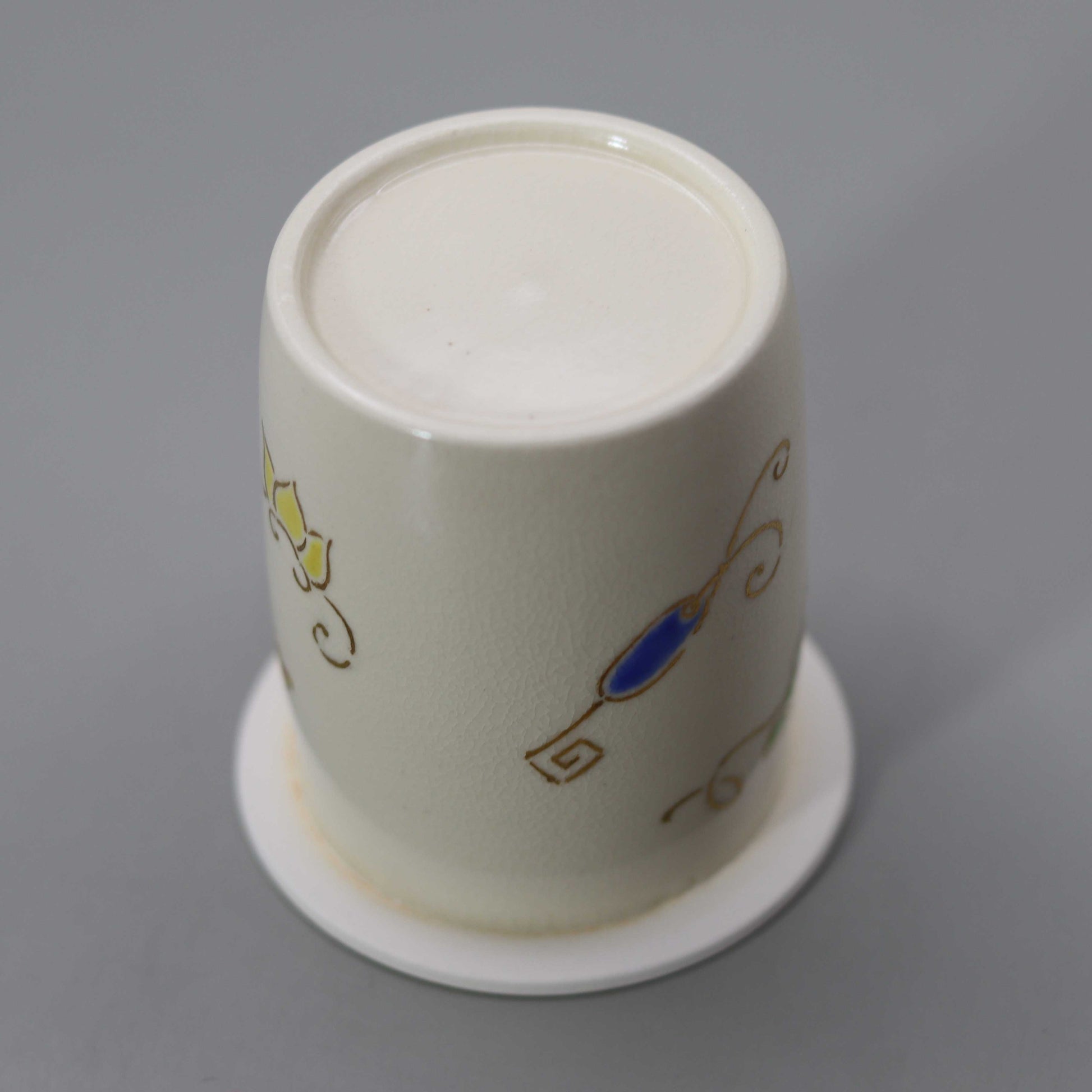
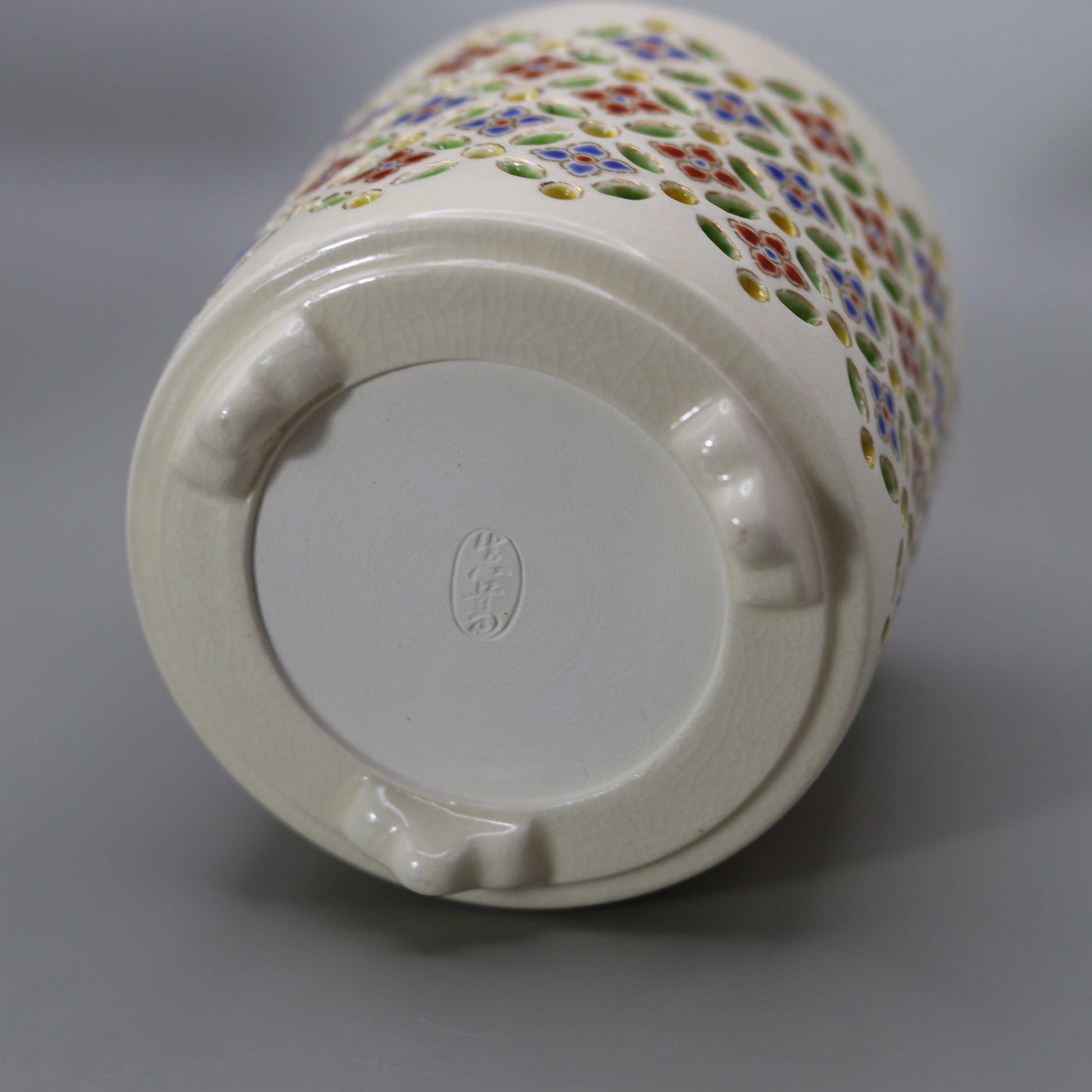
Colored enamel incense burner by Miyagawa Kosai
Colored enamel incense burner by Miyagawa Kosai
Couldn't load pickup availability
Height: 12.5cm Width: 9.5cm
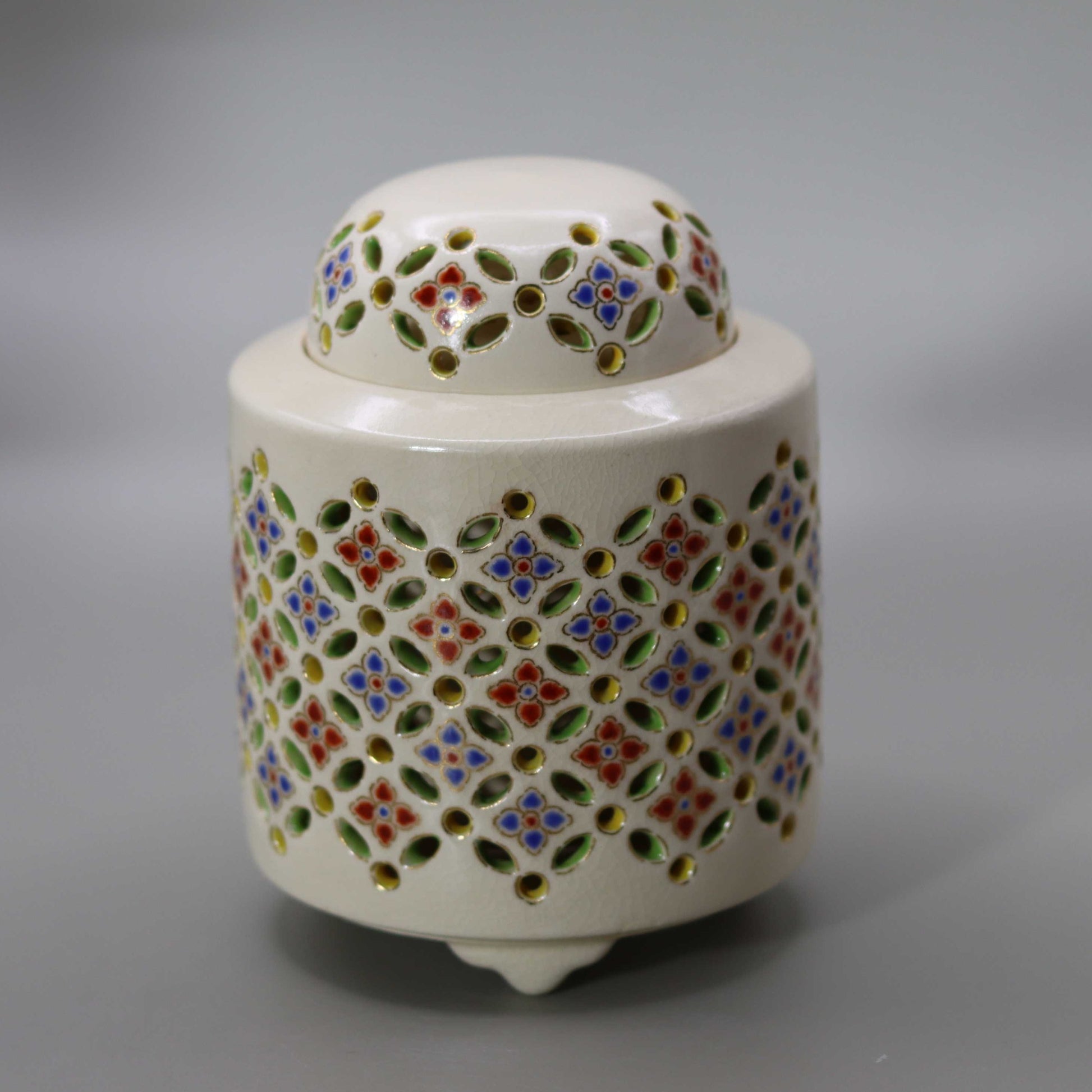
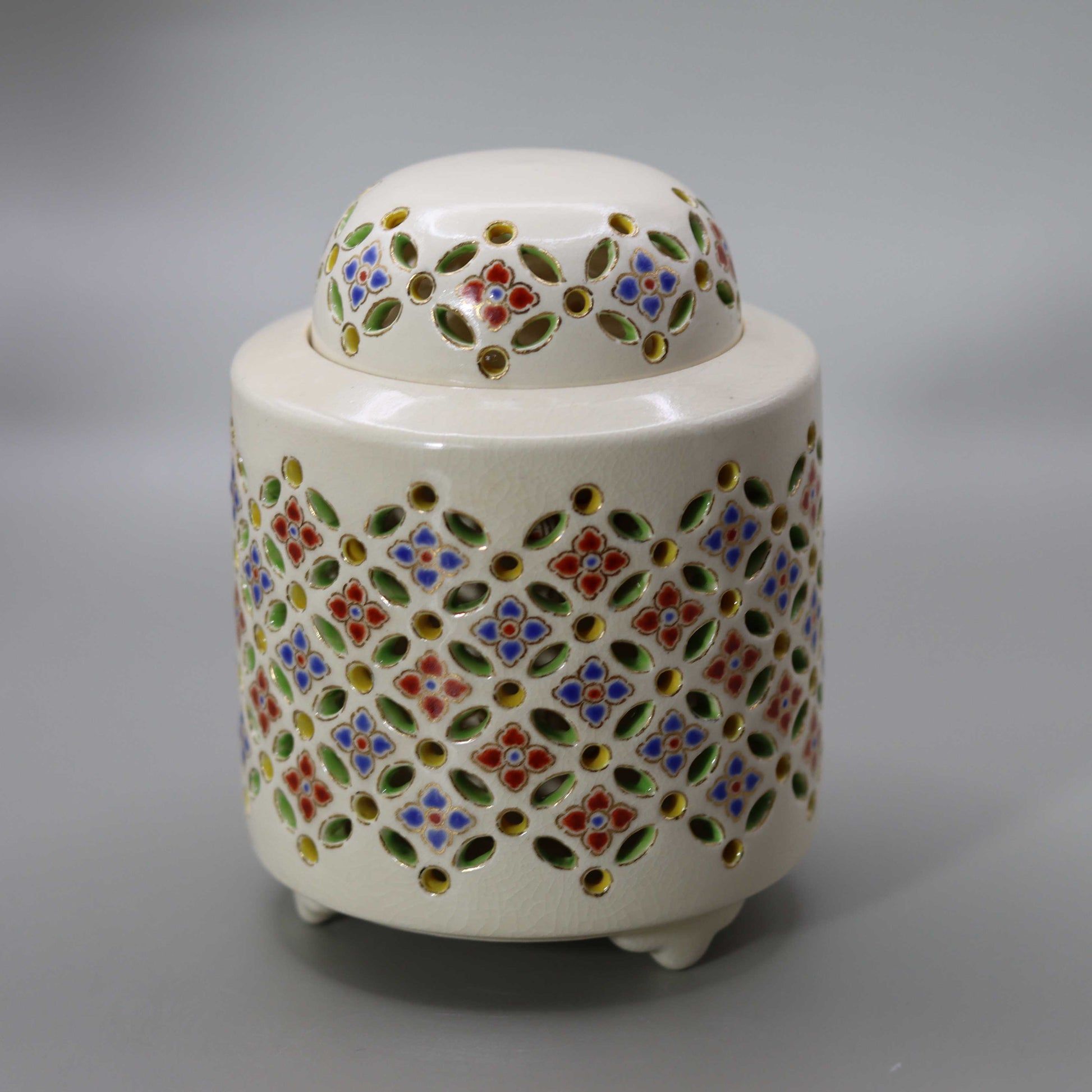
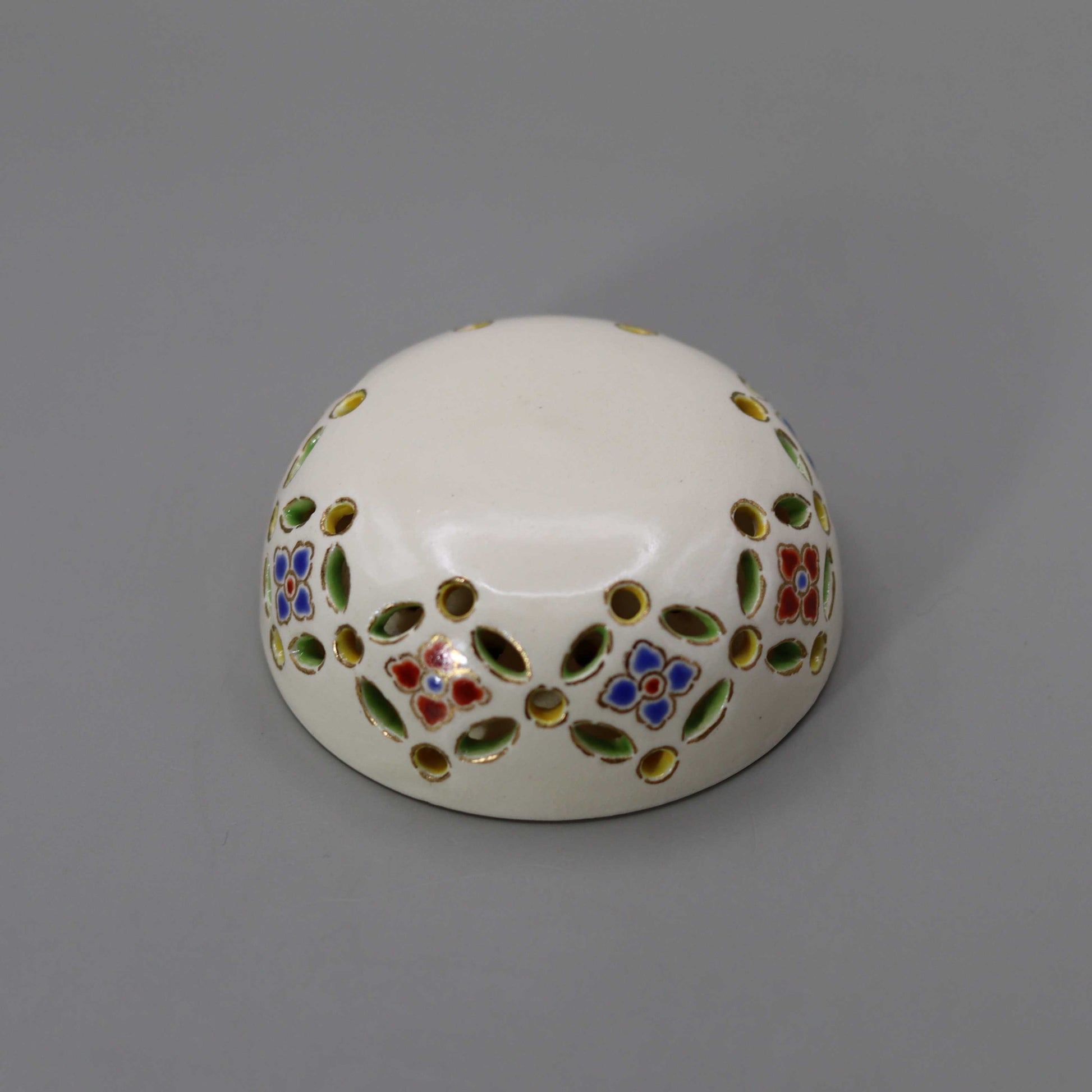
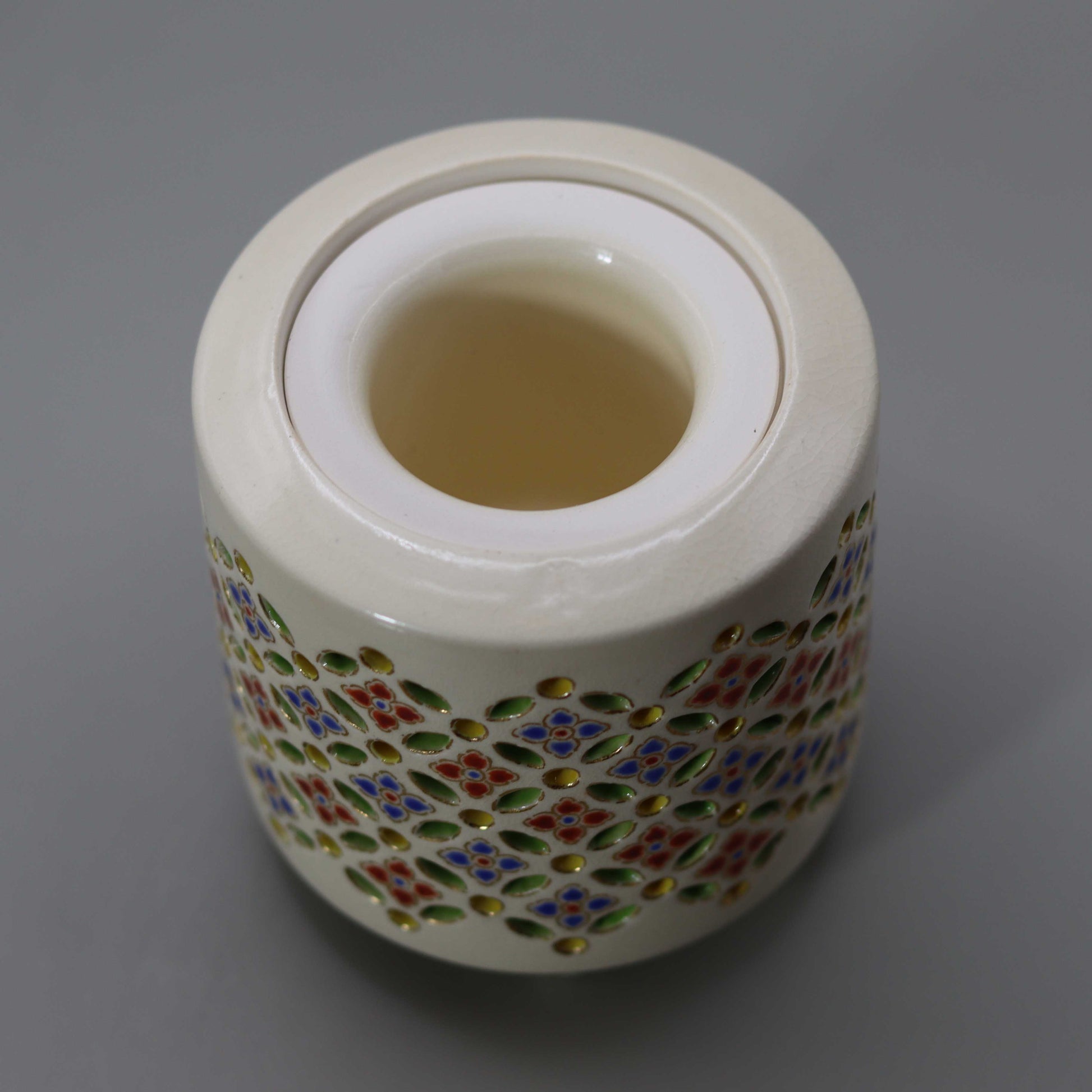
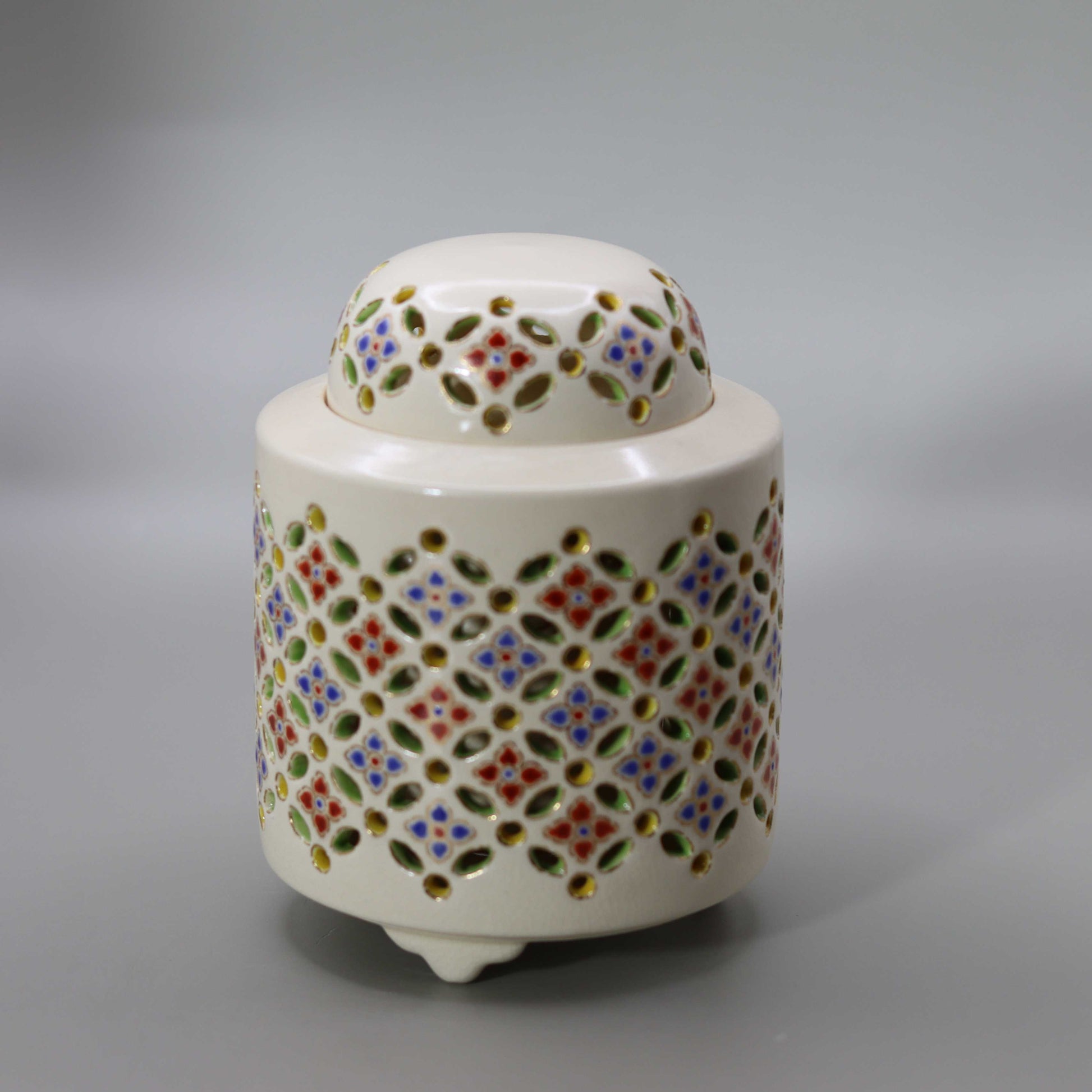
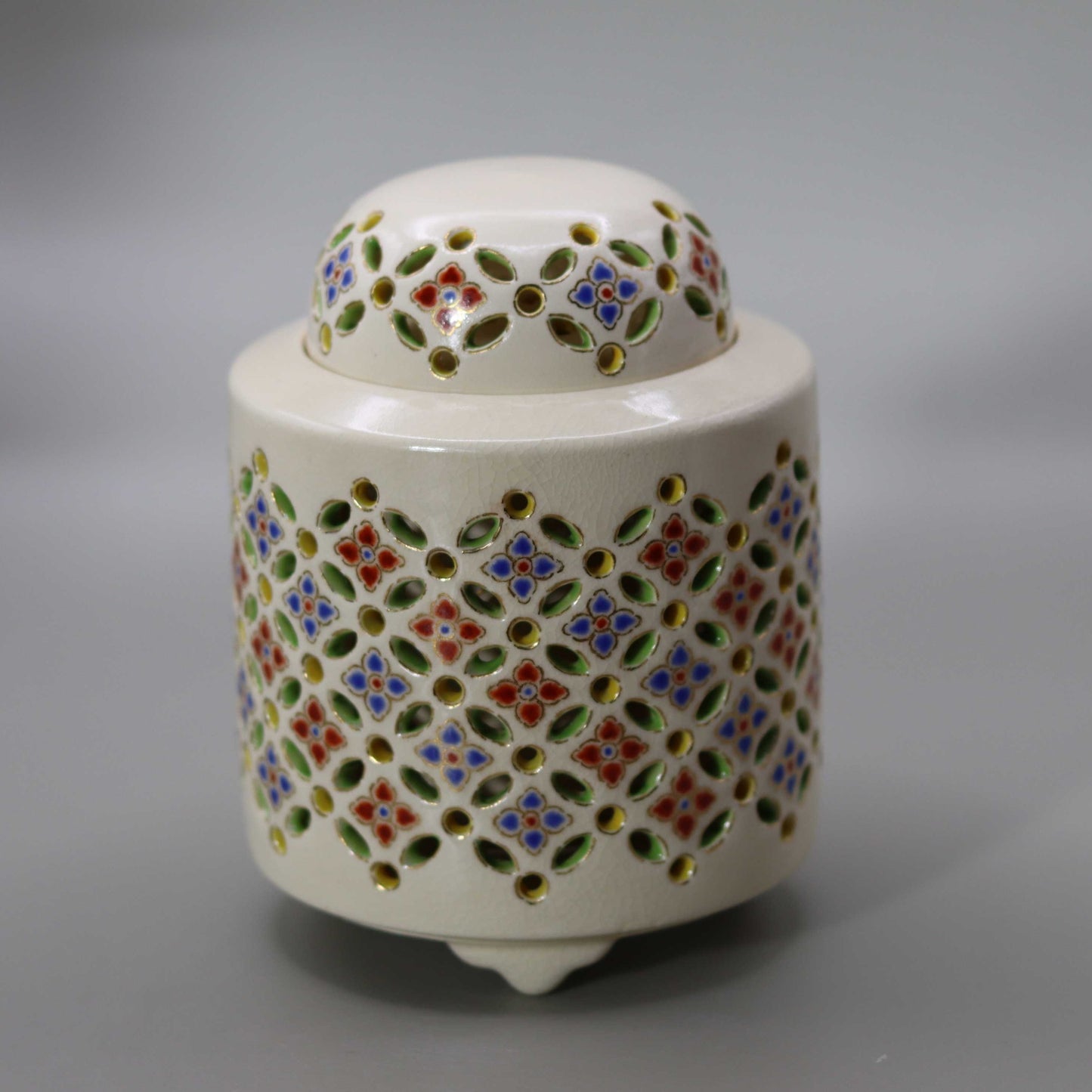
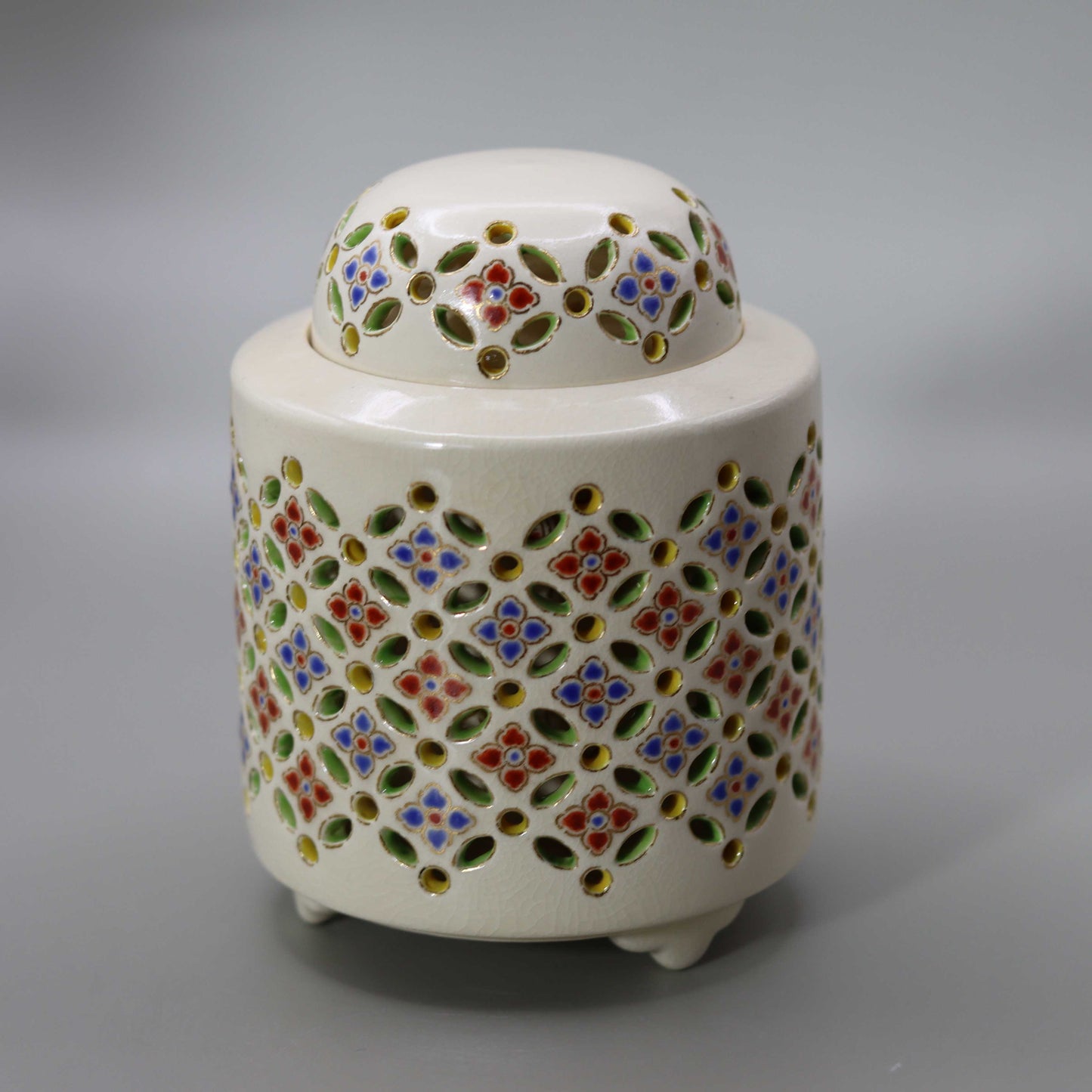
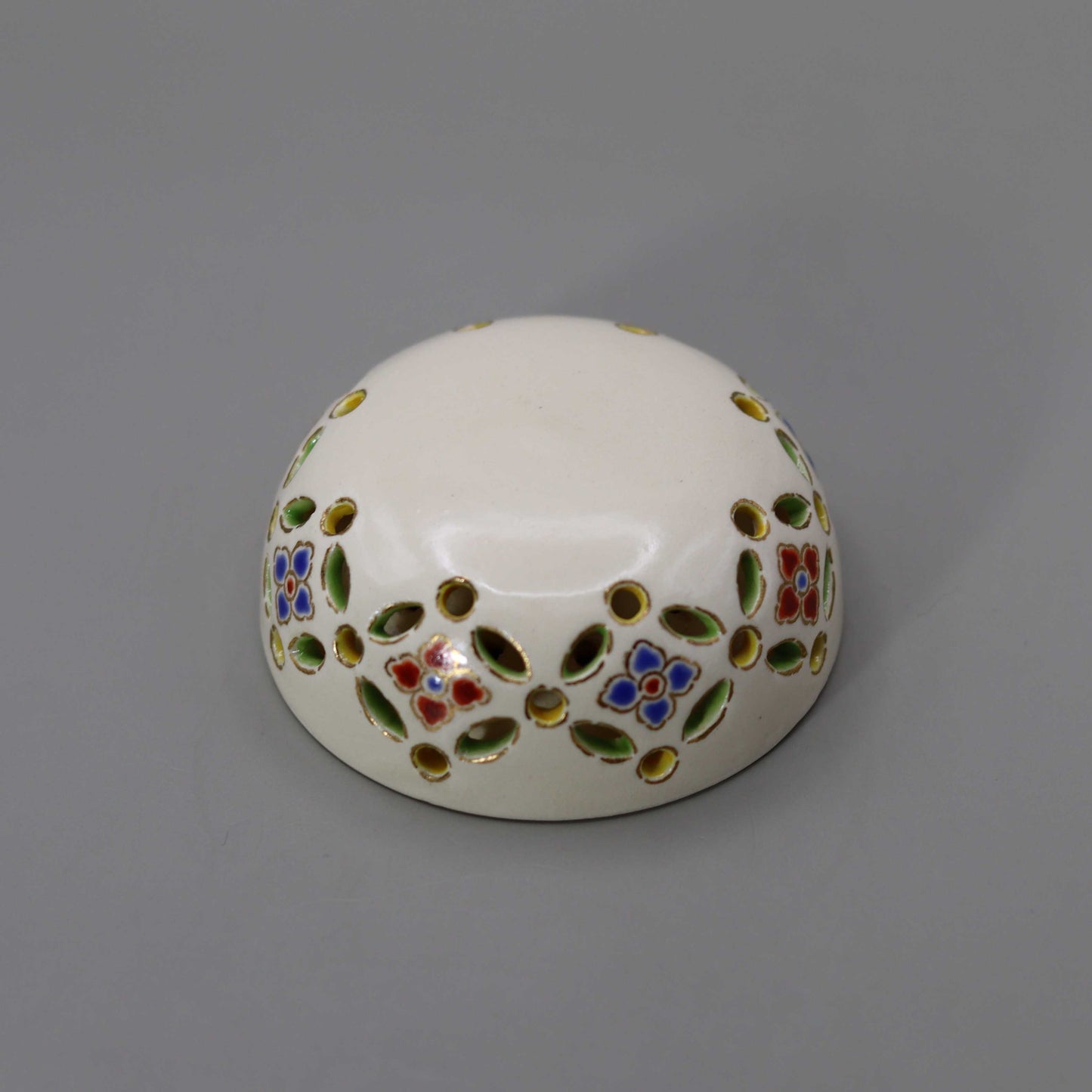
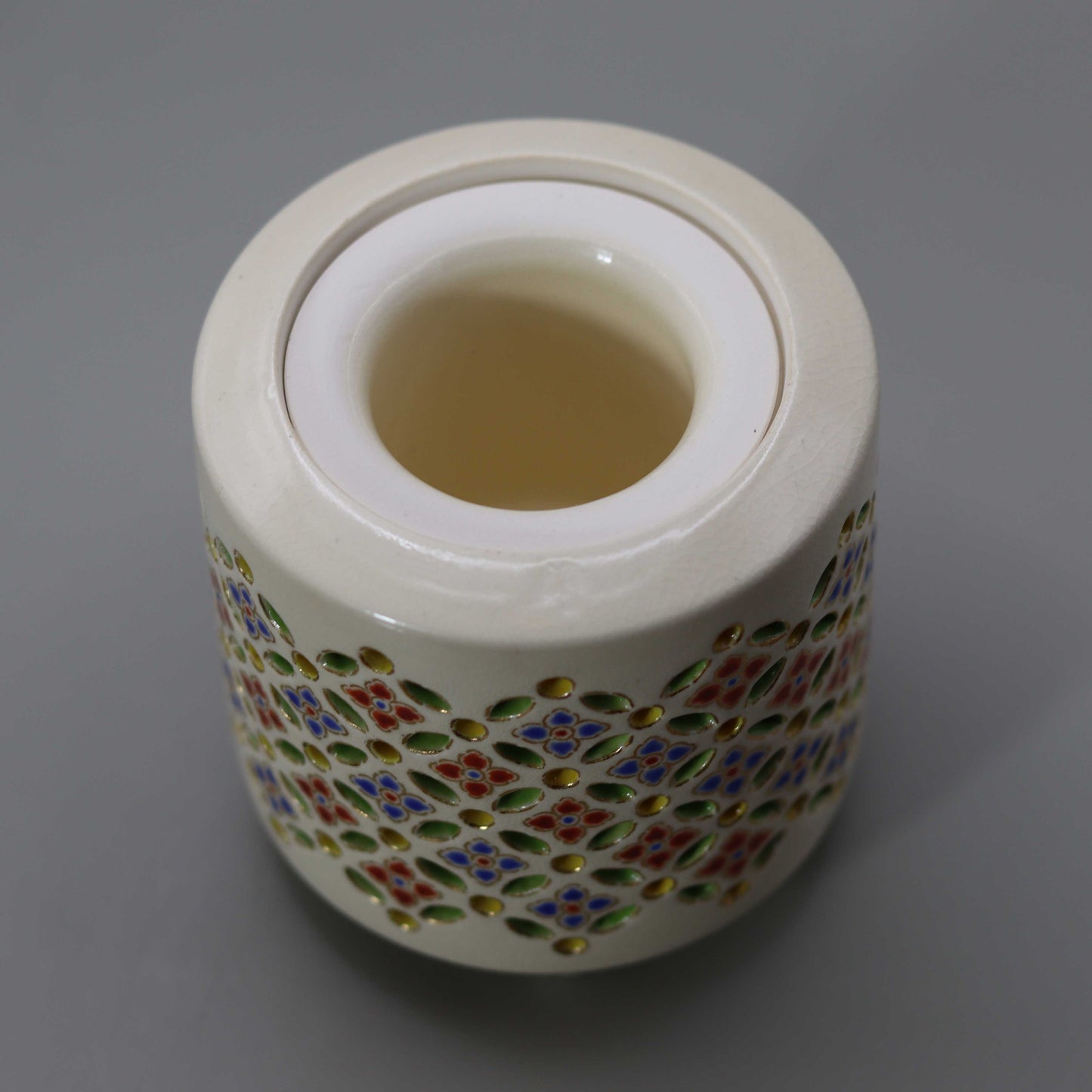
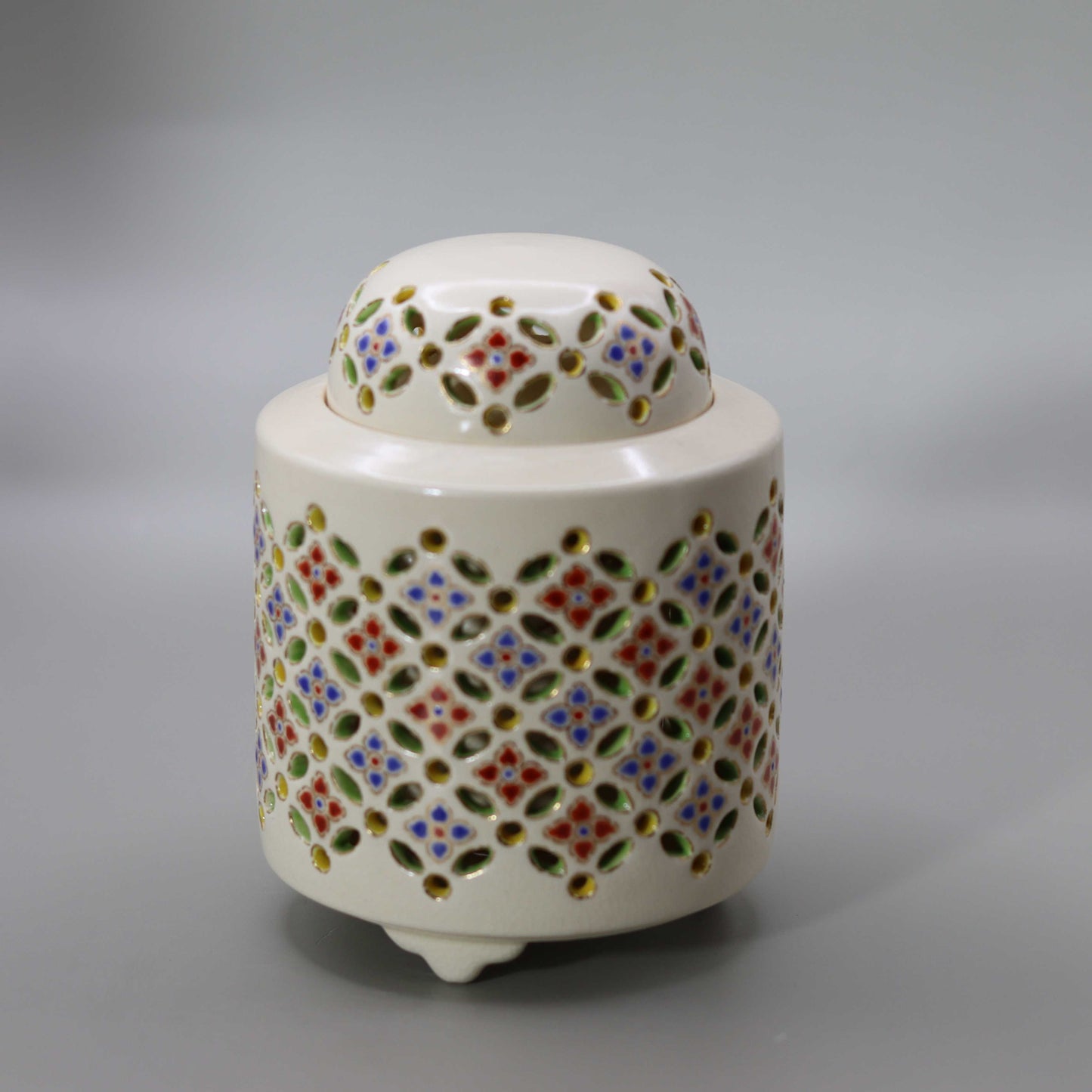
The "Iroe Shippo Openwork Incense Burner Miyagawa Kosai" is a truly beautiful example of tea ceremony utensils, combining the Miyagawa family's signature Makuzu ware techniques with the traditional Japanese "shippo" pattern. Incense burners are used to burn fragrant wood and enjoy its aroma, playing an important role in tea ceremonies and religious ceremonies. This incense burner features intricate openwork carvings and a cloisonné design. Shippo originally refers to the seven treasures described in Buddhist scriptures, each symbolizing nobility and enduring value. Here, however, it is used as a design of connected circles. This chain of circles symbolizes the bond of "en" (fate), and is deeply rooted in Japanese culture as an auspicious motif that prays for human bonds, prosperity of descendants, and family harmony.
The origin and meaning of Shippo patterns
Shippo patterns have long been used in Japanese decorations and crafts as one of the traditional court patterns. This pattern is a geometric pattern of equally sized circles stacked vertically and horizontally to form a mesh. The infinite chain of circles represents harmony and prosperity, and it has become popular as an auspicious design. Shippo patterns also contain wishes for prosperity of descendants and the family, and are therefore frequently used for celebrations such as weddings and housewarmings.
This Shippo pattern is used in a variety of ways in Japan, from family crests and folding screens to kimonos and architectural decorations. In addition, since the word Shippo itself has the Buddhist meaning of "seven treasures," the Shippo pattern as a motif represents the richness of family and human relationships, as well as the infinite possibilities they have.
Miyagawa Kosai and the techniques of Makuzu ware
The name "Miyagawa Kosai" comes from the proud lineage of the Miyagawa family, a prestigious Kyoto ware maker. The Miyagawa family is a distinguished family that dates back to the Edo period, and has inherited a unique pottery technique known as "makuzu ware." Makuzu ware is characterized by its transparent glaze and intricate decoration, and works using colorful glazes known as iroe in particular have received high praise both in Japan and abroad.
The techniques for Makuzu ware were developed by Miyagawa Yukan, who began making pottery in Kyoto in the early Edo period, together with his son Miyagawa Jihei. Makuzu ware was initially fired in Makuzugahara, Higashiyama, Kyoto (near present-day Maruyama Park), but the first Miyagawa Kozan, who later moved to Yokohama, further developed the techniques and made them famous worldwide. Works by the Miyagawa Kosai family are still held in museums and collectors overseas, and are recognized as prime examples of traditional Japanese arts and crafts.
Design and structure of a cloisonné incense burner
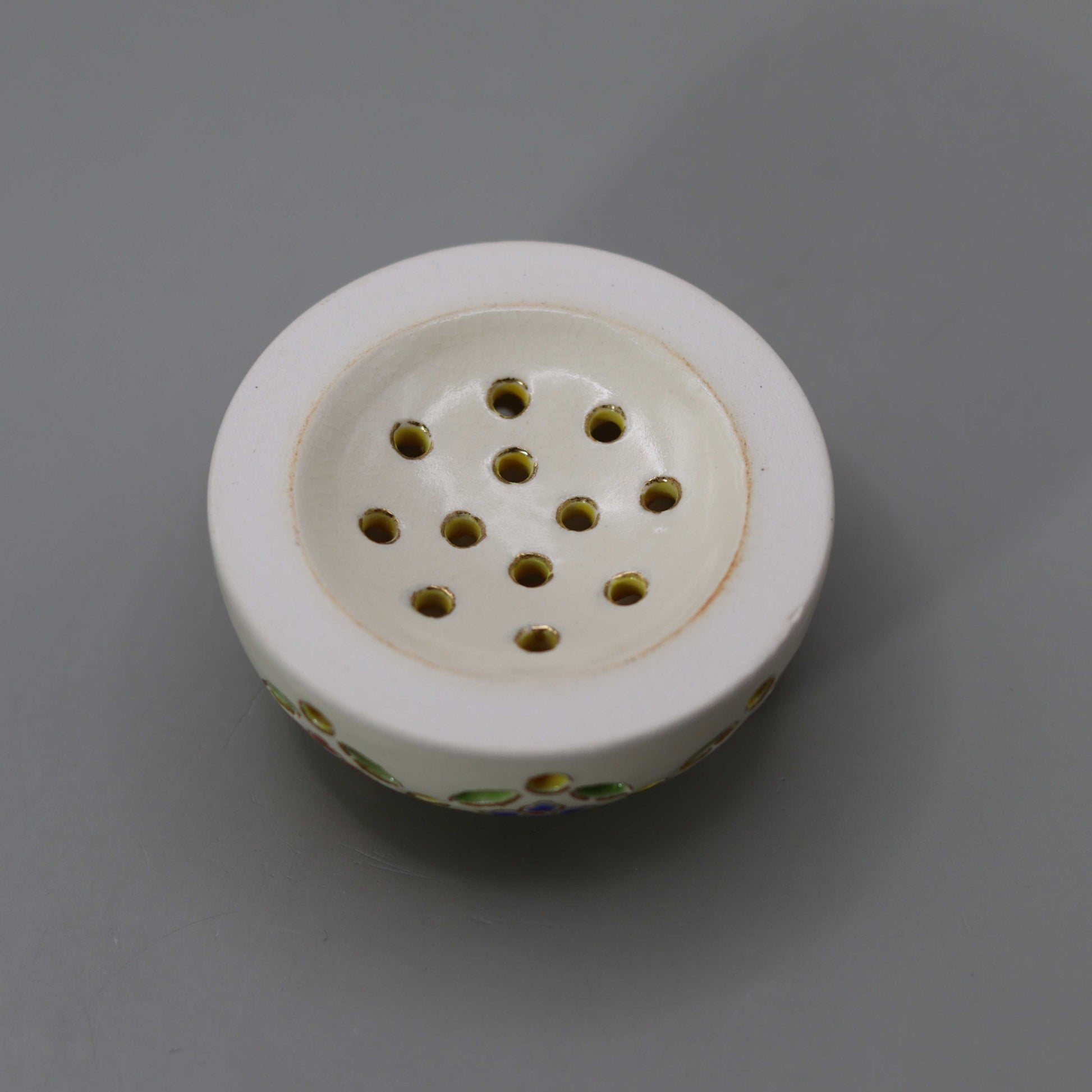
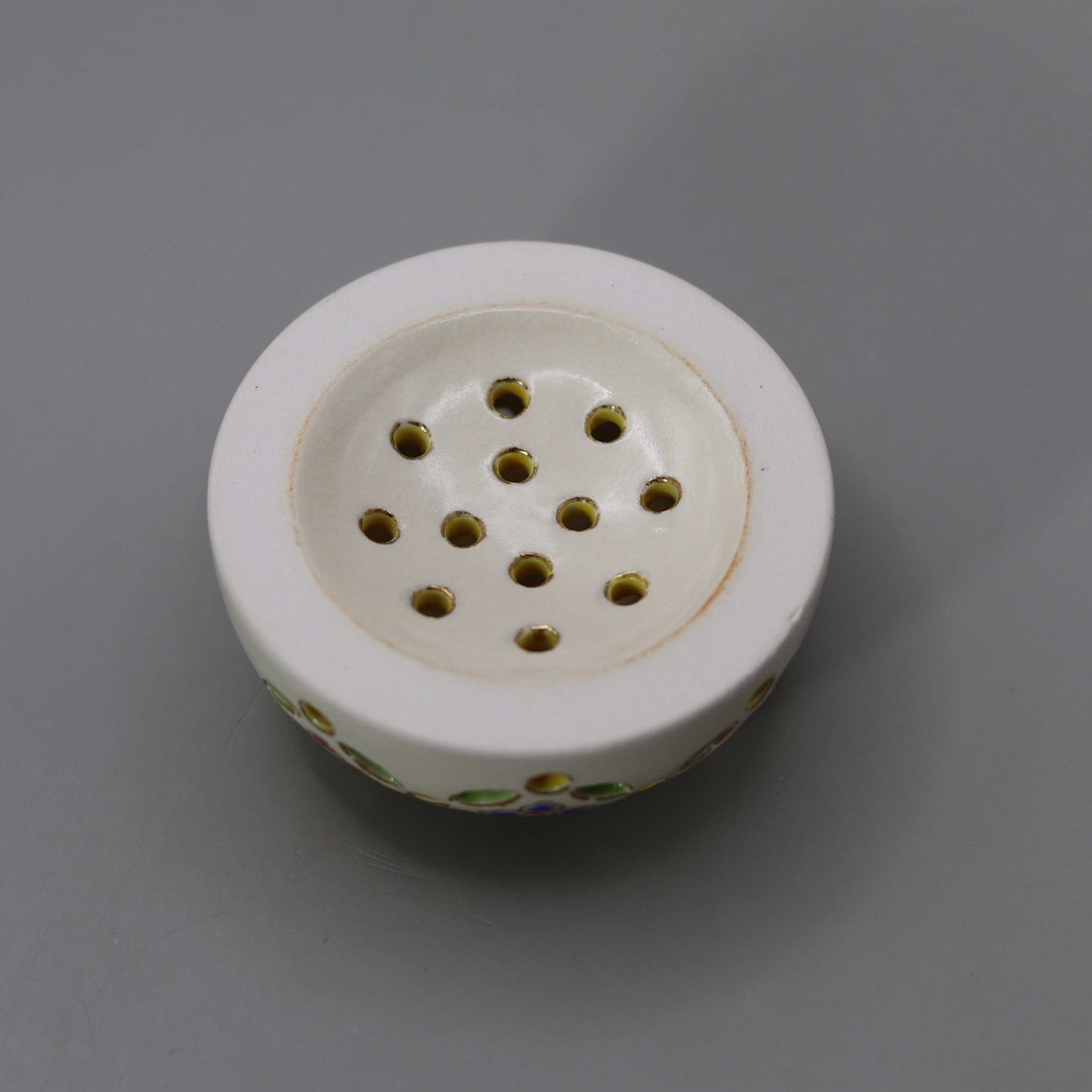
As its name suggests, the "Colored Cloisonné Open Incense Burner" is a beautiful piece of overglaze pottery decorated with a cloisonné pattern and openwork carving. The openwork carving technique involves creating tiny holes and gaps in the surface of the pottery, allowing the fragrance rising from the incense burner to slowly spread throughout the space. Fragrance is considered an especially important element in tea ceremonies, and the fragrance rising from the incense burner in a quiet space has the effect of calming the mind and enhancing the atmosphere of the tea ceremony.
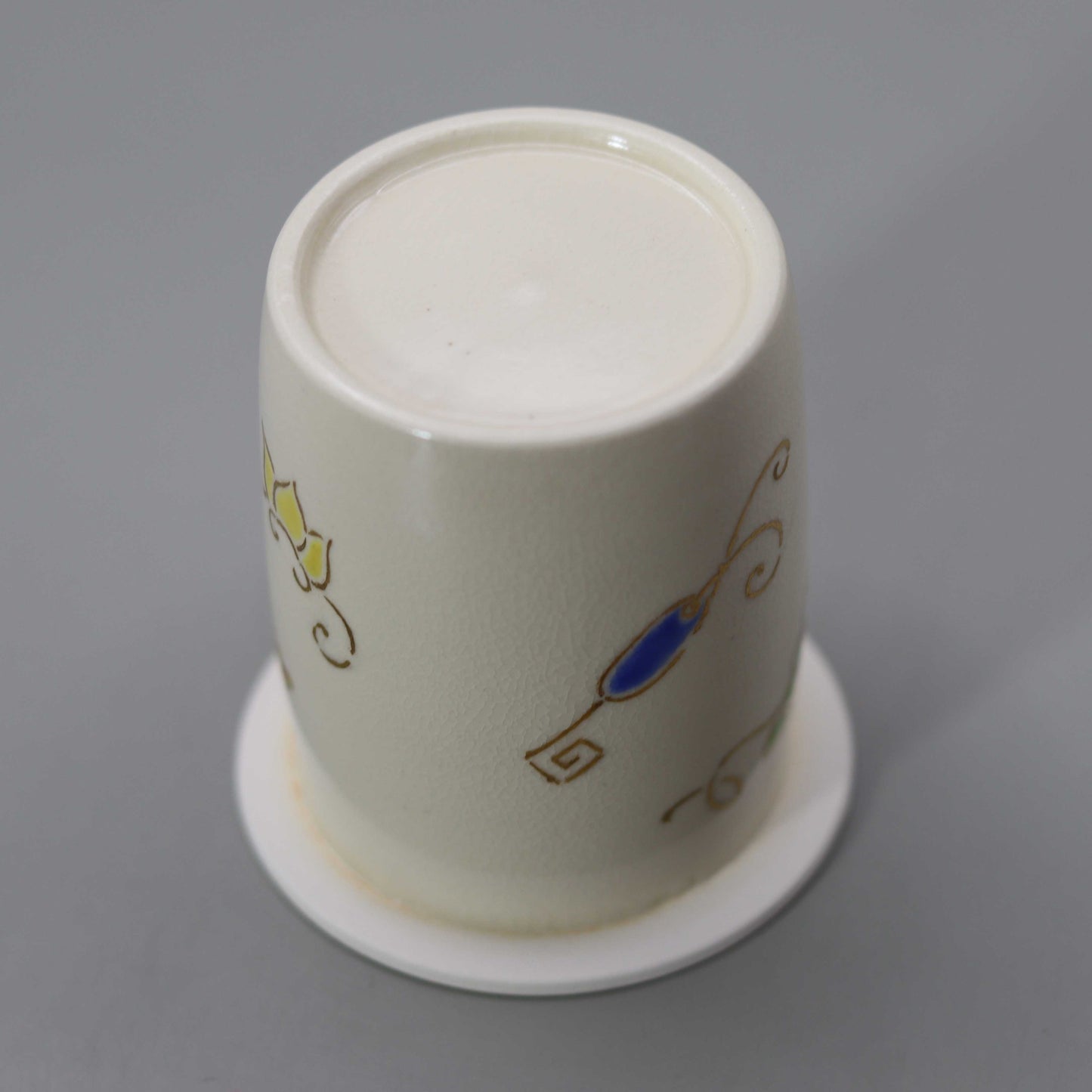
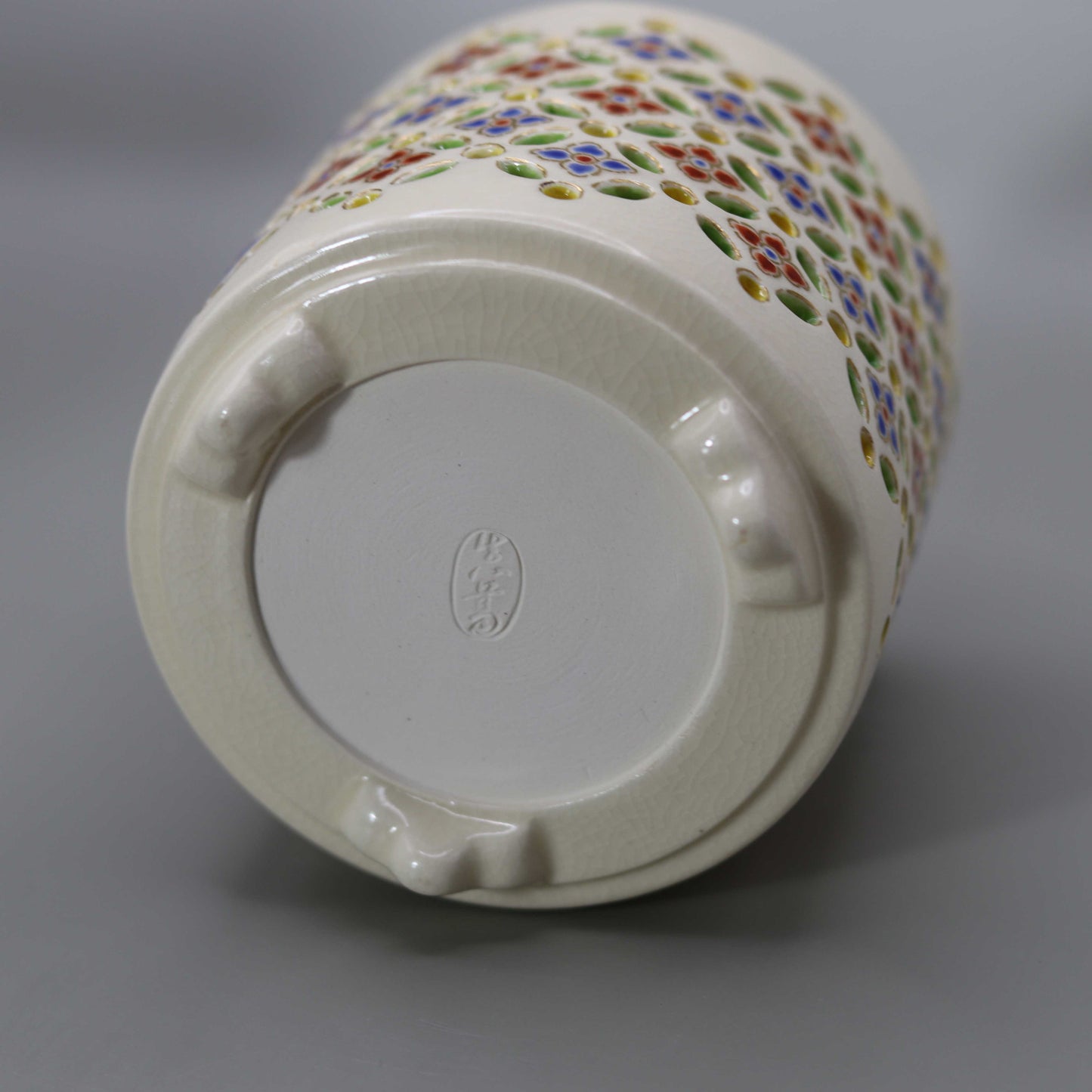
Another distinctive feature of this incense burner is that it has three legs. Three-legged incense burners were introduced from ancient China and have been treasured in Japan for their stability and the fact that the number "three" is considered to be auspicious. The three-legged incense burner is said to have originated from the three-legged frog, a sacred animal in China, and is considered a symbol of fertility and good fortune.
The auspicious meaning of Shippo patterns and the role of incense burners
The interlocking circles of the Shippo pattern symbolize infinite connections and are an auspicious design that wishes for "harmony," "marriage," and "fate." By incorporating this pattern into an incense burner, the act of enjoying the scent itself deepens the connections and bonds between people, and even takes on a deeper meaning of wishing for the prosperity of the family and descendants. In the world of tea ceremony in particular, the incense burner is more than just a tool for burning incense; it is an important item that symbolizes the harmony of the entire space and spiritual purification.
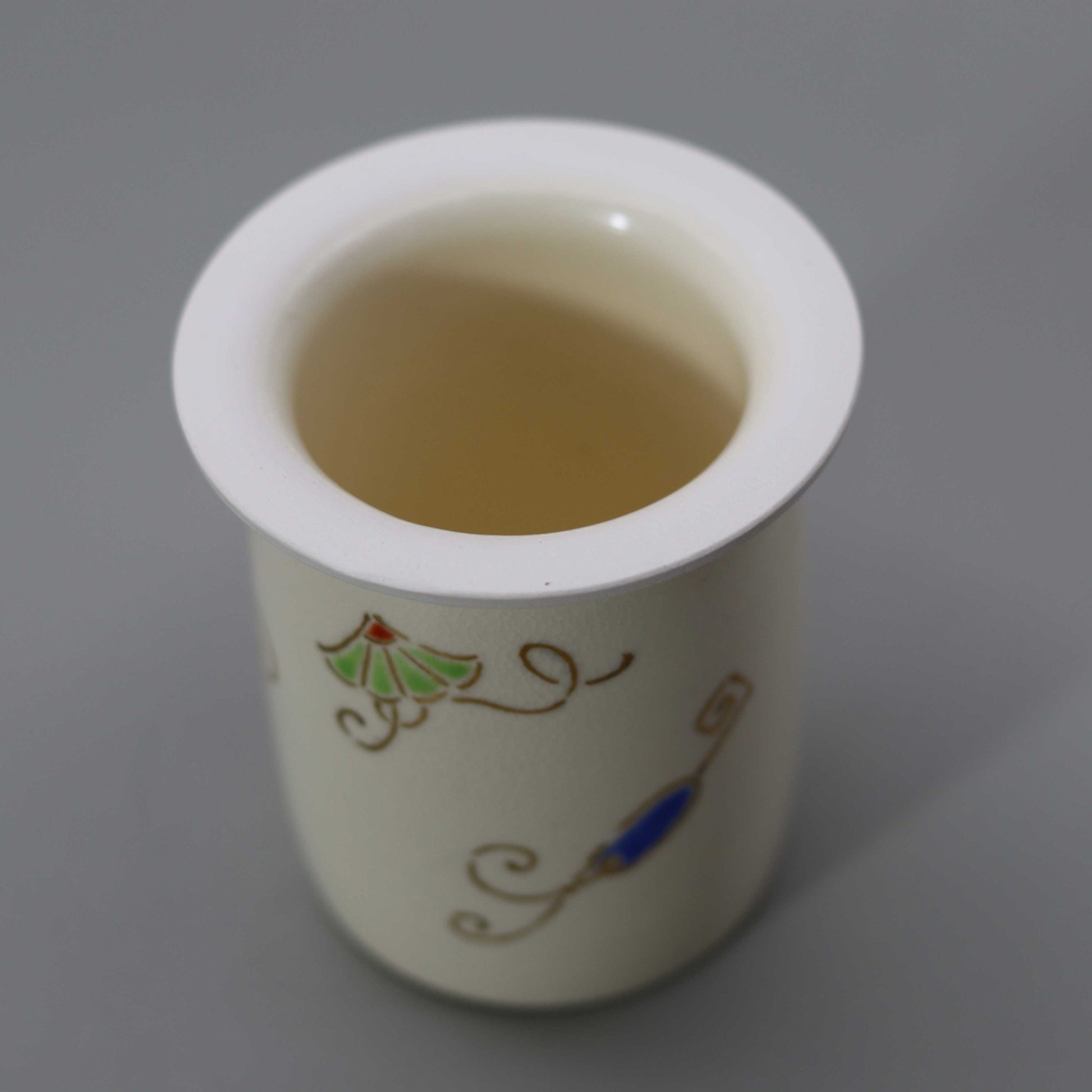
Ash is placed inside the incense burner, charcoal is placed on top of that, and then incense wood is placed on top of the charcoal to release the fragrance. To prevent the incense wood from burning, the fragrance is slowly released, so that the subtle fragrance that lingers in the tea room for a long time calms the mind and further enhances the tranquility of the tea ceremony.
Miyagawa Kosai's works and global recognition
The Miyagawa Kosai family has produced numerous tea ceremony utensils and fine arts, faithfully adhering to traditional techniques while incorporating modern sensibilities into their designs. Miyagawa Kosai, especially the fourth generation, has achieved remarkable success in the production of tea ceremony utensils, and their works are held in museums and private collectors both in Japan and abroad. Their works are housed in international institutions such as the Victoria & Albert Museum in London and the Permanent Mission of Japan to UNESCO in Paris, and are widely recognized as representative examples of traditional Japanese crafts. This piece is an exquisite work of art, combining traditional Japanese cloisonné patterns with openwork carving techniques. The design of this incense burner embodies wishes for harmony, prosperity, and is highly valued in the world of tea ceremony. Crafted through the Miyagawa Kosai family's long history and exceptional craftsmanship, this incense burner has been passed down through the ages and continues to captivate people as a masterpiece that embodies the richness of Japanese culture.
Share
-
[I will send it to you quickly and carefully]
We carefully package each product in a way that suits it best.
Also, delivery times vary depending on the piece (vessel, etc.).
Items that already come with a box will be shipped within 1-3 days of the order date.
For items that require a box to be made after your order, it will take approximately 30 days for production to be completed and then shipped.
In either case, once we have confirmed your order, we will contact you by email to inform you of the delivery date.
-
[Requests when purchasing pottery]
Even products that look the same may differ slightly in color, shape, size, etc.
The way the glaze is used, the power of the kiln, the firing method, the season, and the humidity also affect the appearance of the pottery.
Please understand the individuality of each piece of pottery and enjoy the unique warmth of handmade.