

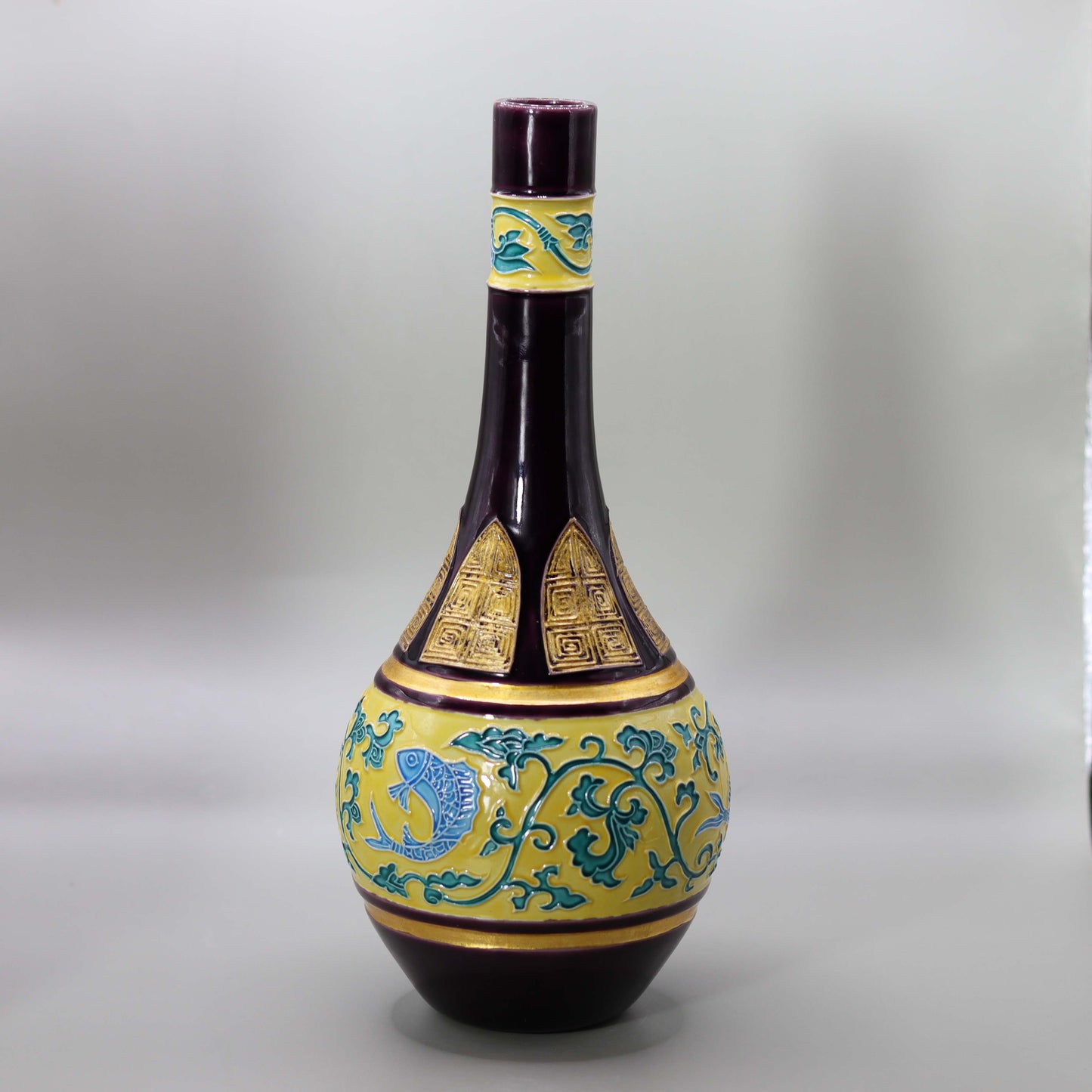
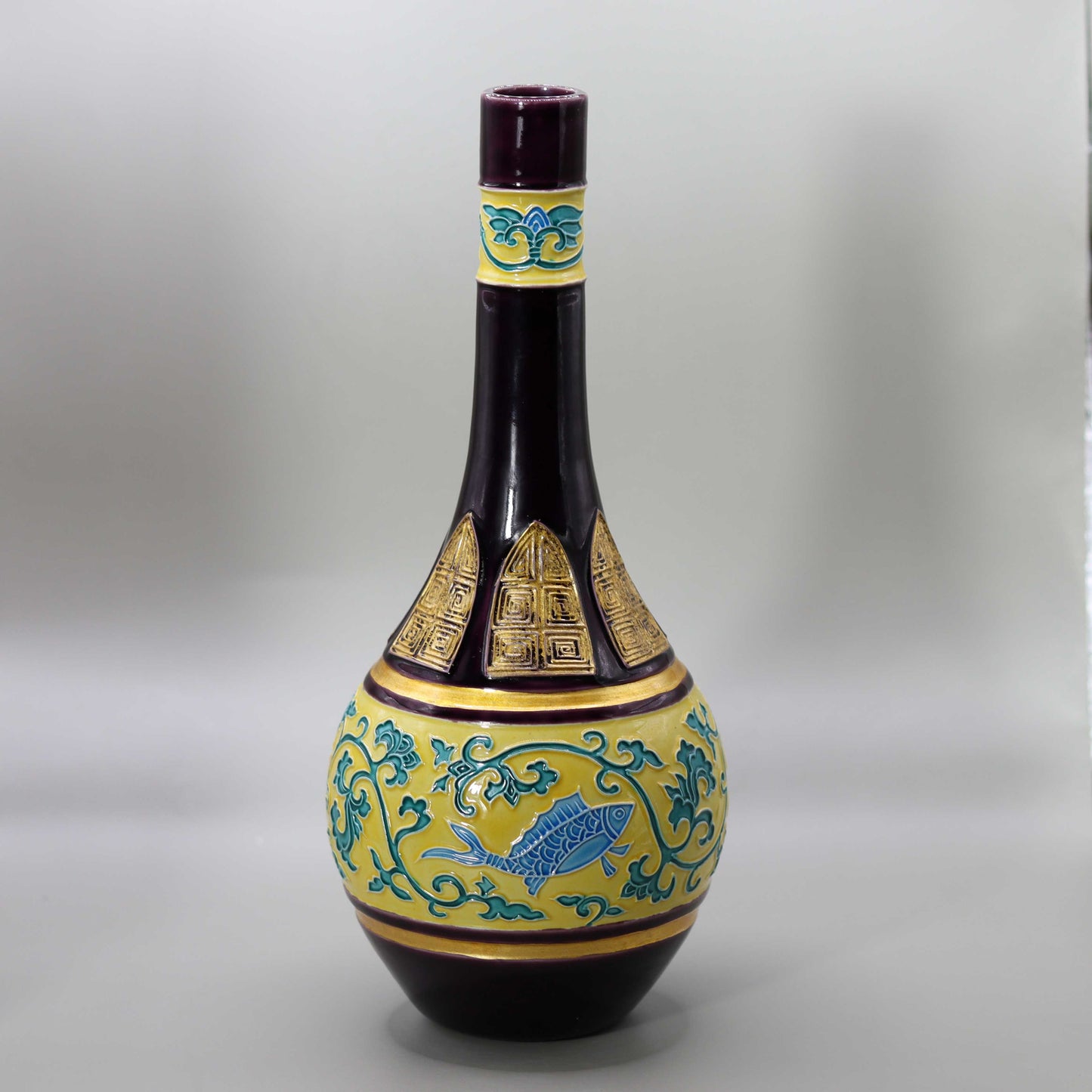
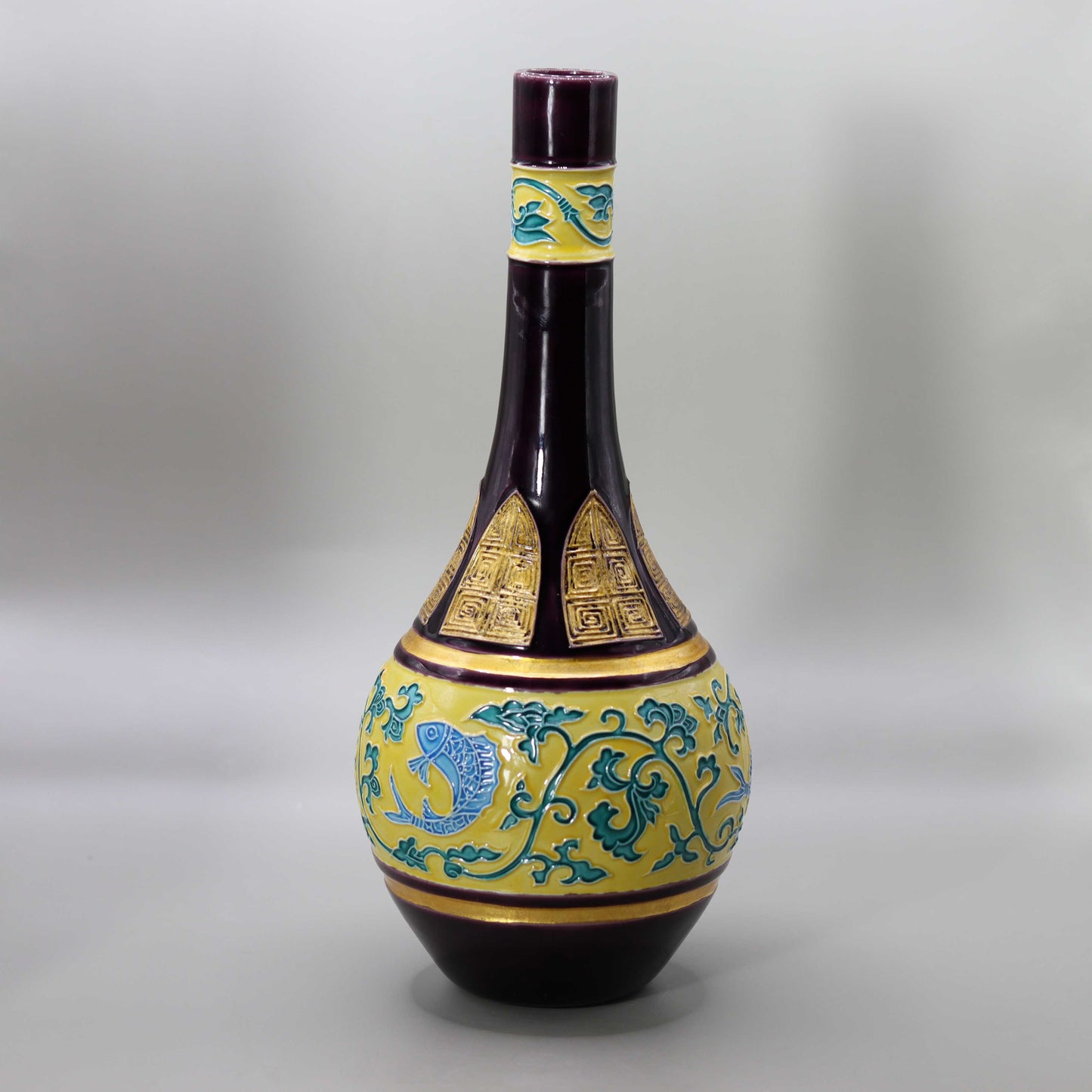
Kochi fish arabesque design peach buttocks vase by Kosai Miyagawa
Kochi fish arabesque design peach buttocks vase by Kosai Miyagawa
Couldn't load pickup availability
Height: 27.5cm Width: 11.5cm
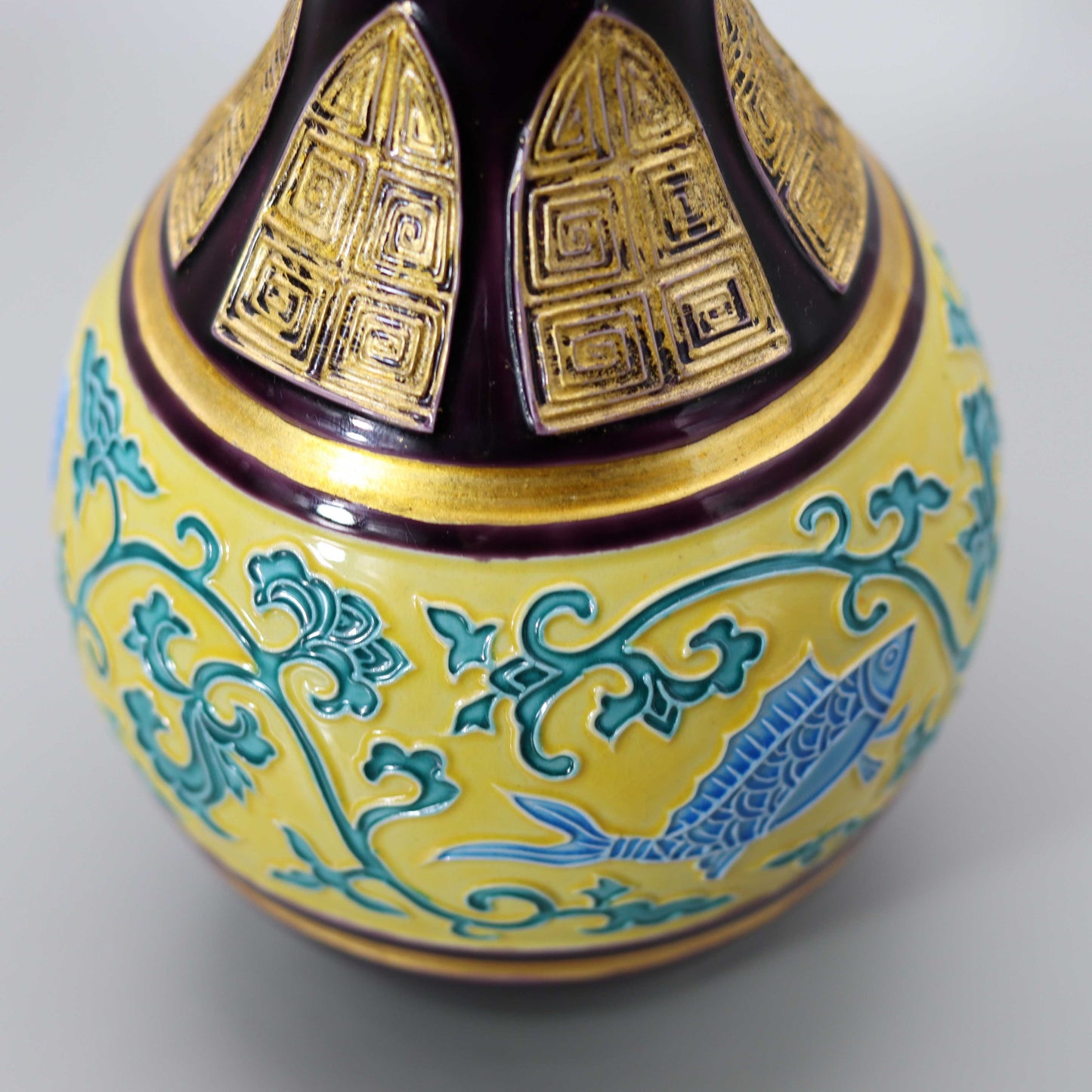
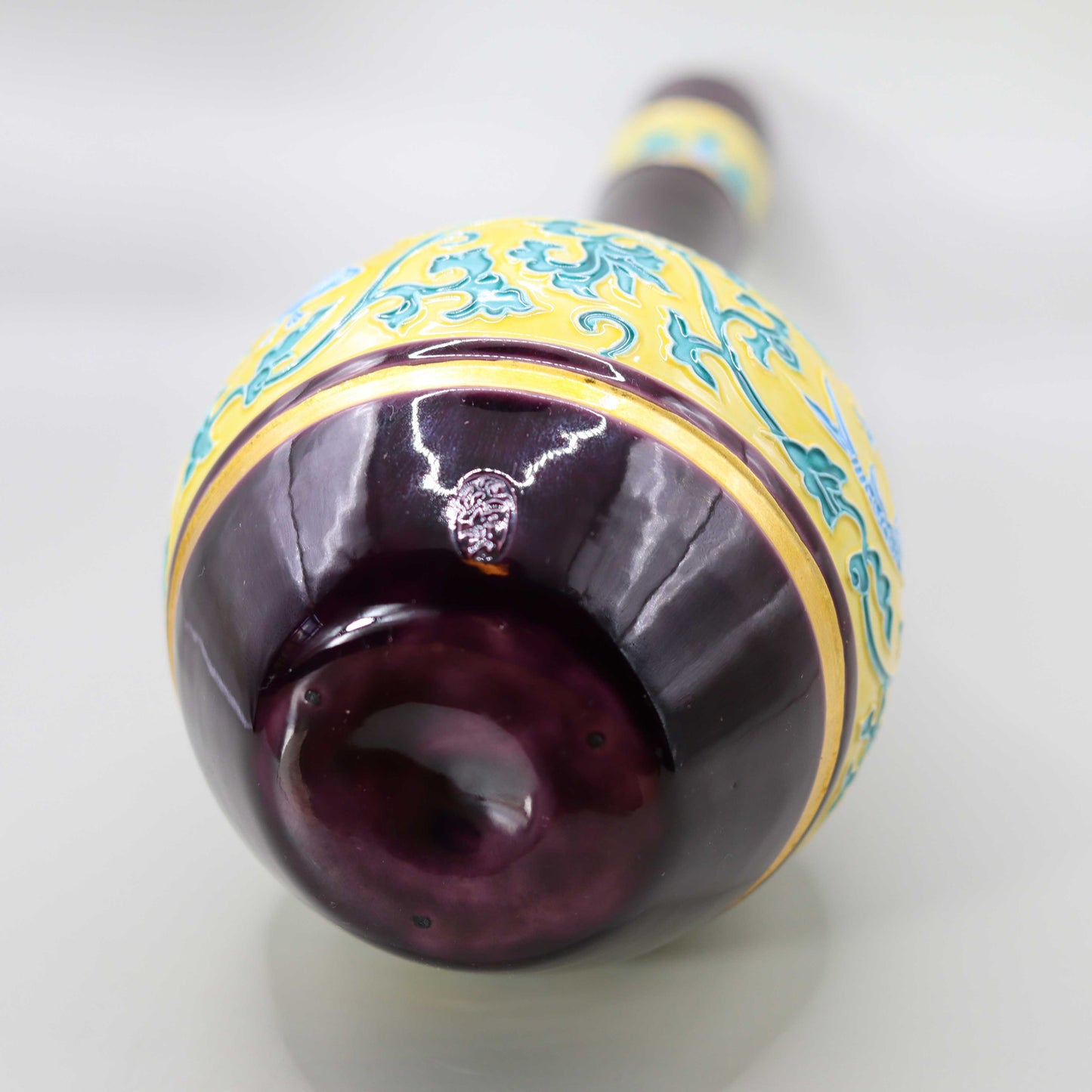
The "Koshi Fish Arabesque Motif Peach-Bottomed Vase by Miyagawa Kosai" is a highly acclaimed piece of tea ceremony utensils. A vase is literally a vessel for arranging flowers, and at tea ceremonies, it is used to display flowers and hanging scrolls together, bringing beauty and tranquility to the space. Koshi ware is characterized by its gorgeous glaze and unique design, and this piece in particular is an extremely sophisticated piece that combines arabesque patterns with a fish motif.
The origin and meaning of arabesque patterns
The arabesque pattern on this vase has its roots in ancient Greece and Egypt. The arabesque pattern expresses the strength of life through the intertwining of grasses and ivy, and was introduced to Japan via the Silk Road. In Japanese culture, the arabesque pattern has been highly valued as an auspicious motif, symbolizing prosperity and longevity. The arabesque pattern is expressed through symmetrical spirals and intertwining vines, and is used as aesthetic decoration in a variety of settings.
Characteristics and history of Koushi ware
Kochi ware is a type of ceramic ware characterized by its vibrant glaze, and was introduced to Japan through trade with Cochinchina, Vietnam. Its name comes from the fact that it was brought there by Kochi ships, but its actual place of origin is believed to be Zhangzhou in southern Fujian Province, China. Kochi ware is characterized by its unique technique of firing at low temperatures, and many pieces are made using a variety of colored glazes, including yellow, purple, blue, and green. It was particularly popular as tea ceremony utensils, and was highly prized by connoisseurs of fine arts during the Edo period.
Fish and peach butt motif
The design of this vase combines fish and arabesque patterns. Fish are a symbol of water, and since ancient times have been considered an auspicious motif representing prosperity and harmony. The fusion of arabesque patterns and fish symbolizes the vitality and abundance of nature, and this meaning is also enhanced in the tea ceremony.
"Momojiri" (peach buttocks) is a word that describes the shape of this vase, with its rounded silhouette reminiscent of a peach. Peaches have been a symbol of longevity and immortality in China and Japan since ancient times, and the shape of this vase is considered auspicious, bringing happiness and health.
Miyagawa Kosai and the tradition of Makuzu ware
He is a member of the Miyagawa family, a prestigious Kyoto ware family known for its Makuzu ware. The Miyagawa family is a pottery family with a long history dating back to the Edo period, and has produced many beautiful tea ceremony utensils, particularly using Makuzu ware and Koshi ware. Miyagawa Kosai's works are highly regarded in the world of tea ceremony, and his techniques and designs are prized by museums and collectors both in Japan and abroad. The Miyagawa family, especially since the fourth generation, has continued to produce works that incorporate modern sensibilities while preserving traditional techniques.
Importance as a tea ceremony utensil
This "Koshigyo Karakusa Motif Peach-Bottom Vase" also plays an extremely important role as a tea ceremony implement. Arranging flowers appropriate to the season and occasion brings the beauty of nature into the tea room and has a calming effect. The vase's vibrant colors and elegant shape bring a balance of splendor and serenity to the tea room, leaving a deep impression on tea ceremony guests. The "Koshigyo Karakusa Motif Peach-Bottom Vase by Miyagawa Kosai" is a masterpiece that beautifully combines traditional techniques and design. Revered in the world of tea ceremony, this vase embodies the Japanese aesthetic sensibility that has been passed down through history, thanks to its ancient arabesque pattern and the auspicious meanings of the fish and peach shapes. This work by Miyagawa Kosai continues to add color to tea ceremonies and captivate the hearts of those who see it.
Share
-
[I will send it to you quickly and carefully]
We carefully package each product in a way that suits it best.
Also, delivery times vary depending on the piece (vessel, etc.).
Items that already come with a box will be shipped within 1-3 days of the order date.
For items that require a box to be made after your order, it will take approximately 30 days for production to be completed and then shipped.
In either case, once we have confirmed your order, we will contact you by email to inform you of the delivery date.
-
[Requests when purchasing pottery]
Even products that look the same may differ slightly in color, shape, size, etc.
The way the glaze is used, the power of the kiln, the firing method, the season, and the humidity also affect the appearance of the pottery.
Please understand the individuality of each piece of pottery and enjoy the unique warmth of handmade.