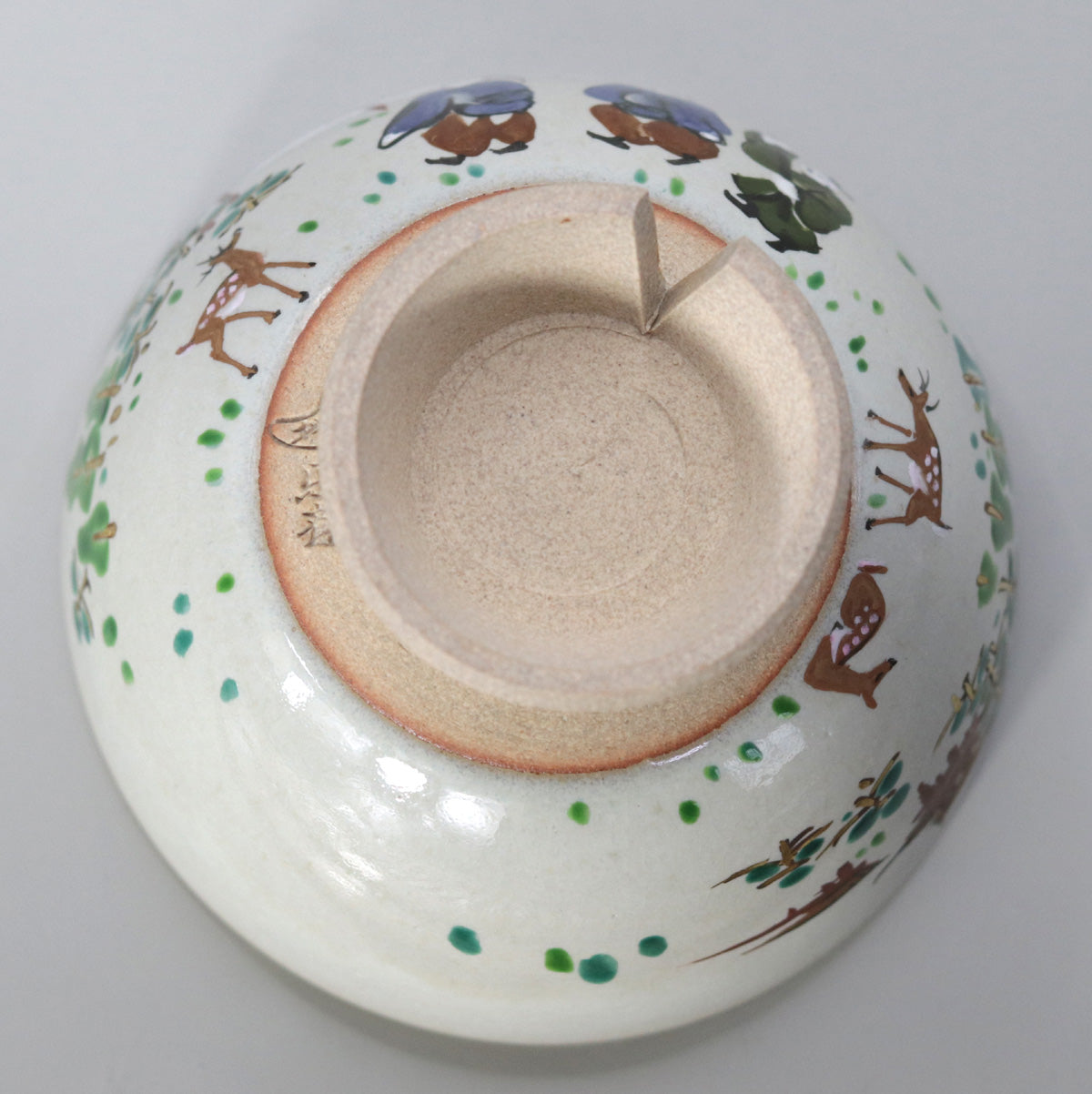
Goki style Kasugae tea bowl by Rakusai Onishi
Goki style Kasugae tea bowl by Rakusai Onishi
Couldn't load pickup availability
Width: 11.3cm Height: 7.8cm
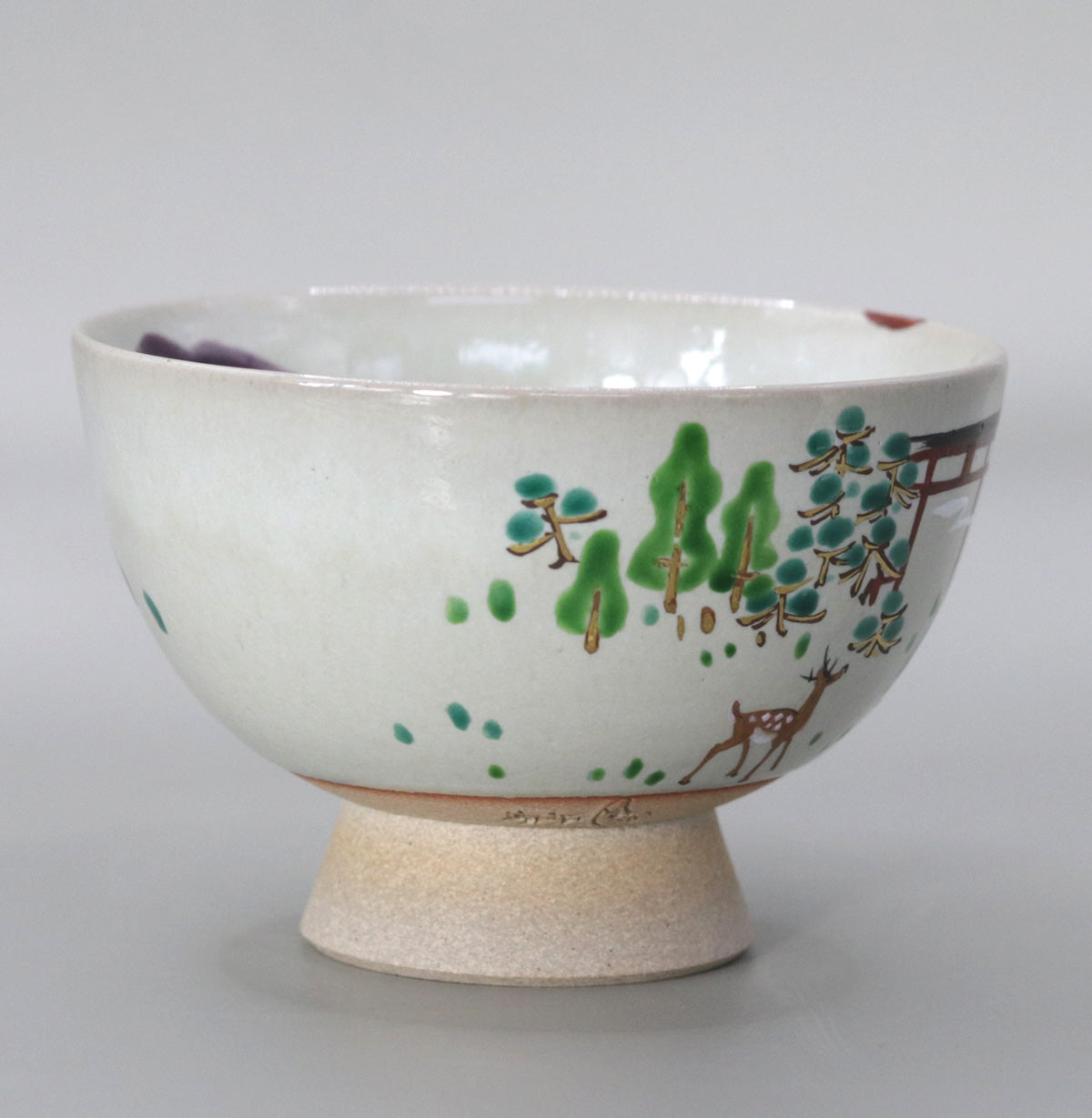
This piece, created by Onishi Rakusai, is a bowl that skillfully combines the powerful form of the "Gouki-gata" style, which originates from rice bowls of the Joseon Dynasty of Korea, with the elegant colors of Kasuga-e painting. When you actually hold it in your hands, you can see that the volume of the base and the lightness of the painting are perfectly balanced, and that this is a piece that simultaneously embodies the "beauty of utility" and the "beauty of conversation" that are sought after in tea utensils.
1. Sculptural beauty - the bold form of Goki style pottery
A neat bowl shape <br data-start="237" data-end="240">The slightly thick, rising base and gently curved rim create ideal proportions to hold the rich foam of matcha tea.
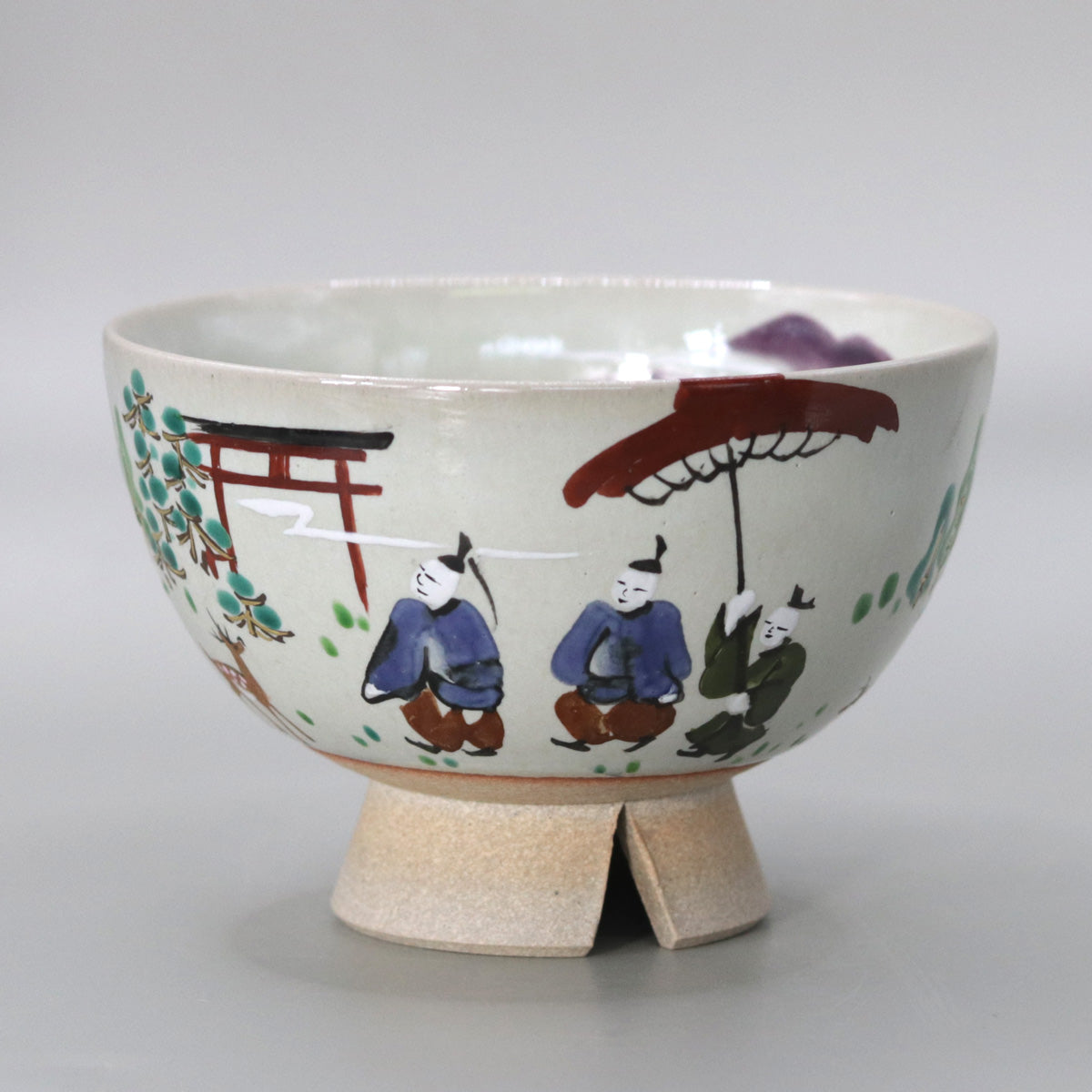
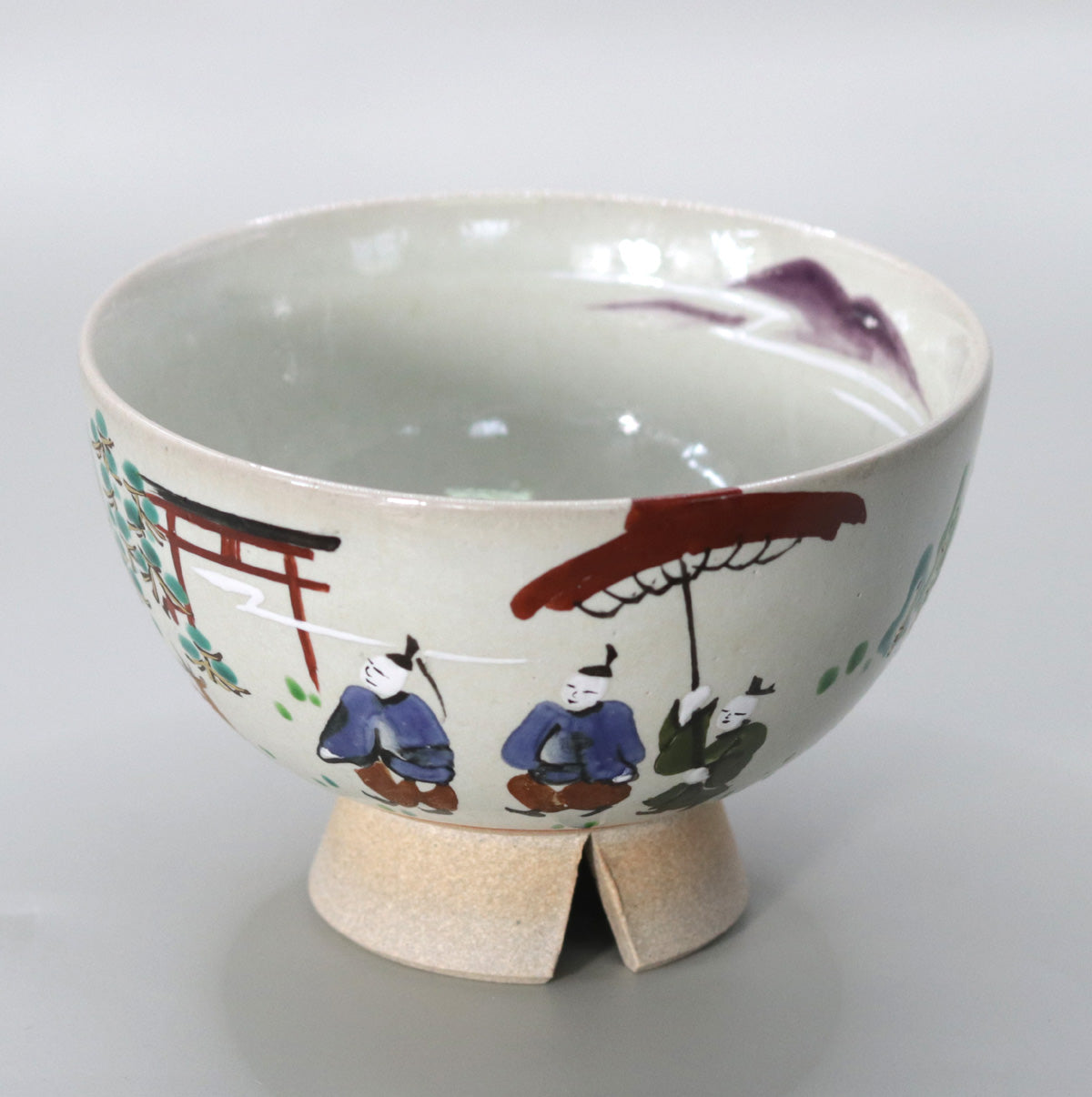
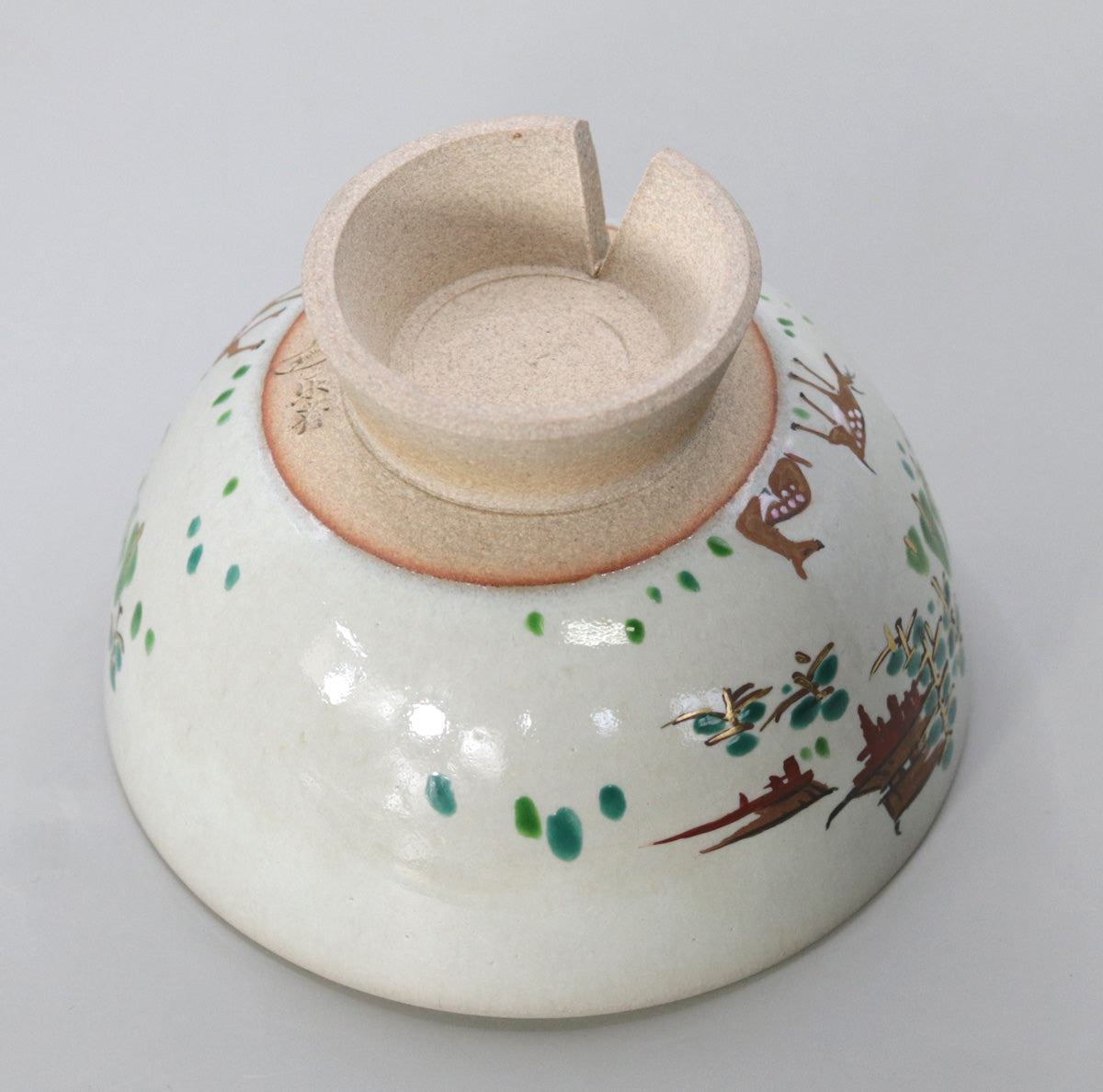
Split foot <br data-start="316" data-end="319">The split foot (split foot) that is unique to the Go-ware style is a faithful replica of the rice bowls that were introduced from the Korean Peninsula, while ensuring the stability of a modern matcha bowl. Another notable feature is that the unevenness that follows the shape of the fingers makes it extremely stable when handling during a tea ceremony.
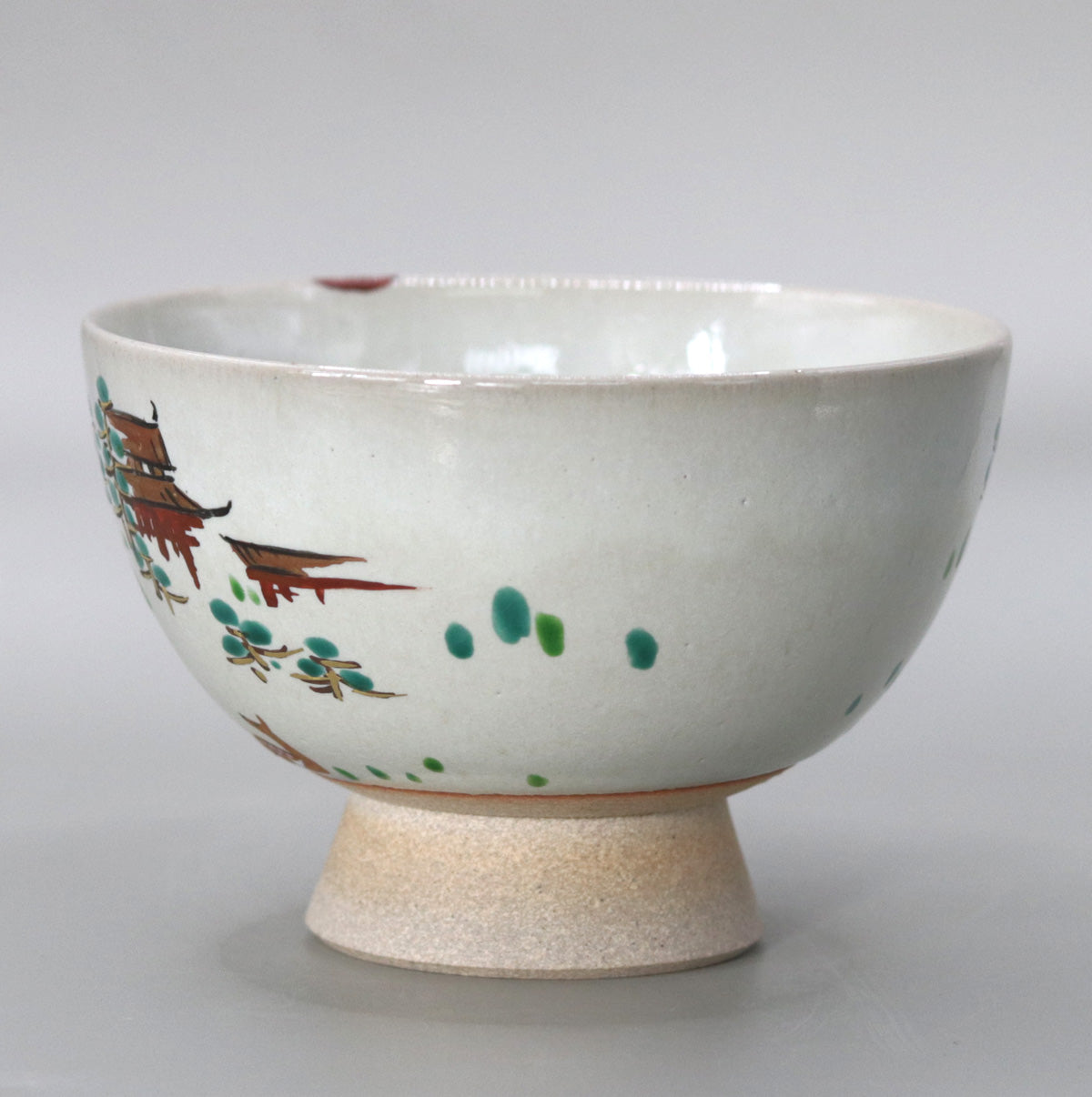
The gloss of the white glaze <br data-start="441" data-end="444">The translucent white glaze that covers the entire body gives off a soft luster, beautifully highlighting the celadon color of matcha. The slight iron-like scorch marks that appear on the rim and sides of the foot add a touch of the charm of kiln change, making it seem as if a tranquil landscape is being framed.
2. Design - Festivals around Kasuga Taisha Shrine
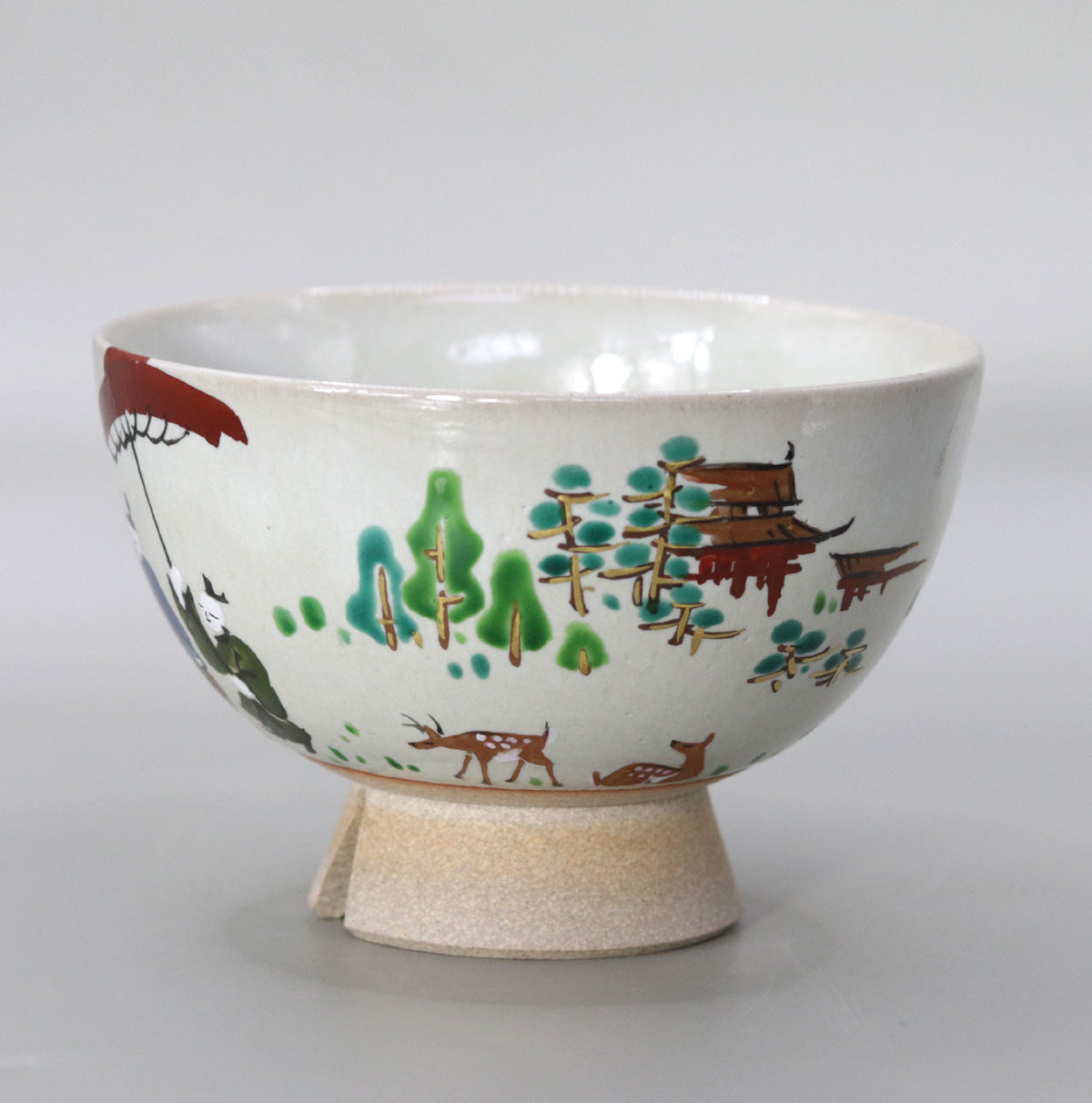
Vermilion Torii Gate and Green Pine Trees <br data-start="593" data-end="596">The vermilion torii gate, a symbol of Kasuga Taisha Shrine, is clearly depicted on the front of the tea bowl, with an evergreen pine tree placed next to it. The complementary colors of vermilion and green resonate vividly against the white glaze.
Deer and the Procession <br data-start="689" data-end="692">The deer, messengers of Kasuga Taisha Shrine, are depicted in an adorable manner walking lightly across a pattern reminiscent of Mount Wakakusa, while the figures in the festival procession are rhythmically lined up with light brushstrokes. The three colours of their costumes - purple, blue and green - echo the green colour inside the matcha bowl, creating a sense of visual depth.
Accented with the vermilion umbrella (karakasa) , the vermilion umbrella is the key element of the procession and symbolizes the ancient culture of the imperial court, while also expressing a blessing to the guests at the tea ceremony. This vermilion acts as a "light" that tightens the overall color tone of the tea bowl.
3. Techniques - The refinement and playfulness of Kyoto ware
Onishi Rakusai's work is based on the five traditional colors of Kyoto ware (red, green, purple, yellow, and navy blue), but he deliberately maintains the brushstrokes and free-flowing, neat contours. The figures' faces are lightly raised with white chalk, evoking a friendly expression while retaining a subtle sense of tension. Furthermore, the green leaves in the details are painted with iron paint as a base, and then copper-green is layered on top to create depth, using a time-consuming two-stage coloring process.
4. Functional beauty at the tea ceremony
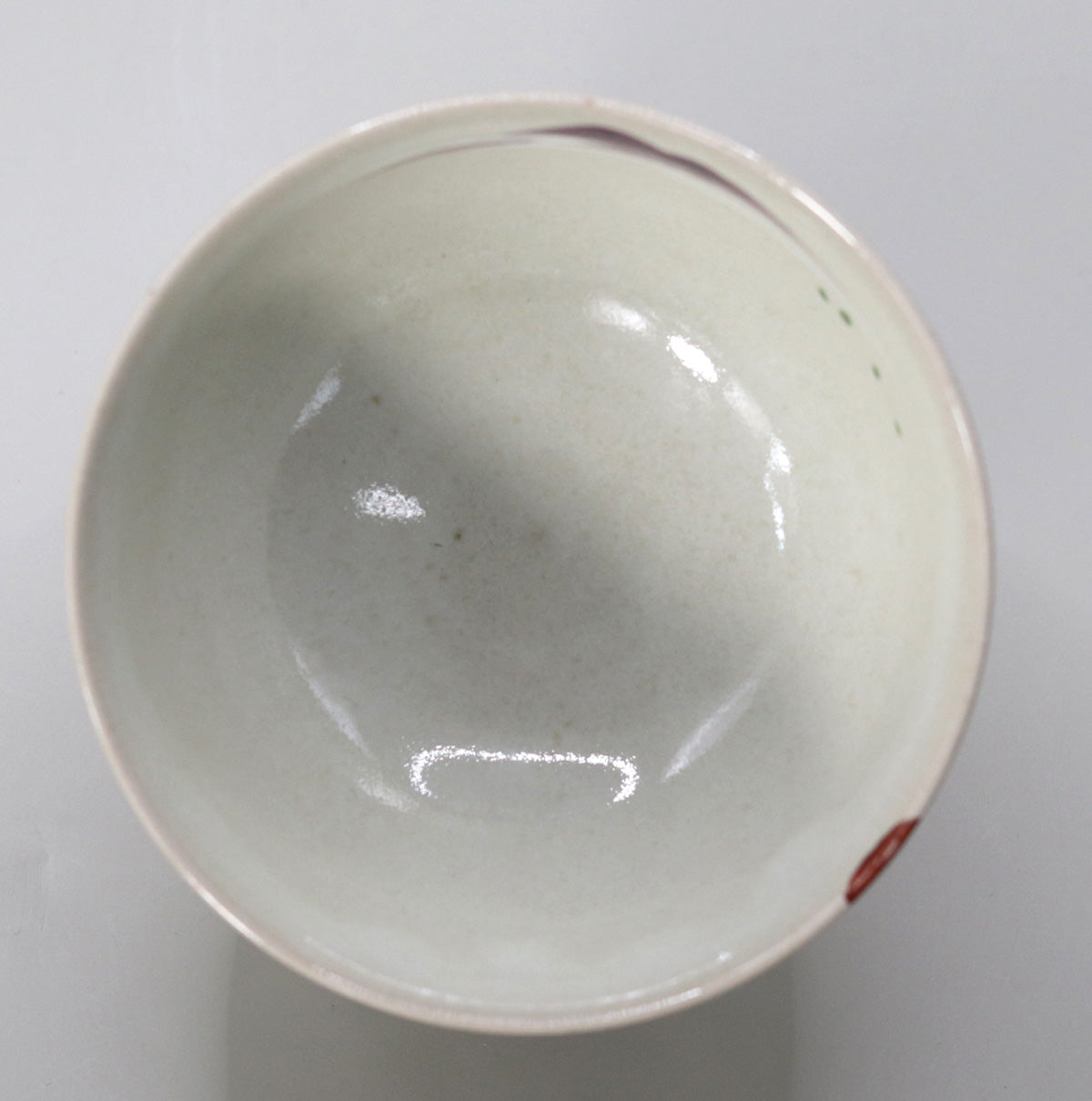
The white of the interior and the green of the matcha <br data-start="1172" data-end="1175">The inside is uniformly finished with a nearly plain white glaze, allowing the lustrous green of the matcha to shine to the fullest. The whisk hits it smoothly, resulting in a fine, fine foam.
The joy of storytelling <br data-start="1252" data-end="1255">As you turn the tea bowl and look, images of a procession progressing and deer playing appear one after another, creating a "picture scroll"-like performance in which the host is telling a story to his guests.
5. Cultural background and modernity
Kasuga Taisha Shrine was worshipped by Heian aristocrats as the guardian deity of the Fujiwara clan, and in Japanese art, motifs such as deer, wisteria, and torii gates have been depicted with layered meanings. This work builds on this iconographic tradition while combining it with the cross-cultural form of Goki-gata, creating a dual structure of "Japanese classicism" and "Korean simplicity." As a result, rather than a return to the classics, it embodies a "border-crossing re-creation," elevating it into vessels with which modern tea masters can freely weave stories.
The bold presence of the Go-ki style and the refined coloring of the Kyoto-yaki Kasuga-e painting - this combination sharply reflects Onishi Rakusai's unique sense of the times. When placed at a tea ceremony, this single bowl opens up a rich world, like a festival picture scroll, and becomes the perfect "stage setting" for deepening conversation with guests.
Share
-
[I will send it to you quickly and carefully]
We carefully package each product in a way that suits it best.
Also, delivery times vary depending on the piece (vessel, etc.).
Items that already come with a box will be shipped within 1-3 days of the order date.
For items that require a box to be made after your order, it will take approximately 30 days for production to be completed and then shipped.
In either case, once we have confirmed your order, we will contact you by email to inform you of the delivery date.
-
[Requests when purchasing pottery]
Even products that look the same may differ slightly in color, shape, size, etc.
The way the glaze is used, the power of the kiln, the firing method, the season, and the humidity also affect the appearance of the pottery.
Please understand the individuality of each piece of pottery and enjoy the unique warmth of handmade.